
Organic search still drives roughly a third of all ecommerce website traffic. Yet most online stores leave that channel underbuilt -- relying on paid ads alone while competitors quietly capture high-intent buyers through search. A strong ecommerce SEO strategy changes that equation, turning your product catalog into a compounding traffic asset that reduces acquisition costs over time.
If you run a DTC brand or growth-stage store, this guide gives you the framework to build (or fix) your organic search foundation -- from keyword research through technical execution to the emerging AI search surfaces that now influence how shoppers discover products.
SEO for ecommerce websites is fundamentally different from SEO for content sites or SaaS companies. The challenges are specific:
These realities mean you need a purpose-built approach, not a generic checklist. The payoff is significant: organic traffic compounds month over month, and unlike paid channels, it does not reset to zero when you pause spend. For a deeper look at how search engine positioning directly impacts traffic volume, the data is clear -- ranking improvements translate directly to revenue.
Effective ecommerce keyword research starts with intent, not volume. Organize your keyword targets into three tiers:
| Intent Tier | Example Keywords | Target Page Type |
|---|---|---|
| Transactional | "buy organic cotton sheets queen" | Product page |
| Commercial investigation | "best organic cotton sheets 2026" | Category or comparison page |
| Informational | "organic cotton vs bamboo sheets" | Blog post or buying guide |
Practical steps to build your keyword map:
An experienced ecommerce SEO specialist will typically start here, because the keyword map dictates every optimization decision that follows.
Technical issues kill ecommerce sites quietly. A store can have great products and strong content, but if search engines cannot efficiently crawl and index the catalog, none of it surfaces in results.
Search engines allocate a finite crawl budget to each domain. Ecommerce sites waste that budget when faceted navigation creates thousands of parameter-based URLs that add no unique value. Address this by:
noindex or blocking them via robots.txtGoogle's Core Web Vitals remain a ranking factor, and for ecommerce, speed directly affects conversion rates. Key metrics to monitor:
Schema markup is no longer optional for ecommerce stores. Implementing Product schema enables rich results that display price, availability, ratings, and shipping information directly in search results.
Priority schema types for ecommerce:
Proper technical execution is where comprehensive ecommerce SEO packages deliver the most immediate impact, because these fixes often unlock rankings that content alone cannot achieve.
Your product and category pages are your money pages. Optimizing them correctly determines whether search traffic converts.
Category pages often have the highest ranking potential for competitive head terms. Strengthen them by:
Building brand trust through your SEO presence matters here -- shoppers who land on a well-structured category page with clear product information, reviews, and transparent policies are far more likely to convert.
Product pages alone will not capture the full range of search queries your buyers use. A content strategy fills the gaps, targeting informational and commercial investigation keywords that product pages cannot rank for.
High-performing content types for ecommerce:
Each piece should link to relevant product and category pages. This creates a content hub structure where blog posts feed authority and traffic into your commercial pages.
Content also plays a critical role in earning backlinks. Authoritative buying guides and original research attract links from publications, bloggers, and industry sites -- which strengthens your entire domain's ability to rank.
Search behavior is shifting. Buyers now discover products through AI-powered surfaces like Google's AI Overviews, ChatGPT, and Perplexity. This means your SEO for ecommerce websites strategy needs to account for how AI systems select and cite sources.
Key principles for AI search visibility:
This is still an emerging area, but brands that invest in structured, authoritative content now will have a meaningful advantage as AI search adoption continues to grow.
The strongest ecommerce search strategies do not treat SEO and paid search as separate channels. They work together. Paid search data reveals which keywords convert, informing your organic priority list. Organic rankings reduce your dependence on ad spend for branded and high-volume terms, freeing budget for prospecting campaigns.
For a detailed breakdown of how to build a balanced search marketing plan that combines SEO and SEM, the integrated approach consistently outperforms either channel in isolation.
Many brands work with an ecommerce SEO consultant or dedicated ecommerce SEO services team to run this combined model, because it requires coordination between content, technical SEO, and media buying -- disciplines that rarely sit in the same person's skillset. EmberTribe's SEO services are built around this integrated model, connecting organic performance directly to revenue outcomes.
Ecommerce SEO is not a one-time project. It is an ongoing system that compounds over time -- each technical fix, each optimized product page, each piece of content strengthens your store's ability to capture organic demand.
The priority order is clear:
Stores that treat SEO as infrastructure -- not a checkbox -- consistently see lower customer acquisition costs, more resilient traffic, and stronger brand positioning in their category. The work is methodical, but the results compound in ways that paid channels simply cannot replicate.

When am I going to start seeing results?
How fast can we scale to $25,000?
How much am I going to spend on testing?
These questions (and more) come up frequently as we're talking to companies who are considering working with us to grow their business. Whether they are just starting out on a new eCommerce store or looking to increase their app signups 3x in Q2, the underlying question is really the same.

Let's face it: digital marketers (and marketing agencies) have really turned their approach into a "black box" over the years. Whether they do it by hiding behind jargon, slapping clever branding over the top, or creating complex or confusing diagrams, the end result is confused business owners who don't really understand what their dollars are going towards, or why.
Now, take a deep breath.
For you, with us, that stops here.
We're about to open the box.
I have two little kids, one preschooler and one toddler. Both are (alarmingly) ambulatory, moving all over the house and getting into everything they aren't supposed to. The older one can unlock deadbolts, push open screen doors, climb ladders and stairs, while the younger is content with simple seeing how fast she can get her body moving in a single direction before she either topples forward or encounters an object that refuses to budge when she slams into it.
Why do I bring this up? Because they didn't start this way.
Yes, it's a tired cliche, but it's so true: you have to walk before you can run.
If your business has never run an ad before, never used marketing to sell, never attempted to convince someone unfamiliar with the brand, product, or service that they should part with their hard-earned Benjamin Franklins, then your first question should not be, "How much can I make?"
You don't have TRACTION yet.
By traction I mean a pattern of desired behavior occurring in a consistent, somewhat predictable fashion. This could mean generating leads, getting purchases, onboarding new users or whatever else your business goal, it doesn't matter. The point is that you need to be able to say that you can cause it to happen, repeatedly, with your efforts.
When we work with clients who have never run ads before, or who are just starting out, our first forays out into the marketplace are focused on finding who will buy and what will cause them to buy. Put another way, this is about audience and creative/offer.
Let's bust a myth: just because you have a product or service does not mean people will buy it. This is not Field of Dreams.
On the contrary, you have to wade through scores of unqualified or uninterested people to find your best candidates, and then test multiple different messages, angles, images, videos, taglines and more in order to find traction.
"Okay, but how long does that take?"
Well, that depends.
I know, that's not what you were hoping for. And if I can tell you that it would take 2 weeks or 2 months or whatever, I definitely would. Instead, here's what I can tell you:
When you work with us, you aren't hiring wizards (or gurus or ninjas) - you're hiring data-driven marketers. So we're going to test, and test, and test, and generate lots of data, and then we're going to do what the data tells us.
👉 Set up your campaigns to get more qualified leads. →
Sometimes it's fast, and we see traction in just a few weeks. Sometimes it takes less time, sometimes it takes longer. All the factors above impact that.
But the good news is, once you have TRACTION, you can move on to start thinking about...
Too many times we'll talk to a business owner who is putting money into ads and wants to see immediate return. If they don't get a certain CPA or ROAS in the first 3 weeks, they think there's something "wrong" with the ads. They don't realize they are trying to run before walking, that you can't build a house without the foundation, or whatever analogy you best identify with.
💡 ROAS isn't everything, it's just a part of the equation. →
Once we help our clients find TRACTION, then (and only then) is it time to start discussing PROFIT.
Why?
If you don't have enough data points, you can't optimize.
Put another way, if you don't have anyone buying from you, how do you know who your best customers are?
Getting this data and acting on it is the basis of improving your PROFIT metrics. If you want a better CPA, you need to find out which creative gets the best response and then test small optimizations on it - a new emoji, a different headline, a carousel vs a static image. If you want better ROAS, you can segment by device type or placement or time of day that gives you the best baseline.
The key to the PROFIT stage is having goals. And I don't mean "I want to retire and sleep on a bed of Andrew Jacksons every night" type goals, more like "If I can generate new users for $20 each that means I'm profitable and am basically printing money" goals.
We help our clients walk through some simple calculations to set their goals. For an eCommerce store this might include repeat purchase rate, average order value (AOV), and cost of goods sold (COGS). For a SaaS client, we would consider lifetime value (LTV), profit margins, and upsells. Whatever the case, we want to end up with a single number.
That number is our PROFIT goal. If we can hit that goal with consistency, it unlocks us to move on the third and final stage.
Ah yes, scaling. The magical, mystical land of unicorns and rainbows where you trade $1 for $4 ten thousand times while eating ice cream in your pajamas.
Okay, well, not quite, but that's how the "get rich quick" YouTube personalities pitch it. Sounds fun, huh?
Truth is, scaling isn't the end - it's the beginning.
When this client partnered with EmberTribe, their goal was to find strategies to scale sales. Now our client has experienced scale from $18K to $370K lifetime revenue, with an $111K lifetime spend.
You can't start putting more dollars into your campaigns until they are making you money back consistently, and you can't do that until you build a system of repeatable client generation. Hence the reason it's the final step. But there's another reason we counsel clients to be smart about getting to this stage: the game changes.
If you want to triple your investment in ads, especially on a channel like Facebook Ads, just about the worst thing you can do is start jacking your budgets up quickly.
😑 Facebook ads not working? This could be why. →
This causes the algorithm to have to start relearning, and oftentimes can tank your PROFIT, forcing you to go back to the drawing board. Instead, you have to be intentional, constantly revisiting your PROFIT goals and testing new TRACTION experiments to widen your funnel. And this is why we insist on walking through the process with clients - because failing to do the hard work on the front end ends up in a house of cards that falls apart, leaving everyone unhappy.
Some of our best success stories are clients who did things the right way, worked with us to build a repeatable system for growth and testing, and then let us run wild with new audiences, creative, automation, rules and more. Their accounts grew from 5 to 7 figures in ad spend profitably not by some mystical proprietary technology or the wizardry of a paid acquisition savant, but by being intentional, creating a solid foundation, and trusting the process.
It's not easy. It's not as fast as we'd like. But the results are worth it, and the potential that it opens up are amazing.
No black box. No magic. No single genius with the inside track on the algorithm.
Just lots of testing, patience, observation, analysis, failure, growth and consistency.
That's the secret sauce of EmberTribe, and it's one of the reasons we've had such great success for ourselves and our clients since our inception: a three-step process of TRACTION, PROFIT, SCALE that works across industries, across business models, regardless of the age or success of the business to date.

In this post:
Check out this TribeTalk from our Marketing Specialist, Kathryn Betancourt chatting with our Director of Operations, J.P. VanderLinden, and one of our Growth Specialist, Melanie D'Angelo.
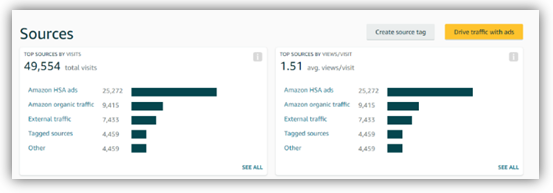
This helps pull data into Amazon but there are still issues for how to pull data OUT to other systems. It's not perfect, but it's more than we've had before, and it might be enough for folks to start exploring.
We've also discovered thatSellerly, a collection of Amazon business tools by Semrush, offers excellent marketing tools for Amazon listings designed to make selling on the marketplace easier and more effective. If Amazon's data insights are still not sufficient for you, give Sellerly a try!
Marketers understand that different ad types work better at different parts of the funnel. For example, Search is great at BOFu, Display at TOFu, etc. But what about how they work together?
Google released a report that marketers advertising on YouTube saw better conversion volume and rates from their Search campaigns. Specifically, Search conversions were 8% higher, conversion rates were 3% higher, and Search CPAs dropped 4%.
We all know that advertising on YouTube increases brand awareness and ad recall. The big questions are: Is this something driven by traditionally understood marketing practice? Or is Google itself actually influencing the algorithm to favor buyers who spend across multiple components of it's ad platform?
Regardless of what’s going on Google’s side, we recommend testing YouTube. Don’t just measure the direct performance, also measure the "halo effect" on other channels like Search & Social.

Yabba DABA Do!! Let’s discuss Facebook DABA campaigns. We think these campaigns have a lot of value for our clients.
Most folks think of Dynamic Ads as only supporting retargeting your website visitors and app users, limiting your audience size to the number of people who’ve interacted with you in the past. That’s why, despite the great performance, the possible investments advertisers have been able to make have been fairly restricted — typically, the biggest share of their budgets goes to acquiring new customers.
To help advertisers reach these audiences with top-performing ads, Facebook now offers the possibility to expand the reach of Dynamic Ads campaigns outside retargeting audiences.
Facebook’s Dynamic Ads for Broad Audiences (DABA) expands your dynamic ads to reach beyond your website or app visitors to generate demand. DABA campaigns serve personalized recommendations based on browsing activity and showcase the relevant inventory from your catalog to people likely to purchase.
Unlike lookalike audiences and retargeting site visitors, broad audience targeting captures intent in other places like:
DABA campaigns will have your potential customers saying….

What questions do you have for us? Have you tried DABA campaigns? Are you running YouTube ads? Comment below.

In competitive digital markets, consumer skepticism is at an all-time high. Buyers research brands thoroughly before making purchasing decisions, and the signals they encounter during that research directly influence whether they trust you enough to convert.
One of the most effective ways to build that trust at scale is through SEO. When done strategically, search engine optimization does more than drive traffic. It positions your brand as a credible, authoritative presence in your industry, and that perception compounds over time.

Brand trust is the confidence consumers place in your ability to deliver on your promises consistently. It is not built through a single interaction. It is earned over time through repeated, positive experiences across every touchpoint.
Trust drives three critical business outcomes:
The foundations of brand trust rest on several pillars. Reliability means consistently delivering on what you promise. Transparency means communicating openly, especially when things go wrong. Consistency means maintaining uniform messaging, visual identity, and quality standards across every channel your audience encounters.
Each of these pillars has a direct connection to how your brand appears in search results, and that is where SEO becomes a trust-building engine.
Think about your own behavior as a consumer. When you search for a product, service, or answer to a question, you naturally assign more credibility to the brands that appear at the top of the results page. This is not accidental. It is a deeply ingrained psychological pattern.
Ranking prominently in search results sends several trust signals simultaneously:
When a potential customer searches for a solution and finds your brand multiple times across different queries, they begin to perceive you as an established player. This is especially powerful in B2B and SaaS markets where purchase decisions involve significant research and multiple stakeholders.
A comprehensive keyword strategy is foundational to trust-building through SEO. The goal is not simply to rank for high-volume terms. It is to align your content with the specific language, questions, and intent patterns your ideal customers use throughout their buying journey.
Different search queries reflect different stages of awareness and intent. A strong trust-building keyword strategy addresses all of them:
Long-tail keywords that reflect your brand's unique value proposition are particularly effective for trust-building. They attract highly qualified traffic, meaning the visitors who arrive through these searches are more likely to find exactly what they need. That alignment between search intent and content delivery is itself a trust-building mechanism.
Conduct keyword research using tools like Ahrefs, Semrush, or Google Search Console to identify the specific phrases your target audience uses. Integrate these terms naturally into your content, headers, meta descriptions, and URL structures.
Understanding user intent behind search queries is crucial for creating content that resonates with your audience. When someone searches "how to improve ecommerce conversion rates," they want actionable guidance, not a sales pitch. When someone searches "best growth marketing agency," they want honest comparisons and proof points.
Matching content format and depth to search intent builds trust because it demonstrates that you genuinely understand what your audience needs.

Beyond keyword strategy, several technical and content-driven SEO practices directly reinforce brand credibility.
Backlinks from reputable, relevant websites serve as third-party endorsements of your brand. Each quality link is essentially another trusted source vouching for your expertise. Focus on earning links through original research, data-driven content, and genuinely useful resources rather than manipulative link schemes that can damage trust.
Google's emphasis on Experience, Expertise, Authoritativeness, and Trustworthiness means that the content signals you send directly impact both rankings and brand perception. Practical steps include:
A fast, mobile-friendly, secure website is a baseline expectation for modern consumers. Poor site speed, broken pages, and security warnings erode trust instantly. Ensure your site loads quickly, uses HTTPS, and delivers a seamless experience across devices. These technical factors influence both search rankings and visitor confidence.
Consistency in content publishing signals that your brand is active, invested, and committed to serving your audience. A strong content strategy that delivers value on a regular cadence builds the kind of long-term trust that converts visitors into loyal customers.
Building trust through SEO is not a one-time project. It requires continuous monitoring, auditing, and optimization to ensure your brand's credibility remains intact as algorithms evolve and competitors adjust their strategies.
Perform comprehensive SEO audits quarterly to assess the health and effectiveness of your website and content. Key audit areas include:
One of the most telling indicators of growing brand trust is an increase in branded search queries. When more people search for your company by name, it signals growing awareness and confidence in your brand. Monitor branded search volume in Google Search Console as a key trust metric.

Search engine algorithms are constantly evolving, and what builds trust today may need adjustment tomorrow. Stay informed about major algorithm updates and industry trends. Brands that adapt quickly to changes in best practices maintain their credibility, while those that rely on outdated tactics risk losing both rankings and trust.
SEO credibility is not an abstract concept. It drives measurable business outcomes that compound over time.
Higher conversion rates - Visitors who arrive through organic search and find relevant, authoritative content convert at higher rates than those from most other channels. The trust established through search rankings carries through to the conversion decision.
Lower customer acquisition costs - As your organic visibility grows, you reduce dependence on paid channels for customer acquisition. The trust equity you build through SEO continues generating results without ongoing ad spend.
Stronger competitive positioning - In crowded markets, the brand that owns the top search positions for key terms has a significant advantage. That visibility creates a perception of market leadership that is difficult for competitors to overcome.
Increased customer lifetime value - Trust reduces friction throughout the customer relationship. Customers who discover your brand through authoritative content tend to have higher lifetime values because the relationship started from a position of credibility.

Building brand trust through SEO requires a strategic, sustained effort that combines keyword research, high-quality content creation, technical optimization, and continuous monitoring. The brands that invest in this approach build a foundation of credibility that drives customer loyalty, organic growth, and long-term competitive advantage.
Start by auditing your current SEO performance and identifying gaps between your content and your audience's search behavior. Develop a keyword strategy that addresses every stage of the buyer journey. Create content that demonstrates genuine expertise and delivers real value. Then measure, iterate, and improve continuously.
The compounding effect of SEO-driven trust is one of the most powerful growth levers available to brands willing to play the long game. Every piece of optimized content, every quality backlink, and every positive search experience adds another layer of credibility that strengthens your brand's position in the market.

🎱 Brands are on the hunt for fresh ways to connect with their audience. TikTok, the rising star of social media platforms, is where the action is. 🌟

Brands that tap into TikTok’s vast user base can unlock unparalleled potential. However, to truly shine on TikTok, expert guidance is crucial. This is where a TikTok Ads Agency steps in. 👔
🎲 Their role? To craft a strategy that maximizes your brand’s impact on this vibrant platform.
TikTok has exploded in popularity, boasting over millions of monthly users worldwide.
💰This makes it a goldmine for brands aiming to reach a diverse, engaged audience.
TikTok’s short-form videos and smart algorithm offer a unique stage for brands to showcase products and services.
But TikTok isn’t just about entertainment. It’s also a hub for education, DIY content, and social causes. 🎨
Brands that tap into this can engage users deeply by offering value through informative and inspiring content.
TikTok’s massive appeal, especially among Gen Z, offers brands a rare opportunity. 💎
Unlike other platforms, TikTok is all about authenticity and creativity.
It’s where brands can connect with users on a personal level, in a way that feels genuine. 💡
TikTok’s interactive features, like challenges and duets, turn passive viewers into active participants.
This level of engagement not only builds brand loyalty but also amplifies reach as users share their interactions, creating a ripple effect of advocacy.
A TikTok Ads Agency specializes in navigating the complexities of TikTok advertising. From crafting a tailored strategy to creating engaging content, they cover it all.
Their in-depth knowledge of TikTok’s tools, targeting options, and best practices ensures your brand’s success. ☘️ And they don’t just stop at the basics. They go above and beyond to deliver exceptional results.
Working with a TikTok Ads Agency brings several benefits. First, you tap into their expertise and industry insights. They stay ahead of trends, algorithm changes, and audience preferences, keeping your brand competitive. Let’s dive into the key benefits:
Creating an effective TikTok ad strategy starts with understanding the platform and its users. As you navigate TikTok, focus on these key elements to ensure success.
By understanding your target audience, crafting creative content, and using the right ad formats, your brand can make a lasting impact on TikTok.
Tracking the success of your TikTok campaigns is key to making informed decisions. Use metrics like impressions, reach, engagement, and conversions to gauge effectiveness.
Impressions show how often your ad is viewed, while reach highlights unique viewers. Engagement rate measures likes, comments, and shares, indicating interaction levels.
Conversion rate shows the percentage of users taking the desired action, like a purchase. 📈
👩🔬 Analyzing these metrics helps optimize your strategy for better results.

TikTok is full of opportunities, but it also presents challenges. Being aware of these challenges and having the right strategies in place can help you navigate them successfully.
The future of TikTok advertising is filled with exciting possibilities. As the platform evolves, staying informed and adaptable will be key to continued success. Is important to stay tuned on emerging trends.
Here are a few: 🚀
To stay ahead, keep up with trends, embrace a test-and-learn approach, and continuously refine your strategy.
TikTok’s landscape is ever-changing, and brands that adapt will thrive. 📶

It has become increasingly important for medical practices to establish a strong online presence in order to attract new patients and stay competitive. One of the most effective ways to achieve this is through search engine optimization (SEO). Implementing SEO strategies can boost your website's visibility on search engine results pages (SERPs), driving more organic traffic to your practice's website. However, navigating the complexities of SEO can be daunting, which is why partnering with a reputable medical SEO agency is crucial. Here, we will explore the key factors to consider when choosing the right medical SEO agency for your practice.

Healthcare marketing is a unique field that requires a delicate balance between promoting services and providing valuable information. With SEO, you can achieve this balance by optimizing your website's content to cater to both search engines and patients. By incorporating relevant keywords and phrases into your website's copy, meta tags, and headings, you can increase your chances of appearing in search results when potential patients are looking for specific medical services or information.
Implementing SEO strategies can bring a range of benefits to medical professionals, such as:
Once you have a clear understanding of the importance of SEO for your medical practice, the next step is to identify your specific SEO needs and goals. This involves assessing your current online presence, identifying areas for improvement, and outlining your objectives.
Start by analyzing your website's performance metrics, such as the number of visitors, bounce rate, and average time on site. This will give you insights into how well your website is currently performing and areas that may need improvement.
In addition to analyzing your website, it is also crucial to evaluate your social media presence. Social media platforms can play a significant role in boosting your online visibility and driving traffic to your website. Assess your engagement levels, follower count, and the effectiveness of your social media campaigns.
Once you have a clear picture of your current online presence, it's time to identify areas for improvement. This could include optimizing your website's loading speed, improving the user experience, enhancing your website's design and layout, or creating high-quality and relevant content.
Defining your SEO goals is equally important. Start by considering the specific objectives you want to achieve through SEO. Do you want to increase your website's organic traffic? Improve your search engine rankings for specific keywords? Generate more patient inquiries through your website? By clearly defining your goals, you can tailor your SEO strategies accordingly.
Before implementing SEO strategies, it is important to define your target audience. Understanding who your ideal patients are will help you tailor your SEO efforts to attract the right demographic. Consider factors such as age, gender, location, and specific medical needs. This information will guide your keyword research and content creation.
When defining your target audience, it is also crucial to consider their online behavior and preferences. Are they more likely to use search engines to find medical information? Do they frequently engage with social media platforms? By understanding how your target audience interacts with the online world, you can optimize your SEO strategies to reach them effectively.
conducting market research can also provide valuable insights into your target audience's needs, preferences, and pain points. This information can help you create content that resonates with your audience and positions your medical practice as a trusted source of information and solutions.
Setting measurable SEO goals is crucial for tracking the success of your SEO efforts. Whether your goal is to increase website traffic, improve your search engine rankings, or generate more patient inquiries, it is important to establish specific, measurable, achievable, relevant, and time-bound (SMART) goals.
When setting your SEO goals, consider using key performance indicators (KPIs) to track your progress. KPIs can include metrics such as organic search traffic, keyword rankings, conversion rates, and the number of patient inquiries generated through your website.
Additionally, it is important to regularly monitor and analyze your SEO data to identify trends, patterns, and areas for improvement. This can involve using tools such as Google Analytics to track website traffic, behavior flow, and conversion rates. By continuously analyzing your SEO data, you can make data-driven decisions and refine your strategies for optimal results.
Remember, SEO is an ongoing process, and it requires consistent effort and monitoring. By setting measurable goals and regularly evaluating your progress, you can ensure that your SEO strategies are effective and aligned with your medical practice's objectives.
Now that you have a clear understanding of your SEO needs and goals, it's time to evaluate potential medical SEO agencies. Consider the following factors to ensure you select the right agency for your practice:
When choosing a medical SEO agency, it is important to consider their experience in the healthcare industry. A specialized medical SEO agency will have a deep understanding of the unique challenges and regulations that medical practices face. They will be familiar with medical terminology, compliance requirements, and the nuances of healthcare marketing.
Another important factor to consider is the range of SEO services offered by the agency. A comprehensive SEO strategy involves various components, including on-page optimization, off-page optimization, content creation, link building, and technical SEO. Ensure that the agency you choose offers a holistic approach to SEO and can tailor their services to meet your specific needs. A right combination of services can take your business to the next level. Here is an example of a business that used SEO to surpass the 10M barrier.
Medical SEO is a highly specialized field that requires a thorough understanding of medical terminology and compliance regulations. The agency you choose should have a team of SEO experts who are well-versed in medical terminology and can create content that is accurate, informative, and compliant with applicable regulations.
Once you have shortlisted potential medical SEO agencies based on the above factors, the next step is to evaluate their SEO strategies. Keep in mind the following considerations:
A cookie-cutter approach to SEO is not effective in the medical industry. Each medical practice is unique and requires a customized SEO strategy that aligns with their specific goals and target audience. The agency you choose should be capable of tailoring their SEO strategies to meet your practice's individual needs.
Keyword research is a crucial component of medical SEO. It involves identifying the most relevant and high-value keywords that potential patients are using when searching for medical services online. The agency you choose should have a solid keyword research strategy, ensuring that the right keywords are incorporated into your website content and meta tags.
For medical practices, local SEO plays a vital role in attracting patients in specific geographic areas. The agency you choose should have expertise in local SEO, helping your practice rank higher in local search results and targeting patients in your area.
Before making a final decision, it is important to assess the performance and reporting capabilities of the medical SEO agency. This will ensure that you can measure the success of your SEO efforts and make data-driven decisions. Consider the following:
The agency should have a solid understanding of SEO metrics and key performance indicators (KPIs) used to evaluate the success of SEO campaigns. These may include website traffic, search engine rankings, organic leads, conversion rate, and return on investment (ROI). Ensure that the agency can provide meaningful insights and reports on these metrics.
Transparent reporting is essential when working with a medical SEO agency. They should provide regular reports that outline the progress of your SEO campaigns, explain the strategies implemented, and highlight areas for improvement. An agency that values transparency will keep you informed and involved in the optimization process.

Choosing the right medical SEO agency for your practice is a crucial decision that can significantly impact your online visibility, patient acquisition, and overall success. By understanding the importance of SEO, identifying your needs and goals, and considering key factors such as the agency's experience, range of services, and SEO methodology, you can make an informed choice. Remember to evaluate the agency's performance and reporting capabilities to ensure that you can track the progress of your SEO efforts. With the right medical SEO agency by your side, you can take your practice to new heights and attract a steady stream of qualified patients.

Search engine positioning refers to where your website appears in organic search results for a given query. It is one of the most measurable, highest-leverage factors in digital marketing, and for growth-stage brands, getting it right can mean the difference between a steady stream of qualified traffic and near-total invisibility.
This guide breaks down what search engine positioning actually is, the role it plays in driving traffic, the factors that influence it, and the strategies your team can use to improve it.
Search engine positioning is the specific rank a webpage holds on a search engine results page (SERP) for a particular keyword or query. If your page shows up third when someone searches "DTC retention strategies," your position for that term is 3.
This is different from search engine optimization (SEO) as a whole. SEO is the practice; positioning is the outcome. You optimize your site so that your positioning improves.
Positioning is always relative. Your rank depends not just on how well your page is optimized, but on how it stacks up against every other page competing for the same query. That competitive dimension is what makes it both challenging and strategically valuable.
It is common to see these terms used interchangeably, but they are not the same thing.
Think of SEO as the input and positioning as the output. You can run a strong SEO and SEM strategy without obsessing over individual positions, but tracking positioning gives you a concrete metric to gauge whether your efforts are working.
Position is not just a vanity metric. It has a direct, measurable impact on traffic volume and quality.
The relationship between search engine position and click-through rate (CTR) is well-documented and steep. Research consistently shows that the top organic result captures the largest share of clicks, with a sharp drop-off after the first few positions. By the time you reach page two (positions 11 and beyond), CTR approaches zero for most queries.
This is why moving from position 36 to position 10 may generate some impressions but still almost no clicks. The real traffic gains come from breaking into the top five, and ideally the top three.
For brands focused on growth marketing channels, organic search is one of the few channels that compounds over time. A page that reaches a strong position can deliver traffic for months or years without additional spend.
Users trust top-ranked results more than lower-ranked ones. This is partly a function of how search engines work: Google's algorithm is designed to surface the most relevant, authoritative content. When your brand consistently appears at the top, it reinforces the perception that you are a credible source.
This credibility effect extends beyond the click itself. A brand that shows up in the top results for multiple related queries builds a stronger association with the topic in the minds of potential customers. For DTC and growth-stage companies working to build brand trust through SEO, this compounding authority is a significant competitive advantage.
The math is straightforward. Higher position means higher CTR, and higher CTR on a high-impression keyword means substantially more traffic.
Consider a keyword with 20,000 monthly impressions. At position 36, you might generate zero clicks (which is exactly what happens in practice). Move that same page to position 5, and you could realistically capture 3-5% of those impressions, translating to 600-1,000 monthly visits from a single keyword. Reach position 1, and that number could climb above 5,000.
This is why search engine positioning improvement is not an incremental game. The gains are nonlinear: small position changes near the top of the SERP produce outsized traffic results.
Google evaluates hundreds of signals when determining positioning. The ones that matter most fall into a few categories.
Content remains the most important on-page factor. Google is looking for content that thoroughly addresses the searcher's intent, provides original value, and demonstrates expertise in the subject.
For positioning purposes, this means:
A strong content strategy is the foundation for any positioning improvement effort.
Even the best content will struggle to rank if the technical foundation is weak. Key technical factors include:
An SEO audit can identify technical issues that may be holding your positioning back.
Backlinks remain one of the strongest off-page ranking signals. When authoritative websites link to your content, it signals to search engines that your page is trustworthy and valuable.
Quality matters more than quantity. A single link from a high-authority industry publication carries more weight than dozens of links from low-quality directories. Building a backlink profile takes time, but it is one of the most durable ways to improve positioning across your entire site.
Google pays attention to how users interact with your page after clicking. High bounce rates, short dwell times, and low engagement can signal that a page is not delivering on its promise, which can erode positioning over time.
Factors that support strong engagement include:
Improving positioning requires a combination of on-page optimization, off-page authority building, and ongoing measurement.
On-page optimization is where most positioning improvement efforts should start, because these are the factors you control directly.
Off-page SEO focuses on building your site's authority and reputation beyond your own domain.
One of the most efficient positioning strategies is to focus on keywords where you already rank in the striking distance zone, typically positions 5 through 20. These are terms where Google has already determined your page is relevant; it just needs a push to break into the top results.
Identify these opportunities using Google Search Console, then optimize the corresponding pages by:
This approach often yields faster results than trying to rank for entirely new terms.
You cannot improve what you do not measure. Tracking your positioning over time is essential for understanding what is working and where to focus next.
Several tools provide reliable positioning data:
Position alone does not tell the full story. Track these metrics together to get a complete picture:
Look for patterns rather than reacting to daily fluctuations. Positioning naturally shifts as competitors publish new content, algorithms update, and search behavior evolves. The goal is to see a sustained upward trend over weeks and months, not to chase position changes day by day.
When you see a position drop, investigate the possible causes: was there an algorithm update? Did a competitor publish stronger content? Has your page become outdated? Data-driven diagnosis leads to more effective responses than guesswork.
Understanding how positioning works in practice helps clarify the strategy.
Example 1: The high-impression, low-position problem. A page ranks at position 36 for a keyword with 20,000+ monthly impressions. It generates zero clicks because almost no one scrolls past the first page. The fix: a complete content overhaul to match search intent, combined with targeted backlink building to improve authority.
Example 2: The striking distance opportunity. A page ranks at position 16 for a long-tail query like "the role of search engine positioning." With 109 monthly impressions and a position just outside page one, small improvements (better content depth, an optimized title tag, a few internal links) could push it to page one and start capturing clicks.
Example 3: The top-position compounding effect. A well-optimized page reaches position 3 for a competitive term. Over time, the high CTR and strong engagement signals reinforce the ranking, making it increasingly difficult for competitors to displace. This is the compounding effect that makes organic search such a powerful acquisition channel.

Search engine positioning is the bridge between SEO effort and measurable traffic outcomes. For brands that depend on organic growth, tracking and improving positioning is not optional; it is foundational.
The playbook is clear: audit your current positions, identify the highest-impact opportunities (especially striking distance keywords), strengthen your content and technical foundation, and build authority over time. The brands that treat positioning as an ongoing discipline, rather than a one-time project, are the ones that consistently capture the most valuable organic traffic.
If you want to see what a data-driven approach to positioning looks like in practice, take a look at our SEO methodology or explore how we have helped brands transform their search rankings.


To carve pumpkins, of course. 🎃
It also means we’re all gearing up for a busy Q4 selling season and taking stock of what’s really scary this time of year: costly marketing mistakes that affect the bottom line.
This post is part cautionary tale and part kick-in-the-gourd for eCommerce businesses still trying to hide from the holiday season just around the corner. Let’s break down some marketing mistakes many eCommerce businesses are making right now, and how you can escape their same fate.
😱 Waiting too long to prepare for Black Friday.
We've been talking about Black Friday 2020 since this August, and for good reason. It’s not only because we wanted to will the hot Summer days away, but because all projections estimate that holiday shopping will begin earlier than ever this year. If you haven’t nailed down your Cyber Month sales plan yet, there’s still time...but not much. Some big name stores are going to kick off their sales as soon as November 1 breaks.
😱 Not testing paid ads early enough.
You don’t want the paid ads you’re running for holiday sales to be test campaigns. They should be tested, re-tested, and optimized to reach tried and true status by the time the critical sales dates come around. Give yourself a few weeks to test creative, audiences, and retargeting strategies. By the time Black Friday comes around, your ads should be lean, mean, revenue-earning machines.
😱 Haven’t optimized their website for mobile.
In 2019, 39.6% of holiday season eCommerce spending can be attributed to smartphone and online shoppers. Shopify reported that a whopping 69% of sales over BFCM 2019 weekend were made on phones or tablets. That’s a big (and growing) share of eCommerce spending, and it’s not something you want to miss out on because your website just doesn’t work on a mobile device. Right? Right.
😱 Confusing, inaccurate, or just plain crappy product descriptions.
Remove friction for shoppers by providing thorough, relevant information in product descriptions. This information should answer common questions, speak to your target audience, and maybe even bust a few objections from the get-go.
😱 Not defining your target market.
Not only is targeting everyone, everywhere extremely expensive, it’s also ineffective. Before you can rake in the big sales, you need to understand your customers. Go beyond a one-size-fits all approach and deep dive into demographics, behavioral data, personalization, and testing to define and refine your target market.
😱 Slow page load speed.
How long do you think a visitor is going to sit around waiting for your site to load? Unfortunately, it’s about 3 seconds. In 2018, a Google study found that page load speeds between 1s to 3s saw the probability of bounce increase 32%. 1s to 5s load time bumps that number up to 90% bounce probability. The answer definitely varies by person and perhaps your chances are better if they are a return customer, but why take chances?
😱 Confusing checkout process.
So your customer has added an item (or 5, 10, 15, 20) to their cart and they initiate the purchase process. You’re this close 👌 to making a sale. Why would a customer exit now? It turns out, there’s a lot of reasons. Your checkout process should be easy to complete. Don’t force visitors to create an account, provide unnecessary information, or take them through needlessly long and confusing forms. Online shoppers can be fickle, and your conversions are only as good as sales completed.
😱 No email marketing plan.
Emails aren’t all about making sales in eCommerce. Since your customers don’t get a chance to interact with your store space, salespeople, or product in person, you need to think about how you can build a relationship with customers. Make sure you’re keeping your store at the top of their mind and getting them excited about upcoming sales.
😱 Surprise fees.
$12 shipping?! No, thank you. We’ve probably all added an item to our cart, initiated a checkout, and even entered our address only to find out that shipping is just...not worth it. Be up front with shipping costs or additional fees. Don’t catch customers by surprise with fees they didn’t anticipate. Include copy on your website that gives clear and concise information about shipping fees. Offer estimates if possible. And if you can swing it, offer free shipping to push shoppers over the edge from browser to purchaser.
😱 Not taking enough time to nurture customers.
There are definitely upsides and downsides to the long 2020 holiday shopping season. One upside is that people who would typically do their shopping in stores will be more likely to make eCommerce purchases, and they will be more deliberate about their purchases because they can’t interact with them ahead of time. That means you have more time to reach that customer with the right kind of ads, emails, social media, etc. that will push them to convert. Take advantage of the Cyber Month timeline to catch audiences, nurture your funnel, and make the sale...and invite them to make another purchase before the season ends.

Phew, that’s a lot of scary mistakes. The good news is you’ve still got time to prepare for huge Q4 sales and avoid these mishaps.
You’ve been warned!

Is a fact: SaaS marketing efforts will fail without a content marketing strategy. With the right approach, your content can help you attract and engage your target audience, differentiate from competition, drive conversions, and build a strong brand presence. In this publication, we'll explore four key tips to help you develop an effective B2B SaaS content marketing strategy.
Before diving into the tips and strategies, let's first take a moment to understand why a content marketing strategy is so important for B2B SaaS businesses.
In the world of B2B marketing, SaaS (Software as a Service) plays a significant role. SaaS companies provide businesses with cloud-based software solutions that help streamline operations, increase productivity, and solve complex challenges. However, with many companies offering similar products and services, standing out from the competition can be challenging. This is where content marketing comes into play.
SaaS has revolutionized the B2B marketing landscape by providing businesses with scalable, cost-effective solutions. With SaaS, businesses no longer need to invest in expensive hardware or software installations. Instead, they can access cloud-based solutions that can be easily customized to suit their unique needs.
By leveraging SaaS, businesses can increase efficiency of their processes, and ultimately drive conversions to stay ahead of the competition. SaaS offers a wide range of benefits, such as improved collaboration, enhanced data security, and seamless integration with existing systems. These advantages make SaaS an attractive option for businesses of all sizes and industries.
However, simply offering a great SaaS product isn't enough. To attract prospective customers and retain existing ones, it's crucial to have a solid content marketing strategy.
Content marketing allows SaaS businesses to establish themselves as thought leaders in their industry. By creating and sharing valuable, informative content, SaaS companies can build trust and credibility with their target audience. Moreover, content marketing helps drive organic traffic to your website, increase brand awareness, and generate leads. By consistently creating and promoting high-quality content, you can attract qualified leads who are more likely to convert into paying customers.

Effective content marketing involves understanding your target audience's pain points and providing them with relevant solutions. By addressing their challenges through your content, you position your SaaS business as a trusted advisor and problem solver.
In addition to building trust and driving traffic, content marketing also plays a crucial role in nurturing leads and guiding them through the buyer's journey. By creating content that aligns with each stage of the customer's decision-making process, you can effectively move them closer to making a purchase.
Likewise, content marketing allows you to showcase the unique features and benefits of your SaaS product. Through detailed product guides, case studies, and success stories, you can demonstrate how your solution solves specific problems and delivers tangible results. You can also foster a sense of community and create brand advocates who will spread the word about your product.
Now that we understand the importance of content marketing in the B2B SaaS space, let's dive into our tips for developing an effective strategy.
The first step in developing an effective B2B SaaS content marketing strategy is to establish clear goals. Without defined objectives, it's challenging to measure the success of your efforts and make necessary adjustments.
When setting your content marketing goals, it's important to consider the overall business objectives you want to achieve. Are you looking to increase brand awareness, generate more leads, or improve customer retention? By aligning your content marketing goals with your broader business goals, you can ensure that your efforts are focused and impactful.
Furthermore, it's crucial to take into account the current state of your content marketing efforts. Are you starting from scratch, or do you already have an existing content strategy in place? Understanding where you are in your content marketing journey can help you set realistic and attainable goals.
Before diving into content creation, it's essential to understand who your target audience is. Who are the decision-makers in your target companies? What challenges do they face? What type of content would resonate with them?
By conducting thorough market research and creating buyer personas, you can gain valuable insights into your target audience's needs, pain points, and preferences. This knowledge will enable you to create content that addresses their specific challenges and provides value.
When identifying your target audience, it's also important to consider the different stages of the buyer's journey. Are you targeting prospects who are just starting their research, or are you focusing on nurturing existing leads? Tailoring your content to each stage of the buyer's journey will help you engage and convert your audience effectively.
Once you have a clear understanding of your target audience, it's time to set measurable objectives for your content marketing efforts. These objectives could include increasing website traffic, boosting lead generation, or improving customer retention rates.
It's essential to set SMART goals - specific, measurable, achievable, relevant, and time-bound. SMART goals provide clarity and direction, helping you stay focused and motivated throughout your content marketing journey.

When setting your objectives, it's important to consider the available resources and budget. Are you working with a small team and limited resources, or do you have a dedicated content marketing department? Aligning your objectives with your resources will ensure that you can execute your strategy effectively.
In addition to setting overall objectives, it's also beneficial to establish key performance indicators (KPIs) to track your progress. These KPIs could include metrics such as website traffic, conversion rates, social media engagement, or email open rates. Regularly monitoring and analyzing these metrics will help you identify areas of improvement and optimize your content marketing efforts.
Now that you have established your goals and identified your target audience, it's time to create high-quality, relevant content that resonates with your audience.
As you know, B2B customers are looking for content that addresses their specific needs and challenges. They want actionable insights and practical solutions to improve their businesses. Therefore, it's crucial to create content that is relevant and provides value to your target audience.
When creating content, put yourself in your audience's shoes and ask yourself, "What information do they need? How can I help them overcome their challenges?" By focusing on relevance, you can ensure that your content resonates with your audience and drives engagement.
Producing high-quality SaaS content requires careful planning and execution. Here are a few tips to help you create content that stands out:
To maximize the reach and impact of your SaaS content, it's essential to leverage search engine optimization (SEO) best practices.
SEO involves optimizing your content and website to improve their visibility in search engine results pages (SERPs). By incorporating relevant keywords, optimizing meta tags, and improving website structure, you can increase organic traffic and reach a broader audience.
When developing your content strategy, consider the following SEO best practices:
In addition to creating great content and optimizing it for search engines, it's essential to leverage social media and email marketing to reach and engage your target audience.
Social media platforms provide an excellent opportunity to connect with your audience, share valuable content, and build brand awareness. By regularly posting relevant content, engaging with your followers, and joining conversations in your industry, you can establish a strong social media presence and attract potential customers.
Email marketing is a powerful tool for nurturing leads and driving conversions. By building an email list and sending targeted, personalized emails to your subscribers, you can stay top-of-mind and encourage them to take the desired actions, whether it's signing up for a free trial, requesting a demo, or making a purchase.
When implementing email marketing for your SaaS business, consider segmenting your audience, personalizing your emails, and providing valuable content and offers that align with their specific needs.
By following these four tips, you can develop an effective B2B SaaS content marketing strategy that helps you achieve your business goals. Remember, consistency, relevancy, and value are key to driving engagement and conversions through your content. Embrace these tips and adapt them to your unique business needs to unlock the full potential of content marketing in the B2B SaaS space.

Most B2B advertisers default to Google Ads as their primary search advertising channel. It is the largest search platform, it has the most sophisticated tooling, and it is where the majority of search volume lives. But this default behavior creates an opportunity that many B2B marketers overlook entirely: Microsoft Advertising (formerly Bing Ads).
Microsoft Advertising consistently delivers lower costs per click, less competition, and access to a high-value professional audience that skews toward exactly the decision-makers B2B brands need to reach. For advertisers willing to look beyond Google, Microsoft's platform offers one of the best risk-adjusted returns in paid search.
The single most compelling reason for B2B advertisers to invest in Microsoft Advertising is audience composition. Microsoft's search network benefits from deep integration with the enterprise software ecosystem that dominates corporate America.
Microsoft still holds significant market share in enterprise environments where IT departments control browser and search engine defaults. In many corporate settings, employees use Edge as their primary browser with Bing as the default search engine. This is not a matter of consumer preference. It is a function of enterprise software policy.
This means that when a procurement manager researches software solutions, when an operations director evaluates service providers, or when a C-suite executive investigates strategic tools, there is a meaningful probability they are doing that research through Bing. These are exactly the high-value searchers B2B advertisers need to reach.
Microsoft Advertising's user base skews toward higher household incomes compared to the general search population. For B2B advertisers selling premium solutions, professional services, or enterprise software, this demographic alignment means your ads reach people with both the authority and the budget to make purchasing decisions.
Microsoft's acquisition of LinkedIn created a unique targeting capability that Google cannot replicate. Through Microsoft Advertising, B2B advertisers can layer LinkedIn profile data, including company, industry, and job function, onto their search campaigns. This means you can bid more aggressively when a searcher matches your ideal customer profile, or exclude searches from industries or roles that are unlikely to convert.
This integration is a game-changer for B2B lead generation. No other search platform offers this level of professional demographic targeting within the search environment.
Beyond audience quality, the economics of Microsoft Advertising work strongly in B2B advertisers' favor.
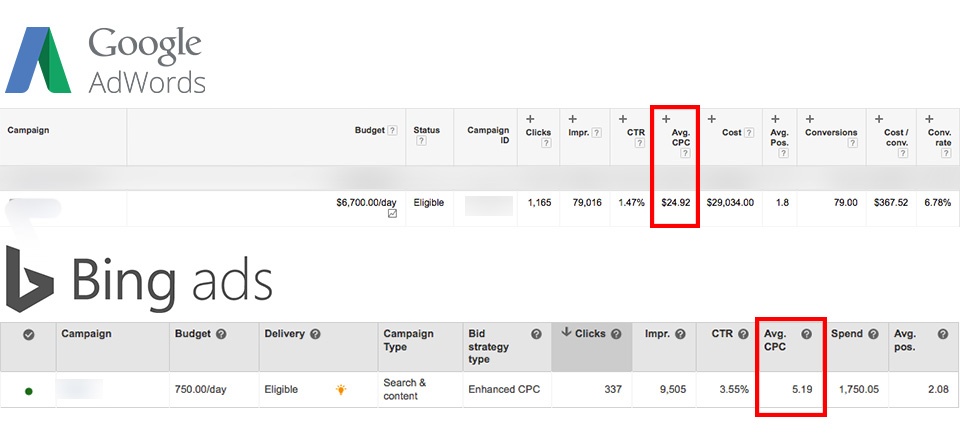
Because most advertisers default to Google, Microsoft Advertising sees significantly less competition for the same keywords. Fewer advertisers bidding on the same terms means lower costs per click across the board. For competitive B2B keywords where Google CPCs can exceed $20-50 per click, the savings on Microsoft's platform can be substantial.
This reduced competition also means higher ad positions are more accessible. On Google, achieving a top position for competitive B2B terms often requires aggressive bidding that eats into margins. On Microsoft, the same top positions are achievable at a fraction of the cost.
Microsoft Advertising consistently delivers lower CPCs than Google Ads for equivalent keywords. For B2B advertisers where search volumes are already lower and each click carries significant value, this cost efficiency directly improves the economics of your lead generation funnel.
When you combine lower CPCs with the platform's professional audience composition, the cost per qualified lead often outperforms Google significantly. The leads may be fewer in total volume, but the quality and cost efficiency frequently make Microsoft Advertising the higher-ROI channel.
B2B advertising budgets are often more constrained than B2C budgets. Microsoft Advertising's lower costs allow smaller budgets to go further, making it an ideal channel for B2B SaaS companies and professional services firms that need to maximize every dollar.
Microsoft Advertising offers several platform features that provide distinct advantages for B2B campaign management.
In Google Ads, managing campaigns across multiple business locations requires either grouping all locations into a single campaign or creating separate campaigns for each location. Microsoft Advertising offers a more flexible approach: you can run a single campaign with ad groups broken out by location. This simplifies account management while maintaining the geographic granularity that multi-location B2B businesses need.
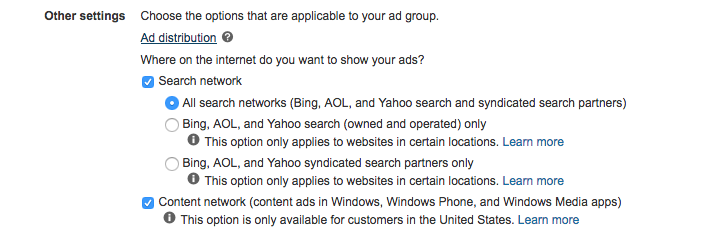
Both Google and Microsoft distribute ads across search partner networks, but they handle transparency differently. Microsoft lets you choose which search partners to include and provides transparent reporting on where your ads appear. You can specifically opt into or out of properties like Yahoo and AOL, and you can see exactly which partners are delivering results.
Google, by contrast, bundles search partners without giving advertisers the ability to select or exclude specific properties, and its reporting on partner performance is less granular.
If you are already running Google Ads campaigns, Microsoft makes it straightforward to import your existing campaign structure, keywords, and ads directly into the platform. This reduces the barrier to entry significantly. You can have a Microsoft Advertising campaign live within hours, using your proven Google Ads structure as the starting point, and then optimize from there based on Microsoft-specific performance data.
Microsoft's Audience Network extends your reach beyond search into native placements across Microsoft-owned properties including MSN, Outlook.com, and Edge. For B2B advertisers, these placements reach professionals during their workday browsing, creating additional touchpoints with your target audience outside of search intent moments.
Getting started with Microsoft Advertising for B2B lead generation follows a structured process.
Start by importing your top-performing Google Ads campaigns. This gives you a proven foundation. Then review and adjust keyword bids downward, since Microsoft's lower competition typically means you can achieve comparable positions at reduced bids.
Apply LinkedIn profile targeting to your campaigns. Start with job function and industry targeting that aligns with your ideal customer profile. Monitor performance by segment and adjust bids to allocate more budget toward the profiles that generate qualified leads.
B2B campaigns should optimize for lead quality, not just lead volume. Set up conversion tracking that captures not just form submissions but downstream indicators of lead quality. Use this data to inform bid adjustments and audience targeting refinements over time.
Once your core campaigns are performing, test expansion into Microsoft's Audience Network, experiment with additional keyword themes, and iterate on ad copy to improve conversion rates. Apply the same structured testing methodology that drives results in any paid channel.
When evaluating Microsoft Advertising performance for B2B, focus on metrics that reflect lead quality and pipeline impact:
These metrics provide a more accurate picture of channel value than surface-level indicators like click-through rate or raw conversion volume.
Microsoft Advertising should be a standard component of any serious B2B search advertising program. The combination of a professional audience, lower competition, reduced costs, and unique LinkedIn targeting capabilities creates a channel that consistently delivers high-quality leads at favorable economics.
The platform is not a replacement for Google Ads. It is a complement that extends your reach into an audience segment that many competitors ignore entirely. For B2B advertisers, that neglected audience often includes the exact decision-makers you need to reach.
Start by importing your existing Google Ads campaigns, layering LinkedIn targeting, and measuring performance against lead quality metrics rather than volume alone. The results will likely make a compelling case for increasing your Microsoft Advertising investment as a core pillar of your B2B growth marketing strategy.

Return on investment (ROI) gives business certainty within uncertainty. Especially in a highly competitive industry like Software-as-a-Service (SaaS). With tight budgets and aggressive growth targets, it's crucial for SaaS companies to leverage digital marketing strategies to achieve their financial goals. Below, we will explore the power of digital marketing strategies to maximize ROI for SaaS companies.
ROI goes beyond just revenue generated. It takes into account factors such as customer acquisition cost (CAC), lifetime value (LTV) of a customer, and churn rate. By incorporating these metrics, SaaS companies can gain a deeper understanding of the financial impact of their marketing campaigns.
Customer acquisition cost (CAC) refers to the amount of money a SaaS company spends to acquire a new customer. This includes expenses related to marketing campaigns, sales efforts, and any other costs associated with attracting and converting leads into paying customers. By tracking CAC, SaaS companies can determine the effectiveness and efficiency of their customer acquisition strategies.
Lifetime value (LTV) of a customer, on the other hand, measures the total revenue a SaaS company can expect to generate from a customer over the course of their relationship. By calculating LTV, SaaS companies can assess the long-term profitability of their customer base and make informed decisions about resource allocation.
Churn rate is yet another crucial metric in the SaaS industry. It represents the percentage of customers who cancel their subscriptions or stop using the software over a given period. By understanding churn rate and its impact on ROI, SaaS companies can identify areas for improvement and implement strategies to reduce customer churn.
When a SaaS company achieves a high ROI, it means that their marketing efforts are generating more revenue than the costs incurred. This allows them to reinvest the profits back into the business, fueling further growth and expansion. With a strong ROI, SaaS companies can attract investors, secure additional funding, and scale their operations to reach new markets and customers.
Also, we must not forget that a high ROI enables SaaS companies to optimize their marketing strategies by identifying the most effective channels, campaigns, and tactics. By analyzing the ROI of different marketing initiatives, SaaS companies can make data-driven decisions to allocate their budget and resources where they will have the greatest impact.
In the digital age, online marketing has become instrumental in driving success for SaaS companies. With a vast array of digital marketing channels available, SaaS companies have the opportunity to reach their target audience more effectively and at a lower cost compared to traditional marketing methods.
However, simply utilizing digital marketing channels is not enough. SaaS companies must also explore and understand the different strategies and techniques that can be employed within these channels to maximize their impact. Let's take a closer look at some of the key digital marketing channels and their potential benefits for SaaS companies.
Social media marketing is one of the most popular and effective digital marketing channels for SaaS companies. Platforms like Facebook, Twitter, LinkedIn, and Instagram provide an opportunity to engage with the target audience, build brand awareness, and drive website traffic. By creating compelling and shareable content, SaaS companies can leverage the power of social media to reach a wider audience and generate leads.
Search engine optimization (SEO) is another crucial digital marketing channel for SaaS companies. By optimizing their website and content for search engines, SaaS companies can improve their organic search rankings and increase visibility to potential customers. This can result in higher website traffic, more qualified leads, and ultimately, increased sales.
Content marketing is a strategy that involvescreating and distributing valuable, relevant, and consistent content to attract and retain a clearly defined audience. For SaaS companies, content marketing can take the form of blog posts, whitepapers, ebooks, videos, and more. By providing valuable information and insights, SaaS companies can position themselves as industry leaders and build trust with potential customers.
Email marketing remains a powerful digital marketing channel for SaaS companies. By building an email list and sending targeted and personalized messages, SaaS companies can nurture leads, drive engagement, and promote their products or services. Email marketing allows for direct communication with the target audience and can be highly effective in converting leads into paying customers.
Pay-per-click (PPC) advertising is a form of online advertising where advertisers pay a fee each time their ad is clicked. SaaS companies can use PPC advertising platforms like Google Ads to display their ads on search engine results pages, websites, and social media platforms. This allows them to target specific keywords, demographics, and interests, ensuring that their ads are shown to the right audience at the right time.
Now that we understand the importance of ROI and the power of digital marketing in the SaaS industry, let's dive into 3 specific strategies that can help SaaS companies maximize their return on investment.
Search engine optimization (SEO) plays a critical role in increasing the visibility of SaaS companies in search engine results pages (SERPs). By optimizing websites and content for relevant keywords and improving site performance, SaaS companies can attract organic traffic, enhance brand awareness, and ultimately increase their customer base while minimizing customer acquisition costs.
A strong social media presence can significantly contribute to maximizing ROI for SaaS companies. Through targeted social media campaigns, SaaS companies can engage with their target audience, share valuable content, generate leads, and drive conversions. By constantly monitoring social media metrics and adjusting strategies accordingly, SaaS companies can continuously improve their ROI.
Content marketing is a powerful tool for SaaS companies to educate potential customers, highlight the benefits of their solutions, and establish thought leadership. By creating informative blog posts, ebooks, whitepapers, and videos, SaaS companies can attract prospects, build trust, and increase conversions. The key to success in content marketing is to develop a content strategy that aligns with the target audience's pain points and provides valuable insights.
To ensure that your digital marketing strategies are delivering the desired results, it's crucial to measure their success using relevant metrics.
Some key metrics that SaaS companies should track include customer acquisition cost (CAC), customer lifetime value (LTV), conversion rate, churn rate, website traffic, and engagement on social media platforms. By analyzing these metrics regularly, SaaS companies can identify areas for improvement, optimize their strategies, and ultimately maximize their ROI.
There are numerous tools available to help SaaS companies measure the ROI of their digital marketing efforts. Google Analytics, HubSpot, and SEMrush are just a few examples of popular tools that provide in-depth insights into website traffic, conversions, and campaign performance. By leveraging these tools, SaaS companies can make data-driven decisions and continually refine their digital marketing strategies to maximize ROI.
Now you know: digital marketing plays a crucial role in maximizing ROI for SaaS companies. By understanding the importance of ROI, harnessing the power of digital marketing, implementing effective strategies, and measuring the success of their efforts, SaaS companies can optimize their marketing campaigns, attract more customers, and drive sustainable business growth in an unforgivable business environment.
Today, my guest is Beau Lebens.
You guys are in for a real treat.
Beau is the Head of Product Engineering for Jetpack at Automattic. Automattic is the company behind WordPress.com, which currently powers 1/3 of the web.
Beau was employee #35 at a company that is now a staggering 855 team members and counting. Automattic is valued north of $1B and operates as a 100% distributed team.
Beau started coding back as a teenager while growing up in a small town in Western Australia. But as his skills & experience continued to grow, his travels brought him to Hawaii, San Francisco, Brooklyn and now Denver, Colorado.
He oversees what I believe to be one the most dynamic product teams in the world. And in this episode there’s a ton of takeaways, from understanding the seemingly “unscalable” hiring process all the way to what is arguably the most robust tech stack I’ve ever seen for a distributed team.
Entrepreneurship has become a fantasy for many young men and women.
You don’t have to look far to find millions of posts that circulate every week, hashtagged with #entrepreneur #startup #girlboss.
But despite this pop-culture dressing, a dark truth lurks in the shadows: startup founders are disproportionately impacted by mental health challenges.
According to a recent study%204-17-15.pdf) conducted by UC Berkeley, 72% of entrepreneurs surveyed report mental health concerns.
By comparison, only 32% of adults in the United States report having been diagnosed with some form of mental illness.
At EmberTribe, we work firsthand with founders across tech, eCommerce, and the service sector. We’ve observed the frenetic pace at which they work towards milestones, whether they be sales figures, fundraising goals or product development.
We’ve also experienced what it’s like to take risks with our family’s well being. We know what it’s like to live in a state of uncertainty, while being accountable to payroll and a team that trusts you with their financial future.
All of these challenges come with the territory, but the debilitating (and potentially life-threatening) impact of depression and anxiety doesn’t have to be a new normal for entrepreneurs and their teams.
Mental health isn’t our area of expertise and we don’t claim to have the answers to this looming crisis.
But one thing we do know...
Isolation is the enemy of wellness.
My co-founder, T.J., and I brainstormed ways that we could be a better ally to startup founders and their teams. Something that goes beyond our normal scope of service.
Here is an email we shared with our current clients last week:
Dear Client,
At EmberTribe, we've worked with hundreds of founders and their teams.
We know through direct experience that entrepreneurship can be a lonely and brutal sport.
Pop-culture idolizes fearless founders, who with steely determination, overcome any obstacle in their way with superhuman, stoic resolve.
But do you know what hasn't made enough headlines?
The mental health struggles that are plaguing the startup ecosystem.
The University of California concluded that 72% of entrepreneurs surveyed report mental health concerns.
That's a lot.
The truth is, many of our peers are quietly suffering from depression and anxiety. And not enough people are talking about it.
My co-founder, T.J. and I have both personally been impacted by this during the course of our careers.
Today, we want to take action and play a small role in bringing more health and balance to the startup ecosystem.
We've chosen to partner with Talkspace, a platform that facilitates discreet, online therapy.
Here's how it works: If you or someone close to you on your team is looking for help in any way, we're sponsoring 100% of a month's worth of sessions on Talkspace.
You can privately request this support by emailing: **@embertribe.com. We'll simply reply with a code that you can use to redeem for the month's sessions. No questions asked.
We're grateful for your partnership and excited for your growth.
With gratitude,
Josh & T.J., Co-founders, EmberTribe
There’s nothing grand about this gesture. It’s just a simple offer to encourage those quietly suffering alone to step out from isolation.
The startup ecosystem includes a diverse group of men and women across different backgrounds and ethnicities. We are a community with shared values of innovation and growth. We hold a unique vision of what the world could be like.
The challenge is, will we support one another when it really counts? Will we listen when it’s uncomfortable or potentially awkward? Will we openly embrace the dark moments of anxiety and depression alongside epic idealism and optimism?
It takes buy-in from founders, investors, strategic partners, consultants, family and friends
Because pursuing growth at all costs is too expensive.
Let’s get to work.


.svg)