






Understanding the difference between upper funnel and lower funnel marketing is one of the most important strategic decisions a growth team can make. Where you invest — awareness or conversion — determines the type of customer you attract, the cost of acquiring them, and how fast your pipeline grows.
This guide breaks down upper funnel vs. lower funnel marketing across strategies, metrics, and tactics, so you can allocate budget and effort where it actually moves the needle.
What Is the Marketing Funnel?
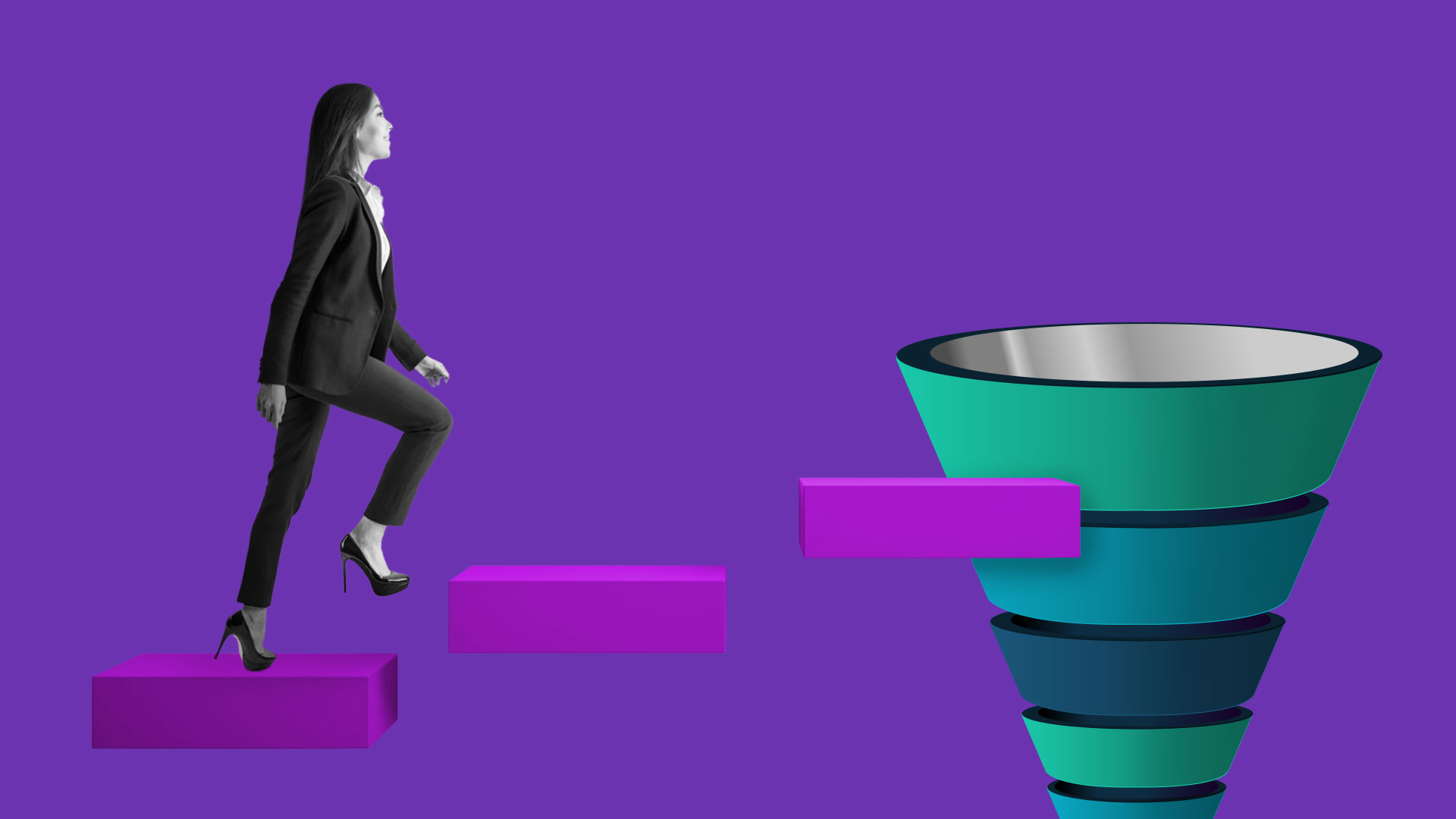
The marketing funnel is a framework that maps the customer journey from first awareness to final conversion. At the top, potential customers discover your brand through advertising, content, or word of mouth. As they move down, they evaluate their options, compare alternatives, and eventually make a purchase decision.
Why the Marketing Funnel Matters
The funnel gives marketers a shared language for diagnosing problems and allocating resources. If traffic is high but conversions are low, the issue is in the lower funnel. If nobody knows you exist, the upper funnel needs work. Without this framework, teams waste budget on the wrong activities at the wrong time.
The funnel is also not strictly linear. Customers enter at different stages, revisit earlier stages, and sometimes skip steps entirely. That makes continuous optimization and personalization essential — not optional.
What Is Upper Funnel Marketing?
Upper funnel marketing targets people who are not yet aware of your brand or product. The goal is visibility: getting your message in front of the right audience at scale, building brand awareness, and generating initial interest.
This is the stage where you are casting a wide net. You are not asking anyone to buy. You are introducing your brand, educating your audience, and earning their attention.
Upper Funnel Characteristics and Goals
The upper funnel is defined by broad reach and low-commitment engagement. Key characteristics include:
- Wide audience targeting — demographic, interest-based, or lookalike audiences rather than intent-based targeting
- Brand recall and recognition — the goal is for prospects to remember you when they enter the consideration stage
- Educational content — blog posts, videos, social content, and thought leadership that inform rather than sell
- Longer time horizon — upper funnel campaigns build pipeline over weeks and months, not days
Upper Funnel Strategies That Work
Effective upper funnel strategies focus on reach and engagement without pushing for an immediate conversion:
- Content marketing — Publishing high-value blog posts, guides, and videos that address your audience's questions
- Social media advertising — Paid campaigns optimized for reach, video views, or engagement rather than clicks
- Influencer partnerships — Collaborating with relevant influencers to tap into established audiences
- SEO — Ranking for informational queries that your target customers search before they are ready to buy
- Display and video advertising — Programmatic campaigns that build awareness across channels
Upper Funnel Metrics to Track
Upper funnel success cannot be measured by conversions alone. The right metrics for this stage include: MetricWhat It MeasuresReachTotal unique people who saw your contentImpressionsTotal number of times your content was displayedBrand liftChange in brand awareness or perception after campaign exposureVideo view ratePercentage of viewers who watched a meaningful portion of your videoEngagement rateLikes, shares, comments, and saves relative to reachShare of voiceYour brand's visibility relative to competitors in the same spaceCPMCost per thousand impressions — the efficiency of your awareness spend
The key distinction: upper funnel metrics measure exposure and attention, not action. If you are evaluating upper funnel campaigns by ROAS alone, you are measuring the wrong thing.
What Is Lower Funnel Marketing?
Lower funnel marketing targets people who already know about your brand and are actively considering a purchase. The goal shifts from awareness to conversion: turning interested prospects into paying customers.
At this stage, prospects have done their research. They know what they need and are evaluating specific solutions. Your job is to remove friction, address objections, and make the purchase decision easy.
Lower Funnel Characteristics and Goals
The lower funnel is defined by high intent and conversion-focused tactics:
- Narrow, intent-based targeting — retargeting website visitors, cart abandoners, email subscribers, and in-market audiences
- Direct response messaging — clear calls to action, urgency triggers, and specific offers
- Personalized experiences — tailored content based on the prospect's behavior and interests
- Short decision timeline — lower funnel campaigns aim to convert within days or weeks
Lower Funnel Strategies and Tactics
Lower funnel marketing is about converting the demand that upper funnel campaigns generated:
- Personalized email marketing — Nurture sequences, abandoned cart emails, and targeted offers based on behavior
- Retargeting ads — Showing relevant ads to people who have already visited your site or engaged with your content
- Product demos and free trials — Letting prospects experience the product before committing
- Social proof — Customer testimonials, case studies, and reviews placed at decision points
- Promotional offers — Limited-time discounts, bundles, or bonuses that create urgency
Lower Funnel Metrics to Track
Lower funnel metrics are tied directly to revenue and efficiency: MetricWhat It MeasuresConversion ratePercentage of visitors who complete a desired actionROASRevenue generated per dollar spent on advertisingCPA / CACCost per acquisition or cost per customer acquiredCart abandonment ratePercentage of shoppers who add items but do not complete the purchaseCustomer lifetime value (LTV)Total revenue a customer generates over their relationship with your brandRepeat purchase ratePercentage of customers who buy more than onceLead-to-customer ratePercentage of leads that convert into paying customers
Lower Funnel Conversion Optimization
Driving lower funnel conversions requires removing every obstacle between intent and action. Effective tactics include:
- Retargeting sequences — Multi-touch ad sequences that address different objections over time
- Cart abandonment recovery — Automated emails triggered within hours of abandonment, often with an incentive
- Landing page optimization — Reducing form fields, improving page speed, and testing CTAs to improve conversion rates
- Social proof placement — Adding reviews, testimonials, and trust badges directly on product and checkout pages
- Urgency and scarcity — Limited-time offers and low-stock indicators that motivate immediate action
The best lower funnel strategies do not feel aggressive. They make the buying process easier, not pushier.
Upper Funnel vs. Lower Funnel: Key Differences
While both stages serve the same goal — revenue growth — the approach, audience, and metrics are fundamentally different. DimensionUpper FunnelLower FunnelGoalBuild awareness and generate interestConvert interest into purchasesAudienceBroad, often unaware of your brandNarrow, already engaged and consideringStrategiesContent, social, influencer, SEO, displayRetargeting, email, demos, promotionsMetricsReach, impressions, engagement, CPMConversion rate, ROAS, CPA, LTVContent typeEducational, entertaining, thought leadershipProduct-focused, testimonial-driven, offer-basedChannelsSocial media, display, video, blogEmail, retargeting, search ads, landing pagesTimelineLong-term pipeline buildingShort-term conversionBudget mindsetInvestment in future demandDirect return on spend
Audience Mindset at Each Stage
The biggest difference is where the customer's head is at. Upper funnel prospects are exploring — they have a problem but may not know the solution exists. Lower funnel prospects are deciding — they know the options and are choosing between them.
This means the same message will not work at both stages. An upper funnel audience needs education. A lower funnel audience needs conviction.
Top of Funnel vs. Bottom of Funnel: Are They the Same?
You will often hear "top of funnel" (TOFU) and "bottom of funnel" (BOFU) used interchangeably with "upper funnel" and "lower funnel." In most practical contexts, they mean the same thing:
- Top of funnel / Upper funnel = Awareness and discovery
- Bottom of funnel / Lower funnel = Decision and conversion
The main difference is that the TOFU/MOFU/BOFU framework explicitly includes a middle stage — MOFU, or "middle of funnel" — which covers the consideration phase. The upper/lower framework sometimes folds consideration into either stage depending on the marketer.
For most teams, the terminology does not matter as much as the principle: different stages of the buyer journey require different strategies, content, and metrics. Whether you call it "top of funnel" or "upper funnel," the playbook is the same.
How to Create Segments for Upper vs. Lower Funnel Users
Knowing the theory is useful, but the real value comes from segmenting your audience by funnel stage and targeting them accordingly. Here is how to build those segments:
Behavioral Signals by Funnel Stage
Upper funnel users show exploratory behavior:
- First-time website visitors
- Blog readers who have not visited product pages
- Social media followers who have not clicked through to your site
- Users who watched a video but took no further action
Lower funnel users show purchase-intent behavior:
- Repeat website visitors, especially to product or pricing pages
- Cart adders and checkout initiators
- Email subscribers who have opened multiple emails
- Users who have engaged with retargeting ads
Building Segments in Practice
Most ad platforms and analytics tools let you create these segments directly:
- Facebook/Meta Ads — Create custom audiences based on website activity (e.g., "visited product page but did not purchase") and use broad interest targeting for upper funnel
- Google Ads — Use in-market audiences for lower funnel and affinity audiences for upper funnel
- Email platforms — Segment by engagement level (opens, clicks) and purchase history
- CRM/Analytics — Tag leads by funnel stage based on their actions and score them accordingly
The goal is to stop treating all prospects the same. A first-time visitor and a cart abandoner should see completely different messages.
How to Align Upper and Lower Funnel for Full-Funnel Growth
The biggest mistake teams make is treating upper and lower funnel as separate efforts run by different people with different goals. In reality, they are two halves of the same engine.
Upper funnel campaigns that do not feed the lower funnel are wasted awareness. Lower funnel campaigns that run without upper funnel support eventually exhaust their audience and see rising CPAs.
Here is how to align them:
- Connect awareness to conversion campaigns — Use retargeting to move upper funnel engagers into lower funnel sequences automatically
- Share audience data across stages — Insights from lower funnel conversions (who actually buys) should inform upper funnel targeting (who to reach)
- Align attribution across the funnel — Use multi-touch attribution to understand how upper funnel touchpoints contribute to lower funnel conversions
- Allocate budget dynamically — If the lower funnel is starved for leads, shift budget up. If awareness is high but conversions are low, invest in the lower funnel
- Optimize your sales funnel as a connected system, not as isolated stages
Teams that build a connected full-funnel strategy consistently outperform those that optimize each stage in isolation. The upper funnel feeds the lower funnel. The lower funnel validates the upper funnel. Neither works as well alone.
Upper funnel vs. lower funnel marketing is not a question of which one matters more. Every business needs both. The key is understanding what each stage requires — different strategies, different metrics, different content — and aligning them into a growth system that compounds over time. Start by identifying where your biggest gaps are today, then build a strategy that connects awareness to conversion at every step.

.webp)
.svg)


