









Why B2B Advertisers Should Take Microsoft Advertising Seriously
Most B2B advertisers default to Google Ads as their primary search advertising channel. It is the largest search platform, it has the most sophisticated tooling, and it is where the majority of search volume lives. But this default behavior creates an opportunity that many B2B marketers overlook entirely: Microsoft Advertising (formerly Bing Ads).
Microsoft Advertising consistently delivers lower costs per click, less competition, and access to a high-value professional audience that skews toward exactly the decision-makers B2B brands need to reach. For advertisers willing to look beyond Google, Microsoft's platform offers one of the best risk-adjusted returns in paid search.
The B2B Audience Advantage
The single most compelling reason for B2B advertisers to invest in Microsoft Advertising is audience composition. Microsoft's search network benefits from deep integration with the enterprise software ecosystem that dominates corporate America.
Enterprise Desktop Default
Microsoft still holds significant market share in enterprise environments where IT departments control browser and search engine defaults. In many corporate settings, employees use Edge as their primary browser with Bing as the default search engine. This is not a matter of consumer preference. It is a function of enterprise software policy.
This means that when a procurement manager researches software solutions, when an operations director evaluates service providers, or when a C-suite executive investigates strategic tools, there is a meaningful probability they are doing that research through Bing. These are exactly the high-value searchers B2B advertisers need to reach.
Higher Average Household Income
Microsoft Advertising's user base skews toward higher household incomes compared to the general search population. For B2B advertisers selling premium solutions, professional services, or enterprise software, this demographic alignment means your ads reach people with both the authority and the budget to make purchasing decisions.
LinkedIn Profile Targeting
Microsoft's acquisition of LinkedIn created a unique targeting capability that Google cannot replicate. Through Microsoft Advertising, B2B advertisers can layer LinkedIn profile data, including company, industry, and job function, onto their search campaigns. This means you can bid more aggressively when a searcher matches your ideal customer profile, or exclude searches from industries or roles that are unlikely to convert.
This integration is a game-changer for B2B lead generation. No other search platform offers this level of professional demographic targeting within the search environment.
The Economic Case: Lower Costs, Higher Efficiency
Beyond audience quality, the economics of Microsoft Advertising work strongly in B2B advertisers' favor.
Less Competition
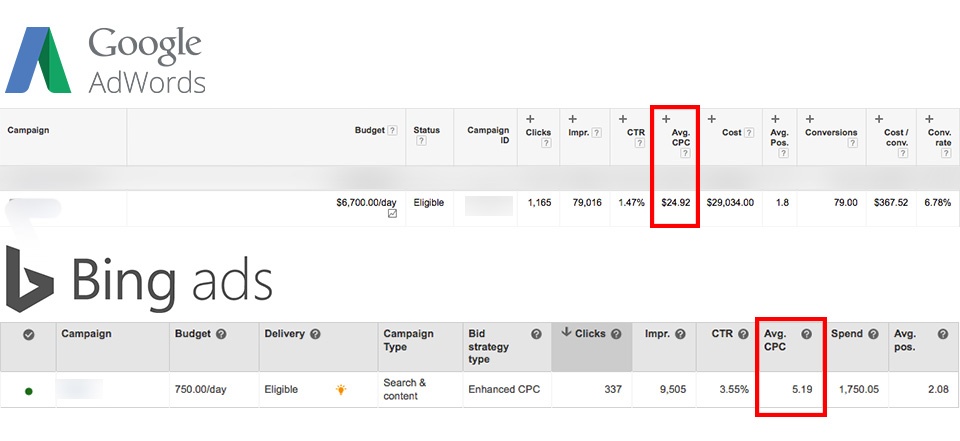
Because most advertisers default to Google, Microsoft Advertising sees significantly less competition for the same keywords. Fewer advertisers bidding on the same terms means lower costs per click across the board. For competitive B2B keywords where Google CPCs can exceed $20-50 per click, the savings on Microsoft's platform can be substantial.
This reduced competition also means higher ad positions are more accessible. On Google, achieving a top position for competitive B2B terms often requires aggressive bidding that eats into margins. On Microsoft, the same top positions are achievable at a fraction of the cost.
Lower Cost Per Click
Microsoft Advertising consistently delivers lower CPCs than Google Ads for equivalent keywords. For B2B advertisers where search volumes are already lower and each click carries significant value, this cost efficiency directly improves the economics of your lead generation funnel.
When you combine lower CPCs with the platform's professional audience composition, the cost per qualified lead often outperforms Google significantly. The leads may be fewer in total volume, but the quality and cost efficiency frequently make Microsoft Advertising the higher-ROI channel.
Budget Efficiency for Smaller Programs
B2B advertising budgets are often more constrained than B2C budgets. Microsoft Advertising's lower costs allow smaller budgets to go further, making it an ideal channel for B2B SaaS companies and professional services firms that need to maximize every dollar.
Platform Features That Benefit B2B Campaigns
Microsoft Advertising offers several platform features that provide distinct advantages for B2B campaign management.
Granular Location Targeting
In Google Ads, managing campaigns across multiple business locations requires either grouping all locations into a single campaign or creating separate campaigns for each location. Microsoft Advertising offers a more flexible approach: you can run a single campaign with ad groups broken out by location. This simplifies account management while maintaining the geographic granularity that multi-location B2B businesses need.
Search Partner Transparency
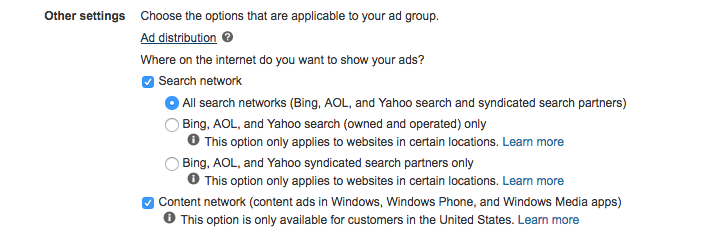
Both Google and Microsoft distribute ads across search partner networks, but they handle transparency differently. Microsoft lets you choose which search partners to include and provides transparent reporting on where your ads appear. You can specifically opt into or out of properties like Yahoo and AOL, and you can see exactly which partners are delivering results.
Google, by contrast, bundles search partners without giving advertisers the ability to select or exclude specific properties, and its reporting on partner performance is less granular.
Import From Google Ads
If you are already running Google Ads campaigns, Microsoft makes it straightforward to import your existing campaign structure, keywords, and ads directly into the platform. This reduces the barrier to entry significantly. You can have a Microsoft Advertising campaign live within hours, using your proven Google Ads structure as the starting point, and then optimize from there based on Microsoft-specific performance data.
Audience Network Expansion
Microsoft's Audience Network extends your reach beyond search into native placements across Microsoft-owned properties including MSN, Outlook.com, and Edge. For B2B advertisers, these placements reach professionals during their workday browsing, creating additional touchpoints with your target audience outside of search intent moments.
Setting Up a B2B Microsoft Advertising Campaign
Getting started with Microsoft Advertising for B2B lead generation follows a structured process.
Step 1: Import or Build Your Campaign Structure
Start by importing your top-performing Google Ads campaigns. This gives you a proven foundation. Then review and adjust keyword bids downward, since Microsoft's lower competition typically means you can achieve comparable positions at reduced bids.
Step 2: Layer LinkedIn Targeting
Apply LinkedIn profile targeting to your campaigns. Start with job function and industry targeting that aligns with your ideal customer profile. Monitor performance by segment and adjust bids to allocate more budget toward the profiles that generate qualified leads.
Step 3: Optimize for Lead Quality
B2B campaigns should optimize for lead quality, not just lead volume. Set up conversion tracking that captures not just form submissions but downstream indicators of lead quality. Use this data to inform bid adjustments and audience targeting refinements over time.
Step 4: Test and Expand
Once your core campaigns are performing, test expansion into Microsoft's Audience Network, experiment with additional keyword themes, and iterate on ad copy to improve conversion rates. Apply the same structured testing methodology that drives results in any paid channel.
Measuring Success: B2B Metrics That Matter
When evaluating Microsoft Advertising performance for B2B, focus on metrics that reflect lead quality and pipeline impact:
- Cost per qualified lead - Not just cost per conversion, but cost per lead that meets your qualification criteria.
- Lead-to-opportunity rate - What percentage of Microsoft-sourced leads become active sales opportunities?
- Pipeline value generated - What is the total revenue potential of opportunities sourced through Microsoft Advertising?
- Channel-level ROAS - How does revenue attributed to Microsoft Advertising compare to the total investment?
These metrics provide a more accurate picture of channel value than surface-level indicators like click-through rate or raw conversion volume.
Making Microsoft Advertising Part of Your B2B Strategy
Microsoft Advertising should be a standard component of any serious B2B search advertising program. The combination of a professional audience, lower competition, reduced costs, and unique LinkedIn targeting capabilities creates a channel that consistently delivers high-quality leads at favorable economics.
The platform is not a replacement for Google Ads. It is a complement that extends your reach into an audience segment that many competitors ignore entirely. For B2B advertisers, that neglected audience often includes the exact decision-makers you need to reach.
Start by importing your existing Google Ads campaigns, layering LinkedIn targeting, and measuring performance against lead quality metrics rather than volume alone. The results will likely make a compelling case for increasing your Microsoft Advertising investment as a core pillar of your B2B growth marketing strategy.

.webp)

.svg)


