
Over the last few years, much has been written about the decline of text. In 2018, The New York Times boldly asserted (in print 🤔) that we were living in a post-text world.
For a society that considers written language to be one of the greatest human accomplishments, it may seem like a far-fetched concept—but the numbers don’t lie. Americans are trading in text for audio and video in every format available.
According to Edison Media Research, over 100 million Americans listen to podcasts monthly, and they tune in to an average of six podcasts each week. YouTube reports that people watch a billion hours a day on their service. In 2020, Netflix pledged to spend $17 billion on content—up from $15 billion in 2019—and Apple estimated they would spend $6 billion.
The abundance of content is likely the culprit behind our ever-narrowing attention spans. When Microsoft conducted a study measuring people’s attention spans in 2000, the results showed the average person can focus on any one thing for about 12 seconds. Fifteen years later, that dropped to 8 seconds—just under the 9-second attention span of a goldfish. Yeesh. Good for goldfish, I guess.
If a picture is worth a thousand words, a video can communicate a novel in a few short minutes. A well-executed video helps consumers instantly understand your product’s purpose and benefits.
Get all the value of great video content without any of the stress.
Videos connect with the consumer on an emotional level and help foster trust in your brand. Best of all, videos perform. Diode Digital found that online videos are 600% more effective than print and direct mail combined. According to Optinmonster, 83% of video marketers say video helps them with lead generation, and 80% say video has directly helped increase sales.
Videos are incredibly easy to access and view. Whether they’re consumed from the couch or a crowded train, watching a video feels like a break for your brain, not a challenge. They’re often education masked as entertainment, and perhaps that’s why they’re so effective. On average, consumers retain 95% of messages they watch in a video compared to 10% they read in text. Merely mentioning the word video in an email subject line can increase the click-through rate by 13%. And according to Hubspot, featuring a video on your landing page can increase your conversion rate by 86%.
Video has always been a popular medium, but the advent of social media and the ease with which users can share content is the real secret sauce behind its newfound fame. Videos on social media generate 12 times more shares than text and images combined. Once content is shared, advertisements are perceived as personal recommendations, creating a far greater chance for conversion.
The majority of consumers (73%) claim they have been influenced by a brand’s social media presence when making a purchase, and an overwhelming 83% are more interested in purchasing a product or service when they've received a recommendation from a friend or family member. Considering today’s (virtual) circle of friends and family is larger than ever, the possibilities are endless.
In the past, utilizing video was a marketing strategy small companies felt they couldn’t afford. Today, they can’t afford not to. By 2022, videos are projected to make up 82% of all consumer internet traffic. The good news? Creating impactful videos is far more affordable today than it was 20 years ago. It’s well within your grasp, and if the research is right, you’ll receive a significant return on your investment.
EmberTribe now offers full-service video packages that bring your brand into the 21st century, in style. Contact us for more information.
Over the last few years, much has been written about the decline of text. In 2018, The New York Times boldly asserted (in print 🤔) that we were living in a post-text world.
For a society that considers written language to be one of the greatest human accomplishments, it may seem like a far-fetched concept—but the numbers don’t lie. Americans are trading in text for audio and video in every format available.
According to Edison Media Research, over 100 million Americans listen to podcasts monthly, and they tune in to an average of six podcasts each week. YouTube reports that people watch a billion hours a day on their service. In 2020, Netflix pledged to spend $17 billion on content—up from $15 billion in 2019—and Apple estimated they would spend $6 billion.
The abundance of content is likely the culprit behind our ever-narrowing attention spans. When Microsoft conducted a study measuring people’s attention spans in 2000, the results showed the average person can focus on any one thing for about 12 seconds. Fifteen years later, that dropped to 8 seconds—just under the 9-second attention span of a goldfish. Yeesh. Good for goldfish, I guess.
If a picture is worth a thousand words, a video can communicate a novel in a few short minutes. A well-executed video helps consumers instantly understand your product’s purpose and benefits.
Get all the value of great video content without any of the stress.
Videos connect with the consumer on an emotional level and help foster trust in your brand. Best of all, videos perform. Diode Digital found that online videos are 600% more effective than print and direct mail combined. According to Optinmonster, 83% of video marketers say video helps them with lead generation, and 80% say video has directly helped increase sales.
Videos are incredibly easy to access and view. Whether they’re consumed from the couch or a crowded train, watching a video feels like a break for your brain, not a challenge. They’re often education masked as entertainment, and perhaps that’s why they’re so effective. On average, consumers retain 95% of messages they watch in a video compared to 10% they read in text. Merely mentioning the word video in an email subject line can increase the click-through rate by 13%. And according to Hubspot, featuring a video on your landing page can increase your conversion rate by 86%.
Video has always been a popular medium, but the advent of social media and the ease with which users can share content is the real secret sauce behind its newfound fame. Videos on social media generate 12 times more shares than text and images combined. Once content is shared, advertisements are perceived as personal recommendations, creating a far greater chance for conversion.
The majority of consumers (73%) claim they have been influenced by a brand’s social media presence when making a purchase, and an overwhelming 83% are more interested in purchasing a product or service when they've received a recommendation from a friend or family member. Considering today’s (virtual) circle of friends and family is larger than ever, the possibilities are endless.
In the past, utilizing video was a marketing strategy small companies felt they couldn’t afford. Today, they can’t afford not to. By 2022, videos are projected to make up 82% of all consumer internet traffic. The good news? Creating impactful videos is far more affordable today than it was 20 years ago. It’s well within your grasp, and if the research is right, you’ll receive a significant return on your investment.
EmberTribe now offers full-service video packages that bring your brand into the 21st century, in style. Contact us for more information.

In this post:
Check out this TribeTalk from our Marketing Specialist, Kathryn Betancourt chatting with our Director of Operations, J.P. VanderLinden, and one of our Growth Specialist, Melanie D'Angelo.
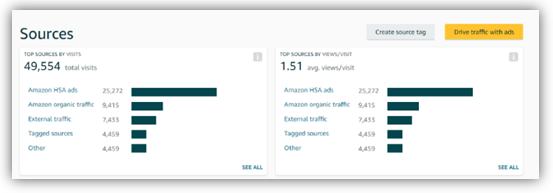
This helps pull data into Amazon but there are still issues for how to pull data OUT to other systems. It's not perfect, but it's more than we've had before, and it might be enough for folks to start exploring.
We've also discovered thatSellerly, a collection of Amazon business tools by Semrush, offers excellent marketing tools for Amazon listings designed to make selling on the marketplace easier and more effective. If Amazon's data insights are still not sufficient for you, give Sellerly a try!
Marketers understand that different ad types work better at different parts of the funnel. For example, Search is great at BOFu, Display at TOFu, etc. But what about how they work together?
Google released a report that marketers advertising on YouTube saw better conversion volume and rates from their Search campaigns. Specifically, Search conversions were 8% higher, conversion rates were 3% higher, and Search CPAs dropped 4%.
We all know that advertising on YouTube increases brand awareness and ad recall. The big questions are: Is this something driven by traditionally understood marketing practice? Or is Google itself actually influencing the algorithm to favor buyers who spend across multiple components of it's ad platform?
Regardless of what’s going on Google’s side, we recommend testing YouTube. Don’t just measure the direct performance, also measure the "halo effect" on other channels like Search & Social.

Yabba DABA Do!! Let’s discuss Facebook DABA campaigns. We think these campaigns have a lot of value for our clients.
Most folks think of Dynamic Ads as only supporting retargeting your website visitors and app users, limiting your audience size to the number of people who’ve interacted with you in the past. That’s why, despite the great performance, the possible investments advertisers have been able to make have been fairly restricted — typically, the biggest share of their budgets goes to acquiring new customers.
To help advertisers reach these audiences with top-performing ads, Facebook now offers the possibility to expand the reach of Dynamic Ads campaigns outside retargeting audiences.
Facebook’s Dynamic Ads for Broad Audiences (DABA) expands your dynamic ads to reach beyond your website or app visitors to generate demand. DABA campaigns serve personalized recommendations based on browsing activity and showcase the relevant inventory from your catalog to people likely to purchase.
Unlike lookalike audiences and retargeting site visitors, broad audience targeting captures intent in other places like:
DABA campaigns will have your potential customers saying….
What questions do you have for us? Have you tried DABA campaigns? Are you running YouTube ads? Comment below.


.svg)