Online advertising has become an integral part of marketing strategies for businesses of all sizes. Google Ads, formerly known as Google AdWords, is one of the most popular advertising platforms, allowing businesses to display their ads across various Google services and partner websites. However, there may come a time when you no longer wish to maintain a Google Ads account. Whether it's due to changing advertising strategies or a shift in business focus, deleting your Google Ads account can be a straightforward process. In this step-by-step guide, we will walk you through the process of deleting your Google Ads account and provide insights into the implications of this decision.

Before diving into the deletion process, it's essential to understand what a Google Ads account entails. Google Ads is a pay-per-click (PPC) advertising platform that allows businesses to create and manage online advertisements. With a Google Ads account, you have access to a wide range of advertising features, including keyword targeting, ad scheduling, and performance tracking. Your account is linked to your Google account and contains information about your advertising campaigns, billing details, and account settings.
It serves as a centralized hub for managing your online advertising efforts. Within your account, you can create and group multiple advertising campaigns, each targeting specific audiences or promoting different products or services. Your account allows you to choose the desired ad format, set a budget, and customize various ad parameters such as keywords, geographic targeting, and ad placements. It also provides valuable insights and analytics on the performance of your advertising campaigns.
When you create a Google Ads account, you gain access to a powerful suite of tools that can help you reach your target audience effectively. The platform offers various ad formats, including text ads, image ads, video ads, and responsive ads. You can tailor your ads to appear on specific websites, in search engine results, or even on mobile apps, ensuring maximum visibility for your business.
There are several reasons why you might consider deleting your Google Ads account. Business priorities and strategies evolve over time, and you may find that Google Ads no longer aligns with your current advertising goals. Additionally, you may be shifting your advertising budget to other platforms or channels. Deleting your Google Ads account allows you to free up resources and focus on alternative marketing strategies that better suit your business objectives.
Furthermore, deleting your Google Ads account can be a strategic move if you have determined that your target audience does not engage with Google Ads or if you have found more cost-effective advertising channels. By redirecting your advertising budget towards platforms that yield better results, you can optimize your marketing efforts and drive higher returns.
It's important to note that deleting your Google Ads account is a permanent action. Once you delete your account, all associated campaigns, ad groups, and ads will be permanently removed. Therefore, it's crucial to carefully evaluate your advertising strategy and consider the potential impact before proceeding with the deletion process.
As you see, a Google Ads account offers businesses a powerful platform to create and manage online advertisements. It provides a wide range of advertising features, targeting options, and performance tracking tools to help you reach your target audience effectively..
Before proceeding with the deletion process, it's essential to make a few considerations and take a few precautionary steps to ensure a smooth transition.
Deleting your Google Ads account is a permanent action, and once deleted, the account cannot be recovered. Therefore, it's crucial to carefully assess the implications and consequences of this decision. Consider the following:
When you delete your Google Ads account, it's important to understand the potential impact on your ongoing advertising campaigns. Take a moment to evaluate the performance of your campaigns and consider whether deleting the account will disrupt any current marketing efforts. It's worth noting that once the account is deleted, all active campaigns will cease to run, and you will lose the ability to make any changes or optimizations.
Another aspect to consider is any remaining account balance or pending invoices. Ensure that you settle any outstanding payments before proceeding with the deletion process. Failure to do so may result in complications or financial issues down the line.
One significant consequence of deleting your Google Ads account is the loss of historical data and performance metrics. This data is valuable for analyzing past campaigns, identifying trends, and making informed decisions for future marketing strategies. Before deleting your account, take the time to export and save any important data or reports that you might need for future reference.

Google Ads provides various exporting options, such as downloading reports in CSV or Excel formats. By taking this step, you can maintain a copy of your valuable advertising data even after deleting your account. This backup can serve as a reference point or provide insights for future campaigns, ensuring that you don't lose valuable information.
Lastly, consider exploring alternative advertising platforms or strategies that could better serve your business goals. Deleting your Google Ads account opens up opportunities to try new marketing channels or approaches. Research and evaluate different platforms to determine if there are better options available that align with your objectives and target audience.
Now that you have carefully considered the implications and backed up your data, let's dive into the step-by-step process of deleting your Google Ads account.
To begin the process, log in to your Google Ads account using your Google credentials. Once logged in, navigate to the "Settings" section of your account. This can typically be found in the top-right corner of the Google Ads dashboard.
Within the "Settings" section, you will find a variety of options and preferences that you can customize to suit your needs. It's important to familiarize yourself with these settings before proceeding with the deletion process.
Take a moment to explore the different tabs and menus within the "Settings" section. You may come across features and tools that you were not aware of, which could be useful for your advertising campaigns.
Once you have located the "Settings" section, scroll down to the "Preferences" section. Here, you will find an option to "Cancel this Google Ads account." Click on this option to initiate the deletion process.
Before proceeding, it's essential to understand the consequences of deleting your Google Ads account. Deleting your account will permanently remove all your campaigns, ad groups, ads, keywords, and other associated data. This action cannot be undone, so it's crucial to make sure you have a backup of any important information.
Consider reviewing your account performance and campaign history to ensure you have extracted any valuable insights or data that you may need in the future.
Google Ads values the security of your account and requires you to confirm your intention to delete the account. Once you click on the option to cancel your account, you will be presented with a series of prompts and asked to enter your account password before being able to proceed.
Take your time to carefully review the information provided in these prompts. Google Ads wants to ensure that you fully understand the irreversible nature of this action and the potential impact it may have on your advertising efforts.
Consider the implications of deleting your account, such as losing access to historical data, performance metrics, and any ongoing campaigns. It's also important to note that deleting your Google Ads account will not affect your other Google services, such as Gmail or Google Drive.
Once you have reviewed and confirmed your understanding of the deletion process, enter your account password as requested. This additional step helps to ensure that only authorized users can delete an account.
After submitting the deletion request, your Google Ads account will be scheduled for permanent deletion. The exact timeframe for the deletion process may vary, but you will receive a confirmation email once the process is complete.
It's important to note that even after your account is deleted, Google may retain certain information for legal and regulatory purposes. However, this information will no longer be accessible to you or used for advertising purposes.

Deleting your Google Ads account is a significant decision, and it's essential to consider all the factors involved. If you are unsure about deleting your account, you may want to explore alternative options, such as pausing your campaigns or seeking assistance from a Google or Search Ads specialist.
Deleting your Google Ads account has immediate effects on your advertising campaigns and account access. It's important to be aware of these implications to manage the transition effectively.
Once your Google Ads account is deleted, your ads will no longer be eligible to appear on Google search results, partner websites, or any other platforms within the Google advertising network. Additionally, access to your account, including campaign data and historical performance metrics, will be permanently revoked. Make sure to adjust any tracking or conversion pixels that were tied to your Google Ads account to avoid any discrepancies in your analytics.
While the immediate effects are evident, there are long-term implications to consider as well. Deleting your Google Ads account may impact your advertising performance if you had campaigns running consistently. It might take time to transition to alternative marketing strategies or platforms, and the reach and visibility of your business could be affected during this period. However, by carefully planning and implementing a new advertising strategy, the long-term effects of deleting your Google Ads account can be managed effectively.
If you have second thoughts or wish to reinstate your Google Ads account in the future, it's important to understand the options available.
Once an account is permanently deleted, it cannot be recovered. Therefore, it's critical to be certain about your decision before confirming the deletion of your Google Ads account. However, if you wish to resume advertising with Google Ads in the future, you can create a new account and start afresh. Keep in mind that you will need to rebuild your campaigns and historical data will not be available.
If you accidentally deleted your Google Ads account and wish to recover it, the best course of action is to reach out to Google Ads support for assistance. While there is no guarantee of account recovery, they may be able to provide guidance or explore any possible options.
Deleting your Google Ads account is a significant decision that requires careful consideration. By following this step-by-step guide, you now have the information and insights necessary to make an informed decision about deleting your Google Ads account. Remember to evaluate the implications, back up your data, and plan alternative advertising strategies to ensure a smooth transition. While deleting your Google Ads account may come with short-term challenges, it can pave the way for a more focused and effective advertising approach that aligns with your evolving business goals.

Advertising on social media platforms has become essential for businesses to reach their target audience effectively. Within the realm of social media advertising, Facebook Carousel Ads have emerged as a powerful tool to capture users' attention and drive engagement. Together, we will explore the ins and outs of creating an engaging Facebook Ad, providing you with the best practices to enhance your advertising campaigns.
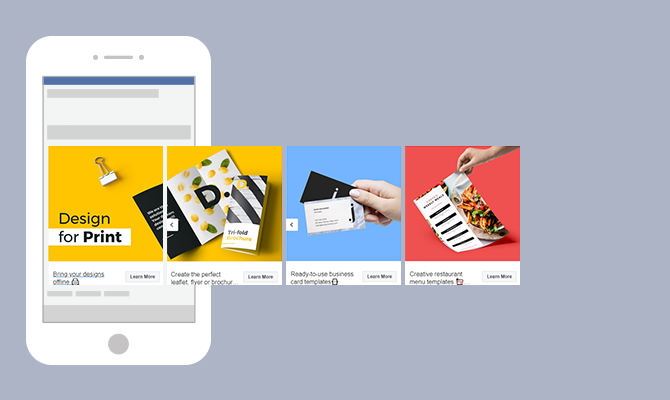
First and foremost, a Facebook Carousel Ad is a dynamic advertisement format that allows businesses to showcase multiple images or videos, each with its own link, in a single ad unit. The ad appears as a scrollable carousel, enabling users to swipe through the various media elements effortlessly. This ad format offers a visually appealing and interactive way to tell a story or present different products or features.
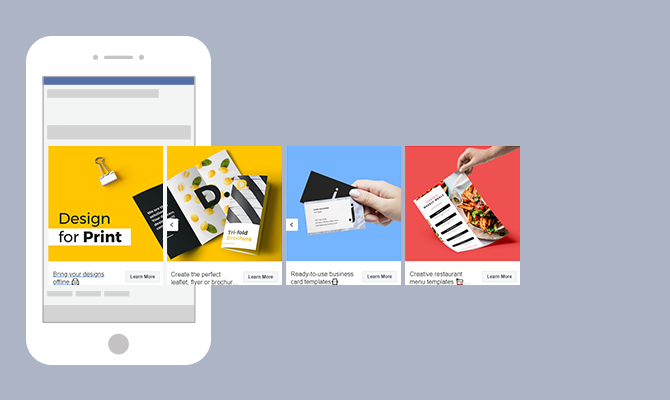
There are several compelling reasons to consider using Facebook Carousel Ads in your advertising strategy:
When it comes to increased engagement, Carousel Ads have proven to be highly effective. The scrollable format captures users' attention and encourages them to explore the different images or videos within the ad. This interactive experience creates a sense of curiosity and excitement, leading to higher click-through rates and longer time spent engaging with the ad.
Moreover, Carousel Ads offer businesses the opportunity to provide users with more information about their brand, products, or services. Instead of relying on a single image or video, Carousel Ads allow you to showcase a variety of visuals that highlight different aspects of your offerings. This enables users to gain a comprehensive understanding of what your brand represents and what you have to offer.
Storytelling is a powerful tool in advertising, and Carousel Ads provide the perfect platform for it. With the ability to present multiple images or videos in a sequential manner, businesses can take users on a journey, guiding them through a narrative that communicates their brand message effectively. This storytelling approach creates a deeper emotional connection with users, making your brand more memorable and relatable.
Carousel Ads can also significantly improve conversion rates. By including multiple links within a single ad, businesses can tailor the user experience based on their interests. For example, if a user is interested in a specific product showcased in the Carousel Ad, they can be directed to a landing page dedicated to that product. This personalized approach increases the likelihood of conversions as users are directed to the most relevant information and offerings.
Creating a successful Facebook Carousel Ad involves careful consideration of various elements. From high-quality images to compelling ad copy and attention-grabbing call-to-action (CTA) buttons, each component plays a vital role in captivating your audience and driving conversions.
When designing a Facebook Carousel Ad, the quality of your images is paramount. Clear, visually appealing images that align with your brand identity and messaging will help captivate your audience and encourage them to explore further. Imagine a carousel ad showcasing a stunning landscape, enticing travelers to embark on an adventure. The vivid colors and breathtaking scenery instantly transport viewers to a world of wanderlust, igniting their desire to learn more about the destination.
However, it's not just about aesthetics. Properly sized and well-lit images are essential to ensure optimal display across various devices and screen sizes. By investing time and effort into selecting and preparing high-quality images, you can enhance the overall impact of your carousel ad and leave a lasting impression on your target audience.
While images play a significant role in Carousel Ads, the accompanying ad copy should not be underestimated. The power of words can complement and reinforce the visual elements, effectively conveying your message to potential customers. Consider a carousel ad promoting a new line of skincare products. Alongside vibrant images showcasing the radiant effects of the products, the ad copy can highlight the key ingredients, emphasizing their nourishing properties and the resulting healthy, glowing skin.
When crafting ad copy, it's crucial to strike a balance between being concise and persuasive. Captivate your audience with compelling language that resonates with their needs and desires. By focusing on the unique features or benefits of your products or services, you can pique their interest and motivate them to take action. Additionally, incorporating a clear call-to-action (CTA) prompts users to engage further, whether it's making a purchase, signing up for a newsletter, or exploring more about your offerings.

CTA buttons serve as a crucial element in driving conversions through Carousel Ads. These buttons provide a clear and direct path for users to take the desired action. When selecting a CTA phrase, it's essential to choose impactful, action-oriented language that aligns with your campaign objectives. For instance, if you're running an e-commerce campaign, a CTA button saying "Shop Now" can create a sense of urgency and encourage users to explore your products further.
Make sure the CTA button stands out within the carousel ad, both in terms of design and placement. Consider using contrasting colors or bold typography to draw attention to the button. Additionally, strategically positioning the CTA button within the carousel sequence can increase the likelihood of user interaction. By creating a seamless user experience and making it effortless for users to take the desired action, you can maximize the effectiveness of your Carousel Ad campaign.
As you embark on creating engaging Carousel Ads, remember that each element, from high-quality images to compelling ad copy and attention-grabbing CTA buttons, contributes to the overall success of your campaign. By carefully crafting each component and ensuring they work harmoniously together, you can create a captivating and persuasive carousel ad that entices your audience and drives meaningful results.
Creating a successful Carousel Ad on Facebook requires careful consideration and attention to detail. A specialized Social Media Advertising Agency could help you implement a well-thought comprehensive strategy. By selecting the right images, writing effective ad text, and choosing the perfect call-to-action (CTA), your audience will be engaged and you will drive the desired actions. Let's dive deeper into each aspect to help you design a compelling Carousel Ad.
One of the key elements of a captivating Carousel Ad is the selection of images. High-resolution product photos can showcase the details and features of your offerings, enticing potential customers. Additionally, lifestyle images can help create a connection between your products or services and the aspirations of your target audience.
Consider going beyond static images and experiment with videos. Videos can bring your offerings to life, allowing viewers to see them in action. They can also be a powerful storytelling tool, capturing attention and conveying your brand's message effectively.
When choosing image combinations for your Carousel Ad, think about the visual appeal and the story you want to tell. Experiment with different sequences and arrangements to create a visually engaging flow that keeps viewers interested and encourages them to interact with your ad.
The ad text in your Carousel Ad plays a crucial role in conveying your message and enticing users to take action. To make the most impact, keep your ad text concise and compelling. Each ad card within the carousel should have a clear and focused message that complements the visuals.
Take the time to understand your target audience and tailor your ad text to resonate with their specific pain points or desires. By addressing their needs directly, you can create a sense of relevance and urgency, increasing the likelihood of engagement.
Consider using persuasive language, highlighting the unique benefits of your offerings, and incorporating social proof or testimonials to build trust. Remember, the goal is to capture attention and encourage users to take the desired action, whether it's making a purchase, signing up for a newsletter, or exploring more about your products or services.
The call-to-action (CTA) is the final piece of the puzzle in your Carousel Ad. It's the prompt that guides users to take the next step and convert. When selecting a CTA, it's essential to align it with the intended action you want users to take.
Start by considering the stage of the customer journey your target audience is in. Are they just discovering your brand, or are they already familiar with your offerings? Based on this understanding, choose a CTA that guides users towards the appropriate next step.
For example, if your goal is to drive immediate conversions, a CTA like "Shop Now" or "Buy Now" can be effective. On the other hand, if you're aiming to nurture leads and build a relationship, a CTA such as "Learn More" or "Sign Up" may be more suitable.
Remember to make your CTA visually prominent within the ad and ensure it stands out from the rest of the content. Use contrasting colors, compelling copy, and clear instructions to encourage users to click and take action.
By carefully selecting the right images, crafting impactful ad text, and choosing a compelling CTA, you can design a Facebook Carousel Ad that captures attention, engages your audience, and drives the desired actions. Start experimenting with these elements and monitor the performance of your ads to continuously optimize and improve their effectiveness.
For your Carousel Ads to be effective, it's crucial to target the right audience. Leverage Facebook's targeting options to define your ideal audience based on demographics, interests, behaviors, or even custom audiences. Refine your targeting strategy to maximize ad relevance and reach.
When setting your budget for Carousel Ads, consider the potential reach and the objectives of your campaign. Facebook offers various bidding options, such as cost per click (CPC) or cost per thousand impressions (CPM). Test different budget levels to find a balance between visibility and cost-effectiveness.

Regularly monitoring the performance metrics of your Carousel Ads is crucial to optimize their effectiveness. Pay attention to key metrics such as click-through rate (CTR), conversion rate, and engagement rate. Based on the insights gained, make data-driven adjustments to improve your ad campaign's performance and achieve the desired results.
By following these examples and best practices, you can create compelling and engaging Facebook Carousel Ads that captivate your audience, drive meaningful engagement, and help you achieve your marketing objectives. Remember to continuously iterate and refine your ad campaigns based on user feedback and data analysis, ensuring the ongoing success of your advertising efforts.
Google Ads is a powerful online advertising platform that can help businesses reach their target audience and drive results. Whether you're new to Google Ads or looking to improve your existing campaigns, this step-by-step guide will walk you through the process of setting up your Google Ads branch effectively.

Google Ads, formerly known as Google AdWords, is a robust advertising platform powered by Google's vast network. It offers a variety of ad formats, such as text ads, display ads, video ads, and more, allowing businesses to reach their target audience across different channels.
Text ads are the most common ad format on Google Ads. They appear as sponsored search results when users search for specific keywords related to your business. Display ads, on the other hand, are visually appealing image or banner ads that are shown on websites within Google's Display Network. Video ads, as the name suggests, are short video clips that can be displayed on YouTube (Ads) or other partner websites.
Google Ads also offers advanced targeting options to help businesses reach the right audience. You can target users based on their location, language, demographics, interests, and even specific websites or apps they visit. This level of precision ensures that your ads are shown to the most relevant audience, increasing the chances of engagement and conversion.
Google Ads is an essential tool for businesses of all sizes. It provides a way to increase visibility, drive website traffic, generate leads, and ultimately, grow your business. With Google Ads, you have the ability to reach users who are actively searching for products or services related to your business, increasing the chances of conversion.
One of the key advantages of Google Ads is its flexibility. You have full control over your ad budget, allowing you to set a daily or monthly spending limit. This ensures that you only spend what you can afford and gives you the flexibility to adjust your budget based on the performance of your ads.
Google Ads also provides detailed performance metrics and analytics, allowing you to track the effectiveness of your campaigns. You can see how many clicks your ads receive, the cost per click, the number of conversions, and much more. This data-driven approach enables you to make informed decisions and optimize your campaigns for maximum results.
Furthermore, Google Ads offers various ad extensions that can enhance the visibility and effectiveness of your ads. These extensions allow you to add additional information, such as phone numbers, addresses, or links to specific pages on your website. This not only makes your ads more informative but also increases the chances of users taking action.
Before diving into the setup process, there are a few things you need to prepare.
Setting up your Google Ads branch requires careful planning and organization. To ensure a smooth and successful setup, it is essential to gather all the necessary information and tools beforehand.
Start by gathering the necessary information and tools for setting up your Google Ads branch. This includes your business website URL, relevant keywords related to your business, ad images or videos, and a clear understanding of your target audience.
When it comes to your business website URL, make sure it is up-to-date and optimized for user experience. A well-designed and user-friendly website will greatly enhance the effectiveness of your Google Ads campaigns.
In terms of relevant keywords, conduct thorough research to identify the most appropriate and high-performing keywords for your business. These keywords will help you reach your target audience and increase the chances of your ads being shown to the right people at the right time.
When selecting ad images or videos, choose visuals that are visually appealing and relevant to your business. High-quality and engaging visuals can significantly improve the click-through rate of your ads.
Lastly, having a clear understanding of your target audience is crucial. Define your target audience based on demographics, interests, and behaviors. This knowledge will enable you to tailor your ads to resonate with your target audience and maximize your campaign's effectiveness.
It's important to establish clear advertising goals before setting up your Google Ads account. Determine what you want to achieve with your ads, whether it's getting more website traffic, increasing sales, or raising brand awareness. This will help you create effective campaigns that align with your business objectives.
Consider the specific metrics you want to track and measure to gauge the success of your campaigns. For example, if your goal is to increase sales, you may want to track the number of conversions or the return on ad spend (ROAS).
Furthermore, setting realistic and attainable goals is crucial. Take into account your budget, resources, and the competitive landscape of your industry. By setting achievable goals, you can stay motivated and focused throughout the setup and optimization process.
Remember, Google Ads can be a powerful tool for driving business growth, but it requires careful planning and strategic execution. By preparing the necessary information and setting clear advertising goals, you are laying the foundation for a successful Google Ads setup.

Now that you have everything in place, it's time to create your Google Ads account.
Creating a Google Ads account is a straightforward process that can be done in a few simple steps. By following these steps, you'll be well on your way to launching successful advertising campaigns:
To begin creating your Google Ads account, navigate to the Google Ads website. You can do this by typing "Google Ads" into your preferred search engine or by directly entering the URL in your browser's address bar.
Once you're on the Google Ads website, locate the "Get Started" button and click on it. This will initiate the account creation process and guide you through the necessary steps.
During the setup process, you'll be asked to provide information about your business. This includes details such as your business name, website, industry, and location. It's important to provide accurate and up-to-date information to ensure that your ads are relevant to your target audience.
One of the crucial aspects of creating a Google Ads account is setting your budget. You'll need to determine how much you're willing to spend on advertising each day. Google Ads offers various budget options, allowing you to choose what works best for your business.
Another important step in creating your Google Ads account is defining your target audience. You'll have the opportunity to specify the geographic locations where you want your ads to appear, ensuring that you're reaching the right people in the right places.
Google Ads also allows you to customize your ad scheduling preferences. This means you can choose the days and times when you want your ads to be displayed. By aligning your ad schedule with your target audience's online behavior, you can maximize the effectiveness of your campaigns.
Once you've provided all the necessary information and customized your preferences, you can proceed to complete the setup process. Review your choices to ensure everything is accurate, and then click on the "Finish" or "Create Account" button to finalize the creation of your Google Ads account.
After creating your Google Ads account, you'll gain access to the Google Ads dashboard. This dashboard serves as your central hub for managing and monitoring your advertising campaigns. Let's take a closer look at some key sections and features you'll encounter:
The "Campaigns" section is where you'll create, organize, and manage your advertising campaigns. Here, you can set campaign goals, select targeting options, and monitor performance metrics such as impressions, clicks, and conversions.
Within each campaign, you'll have the ability to create multiple ad groups. Ad groups allow you to organize your ads based on specific themes or target audiences. This level of granularity enables you to tailor your messaging and optimize your campaigns for better results.
The "Ads" section is where you'll create and manage the actual advertisements that will be shown to your target audience. You can experiment with different ad formats, headlines, descriptions, and visuals to find the most effective combination.
Keywords play a crucial role in Google Ads campaigns. In the "Keywords" section, you can research, select, and manage the keywords that trigger your ads. By choosing relevant and high-performing keywords, you can increase the chances of your ads being shown to the right audience.
The "Reports" section provides valuable insights into the performance of your campaigns. You can generate various reports that highlight key metrics and trends, allowing you to make data-driven decisions and optimize your advertising strategy.
As you navigate the Google Ads dashboard, take some time to explore the various features and settings available. Familiarize yourself with the interface, experiment with different options, and leverage the tools provided to optimize your campaigns for better performance.
With your account ready, it's time to set up your first Google Ads campaign.
When setting up your campaign, you will be presented with different campaign types. Consider your advertising goals and select the one that aligns with your objectives. The available options include Search Network campaigns, Display Network campaigns, Video campaigns, Shopping campaigns, and more.
It’s crucial to define your target audience when setting up your Google Ads campaign. Customizing your targeting options based on demographics, interests, and search intent will ensure that your ads reach the right people. Additionally, set a realistic budget that matches your advertising goals and resources to maximize your return on investment.
The effectiveness of your ads plays a vital role in the success of your Google Ads campaign.
The text in your ads should be catchy, concise, and convey the value proposition of your products or services. Highlight unique selling points, use persuasive language, and include relevant keywords to attract the attention of potential customers. Experiment with different ad variations to see which ones perform best.

Selecting the right keywords is crucial for targeting the right audience. Conduct keyword research to find relevant and high-performing keywords related to your business. Incorporate these keywords into your ad copy, headlines, and landing page content. Additionally, optimizing your website for SEO will improve your organic search rankings and increase your visibility.
Setting up your Google Ads branch doesn't have to be overwhelming. By understanding the basics of Google Ads, preparing the necessary information and tools, creating your account, setting up campaigns, and crafting effective advertisements, you can maximize the potential of this powerful advertising platform. Keep monitoring and optimizing your campaigns to ensure long-term success. Good luck!

Having an effective advertising strategy is crucial for businesses to reach their target audience and drive success. Google Ads is a powerful tool that allows businesses to advertise their products and services to millions of users across the globe. One essential component of Google Ads is the Customer ID, which plays a significant role in optimizing your advertising efforts, including search and social media ads. In this article, we will discuss the importance of understanding and utilizing your Google Ads Customer ID, as well as ways to protect and maximize its potential.

Your Google Ads Customer ID is a string of numbers that is assigned to your account. It serves as a way for Google to track your campaigns, ads, and overall account performance. Think of it as a digital fingerprint that is unique to your account.
With your Customer ID, Google can easily identify and organize all the data related to your advertising efforts. This includes information about your campaigns, ad groups, keywords, and more. It helps Google keep everything organized and makes it easier for you to manage your account.
First and foremost, your Customer ID is the backbone of your Google Ads account. It is the key that unlocks access to all aspects of your campaigns. With your Customer ID, you can monitor your advertising spend, track conversions, analyze performance metrics, and make data-driven decisions to optimize your campaigns.
But the importance of your Customer ID doesn't stop there. It also enables you to link your Google Ads account to other Google services, such as Google Analytics and YouTube. By doing so, you gain access to a wealth of additional data and enhanced targeting capabilities.
For example, by linking your Google Ads account to Google Analytics, you can get a deeper understanding of how your ads are performing and how they are driving traffic to your website. You can track user behavior, identify which keywords are driving the most conversions, and even set up custom reports to get the insights you need.
Similarly, linking your Google Ads account to YouTube Ads allows you to run video ads and reach a wider audience. You can leverage the power of video marketing and tap into the massive user base of YouTube to promote your products or services.
Overall, your Google Ads Customer ID is not just a random string of numbers. It is the key that unlocks the full potential of your advertising efforts. Understanding its importance and leveraging its capabilities can help you take your Google Ads campaigns to new heights.
Locating your Google Ads Customer ID is an essential step in managing your advertising campaigns effectively. Your Customer ID is a unique identifier that allows you to access and control your account. Follow the steps below to find your Customer ID:
Locating your Google Ads Customer ID is a straightforward process. Simply follow the steps below:
Once you have obtained your Customer ID, you can use it to access various features and settings within your Google Ads account. It is important to keep your Customer ID secure and confidential to protect your account from unauthorized access.

While finding your Customer ID is generally simple, there may be instances when you encounter difficulties. Some common issues and their solutions include:
Remember, your Customer ID is a crucial piece of information that allows you to manage your Google Ads account effectively. By following the steps outlined above and addressing any common issues that may arise, you will be able to locate your Customer ID and take full control of your advertising campaigns.
When it comes to running successful advertising campaigns on Google, your Google Ads Customer ID is a powerful tool that can greatly enhance your marketing strategy. Not only does it provide you with a unique identifier for your account, but it also offers a range of features and benefits that can help you achieve your advertising goals.
One of the key advantages of your Google Ads Customer ID is its ability to integrate with other Google services, such as Google Analytics. By linking these accounts, you can gain a deeper understanding of your advertising performance and audience behavior. With Google Analytics, you can track important metrics like website traffic, conversions, and user engagement, allowing you to make data-driven decisions to optimize your campaigns.
Additionally, linking your Customer ID to YouTube opens up a world of video advertising opportunities. With the rise of video content consumption, leveraging YouTube as a platform for your ads can significantly expand your reach and engagement. By connecting your Customer ID to YouTube, you can create and manage video campaigns, target specific audiences, and measure the success of your video ads.
For businesses or advertisers who manage multiple Google Ads accounts, the Customer ID becomes invaluable in streamlining their efforts. Instead of juggling multiple logins and interfaces, consolidating all accounts under one Customer ID allows for a more efficient and seamless management experience.
With a single Customer ID, you can access and manage all your accounts simultaneously, saving time and effort. This feature provides a holistic view of your advertising campaigns, making it easier to analyze performance trends, identify areas for improvement, and make strategic adjustments. Whether you're running multiple campaigns for different products or targeting different regions, having all your accounts accessible through one Customer ID simplifies administrative tasks and ensures consistency in your advertising strategy.
The Customer ID also enables you to set different access levels and permissions for team members or agencies who work on your accounts. This allows for better collaboration and control over who can make changes or view sensitive information, ensuring the security and integrity of your advertising campaigns.
Protecting your Google Ads Customer ID is crucial to maintain the security and integrity of your advertising account. Your Customer ID is a unique identifier that grants access to your account and holds sensitive information. Taking the necessary security measures will help prevent unauthorized access and potential breaches.
To safeguard your Customer ID, it is important to implement the following security measures:
In the unfortunate event that your Customer ID is compromised, it is vital to take immediate action to secure your account. Follow these steps:
By following these security measures and taking immediate action if your Customer ID is compromised, you can help protect your Google Ads account from unauthorized access and potential harm.

Your Google Ads Customer ID generates a wealth of valuable data that can provide insights into your advertising performance. By analyzing this data, you can identify trends, optimize campaign targeting, and make data-driven decisions. Key metrics include impressions, clicks, conversions, cost per click, and return on ad spend, among others. By understanding these metrics and how they relate to your business goals, you can refine your campaigns to maximize results.
Effective utilization of your Google Ads Customer ID data can significantly contribute to your business growth. By identifying profitable keywords, analyzing audience demographics, and tracking conversion rates, you can fine-tune your targeting strategy and allocate resources efficiently. Additionally, comparing data across different time periods can help identify seasonal trends, allowing you to optimize your campaigns accordingly.
Your Google Ads Customer ID is a fundamental element in unlocking the full potential of your advertising campaigns, even if they are managed by you or by a specialized ads agency. By understanding the importance of your Customer ID, locating it easily, maximizing its use, and protecting it diligently, you can harness the power of data-driven marketing to drive business growth and achieve your advertising goals effectively.

Achieving sustainable growth requires careful planning, strategic execution, and specialized knowledge. This is where a business growth agency plays a pivotal role. A business growth agency can be the springboard that launches your business to new heights. By understanding the role and functions of a business growth agency, as well as the importance of business growth for your company, you can harness the expertise of these agencies to take your organization to new heights.
A business growth agency is a strategic partner that works closely with your company to identify growth opportunities and develop tailored strategies to achieve them. They possess a deep understanding of your industry and market dynamics, allowing them to provide valuable insights and guidance.
When it comes to understanding the role of a business growth agency, it is crucial to recognize their ability to analyze your current business landscape. By conducting a thorough evaluation, they can identify areas for improvement and growth potential. This analysis involves studying market trends, consumer behavior, and competitor strategies.
Furthermore, a business growth agency goes beyond just identifying growth opportunities. They also play a crucial role in developing comprehensive strategies to maximize your company's growth potential. These strategies may involve marketing and branding, sales optimization, and operational efficiency improvement.
[You can check an example of 5 proven strategies to boost lead generation here].
Business growth is not just a desirable outcome; it is essential for the long-term success and sustainability of your company. Without continuous growth, businesses can quickly fall victim to stagnation, which can have detrimental effects.
When a business remains stagnant and fails to adapt to changing market conditions, it can experience stagnation. Stagnation often leads to declining sales, loss of market share, and reduced profitability. The inability to keep up with the ever-evolving business landscape puts stagnant businesses at risk of becoming obsolete.
However, continuous growth paves the way for numerous benefits. It enables your company to stay ahead of the competition, seize new market opportunities, and attract top talent. By embracing growth, your business can expand its reach and explore untapped markets, ensuring its relevance and longevity.
One of the key advantages of business growth is the increased revenue and profitability it brings. As your company expands, it can tap into new customer segments and generate more sales. This influx of revenue provides the financial resources necessary to invest in further expansion and innovation.
Moreover, continuous growth allows your company to build a strong brand reputation. As you expand your operations and reach, you can establish yourself as a market leader and gain the trust and loyalty of customers. A reputable brand not only attracts more customers but also opens doors to strategic partnerships and collaborations.
Business growth also creates a positive ripple effect throughout the organization. It fosters a culture of innovation and creativity, as employees are motivated by the exciting opportunities that come with expansion. This, in turn, attracts top talent who are eager to be part of a dynamic and growing company.
Additionally, growth provides the opportunity to diversify your product or service offerings. By expanding your portfolio, you can cater to a wider range of customer needs and preferences. This diversification not only strengthens your market position but also mitigates the risks associated with relying too heavily on a single product or service.
A business growth agency follows a structured approach to drive growth for your company. The process typically involves an initial assessment and strategy development phase, followed by the implementation of growth strategies.
But what exactly happens during each phase? Let's dive deeper into the workings of a business growth agency.
During the initial assessment phase, the business growth agency conducts a thorough analysis of your company's current performance, market position, and growth potential. They gather data, conduct market research, and assess your competitive landscape to identify the most viable growth opportunities.
But it doesn't stop there. The agency's team of experts goes beyond the surface-level analysis. They dig deep into your company's strengths, weaknesses, opportunities, and threats (SWOT analysis) to gain a comprehensive understanding of your business.
Additionally, they also examine industry trends, consumer behavior, and emerging technologies to identify potential disruptors or innovative strategies that can propel your company forward.

Based on these findings, they develop a tailored growth strategy that aligns with your company's vision and objectives. This strategy is not a one-size-fits-all approach. Instead, it is customized to address your specific challenges and leverage your unique strengths.
Once the growth strategy is developed, the business growth agency collaborates with your team to implement the identified strategies. This collaboration is crucial as it ensures that the agency's expertise is combined with your team's knowledge of the business.
The agency takes a hands-on approach, working closely with your team to ensure successful execution and ongoing monitoring and optimization of the growth initiatives. They provide guidance, support, and resources to implement marketing and branding campaigns, optimize sales processes, or improve operational efficiency.
But it doesn't end there. The agency continuously monitors the progress of the growth initiatives and collects data to measure their effectiveness. They analyze the results, identify areas for improvement, and make necessary adjustments to maximize the impact of the strategies.
Moreover, the agency also keeps a close eye on market dynamics, consumer preferences, and industry trends to ensure that the implemented strategies remain relevant and effective in the ever-changing business landscape.
So, as you can see, a business growth agency goes above and beyond to drive growth for your company. Their structured methodologies (as this one for SEO), thorough analysis, and hands-on implementation ensure that your company is equipped with the right strategies to thrive in today's competitive business environment.
Business growth agencies offer a wide range of services designed to fuel growth in various aspects of your business. Let's explore some of the key services provided by these agencies:
A strong marketing and branding strategy is essential for reaching your target audience and driving growth. Business growth agencies provide expertise in developing and executing effective marketing campaigns,creating impactful branding assets, and leveraging digital channels to maximize your brand's visibility and reach.
Optimizing your sales processes and equipping your sales team with the necessary skills and knowledge is crucial for driving revenue growth. Business growth agencies offer comprehensive sales optimization services, including sales process analysis, sales training, and CRM implementation, to enhance your company's sales performance.
Improving operational efficiency is a key driver of growth. Business growth agencies help identify inefficiencies in your operational processes and develop strategies to streamline operations, reduce costs, and enhance productivity. This allows your organization to operate more efficiently, freeing up resources that can be allocated to growth initiatives.
Choosing the right business growth agency is vital to ensure a successful growth journey for your company. Consider the following factors when selecting an agency:
While cost is an important consideration, it is equally crucial to assess the value you will gain from the agency's services. Look for an agency that offers a comprehensive suite of services tailored to your specific growth needs and provides ongoing support and monitoring to ensure the success of your growth initiatives.

With expertise and a strategic approach, a growth agency can help you navigate the complexities of today's business landscape and achieve sustainable growth in various aspects of your operations. By understanding the role of a business growth agency, the importance of business growth, and the services they offer, you can make an informed decision when selecting the right agency to partner with. Embrace the power of a business growth agency and take your company to new heights.

In today's interconnected and digital age, having a strong presence on social media is essential for businesses and individuals alike. One platform that has garnered immense popularity is Instagram, with its stunning visuals and engaged user base. However, growing your number of Instagram followers can be a challenge. That's where Facebook ads come in. By leveraging the power of Facebook's ads with Instagram ads, you can effectively boost your Instagram growth and reach a wider audience.
Before diving into the specifics, it's important to understand the symbiotic relationship between Facebook ads and Instagram growth. Since Facebook owns Instagram, they have seamlessly integrated their ad platforms, making it easier than ever to target Instagram users. By utilizing Facebook ads, you can tap into the massive user base of both platforms and increase your chances of growing your Instagram followers.

But what exactly is the connection between Facebook ads and Instagram growth? Let's explore further.
One of the key advantages of using Facebook ads for Instagram growth is the ability to cross-promote your content on both platforms. By running ads simultaneously on Facebook and Instagram, you can create a cohesive brand presence and reach a wider audience.
Imagine this scenario: you have a stunning visual ad that perfectly captures the essence of your brand. By promoting this ad on both Facebook and Instagram, you not only increase its visibility but also create a consistent brand experience for your audience. This cross-promotion strategy allows you to maximize your ad campaign's impact and increase the likelihood of gaining new Instagram followers.
Cross-promotion can also help you leverage the strengths of each platform. Facebook, with its extensive targeting options, allows you to reach a specific audience based on demographics, interests, and behaviors. On the other hand, Instagram's visually-driven nature makes it ideal for showcasing your brand's aesthetics and engaging with users through captivating images and videos.
Facebook's ad platform offers a robust set of tools and features that can help you optimize your Instagram growth strategy. From advanced targeting options to detailed analytics, Facebook ads provide invaluable insights that can guide your decision-making process.
With Facebook's targeting options, you can narrow down your audience to specific demographics, interests, and even behaviors. This level of precision allows you to create ad campaigns that specifically target your desired audience on Instagram. For example, if you're a fashion brand targeting young adults interested in sustainable fashion, you can use Facebook's ad platform to reach this specific audience on Instagram.
Moreover, Facebook's analytics provide you with valuable data on the performance of your ads. You can track metrics such as reach, engagement, and conversions, allowing you to measure the effectiveness of your Instagram growth strategy. Armed with these insights, you can make data-driven decisions to optimize your ad campaigns and achieve better results. By cross-promoting your content on both platforms and leveraging Facebook's ad platform, you can increase your chances of growing your Instagram followers and expanding your brand's reach. So, if you're looking to take your Instagram growth strategy to the next level, consider incorporating Facebook ads into your marketing efforts, or working with a specialized growth agency.
Now that you understand the connection between Facebook ads and Instagram growth, it's time to set up your ads for maximum impact.
But before we dive into the nitty-gritty of setting up your Facebook ads for Instagram growth, let's take a moment to explore why this strategy is so effective.
Instagram has become one of the most popular social media platforms, with over 1 billion monthly active users. It's a visually-driven platform that allows users to share photos and videos, making it the perfect place for businesses to showcase their products or services.
By leveraging Facebook ads, you can tap into Instagram's massive user base and reach a wider audience. Facebook's powerful targeting options allow you to connect with people who are most likely to be interested in your content, increasing the chances of gaining new Instagram followers.
When creating your Facebook ads, it's crucial to select the right ad format to capture the attention of your target audience on Instagram.
Instagram offers various ad formats, including photo ads, video ads, and carousel ads. Each format has its own unique advantages and can be used to convey different messages.
Photo ads are great for showcasing a single product or highlighting a specific feature. They allow you to capture your audience's attention with a visually appealing image.
Video ads, on the other hand, give you the opportunity to tell a story and engage your audience on a deeper level. With videos, you can demonstrate how your product works or share customer testimonials.
Carousel ads are perfect for showcasing multiple products or telling a more comprehensive brand story. They allow users to swipe through a series of images or videos, providing a more interactive and immersive experience.
When choosing the right ad format, it's important to align it with your brand and resonate with your audience. Experiment with different formats to see which ones perform best and drive the most Instagram follows.
One of the greatest strengths of Facebook ads is their ability to target specific demographics, interests, and behaviors. To maximize your Instagram growth, ensure that you are targeting the right audience.
Facebook's robust targeting options allow you to narrow down your target audience and reach those most likely to be interested in your content. You can target people based on their age, gender, location, interests, and even their online behaviors.
For example, if you're a fitness brand selling workout equipment, you can target people who are interested in fitness, follow fitness influencers, or have previously purchased fitness-related products.
By reaching the right people, you increase the chances of gaining new Instagram followers who are genuinely interested in what you have to offer.
It's important to regularly analyze and optimize your targeting strategy. Keep an eye on the performance of your ads and make adjustments as needed. Test different targeting options to see which ones yield the best results and help you achieve your Instagram growth goals.
When it comes to ad campaigns, content is king. To maximize your Instagram growth, you need to create compelling ad content that captures the attention of your audience and drives engagement.
But what exactly makes ad content compelling? How can you craft ad copy and visuals that stand out from the crowd and entice users to follow you on Instagram? Let's dive deeper into the art of creating compelling ad content.
Your ad copy plays a crucial role in convincing users to follow you on Instagram. It's not just about writing a few lines of text; it's about crafting engaging and persuasive copy that clearly communicates the value proposition of following your account.
One effective strategy is to highlight the benefits and unique selling points of your content. What makes your account different from others? Is it your expertise in a specific niche? Is it the exclusive content you provide to your followers? Whatever it is, make sure to emphasize it in your ad copy.

Another important aspect of crafting engaging ad copy is to understand your target audience. What are their pain points, desires, and aspirations? Tailor your copy to resonate with their needs and aspirations, showing them how following your account can help them achieve their goals.
Instagram is known for its visually stunning content, so it's essential to use high-quality visuals in your ads. Investing in eye-catching imagery or videos can make a significant difference in attracting new Instagram followers.
When selecting visuals for your ads, pay attention to detail. Choose images or videos that not only showcase your brand or products but also evoke emotions and tell a story. Visual storytelling can be a powerful tool in capturing the attention of your audience and making your ad content memorable.
Moreover, consider the aesthetics of your visuals. Instagram users are drawn to visually appealing content, so make sure your visuals are well-composed, well-lit, and visually pleasing. Experiment with different styles and themes to find what resonates best with your target audience.
By crafting engaging ad copy and utilizing high-quality visuals, you can create compelling ad content that stands out on Instagram. Remember, the key is to understand your audience, highlight the unique value you provide, and capture their attention with visually stunning content. Start experimenting and refining your ad content strategy to drive more engagement and grow your Instagram following.
To ensure your Instagram growth strategy is effective, you need to measure the success of your Facebook ads and make data-driven decisions.
Identify key performance indicators (KPIs) to track the success of your ad campaigns. Metrics such as click-through rate, conversion rate, and cost per follower are essential to understanding the effectiveness of your ads. Regularly analyze these metrics and make necessary adjustments to optimize your campaigns for Instagram growth.
Data analytics provide valuable insights into the performance of your Facebook ads. Monitor the analytics closely and adjust your strategy accordingly. If certain ads are not performing as expected, experiment with different visuals, copy, or targeting options. Use the data at your disposal to refine your approach and maximize your Instagram growth potential.
While Facebook ads provide a powerful tool for growing your Instagram following, there are additional tips and tricks you can implement to further maximize your ad impact.
Timing plays a crucial role in the success of your Facebook ads. Experiment with different posting schedules to determine when your audience is most active and engaged. By posting your ads when your target audience is most likely to be online, you increase the chances of capturing their attention and gaining new Instagram followers.
A clear and compelling call-to-action (CTA) can significantly impact whether a user decides to follow you on Instagram. Encourage users to take action by including a strong CTA in your ad copy. Use phrases like "follow us on Instagram for more" or "join our growing community on Instagram" to prompt users to click that follow button.

As you see, utilizing Facebook ads is a powerful strategy to grow your Instagram followers. By understanding the connection between Facebook ads and Instagram growth, setting up your ads effectively, creating compelling ad content, measuring success, and implementing tips and tricks, you can maximize the impact of your ad campaigns. Leverage the power of Facebook's ad platform to reach a wider audience and achieve exponential Instagram growth.

Facing the issue of a missing Instagram ad account can be frustrating and disruptive to your advertising efforts. However, there are steps you can take to address this problem and potentially regain access to your account. Below, we will guide you through the process of understanding the issue, initial steps to take, contacting Instagram support for assistance, preventive measures, and navigating the reinstatement process. As you know, Instagram can be a great channel to build brand and drive traffic, among others. Is important to have it in perfect operability.

When you encounter the error message indicating that your Instagram ad account is not found, it's essential to understand the possible reasons behind this inconvenience.
Having an Instagram ad account is crucial for businesses and individuals looking to promote their products or services on the platform and engaging with its customers. However, sometimes you may come across situations where your ad account seems to have disappeared. In such cases, we must investigate the matter further to determine the cause and find a solution.
There are several potential reasons why your Instagram ad account may disappear. Understanding these reasons can help you troubleshoot the issue more effectively. Here are a few common causes:
When your Instagram ad account is not found, you might encounter different error messages, each indicating a specific issue. Understanding these error messages can provide insights into the nature of the problem. Here are a few common error messages and their meanings:
Dealing with an Instagram ad account not found issue can be frustrating, but understanding the possible reasons and error messages can help you navigate through the problem more effectively. Remember to review your account settings, ensure compliance with Instagram's advertising policies, and report any technical issues to Instagram's support team for prompt resolution.
When faced with a missing Instagram ad account, there are a few initial steps you should take to assess and address the situation.
The first step is to verify the current status of your Instagram ad account. Check whether your account is still active or if it has been suspended or disabled for any reason.
Next, it's important to ensure that your account information is accurate and up to date. Make sure that your email address, contact information, and payment details associated with the account are correct.
If you are unable to address the issue on your own, reaching out to Instagram support can provide you with the necessary guidance and assistance to resolve the problem.
Instagram support is a dedicated team of professionals who are well-equipped to handle various user concerns. Whether you are experiencing login issues, encountering errors, or facing any other technical difficulties, reaching out to Instagram support can be the key to finding a solution.
You can contact Instagram support through their Help Center or by using the "Report a Problem" feature within the Instagram app. Accessing the Help Center will provide you with access to Frequently Asked Questions (FAQs) and troubleshooting guides.

The Help Center, as indicated above, is a comprehensive resource that covers a wide range of topics related to Instagram. From account security to privacy settings, you can find detailed information and step-by-step instructions to resolve common issues. It is a valuable tool that empowers users to troubleshoot problems independently.
If you are unable to find a solution through the Help Center, you can directly contact Instagram support by using the "Report a Problem" feature within the app. This feature allows you to submit a detailed description of the issue you are facing, providing Instagram support with the necessary information to assist you effectively.
When contacting Instagram support, it's important to provide them with relevant information to help them understand your issue better. Include details such as your account username, the error message you are seeing, and any steps you have taken to address the problem.
By providing accurate and detailed information, you increase the chances of receiving a prompt and accurate response from Instagram support. It allows them to assess the situation thoroughly and provide you with tailored guidance to resolve the issue.
Additionally, if you have encountered any error messages or unusual behavior on the app, make sure to include them in your communication with Instagram support. These details can provide valuable insights into the root cause of the problem and help the support team identify any ongoing technical issues.
Remember, Instagram support is there to assist you, so don't hesitate to reach out if you need help. They are committed to ensuring a seamless user experience and will work diligently to resolve any issues you may encounter.
While dealing with a missing ad account can be challenging, taking preventive measures can help you avoid similar issues in the future.
Here are a few preventive measures you should consider:
Ensure that you regularly review and update your account information, including your contact details and payment information. This will help maintain the accuracy and validity of your account.
By regularly updating your account information, you can ensure that any changes to your contact details or payment information are accurately reflected. This will help prevent any potential issues that may arise from outdated or incorrect information. Additionally, keeping your account information up to date will make it easier for Instagram or any other platform to reach out to you if there are any concerns or updates regarding your account.
Adhere to Instagram's advertising policies to prevent violations that could lead to your ad account being suspended or disabled. Familiarize yourself with these policies and ensure compliance with them at all times.
Instagram's advertising policies are designed to maintain a safe and positive experience for users. By familiarizing yourself with these policies, you can ensure that your ads meet the platform's guidelines and avoid any potential violations. This includes understanding the rules regarding prohibited content, targeting restrictions, and disclosure requirements. Staying informed about any updates or changes to these policies is also crucial to maintaining compliance.
Additionally, it is important to regularly review your ad campaigns to ensure they are aligned with Instagram's policies. This includes monitoring the content, targeting options, and engagement metrics to identify any potential issues or areas for improvement. By proactively addressing any concerns, you can prevent your ad account from being suspended or disabled, thus avoiding future issues.
Once you have identified the issue and contacted Instagram support, you may need to navigate the reinstatement process to regain access to your missing ad account.
When it comes to reinstating your ad account on Instagram, there are a few important steps to keep in mind. It's crucial to follow these steps closely to ensure a smooth and successful reinstatement process.
The first step in the reinstatement process is to reach out to Instagram support. They will guide you through the necessary steps to regain access to your missing ad account. It's important to provide them with all the relevant information and details about your account.
Once you have contacted Instagram support, they may require additional information or documentation to verify the ownership and legitimacy of your account. This could include providing proof of identity, proof of ownership, or any other documents that can support your case.
After submitting the required information, it's crucial to be patient. The reinstatement process may take some time as Instagram support reviews your case and makes a decision. During this waiting period, it's essential to be prepared for potential requests for further information or clarification.

During the reinstatement process, it's important to manage your expectations. While you may be eager to regain access to your ad account, it's crucial to understand that the process may take some time and patience.
Instagram support will carefully review your case and assess the information and documentation you have provided. They will consider factors such as the nature of the issue, the legitimacy of your account, and any previous violations or warnings.
It's important to note that every case is unique, and the reinstatement process may vary depending on the specific circumstances. Instagram support will communicate with you throughout the process, providing updates and requesting any additional information if necessary.
Remember to check your email regularly during the reinstatement process, as Instagram support may reach out to you for further details or clarification. It's crucial to respond promptly and provide the requested information to expedite the process.
While waiting for the reinstatement decision, it's a good idea to review your account and ensure that you are in compliance with Instagram's policies and guidelines. This includes reviewing your ad content, ensuring it meets the platform's advertising standards, and addressing any potential issues or violations.
You can always leave your social media advertising Sarategy in the hands of the experts, ideally a social media agency. But, by following the instructions provided by Instagram support and being patient throughout the reinstatement process, you increase your chances of successfully managing any problems, like a missing ad account.
Experiencing a missing Instagram ad account can be a frustrating situation. By following the steps outlined above and reaching out to Instagram support for assistance, you can increase your chances of regaining access to your account. Additionally, taking preventive measures and staying compliant with Instagram's advertising policies can help you avoid similar issues in the future. Remember to remain patient and cooperative throughout the process, as reinstating your ad account may take some time.

Marketing for SaaS (Software as a Service) companies can often be challenging. With the increasing number of competitors and evolving consumer expectations, it's crucial for SaaS companies to stay ahead of the game to maximize their growth potential. In this article, we will explore seven essential tips for marketing your SaaS company effectively and driving sustainable growth.
It's important to understand the fundamentals of SaaS marketing and its significance. SaaS marketing refers to the process of promoting and selling software products on a subscription model. Unlike traditional software sales, SaaS companies focus on building long-term relationships with customers. It involves a strategic approach to attract, engage, and retain customers in a highly competitive market.

Successful SaaS marketing goes beyond simply selling a product; it involves creating a comprehensive marketing strategy that encompasses various elements such as branding, content creation, lead generation, and customer relationship management.
Developing a successful SaaS marketing strategy requires careful planning and execution. Here are some key elements to consider:
These elements form the foundation of a successful SaaS marketing strategy. By incorporating them into your overall marketing plan, you can effectively reach your target audience, generate leads, and drive business growth.
Remember, SaaS marketing is an ongoing process that requires constant adaptation and optimization. Stay up-to-date with industry trends, monitor competitor strategies, and regularly evaluate and refine your marketing tactics to stay ahead in the ever-evolving SaaS landscape.
A distinct and memorable brand identity is essential for attracting and retaining customers in the competitive SaaS industry. In order to stand out from the crowd and establish a strong presence in the market, there are several key aspects to consider.
Your unique selling proposition (USP) is what sets your SaaS company apart from competitors. It is the foundation upon which your brand identity is built. Clearly defining your USP is crucial in order to effectively communicate the value your product provides to customers.
When defining your USP, it is important to consider the key features, benefits, and value that your product offers. What makes your SaaS company unique? How does your product solve a problem or fulfill a need that other competitors cannot? These are the questions you need to answer in order to create a persuasive message that resonates with your target audience.
By highlighting the uniqueness of your offering, you can differentiate yourself from the competition and attract customers who are specifically looking for the benefits that your product provides. This will not only help you acquire new customers but also retain them in the long run.

Consistency is key when it comes to building a strong brand image. In order to establish a recognizable and memorable brand, it is important to ensure that your brand elements are consistently applied across all marketing channels.
One of the most important brand elements is your logo. Your logo should be visually appealing and reflect the essence of your brand. It should be placed prominently on all marketing materials, including your website, social media profiles, and promotional materials.
In addition to your logo, your color scheme, typography, and tone of voice also play a crucial role in creating a consistent brand image. Choose colors that align with your brand values and evoke the desired emotions in your target audience. Select fonts that are easy to read and reflect the personality of your brand. And finally, develop a tone of voice that is consistent across all communication channels, whether it's your website, social media posts, or customer support interactions.
By ensuring consistency in your brand elements, you create recognition and reinforce the credibility of your brand. Customers will be able to easily identify your brand and associate it with the positive experiences they have had with your product or service.
Building a strong brand identity takes time and effort, but it is a worthwhile investment. By defining your unique selling proposition and creating a consistent brand image, you can attract and retain customers in the competitive SaaS industry, ultimately leading to long-term success for your business.
Search engine optimization (SEO) plays a vital role in driving organic traffic to your website and increasing your visibility in search engine result pages (SERPs). By implementing effective SEO strategies, you can improve your website's ranking and attract potential customers. Here are some best practices for SaaS SEO:
SEO is crucial for increasing your website's visibility and attracting organic traffic. When potential customers search for solutions related to your SaaS company, a well-optimized website will have a higher chance of appearing in the top search results. By utilizing relevant keywords, optimizing meta tags, and improving site speed, you can improve your ranking in search engine results, leading to increased exposure and higher chances of attracting potential customers.
To effectively implement SEO for your SaaS company, consider the following best practices:
Keyword research is a critical step in SEO. By understanding the search terms your target audience uses, you can optimize your website's content to align with their needs. Use keyword research tools to identify high-demand keywords that are relevant to your SaaS product or service. This will help you create content that addresses the pain points and needs of your potential customers.
Content is king in SEO. By creating informative and keyword-rich content, you can attract and engage your target audience. Develop blog posts, articles, and guides that provide valuable insights and solutions related to your SaaS product or service. Incorporate relevant keywords naturally into your content to improve its visibility in search engine results.
On-page optimization is essential for improving your website's visibility in search engine results. Optimize your meta titles, meta descriptions, headers, and URLs with relevant keywords to help search engines understand the content of your web pages. This will increase the likelihood of your website appearing in relevant search queries.
Backlinks are an important factor in SEO. By building high-quality backlinks from reputable websites in your industry, you can enhance your website's authority and visibility. Reach out to industry influencers, guest post on relevant blogs, and participate in online communities to build valuable backlinks that will improve your website's SEO performance.

Regular monitoring and analysis of your SEO performance are crucial for identifying areas for improvement. Utilize analytical tools such as Google Analytics to track your website's traffic, keyword rankings, and user behavior. Analyze the data to identify trends, strengths, and weaknesses in your SEO strategy. This will help you make informed decisions and optimize your SEO efforts for better results.
By implementing these best practices, you can enhance your SaaS company's SEO performance and increase your website's visibility in search engine results. Remember to stay up-to-date with the latest SEO trends and algorithms to ensure long-term success in driving organic traffic to your website.
Content marketing is a powerful tool for SaaS companies to engage their target audience and establish thought leadership. Consider the following tips to create compelling and relevant content:
Content marketing allows SaaS companies to deliver valuable information and insights to their target audience, positioning themselves as industry experts and thought leaders. By offering relevant and informative content, you can build trust, establish credibility, and drive customer engagement.
Here are some tips to help you create engaging and relevant content for your SaaS company:
Social media has become an integral part of the marketing strategies for SaaS companies. Follow these tips to effectively leverage social media:
Each social media platform has its own strengths and characteristics. Understanding your target audience and their preferred platforms will help you choose the most suitable ones for your SaaS business. Consider factors such as audience demographics, engagement levels, and platform capabilities when making your decision.
Boosting engagement on social media is crucial for increasing brand visibility and fostering customer loyalty. Consider implementing these strategies:
By understanding the basics of SaaS marketing, building a strong brand identity, implementing strong SEO methodologies, utilizing content marketing, and harnessing the power of social media, you can drive sustainable growth and establish a strong presence in the market. Stay proactive, adapt to the ever-changing landscape, and continuously optimize your marketing efforts to stay ahead of the competition.

Lead generation has become a crucial aspect of any organization's marketing strategy. As businesses strive to expand their customer base and increase sales, understanding lead generation pricing becomes paramount. This article aims to provide a comprehensive overview of lead generation pricing, from its definition to the factors influencing it, and offer practical tips on budgeting and evaluating the return on investment (ROI) of these efforts.

In simple terms, lead generation refers to the process of attracting and converting potential customers into leads, who express interest in a company's products or services. These leads then become valuable assets for the sales team, as they can be nurtured and eventually converted into paying customers.
Lead generation is a multifaceted strategy that involves various tactics and techniques to capture the attention of potential customers. It is not just about getting people to visit a website or filling out a form; it is about building relationships and creating opportunities for businesses to connect with their target audience.
Lead generation plays a pivotal role in the growth and success of a business. By generating high-quality leads, companies can create a steady stream of potential customers, thereby increasing their chances of closing deals and driving revenue. Moreover, lead generation helps businesses build brand awareness, establish authority in their industry, and cultivate long-term relationships with customers.
When done effectively, lead generation can be a game-changer for businesses, providing them with a competitive edge in the market. It allows companies to proactively reach out to potential customers, rather than waiting for them to come across their products or services. This proactive approach not only increases the likelihood of conversions but also enables businesses to tailor their offerings to meet the specific needs and preferences of their target audience.
When it comes to lead generation, several key components work synergistically to achieve optimal results. These components include:
An effective website is the foundation of a successful lead generation strategy. It should be visually appealing, user-friendly, and optimized for search engines. Compelling landing pages with clear call-to-actions help guide visitors towards taking the desired action, whether it's filling out a form, subscribing to a newsletter, or making a purchase.
Engaging content is another crucial component of lead generation. By creating valuable and informative content, businesses can attract potential customers and establish themselves as industry experts. This can be achieved through blog posts, whitepapers, ebooks, videos, and webinars, among other content formats.
Lead capture forms and lead magnets play a vital role in capturing visitor information. These forms should be strategically placed on landing pages and offer something of value in exchange for contact details, such as a free ebook, a discount code, or access to exclusive content. This incentivizes visitors to provide their information willingly.
Targeted advertising and marketing campaigns help businesses reach the right audience and generate qualified leads. By leveraging data and analytics, companies can identify their target market and create customized campaigns that resonate with their audience's needs and preferences. This can be done through various channels, such as social media advertising, search engine marketing, email marketing, and content syndication.
Marketing automation tools streamline lead nurturing and follow-up processes, allowing businesses to engage with leads at scale. These tools automate repetitive tasks, such as sending personalized emails, tracking customer interactions, and scoring leads based on their level of engagement. By nurturing leads through targeted and timely communication, businesses can increase their chances of converting them into paying customers.
[Here are 5 proven strategies to boost lead generation].
Now that we've covered the basics of lead generation, it's time to explore the various pricing models commonly used in this realm. Understanding the pros and cons of each model is crucial for businesses to make informed decisions and maximize their return on investment.
When it comes to lead generation, businesses have several pricing models to choose from. Each model offers its own advantages and disadvantages, catering to different business needs and goals. Let's take a closer look at three popular pricing models: Cost Per Lead (CPL), Monthly Retainer, and Performance-Based.

The cost per lead (CPL) model, as the name suggests, entails businesses paying a fixed amount for each lead they receive. This model offers a predictable and measurable approach to lead generation pricing. With CPL, companies have greater control over their budget, as they only pay for actual leads.
However, it is important to carefully evaluate the quality of leads generated under the CPL model. While lower-cost leads may seem appealing, they may not always translate into qualified prospects. Businesses need to ensure that the leads they receive are relevant and have a higher likelihood of conversion.
In the monthly retainer model, businesses work with lead generation agencies or consultants on an ongoing basis, paying a fixed monthly fee for their services. This model offers a more comprehensive approach, as the agency takes responsibility for managing the entire lead generation process.
The advantage of the monthly retainer model lies in its scalability and flexibility. Businesses can adjust their lead generation efforts according to their needs, whether it's increasing or decreasing the volume of leads generated. This model allows businesses to have a dedicated team working on their lead generation efforts, ensuring consistent results.
At the same time, it's important to note that the cost of retaining a lead generation agency can be higher compared to other pricing models. Businesses need to carefully assess their budget and the value they expect to receive from the agency before committing to a monthly retainer.
The performance-based model aligns lead generation pricing with the desired outcomes. Instead of paying a fixed fee or cost per lead, businesses only compensate lead generation agencies based on the actual performance achieved, such as the number of qualified leads or converted customers.
This model provides a clear incentive for the agency to deliver tangible results. The agency's compensation is directly tied to the success of the lead generation campaign, motivating them to put in their best efforts. It also allows businesses to closely track their return on investment (ROI) and ensure that they are getting the desired results.
However, implementing a performance-based model requires businesses to carefully define and measure the key performance indicators (KPIs) that will determine the agency's compensation. This ensures fair compensation for both parties and avoids any potential disputes.
While understanding the pricing models is crucial, it is equally important to consider the factors that influence lead generation pricing. By identifying these factors, businesses can set realistic expectations and allocate their resources effectively.
The quality of leads greatly impacts the pricing. High-quality leads, who are more likely to convert into paying customers, generally incur higher costs. Factors that contribute to lead quality include the relevance of the target audience, the level of interest demonstrated, and the accuracy of the contact information provided.
For example, let's say a business is targeting professionals in the healthcare industry who have shown a strong interest in a specific product. These leads are more likely to convert into customers compared to leads from a general audience. Therefore, the cost per lead for such high-quality leads would be higher due to the increased chances of conversion.
The industry in which a business operates and the characteristics of its target market can significantly influence lead generation pricing. Industries with intense competition or niche markets may require more targeted and tailored lead generation strategies, resulting in higher costs.
Consider a business operating in the highly competitive technology industry. The target market for this business consists of tech-savvy individuals who are constantly bombarded with advertisements and marketing campaigns. In order to stand out from the competition and capture the attention of these potential leads, the business may need to invest in more sophisticated lead generation tactics, such as personalized email campaigns or social media advertising. These additional efforts would naturally increase the overall cost of lead generation.

Let's say a business wants to implement a comprehensive lead generation strategy that includes not only capturing leads but also nurturing them through personalized email sequences and targeted content. This level of service requires a greater investment of time, resources, and expertise from the lead generation agency. As a result, the pricing for such a customized and hands-on approach would be higher compared to a more basic lead generation package.
At the same time, businesses that require advanced analytics to track and measure the effectiveness of their lead generation efforts may need to pay a premium for the tools and expertise needed to provide such insights. These analytics can help businesses optimize their lead generation strategies and improve their return on investment.
As you see, several factors influence lead generation pricing, including the quality of leads, the industry and target market, and the level of service and customization required. By understanding these factors, businesses can make informed decisions about their lead generation strategies and budget accordingly.
Prior to budgeting for lead generation, it is crucial for businesses to determine their specific lead needs. This involves assessing the desired volume of leads, the expected conversion rate, and the target cost per lead. By setting clear objectives and benchmarks, businesses can allocate their budget more effectively.
Allocating resources for lead generation involves finding a balance between investing in various lead generation strategies and managing costs. Some resources that would require allocation include advertising budgets, staff dedicated to lead generation efforts, and the technology needed to support these activities.
To evaluate the return on investment (ROI) of lead generation efforts, businesses must establish key performance metrics and regularly measure their performance against these benchmarks. Metrics such as the cost per lead, lead-to-customer conversion rate, and customer lifetime value are valuable indicators of lead generation success.
Based on the ROI analysis, businesses should make data-driven decisions to optimize their lead generation strategy. This might involve reallocating resources, refining targeting criteria, or experimenting with new lead generation tactics. Continuous monitoring and adaptation are crucial for achieving long-term success in lead generation.
To thrive in today's highly competitive business landscape, understanding lead generation pricing is essential. By comprehending the various pricing models, considering influencing factors, and budgeting wisely, organizations can maximize their lead generation efforts and ultimately drive revenue growth. Additionally, by evaluating the ROI of lead generation and making necessary adjustments, businesses can continuously refine their approach and stay ahead of the curve.

It is crucial for businesses to effectively market their products and services online. For Software as a Service (SaaS) businesses in particular, content marketing for SaaS plays a pivotal role in attracting and retaining customers. However, implementing an effective content marketing strategy requires specialized knowledge and expertise that may not be readily available in-house. This is where a SaaS content marketing agency can be invaluable.
SaaS content marketing refers to the creation and distribution of valuable and relevant content with the aim of attracting and retaining customers for SaaS businesses. Unlike traditional advertising, content marketing focuses on providing educational and informative content that addresses the pain points and challenges of the target audience.

But why is this approach so effective for SaaS businesses? The answer lies in the nature of the SaaS industry itself. SaaS products and services are often complex and require a certain level of understanding from potential customers. By providing educational content, a SaaS content marketing agency helps bridge the knowledge gap and empowers your audience to make informed decisions.
A SaaS content marketing agency is a professional service provider that specializes in helping SaaS businesses create and execute content marketing strategies. Their primary goal is to create engaging and persuasive content that resonates with the target audience, ultimately driving more traffic, generating more leads, and increasing conversions.
But what exactly does it mean to create engaging and persuasive content? It's about more than just writing a few blog posts or social media updates. A SaaS content marketing agency goes beyond the surface level and delves deep into understanding your target audience.
They conduct extensive research to identify the pain points and challenges that your potential customers face. This allows them to create content that not only captures their attention but also provides valuable solutions. By addressing these pain points, the agency can position your SaaS business as an authority in the industry, building trust and credibility with your audience.
Choosing the right SaaS marketing agency can be a game-changer for your business. With the right expertise and experience, they can help you reach your target audience, generate leads, and drive growth. However, with so many agencies out there, it can be overwhelming to make a decision. That's why it's crucial to consider the following factors:
Look for agencies that have proven expertise and experience in the SaaS industry. A track record of successful campaigns and satisfied clients is a testament to their capabilities.
When it comes to SaaS marketing, industry knowledge is key. An agency that understands the unique challenges and opportunities in the SaaS space will be better equipped to create effective strategies and deliver results. Look for agencies that have worked with SaaS companies similar to yours and have a deep understanding of the industry's dynamics.
Consider the range of services offered by the agency. Do they provide comprehensive content marketing solutions, including strategy development, content creation, and distribution? Make sure their services align with your specific needs.
Effective content marketing involves more than just creating blog posts or social media updates. It requires a strategic approach that encompasses various elements, such as SEO optimization, email marketing, and lead nurturing. Look for an agency that can provide a holistic approach to your content marketing efforts and has a proven track record in delivering results across different channels.
While cost should not be the sole determining factor, it is important to evaluate the agency's pricing structure and the value you will receive in return. Request detailed proposals and compare them to ensure you are getting the best value for your investment.

When it comes to pricing, it's important to strike a balance between affordability and quality. While it may be tempting to go for the cheapest option, keep in mind that quality and expertise come at a price. Look for an agency that offers transparent pricing and can demonstrate the value they will bring to your business. Consider factors such as the agency's reputation, the expertise of their team, and the results they have delivered for their clients. Remember, the right agency will not only help you achieve your marketing goals but also become a trusted partner in your business's growth.
Once you have shortlisted a few potential agencies, it is essential to evaluate their effectiveness in delivering results for SaaS businesses. Making the right choice can have a significant impact on the success of your content marketing efforts. Here are some key factors to consider:
Ask for case studies or examples of their previous work. This will give you a glimpse into their track record and the kind of results they have achieved for their clients. Look for agencies that have successfully increased website traffic, generated quality leads, and improved conversion rates. These tangible outcomes demonstrate their ability to deliver measurable results.
Additionally, seek feedback from their past and current clients. This will provide you with valuable insights into the agency's performance, professionalism, and ability to meet deadlines. Client testimonials and reviews can give you a well-rounded view of their strengths and weaknesses.
Understanding the agency's approach to content marketing is crucial. Are they up-to-date with the latest trends and best practices? Do they have a clear strategy for creating valuable and engaging content that aligns with your target audience's needs and preferences?
Look for agencies that prioritize research and data-driven insights. A successful content marketing strategy requires a deep understanding of your target audience, their pain points, and the solutions they seek. The agency should be able to demonstrate how they conduct audience research, develop buyer personas, and tailor content to resonate with your ideal customers.
Also, consider their expertise in different content formats such as blog posts, whitepapers, videos, infographics, and social media content. A diverse content mix, including paid ads, can help you reach a wider audience and engage them effectively.
Every SaaS business is unique, and it is crucial to find an agency that understands your specific needs. Consider factors such as their understanding of your industry, target audience, and unique selling points.
An agency that specializes in SaaS content marketing will have a better grasp of the challenges and opportunities in your industry. They will be familiar with the language, trends, and pain points that resonate with your target audience. This industry knowledge can save you time and effort in explaining your business context and help the agency create content that truly speaks to your customers.
When it comes to making the final decision, consider the pros and cons of each agency and how they align with your business objectives.
Review the strengths and weaknesses of each agency based on the factors mentioned earlier. Consider the agency's capabilities, level of expertise, and their ability to meet your specific requirements. A comprehensive evaluation will help you make an informed decision.

Choosing a SaaS content marketing agency is not just about hiring a service provider; it is about establishing a long-term partnership. Look for agencies that demonstrate a willingness to collaborate, communicate effectively, and align with your company's culture and values.
Before entering into a partnership, clearly communicate your expectations and goals to the agency. This will ensure that both parties are aligned and working towards a common objective within a flexible but precise marketing strategy. Regular communication and performance tracking will help you gauge the effectiveness of the partnership and make adjustments if necessary.
Choosing the right SaaS content marketing agency is a critical decision that can significantly impact your business's success. By understanding the role of a SaaS content marketing agency, evaluating key factors, and assessing their effectiveness, you can make an informed decision that drives growth and engagement for your SaaS business.

Instagram ads have become a valuable tool for businesses looking to expand their reach and connect with their target audience. However, like any online platform, issues can arise that hinder the smooth functioning of your ads account. One common issue that advertisers encounter is the 'Not Found' error on Instagram ads. Together, we will explore the reasons behind this error and provide you with troubleshooting steps to resolve it effectively.

The 'Not Found' error is a response from the server, indicating that the requested resource cannot be found. It can occur due to various reasons, including technical glitches, temporary server issues, or an error on the user's end.
Several factors can contribute to the occurrence of the 'Not Found' error on Instagram ads. Some common reasons include:
One of the most common reasons for the 'Not Found' error is an incorrect URL or link. If the URL or link you are trying to access is mistyped or contains errors, Instagram will not be able to find the content you are looking for. It's crucial to double-check the URL or link and ensure that it is accurate and properly formatted.
Temporary server issues can also lead to the 'Not Found' error. Instagram's servers may experience occasional downtime or maintenance, resulting in the inability to find certain content. If you encounter the error, it's worth waiting for some time and trying again later to see if the issue resolves itself.
Another possible reason for the 'Not Found' error is insufficient account permissions. If you don't have the necessary access rights or privileges, Instagram may display the error message when you try to view specific ad campaigns or accounts. Make sure that you have the appropriate permissions to access the content you are trying to view.
An outdated version of the Instagram app can also contribute to the 'Not Found' error. Instagram regularly releases updates to improve performance, fix bugs, and introduce new features. If you are using an older version of the app, it may not be compatible with certain content, resulting in the error. Updating the app to the latest version can often resolve this issue.
If you encounter the 'Not Found' error on your Instagram ads account, there are a few initial steps you can take to troubleshoot the issue.

Begin by checking your internet connection. Ensure that you have a stable and reliable internet connection to access Instagram and its features, like engaging with great content. Unstable connections can often lead to errors, including the 'Not Found' error.
When it comes to troubleshooting any online platform, the first thing you should always check is your internet connection. A slow or unstable connection can cause various issues, including the dreaded 'Not Found' error. To ensure that your internet connection is up to par, you can try resetting your router or modem, or even contacting your internet service provider for assistance. It's also a good idea to check if other websites or apps are working properly on your device to rule out any potential network issues.
Furthermore, if you're using a mobile device to access Instagram, make sure you have a strong cellular signal or a stable Wi-Fi connection. Sometimes, simply switching from Wi-Fi to mobile data or vice versa can resolve connectivity problems and eliminate the 'Not Found' error. If you don't have time to address the implications of managing an Instagram account, remenber that you can always hire a specialized social media ads agency.
Next, verify the status of your Instagram ads account. Ensure that your account is active, and there are no restrictions or limitations imposed on your account or specific features. You can do this by going to your account settings and reviewing any notifications or alerts related to your ads account.
It's essential to keep an eye on the status of your Instagram ads account to ensure that it's in good standing. Sometimes, account-related issues can trigger the 'Not Found' error. To check the status of your account, navigate to the account settings section on Instagram. Look for any notifications or alerts that may indicate restrictions or limitations on your ads account. These notifications could be related to billing issues, policy violations, or other account-specific matters.
If you do come across any notifications or alerts, it's crucial to address them promptly. Follow the instructions provided in the notifications to resolve any issues and regain full access to your Instagram ads account. By staying proactive and keeping your account in good standing, you can minimize the chances of encountering the 'Not Found' error.
If the initial steps do not resolve the 'Not Found' error, you can try more advanced troubleshooting techniques, as:
Clearing your cache and cookies can help resolve various technical issues, including the 'Not Found' error. It refreshes your browser data and removes any temporary files or corrupted data that may be causing conflicts.
When you visit websites or use web applications, your browser stores certain data, such as images, scripts, and cookies, to improve your browsing experience. However, over time, this stored data can become outdated or corrupted, leading to errors like the 'Not Found' error.
To clear cache and cookies, go to your browser settings and locate the respective options. In Google Chrome, for example, you can access the settings by clicking on the three-dot menu icon in the top right corner and selecting "Settings." From there, navigate to the "Privacy and security" section and click on "Clear browsing data." Make sure to select the options for clearing cache and cookies, and then click on the "Clear data" button.
By clearing your cache and cookies, you are essentially starting with a clean slate, allowing your browser to fetch fresh data from websites and web applications, which can help resolve the 'Not Found' error.
An outdated Instagram app or web browser can also contribute to the 'Not Found' error. Developers often release updates to fix bugs and address compatibility issues, so it is important to ensure that you have the latest version of the Instagram app installed on your mobile device or update your web browser to its latest version.
Updating your Instagram app on your mobile device is relatively straightforward. Open the respective app store on your device, such as theApple App Store or Google Play Store, and search for "Instagram." If an update is available, you will see an "Update" button next to the app. Tap on it to initiate the update process. Once the update is complete, relaunch the app and check if the 'Not Found' error persists.
Updating your web browser is also essential to ensure optimal performance and compatibility with various websites and web applications. Each web browser has its own update mechanism, but generally, you can check for updates by accessing the browser's settings or preferences.
In Google Chrome, for instance, you can access the settings by clicking on the three-dot menu icon in the top right corner and selecting "Settings." From there, click on "About Chrome" in the left sidebar. The browser will automatically check for updates and install them if available. After the update is complete, restart your browser and see if the 'Not Found' error is resolved.
By keeping your Instagram app and web browser up to date, you ensure that you have the latest bug fixes, security patches, and compatibility improvements, which can help eliminate the 'Not Found' error and provide a smoother browsing experience.
If the troubleshooting techniques mentioned above fail to resolve the 'Not Found' error, it may be necessary to contact Instagram support for further assistance.
Encountering an error message can be frustrating, especially when you have tried everything you can think of to fix it. The 'Not Found' error on Instagram can be particularly perplexing, as it prevents you from accessing certain features or content on the platform. However, there is no need to despair, as Instagram provides a support system to help users in such situations.
If you have followed all the troubleshooting steps mentioned earlier and are still experiencing the 'Not Found' error, reaching out to Instagram support is recommended. They can provide specific guidance tailored to your situation.
It is important to note that contacting Instagram support should be your last resort. Before reaching out to them, it is advisable to exhaust all other options and attempt the troubleshooting techniques provided in the previous section. This way, you can demonstrate to the support team that you have made a genuine effort to resolve the issue on your own.
Once you have reached the point where you have tried everything within your power, it is time to seek assistance from the experts. Instagram support is there to help you navigate through any technical difficulties you may encounter while using the platform.

To contact Instagram support, navigate to the Help Center within the Instagram app or website. From there, you can access the support resources and find the appropriate contact method, such as email or live chat.
Instagram understands that each user's situation is unique, and therefore, they offer multiple avenues to get in touch with their support team. Whether you prefer written communication or real-time assistance, Instagram has you covered.
When reaching out to Instagram support, it is crucial to provide a detailed explanation of the issue you are facing. This includes any error codes or messages you encounter, as well as the specific actions you took that led to the 'Not Found' error. The more information you can provide, the better equipped the support team will be to understand the problem and offer a solution.
Remember, the support team is there to assist you, so do not hesitate to ask questions or seek clarification if needed. They have the expertise to guide you through the troubleshooting process and help you overcome the 'Not Found' error.
Once you have contacted Instagram support, be patient and allow them some time to investigate the issue. Depending on the complexity of the problem, it may take some time for them to provide a resolution. Rest assured, though, that they are working diligently to assist you and get you back to using Instagram without any hiccups.
To minimize the occurrence of 'Not Found' errors in the future, consider implementing the following preventive measures.
Keeping your Instagram app up to date is crucial for maintaining optimal performance and reducing the likelihood of encountering errors. Enable automatic updates or periodically check for app updates in your device's app store to ensure you have the latest version installed.
Regularly assess your Instagram ads account to ensure it remains healthy. Keep an eye out for any notifications, warnings, or restrictions imposed on your account. It's important to adhere to Instagram's guidelines and policies to avoid any potential issues that may lead to errors like the 'Not Found' error.
Instagram can be a great channel to generate traffic and build brand. Understanding any error, following the initial steps, and employing advanced techniques can help you overcome the error and minimize its occurrence in the future. If all else fails, don't hesitate to reach out to Instagram support for further assistance. By proactively maintaining a healthy ads account and staying updated, you can prevent future 'Not Found' errors and ensure a smoother experience while managing your Instagram ads.

It has become increasingly important for medical practices to establish a strong online presence in order to attract new patients and stay competitive. One of the most effective ways to achieve this is through search engine optimization (SEO). Implementing SEO strategies can boost your website's visibility on search engine results pages (SERPs), driving more organic traffic to your practice's website. However, navigating the complexities of SEO can be daunting, which is why partnering with a reputable medical SEO agency is crucial. Here, we will explore the key factors to consider when choosing the right medical SEO agency for your practice.

Healthcare marketing is a unique field that requires a delicate balance between promoting services and providing valuable information. With SEO, you can achieve this balance by optimizing your website's content to cater to both search engines and patients. By incorporating relevant keywords and phrases into your website's copy, meta tags, and headings, you can increase your chances of appearing in search results when potential patients are looking for specific medical services or information.
Implementing SEO strategies can bring a range of benefits to medical professionals, such as:
Once you have a clear understanding of the importance of SEO for your medical practice, the next step is to identify your specific SEO needs and goals. This involves assessing your current online presence, identifying areas for improvement, and outlining your objectives.
Start by analyzing your website's performance metrics, such as the number of visitors, bounce rate, and average time on site. This will give you insights into how well your website is currently performing and areas that may need improvement.
In addition to analyzing your website, it is also crucial to evaluate your social media presence. Social media platforms can play a significant role in boosting your online visibility and driving traffic to your website. Assess your engagement levels, follower count, and the effectiveness of your social media campaigns.
Once you have a clear picture of your current online presence, it's time to identify areas for improvement. This could include optimizing your website's loading speed, improving the user experience, enhancing your website's design and layout, or creating high-quality and relevant content.
Defining your SEO goals is equally important. Start by considering the specific objectives you want to achieve through SEO. Do you want to increase your website's organic traffic? Improve your search engine rankings for specific keywords? Generate more patient inquiries through your website? By clearly defining your goals, you can tailor your SEO strategies accordingly.

Before implementing SEO strategies, it is important to define your target audience. Understanding who your ideal patients are will help you tailor your SEO efforts to attract the right demographic. Consider factors such as age, gender, location, and specific medical needs. This information will guide your keyword research and content creation.
When defining your target audience, it is also crucial to consider their online behavior and preferences. Are they more likely to use search engines to find medical information? Do they frequently engage with social media platforms? By understanding how your target audience interacts with the online world, you can optimize your SEO strategies to reach them effectively.
conducting market research can also provide valuable insights into your target audience's needs, preferences, and pain points. This information can help you create content that resonates with your audience and positions your medical practice as a trusted source of information and solutions.
Setting measurable SEO goals is crucial for tracking the success of your SEO efforts. Whether your goal is to increase website traffic, improve your search engine rankings, or generate more patient inquiries, it is important to establish specific, measurable, achievable, relevant, and time-bound (SMART) goals.
When setting your SEO goals, consider using key performance indicators (KPIs) to track your progress. KPIs can include metrics such as organic search traffic, keyword rankings, conversion rates, and the number of patient inquiries generated through your website.
Additionally, it is important to regularly monitor and analyze your SEO data to identify trends, patterns, and areas for improvement. This can involve using tools such as Google Analytics to track website traffic, behavior flow, and conversion rates. By continuously analyzing your SEO data, you can make data-driven decisions and refine your strategies for optimal results.
Remember, SEO is an ongoing process, and it requires consistent effort and monitoring. By setting measurable goals and regularly evaluating your progress, you can ensure that your SEO strategies are effective and aligned with your medical practice's objectives.
Now that you have a clear understanding of your SEO needs and goals, it's time to evaluate potential medical SEO agencies. Consider the following factors to ensure you select the right agency for your practice:
When choosing a medical SEO agency, it is important to consider their experience in the healthcare industry. A specialized medical SEO agency will have a deep understanding of the unique challenges and regulations that medical practices face. They will be familiar with medical terminology, compliance requirements, and the nuances of healthcare marketing.
Another important factor to consider is the range of SEO services offered by the agency. A comprehensive SEO strategy involves various components, including on-page optimization, off-page optimization, content creation, link building, and technical SEO. Ensure that the agency you choose offers a holistic approach to SEO and can tailor their services to meet your specific needs. A right combination of services can take your business to the next level. Here is an example of a business that used SEO to surpass the 10M barrier.
Medical SEO is a highly specialized field that requires a thorough understanding of medical terminology and compliance regulations. The agency you choose should have a team of SEO experts who are well-versed in medical terminology and can create content that is accurate, informative, and compliant with applicable regulations.
Once you have shortlisted potential medical SEO agencies based on the above factors, the next step is to evaluate their SEO strategies. Keep in mind the following considerations:
A cookie-cutter approach to SEO is not effective in the medical industry. Each medical practice is unique and requires a customized SEO strategy that aligns with their specific goals and target audience. The agency you choose should be capable of tailoring their SEO strategies to meet your practice's individual needs.
Keyword research is a crucial component of medical SEO. It involves identifying the most relevant and high-value keywords that potential patients are using when searching for medical services online. The agency you choose should have a solid keyword research strategy, ensuring that the right keywords are incorporated into your website content and meta tags.
For medical practices, local SEO plays a vital role in attracting patients in specific geographic areas. The agency you choose should have expertise in local SEO, helping your practice rank higher in local search results and targeting patients in your area.
Before making a final decision, it is important to assess the performance and reporting capabilities of the medical SEO agency. This will ensure that you can measure the success of your SEO efforts and make data-driven decisions. Consider the following:
The agency should have a solid understanding of SEO metrics and key performance indicators (KPIs) used to evaluate the success of SEO campaigns. These may include website traffic, search engine rankings, organic leads, conversion rate, and return on investment (ROI). Ensure that the agency can provide meaningful insights and reports on these metrics.
Transparent reporting is essential when working with a medical SEO agency. They should provide regular reports that outline the progress of your SEO campaigns, explain the strategies implemented, and highlight areas for improvement. An agency that values transparency will keep you informed and involved in the optimization process.

Choosing the right medical SEO agency for your practice is a crucial decision that can significantly impact your online visibility, patient acquisition, and overall success. By understanding the importance of SEO, identifying your needs and goals, and considering key factors such as the agency's experience, range of services, and SEO methodology, you can make an informed choice. Remember to evaluate the agency's performance and reporting capabilities to ensure that you can track the progress of your SEO efforts. With the right medical SEO agency by your side, you can take your practice to new heights and attract a steady stream of qualified patients.

Having a strong online presence is essential for the success of any business. One way to ensure that your website is optimized for maximum visibility and traffic is by conducting an SEO audit. An SEO audit is a comprehensive analysis of your website's search engine optimization (SEO) performance and its alignment with industry best practices. While you can attempt to perform an SEO audit in-house, hiring an SEO audit agency can provide significant benefits for your online business. Below, we will explore five reasons why hiring an SEO agency is a smart investment.
An SEO audit is the process of analyzing your website's SEO performance and identifying areas for improvement. It involves evaluating various aspects of your website, such as its on-page optimization, off-page optimization, technical SEO, and user experience. The goal of an SEO audit is to uncover any weaknesses or issues that may be hindering your website's visibility in search engine results pages (SERPs) and provide recommendations to enhance its performance.

During an SEO audit, experts analyze your website's on-page optimization, which includes elements such as meta tags, keyword usage, and content structure. They assess whether your website's content is relevant, engaging, and properly optimized for search engines. Additionally, they examine your website's off-page optimization, which involves analyzing backlinks, social media presence, and online reputation. By evaluating these factors, SEO auditors can determine the overall authority and credibility of your website.
Technical SEO is another crucial aspect of an SEO audit. It involves assessing your website's technical infrastructure, such as site speed, mobile-friendliness, and crawlability. SEO auditors ensure that your website is properly structured and optimized for search engine crawlers, making it easier for search engines to index and rank your web pages.
User experience is also a significant factor in an SEO audit. Auditors analyze your website's design, navigation, and overall usability to ensure that visitors have a positive experience. They assess factors such as page load speed, mobile responsiveness, and intuitive navigation. By improving user experience, you can increase engagement, reduce bounce rates, and ultimately improve your website's ranking in search engine results to drive traffic.
An SEO audit is crucial for online businesses because it helps identify and address any SEO-related issues that may be negatively impacting the website's performance. By conducting an SEO audit, you gain valuable insights into how search engines perceive your website and can make informed decisions to improve its visibility, organic traffic, and ultimately, its profitability.
One of the key benefits of an SEO audit is that it provides a comprehensive overview of your website's current SEO status. It allows you to identify any weaknesses or areas for improvement that may be hindering your website's performance in search engine results. By addressing these issues, you can optimize your website to rank higher and attract more organic traffic.
Furthermore, an SEO audit helps you stay up-to-date with the latest SEO best practices and algorithm updates. Search engines constantly evolve, and what may have worked in the past may no longer be effective. By conducting regular SEO audits, you can ensure that your website is aligned with the latest SEO trends and guidelines, giving you a competitive edge in the online landscape.
Another advantage of an SEO audit is that it provides actionable recommendations to improve your website's SEO performance. SEO auditors not only identify issues but also provide specific recommendations to address them. These recommendations may include optimizing meta tags, improving website speed, enhancing content quality, or building high-quality backlinks. By implementing these recommendations, you can enhance your website's visibility, attract more organic traffic, and ultimately, increase your online business's profitability.
By evaluating various aspects of your website's SEO, an SEO audit provides valuable insights and recommendations to enhance your website's visibility, organic traffic, and profitability. Consider hiring an SEO audit agency to conduct a thorough analysis of your website and unlock its full potential.
Now that we understand the importance of an SEO audit, let's explore the role of an SEO audit agency in helping online businesses optimize their websites.
When it comes to improving your website's search engine optimization (SEO) performance, an SEO audit agency plays a crucial role. These agencies specialize in analyzing and assessing various aspects of your website's SEO, providing valuable insights and recommendations to enhance its visibility and attract more organic traffic.

One of the primary responsibilities of an SEO audit agency is to identify the weaknesses in your website's SEO performance. They conduct a thorough analysis of your website's SEO assets, including on-page optimization, off-page optimization, technical SEO, and user experience.
During the audit process, the agency examines your website's content, keywords, meta tags, headers, and other on-page elements to determine if they are properly optimized for search engines. They also assess your website's backlink profile, analyzing the quality and relevance of the links pointing to your site. Additionally, they evaluate your website's technical aspects, such as site speed, mobile-friendliness, and crawlability.
By identifying the areas that require improvement, an SEO audit agency can provide targeted recommendations to enhance your website's performance in search engine results pages (SERPs).
An SEO audit agency doesn't just identify the weaknesses in your website's SEO performance; they also provide strategic recommendations to address these issues. These recommendations may include optimizing your website's meta tags and headers, improving your website's load speed, updating your content strategy, and enhancing the user experience.
For example, if the agency finds that your website's meta tags and headers are not effectively optimized for relevant keywords, they may suggest rewriting them to improve their relevance and click-through rates. They may also recommend implementing technical changes to improve your website's load speed, such as compressing images or minifying CSS and JavaScript files.
An SEO audit agency may analyze your website's content strategy and provide recommendations on how to optimize it for search engines and users. This could involve conducting keyword research to identify relevant and high-volume keywords, creating engaging and informative content, and improving the overall structure and organization of your website.
By implementing these recommendations, you can improve your website's visibility in search engine results pages and attract more organic traffic.
Another important role of an SEO audit agency is to monitor your website's SEO performance over time. They track key performance indicators (KPIs) such as organic traffic, keyword rankings, and conversions to assess the effectiveness of their recommendations and make necessary adjustments.
By continuously monitoring your website's SEO performance, an SEO audit agency ensures that your website remains optimized and competitive in the ever-evolving world of SEO. They analyze the data collected from various analytics tools to identify trends, opportunities, and potential issues that may impact your website's SEO performance.
Based on their analysis, the agency may recommend further optimizations or adjustments to your SEO strategy. This could involve refining your keyword targeting, updating your content strategy based on user behavior and search trends, or adapting to algorithm updates and changes in search engine guidelines.
Ultimately, the role of an SEO audit agency is to provide ongoing support and guidance to help your website achieve and maintain a strong presence in search engine results pages. By leveraging their expertise and insights, you can optimize your website for better visibility, increased organic traffic, and ultimately, improved online success.
One of the primary reasons to hire an SEO audit agency for your online business is their expertise and knowledge in the field of SEO. SEO is a complex and ever-changing field, and keeping up with the latest trends and best practices requires dedicated time and effort. By hiring an SEO audit agency, you gain access to a team of SEO specialists who possess the necessary expertise and knowledge to conduct a comprehensive SEO audit of your website.
An SEO audit agency has a team of SEO specialists who are well-versed in the latest SEO techniques and strategies. These specialists have the necessary skills and experience to analyze your website's SEO performance and provide targeted recommendations to optimize its visibility in search engine results pages (SERPs). By leveraging the expertise of SEO specialists, you can ensure that your website is equipped with the most effective SEO strategies to drive organic traffic and generate revenue.
SEO is a dynamic field, with algorithms and ranking factors constantly evolving. By hiring an SEO audit agency, you benefit from their continuous monitoring of SEO trends and updates. This ensures that your website remains up-to-date with the latest SEO best practices and is in compliance with search engine guidelines. Staying updated with SEO trends is crucial to maintaining your website's visibility and competitiveness in search engine results pages.
Running an online business requires your attention to be divided among multiple tasks, from managing operations to marketing and customer support. Conducting an SEO audit internally can be time-consuming and detract from your core business operations. By hiring an SEO audit agency, you can save time and focus on what matters most – running your business.
Outsourcing your SEO audit to an agency allows you to focus on your core business operations. While the agency takes care of analyzing and optimizing your website's SEO performance, you can allocate your time and resources to other critical aspects of your business, such as product development, customer acquisition, and brand building. This ensures that your business continues to grow and thrive while benefiting from the expertise of an SEO audit agency.
An SEO audit agency has the experience and resources to conduct an SEO audit efficiently and effectively. They have access to cutting-edge tools and technologies that expedite the audit process and provide accurate insights into your website's SEO performance. By hiring an SEO audit agency, you can expect fast and reliable SEO solutions that help improve your website's visibility and, eventually, increase conversions.

Contrary to popular belief, hiring an SEO audit agency can be a cost-effective investment for your online business. While there is a cost associated with hiring an agency, the benefits they provide far outweigh the investment.
SEO mistakes can have serious consequences for your website's visibility and ranking in search engine results pages. These mistakes can be time-consuming and expensive to rectify. By hiring an SEO audit agency, you can avoid costly SEO mistakes that may arise from insufficient knowledge or understanding of SEO best practices. The agency's expertise ensures that your website is optimized correctly from the start, saving you valuable time and resources.
An SEO audit agency helps you maximize your return on investment (ROI) by optimizing your website for better visibility and organic traffic. By driving targeted organic traffic to your website, you increase the chances of converting visitors into customers and generating revenue. The cost of hiring an SEO audit agency is significantly outweighed by the potential increase in revenue and long-term benefits that an optimized website can bring to your online business.
Hiring an SEO audit agency for your online business is a wise decision that can yield significant benefits. With their expertise and knowledge, an SEO audit agency can help you identify and address weaknesses in your website's SEO performance. They provide strategic recommendations and continuously monitor your website's KPI's to ensure that it remains optimized and competitive. Additionally, hiring an SEO audit agency saves you time and allows you to focus on your core business operations. Finally, while there is a cost associated with hiring an agency, the long-term benefits and return on investment make it a cost-effective strategy for your online business. So, take the first step towards optimizing your website's SEO performance by hiring an SEO audit agency today!

TikTok, the popular social media platform known for its short-form videos, has taken the world by storm. With over millions of users worldwide, it offers a unique opportunity for brands and individuals alike to grow their presence and engage with their audience (take a look at the graph below to get an idea about the age range of TikTok users). With a specialized e-commerce agency, you can make the most of it to boost sales, drive traffic or create brand awareness. Keep reading to delve into some strategies and techniques that can be employed to enhance your presence on TikTok.

One of the key factors to consider when aiming for organic growth on TikTok is understanding the algorithm that determines the visibility of your content. The platform's algorithm takes into account factors such as user interactions, video completion rates, and engagement levels to determine the reach of your videos.
For example, if your video receives a high number of likes, comments, and shares, it is more likely to be shown to a wider audience. On the other hand, if your video has a low completion rate or lacks engagement, it may not be promoted as prominently. By understanding how the algorithm works, you can optimize your content to increase its visibility and attract a larger audience.

It is important to note that the TikTok algorithm is constantly evolving, so staying up to date with the latest trends and changes is crucial. By keeping an eye on the platform's updates and experimenting with different content strategies, you can stay ahead of the curve and maximize your organic growth potential.
Organic growth on TikTok refers to the process of attracting genuine followers and engagement without resorting to paid promotions or advertisements. While paid promotions can certainly be effective, organic growth allows for a more authentic connection with your audience and can lead to long-term success on the platform.
By focusing on organic growth, you can build a loyal following and establish a strong presence on TikTok. This involves creating high-quality content that resonates with your target audience, engaging with your followers through comments and collaborations, and staying consistent with your posting schedule.
Additionally, organic growth allows you to tap into the viral nature of TikTok. With the right content and strategy, your videos have the potential to reach millions of users and become a trending sensation. This can significantly boost your visibility and attract even more followers and engagement.
Remember, building a successful presence on TikTok takes time and effort. It requires a deep understanding of your target audience, consistent content creation, and a willingness to adapt to the ever-changing trends. But with dedication and creativity, you can unlock the full potential of TikTok and take your content to new heights.
Once you have a good understanding of TikTok and its algorithm, it's time to dive into the strategies that can help you achieve organic growth on the platform.
But what exactly is organic growth? Organic growth refers to the process of gaining followers and engagement on TikTok without resorting to paid advertising or other artificial means. It's all about attracting genuine interest from users who are genuinely interested in your content.
Your TikTok profile serves as your virtual identity on the platform, so it's important to optimize it to attract and engage with your target audience. Follow this steps:
When it comes to creating content for TikTok, there are a few best practices to keep in mind.
TikTok is constantly evolving, with new trends and challenges emerging on a regular basis. To maximize your organic growth, it's important to stay up-to-date with the latest TikTok trends and incorporate them into your content.
Jumping on the bandwagon of a viral dance challenge, a popular meme, or a trending hashtag can help increase your visibility and attract new followers. However, it's important to put your own unique spin on these trends to stand out from the crowd and showcase your creativity.
Keep an eye on the Discover page and follow other popular TikTok creators in your niche to stay in the loop about the latest trends. By participating in these trends, you can tap into the existing user base and potentially reach a wider audience.
Remember, organic growth on TikTok takes time and effort. It's important to consistently create high-quality content, engage with your audience, and stay active on the platform. By implementing these strategies and staying true to your brand, you can build brand awareness, drive traffic, generate leads, and eventually increase conversions.

Engagement is a crucial aspect of growing your TikTok presence and building a community of loyal followers. Here are some strategies to enhance engagement on the platform.
Building a strong relationship with your audience is key to increasing engagement on TikTok. Respond to comments on your videos, engage in conversations, and show appreciation for your followers. This not only fosters a sense of community but also encourages others to engage with your content.
When responding to comments, take the time to craft thoughtful and personalized replies. This shows your followers that you value their input and encourages them to continue engaging with your content. Additionally, consider asking your audience questions in your videos or captions to prompt further discussion. By actively engaging with your audience, you create a welcoming and interactive environment that encourages others to join in.
Another way to enhance engagement with your audience is by hosting live streams. Live streaming allows you to directly interact with your followers in real-time, answering their questions, and addressing their comments. This personal connection can significantly boost engagement and create a stronger bond between you and your audience.
Collaborating with other TikTok creators can be a powerful way to expand your reach and engage with a wider audience. By duetting or creating videos together, you can tap into each other's follower base and attract new followers. Look for creators in your niche or with a similar target audience to collaborate with.
When collaborating, it's important to choose partners who align with your brand and values. This ensures that the collaboration feels authentic and resonates with both your audiences. Consider reaching out to creators who have a slightly larger following than you, as this can help expose your content to a broader audience.
When duetting with another creator, aim to add value to the original video. Whether it's through humor, a unique perspective, or additional information, providing something extra can make your duet stand out and encourage viewers to engage with your content.
(If you want real-life examples, here are The Best TikTok Campaigns for 2023)
Creating challenges or contests is another effective strategy to enhance engagement on TikTok. Encourage your followers to participate by using a specific hashtag or creating their own videos based on a theme or prompt. Not only does this foster creativity and engagement, but it also helps spread your content to a wider audience.
When designing challenges or contests, make sure they are relevant to your niche or brand. This ensures that participants are genuinely interested in your content and increases the likelihood of attracting new followers who share similar interests. Consider offering incentives, such as prizes or shoutouts, to further motivate your audience to participate.
Additionally, actively engage with participants by liking and commenting on their challenge entries. This shows appreciation for their efforts and encourages others to join in. You can also feature standout entries in your own videos, giving participants recognition and further boosting engagement.

Tracking your performance and analyzing key metrics is crucial to understand the effectiveness of your strategies and optimize your TikTok presence. Here are some important metrics to monitor.
TikTok provides a built-in analytics tool that gives you insights into your account's performance. It allows you to track metrics such as video views, followers gained, and engagement rates. Explore the analytics dashboard to gain a better understanding of your audience and make data-driven decisions.
While the specific metrics you track may depend on your goals and objectives, some key metrics to monitor include video views, likes, comments, and shares. Tracking these metrics over time can help you identify trends, understand what content resonates with your audience, and apply a data driven approach to your strategy.
Regularly analyzing your TikTok analytics and adjusting your strategy based on the data is crucial for continued growth and engagement. If certain types of content are performing exceptionally well, consider creating more of that content. Likewise, if certain videos are not resonating with your audience, try to identify the reasons behind it and make changes accordingly.
A growth agency can help you achieve exponencial growth in a cost-effective manner. For TikTok, growth requires a combination of understanding the platform's basics, implementing effective strategies, and monitoring your performance. By optimizing your profile, creating compelling content, staying up-to-date with trends, and engaging with your audience, you can grow your presence and establish a strong community on TikTok. Remember to continuously analyze your performance, make data-driven decisions, and adapt your strategy as needed. With persistence and creativity, TikTok can become a powerful platform for organic growth and engagement.

Did you know that 52% of US millennials use Pinterest? Among the myriad of platforms available, Pinterest has emerged as a powerful platform for enhancing e-commerce businesses. It allows to showcase their products and engage with potential customers. In this comprehensive guide, we will delve into the world of Pinterest Marketing Services, including its e-commerce ads, while exploring its basics, setting up a business account, developing a marketing strategy, and optimizing SEO to maximize your business's presence on Pinterest.
Pinterest is a visual discovery and bookmarking platform where users can discover and save ideas for various aspects of their lives. It provides a unique opportunity for businesses to showcase their products and services through visually appealing pins, which users can save and share.
When it comes to understanding the basics of Pinterest marketing, it's important to recognize the platform's user base. Pinterest has a predominantly female audience, with women in the age range of 18 to 34 years being the primary users. This demographic presents valuable opportunities for businesses targeting this specific audience.
One of the key aspects of Pinterest marketing is creating visually appealing pins that capture the attention of users. High-quality images, creative designs, and engaging content are essential for standing out in the Pinterest feed. Businesses can use this platform to showcase their products in a way that resonates with their target audience.
Pinterest marketing has proven to be a highly effective strategy for businesses in various industries. With over 450 million active users worldwide, businesses have the potential to reach a vast audience and increase brand visibility. The platform's user base is highly engaged, with users spending an average of 14.2 minutes per visit, making it an ideal platform for businesses to capture the attention of their target audience.
One of the key reasons why Pinterest marketing is essential for businesses is the strong intent to purchase among Pinterest users. According to a study conducted by Pinterest, 85% of weekly Pinners have made a purchase based on content they saw from brands on Pinterest. This presents a significant opportunity for businesses to drive conversions and increase sales.

In addition to the large user base and high intent to purchase, Pinterest offers unique features that make it a valuable platform for businesses. Rich Pins, for example, allow businesses to provide detailed information about their products, such as pricing, availability, and product descriptions. This additional information helps users make informed decisions and increases the chances of conversions.
Another valuable feature offered by Pinterest is Buyable Pins. These pins enable users to make purchases directly through the platform, without having to leave the site. This seamless shopping experience makes it easier for users to convert and provides businesses with a direct channel to drive sales.
Setting up a Pinterest business account is an important step towards establishing a strong online presence for your brand. By utilizing the platform's unique features and tools, you can effectively showcase your products or services to a wider audience. In this guide, we will explore the key elements of creating a compelling business profile and utilizing Pinterest Analytics to measure your success.
When it comes to creating your Pinterest business profile, attention to detail is crucial. Start by selecting a profile picture that accurately represents your brand. This could be your company logo or a visually appealing image that reflects your brand identity, and therefore, it will be the initial flag of your brand awareness in the mind of the consumer. Make it count!
In addition to a captivating profile picture, it is essential to provide a concise yet informative bio that highlights your business's unique selling points. Use this space to briefly explain what sets your brand apart from the competition and why users should follow or engage with your content.
Completing your profile with contact information and links to your website and other social media platforms is also crucial. This allows users to easily connect with your brand and explore your offerings further. By providing multiple avenues for engagement, you increase the chances of converting Pinterest users into loyal customers.
Once your business account is set up, it's time to dive into the world of Pinterest Analytics. This powerful tool provides valuable insights into your audience and the performance of your pins. By understanding these analytics, you can make data-driven decisions to optimize your marketing strategy and drive better results.

One of the key metrics to track is impressions, which refers to the number of times your pins are seen by users. By monitoring impressions, you can gauge the reach of your content and identify trends that resonate with your audience. Engagements, another important metric, measure the number of interactions users have with your pins, such as saves, clicks, and comments. By analyzing engagements, you can determine which pins are most effective in capturing users' attention and driving engagement.
Click-through rates (CTR) are yet another crucial metric to keep an eye on. CTR measures the percentage of users who click on your pins to visit your website or landing page. By tracking CTR, you can assess the effectiveness of your call-to-action and optimize your pins to drive more traffic to your desired destination.
By utilizing Pinterest Analytics, you can gain a deeper understanding of your audience's preferences, behaviors, and interests. This Data-Driven-Marketing allows you to tailor your content to better resonate with your target audience, resulting in increased engagement, conversions, and ultimately, business growth.
When it comes to developing a successful Pinterest marketing strategy, there are several key factors to consider. One of the first steps is identifying your target audience and understanding their preferences and interests. This can be done through thorough research and analysis of Pinterest Analytics.
By delving into the data provided by Pinterest Analytics, you can gain valuable insights into your target audience's behavior. This information will help you create content that not only resonates with them but also meets their needs and desires.
Then you should analyze your competitors. By studying what your competitors are doing on Pinterest, you can gain inspiration and identify opportunities to differentiate your brand.
Once you have a clear understanding of your target audience and have analyzed your competitors, it's time to start crafting your brand's Pinterest content strategy. Creating compelling and visually appealing content is crucial for success on this platform.
Pinterest encourages businesses to not only promote their products but also provide inspiration and helpful information to users. This means that your content strategy should go beyond simply showcasing your products. It should also include lifestyle pins, tutorials, and user-generated content.
By blending promotional pins with other types of content, you can establish your brand as an authority in your niche. This will help build trust with your audience and keep them coming back for more.
Overall, developing a Pinterest marketing strategy requires a deep understanding of your target audience, careful analysis of your competitors, and a thoughtful approach to content creation. By taking these steps, you can position your brand for success on Pinterest and tap into the platform's vast potential.
When it comes to advertising on Pinterest, there are several tools and strategies that businesses can leverage to maximize their reach and drive more traffic to their websites. Two of the most effective advertising tools on Pinterest are Promoted Pins and Pinterest Shopping Ads.
Promoted Pins are a powerful advertising tool that allows businesses to boost the visibility and reach of their pins. By strategically targeting specific keywords, interests, and demographics, promoted pins can help drive more traffic to your website, increase brand awareness, and generate leads and sales.

But how can you optimize your promoted pins to ensure they resonate with your target audience and encourage engagement? Crafting compelling visuals is key. Eye-catching images and videos can capture the attention of users as they scroll through their Pinterest feed. Additionally, compelling copy is essential. Your pin's description should be concise, yet persuasive, highlighting the unique selling points of your product or service. Finally, don't forget to include clear calls to action. Whether it's "Shop Now," "Learn More," or "Sign Up," a strong call to action can prompt users to take the desired action.
Pinterest Shopping Ads provide businesses with a unique opportunity to showcase their products to users actively searching for inspiration and research. These paid ads feature product information, pricing, and availability directly on Pinterest, making it convenient for users to explore and purchase products without leaving the platform.
For businesses looking to leverage Pinterest Shopping Ads effectively, there are a few key steps to consider. First and foremost, ensure that your product catalog is up to date and accurately reflects your inventory. This will help avoid any discrepancies or disappointments for potential customers. Additionally, optimizing your ads for mobile is crucial. Pinterest is primarily accessed through mobile devices, so it's essential to ensure that your ads are visually appealing and user-friendly on smaller screens. By doing so, you can maximize your reach and conversion potential.
Overall, Pinterest offers a range of advertising tools that businesses can utilize to expand their online presence and drive more traffic and sales. Whether it's through Promoted Pins or Pinterest Shopping Ads, taking advantage of these tools can help businesses connect with their target audience and achieve their marketing goals.
Keywords play a crucial role in Pinterest's search algorithm, making it essential to optimize your pins and boards with relevant keywords. Conduct thorough keyword research to identify popular search terms in your niche and strategically incorporate them into your pin descriptions, titles, and board names.
Consider using long-tail keywords to target specific niches and optimize your pins for different seasons, events, or trends to increase their visibility in search results.
Hashtags are another powerful tool to maximize your visibility on Pinterest. Research popular and relevant hashtags in your industry and incorporate them into your pin descriptions to increase the discoverability of your content.
Be strategic with your hashtags, using a combination of broad and specific terms to reach a wider audience while targeting users interested in your specific niche.
Mastering Pinterest marketing services is very helpful for businesses looking to expand their online presence and connect with their target audience. By understanding the basics, setting up a business account, developing a marketing strategy, utilizing advertising tools, and optimizing SEO, businesses can leverage Pinterest's potential to drive brand awareness, engagement, and conversions. Keep in mind that Pinterest is a dynamic platform, so continuously monitor analytics, adapt your strategy, and stay up to date with the latest trends to maintain a competitive edge in the ever-evolving world of social media marketing.

Google has always been at the forefront of technological innovation, and their latest endeavor involves leveraging generative AI for sophisticated ad campaigns. Join us to learn more about the concept of generative AI, its evolution, and how Google is utilizing this technology in advertising.

Generative AI is a branch of artificial intelligence that focuses on creating new content rather than simply analyzing or processing existing data. It involves using algorithms to simulate human-like creativity and generate original, unique content.
Generative AI has the ability to mimic human creativity by learning from vast amounts of data and using that knowledge to generate new and innovative content. This technology has the potential to revolutionize various industries, including art, music, literature, and marketing.
Generative AI has come a long way since its inception. Initially, AI was primarily used for analyzing data and making predictions. However, with advances in deep learning and neural networks, generative AI has emerged as a powerful tool for creative content generation.
One of the breakthroughs in generative AI was the development of generative adversarial networks (GANs). GANs consist of two neural networks: a generator network that creates new content and a discriminator network that evaluates the generated content. These networks work in tandem, constantly improving and refining the generated content.
From generating realistic images to composing music and writing compelling narratives, generative AI is revolutionizing the creative landscape. Artists can now use AI algorithms to create unique and visually stunning artwork. Musicians can leverage generative AI to compose melodies and harmonies that are both innovative and emotionally resonant.
Another exciting application of generative AI is in the field of virtual reality (VR). AI algorithms can generate realistic virtual environments, complete with lifelike characters and interactive elements. This opens up new possibilities for immersive gaming experiences and virtual training simulations.

Despite its many advancements, generative AI still faces challenges. One of the main concerns is the ethical implications of AI-generated content. As AI becomes more capable of creating content that is indistinguishable from human-generated content, issues of authenticity and ownership arise. Striking a balance between creativity and ethical considerations will be crucial for the future of generative AI.
Google has been at the forefront of AI research and development for years. They have a deep-rooted history of exploring AI technologies and integrating them into their products and services. From Google Assistant to autonomous vehicles, Google has been pioneering AI-driven advancements.
One of the earliest instances of Google's foray into AI can be traced back to the introduction of Google Translate. This groundbreaking service utilized AI algorithms to provide accurate translations between different languages. It was a game-changer in the world of language barriers and opened up new possibilities for global communication.
As Google continued to invest in AI, they expanded their efforts into the realm of voice recognition. This led to the development of Google Voice Search, a feature that allowed users to perform searches by simply speaking into their devices. This innovation revolutionized the way people interacted with technology and laid the foundation for the development of virtual assistants.
In recent years, Google has made significant breakthroughs in the field of AI. They have developed advanced machine learning algorithms that can perform complex tasks like natural language processing, image recognition, and more. Their innovations have helped shape the AI landscape and set new industry standards.
One of Google's most notable AI innovations is Google Photos. This application utilizes AI algorithms to organize and categorize photos based on their content. Through deep learning techniques, Google Photos can recognize faces, objects, and even specific locations, making it easier for users to search and manage their vast photo collections.
Another groundbreaking AI innovation by Google is the development of AlphaGo, an AI-powered computer program that can play the ancient Chinese board game, Go. In 2016, AlphaGo made headlines when it defeated the world champion Go player, Lee Sedol, in a five-game match. This achievement showcased the immense capabilities of AI and its potential to outperform human experts in complex tasks.
Google's commitment to AI innovation is further evident in their self-driving car project, Waymo. Through the use of AI algorithms and sensors, Waymo vehicles can navigate the roads autonomously, reducing the need for human intervention. This project represents a significant milestone in the development of autonomous vehicles and highlights Google's dedication to pushing the boundaries of AI technology.
AI can play a crucial role in advertising. It offers marketers the ability to analyze large amounts of data, identify patterns, and make data-driven decisions. This level of analysis was previously unimaginable, as it would have taken humans an immense amount of time and effort to sift through the vast amounts of data available.
AI algorithms can optimize ad campaigns, target specific demographics, and personalize ad content, resulting in increased engagement and conversions. By using AI, advertisers can now deliver highly targeted ads to their audience, ensuring that the right message reaches the right people at the right time. This level of precision is invaluable in a world where consumers are bombarded with countless ads every day.
Generative AI is taking advertising to new heights. With its ability to generate dynamic and personalized content, it enables marketers to create highly targeted and engaging ad campaigns. By leveraging generative AI, advertisers can deliver tailored messages to their audience, capturing their attention and driving brand awareness.
Generative AI algorithms can analyze vast amounts of data and generate ad content that is tailored to individual preferences and interests. This level of personalization goes beyond simply targeting demographics; it allows advertisers to create ads that resonate with individuals on a personal level.
For example, a clothing retailer can use generative AI to create personalized ads that showcase products based on a customer's browsing history and previous purchases. By showing customers items that align with their personal style and preferences, the retailer can significantly increase the chances of conversion.
The future of AI in advertising looks promising. As technology continues to advance, AI algorithms will become even more sophisticated and capable. We can expect increased automation, better targeting capabilities, and more personalized ad experiences. AI will continue to shape the advertising landscape and revolutionize how brands reach and engage with their audience.

While AI presents numerous opportunities, it also brings challenges and risks. Privacy concerns, data security, and ethical implications are crucial considerations when leveraging AI in advertising. As AI becomes more prevalent, it is essential for brands and advertisers to establish transparent and responsible AI practices to maintain trust with consumers.

Google Ads Conversion Tracking is a feature provided by Google that allows you to track and measure the actions taken by users on your website after they click on your Google Ads. It provides you with valuable data on the effectiveness of your ads and helps you understand which campaigns are generating the most conversions and revenue.
With Google Ads Conversion Tracking, you can set up conversion actions that align with your business goals. These actions can be as simple as tracking purchases or more complex, such as tracking form submissions or app downloads. By defining these conversion actions, you can accurately measure the success of your advertising campaigns and make data-driven decisions to optimize your marketing strategies.

By implementing Google Ads Conversion Tracking on your Shopify store, you can gain valuable insights into the performance of your ads. You can see which keywords, ads, and campaigns are driving the most conversions, allowing you to allocate your budget more effectively and focus on strategies that yield the best results.
Conversion tracking is essential because it allows you to measure the return on investment (ROI) of your advertising efforts accurately. By knowing which campaigns generate the most conversions and revenue, you can allocate your budget more effectively and focus on strategies that yield the best results.
With Google Ads Conversion Tracking, you can go beyond tracking clicks and impressions. You can track the actions that users take on your website after clicking on your ads, giving you a better understanding of the customer journey and the effectiveness of your marketing campaigns.
Conversion tracking provides you with valuable data that can help you refine your targeting, messaging, and landing pages to improve your overall conversion rates. By analyzing the data, you can identify trends and patterns that can guide your marketing decisions and help you optimize your campaigns for better results.
By analyzing the data, you can pinpoint any bottlenecks or areas where users are dropping off, allowing you to make necessary adjustments to improve the user experience and increase conversions. With this, you can accurately measure the ROI of your advertising efforts and make data-driven decisions to improve your overall conversion rates.
The first step in setting up conversion tracking is to enable the relevant settings on your Shopify store. This ensures that the necessary data is captured accurately to track and measure conversions. To do this, follow these steps:
In addition to Google Ads Conversion Tracking, it's also important to have Google Analytics set up on your Shopify store. Google Analytics provides a comprehensive overview of your website's performance and can give you insights beyond just conversions. To install Google Analytics, follow these steps:

By integrating Google Analytics with your Shopify store, you gain access to a wealth of data about your website visitors, including their demographics, behavior, interactions, bounce rate, time on site, and page views. This information can help you understand your audience better and optimize your marketing strategies accordingly.
Now that you have prepared your Shopify store, it's time to set up your Google Ads account for conversion tracking. Follow these steps to ensure that your Google Ads campaigns are accurately tracking the valuable actions taken by your website visitors.
If you haven't already done so, you'll need to create a Google Ads account. Visit the Google Ads website and sign up for an account. Once you have created your account, you'll need to set up your billing information and choose your ad campaign settings.
After creating your Google Ads account, you'll need to set up conversion actions. Conversion actions define the specific actions you want to track. To create a new conversion action, go to the Tools & Settings section in your Google Ads account and select "Conversions." Click on the "+" button to create a new conversion action. Follow the prompts to set up your conversion action, including the name, value, and other relevant details. Once you have configured your conversion action, you'll be provided with a conversion tracking tag.
Now that you have set up your Google Ads account and created conversion actions, it's time to integrate the conversion tracking tag with your Shopify store. By doing this, you'll be able to automatically track conversions and gather valuable data to optimize your campaigns.
To add the conversion tracking tag to your Shopify store, navigate to the Shopify admin panel and go to Online Store > Themes. Locate your current theme and click on "Actions" > "Edit Code." Find the "theme.liquid" file and insert the conversion tracking tag just before the closing tag. Save the changes, and the conversion tracking tag will now be implemented on your Shopify store.
After adding the conversion tracking tag to your Shopify store, it's important to verify that everything is set up correctly. To do this, go back to your Google Ads account and navigate to the "Conversions" section. Find the conversion action you created and click on the "Test" button. This will allow Google Ads to verify that the tracking tag is correctly installed on your website. Once the test is successful, you can be confident that your conversion tracking setup is working as intended.

While setting up Google Ads Conversion Tracking on Shopify is relatively straightforward, you may encounter some common issues along the way. Here are a few potential problems and how to solve them:
Accurate conversion data is essential for optimizing your Google Ads campaigns. To ensure that your conversion data is as accurate as possible, regularly monitor your tracking and test your conversion actions across different devices and scenarios. Additionally, keep an eye on your Google Analytics reports to gain further insights into user behavior and identify potential discrepancies in your conversion tracking.
As you see, Google Ads Conversion Tracking on your Shopify store is not as daunting as it may seem. With the steps outlined in this guide, you can easily integrate this powerful feature into your marketing strategy. By accurately tracking conversions and utilizing the data insights, you can optimize your Google Ads campaigns for maximum profitability and drive more sales for your Shopify store.
But -if this isn't enough- don't take our word. Read some examples of successful Google Ads campaigns and revenue growth right here.

Facebook ads have long been a popular choice for businesses looking to reach a wide audience and generate leads. But recent trends have shown a decline in the effectiveness of Facebook ads, leaving many businesses wondering what they can do to adapt and maintain their advertising success. To learn why this is happening and what to do about it, keep reading.

Facebook has been an advertising powerhouse for years, providing businesses with targeted ad options and a vast user base. However, recent changes in user behavior, high competition and platform algorithms have resulted in a decline in the overall performance of Facebook ads. Let’s dive into some reasons behind the downward trend.
One crucial factor is the ever-evolving Facebook algorithm, which determines the content users see on their feeds. The algorithm prioritizes personal connections and engagement over promotional content, making it challenging for businesses to organically reach their target audience.
Another one is the rise of ad-blocking software and users' growing use of mobile devices. Ad-blocking software prevents ads from being displayed, while mobile devices have limited screen space, making it more challenging for ads to capture users' attention.
The COVID-19 pandemic has also played a role in the downward trend of Facebook ads. The economic uncertainty caused by the pandemic has led many businesses to cut back on their advertising budgets, resulting in a decrease in overall ad spend on Facebook. This reduction in ad spend has further intensified the competition among businesses, making it harder for individual ads to stand out and generate desired results.
Additionally, the increasing popularity of influencer marketing has diverted some advertising budgets away from traditional Facebook ads. Brands are now collaborating with influencers who have a loyal following on social media platforms, including Instagram and YouTube, to promote their products or services. This shift in advertising strategy has impacted the reach and effectiveness of Facebook ads.
As you see, the downward trend in Facebook ads can be attributed to various factors, including ad fatigue, privacy concerns, the rise of alternative social media platforms, the ever-evolving Facebook algorithm, ad-blocking software, the growing use of mobile devices, the impact of the COVID-19 pandemic, and the rise of influencer marketing. Understanding these factors is crucial for businesses looking to optimize their advertising strategies and adapt to the changing landscape of digital marketing.
The decline in Facebook ad effectiveness has had a significant impact on businesses across various industries. It has become increasingly challenging for businesses to generate leads and conversions solely through Facebook ads, requiring them to rethink their marketing strategies and explore alternative advertising platforms.

This decline in Facebook ad effectiveness has left businesses scrambling to find new ways to reach their target audience. With the decrease in ad performance, businesses have had to allocate more resources and effort into other marketing channels to compensate for the loss in conversions. This shift in focus has forced businesses to adapt and explore new advertising strategies to stay competitive in the ever-changing digital landscape.
One of the major challenges that businesses face due to the decline in Facebook ad effectiveness is the increase in cost per acquisition. A small e-commerce company, for example, heavily relied on Facebook ads for customer acquisition. However, with the downward trend, their cost per acquisition increased significantly, ultimately impacting their profitability. This forced the company to reevaluate their advertising budget and explore other cost-effective marketing channels to maintain their customer base.
As the downward trend in Facebook ads continues, businesses must anticipate its future impact. It's crucial to evaluate and adapt marketing strategies to ensure continued success. Although predicting the exact trajectory of Facebook ads is challenging, industry experts and marketers have provided valuable insights into potential future trends.
Some experts suggest that Facebook ads will undergo further algorithm changes to promote greater user engagement. This could mean that businesses need to focus more on creating engaging and interactive ad content to capture users' attention effectively. Experts predict a shift towards video and interactive ad formats to keep up with the changing preferences of social media users.
At the same time, the decline in Facebook ad effectiveness has led businesses to explore alternative advertising platforms. Many businesses are now investing in platforms like Instagram, YouTube, and TikTok to diversify their advertising efforts and reach a wider audience. By expanding their presence across multiple platforms, businesses can reduce their reliance on Facebook ads and mitigate the impact of the downward trend.
Here are some practical steps you can take:
Rather than relying solely on Facebook ads, consider diversifying your marketing efforts across multiple channels. Explore other social media platforms, such as Instagram, Pinterest, or LinkedIn, which may offer greater targeting capabilities and engagement opportunities for your audience. Additionally, invest in content marketing and SEO strategies to leverage organic traffic and capture users' attention.
While Facebook ads may be losing their effectiveness, other advertising platforms are gaining traction. Platforms such as Google Ads, YouTube Ads, or even emerging platforms like TikTok Ads offer new opportunities to reach your audience. Research these platforms to identify which align best with your target market and business objectives.
The content of your Facebook ads plays a crucial role in capturing users' attention and driving conversions. Ensure your ad content is relevant, visually appealing, and aligned with your target audience's interests. A/B test different ad formats, copy variations, and visuals to identify which combinations yield the best results.

Facebook offers a range of ad tools to help businesses optimize their ad campaigns. Explore options such as Custom Audiences, Lookalike Audiences, and Retargeting to refine your targeting and increase your chances of reaching the right users. Additionally, regularly monitor and analyze your ad performance metrics to identify areas for improvement and adjust your campaigns accordingly.
As businesses navigate the challenges of the downward trend in Facebook ads, it's essential to keep an eye on the future of this advertising platform.
Experts in the advertising industry have shared valuable insights into the future of Facebook ads. Some predict a shift towards more personalized and interactive experiences, with ads becoming increasingly integrated into users' daily lives. Others foresee the importance of transparency and authenticity in ad content, emphasizing the need for businesses to build genuine connections with their audience.
To prepare your business for the future of Facebook ads, it's crucial to stay informed about industry trends and adapt your strategies accordingly. Continuously monitor Facebook's updates and algorithm changes, as well as emerging advertising platforms. By staying proactive and flexible, businesses can stay ahead in the ever-evolving world of digital advertising.

Finding the right ecommerce Google Ads agency for your business can be a daunting task. With so many options available, it's important to understand the role of a Google Ads agency and why your ecommerce business needs one. Here, we'll explore key factors to consider when choosing a Google Ads agency, how to evaluate their performance, questions to ask potential agencies, and how to make the final decision. By following these steps, you'll be on your way to finding the perfect agency to help grow your ecommerce business.
When it comes to online advertising, Google Ads is an incredibly powerful tool. With billions of searches conducted on Google every day, businesses have a unique opportunity to reach their target audience and drive traffic to their websites. However, navigating the intricacies of Google Ads can be challenging, especially for businesses without a dedicated marketing team or the necessary expertise. That's where a Google Ads agency comes in.

A Google Ads agency is a team of experts that specialize in managing Google Ads campaigns for businesses. They have the knowledge and experience to create and optimize ad campaigns that generate leads and drive conversions. Their expertise extends beyond simply setting up ads, as they also analyze data, monitor performance, and make adjustments to maximize results. By hiring a Google Ads agency, you're leveraging their expertise to boost your online presence and attract more customers.
Google Ads is one of the most effective advertising platforms for ecommerce businesses. It allows you to reach potential customers at the moment they're actively searching for products or services similar to what you offer. However, managing Google Ads campaigns requires expertise and constant monitoring to ensure optimal performance. By partnering with a Google Ads agency, you can offload this responsibility to professionals who specialize in navigating the complexities of the platform. They'll help you create engaging ads, target the right keywords, and maximize your advertising budget, ultimately resulting in increased website traffic and conversions for your ecommerce business.
Running a successful ecommerce business involves more than just setting up an online store and waiting for customers to come. It requires a strategic approach to marketing and advertising to stand out in a crowded online marketplace. This is where a Google Ads agency can be a game-changer for your ecommerce business.
When you partner with a Google Ads agency, they will take the time to understand your ecommerce business inside out. They'll delve deep into your product offerings,target audience, and competitive landscape. Armed with this knowledge, they will develop a comprehensive Google Ads strategy that aligns with your business goals and drives results.

One of the key advantages of using Google Ads for your ecommerce business is the ability to target specific keywords that potential customers are actively searching for. For example, if you sell organic skincare products, a Google Ads agency can help you identify relevant keywords like "organic skincare," "natural beauty products," or "vegan skincare." By targeting these keywords, your ads will appear at the top of Google's search results when someone searches for these terms, increasing the visibility of your ecommerce business and attracting potential customers.
Nonetheless, managing Google Ads campaigns requires ongoing optimization and monitoring. Bids need to be adjusted, ad copy needs to be refined, and targeting parameters need to be tweaked to stay ahead of the competition. This can be time-consuming and overwhelming for ecommerce business owners who are already juggling multiple aspects of their business. By partnering with a Google Ads agency, you can focus on running your business while leaving the intricacies of Google Ads to the experts.
A Google Ads agency will continuously monitor the performance of your campaigns, analyzing data and making data-driven decisions to improve results. They will identify trends, uncover opportunities, and make strategic adjustments to ensure that your advertising budget is being used effectively. With their help, you can maximize your return on investment and drive more traffic to your ecommerce website, ultimately leading to increased sales and revenue.
In conclusion, a Google Ads agency plays a crucial role in helping businesses navigate the complexities of Google Ads and drive results. By leveraging their expertise, businesses can reach their target audience, increase online visibility, and attract more customers. Whether you're a small business owner or an ecommerce entrepreneur, partnering with a Google Ads agency can be a game-changer for your online advertising efforts.
These factors will help you narrow down your options and find an agency that aligns with your business goals and requirements.
One of the most important factors to consider is the agency's experience and expertise. Look for an agency that has a proven track record of managing successful Google Ads campaigns for ecommerce businesses. They should have experience in your industry and possess a deep understanding of the unique challenges and opportunities within the ecommerce space. Additionally, the agency should stay up-to-date with the latest trends and best practices in Google Ads to ensure they deliver optimal results for your business.
It's crucial to find a Google Ads agency that understands the intricacies of the ecommerce industry. They should be familiar with the specific needs and requirements of ecommerce businesses, such as product listings, shopping campaigns, and conversion tracking. This industry knowledge will enable them to create tailored strategies that resonate with your target audience and drive meaningful results for your ecommerce business.
Before making a decision, it's essential to review the agency's track record and client testimonials. Look for case studies or success stories that showcase their ability to generate positive results for their clients. Additionally, reach out to their previous or current clients to get firsthand feedback on their experience working with the agency. This will provide valuable insights into the agency's communication, performance, and overall satisfaction of their clients.
Once you've narrowed down your options and selected a few potential Google Ads agencies, it's time to evaluate their performance. This step will help you assess their capabilities and determine if they're the right fit for your ecommerce business.
When evaluating an agency's performance, there are several key performance indicators (KPIs) to consider. These may include click-through rates (CTR), conversion rates, cost per click (CPC), return on ad spend (ROAS), and overall return on investment (ROI). Look for agencies that have consistently delivered positive results across these metrics, as it's a strong indicator of their ability to optimize campaigns and generate meaningful outcomes for their clients.

Google Ads agencies provide regular reports on campaign performance, which include various data and metrics. When reviewing these reports, pay attention to the level of detail provided and how well the agency explains the insights derived from the data. A good agency will not only present the numbers but also provide actionable recommendations for improvement based on the data analysis. This demonstrates their commitment to transparency and their ability to make data-driven decisions.
As you move closer to making a decision, it's crucial to ask potential Google Ads agencies a series of questions to ensure they meet your business requirements and expectations. These questions will help you gain insights into their strategies, pricing, and contract terms.
After careful consideration and evaluation, it's time to make the final decision and choose your Google Ads agency. This decision shouldn't be taken lightly, as it will have a significant impact on your ecommerce business's success.
Take the time to compare the options you've narrowed down based on their experience, expertise, performance, and pricing. Consider the agency's communication style and how well they understand your business goals. Additionally, assess their ability to align with your core values and work collaboratively with your team.
Ultimately, the right Google Ads agency for your ecommerce business will be the one that demonstrates a deep understanding of your industry, possesses the necessary expertise, and aligns with your business goals. Trust your instincts and choose an agency that you believe will be a long-term partner in helping you achieve your ecommerce business objectives.
By following the steps outlined in this article, you'll be well-equipped to find the right ecommerce Google Ads agency for your business. Remember to consider the agency's experience, understanding of the ecommerce industry, and track record of success. Evaluate their performance based on key metrics and ask important questions to gain a clear understanding of their strategies and pricing. Making an informed decision will set your ecommerce business on the path to success with effective Google Ads campaigns.

If you've encountered a Google Ads 500 Error, don't panic. This guide will take you through the process of understanding the error, exploring its impact on your Google Ads campaigns, and providing you with step-by-step instructions on how to troubleshoot and prevent similar errors in the future.

A 500 Error, also known as a Internal Server Error, indicates that an unexpected condition occurred, preventing the server from fulfilling your request. This could be due to a variety of factors, including misconfigurations, programming errors, or issues with the server infrastructure.
When you encounter a 500 Error, it's important to understand that the problem lies with the server, not your specific request or configuration. This means that you don't have direct control over resolving the error, but you can take steps to troubleshoot and report the issue to Google Ads support.
One possible cause of a 500 Error is a misconfiguration in the server settings. This could be related to the server software, such as Apache or Nginx, or the server's operating system. It's important to ensure that all server configurations are set up correctly and that any recent changes to the server's settings are thoroughly tested before deploying them in a production environment.
Another potential cause of a 500 Error is a programming error in the server-side code. This could be a bug or an issue with the code logic that is preventing the server from processing requests correctly. In such cases, it's crucial to review the server-side code, identify any errors or issues, and fix them accordingly.
When it comes to Google Ads, a 500 Error can have a significant impact on your advertising campaigns. The error interrupts the delivery of your ads, potentially leading to decreased visibility and potential revenue losses. Therefore, it's essential to address and resolve this issue promptly to ensure your ads reach their intended audience.
Not only can a 500 Error affect the delivery of your ads, but it can also impact the overall user experience on your website. If the error occurs when a user clicks on your ad and tries to access your website, they may encounter a blank page or an error message, leading to frustration and a negative perception of your brand.
A 500 Error can also impact your Quality Score in Google Ads. Quality Score is a metric used by Google to determine the relevance and quality of your ads and landing pages. If your website consistently returns 500 Errors, it may signal to Google that your website is unreliable or poorly maintained, resulting in a lower Quality Score and potentially higher advertising costs.
To mitigate the impact of a 500 Error on your Google Ads campaigns, it's crucial to monitor your ads and website regularly. Implementing a robust monitoring system can help you identify any server-side errors promptly and take immediate action to resolve them. Additionally, regularly testing your website's performance and functionality can help uncover any potential issues before they affect your advertising campaigns.

In some cases, your server might experience a momentary overload due to a sudden surge in traffic or other resource-intensive processes. This overload can result in a 500 Error. Monitoring and optimizing your server's performance can help prevent these issues.
Server overload can occur when your website experiences a significant increase in user traffic, causing the server to struggle to handle the load. This can happen during peak hours, when many users are accessing your website simultaneously. Additionally, resource-intensive processes such as running complex scripts or executing large database queries can also contribute to server overload.
To avoid server overload, it is essential to regularly monitor your website's traffic patterns and server performance. By identifying potential bottlenecks and optimizing your server's configuration, you can ensure that it can handle the expected load and prevent 500 Errors from occurring.
If you're using plugins or extensions in conjunction with your Google Ads campaigns, it's possible that one of them is causing conflicts and triggering the 500 Error. Disabling or updating these plugins can help resolve the issue.
Plugins and extensions can enhance the functionality of your website and provide additional features for your Google Ads campaigns. However, they can also introduce compatibility issues and conflicts that may lead to a 500 Error. These conflicts can occur when a plugin or extension modifies crucial files or interferes with the normal operation of your website.
To troubleshoot this issue, you can start by disabling all plugins and extensions and then enabling them one by one to identify the problematic one. Once you have identified the culprit, you can either update it to a newer version or find an alternative plugin or extension that provides similar functionality without causing conflicts.
In rare cases, corrupted files on your server can cause a 500 Error. These files may be integral to the functioning of your advertising campaigns. Identifying and repairing any corrupted files can help rectify the error.
Corrupted files can occur due to various reasons, such as incomplete file transfers, hardware failures, or software bugs. When these corrupted files are essential for the operation of your advertising campaigns, they can lead to a 500 Error and disrupt your Google Ads performance.
To address this issue, you can perform a thorough examination of your server's file system to identify any corrupted files. This can be done by checking file integrity using tools like checksum verification or by comparing file versions with known good copies. Once the corrupted files are identified, you can replace them with their undamaged counterparts or restore them from backups if available.
Regular backups of your website's files are crucial in mitigating the impact of corrupted files. By having up-to-date backups, you can quickly restore any corrupted files and minimize the downtime caused by a 500 Error.
With the causes in mind, let's now dive into the troubleshooting process for a Google Ads 500 Error.
Begin by inspecting your server logs. These logs can provide valuable insights into the underlying issue causing the 500 Error. Look for any error messages or indications of resource limitations. Analyzing these logs will guide you towards potential solutions.
If you suspect that a plugin or extension is triggering the error, disable them temporarily. Monitor whether the 500 Error persists. If the error disappears, it's likely that one of the plugins or extensions was the culprit. Gradually enable them one by one until you identify the problematic one. Updating or replacing that specific plugin or extension can resolve the issue.
If a corrupted file is causing the error, you'll need to locate and repair it. Consult with your server administrator or IT team to identify the affected files and work on restoring them. If possible, having regular file backups will prove to be invaluable in mitigating the impact of corrupted files.

Now that you've resolved the current 500 Error, it's essential to implement preventive measures to avoid encountering similar issues in the future.
Perform routine maintenance tasks on your server, ensuring that it remains optimized and up to date. Regularly monitor its performance and promptly address any potential issues that arise. By proactively managing your server, you can minimize the risk of encountering server-related errors.
Maintain a proactive approach towards managing your plugins and extensions. Regularly update them to ensure compatibility with the latest versions of other software or platforms you're using. Developers often release updates that address known bugs and vulnerabilities, reducing the chances of causing errors like the 500 Error.
Implement a reliable file backup system that performs regular backups of your important files. In the event of a corrupted file or other issues, having a recent backup can save you time and effort in resolving errors. Make sure that your backup system runs consistently and that you can easily restore files if needed.
By following these preventive measures, you'll greatly reduce the likelihood of experiencing Google Ads 500 Errors in the future, allowing your campaigns to run smoothly.
So, there you go: troubleshooting a Google Ads 500 Error might seem daunting, but with the right approach, it's entirely manageable. Understand the error, identify its causes, and follow the step-by-step guide provided. By implementing preventive measures, you'll not only troubleshoot the current error but also safeguard your campaigns from future disruptions. Keep your Google Ads running error-free and maximize their potential.

Ads are client magnets. With the rise of Google Ads, advertisers have a powerful tool to reach their target audience and drive traffic to their websites. However, it can be challenging to create the perfect ad that captures attention and delivers results. In this step-by-step guide, we will explore the importance of Google Ads for your business and provide you with practical tips to create your next advertising campaign.

Before diving into the process of creating a Google Ads mockup, it's essential to understand the role of Google Ads in digital marketing. Google Ads, formerly known as Google AdWords, is an advertising platform that allows businesses to display their ads on Google's search engine results pages (SERPs) and partner websites. With billions of daily searches performed on Google, advertising on this platform can put your brand in front of a massive audience.
Google Ads offers a variety of ad formats, including text ads, display ads, video ads, and app promotion ads. These ads can be highly targeted, allowing businesses to reach specific audiences based on demographics, interests, and search intent. This level of targeting ensures that your ads are shown to the right people at the right time, increasing the chances of generating leads and conversions.
Now, you might be wondering why mockups are crucial in the ad creation process. A mockup is a visual representation of how your ad will appear on Google's search engine or partner websites. By creating a mockup, you can visualize your ad's design, layout, and messaging before launching your campaign. It helps you refine your ads, optimize their performance, and ensure they align with your marketing goals.
Before starting your mockup, it's essential to define your campaign goals. Are you looking to increase brand awareness, drive website traffic, or generate leads? Defining your goals will help you create an effective mockup that aligns with your overall marketing strategy.
Knowing your target audience is key to creating a successful ad campaign. Spend time researching and identifying your ideal customers. Consider factors such as demographics, interests, and online behavior. This information will guide your ad design and targeting options.
Now it's time to craft your ad copy and visuals. Write compelling headlines and copy that grab attention and highlight your unique selling points. Use persuasive language and focus on the benefits your product or service offers. When it comes to visuals, choose high-quality images or videos that resonate with your target audience.

Setting your budget and bidding strategy is a crucial step in creating your Google Ads mockup. Determine how much you're willing to spend on your campaign and allocate your budget wisely. Additionally, choose the appropriate bidding strategy, such as cost-per-click (CPC) or cost-per-impression (CPM), based on your goals and budget.
Once your ad campaign is live, it's essential to continuously test and optimize your ads. A/B testing, also known as split testing, involves running multiple variations of your ads simultaneously to determine which performs better. Test different headlines, ad formats, visuals, and calls-to-action to optimize your campaign's performance.
When it comes to optimizing your Google Ads campaign, data is your best friend. Regularly analyze your campaign's data to gain insights into its performance. Look at metrics such as click-through rates (CTR), conversion rates, and cost-per-conversion. Use this data to make data-driven decisions and refine your ads to maximize their effectiveness.

Optimizing your Google Ads campaign involves continuous monitoring and tweaking. Here are some tips to help you optimize your campaign:
As you see, the perfect Google Ads mockup requires careful planning and optimization. By understanding the importance of Google Ads mockup, familiarizing yourself with the Google Ads interface, and following a step-by-step guide, you can create ads that capture attention and deliver meaningful results for your business. Remember to test, analyze, and optimize your ads regularly to refine your campaign and maximize its effectiveness.

Google Ads invoicing can be a headache. As an advertiser, you must have a streamlined invoicing process to manage your Google Ads expenses effectively. Join us to deep into the Google Ads invoicing process and to discuss the importance of streamlining it. We will also provide you with a step-by-step guide on how to streamline your Google Ads invoicing and leverage the available tools.

When it comes to managing your online advertising campaigns, having a solid understanding of the Google Ads invoicing process is a must. With Google Ads, you have the ability to create and manage campaigns by bidding on keywords relevant to your business. But how does the invoicing process work?
Let's take a closer look:
While the Google Ads invoicing process may seem straightforward, advertisers often encounter challenges that can slow down their invoicing cycle. It's important to be aware of these challenges and find ways to address them effectively. Here are some common challenges:
By implementing effective strategies and leveraging available tools, advertisers can overcome these obstacles and optimize their invoicing workflow.

A well-optimized and streamlined Google Ads invoicing process can save you valuable time and resources. With automated invoicing and efficient reconciliation, you can minimize manual tasks and focus on more strategic aspects of your advertising campaigns.
Imagine a scenario where you no longer have to spend hours manually generating invoices, cross-referencing data, and double-checking calculations. By implementing a streamlined process, you can automate these tasks and free up time for more critical activities, such as analyzing campaign performance or brainstorming creative marketing strategies.
A streamlined invoicing process also allows you to allocate your resources more effectively. By reducing the time and effort spent on invoicing, you can redirect those resources towards other areas of your business that require attention, such as customer acquisition, product development, or expanding your marketing team.
One of the most significant advantages of a streamlined invoicing process is the improvement in accuracy and efficiency when managing your ad spend. By reconciling invoices promptly and regularly, you can identify any discrepancies or errors early on and address them quickly.
Imagine the frustration of receiving an invoice with incorrect charges or missing information. It not only wastes your time but also creates unnecessary confusion and potential financial discrepancies. However, with a streamlined process in place, you can minimize the chances of such errors occurring.
By automating the invoicing process, you can ensure that the correct charges are reflected in your invoices. This reduces the risk of overpayment and ensures that your financial records are accurate and up to date. Additionally, a streamlined process allows you to easily track and monitor your ad spend, helping you make informed decisions about your advertising budget and ROI.
Now that we understand the importance of streamlining the Google Ads invoicing process, let's explore a step-by-step guide to help you achieve this:
Streamlining your Google Ads invoicing process is crucial for efficient financial management and maintaining a healthy cash flow. By following these steps, you can simplify your invoicing procedures and ensure timely payments.
The first step in streamlining your Google Ads invoicing process is to set up automated invoicing. Google Ads provides various options for automated billing, such as automatic payments and monthly invoicing. By opting for automated invoicing, you can eliminate the need for manual invoicing and reduce the risk of errors.
Automated invoicing also ensures timely payments, as Google Ads will automatically charge your preferred payment method based on your advertising expenses. This eliminates the hassle of manually making payments and allows you to focus on other aspects of your business.
In addition to automated invoicing, Google Ads offers several billing features that can streamline your invoicing process. One such feature is budget orders, which allow you to set a specific budget for your advertising campaigns. By utilizing budget orders, you can control your ad spend and prevent unexpected billing surprises.
Google Ads also provides invoice notifications, which alert you when a new invoice is generated or when there are changes to your billing account. These notifications help you stay informed about your financial obligations and enable you to take prompt action if necessary.
Another useful billing feature is billing summaries. These summaries provide an overview of your advertising costs, including the amount spent, the number of clicks received, and the average cost per click. By regularly reviewing these summaries, you can gain insights into your campaign performance and make informed decisions regarding your advertising budget.
Another critical step in streamlining your Google Ads invoicing is to regularly review and update your billing information. It is essential to ensure that your payment methods, billing addresses, and contact details are accurate and up to date.
By maintaining accurate billing information, you can avoid payment delays or disruptions caused by outdated details. It is particularly crucial to review your billing information if you have recently changed payment methods or moved your business location.
Regularly reviewing your billing information also allows you to identify any discrepancies or unauthorized charges. If you notice any irregularities, you can immediately contact Google Ads support to resolve the issue and prevent any financial losses.
By following these steps and implementing best practices for Google Ads invoicing, you can streamline your invoicing process and ensure smooth financial operations. Remember, efficient invoicing not only saves you time and effort but also contributes to the overall success of your advertising campaigns.
Google Ads provides a range of tools designed specifically to streamline your invoicing process. These tools offer advanced features for budgeting, tracking ad spend, and generating detailed reports. Familiarize yourself with these tools to leverage their benefits and optimize your Google Ads invoicing.
Once you are familiar with the Google Ads billing tools, it's time to put them to use for efficient invoicing. Utilize the budgeting tools to set spending limits for your campaigns, monitor your ad spend regularly, and make adjustments as needed. Generate reports to analyze your campaign performance and identify areas where you can optimize your ad spend.

To ensure a smooth and efficient Google Ads invoicing process, it is essential to follow some best practices. Here are a few tips to help you:
Regularly review and update your account information, including payment methods, billing addresses, and contact details. This ensures that your invoices reach you correctly and prevents any disruptions or delays in payment processing.
Keep a close eye on your ad spend to prevent any unexpected surprises or discrepancies in your invoices. Regularly monitor your campaigns' performance, track your budget utilization, and make necessary adjustments to optimize your ad spend.
Stay informed about Google Ads' billing policies to ensure compliance and avoid unnecessary issues with your invoices. Familiarize yourself with their payment terms, refund policies, and any other relevant guidelines to maintain a healthy invoicing relationship with Google Ads.
Streamlining your Google Ads invoicing process is crucial for effective expense management and financial control. By understanding the basics of the Google Ads invoicing process, recognizing its importance, following a step-by-step guide, leveraging the available tools, and implementing best practices, you can streamline your Google Ads invoicing and optimize your advertising efforts. So, take the necessary steps today to enhance your invoicing process and maximize the benefits of Google Ads for your business.

First things first. We cannot talk about Conversion Rate Optimization (CRO) without defining it. Simple, it refers to the systematic process of improving a website's conversion rate through data-driven decision-making. It involves certain processes, such as analyzing user behavior, conducting A/B tests, and implementing changes to optimize the website for better results. Easy, right?
But there is more. When it comes to CRO, it's essential to understand the customer journey and identify potential barriers that may prevent users from taking the desired action. By addressing these barriers and providing a seamless user experience, you can increase the likelihood of conversions.

CRO plays a fundamental role in digital marketing. It helps businesses maximize their return on investment (ROI) from their website traffic. By improving the conversion rate, you can generate more leads or sales without increasing your advertising budget.
Imagine if your website is receiving a significant amount of traffic, but only a small percentage of visitors are converting into customers. By implementing CRO strategies, you can unlock the true potential of your website and capitalize on the existing traffic.
CRO also ensures that your website provides a positive user experience, which leads to higher customer satisfaction and loyalty. When users find it easy to navigate your site, find the information they need, and complete their desired actions, they are more likely to become repeat customers and even recommend your business to others.
Becoming a successful Conversion Rate Optimization specialist requires a combination of technical skills and marketing knowledge. Here are some essential skills you should develop:
To enhance your skills and knowledge in CRO, consider enrolling in the following courses or earning relevant certifications:

While theoretical knowledge is important, gaining practical experience is equally crucial to becoming a successful CRO specialist. Here are two ways to gain hands-on experience:
Look for internship opportunities in companies that specialize in CRO. This will allow you to work closely with experienced professionals and learn industry best practices.
During your internship, you will have the chance to immerse yourself in the world of conversion rate optimization. You will be exposed to real-life projects and have the opportunity to work on actual client campaigns. This hands-on experience will not only enhance your understanding of CRO principles but also give you practical skills that can be applied in future roles.
Working alongside seasoned CRO specialists, you will gain valuable insights into the strategies and techniques they use to improve conversion rates. By observing their workflow and participating in team discussions, you will learn how to identify conversion barriers, conduct A/B tests, analyze data, and implement effective optimization strategies.
Study real-world case studies of successful CRO campaigns. Analyze the strategies and tactics implemented, the challenges faced, and the results achieved. This will give you valuable insights into the practical application of CRO principles.
By delving into case studies, you will gain a deeper understanding of the complexities involved in CRO. You will learn about different industries, target audiences, and unique challenges that CRO specialists encounter. This knowledge will help you develop a holistic approach to optimization and enable you to adapt strategies to diverse scenarios.
Besides, studying successful CRO case studies will allow you to identify patterns and trends that lead to positive outcomes. You will uncover common optimization techniques, such as improving website navigation, optimizing landing pages, and streamlining the checkout process, that consistently yield higher conversion rates.
Also, failure tends to be our biggest opportunity to learn. Examining unsuccessful CRO case studies is equally valuable. It provides an opportunity to understand the mistakes made and the lessons learned from those experiences. By analyzing the pitfalls and challenges faced by others, you can develop a proactive mindset and avoid similar pitfalls in your own CRO endeavors.
To be effective in CRO, you need to be proficient in using various CRO tools and software. Here is an overview of popular CRO tools:
When it comes to Conversion Rate Optimization (CRO), having the right tools at your disposal can make all the difference. These tools not only streamline the optimization process but also provide valuable insights into user behavior and preferences. Here are some of the most popular CRO tools:
A/B testing is a critical component of CRO. By conducting A/B tests, you can compare two versions of a web page or element to determine which one performs better in terms of conversions. Here are some steps to effectively use A/B testing tools like Google Optimize or Optimizely:
By mastering A/B testing tools and software, you can effectively optimize your website and drive higher conversion rates. Practice setting up experiments, defining goals, and analyzing the results to gain a deep understanding of your audience and make data-driven decisions.
Web analytics is an integral part of CRO. Understanding how to leverage web analytics tools will help you gain insights into user behavior and make data-driven decisions. Here's why web analytics is important:
Web analytics provides valuable data on user behavior, such as page views, bounce rates, and conversion rates. By analyzing this data, you can identify areas of improvement and make informed decisions to optimize your website's performance.
Google Analytics is one of the most widely used web analytics tools. Learn how to set up Google Analytics, create custom reports, and extract meaningful insights to drive CRO efforts.

Becoming a Conversion Rate Optimization specialist requires acquiring skills, gaining practical experience, mastering CRO tools, and understanding web analytics. By following these four steps, you can pave your way to becoming an expert in the field and help businesses maximize their conversion rates.

Jayca Pike (Director of Client Services, EmberTribe) and Halley Gray (Director of Marketing, EmberTribe) joined Nick Bélanger (Agency Partnerships, Clearco) to discuss ways to optimize your sales funnel and how to test to get it right!
Get our insights on:
🚀Experiment ideas and which KPIs you should measure.
🚀Understanding the conversion rates on your funnel by each channel.
🚀Why more traffic will not improve a funnel that has low conversion rates.
🚀How to compare your results to the industry standards (and where to find available tools).
Transcript:
Nick Bélanger, Clearco:
Welcome to Partner Pulse! Excited to get going with you two today. Today our topic is sales funnels, all things, sales funnels, everyone's favorite topic. I'm happy to be nerding out today with Halley and Jayca from EmberTribe. I'm going to get really into, well, we'll start high level, but excited to get kind of into the nitty gritty with you two today. To kick things off though, I'll just quickly introduce myself and then I'll throw it over to you to, if you could do the same. And then we'll kick off with a couple of questions that I got but also excited to answer some questions from the audience as people join into the live today. My name is Nick. I work at Clearco I'm on the agency partnership team which means I work closely with our brands that we work with at Clearco to connect them with our best fit agencies, to help them reach kind of like the next level of growth in their lifecycle as a brand. Embertribe, the two folks that I got on the call today are very strong partners with us on the agency side.
Jayca Pike, Director of Client Services:
Sure thing. Hi, I'm Jayca. I'm the Director of Client Services over here at EmberTribe, which means I get to see pretty much the ins and outs and the overall strategies of all of our amazing clients. A lot of which are e-commerce, but not all. So I have a, I get to have a very wide lens and get to view a lot of different tests and a lot of different strategies towards success. So I'm really lucky to be where I am and happy to be talking to you guys today.
Halley Gray, Director of Marketing:
Hello, I'm Halley Gray from EmberTribe. I'm super excited to be here. I'm Director of Marketing, and I cannot wait to nerd out about marketing funnels with you, Nick. This is going to be super fun, especially because Black Friday Cyber Monday is coming up at the time of recording this. So it's a really good thing to get taken care of right now while we're right now, literally right now, while we're talking. So let's get the homework started. I think we should jump right in, right.
Nick Bélanger, Clearco:
I'm going to start at the very, very top and see if you guys can maybe just add some definition of what does a sales funnel mean to you folks inside of EmberTribe, and why is one important? Why should brands have a sales funnel? And then even when you're thinking about a sales funnel, what are then the important kind of metrics to track throughout? So it was kind of like a triple headed question but I'll throw it over to you, Jayca. See if you can start to kind of unwind this for the audience.
Jayca Pike, Director of Client Services (03:13):
Yeah, no problem at all. I can sort of talk about it in a little bit of the way that I speak about it with clients often who are onboarding with us, right? So I start with, listen, the ads have what I'm talking about. Like the sales funnel I'm like the ads have one job. That job is to get people to the landing page. So for e-commerce sense of product page, right? So we judge that ad on its ability to get people to the landing page in a cost-effective way. So that's going to be CTR and somewhat CPC or CPM. And then the landing page has one job. That landing page's job is to get people to add to cart or to get people to sign up as a lead, right? So that's its only thing that it's supposed to do.
Jayca Pike, Director of Client Services (03:54):
So if people are bouncing out of that page right quick, if not very many people are taking the action, if not very many people for the volume of traffic we're sending to it or taking the action, then that landing page isn't doing its job or product page. Last but not least, when I think about a sales funnel, I'm thinking about that checkout, which again has one job. If your, the add to cart has a job to get people to initiate checkout, initiate checkout has a job to get people to purchase. So if we are seeing, for instance pack only like 25% of people who initiate checkout move forward to purchase, we're not looking way back up here at the ad. Like how can the ad solve that problem? We're looking down here like, okay do folks not understand what the shipping time is? Are they sticker shock that they didn't get, you know, a coupon in their email, something along those lines. So that's how I think about the sales funnel and how we sort of diagnose different issues. At the point where there is an issue versus just spray and pray, we can, we can hit a solution. How did I do on answering that? Nick? Did I go, did I go too high level for you there?
Nick Bélanger, Clearco (05:00):
I think that's great. I think generally the idea is like just that visualize like an old fashioned funnel that you'd see in your kitchen, right? Like triangle and there's drop-off at each one of the stages that you identified. Right. So it's, it seems to be that it's about understanding how to diagnose each of those levels in funnel. Is that right? Is that what you would say, Halley?
Halley Gray, Director of Marketing (05:26):
Yeah, definitely. So what I would say as well is that like a lot of people wrongly diagnosed or excuse like the ad saying, we need more clever ads or we need more sophisticated bidding strategies or iOS14 and Zuckerberg are against us, but like in a lot of cases, what happens is that people aren't looking at the holistic marketing picture, like the whole growth system and they're not seeing how all of these things work together. And so like Jayca was saying like, if you can't convert a visitor into a buyer, that's not necessarily an ad's fault, that's a funnel fault. So it's really important to think about these things and like really get strategic about your funnel and optimizing it for better results.
Nick Bélanger, Clearco (06:04):
Okay. And then I'd love to get your thoughts on like what makes a strong funnel thinking at the, from like the very top. Do you typically advise your clients, the brands that you work with to send traffic to a product page? Like you mentioned, like what are your thoughts on sending directly to a homepage versus a product page versus a collections page versus maybe like a standalone landing page? I'm curious how you guys advise on, on that front.
Jayca Pike, Director of Client Services (06:38):
So I would start with probably exactly what Halley would say as well. Test all of the above. Right? So test what happens when you send to a homepage versus a product page versus a collection page, generally, big fat, generally I find that a product page tends to perform the best out of those, but that is by no means universal. Halley, I know, even in your experience, you absolutely have a of times when you don't want to be sending people directly to a product page, not just because it isn't going to be the best converter, but because somebody needs a heck of a lot more education before they're ready for a product page maybe. Right. So I have that, right?
Halley Gray, Director of Marketing (07:18):
Yeah, definitely. I mean, I am a hundred percent behind product, like sending people directly to the product page. Especially if you have a product page that's like been optimized because you can AB test like one with a lot more information and a video versus one that just like just the information with no video.
Halley Gray, Director of Marketing (07:34):
There's a lot of different ways to see like how you can improve your most popular product pages. But like Jayca said, it really just comes down to testing, like where, where in the funnel do they need to go? Like at the top of the funnel, they might need to go to the homepage where it has a lot more education and then you might need to retarget them to then get them to go to our product page and then making sure that they, if they abandoned their cart, that they get retargeted again. So, you know, ads can support a funnels progress, but when you look at how you're sending traffic through and how it's dropping off, what we're really looking at is, okay, we have ads they're going through the whole funnel. The funnel is performing at this rate. And then like Jayca was saying, there's benchmarks for performance that we want to look at in terms of, okay, well, let drop off rate is so dramatically low. That that is really the biggest opportunity for growth. Not necessarily just optimizing ads. And so that's how we look at it in terms of improving our client's funnels.
Nick Bélanger, Clearco (08:29):
Cool. And when you guys are talking about like assessing the health of a funnel or understanding performance versus, you know, landing on any one of those pages that you mentioned, what are the key metrics then you're really looking at that are like the telltale signs of whether something is performing well or something needs attention.
Jayca Pike, Director of Client Services (08:52):
I think we're going to just continue this pattern, Halley, where I start and then I throw it over to you and you add supplemental stuff onto it. I will say that it's especially, especially in light of iOS 14, right? One of the most important things that we can do is set benchmarks outside of just what the platform is telling you. So if I'm looking at something like click through rates, right. I can't, I, I think that my best, my best estimates are comparing click-through rates from, you know, the exact same client or a series of clients who are in a similar situation, right? It's similar AOV, similar ad spend similar revenue, right. So how can I understand this performance as compared to a wider range of performances and not just against where this client has been previously, Clearco by the way is great for that.
Jayca Pike, Director of Client Services (09:48):
Right? So we can have a bunch of different things that we can benchmark. So if I'm thinking like conversion rate on a product page, right. I can look at that for a client. Who's got an AOV of $20 and be like, okay, you should be at least 5% conversion rate. If I have an AOV of $120 on another client that at least 5% isn't as valid, I'm seeing lots of successful stores with much lower conversion rates. It has to do with, you know, people's willingness to pull the trigger right away on a higher average order value. So some of the ones that we look at CTR, CPM, conversion rate, add to cart rate, add to cart to initiate checkout, initiate checkout to purchase, those are all valid things to look at. And we do we just have to be careful about looking at them in isolation, right?
Nick Bélanger, Clearco (10:45):
I'll step in for just a second there, because I think that's super important. What you mentioned that like all of this alphabet soup of these acronyms that we use, like the marketing jargon are important in and of themselves, but only in relation to other stores that are similar. Right. In terms of like, if it's an impulse purchase versus a very considered purchase, if the AOV is a lot higher, right. That you're not going to measure conversion rate to a store that has a $10 AOV product. Right. It's it won't be apples to apples. Super good point for doing that benchmarking and appreciate the plug to Clearco what Jayca is referencing there is inside of your Clearco dashboard, you're actually able to benchmark against the, you know, hundreds or tens of thousands of other stores in your vertical that have also connected with us. So it gives you a good sense of like where you sit relative to other stores that are similar to you. I'll throw it over to you, Halley, to kind of round that out, though, if you had some other thoughts on that.
Halley Gray, Director of Marketing (11:49):
Yeah. I mean, I think something thatJayca ended that is that your average order value your AOV is if it's higher, your funnel length. So the time it takes for someone to become a visitor on your site to becoming a buyer, usually increases as things get more expensive. Like you're not going to buy a $10,000, I don't know, wristwatch, if you have just like heard about them, it usually takes more education and it takes more retargeting and value setting and messaging and prep. Like it takes a lot more testing, especially with the way that Facebook has changed their attribution settings, like this all kind of works together to make sure that when we're looking at how your funnel is operating, we definitely need to be taking into consideration funnel length, like the time from seeing it to conversion. And that's something that really, a lot of people don't think about because they're like, oh, I've heard that other e-commerce stores take like seven days. And it's like, sure, buddy, but they're $30 products and you're selling a $300 product. So let's add some more time there to give people the chance to like, get to know you first, before jumping right in, because it's a bigger risk, bigger cost.
Nick Bélanger, Clearco (12:52):
Yeah. I think from there, this is a natural segue into a topic that like things seem to be pretty hot these days, like dealing with the changes on the iOS side and that no limited visibility that you have into the attribution window now. Right. And I'm curious to see how, or to hear a little bit more from you guys EmberTribe how you're addressing this and making sense out of sales funnels, performance based off of, you know, no longer having that longer click or view window to analyze on the, the traffic front.
Jayca Pike, Director of Client Services (13:35):
Okay. Yeah. So I can say again, this is highly, you know, dependent on you know, not highly dependent on clients, so it depends on client to client. So one of the things that I would say that we're encouraging the vast majority of our clients to do is to be in as many places as possible. Right. So one of the things that we know what happened is we lost attribution from the majority of iOS, iPhone users from an app, right? So we didn't lose attribution within the app though. So we can still retarget people really effectively if they engaged with an ad on Facebook or Instagram, or watched a video or shared it or made a comment, right? Same thing across all of the other apps, Pinterest or TikTok or Snapchat or wherever you want to go.
Jayca Pike, Director of Client Services (14:21):
So one of the things we're trying to encourage people to do is to touch people in on a whole bunch of different platforms so that we can continue to watch that journey as far as we can. Right. So if you lost them, you know, a couple days ago on Facebook, but you pick them up again on Pinterest and you pick them up again on Snapchat and then even better, please, please, please get people into your email and your text providers so that we can reach out to them for free. And we don't lose and there's no attribution loss, right? Like we can always retarget people, text some people. So those are the, those are some of the things that we're talking to people about. In order to just, I guess, kind of expand the sales funnel or expand our, our sort of definition of it.
Jayca Pike, Director of Client Services (15:01):
It's going to be difficult to, it's always been difficult to get people to, you know, purchase that first site. Right. But where we're losing folks both from an attribution standpoint where we're just looking at the revenue overall as growth, like, okay, if we're spending money on, as we see the revenue overall growing, but also where we're just losing the ability to actually touch people as reliably, as we used to, we have to open up the different places where we can touch them so that we can communicate with them, with them throughout the season and throughout their customer journey. So that's what I would say, Halley's more in the, in the day to day than I am. Do you have similar thoughts or different ones?
Halley Gray, Director of Marketing (15:42):
Yeah, definitely. I think when it comes to this sort of thing because most of the time I spend now in a longer funnel length, lead gen funnel.
Halley Gray, Director of Marketing (15:50):
But before that as well, we had a couple of a few clients that I was working on directly who had a higher AOV and higher average or value. And what I would say is there's, there are solutions out there. My favorite is Segmetrics for helping with attribution and seeing the client customer journey that's really helpful. Segmetrics has been able to kind of like drill down to ads and ad sets that generate sales, but outside of that seven day window attribution for Facebook as well as other platforms. So that's a great way to move forward if you want to and then what I would say as well is that leg was saying, like, if you can make sure that you are getting the most out of your retargeting channels, email, SMS messenger all of those things that's really helpful for, you know, working around that and making sure that that's not impacting your business as much as it could.
Nick Bélanger, Clearco (16:46):
Cool. So I like that going omni-channel is like part of the solution to dealing with some of these challenges. All right. Let's take a step back here now that everyone is, you know, on the same page as to what a sales funnel is, you have one, whether you like it or not. And now we know some of the key metrics that you're looking at when you're trying to assess the health of a sales channel or sales funnel rather. What do folks do with that data now that they're beginning to collect it and kind of inspect it, I guess it typically people talk about testing, like going hand in hand with understanding your sales funnel. I'm curious to understand how EmberTribe approaches testing and how do you think about it in terms of like running campaigns to an individual sales funnel and how do you, what are your, some of your, let's say favorite leavers to pull on, to increase performance at each one of those levels through the funnel?
Jayca Pike, Director of Client Services (17:52):
That's a lot of questions in one question. All right. So here we go. I'm going to, I'm going to start with some leaders, cause that was the last one. So all right. I love me and leader. And I was just rubbing my hands. That means good stuff is coming. All right. So if we're talking for instance, let's talk about that very first stage in that, in that sales funnel and that journey and in ad land, generally the lever that we're pulling is going to be ad creative, right? Copy makes a difference. Optimization makes a difference place, and it makes a difference. Headlights make a difference. All these things make a difference format. But generally creative is what hits people first and what can often be the largest needle mover in terms of ads, right? So in terms of getting people who are interested in your product to the product page, going to go with creative there if you're on your product page and you're having a lot of trouble getting people to add to cart, we have a couple different leavers we pull. I think that one of the
Nick Bélanger, Clearco (18:50):
Does that mean your advice is typically like let's go right to the top of the funnel and address the creative first because that'll have downstream effects through the entire funnel? Is that typically?
Jayca Pike, Director of Client Services (19:04):
Yeah, sure. Really good question. Really good clarification. If that's the problem, right? If you got 5% of people that you're targeting, clicking on your ads and bringing qualified traffic to your site, then getting people interested in getting people to your site, isn't the problem, right? So it, it wouldn't be where it starts. If we're having trouble getting qualified traffic to the site. And by qualified, I just mean people that are apt to purchase, right? People who have bought in on an ad that is a truthful representation of what you sell for a cost effective price, according to your budget and according to your cost, your margins, whatever. Then that's, if that's something that we're having trouble doing, then creative is the easiest thing to, or probably the most impactful lever to pull in order to get people into or to get those people to the site. But if you've got really engaging ads and people are really loving it and they're coming to the site and the ad CTR, isn't really a problem. Then the ad creative, isn't really a problem. You need to focus on what the problem actually is like where in that funnel is that hold up happening. Right. So not necessarily, I guess, is the answer to that question. Okay.
Nick Bélanger, Clearco (20:15):
Well yeah, that's, that's helpful. And so it's a matter of like, okay, where is the drop-off happening in the funnel? And then if creative is the area of like actually getting people into the sales funnel is problematic, then address that. I'm curious if you have I feel like this is a loaded question, but when you're playing with things like creative to make some of those changes, do you go directly for having like wildly different creatives to, to build out your split test? Or is it, you know, changing some colors here and there? Like, I'm curious, like what, what's your philosophy around that type of thing? And I can throw it over to Halley if you'd like, hello,
Halley Gray, Director of Marketing (21:07):
I'm team wildly different. What team are you on? Definitely team wildly different. I want people like, I want to be testing different messaging, different carousels, different creative UGC, single images. Like in the beginning, you just want to try as many different things as possible and whatever moves the bar forward or performs better than the others, then you can kind of iterate on it and then keep moving forward. But yeah, wildly different. I'm a hundred percent behind that. But the other thing too, it could be that like you, like, like Jayca was saying, is that when you're looking at it, and you're not just blaming ads because, you know, ads are only a small portion of it. Once you have enough traffic, you can figure out where the funnel drop is. You can figure out where the funnel is performing or not. Like maybe you've been sending more traffic, which is already like, knows about your product and these really jazzed about it, which is going to change your funnel performance.
Halley Gray, Director of Marketing (21:57):
When you add in cold traffic of people who are like, who are you? And why are you following me on Facebook? So a big challenge can be finding out like how that cold traffic performs, because you might've been using the wrong benchmark with warm traffic. And really like the places that we, the places that we see, the biggest drop offs are like, take a said, add to carts initiate checkout, and then purchase is where you're looking for. And then repeat purchases. So like a lot of this is done on your website and optimizing your website. A lot of it can be done in retargeting as well with your ads and your email and your SMS. And what you'll find is that when it comes to this there are usually key factors, key levers that you can pull that will offer you the best results.
Halley Gray, Director of Marketing (22:43):
Because I think of the day, if you're optimizing your website or your checkout process, or your site speed to be like, you know, quarter of a second faster, that's not going to be moving you forward. You know, that's not really a big impact that you can have. And so there's a certain point where when it comes to testing your funnel, you're going to have diminishing returns. So what you're trying to look for is one of the big growth opportunities inside of your funnel, where the big growth opportunities inside of your growth system, because when it comes to this, like this is all working together and, you know, specifics on how to get it improve. It are things that are really like, you know, at the end of the day, they don't seem that exciting, but it's like site speed. It's making sure your messaging matches on from your ad to your landing page, making sure your products have good videos and pictures of them, making sure that it's clear how to check out and your checkout process makes sense. So I can nerd out about this for ages, but is that the answer to your question, Nick?
Nick Bélanger, Clearco (23:42):
Like I earlier, there's all of these acronyms that we've listed and then understanding like the full, you know, top to bottom of your funnel. And I think a lot of people can get this kind of analysis paralysis of like, where do I begin? Right. Like what do I test first? How do I actually action on any of this? And I'm super happy that you went straight to like creative is gonna, you know, move the needle the most it's most, it's the most like likely culprit or opportunity to find improvement. And then it becomes the smaller stuff. Like, like you mentioned, like site speed is not a small thing. It's like huge, but you know, there's a hierarchy of things that you, you approach when you're, you're making these changes. But maybe speak to that a little bit. Like when you are executing, you know, you choose one of these variables to test in your sales funnel.
Nick Bélanger, Clearco (24:38):
Do you typically, and I guess, you know, I'm also on team like wildly different but does that mean changing all of like a number of different variables or do you like to isolate one variable or do you typically run a number of tests at once? Just curious if you can kind of, you know, show us a little bit of the EmberTribe playbook there. I think people would be curious to kind of learn more about what is the smartest way to efficiently capture this data to make some big decisions in terms of where they're moving their budgets.
Jayca Pike, Director of Client Services (25:12):
Yeah. I don't know if I feel like just opening up a playbook here, but no, I think it's a fairly tried and true set of strategies. I would, I would say first of all, if you're, if you're new to advertising or not sure where to start, you start at the place where there's the problem, right? So it started a place where there's the most friction, right? If you ha, if it takes your site a minute to load start, there don't run ads yet. Like that's, that's gotta get fixed. If people can't add to cart and checkout in lickety split time, like with PayPal and affirm and whatever else they want to be able to check out with, start there. Like that's not a test, right. That's one thing that I try to make sure clients understand, like fixing problems. Isn't a test, a test is people in an ad versus puppies. Right. And so
Nick Bélanger, Clearco (26:04):
I'm very happy that you said that because there's just some things that you should split test, like just do them, right. Make those improvements that doesn't require a split test for every single thing.
Jayca Pike, Director of Client Services (26:15):
A hundred percent. I think that, I think that that's a good that's. Let's just keep saying that I'm good. Shut up.
Nick Bélanger, Clearco (26:22):
We do got a question from the audience, so maybe I'll throw that at you guys. And then we can kind of jump back to some other things here, but how do you guys feel generally about buying followers for your Instagram account?
Halley Gray, Director of Marketing (26:39):
Halley. Halley, okay. Halley is going to take the tirade fine. I'm going to crush the dreams. Yeah. Thank you. I'm really excited. Also, I'm going to check out your lash lab after this. That sounds pretty amazing. But what I would say is that this is something that's not going to move the needle forward. It is definitely like an, it's a vanity number at the end of the day. It's going to be full of people who don't care. They're not interested. We can't like you can't do anything with that. Really. It's just showing people that you are you've got followers. So what I would say is if you're going to buy followers, take that, that budget and put it into ads, put it into something that generates traffic with actual genuine people who are interested in your product. And I mean, if you're talking about lash lab, you're talking about people who want amazing lashes, I assume.
Halley Gray, Director of Marketing (27:29):
And there's a lot of people out there like that. So think about blog posts, think about organic social media, like, you know, organic social media, it's a little slower, but at the end of the day, you're going to be able to get more authentic traffic coming your way, which is really what you want when you're a business. You're an e-commerce owner. And also it's going to help you a lot because it's, you're going to be more credible. If you have great content on your organic social channels and you know, your website than if you just try buying followers and not having that sort of investment into your like product images, your, your website, et cetera, Jayca, anything to share. I'm just saying, if, you know, if you have money to buy some followers, I would suggest putting it into advertising, you know? Well, I think that, I think that will get some more people to your site. That's generally been my experience.
Nick Bélanger, Clearco (28:18):
I a thousand percent agree. All right. What I was going to say here is that let's just kind of try to summarize where we are right now. We understand what a sales funnel is. We understand that there's different stages and number of different metrics that are key to track and understand which of, you know, are kind of like the go-to tests to implement, to try to improve some of these metrics and the results that we're seeing inside of our sales funnel. How now, like what maybe some of those split tests in mind, let's say around creative or headlines on the page and things like that. What is the next step when you actually want to begin running a split test, you know, against a number of different these elements in your sales funnel, and what is your process around making decisions in terms of yes. A is a winner versus a variant B.
Jayca Pike, Director of Client Services (29:12):
Yeah, I can Halley, I'll take that from the ads perspective and you want to take it from the page perspective afterwards, does that work for you? Sweet deal. So generally if you're trying to test, like, let's say you fixed all the broken stuff on your page and your site's feed and your checkout process, all that, it's all fixed. It's, nothing's a red flag any longer, you want to start testing, what kind of ads work for you generally? We like to say that you have, I mean, absolutely start with a goal in mind, start with a realistic, reasonable goal. I want to get to a 2% CTR on these ads, or I want to get to a $10 CPM cost per mil. That's how much the cost to reach a thousand people in that audience, in that audience. Right. So start with a goal in mind.
Jayca Pike, Director of Client Services (29:53):
I would say if you want to go buy a time base, give yourself two weeks to look and see how that performs over two sets of weekdays and two sets of weekends. Or you could give, I would say, and not necessarily, or give yourselves, you know, five to 10,000 impressions on that ads on those, you know, split ads before you would decide to make a decision, your budget can vastly affect this, right? Maybe you have a kind of budget where you're getting $30,000. I mean, excuse me, 30,000 impressions in a day. That's fine too, but you need to allow for the time as well. So impressions isn't by itself. A great measure time is by itself. Isn't a great measure. The both together will give you the data you want that would be reliable to work with from an ads perspective.
Halley Gray, Director of Marketing (30:40):
Yeah, I agree. I mean, really what you're looking to do is once you've driven traffic to a page, that's when you can start to analyze this performance, but until then, you don't know. So the other thing as well is that like the source that you're sending it from, it could be, you know, will very differently it's performance between like tic-tac and Facebook and Snapchat. So thinking about things like that and how comparing them is a good thing to look at in terms of analyzing a page's performance site speed, always a key one, looking at how people move through the funnel from different channel sources is a good one. But basically you're just looking to see that if they're taking the next step to the next step of the funnel, because basically when you're optimizing a funnel, you're just trying to unblock it. Like there's like five dams and you're just trying to lift each dam. So like, you can get the water through. And like the first one, this is a really not like a very technical, mechanical engineering analogy, but basically you're just trying to get that water pushed through and you want to like go one at a time. And so the next step is to see, like, can you get them to the next step? Great. What's it going to take it to the, go to the next step as well? And so really what you're looking to do is just improve the existing numbers that you have.
Nick Bélanger, Clearco (31:46):
Yup. Yup. I like that. Where can you remove friction along the path? Right.
Halley Gray, Director of Marketing (31:52):
And if you can take down the number of steps too, that's a good way to test as well.
Nick Bélanger, Clearco (31:57):
One quick kind of follow up question on what you mentioned there, Halley is, is it often the case that you'll see different performance on the same sales funnel through different channels?
Halley Gray, Director of Marketing (32:10):
Yeah, that's what I've found in my accounts is that you'll have different performance for like, you might have a higher ads current rate if the traffic's coming from like Pinterest. Whereas if it's coming from Facebook, you have a higher drop off in the initiate checkout. Whereas from like, TikTok, you might have a higher drop off from the platform to the landing page. So yeah, it does actually differ a bit between channels. It definitely gives you a wider perspective on higher funnel performs, but then I would try to look like, can you optimize for that specific channel? Are you getting enough traffic to actually have like meaningful insights from a specific channel to like even bother optimizing it? Because at the end of the day, you want to look for like the biggest factor to move, to create the biggest positive change. Not just tiny things all the time, because that will take up a lot of time and a lot of testing that won't get you the bigger results that you're looking for.
Nick Bélanger, Clearco (33:03):
Yeah. Yeah. That's key. I guess, okay. So where are we now? So I think we've, we've run a successful test. We were analyzing all of our metrics. We finally understand that funnel a is performing better than funnel B in our tests. What now? What should the brand or the founder or the media buyer kind of do at that stage? Is it game over? Do they just celebrate themselves on the back?
Jayca Pike, Director of Client Services (33:29):
You are welcome to celebrate and pat yourselves on the back turn off the other tests that you had about the one thing that you were testing copies versus humans, or this kind of funnel versus this is going to turn that bad boy off, put the winner into practice and then hypothesize on the next test so that you can start building on better results, right? You pick the next place where there's a dam or friction as Halley was saying. And go ahead and start chopping away at the dam. The metaphor is going to get real messed up in a second here, but that's what we do here is we say, you know, great, we found a winner. We're going to put some money behind it and keep it where it is, and then go try and be there. I like
Nick Bélanger, Clearco (34:07):
That EmberTribe is in the business of chopping down dams,
Jayca Pike, Director of Client Services (34:13):
Spread that far and wide highly hear that. That's a good one. Yeah.
Nick Bélanger, Clearco (34:19):
Okay. That's essentially what I wanted to hear that there's like, there's another test that will backfill, you know, there's always a test in the queue. Is that typically how you approach things, Halley? Yeah,
Halley Gray, Director of Marketing (34:29):
I would say as well, like, like Jayca is saying, you're probably gonna start with ads because that's your traffic generator and then you're going to move on to your website. Then you're going to move on to your other retargeting channels, like email, SMS messenger. Anything you wanna think about is offers and products and looking at how those products work together and those offers work together. And if you can optimize an offer or a product because sometimes as Jigga knows, like a client will come in wanting to do like wanting to have a specific product being the, I dunno, the golden child, but actually it might be like a bundle or a different product that actually moves them forward to when it comes to their profit margins or the conversion rate of that product. So really having an open mind when it comes to the assumptions you have around your funnel around your business is really useful because once you've tested it, you can actually find out what works, what doesn't. But if you already come in assuming certain things work without any data to back it, then it ends up skewing your results.
Nick Bélanger, Clearco (35:24):
I'm so happy you said that because it's easy to kind of fiddle around the margins around all of these tiny little optimizations when the real problem is the offer. Right? And like, that should be kind of like top of mind when you're making a lot of these decisions around what to test next. Thank you for taking the time to kind of nerd out about all this stuff with me. This is really fun. Thanks for having us. We'll have been learning lots. But if people want to learn more about EmberTribe or how to build a really good sales funnel, where should we send people?
Halley Gray, Director of Marketing (36:03):
Definitely have them talk to one of our growth experts. You can book a free discovery call and we can take a look at this stuff for you. Definitely answer these questions. But at the end of the day, just coming, visit us over at EmberTribe.com and nerd out with us on all of this cool stuff about digital marketing and growth systems. Are we all nerds? I think we all are nerds. You're a nerd.
Nick Bélanger, Clearco (36:30):
I'm proud to associate myself with nerds. Okay, cool. Thanks for being on Partner Pulse today. We'll talk to you soon.

In this post:
This is the question Halley, our Director of Marketing, wants to help you figure out.
If you don’t know what we mean by “cashflow runway,” we’re definitely not talking about planes, trains, or automobiles. We’re talking about creating a strategic way to fund your eCommerce brand—this is your cash flow runway.
A lot of business owners don’t look at this. They just look at their bank accounts and see their balance, and take this information at face value. What they’re overlooking is the timeline for how long that cash is going to last. This is especially important to think about when you’re thinking about ways to grow your eCommerce business.
Your cash flow runway is a crucial component of growth that a lot of founders and store owners ignore. Don’t be one of them!
In short, your cash flow is how much money you have, divided by the monthly costs of running your business (sometimes referred to as “burn rate”).

So if you have $200,000 in the bank and it costs $50,000 per month to keep your business running, you have a four-month cash flow runway.
This is a simple formula for a very important piece of information! Your cash flow calculation helps you see where (and when) you’re going to need a cash injection from an investor like Clearco. With an investment, you’re able to focus on growth without worrying about running out of critical funds.
You should check your cash flow runway frequently. Is your burn rate increasing? Do you have the funds on hand to keep your store live for 3 months? 6 months? 9 months? If you’re constantly short on cash and short on time trying to keep up with your invoices and billing, you should consider seeking opportunities to inject your business with additional cash.
This is a tough question! If you’re running out of money and your cash flow runway has become a cash flow parking lot, there are still steps you can take to keep your business afloat. First, you should look at cutting immediate expenses to save on costs. You can also look at what inventory you have existing and run a sale for a product you have a lot of inventory for to get a quick injection of cash. And, finally, if you qualify for funding from reputable eCommerce investors, like Clearco, we would encourage you to jump on the opportunity!
In short: it depends. The answer comes down to how realistic your goals are in relation to the channel fit. In other words, the less proven a channel is for a business, the more they should expect to spend on that channel before they start seeing positive returns.
There are so many digital advertising channels and, if you’re not careful, it can be easy to overspend on strategies that just aren’t working for you. There is such a thing as growing too fast, and that often comes from investing in too many channels that aren’t bringing returns
Maybe you're investing in Facebook, TikTok, Pinterest, and Snapchat, but in reality, you should only be investing in one. Usually, for our eCommerce clients, we recommend advertising on Facebook. Facebook (which also includes Instagram ads) is a powerful platform for testing and selling products. It’s a great starting point for testing a lot of messaging, position, and pricing. Ha.ving one solid platform that can give you valuable insights into how your funnel is performing gives key findings that can be used to expand to other channels. This approach also gives you early benchmarks to test against when you’re figuring out your advertising budget.
Before embarking on any new marketing initiative, you should consider what the impact would be if it:
If the result of those scenarios is that the business goes under or is irreparably damaged, don't do it. That's not experimenting or taking a risk, that's gambling.
If you’re curious about strategic ways to turn your cash flow runway into a growth runway with sustainable growth systems, book a discovery call with our team to get started!

Ruth Even Haim, Co-Founder at StilyoApps, and John Tedesco, CEO at Drip, joined EmberTribe's very own founders to chat about opportunities and challenges facing eCommerce brands, how to use customer feedback to build better SaaS products, and what it takes to be a good leader.
The following interview excerpts from episode two of Founders Forum have been edited for length and clarity. You can download the full transcript here.
In this interview:
Josh: All right. Welcome to our second episode. And this is just a series where we get a chance in a round table format to dive behind the scenes and talk to some founders and executives, and really just help our community of entrepreneurs level up wherever they are. Learn from other's mistakes. Copy people's wins and take it from there. So Ruth, why don't you take it away? I'd love to introduce you first.
Ruth: Nice to meet you all. I am Ruth. I'm the co-founder of StilyoApps. We develop apps for eCommerce in general, mostly for Shopify, and Reconvert currently serves over 30,000 Shopify merchants from all sizes, providing post-purchase upselling and retention tools.
Josh: Fantastic. Thank you for joining us and John over to you.
John: Hi, I'm John Tedesco. I am the CEO of Drip. Super excited to be here. Thanks for having me on. Drip is an email and SMS marketing automation platform serving eCommerce merchants, helping them build their brand and grow their revenue. We've got over 7,000 customers across the globe, 80 employees, and we've generated over a billion dollars in revenue for our customers over the past couple of years.
Josh: Well, we're thrilled to have both of you, on this episode and I figured where we could start is the last year. At the time of this recording, we're looking back on a year of a pandemic, which has been a very interesting time in our space, which we're lucky and fortunate that we've had a lot of success in our space during this time period.
Josh: As you're looking forward, and John we’ll start with you as you're looking forward into 2021. What are some of the challenges, but also some of the opportunities facing direct-to-consumer eCommerce brands as they're trying to grow in scale?
John: Yeah, so I think as you look at 2020, the methodology for the consumer around online purchasing has now been permanently altered for the positive for D2C brands. And I think the greatest indication of that has been kind of, you know, when you see groceries and grocery shopping, which used to be the most tangible hands-on type purchasing now being done with, per service providers, Instacart, et cetera.

When, you know, when you used to have to touch produce, when now that has crossed over to online, then I think the world is open for all services and goods to be transacted online. So, and again, we talk about, you know, 10 years being fast-forwarded over the last year with, COVID. So I think online as being a method or the primary method, actually not shifting from a, from a certain minority purchasing to the method of purchasing has now opened up the playing field.
John: The challenges I would foresee is a lot of noise, a lot of competition, a lot of complexity. And so it's really going to be hard for brands, harder for brands to stand out and differentiate what their unique selling proposition is and to get a cut through the noise and get into the mind share of these consumers who now have a plethora of choices. And so I think the ability of a brand, whether it's brands like Drip or D2C brands themselves to have an authentic and meaningful value proposition, is going to be critical, in general, because that's the core. And then the ability to amplify that through all of the channels possible to get in front of their audience is going to be critical to success.
Josh: Absolutely. Yeah. Ruth, what's your take on this upcoming year’s challenges and opportunities?
Ruth: So I really agree with what John said about basically the fact that eCommerce has grown so much this year creating so much more competition, and this will force brands to focus more on retention and not just on selling and getting new customers in. But actually just making the most out of each customer, each existing one, by creating an actual relationship and just building something that is more than just a store that is selling to customers.
Josh: Definitely. Yeah. I think one thing that we're seeing, you know, on the media buying side is just as these platforms continue to get more expensive and there's more competition. Like there's more opportunity, but there's more competition and these brands need to start looking beyond customer acquisition and they need to be looking at repeat purchase rates and the whole post-purchase experience.

Josh: Reconvert does this in spades, but what are some of the ways that your brands are making use of the tool and how does that kind of impact, I guess their overall unit economics of acquiring new customers?
Ruth: So we see two different roads that stores usually go in. So basically upselling and cross-selling on the thank you page, getting the customer to buy again before they even left the store. And for a lot of people, it sounds like something that is not very realistic. Like most customers would finish the purchase and they already bought, but it's not actually true. A lot of customers are like warm customers when they get to the thank you page. We can see people going from basically a 0% thank you page all the way to a 5% conversion rate for people who are really doing it well. And this just increases the bottom line for a customer that ideally already returned the investment on the ads or however you got into the website.
Josh: Absolutely. Yeah. I mean, I think what you're highlighting and underscoring there is just that you can't ignore these intermediary steps in the funnel; every piece counts to your bottom line and in an increasingly competitive space, you have to make use of things like a thank you page or things like an upsell sequence. So all of those touchpoints matter. And I think we're seeing that even more this year, like you're saying, John, I've been hearing for years, that email is dead, and yet all I'm seeing is more and more email, especially in the eCommerce world. So talk to us a little bit just about maybe those post-purchase sequences, how your customers are using drip to continue engaging with their clients.
John: Yeah. So, email's dead, long live email. I think at a high level here taking a step back a lot of what direct-to-consumer people think about as kind of a channel. But in reality, the power of direct-to-consumer is owning the customer relationship. And in the old days, you'd put the product on a shelf, at the Targets or the Best Buys or the merchant, they own that relationship. The customer came to that store, that brand, and they checked out and they had that data on that customer.

So email and direct ownership, you know, that is that identity. Now that relationship is directly with the brand. And while you may use a channel for paid media acquisition, once you capture that email address, you can start a direct relationship.
John: I think the second piece is we really have to be careful that we don't lose the humanity in the entire process here. Like we should be trying to replicate physical world relationships in a digital world. So when I hear things about sequences and funnels, and this is the challenge of our industry and we have to kind of, you know, cause we're in it all day long and we program it in the platform, we should really be thinking about a relationship we're trying to build with the customer. How would you act in a physical world and then how do I replicate that in a digital world? So, the initial purchase immediately, our customers should be asking, how was that first?
John: You know, how was that initial [experience]? Did it meet your expectations? Because that's really the trajectory for that customer relationship going forward. If it's negative, it's an opportunity to understand and salvage it. If it's positive, now you're starting to build a path in which you can have repeat purchases or have them move towards a loyal customer base. And so when you think about all of that, then you work backward and say, what information do I want to capture digitally to then feedback into my business? The outputs will be greater lifetime value, greater repeat purchasing, shorter CAC, but really think about that relationship because at the end of the day here, if you have a loyal customer base, which will generate, you know, the industry 60 to 80% of your lifetime revenues, that's also the foundation in which you create, um, word of mouth, influencer, marketing, et cetera.
And so for using Drip, what we're helping our brands do is, map out that customer journey in a digital way to help them capture this information and then really put them on a path towards better understanding. And then again, either giving them products, they want recommending products, or if it's a suboptimal experience, how do you capture more data? How do you contact the customer? And that is the information we're just helping them power digitally through the platform.
Josh: That's really good. I love that point just about focusing on relationships and then these tools, either the ones that you're building or that we have available to us in the industry should be amplifying and extending that relationship. And so I think what I'm, what I'm getting at, even from the other end of this is if you have a bad experience, these tools will only amplify about experience. So it's important to get that.
John: You know, when you have another human or you're facing another human, you would act very differently. If you can read the body expression, you can see their face. You know, you can see if they have a return in their arm or not. You know, you're just losing all of those signals. And the key is at the end. I think, you know, we sit in our offices or our home offices and look at screens all day and we forget that there's another human on the other end of the line. And that's why the biggest challenge I think, is in the digital side, is this loss of customer intimacy.

And that's why communities and voices and being embedded, no matter whether you're a service provider, like Ruth or I, or you're the brand itself, you got to remember there's another human at the other end, who cares about, or wants to care about kind of what you're doing. And that's kind of going back to the bright, bright, greater brand positioning, but I think sometimes you would get so lost in the tools. We forget kind of the bigger picture of what we're trying to accomplish.
Josh: Hundred percent. That's great. Let's actually take that angle and flip it on its head. So that's great advice for the DTC brands who need to maybe dig in a little bit more to that qualitative insight from their customer and to get closer to the customer.
Josh: But Ruth, I want to go over to you just as a, as a founder and as like a creator of this product, how have you been able to speak to potential customers? Like let's talk about user research and getting that same insight into your end users of your product. Like, how did you, you know, how did you start with that? How did you get good feedback from those users in the early stage and how that maybe directs your product roadmap?
Ruth: Um, so to be honest, our approach with market research is maybe a little different than a lot of other, um, SaaS brands. We started off, my brother and me, who's my co-founder--we started off being Shopify merchants ourselves, and Reconvert and all of our other products from our personal needs. We built it because we felt like there was something missing that we wanted to create. We also still have, even though we're not merchants ourselves anymore, we still have a lot of friends who we use kind of a small feedback group for any idea that we have.
Ruth: And when it comes to new features in existing products, it's even easier. With our support guys...whenever a customer asks for a feature, they have a list where they actually write down any feature requests and we count them. We see how many times each feature request was made. And then we decide what to work on next, according to how much time it would take to develop and what is the marketability of this feature? Is it something that is going to help us reach new customers? And what is the value this gives to merchants? Is this something that is going to give them so much value that they are going to want to stay with us even longer?
Josh: Yeah. That is highly practical. And I lost you there for a minute. So I want to just make sure I recap that and anybody listening can catch this is that you've really blended a highly, just practical, sensible approach to using the sun product. Does it add value to what I'm doing as a merchant, but then you're also pairing that with a data-driven approach of tickets. So let's actually take a look at this objectively and not fall in love emotionally with a feature set that we think is cool, but let's also hear from the people who are using our products in the trenches and yeah. And be sensible about it that way. So it's a great blend of both like the qualitative, like is this work when I use it, but also the quantitative of how many people are asking for this. It's great. Yeah.
John: To piggyback off that if you have me. Cause I think what's great about Ruth is from when she was a Shopify merchant, she has a deep understanding of the problems her target customers are facing. And so, that proximity is so critical and I think sometimes you can get it.
So I think it's a statement of data, but that qualitative piece, what we do at Drip is, many times we'll adopt a customer, particularly for new employees who have not been in the eCommerce sector and particularly on the product teams and the benefit of seeing the day to day, what they do in the app, but also what their work environment is, their challenges are how much they move through the app and outside of the app.
John: Cause many times it's around business process. That's also going on at, with the marketer or the person using the product is to understand that entire, their day to day will help you build a better product as well. And so that intimacy and not just seeing the output, the exhausts through data and metrics or tickets, but also just realizing when a customer is using your product or platform, what else is going on in their world, whether there are other apps that are up simultaneously, you know, stay in for 10 minutes and then out, or they have two hours. And then of course there's the data and the metrics that also help sort out opinions from fact. So that's always helpful.
Josh: Really tactical follow-up question to that. So besides a ticketing system, are you guys using any sort of tools or processes to track all this and kind of be able to take a high-level view of all these different stakeholders in your case, John, or all these different users in your case, Ruth, are there any kind of practical tools that you guys could recommend to our listeners?
Ruth: Yeah. So for us, we don't have any kind of tool to actually follow up on specific requests. We do use segment and mixed panel, to actually follow up on adoption of new features that we released. Cause we want to understand, okay, so X number of customers ask for that, but how many actually are using that after we released it? And we just make sure to follow up on any kind of usage metrics of these features and the value that they are providing the merchants.

So we don't just release things because they're cool or pretty. We actually give them the value that they are looking to get from the app.
John: And I'm plus one on that we use a mixed panel to get the usage, you know, the qualitative product usage data. And then we combine that we have lots of places in the app where customers can give us, you know, you know, thumbs up, thumbs down and feedback, feedback, NPS type, qualitative feedback. And again, the challenge on all of that, depending on the scope, you’ve got tens of thousands of customers. Because again, when you have, you know, you can have a sea of data, but you don't have necessarily insight. And so that's going to be a challenge for any, um, kind of SaaS leader. Who's looking at that feedback loop? It's almost too much data at times.
Josh: For sure, for sure. I want to switch gears now, to leadership and particularly I'm interested in leadership kind of in this remote era. So John we’ll start with you. You’ve been a leader in a number of SaaS and MarTech organizations over the years. What have you taken with you just from a general leadership principle of growing and scaling a team, but particularly, I guess with this remote flare, like in the last year, what are some things that you picked up to try to keep the culture coherent and consistent and to deliver a good experience to your team?
John: Yeah, so I think one of the principles that I've always appreciated is, around the power of focus as a leader. The tighter the focus, the greater the overall benefits to the business. There's a saying for startups...most of them will fail due to indigestion, not starvation. Over time I've seen that focus allows a greater excellence or chance of excellence, knowing your target customer more precisely than you do building a product that then meets their pain points.
John: So whether it's the company priorities, our values, our customer messaging that, allows people in a noisy world or a world of distractions or a world of anxiety and mental health, you know, aloneness...I think focus has just been more powerful. So I've appreciated it, you know, through my career, the power of focus.
Josh: Definitely. Yeah. I can say from experience, we've been a distributed team since 2015 and that's one of the challenges that comes up time and time again, is how do we make sure that, or our conversation isn't just transactional, but how do we create that space for people to relate on a human level?
John: I think companies that started that way or have been working in that model for a longer time. When you're meeting in person, there's a lot more inefficiency, I guess. And so when it comes in and like, you know, everyone's distributed, there's been a magnifying glass on what is the purpose of meetings? You know, so that's a great place in which to do it. And so for a lot of companies, they have to undo, how do we communicate? How do we drive outcomes? What's the purpose of us getting together?
And so people just shifted many, you know, bad meeting habits into bad zoom meeting habits, which gets to the fatigue piece, but I've found that companies that have been remote for a long time have built-in better systematic communication methods, better check-ins. And they've been much more time-efficient for the employee and consistent across the entire organization from onboarding to ongoing. I think companies that didn't have that luxury of having remote as a primary mechanism have those inefficiencies just had a magnifying glass in the last year.
Josh: That's a great point. Yeah. And Ruth, I'd love to turn this question to you as well. And with specific reference to, I guess, your military experience, cause I know both you and your brother, you come from a military background. So how, if at all, has that entered into your leadership style?
Ruth: So actually it's funny that you ask that because one thing both of us agree on because of our military experience is that we never want to work with people who don't want to be there because this is something that happens in the military when it's mandatory, people are there and you don't always have a way to motivate them. You can't incentivize them, you can't fire them. You basically have to kind of create motivation out of nowhere. And these can be very difficult and frustrating.
So one of the things we feel very strongly about is that if someone wants to work with us, they will do their job and in the best way possible. And we have a lot of patience for learning processes for human problems.

Ruth: Um, we always tend to say yes, even if it's not the most comfortable thing for the company at the moment, I never want my employees to feel like they are employees first. I always want them to know that we see them as people first.
Josh: I love that because it beats the transactional communication that we've been talking about, but it also just reemphasizes that you're human first and we care about what's going on in your life. So it's prioritized us in the meeting. Let's prioritize this in the agenda. Let's plan on talking about it because it's important. It's important to us. It's important to you.
Josh: I'd love to kind of wrap up and just hear from you. What are some of the podcasts you're listening to, the books that you're reading, the blogs that you frequent? It doesn't have to be super aligned with leadership or entrepreneurship. It could be totally out of the box and just a guilty pleasure that you have, but what are some resources that you could share with our audience and recommend?
Ruth: I really enjoy Y Combinator that you mentioned before. And basically whenever there's something new that I need to learn, another place the businesses is going, that I feel like I don't know enough about, I search on YouTube and I just listen to other founders talk about it. That's the main resource I use for mindset and for basically the new ideas on where to take the business and how to go at and how to manage it.
John: Yeah, I'll add...I think there are lots of, you know, business podcasts. TheSaaSter is one for sure. Seeking Wisdom With David Cancel out of drift is another one. So I think there's, lots of those, but I think the most exciting ones are... a lot of the ones there's like how, as a founder, you're really a leader as you talked about it. And so what is leadership? How do you become a better leader?

And I think to some of Ruth's points around, being a whole leader, the whole self, and being in tune, the stronger you are mentally and understand who you are emotionally, the better you're going to be a leader, which means the better you're going to lead others and your company is going to be successful.
John: So I think, um, podcasts like The Reboot from Jerry Colonna. He is a former VC, but he talks about the whole self as a leader as is really going to be helpful for founders as they go on that journey to understand who they are and realize also that they are human in this process because many times there's the perception of what a founder has to be and in defeat and tireless, always be positive and all that stuff, but in reality, they're human too.
John: Sometimes the best ideas are orthogonal. They're not direct, you know, it's the intersection of ideas and creativity that occurs there.
Josh: Yeah. Brilliant answers from both of you, you know, Ruth from your part, just being able to listen to other peers, just leveraging YouTube for the resource. It is the second-largest search engine in the world and maybe not over-indexing on thought leaders, but also listening from people who are in the trenches and just talking about it openly.
And then your point about getting outside of the echo chamber of business books or business podcasts, and borrowing ideas from other industries or other disciplines can be incredibly effective.
Josh: I want to thank you both for joining us and we'll have plenty of notes here in the show notes for where they can find both of your tools. I hope that people can reach out and keep the conversation going. But thank you both for your time today.

There's no question here—we love advertising with Facebook because the platform continues to provide tools for eCommerce markers to reach an ever-broadening audience.
In 2015, Facebook launched Dynamic Product Ads (DPAs), a way for companies to get their ads in front of people who had visited and/or interacted with their Facebook page or website in the past. In 2017, Facebook expanded on this advertising format by launching Dynamic Ads for Broad Audiences (DABAs). This tool dramatically expands the potential reach of Facebook ads, helping eCommerce businesses improve ad performance.
DABAs expand on the concept of DPAs. However, instead of showing your ad to people who have previously interacted with your company, with DABAs, Facebook expands that audience to those people who have searched for a similar product or service to the ones you offer and/or who have interacted with a company similar to yours.
Obviously, this changes the dynamics of these ads from simply "preaching to the choir" to exposing your product to those who want what you are selling, but haven't yet heard of your company.
When you're not preaching to the choir, your ads can pop-and-lock their way to reach expanded audiences.

DABA campaigns aren't limited to Facebook feeds alone. They can appear on any of the Facebook platforms, including Instagram and Audience Network. They can be single-image ads, carousel ads, and collection ads. In addition, these ads are available across devices, including PCs and laptops, as well as mobile traffic.
With more than 2.5 billion registered users on Facebook and another one billion on Instagram, the potential of this marketing tool is difficult to ignore.
DABA campaigns are a great tool for reaching new customers aka top-of-funnel traffic. This ad tool considers the user's interest, behavior, and demographic data when deciding what ads an individual user will see. This can be beneficial when introducing a new product or a new marketing campaign. You can get your product information in front of potential customers who have already expressed interest (via their actions) in a product like the one you are promoting.
To make the most of your DABA campaigns, we suggest the following Best Practices:
1. Make sure that you write your ad to appeal to new customers. Since the goal of DABAs is to attract new customers to your eCommerce business, you want to write your ad to draw in those people. Don't assume in your ad copy that the reader has any knowledge or preconceived notion of your product or business.
2. Use demographics to fine-tune your audience. While Facebook and its subsidiaries have more than four billion registered users, it's not likely that all of them will have an interest in your product (unless you’re selling pizza—we imagine that’s a pretty universal sell 😋).
For example, are you interested in marketing to customers overseas? If not, you can limit your ad placement to US users. Are you looking to drive business to your local eatery? If so, then you'll want to hone your demographic information even more, so that only people within driving distance of your restaurant see your ad.
3. If you're using product sets, make sure to include a good number of products in each set. Facebook uses AI with DABAs to "learn" about its site visitors' preferences and extrapolate what products might interest them tomorrow...or next week. By including a large number of products in your set, the Facebook algorithm has room to work its magic and match a broader number of potential customers with products.
4. Exclude your current customers. Since you are looking for new customers with your DABA campaign, you want to exclude the people who have purchased from you in the past. We suggest those who purchased in the last 30 days. This function is found under "targeting". You exclude these people because you don't want your numbers to be skewed by people who already know and like your products.
5. Engage in ad testing to see what's working. Ad testing (which is an umbrella term for split tests and lift tests) will show you if you should replace some of your existing prospecting campaigns with DABAs.
Setting up a marketing campaign using DABA isn't difficult. It just takes a few steps. The good news is that you only have to do most of these steps once.
Dynamic Ads for Broader Audiences can dramatically transform your business. However, it does take a little bit of time and effort to set up.
At EmberTribe, we've been optimizing social media advertising like DABAs for our clients for several years and can do the tedious legwork for you so that you can concentrate on what you do best—interact with your customers.
To learn more about using Facebook ads for eCommerce and how to make dynamic ads for broad audiences work for you, book a call now!

Here at EmberTribe, we are continually running different tests and helping our clients find their best approach for their growth marketing. This is not a cut-and-dry approach because every brand and their target audience is different.
When it comes to some of ourbest-performing ads, you will notice they are all very diverse and customized for the brand they represent.
Here are some key ad creation concepts that are currently working to boost engagement for some of our clients.
Get a look inside how we develop ad angles, experiment with creative, and generate ads that get results with these 9 components of a high-performing ad.

This ad may not necessarily seem like a show-stopper, but it’s pulling in 80% of this client's email leads. Between the alluring look of the image with the message overlay and the direct call to the customer within the first two lines of the ad copy, people are drawn to stop.
The copy is direct and engaging for the people it’s supposed to be engaging for. The people who aren’t within the target audience will just scroll right by (which means fewer wasted clicks for the client).
You don’t need to target everyone. In fact, you shouldn’t target everyone. Pinpointing a very select audience is the best way to create the kind of ad that is going to speak to the right people.

Targeting the middle-of-the-funnel crowd worked well for Casa Pilates Equipment. Rather than shoot for those at the very beginning of the buyer’s journey, this ad is jumping right into that mid-point, where the targeted audience has beyond beginner knowledge about yoga and may be looking to add some equipment to their home studio.
Adding the title “My Self-Quarantine Savior!” resonated with the users who were feeling stuck at home. The copy stays focused on the buyer, clarifying how the Casa Pilates team is there to help, how customers are happy with the great service, and how the machines are made to be durable investments.
This ad worked well for remarketing purposes, targeting the crowd that was already somewhat familiar with Casa Pilates Equipment.

For this ad, the client clearly had an edge—they had their product on Kelly Ripa and we were able to include this 50-second clip of her raving about it. This was paired with a very short, interest-piquing quote from Kelly (“This is quite possibly the greatest thing ever”) and a quick two-liner about the product.
If you have a high-quality asset, like this video, you don’t have to try to add competing text. We let the asset shine on its own and it quickly became a high-performer for this client.
Essentially, you want to get out of the way and let a video like this do all the talking for you.

This ad is another one that might not seem like much at first glance, but all the elements are working for it.
These are top-sellers on the site and the ad plays blinking text that is just enough to catch someone’s eye as they are scrolling past. It is a great ad for a top-of-the-funnel lead because it showcases these products and offers a simple introduction to the brand.
“The best yard games for any age” is a title that communicates plenty of other game options. The text itself on the image “NEW GAMES, NEW ARRIVALS” is a call to novelty, which is often a great tool for piquing interest and getting the click-thru.
This example is the top-earning ad for this client.
A 10-second smack-in-the-face video of images with text overlay is very attention-grabbing for just about anyone, but really speaks to the Bulletprute audience.
We know that we're targeting a very cut-and-dry audience that is after quality and wants to know what they're getting for the money. Knowing your audience well is a huge asset that is crucial for a successful campaign.
An ad trying to evoke sadness, joy or excitement just wouldn’t go over nearly as well with this audience. This ad feels inspirational and gritty but places a lot of focus on the product's durability and value.
Including the link within the ad text offers a double CTA that often works well.

This product is targeting a very specific type of hair (3-4C curls), so the video of it in action offers a lot of impact. Showing the brush gently and easily slide through the thick, healthy hair is a huge selling point.
Anyone with this type of hair is familiar with how much the small bristles can get caught and tangle the hair. The thick nature of the product is a huge selling point and this ad centered in on that value. The ad copy backs this value with the 100% satisfaction guarantee promise.

This is a story-telling ad with a powerful video that reveals the story behind Combat Flags. Telling the audience about the company’s “why” often makes a big difference in how customers perceive the value.
There are a lot of people who make similar kinds of patches, but Dan is a veteran who creates patches from retired fatigues. His mission really sets apart his brand.
In the past, he was able to get traffic by just including product images. But, this story-telling ad really took the attention to the next level. People want to know about the companies they are supporting. They will choose a good story over a generic one just about every time.

This stunning image showcases everything beautiful about beachwear. The women pictured are in a natural element and look like they are just walking through the seagrass near beach dunes. From their hair to their outfits and surroundings—nothing looks contrived or overdone. They look comfortable and happy—which are huge selling points for swimsuits.
The ad copy mentions “luxe” which is then repeated in concept by the title, “Inspired by the lush textures found in a Moroccan market…”
This ad appeals to an unusual product value for this industry and it uses an authentic (but polished) approach that is very appealing to those in its target audience.

Don’t be afraid to let the focus fall directly on the product. This appealing image is very reminiscent of the flat lays that are popular on Instagram. It lets the coffee speak for itself. And, the audience targeted here is one seeking out simply good brands and love pour-over coffee.
The “FREE Shipping over $25” is an offer that is likely to pique some interest. Many free shipping promises start at $35 (Target) or higher, and $25 doesn’t sound like an unreasonable amount to spend on coffee to someone who will go through a few bags in just as many weeks.
Getting an offer into the ad can sometimes get a click-through. In this case, the product looks good, plus interests leads to check out how many bags they need to buy to get to the free shipping.
Are you trying to up your ad game? Our growth marketing agency team could help.
We work with clients spanning all industries to pinpoint their audience and increase their traffic through paid social. We focus on the metrics to find the growth marketing ads that work best for you.
If you're ready to outsource, we can help take the load off.
Talk to us today about how to get better results with your ad spend.

If you’ve got a store on Shopify, you’re in it to generate sales.
One of the best ways to drive your revenue is by using email to your Shopify customers. Email marketing is an awesome tool for retaining customers and keeping them engaged with your brand.
A great feature of Shopify is that each time customers set up an account at your Shopify eCommerce site, they are agreeing to receive messages from your store. That lays the foundation for using Shopify email marketing as a direct connection to your customers.
Unlike social media or paid ads, which customers may not see, emails are delivered right to their inbox. Email marketing also provides an incredibly high ROI. For every dollar you spend on email marketing, companies report an average return of $42.
If you’re looking for D2C (direct-to-consumer) email marketing templates to help ramp up sales, here’s what you need to know.
There are many Shopify email marketing templates you may choose to test with your customers. However, the three most important Shopify emails you need in your toolbox are:
We’re going to break down the purpose of each of these types of messages plus give you a few examples and free customizable email templates to use for your Shopify store.
The welcome email is your first formal introduction to your customers. They might have found you through an ad, or maybe via social media, but up until this point you haven’t had the opportunity to speak directly to your audience. With emails, you can send highly personalized messages to people who have entered your funnel.
This email should introduce your brand, define your unique selling proposition, and nudge people to become customers.
After a purchase, you should always send a thank you to your customer to solidify the relationship and reassure them that their order is being processed.
This email message should also include order and tracking information.
Order confirmation emails have the highest open rates in eCommerce. Now that you’ve got your customer’s attention, you’ve found a great way to upsell related products or offer an additional incentive to attract repeat business.
When an item ships, you should also send a shipping email with an order update and tracking information. It’s also another good place to seek additional sales.
It’s frustrating that so many shoppers select items and put them in their shopping carts but never complete the sale. More than 8 out of 10 online shopping orders were abandoned in 2020, according to Statista. These are prime targets for remarketing.
Think of the abandoned cart email in two stages. The first should be sent within an hour after the abandonment occurs. It should remind shoppers that they didn’t complete the sale. The second should occur in a day or two after the first email to remind them again and offer them an incentive to convert.
If they haven’t acted after the second email, they’re probably not going to convert on this purchase for the time being, but at least they have entered your funnel.
Another effective email tactic is targeted at lapsed customers. It can be as simple as letting customers know you’ve missed them, highlighting a product or new promotion, and adding an incentive to entice them to re-engage.
You may also want to use email marketing for:
EmberTribe is an eCommerce Digital Marketing Agency that gets results. We use email marketing as part of our proven growth system that’s responsible for hundreds of millions of dollars in eCommerce sales. While email marketing is an important part of your growth strategy, it takes a comprehensive marketing strategy to achieve greatness.
If you’re ready to significantly increase conversions and revenue for your D2C eCommerce site, contact us at EmberTribe today and let us help you grow your business.

In this post:
Search marketing refers to getting your website, social media pages, or other web pages to rank well with search engines like Google and Bing via paid and unpaid methods.
Try saying that five times fast! If it seems like a mouthful, that’s because it kind of is.
Ranking well with search engines is essential to getting your web pages noticed by potential customers. Even the best-written pages will be ineffective if they languish on page six, ten, or 100 (the horror!) of search results.
According to Forbes, as many as 92 percent of web users look no further than the first page of search results. With around1.2 billion websites active today, the competition for those top spots is fierce.

The best search marketing efforts combine both paid and unpaid methods of increasing search engine ranking. Organic (unpaid) growth can be more cost-effective, but it usually takes longer to realize even small movements in ranking using unpaid methods. The good news is that once you've gained ground using organic growth, the results tend to stay awhile.
Conversely, the effects of paid advertising on search engine results (and website traffic!) are more immediate but vanish immediately when you end your paid campaign.
Search marketing is a big space in the digital advertising world, so buckle up as we dive right in.
Search Engine Optimization, usually referred to simply as SEO, is the art and science of making your web pages rank highly with search engines using organic methods (aka unpaid traffic).
Entire books have been written about what makes up good SEO techniques. In a nutshell, it involves creating content that is useful and beneficial to your readers and letting the search engines easily detect what your pages are about. The algorithms know best, in this case.
There are three types of SEO: on-page SEO, technical SEO, and off-page SEO.
On-page SEO, as the name implies, involves what you write on your web and social media pages. Good on-page SEO technique includes publishing good, interesting, and useful content, using a few, carefully chosen keyword phrases to let search engines know what your page is about. A popular planning strategy for good on-page SEO is using the topic cluster model of content development.
You’ll want to make sure you’re using those keywords and phrases in the right places on the page (e.g. in the first paragraph, in at least one "H2" heading, in the page title, in your image caption) so the Google machine doesn’t get confused. (The Google machine is very particular.)
Of these on-page elements, having good content is by far the most important. Google, in particular, seeks out websites with what it deems to be good content. Google uses a sophisticated machine-learning algorithm to evaluate content.
While the exact algorithm is a well-kept secret, it's safe to say that it works by matching your content to that of a known authority in your field (like a university site or a non-profit). It also looks at how long readers stay on your pages, using the theory that good content encourages readers to stay longer to read it. It looks at things like images—which might be optional for an opinion site—but necessary for a food, gardening, or craft site.
Without good content, none of the rest of the information and tips on this page are likely to make any difference in your page ranking.
Technical SEO is the "page-office" stuff. This includes crafting a good META title and META description, making sure that you site loads quickly, having the necessary security measure in place, making your site adaptable to a variety of screen sizes and mobile-friendly, and organizing your website logically.
Off-page SEO has to do with your relationships with other well-regarded websites. Who is linking to your site? Are they sites that increase your image of authority in the eyes of search engines...or are they cheapening your brand? A good way to get good backlinks is to offer to write a guest post for websites that complement your site. (Oh by the way, have you read this blog post from Sellerly about us? ← See what we did there?)
👍 SEO in action: This client engaged us for SEO help and reached #1 on Google!
Search Engine Marketing (SEM) is using paid advertising to help your web pages show up on search results pages. We like to call this a rent-to-own approach to marketing. Basically, you’re taking up prime space with paid ads until you can reach that same prime space without paid ads.
By using Google AdWords (or the similar Microsoft Advertising platform through Bing), you can bid for and purchase keywords and phrases that best represent your business. If your business focuses on local traffic, you can add the city, with a keyword like "Atlanta hair salons" or "Boston pet food stores".
When someone searches for something similar to your keyword or phrase, your ad will be in the running for ones that they'll see at the top of the page (without having to scroll down...this is key). If someone clicks through to your website from one of those ads, Google (or Bing) will charge your account. Your ad will stop running when you've hit your agreed-upon monthly maximum marketing budget.
So...why should you pay for a good search engine ranking when you can (at least theoretically) get the same results for free, using good SEO practices? Using paid search advertising helps put your listing at the "front of the line" and increases the likelihood that you'll show up at the top of Google (at least in the short run), outsmarting your competitors who are using exclusively organic methods.
However, it's wise to keep in mind that there is a subset of consumers who bypass the paid ads in search results on general principle. By using paid search methods exclusively, you'd miss out on that segment of the web buying public.
👍 SEM in action: This client employed PPC ads to drastically increase product sales.
SEO vs. SEM, paid vs. unpaid...which one is better?
The answer is that it depends.
It depends on your industry, your goals for your digital marketing, your budget, and how much time you have to devote to your SEO or SEM efforts. It's our view that everything "depends" in marketing.
SEO is best for those companies that have more time than money. If you have a lot of time to devote to crafting stellar content, approaching other websites about guest posts and writing them, and manually updating your pages and links so that everything is constantly fresh, then SEO will save you money and, done well, will yield long-lasting results.
SEM helps to speed up the process and yields results even if you have limited time to devote to search marketing. If it is done well, SEM can get your site placed above the organic sites. SEM is also a good choice for a promotion that has specific parameters, such as Red Lobster's "Lobster Fest" month. The downside to SEM is that when you stop paying for ads, your visibility (and traffic) will decrease abruptly.
Our opinion is that the best digital marketing plan uses a combination of SEO and SEM.
Both SEO and SEM will help your web pages stay visible to consumers and drive a more targeted base of readers to your web pages. SEM can get you instant web traffic while you build your content and the depth of your site enough to attract readers organically.
Back to the "rent-to-own" approach...When you combine SEO and SEM you're getting the best of both worls. You pay first for results, and you end up "owning" your good ranking by virtue of your well-built, well-organized website and its stellar content.
To learn more about how to increase your search engine ranking using SEO and SEM techniques, book a call with one of our growth experts!

Over the last few years, much has been written about the decline of text. In 2018, The New York Times boldly asserted (in print 🤔) that we were living in a post-text world.
For a society that considers written language to be one of the greatest human accomplishments, it may seem like a far-fetched concept—but the numbers don’t lie. Americans are trading in text for audio and video in every format available.
According to Edison Media Research, over 100 million Americans listen to podcasts monthly, and they tune in to an average of six podcasts each week. YouTube reports that people watch a billion hours a day on their service. In 2020, Netflix pledged to spend $17 billion on content—up from $15 billion in 2019—and Apple estimated they would spend $6 billion.
The abundance of content is likely the culprit behind our ever-narrowing attention spans. When Microsoft conducted a study measuring people’s attention spans in 2000, the results showed the average person can focus on any one thing for about 12 seconds. Fifteen years later, that dropped to 8 seconds—just under the 9-second attention span of a goldfish. Yeesh. Good for goldfish, I guess.
If a picture is worth a thousand words, a video can communicate a novel in a few short minutes. A well-executed video helps consumers instantly understand your product’s purpose and benefits.
Get all the value of great video content without any of the stress.
Videos connect with the consumer on an emotional level and help foster trust in your brand. Best of all, videos perform. Diode Digital found that online videos are 600% more effective than print and direct mail combined. According to Optinmonster, 83% of video marketers say video helps them with lead generation, and 80% say video has directly helped increase sales.
Videos are incredibly easy to access and view. Whether they’re consumed from the couch or a crowded train, watching a video feels like a break for your brain, not a challenge. They’re often education masked as entertainment, and perhaps that’s why they’re so effective. On average, consumers retain 95% of messages they watch in a video compared to 10% they read in text. Merely mentioning the word video in an email subject line can increase the click-through rate by 13%. And according to Hubspot, featuring a video on your landing page can increase your conversion rate by 86%.
Video has always been a popular medium, but the advent of social media and the ease with which users can share content is the real secret sauce behind its newfound fame. Videos on social media generate 12 times more shares than text and images combined. Once content is shared, advertisements are perceived as personal recommendations, creating a far greater chance for conversion.
The majority of consumers (73%) claim they have been influenced by a brand’s social media presence when making a purchase, and an overwhelming 83% are more interested in purchasing a product or service when they've received a recommendation from a friend or family member. Considering today’s (virtual) circle of friends and family is larger than ever, the possibilities are endless.
In the past, utilizing video was a marketing strategy small companies felt they couldn’t afford. Today, they can’t afford not to. By 2022, videos are projected to make up 82% of all consumer internet traffic. The good news? Creating impactful videos is far more affordable today than it was 20 years ago. It’s well within your grasp, and if the research is right, you’ll receive a significant return on your investment.
EmberTribe now offers full-service video packages that bring your brand into the 21st century, in style. Contact us for more information.

TikTok’s easy-to-consume video content is being watched by millions of people every day from all around the globe — and it’s relatively simple to understand why there’s growing popularity for TikTok ads. And if you've been keeping up with the news, video content is the future of digital marketing.
If you’re curious about advertising on TikTok but don’t know where to start, then we’ve got you covered! We’ve done the dirty work for you (we mean research), and put together this guide to give you all the things you need to understand TikTok ads like never before.
Understanding how campaigns are structured can help you set up better target audiences, design better materials, and spend your budget effectively. TikTok allows you to organize your ads using three levels: campaigns, ad groups, and ads.
These levels will help you in expanding your reach, improving your ad’s overall performance, and achieving your goals. But, first things first — to get started advertising on TikTok, you will need to have a TikTok For Business account.
Click Get Started once you’re on the TikTok Ads homepage.
You must provide your business details because your account has to be approved by a TikTok representative before you can start creating your ads.
Once you’re done filling out the form, a representative will get in touch with you within 48 hours to set up your account.
Note: TikTok Ads is currently only available in certain regions (other than the USA) but you will be able to sign up for a TikTok ad account directly if you’re located in India, Vietnam, Japan, Taiwan, Malaysia, Indonesia, or Thailand.
You will have access to the TikTok Ads dashboard once your TikTok advertising account is up and running. Click on the Campaign button at the top of the page and then click Create.
Note: You may have more options available to you depending on where you’re located.
The campaign budget is unlimited with a minimum of $50 by default. But, of course, you can set a daily or lifetime budget limit. This means that your ad groups will stop once you've reached your spending limit.
What’s the difference between daily and lifetime budget? Setting a lifetime budget would allow your ad campaign to reach as many people and as soon as possible. A daily budget, on the other hand, would allow your ad campaign to steadily penetrate your target market over a certain period.
After setting up a campaign, ad groups come next.
To get the best results among international audiences, choose Automatic Placement. Doing so will allow your ad to appear on TikTok partner apps including BuzzVideo (Japan), TopBuzz (US and BR), Babe (Indonesia), and the News Republic which, as result, will reach more people and drive more traffic.
If you choose Select Placement, you can manually choose where your ads appear.
Depending on your campaign objective, you can choose from two promotional types: app install or website. Some campaign objectives set this by default.
When the Automated Creative Optimization option is turned on, the system will automatically generate combinations from your images, videos, and ad texts. This means that you will get ready ad combinations.
Customize your audiences in your ad group targeting. You can use your customer’s contact data, website traffic, app activity, or ad engagement or by uploading IDFA & GAID. You can also create a pixel-based audience or lookalike audience (users who are similar to your clients).
Once your audience targeting is complete, you can configure the budget (no less than $50) and schedule for your ad group.
You may be able to customize the bidding and optimization of your ad budget spend. The higher your bid, the more likely your ad will be seen by your target audience over your competitor’s ads.
Note: Once your ad group is created, the following settings can’t be changed anymore:
Once your ad group is configured, you can proceed to upload your new ad.
TikTok Ads supports two formats: videos and images. If you opt for images, TikTok will group them into a video for you.
Technical requirements:
You can upload your photo or choose one from the pre-selected images from your video.
Once you have finished creating your ad, you can use TikTok’s ad preview tool to see how your ad will look on mobile devices.
The ad text will be shown above your ad. TikTok supports 12-100 English characters. Reminders:
TikTok Ads now offers 22 calls-to-action you can choose for your ads depending on what is applicable for your ad:
TikTok offers several options for paid advertising, and they are as follows:
The ad that appears in TikTok’s native news feed on the For You page (similar to Instagram story ads). In-Feed videos appear in the feed as a part of the video queue when users are exploring content.
The ad appears when TikTok users open the app and completely take over the screen for a few seconds to create images, GIFs, and videos.
The ad appears on the Discovery page and encourages users to participate in user content creation challenges about the campaign hashtag. Challenges usually last for about 6 days.
The ad appears as branded lenses (similar to Instagram or Snapchat filters), stickers, and other 2D/3D/AR content for TikTok users to use in their videos.
Luckily, you can checkout support pages and creative tips on TikTok for any ad you want to run. TikTok also supports a suite of creative tools for the ad platform:
Video Template is a tool that makes creating video ads faster and easier than ever before. With this tool, you can simply create a video ad by selecting a template and uploading your existing photo assets, text, and logos.
To help you choose the right background music to create beautiful video ads, TikTok Ads Manager offers the Smart Video Soundtrack tool. You will be able to upload videos with one click, and the system will automatically select appropriate music material based on your videos.
You can also change the music and adjust both the video volume and music volume for your ads. You can even try different background music to test their effect on ad delivery performance.
Automated Creative Optimization helps in managing your ads by automatically finding high-performing combinations of your creative assets--or in other words, takes the creative heavy lifting off your shoulders and into the hands of a clever optimization AI. With this tool, you will be able to upload images or videos, write some ad text, and select your call-to-action (CTA) buttons.
TikTok’s system will then automatically combine your creative assets into multiple ads for your campaign which will be explored, evaluated, and optimized continuously to find the optimal combination for your campaign. The best creative, then, will be presented to your target audience based on the tested combinations.

It seems like GIFs have managed to manifest a conversation of their own. It’s a language that is fast becoming the most popular dialect of the internet. Everything from clap backs to listicles to blog posts are adorned with these Graphics Interchange Formats (where do you stand in the “do you pronounce it ‘GIF’ or ‘GIF’” debate?).

But is that all that it is, a juvenile language that’s getting in the way of an ideal content development strategy?
We think not!
Google crawls GIFs the same way it does other images, so the same image optimization techniques apply to your favorite moving GIFs as well. Since this format has made its way into almost every piece of content that we interact with, let’s assess whether it’s holding back our SEO efforts, or unknowingly helping us boost it.
GIFs are helping authors break up long-form SEO content. Where viewers may once roll their eyes at how long an article or blog post is, viewing GIFs can change the game as readers actually look forward to perusing the content endlessly.
GIFs are bad for SEO if you oversaturate your page with too many of them. They will simply slow down your site’s loading time, and Google takes this into account when ranking pages.
Another issue that could arise is accessibility. Web Content Accessibility Guidelines (WCAG) compliance is vital to ensure that as many people as possible are able to access the information on your site. Accessibility can help with your SEO efforts because many of the practices for both are in alignment. Pretty cool, right? So there’s really no reason for you to not want to improve your website accessibility for all.
But none of that should keep you from using GIFs. Use appropriate image captions, associated links, and tags — and keep on gif’ing!
There are plenty of ways you can optimize GIFs. Here's a few recommendations:
The truth of the matter is that—when used in your content development strategy—GIFs have the power to boost your engagement phenomenally and increase traffic to your site. Mindful use of GIFs helps signal to Google the validity and quality of your content.
Remember: people want to interact with your content and see what more you have to offer, and they want to have a little fun in the process.
Now, back to the real debate…


With social media advertising becoming more and more efficient and targeted every day, we’re often left to wonder what little details we can tweak to make a massive difference for the visibility of a brand.
One of the factors that can help your campaign objectives are ad formats. Some of the ad formats that you may be used to interacting with across social media platforms include:
But does one ad format rule them all?

Mixing up ad formats can benefit your brand. By using various methods to communicate your current campaign, you’re able to increase brand perception positively by 8 percent.
Ad formats shouldn’t necessarily be selected simply because they look better or it’s your personal preference. Instead they should be chosen according to the objective you’ve set. Some ad format types are more finely tuned to different objectives and audiences.
Let’s take a look.
Trying to get your foot through the door?
If you’re at a stage in your business where you want top-of-funnel audiences to recognize your brand, or perhaps you’ve launched a new product that you want to raise awareness, your priority should be: impressions and reach.
This is where it gets a bit tricky. Your unique views (impressions) are driven by whether or not your ads were engaging to target audiences.
In a perfect world, an ad would go viral, right? With hundreds of thousands of viewers sharing your content it makes sense that you would be getting more out of your ad spend. However, to be realistic, not every (or any) of your ads can go viral and quality is hardly a factor in anything going viral at all. So you should never formulate their strategy relying on that.
Instead, you should focus on using ad formats that are best suited to increase awareness, that consistently get good impressions and engagement. In most cases, that means video ads.
Video ads regularly achieve higher engagement rates, and can be extremely effective at persuading audiences to interact with your ad.
In order to convert customers you have to make sure that you are also driving traffic of the right leads. These two ad formats have been proven to help drive conversions.
A carousel ad is perfect for driving high-intent traffic to your site. The ads stand out and lead directly to a product that a user clicks on, making their journey short and easy.

Video ads are also a great tool for conversions as people get invested and often check out your website. A video format also allows a brand to relay all the necessary information that it needs to give out in order to convince a customer of their unique selling point.
At the end of the day, ad formats are very relevant to what your campaign is trying to achieve. However, you cannot drive a social media advertising campaign solely on what format you pick.
For example, if you pick image ads you must imbed it with a witty copy to captivate audiences. A video has to be relevant and informative, not confusing or off-putting. The ad format is just a piece of the puzzle...if you get the other pieces wrong, viewers will dismiss your ads without a second thought.

Whatever ad format you’re using, it’s crucial that you have Pixels set up so that you can retarget the people who may have seen your top-of-funnel and middle-of-funnel ads. Without your Pixel set up properly, you’re basically working on that same puzzle with missing pieces you’ll never get back.
As always, finding the best ad format for your objectives is a matter of experimentation and iteration. As you set up your campaigns, consider which ad formats you want to test with different objectives. Best practices are only as good as the results you get from them!

We’ve said it hundreds, maybe thousands of times, and we’ll say it again: always be testing.
Testing—especially smart, methodical testing—is the key to building a sustainable marketing strategy. The hot new thing (for good reason) is viewing digital marketing as a tool for growth marketing.
Growth marketers apply the scientific method to marketing to create strategies that are as data-driven as they are idea-driven. That’s essentially the basis of what EmberTribe does: ideate, test, iterate.

🌱 We're growth scientists, and you can be too!
Growth marketing relies on structured, repeatable processes to develop hypotheses, discover results, come up with conclusions, and iterate on findings. This is smart testing.
Anyone can run paid traffic, but just running paid traffic won’t always get the results you want. You have to use that big brain of yours to engage in serious testing to find the wins you're looking for.

We’ve been able to prove time and time again that if you test your assumptions and follow the data, your ads will begin to meet and even exceed your goals. In this post we’ve gathered 5 case studies that illustrate how testing brought insights to light, that we were able to leverage into profitable campaigns.
1. Testing ads before a new collection launch leads to sales exceeding launch goals.
For this gift and accessories brand, we started out by seeking strategies to expand cold audience reach. By launching multiple campaign ads that spanned a variety of messaging angles, we discovered what messages resonated with this client’s audiences.
With this data in hand, we then rapid-tested ads for a new collection launch to identify winning creative among them. Our method resulted in their second highest sales day ever, just behind Black Friday sales.
2. We tested our way to discovering a hard-to-pinpoint core audience.
This sports coaching subscription service couldn’t seem to find enough audiences on Facebook to validate their strategy. We began running traffic to test which got the best engagement and build their Pixel data.
We ran more lead generation campaigns offering valuable content (ebook) and nailed down our audiences further. By continuing to optimize ads for audience, urgency, and cost, we achieved 8.77x ROAS.
3. Moving from traction to revenue by testing factors in a buyer’s purchasing decision.
This children’s clothing boutique had a great product, but at a higher price point than competitors in the children’s wear market. We set out to find the right audience for this store.
We extensively tested creative formats for cold audiences based on interests, behaviors, and lookalikes. By restructuring the strategy from broad reach to testing and refining highly targeted smaller audiences, as well as consistently retargeting all engaged people, we achieved 2.71x ROAS.
4. Using market research and testing to scale user acquisition via Facebook traffic.
EmberTribe researched the client’s target audience, it’s competitor’s advertising campaigns, and it’s competitor’s content before beginning to conduct tests.
Armed with a substantial amount of market research to go along with a series of targeted audiences, EmberTribe created and tested hundreds of ad variations and made adjustments and iterations as certain ads proved to be successful. This resulted in scaling up to 400k unique user sign ups per month.
5. Finding new opportunities to leverage Facebook ads to scale revenue.
Knowing fit was crucial for this high-end lingerie brand, we focused on showing the fit through videos of models moving in the bras, and including testimonials, social proof/awards, and short copy hitting on the discomfort many women associate with bras.
Our team also tested and iterated extensively with optimizations and creative including dynamic broad reach targeting, single images, videos, carousels and Dynamic Product Ads (DPAs). Our testing resulted in a 300% lift in revenue compared to the previous period.
Just say no 🙅♀️ to a “set it and forget it” mindset! We cannot say this enough. Testing, when done well, will create the foundation you need to iterate on successes and collect data to help you make educated decisions for your campaigns.

⏱️ This post is part of a blog series, “Great Scott! The Future of Marketing is...” that will answer questions about marketing trends from emerging technologies to changing views about the role and purpose of marketing.
From the Four Ps to the Four Es: Time to Remix the Traditional Marketing Mix
In 1960, Xerox introduced the first photocopier, minimum wage was $1, and cassette tapes were on the verge of being invented. Our phones were rotary, our news was delivered by hand, and milk men were heartily employed.
It was also the year that marketer and academic E. Jerome McCarthy introduced the Four P’s—product, price, place, and promotion—in his book Basic Marketing: A Managerial Approach. This foundational text has been taught in university marketing courses ever since, leading to widespread acceptance of the Four P’s as the pillars of a solid marketing framework.
Considering milk men and cassette tapes feel several lifetimes behind us, it’s not hard to fathom that this paradigm might be in need of a face lift (which interestingly, has been around since 1916).
McCarthy’s first P, product, refers to the tangible good or intangible service being sold to consumers. Marketers must have a solid grasp on their product’s value, strengths, and weaknesses. What makes your product unique? Can you find it on every street corner? How will you stand out from the competition?
Long considered to be the primary driver of sales, price impacts everything from profit margins to perception and is particularly important if you’re entering into a crowded market, which almost everyone is.
Place is the physical or digital location where your product can be purchased, and promotion refers to the ways in which you disseminate information about your product.
In 2009, thought leader and CEO of Ogilvy & Mather, Brian Fetherstonhaugh, proposed a new formula that replaces the Four P’s with the Four E’s—experience, exchange, every place, and evangelism—repositioning the marketing framework to center around delivering meaningful value to the customer.
In Fetherstonhaugh’s new model, experience is the new product. It’s no longer enough to simply fill the need provided by the product itself. Today’s consumer is looking to buy an experience, and every moment they invest in your brand factors into their ultimate satisfaction. This is especially true for e-commerce and SaaS companies, whose interactions and customer service form the basis of the product itself.
Fetherstonhaugh posits that price has been replaced by exchange. So much is offered for free today that brands cannot depend on price alone. Price now represents an exchange for value, and that value includes the entire customer journey experience, before and beyond the point of purchase.
Thanks to the most transformative invention of our lifetimes (hint: you’re holding it), place becomes every place. We live in an era of immediateness, where almost anything is obtainable from the palm of our hand and deliverable to our doorstep within hours to days. Brands need to meet customers where they’re at, whether that be a physical location or online via your website, social media, or other channels.
In 1960, promotion meant utilizing various channels controlled by large media organizations. Today, promotion is replaced by evangelism. Depending on their following, any one of your customers holds the same power to reach the masses. Social media has granted word-of-mouth marketing unlimited potential. Marketers must embrace customers’ power and inspire them to be ambassadors for the brand.
The silver lining to this new power dynamic? If marketers provide a valuable experience with a meaningful exchange and meet customers where they’re at, placing a megaphone in their hands is a good thing. Transparency is welcomed by those who have nothing to hide. And similar to earned versus paid media, positive testimonials carry more weight. One study found that online reviews impact 67.7% of respondents' purchasing decisions.
What’s the takeaway here? The future of marketing can be summed up with an age-old mantra: the customer is king. Scratch that: customer-generated content is king, and if you execute the Four E’s correctly, you’ll reign supreme.

Facebook unveiled a new way of monetizing live online events in 2020 and we were quick to take this new feature for a test drive.

Before we give you the details of our experience, first let’s take a look at the details of paid online events.
The need for Facebook paid online events arose from COVID-19 shutdowns that required large gatherings to either shut down or move to a totally virtual format. Enterprising businesses began using Facebook Live broadcasts more frequently to engage customers even when they couldn’t be together.
Facebook paid online events allow businesses to monetize their live online events by charging a one-time access fee collected upon guest registration. The goal is that businesses can create an event, get registrants, and collect fees all in one place—and then host their event from that same platform.

This is a pretty neat, accessible idea, especially for businesses with fewer resources on-hand to facilitate online events.
Your page is eligible for paid events as long as you’re in compliance with:
✔️ Facebook's Partner Monetization Policies
✔️ Paid Online Events Terms and Conditions
✔️ Apple's App Store Guidelines for In-App Purchases
✔️ Google Play’s Monetization and Ads Policy
Plus, your Page has to be in a region where paid online events are available.
You can check your Page’s eligibility for monetization by going to Creator Studio > Monetization > click the View Page Eligibility button in the Status widget at the top of the page.
💡 Promote your event to increase registrations and raise awareness to new audiences.
💡 Start your live stream early to tackle those pesky technical difficulties that can occur when starting an event online.
💡 Communicate expectations for your event so that registrants know what’s going to happen. Post a schedule in your event description or in posts on the event.
💡 Change the date and time if you have no purchases but still want to hold the paid event. This will give you more time to reach registrants.
💡 Only post content you have the rights to and make sure it’s in compliance with community guidelines.
EmberTribe scheduled a paid online event for one of our clients and ran an event response campaign to promote it. Here’s what we learned from our first experience with paid online events through Facebook.
The pros: solid targeting, good clickthrough rates, and good CPMs.
The cons: with $1000 spent, we only got 4 sales and $80 in revenue.
What we learned: While it’s possible that not enough people were interested in the topic or the price was too high, we believe that ultimately the problem is with event response campaigns themselves.
With event response ads, people don't even need to visit your event page. They can just click "interested" and continue scrolling through their feed. We theorize that's what most people who saw the ads were doing.
Our takeaway: Paid online events might be successful if you have really good organic reach, but we’re now wary about putting a big advertising budget behind them. If you do run an event response campaign, it's probably best to just do retargeting.

Rejoice! Facebook made its recommendation guidelines public this year and there’s a lot to dig into. With so many users blaming the platform for not detecting problematic content, this move comes as the platform’s efforts to increase transparency for its users both on Facebook and Instagram.
Examples of Facebook recommendations experiences include Pages You May Like, “Suggested For You” posts in News Feed, People You May Know, or Groups You Should Join.
To make it simpler for audiences, the social network has released a list of five categories that are allowed on Facebook but do not qualify for recommendation under the Facebook recommendation guidelines.

To improve user experience, the following content will not be recommended to other Facebook/Instagram users:
Content that jeopardizes a safe community, such as:
Post regarding finance and health, such as:
Posts that diminish experience aka annoying stuff, such as:
Poor quality content, such as:
Misleading content, such as:
It sure is tough to be the social media marketing manager of a borderline page...
Some of the content restricted by the Facebook recommendation guidelines feel like they overlook context. But that’s nothing new for algorithms that rely on AI.
In the world of marketing, what do the recommendation guidelines mean for digital marketers?
We already fine-tune our content strategy to fit the community standards set by the social media platform. Content producers will have to continue to navigate the Facebook maze to generate posts for organic campaigns, but with a little more information to guide them.
Here are some tips to follow to avoid being blacklisted from Facebook’s recommendations:
👍 In order to be recommended as a page, you should sweep the history of content that you've posted and align it to Facebook's recommendation guidelines. This means if you set a sponsored campaign in motion but have chosen to re-share someone else’s post that does not fill the recommended criteria, your content may be negatively affected by your move. As always, be vigilant about what you’re sharing to your social media!
👍 Make sure to deactivate affiliate pages regarding your business, especially if you post the same content everywhere.
👎 Pages that have bought likes and followers will no longer be recommended.
👎 On top of this, Facebook will also not recommend accounts that have been banned from Instagram Ads or Facebook Ads, and communities that promote violence in an offline movement.
👍 And finally, keep creating content that’s relevant and provides value to the audiences you’re trying to reach through your social media presence.

It’s spooky season and we’re snuggling up in our sweaters, wool socks, and grabbing our knives.

To carve pumpkins, of course. 🎃
It also means we’re all gearing up for a busy Q4 selling season and taking stock of what’s really scary this time of year: costly marketing mistakes that affect the bottom line.
This post is part cautionary tale and part kick-in-the-gourd for eCommerce businesses still trying to hide from the holiday season just around the corner. Let’s break down some marketing mistakes many eCommerce businesses are making right now, and how you can escape their same fate.
😱 Waiting too long to prepare for Black Friday.
We've been talking about Black Friday 2020 since this August, and for good reason. It’s not only because we wanted to will the hot Summer days away, but because all projections estimate that holiday shopping will begin earlier than ever this year. If you haven’t nailed down your Cyber Month sales plan yet, there’s still time...but not much. Some big name stores are going to kick off their sales as soon as November 1 breaks.
😱 Not testing paid ads early enough.
You don’t want the paid ads you’re running for holiday sales to be test campaigns. They should be tested, re-tested, and optimized to reach tried and true status by the time the critical sales dates come around. Give yourself a few weeks to test creative, audiences, and retargeting strategies. By the time Black Friday comes around, your ads should be lean, mean, revenue-earning machines.
😱 Haven’t optimized their website for mobile.
In 2019, 39.6% of holiday season eCommerce spending can be attributed to smartphone and online shoppers. Shopify reported that a whopping 69% of sales over BFCM 2019 weekend were made on phones or tablets. That’s a big (and growing) share of eCommerce spending, and it’s not something you want to miss out on because your website just doesn’t work on a mobile device. Right? Right.
😱 Confusing, inaccurate, or just plain crappy product descriptions.
Remove friction for shoppers by providing thorough, relevant information in product descriptions. This information should answer common questions, speak to your target audience, and maybe even bust a few objections from the get-go.
😱 Not defining your target market.
Not only is targeting everyone, everywhere extremely expensive, it’s also ineffective. Before you can rake in the big sales, you need to understand your customers. Go beyond a one-size-fits all approach and deep dive into demographics, behavioral data, personalization, and testing to define and refine your target market.
😱 Slow page load speed.
How long do you think a visitor is going to sit around waiting for your site to load? Unfortunately, it’s about 3 seconds. In 2018, a Google study found that page load speeds between 1s to 3s saw the probability of bounce increase 32%. 1s to 5s load time bumps that number up to 90% bounce probability. The answer definitely varies by person and perhaps your chances are better if they are a return customer, but why take chances?
😱 Confusing checkout process.
So your customer has added an item (or 5, 10, 15, 20) to their cart and they initiate the purchase process. You’re this close 👌 to making a sale. Why would a customer exit now? It turns out, there’s a lot of reasons. Your checkout process should be easy to complete. Don’t force visitors to create an account, provide unnecessary information, or take them through needlessly long and confusing forms. Online shoppers can be fickle, and your conversions are only as good as sales completed.
😱 No email marketing plan.
Emails aren’t all about making sales in eCommerce. Since your customers don’t get a chance to interact with your store space, salespeople, or product in person, you need to think about how you can build a relationship with customers. Make sure you’re keeping your store at the top of their mind and getting them excited about upcoming sales.
😱 Surprise fees.
$12 shipping?! No, thank you. We’ve probably all added an item to our cart, initiated a checkout, and even entered our address only to find out that shipping is just...not worth it. Be up front with shipping costs or additional fees. Don’t catch customers by surprise with fees they didn’t anticipate. Include copy on your website that gives clear and concise information about shipping fees. Offer estimates if possible. And if you can swing it, offer free shipping to push shoppers over the edge from browser to purchaser.
😱 Not taking enough time to nurture customers.
There are definitely upsides and downsides to the long 2020 holiday shopping season. One upside is that people who would typically do their shopping in stores will be more likely to make eCommerce purchases, and they will be more deliberate about their purchases because they can’t interact with them ahead of time. That means you have more time to reach that customer with the right kind of ads, emails, social media, etc. that will push them to convert. Take advantage of the Cyber Month timeline to catch audiences, nurture your funnel, and make the sale...and invite them to make another purchase before the season ends.

Phew, that’s a lot of scary mistakes. The good news is you’ve still got time to prepare for huge Q4 sales and avoid these mishaps.
You’ve been warned!

⚓ This post is part of a blog series, “Here Be Metrics,” breaking down the primary aspects of the so-called pirate metrics for growth marketing. Keep up with this series and others by subscribing to our blog!
Seeing a skull and bones on the high seas sent people fleeing in fear of imminent attack, for pirates wasted little time once their presence was known.

Although they shouldn’t attack customers, corporations today should likewise waste little time taking action once a target sees their brand. The move from awareness to acquisition is a critical process in the customer lifecycle.
The goal of acquisition is to move people from undefined groups to individual leads or customers.
While cannons and swords were effective when pillaging ships and towns along the high seas, today’s civilized lands call for a more nuanced approach to gathering people. Corporations must entice, rather than force, customers to join their tribe (or crew, in this case).
Image Credit: 500 Hats
Acquisition can be drilled down to the moment of the very first transaction with a customer, or simply bringing new customers/clients to your business.
This transaction often isn’t a monetary payment for goods or services, but it’s normally an exchange of information and permission. The target audience volunteers their personal information with the understanding the company will contact them in the future.
To further entice customers to make this transaction, many companies offer some immediate content in exchange for personal information. Coupons, PDF downloads, ebooks and membership deals are all common offerings that tend to be much more accepted than threats of cannonballs or pillaging.
Image Credit: 500 Hats
With regard to metrics, acquisition focuses on data that’s related to lead captures. Some of the data is directly connected to leads, while others help indicate how engaging lead-generating content is. Metrics that companies in any industry might use include:
For online marketing campaigns, the plethora of acquisition data that’s available makes this particularly powerful. In addition to the previously mentioned metrics, online marketers can get highly detailed data on things like:
With such detailed information, the moment of acquisition can be fine-tuned to maximize the conversion rate and minimize the cost of acquisition.
Don’t waste time delaying acquisition!
The moment your target demographic becomes aware of your brand, move toward actions that will acquire them as customers. The pirates of the high seas didn’t dally, and neither should you.

If you’re using Facebook ads, the Facebook pixel is a huge asset.
You should be using this key tool to realize the full potential of your social ad budget. With a little learning under your belt, you can use the pixel to gain major advantages for your results.
Facebook Pixel refers to code on a website that measures an advertising campaign’s effectiveness by interpreting the actions visitors take on the website.
In other words, the Facebook Pixel is an analytics tool that helps you track the conversion rate generated from Facebook ads and builds the target audience for future ads. Businesses can use it to ensure that their ads go to the right people.
It sounds a little weird, right? We train horses, dogs, sometimes dragons…

But a snippet of code is a whole other animal.
Training your pixel means that you don’t run a campaign with the purpose of getting a huge profit but rather to find the right audience. When you find the right audience, conversions should naturally follow.
The only conversion that you can optimize for without a pixel is link clicks. On the other hand, a pixel makes it possible for you to optimize a variety of conversion types in close alignment with the goals and aims of the business.
The Facebook pixel allows you to gain insight into how people interact with your website and allows you to track customers across the various devices. To put it simply, it can track whether the customers saw your ads on mobile and turned to the desktop before making a purchase, or the other way around.
It’s the real brains of your Facebook advertising operation.

To sum up, training your pixel is essential because it creates a customized audience that will most likely convert and turn into a lead by learning about your audience.
This brings us to the next point.
The Facebook ads delivery system uses machine learning to optimize for results. The delivery system collects more insights about the right target audience each time one of your Facebook ads is displayed (or as ad pros say, “served”).
You’ll know that your ad is in the learning phase because the Delivery column in your ads manager will indicate the ad set is “Learning.”
The learning phase is a critical time for Facebook’s machine learning to kick in and collect helpful information that will help you optimize your campaign. Thanks to the learning phase, you can get information that can take your ads from running on your assumptions to running on a data-backed hypothesis.
The learning phase is typically defined by 50 conversions that need to occur per ad set within one week’s time. Sometimes this number might be more, sometimes less, depending on your particular niche. We like to say 50 is a good rule of thumb, but not a magic number.
Now this part is important. It might go against your instincts to tweak and optimize, but during the learning phase you should avoid changing any of the following:

You can’t touch these!
Because if you do, Facebook will start the whoooole thing over again. Basically, by trying to tweak with variables during the learning phase you’re not allowing Facebook the chance to properly learn.
It would be like introducing a new topic in math class every day and expecting a student to master the information on the fly. Not fair.
At this time, Facebook has had the chance to explore all the best possible options to deliver your ad set.
Each time your ad was shown, the delivery system learned how to optimize your ad’s performance. This in turn helps you learn what ad strategies are working for your business and which ones you can toss out.
If you don’t get past the learning phase, Facebook will let you know that the ad set came back as “Learning Limited” — the ad set is not getting the required number of conversions for optimization or the system predicts that the ad set won’t be able to garner enough optimization events in the coming future.
It’s not the end of the world, but it does mean you’ll have to try again with a different ad set. We really value failure here, so even though Facebook comes back as “learning limited,” it’s definitely possible for you, the advertiser, to make educated adjustments to your ad creative to improve on future ads.
👍 If you’re not getting to that 50 conversion benchmark for purchases, try moving up the funnel and adjusting your ads for things like link click, page views, etc. That way you’re more likely to get the ad set through the learning phase and you’re getting more eyes on your ads (always a good thing). Once you’re optimized for top of funnel conversions, you’ll be better set up for bottom of funnel conversions.
👍 Run fewer ad sets in the beginning of your process. Remember: quality over quantity! If you have a limited budget, focus on a few key ad sets early on that you can really get through the learning phase as quickly as possible with a solid basis for scaling your ads for conversions.
👍 If you're not getting whatever the objective is that you’re going after, it could be that your ad creative just isn't hitting right with your target audience. So try testing new ad creative. Try out creating multiple ads, changing up the headline, making other bold changes to the ads before you enter the learning phase and see if any of these succeed.
Just like training a dog, training your Facebook pixel takes a lot of time, flexibility, and patience. But if you stick with it and make it through that learning phase to start optimizing, your pixel will be able to fetch you better results.


We all love the idea of having our own Pinterest board, right? It shows off our taste to the world, allowing them a glimpse into just how unique and interesting we are.
But Pinterest is more than just a catalog of images that inspire us to try new recipes, redesign our kitchens, or plan a wedding without our partners knowing (we know you do it, but we won’t tell 🤐).
Pinterest is also a powerful marketing tool.
Before you start panicking about how incessant advertising might ruin the one platform that you treat as your haven, hear us out.
One of the best things about Pinterest is its plethora of ways to organically promote content that your audience cares about. That means you’re getting practically free Pinterest advertising without ruining the look and feel of the platform.
Pinterest works differently than other social media platforms. The platform does not consider followers the same way Facebook and Instagram do, where more followers give a post legitimacy.
Instead, it identifies a pin as relevant when it gets repinned. Because of this, it gets pushed more in search results. As a pin earns impressions, it gains potential for more impressions.
In order to get your message across to a massive audience that is busy curating their board as we speak, you have to give them a reason to repin your work.
When it comes to choosing what you should or should not pin, start with the goal. We have already established that for organic and free advertising, your goal is that your audience will repin your content. You must engage them by inspiring them, or piquing their interest, or making them laugh. Create pins worth saving! This way they will want to make your post a part of their board.

Here are some other Pinterest tips to keep in mind:
📌 Make sure to include branding in your content, but keep it subtle enough so that it doesn’t stick out like a sore thumb. If it’s too in your face, your audience may not want to pin it and you lose traction from the start.
📌 Another Pinterest best practice to keep in mind is to focus on keywords that your audience is likely to search. If you use targeted keywords, you will come up in users’ searches and your brand will gain increased visibility. Take some time to compile relevant keywords and come up with appropriate board names.
📌 Pinterest, like Instagram, is a very visual platform and not just any old images will do. Plan your Pinterest imagery to catch the attention of a scroller.
📌 Don’t just post and pin to create content. Be deliberate with your content strategy—this is a good time to curate your board. Entire boards can draw users and turn them into followers, so that they know where to keep going for more content. For example, if you’re a men’s clothing eCommerce shop, don’t just pin a shirt or slacks here and there, create boards with outfit ideas for different occasions and seasons.
📌 Remember, a pin can be linked back to a description for more context. This means Pinterest can always play a part in a larger advertising campaign for your business. Just pop your store URL, or even better, a landing page URL, into the pin to lead traffic to your website.
📌 When in doubt, research what other companies are doing with their organic content on Pinterest, and emulate the strategies you like.
Any avid Pinterest user won't think twice before answering a firm “No”!
But that’s probably because they use real life to influence their Pinterest boards and not because they're marketing mavens.
The truth is, Pinterest does not rely entirely on fresh content to overtake older content on its feed. Pinterest has stated that all content across board browsing, search browsing, home feed, and category feed is viewed equally. 🤯
Pinterest decides what should make it to a person’s feed according to the quality of each post as opposed to how recently it was uploaded. As a brand, quality over quantity will definitely serve you well.

Admit it, marketer or not we have all talked about algorithms being (scarily) artificially intelligent, real-life Skynet, and a sinister machine that monitors all our actions and knows us better than we know ourselves.

But do we even know what algorithms are?
We assume there is this one algorithm in a top-secret file at Google Headquarters that’s prized for listening in on our conversations and reading our minds.
But there isn’t just one algorithm, there are many algorithms—each one personalized to produce a result we care about.
For example, putting a pan of water on the stove at a certain temperature for a certain time is a way to reach the result of boiling hot water. This is one equation, or rule, or sequence. Adding eggs to the boiling water and letting them stay in for a certain period of time leads to hard-boiled eggs. This is another sequence that leads to a result.
Continuing with that metaphor, when you type a query into the Google search bar, it doesn’t just fire one sequence to get your result, it fires up an entire kitchen of line cooks. 🍳
Algorithms are excellent tools for optimizing your marketing campaign because they provide what we love best: data. They can help you pick apart your audiences’ complex decisions. Here are a few examples of how you can use algorithms as a marketer.
Algorithms help monitor the behavior of your demographic and suggest the likely hours during the day when your leads are browsing online.
Having a pool of valuable behavioral data can help you remarket to the right people at the right time. If you share that information with your broader marketing team you can even use it to design a unique campaign that incorporates highly targeted information about your audience.
Algorithms can help you personalize the way you show an ad to your consumer or a lead. Remember that song that played on Spotify shuffle? Wasn’t it exactly the kind of tune you were looking for? Now how did that happen? Or that ad about artisanal potato chips made from handpicked Idaho potatoes...how did they know that’s just what you were craving?
Google uses algorithms to show you information that you are likely going to be interested in, such as targeted news articles and tutorials. That means you’re not just being delivered the answer to your query, but information about your query targeted for you based on your search habits.
Targeting is what allows the internet to predict what you may feel like eating the next day. It has consumed so much of your behavioral pattern that you start panicking Google is reading your mind. It’s not…
Or is it?

No seriously, that's just how proactive algorithms are. They make use of something that we hear a lot: Machine learning, aka another way of saying artificial intelligence.
Machine learning helps figure out what your customer is thinking. Are they browsing? Are they going to spend soon? Are they looking to spend now? Basically, it helps you determine the stage of your buyer’s journey so you can address it.
🛠️ Find out how you can build a better funnel with retargeting. →
Sounds great right? By now you feel ready to drive your entire digital marketing campaign based on algorithms. We’ve said a lot of great things about them so far, but are algorithms really the bee’s knees?
The answer to that is yes and no. Google algorithm and machine learning is great at monitoring behavior and 7 times out of 10 it does strike true, but the times it does not is because algorithms cannot grasp context. AI can predict a customer’s response to likely be a certain way, but what if the routine context is changed (as it is in life), rendering the data ineffective?

That being said, algorithms remain the foremost tools to learn about humans and their actions. They have brought us far in the way marketers engage with audiences and it has proven effective. For that reason, we have to raise our glass to algorithms that make our lives as marketers just a little easier and more data-driven.

Advertising on Facebook is not for the weak-willed. There’s a lot to know and a lot to learn about Facebook ads to master Facebook marketing skills. That’s one of the reasons there are so many educational resources about Facebook advertising—there’s so much to know!
Luckily, the overlords folks at Facebook have produced tons of learning materials for us lowly marketers.

The Facebook Blueprint certification exams are targeted to digital marketers looking to demonstrate advanced proficiency using Facebook advertising services across platforms. There are 8 total certification levels:
One of our own EmberTribers, Joe, set out to test what a Facebook Blueprint Certification Exam is like and determine if it’s worth the hassle. He took the 100 level “Digital Marketing Associate” course as his test. After finishing his exam (passed with flying colors!), he reported back to us about his experience.
Here’s what he had to say:
Some other questions that our team had for Joe about the process:
Do you think the 100 certification is necessary for Facebook competency?
No, this level is not too difficult and covers a lot of the basics that any seasoned Facebook advertiser would already have under their belt. Taking the certification exam for the 100 level is more of a resume builder than a knowledge builder for those already familiar with Facebook digital marketing.
Was there a fee attached?
Yes, the fee for each exam is $99.
Is it a lifetime or time-limited certification?
The certification is good for 1 year.
Facebook's Blueprint course is a great foundational tool for advertisers. But what about the spaces "in-between" where many marketers find themselves wondering how to address using ads for growth?
Since our agency's inception, we've profitably spent more than $100 million on Facebook runnings ads for ourselves and our clients. We wanted to put all of this practical knowledge to work by creating a free Facebook ads training course for founders who are serious about growing their business with paid ads.
If you're not familiar with Facebook ads yet, you will want to start with the Facebook Blueprint course. Once you're done, we recommend bookmarking our free Facebook ads course or signing up for lessons sent directly to your email inbox.
In these training modules, we outline strategies and tactics that you won't find in the Facebook help section. Take time reviewing these training videos to learn from our deep knowledge of Facebook ads.
Digital marketers seeking a higher level of proficiency in Facebook ads should consider studying up on the 200 and up level certification to get the most bang for their buck. The certification itself, while nice to have, isn’t necessary to become a competent Facebook advertiser, but the lessons can help you boost your skill level.

And if you’re not comfortable learning the ins and outs of Facebook, it might be a good idea to bring in someone steeped in Facebook ad success. Hey, we know some people 😉.

Earlier this year, Facebook announced a new user interface that would overtake so-called “classic Facebook” in September. This means bye-bye 👋 to the old look and hello to a refreshed, updated interface. One of the main motivations for switching to a new Facebook interface (or FB5 as they call it) is a company-wide pivot toward privacy-focused communications.
Another big motivation is simply that Facebook’s desktop UI has remained essentially unchanged for years, and what worked in 2012 doesn’t really translate to a great 2020 user experience. Oh, how time passes...

What the new design addresses:
Among the changes in the new interface:
Unfortunately for Facebook, the UI change has been received with very mixed reviews, and despite the months-long lead time on changes, it seems likely that people will continue to have to grapple with getting used to “new Facebook” for a while.
The new Facebook design has triggered quite a few (negative) emotions from users. The change was made permanent on September 1, 2020, so users and Facebook engineers will have to adapt and make the best of a new situation.
A quick search for “Facebook interface” on Twitter shows that a lot of people aren’t loving the updates, and some are even reporting issues with the desktop interface loading. Well, anyone who has ever done anything knows that it’s impossible to please everyone, so these mixed reviews are far from shocking.

Some common criticisms (so far):
Well, truth be told, our team feels pretty lukewarm toward these changes. However, since we’re in the business of paid social, a big interface change like this could have unexpected influence over Facebook advertising strategies. To put it plainly: the success of Facebook ads is intrinsically tied to the functionality and popularity of Facebook itself.

With web browsing increasingly trending toward mobile usage, this change seems like a warranted update to accommodate evolving preferences.
It’s hard to say right now if these changes will turn out to be positive for the overall user experience or anger frequent Facebook users to the point of no return. But from a personal point of view, if users haven’t been deterred by previous Facebook updates, scandals, and complaints, this remodeled UI seems unlikely to push users away.
For now, Facebook advertising is safe (and we love to see it!). If you're ready to run Facebook ads that get results, let's talk.

Amazon has been crowned a revolutionary platform for many small to medium-sized businesses and online retailers looking to increase the visibility of their products. This eCommerce marketplace has attracted sellers with its wide-ranging reach and reputation. However, sellers on Amazon make sacrifices to sell through this behemoth.

Selling your products directly to the consumer (some say DTC sales, others say D2C—potato, po-tah-to 🥔) gives you more control over distribution of your products.
Sellers get a choice between two plans: Professional and individual. Both plans have a subscription fee and a selling fee for each item that sells through Amazon. As a seller, you get to decide what service to use to dispatch the items. There’s also another option (not-so-secret option C), the FBA aka Fulfillment by Amazon. And, you guessed it, it comes with a fulfillment fee attached.

Don’t get us wrong. FBA has a ton of perks. Picking, packing, shipping, and handling. This comes in super handy when you’re dealing with returns (or more accurately when you don't want to deal with returns, so Amazon takes care of the hassle).
Overall, sellers use Amazon to boost sales because they believe it’s a good solution to one or more of their pain points, whether that be inventory management or audience reach.
At some point, you probably thought about Amazon and worried that you might be losing money by not showcasing your hard work in the marketplace. After all, your target market is definitely lurking there looking for exactly what you’re dealing in right now. Let’s take a look at some of the positive and negative points of marketplace selling vs. direct-to-consumer transactions.
👉Note: If not having enough data from Amazon has gotten you down but you're still getting good results from the marketplace, we'd recommend adding a third-party collection of tools like Sellerly by Semrush to your toolbox. With Sellerly, you can gain insights not available on Amazon Seller Central and get a leg up on your competition!

While you shouldn’t completely demolish your listing on Amazon after reading this post (unless you find it isn’t making a big difference in your revenue), you should consider making a switch to direct-to-consumer sales.
📈 We grew luxury eCommerce brands despite a global pandemic. Here's how we did it. →
Diverting resources from Amazon to set up a D2C model will help you take steps toward full control over your sales. You get to work on building a competitive edge on your own terms, and as you grow your business you are also growing a brand.
Here are some tips on how to do D2C right:
Going D2C is imperative whether you decide to list on Amazon or not. It helps you learn about what works best for your product and your brand. Are you a loyal Amazon seller or are you ready to break up with the marketplace and go solo like Beyonce?


Are you currently maximizing Pinterest advertising for your eCommerce or online retail business? If not, you might be making a big mistake by snubbing this powerful social media marketing platform.

The user mindset on Pinterest is significantly different than it is on other social media platforms — users are often on Pinterest specifically to decide what to buy next, or plan a big future purchase. That high shopping intent is key for conversions!
This makes Pinterest a go-to eCommerce advertising platform full of marketing potential for your business. Imagine being able to present users who are actively searching for your products (or similar ones) with ads while also being able to promote to users who are passively browsing through their feed.
That's a clear win-win for catching ToFu and MoFu audiences.

Pinterest can also reveal your target audience's aesthetic preferences and preferred products and services, giving you an upper hand for your ad creative strategy.
What visuals appeal to your buyer persona? The answer in is the boards!
The best and most effective Pinterest ads:
Here’s some best practices and tips we've come across for how to make the most of your ads:
📌 Pinterest is growing fast and eCommerce advertisers are taking notice. →
This type of ad works well for health and wellness businesses because everyone loves a great success story. The image and the text overlay used for this ad are easily relatable. Your audience is invited to see themselves getting the same end result from your product.
Who says no to cute outfit ideas? There's a lot to gain from advertising clothing and accessories on Pinterest. Just make sure that your ads represent current stock!
Also, take note of the call to action in this ad. A good call to action will grab the attention of audiences. This one gives browsers an idea of cost without having to click first and entices them with a good deal.
Make sure that your pin is interesting enough to convince your audience to visit your website. This ad featuring Drummond House Plans shows a mock up design and floor plan of a modern house. It's not so vague that the viewer thinks it's just a regular house photo, but it also doesn't overstate the business.
On top of the sleek visual, Drummond House Plans takes into account user intent by including tags popular to Pinterest users planning to purchase or build a home.
We've seen clients get big returns on Pinterest ads. Are you ready to try out this visual social platform for your ad campaigns?

Have you scrolled through your Facebook feed and had a good product review catch your eye? Maybe you even ended up buying a product because you were swayed by a positive review from a friend, a relative, or even other online users you don’t really know.

That, my friend, is a result of social proof!
Social proof is social influence derived from the same principle as “word of mouth.” It generally inspires trust between your potential customer and users who leave testimonials about a certain product or service you offer.
Social proof doesn’t just rely on reviews or feedback — it’s also about what people see in your public social engagement such as the number of reactions, comments, and shares your ad receives.
If your ad gained around 1,000 likes whether organically or not, a customer’s natural reaction is to find out why. All thanks to a social phenomenon called FOMO or “fear of missing out,” people always want to know what the next big thing is.

Social proof is part of almost every successful social media marketing campaign and can negatively or positively impact customer’s purchase behavior.
When a customer is in a brick and mortar store, they have full capacity to weigh out options and directly see which product is the best for them. Things are a lot more complicated when shopping online.

Your potential customer needs an external factor to rely on to make a decision — and this is where social proof steps in.
The key to having effective social proof is using specific and authentic user-generated content (such as reviews) in your ads that are targeted to warm audiences. Your warm audiences are people who are already familiar with your products and just need a bit of a nudge to make that purchase.
Your Facebook campaigns can contain reviews that are not too in-your-face or too dry and unexciting. Although reviews are not exactly reactions or shares on your actual ad, they still showcase how other people love your brand and your products.
You can fit these testimonials into your ad copy or creative image into your actual ad depending on the length. Here are 4 stunning social proof examples used in Facebook ads.
Review in headline:

Review in ad:

Review in ad text:


Yup, you read that right — Facebook has ad text rules that you need to be wary of before running your campaign.
Facebook’s advertising guidelines include a 20 percent text rule. This specifically means that your image text cannot take up more than 20 percent of the photo. Facebook typically suggests no more than 500 characters and an image that is 400x400 pixels for News Feed ads, simply because they perform and drive results better.
Keep in mind that you can test your ad photos with Facebook’s Text Overlay Tool and see if they fit the standards before officially running your Facebook ads.
How will you use social proof to engage audiences?

How Your Digital Content Strategy Can Generate Inexpensive Growth Through Organic Traffic
“Content is king,” right? We’ve all heard it before, and we are all subjects to our content overlord.
If you think that’s a bit dramatic, you might be surprised.
An effective digital content strategy can serve the dual purpose of giving your website ranking authority in searches while also appealing to audiences by providing valuable information. In other words, investing in good content will help draw inexpensive organic traffic through meaningful engagement.
When done right, your content can generate organic traffic with long-term ROI at a fraction of paid traffic costs.
If you’re still not sold on the reigning power of content, here’s our proclamation to declare that content is, indeed, still king.
Quality content and a healthy organic digital content strategy can increase web traffic at lower costs than running paid ads. You can grab the attention of visitors (aka future customers) through informative and engaging content that adds value to your brand.
Your organic content strategy will help inform a cohesive 3-dimensional digital marketing strategy across all platforms/channels. If you are testing your content on organic first, you’ll know what performs well before investing more money into paid traffic.

Who doesn’t love a good story?
Content goes beyond selling your product or service to telling your story. What is your brand about? What passions, missions, and motivations drive your business? Your digital content should reflect your business’ values and priorities.
Don’t create content just to have content. It should have a purpose and a place within your digital content strategy. Overall, the content you produce should back up direct response campaigns and build credibility among your audience.
Telling your story differentiates your business from competition and helps solidify your brand.
If you’re stuck on step one of content creation, get started with these three quick ways to generate content ideas.
Think about the content you have already produced. No doubt you’ve done a lot of leg work to create quality content for your audience. You don’t have to throw away digital content that you’ve invested in!
Content doesn’t have to go to waste when it can be recycled and updated for more organic traffic. It’s easy to keep good content evergreen by updating links and repackaging information for multiple uses.

You can use past content to help to create better funnels, reinforce re-targeting campaigns, and learn more about your own brand and audience. The best part is that building a content inventory doesn’t have to take a long time.
What if you were able to publish content that could predictably provide measurable business value? You can. This is what we call growth content.
Growth content drives measurable business value in the form of new users, leads, or sales.
A growth content framework consists of 5 key attributes that, help you optimize content creation efforts with an eye toward growth.

By adopting a growth content framework, you can use content strategically and measurably to add value to your digital content strategy.
Despite all of this talk about creating content, you might still be tempted to ignore the long-term organic content strategy for the quick returns of paid ads.
We can’t deny that paid ads are an effective way to drive traffic to your website. However, if you’re seeking a long-term digital marketing strategy to increase traffic at a lower cost, good content is going to drive your organic traffic in valuable ways.
Even better, your content can be used to inform paid traffic and organic traffic alike.

👑 Long live good content!

Congratulations! You’ve decided to start an eCommerce business, a big step toward becoming a successful online retailer. At this point, there’s still so much to do before making that first big sale, including building your perfect eCommerce website. Where to begin?
Three of the most trusted eCommerce platforms in the game right now are Shopify and competitors BigCommerce and WooCommerce. If you’re trying to decide if one of these three platforms is right for you, we’ve put together some insights to help make your decision easier.

Shopify touts itself as an all-in-one solution for online businesses. The service offers domain name purchasing and web hosting, a web-based website builder and content management system, a wide selection of payment gateways, top notch security features, and a robust analytics platform.
Marketing on Shopify is made easy through online marketing campaigns using email, Google Smart Shopping, and Facebook ads. To top it off, users have access to thousands of add-ons in the Shopify App Store.
There’s no denying that this service has a lot going for it!

Now let’s talk about limitations that users have run into with Shopify.
Some users have pointed out Shopify’s transaction fees as a downside, especially when utilizing a third party payment solution. And while Shopify has a lot of features included in their pricing plans, if you’re interested in using apps to improve conversions you’ll need to spend more money.
When it comes down to it, Shopify is a standout platform for getting your business set up quickly with very little hair pulling.
WooCommerce claims to be “the most customizable eCommerce platform for building your online business.” WooCommerce differentiates itself from Shopify by being an open-source plugin through WordPress rather than a full-service eCommerce solution. The base plugin is free and totally modifiable.
For eCommerce businesses that want the ability to build their site from scratch, WooCommerce is a great resource. Users will find many features to extend their site’s functionality in the WooCommerce Marketplace. This plugin is fully developer-friendly!

With all that being said, let’s talk limitations again.
Upfront costs can also be a little trickier to determine. While Shopify offers subscription packages that clearly lay out costs, WooCommerce users will have a harder time getting this information.
Because WooCommerce is a plugin, users have to do more of the upfront work to secure a domain and host their WordPress site. There are a variety of WordPress themes optimized to work with WooCommerce (including the official Storefront theme), but not all of them are free to use.
While the WooCommerce plugin is free, most businesses will want to add functionality extensions that will add to ongoing costs. On top of this, users will have to spend more time researching extensions that offer features that are included in Shopify’s basic platform.
BigCommerce is a hosted eCommerce platform in the same vein as Shopify. Users pay a monthly subscription fee and gain access to a wide spectrum of features to help you get your eCommerce business off the ground.
This platform is all-in-one, meaning that all of the functionality you need to build your store is right at your fingertips, including an expansive app store. BigCommerce boasts drag-and-drop templates for beginners as well as access to CSS files for more seasoned coders who want to modify themes to reflect their unique business.
Users of BigCommerce can take advantage of built in marketing tools, analytics, and cross channel commerce. One big benefit—subscribers can use payment solutions without transaction fees.

Here are some of the drawbacks that BigCommerce customers have identified.
BigCommerce free themes are limited, and even though the code is customizable, there is a learning curve for non-coders who want to modify themes.
Some BigCommerce critics have complained that customer support is not always responsive to feature requests.
Additionally, BigCommerce plans put a cap on your annual online sales based on which pricing plan you have selected for your business. If your business experiences sales about your price plan limit, you will be automatically subject to additional fees.

.png)
Shopify gets the EmberTribe seal of approval. Our team of growth experts swear by Shopify’s functionality and ease of use.
BigCommerce has a lot of great features for new and established online retailers, though it is limited by its free theme selection. WooCommerce is a good option for those who aren’t intimidated by unlimited options and a steep learning curve. Shopify will get you from 0-60mph pretty frustration-free with a friendly backend user interface.
If you’re looking for the simplest solution to your eCommerce needs, Shopify’s all-in-one solution is the best place to start.

Some of our best-performing ads aren't visually impressive, so don't get too hung up on animation or polish, trust the data.
Running "ugly" ads (aka real, lo-fi, less polished) could seem counterintuitive, but if done right, it can help to bring in new customers at a low cost, help convert retargeting audiences, and bring in more traffic to your site.
Consumers trust brands that feel attainable, authentic or aren't big $$$ brands. Ads that are too polished blend in with large companies and often don't attract consumers. Think about the sort of images that you see naturally occurring from other users on your Facebook and Instagram feeds - that is what we’re going for.
If your brand is new, cottage/boutique size, organic, all-natural, "made by moms", etc. then running less-polished" ads could be for you!
Using assets like UGC won't be pixel-perfect but do prove to be very popular and ads consumers trust.
Here are some examples of ads that are producing our best results right now:


Ideas to test "ugly" ads:
Less production time helps you be faster to respond to trends, news, events, new stock, inventory issues, sales etc.
Flashy, polished ads don’t always mean great performance. So test out an “ugly” ad and see if it outperforms. You just might surprise yourself!


In this post, you'll learn:
Whether it’s a cart recovery system, upsells, a messenger bot, or a review platform, the right Shopify App can drive the conversation, streamline your workload, and boost revenue for your store in little more than a few clicks a week.
From improving conversion rates to bolstering consumer trust, you’d be hard-pressed not to find something a simple app can improve in your store.
But all that convenience comes at a cost. With over 1200 apps to choose from – many of which you’d need to pay for, right out of the gate – and no reliable way to test them, enterprising Shopify store owners can quickly find themselves overwhelmed and underwater
👋 This is exactly what we’re here for!
With decades of combined experience across hundreds of Shopify stores of every possible size and type, we’ve narrowed down the list of must-have apps to 26.
We’ve divvied these apps up into the must-have categories your store should cover, and further broken them down by cost and sophistication – so feel free to choose your own adventure with them at that point.
With this list in hand, you can’t go wrong wading into the Shopify App waters.
If you’re a digital seller, these are non-negotiable.

(Not to be confused with the Facebook Sales Channel)
If you want to advertise your products on Facebook (and you do), your best option is hands-down going to be Flexify.
1. Flexify (Free plan available. Additional charges may apply):
Sure, Shopify has the ability to add Facebook as a sales channel, which allows you to connect your product catalog to an ad account. But that will limit you (and any agency you might want to employ hint hint) in your product set creation and image-cropping options. Flexify’s free plan simplifies this whole process and does it very, very well. Flexify recently introduced its new superfeed which removes the need for pagination and can be used for Google, Pinterest, Snapchat, and Facebook.
(Not to be confused with the Google Sales Channel)
Same deal – if you’re into advertising on Google Shopping (and… you probably are), the Google Shopping Feed is your buddy.
2. Google Shopping Feed ($4.99/month. 21-day free trial.) Additional charges may apply):
Shopify has made an app to try to hook stores’ feeds into Google … but by all accounts (um, including ours), it’s awful. Do yourself a favor, skip the Shopify version and head straight to Google’s purpose-built feed app.
Repeat after us: Abandoned cart recovery = Revenue recovery

All stores need some sort of email marketing solution, which is how you’re going to at least start recovering these carts. Here are some of our favorite, low-risk options:
3. Recart ($29/month. 28-day free trial. Additional charges may apply.)
Also includes Facebook Messenger Recovery, where we’ve seen messages getting upwards of 70% open rates.
4. ShopSync (Free.)
If you’ve already got MailChimp as your email provider, nab this app for recovery. Mailchimp removed its partnership with Shopify and the only way to sync the platforms is with this app.
5. Klaviyo (Free to install. Additional charges may apply.)
Robust email platform, works beautifully with equally sophisticated stores, tons of automation options.
Got another email provider in place? See if they have a Shopify app and give it a go. The above are our favorites, but that doesn’t mean an email platform you love won’t perform adequately in its Shopify implementation. We’re just a little more skeptical (and how much do you really love that email provider anyway? 😉).
6. OneClickUpsell ($24.99/month. 30-day free trial.)
Although this app can be quite expensive, we’ve seen the OneClickUpsell app pay for itself many times over if set up properly.
7. Product Upsell by Bold Apps (From $9.99/month. 14-day free trial.)
This app is an awesome way to increase your average order value.
8. Persistent Cart (Free.)
With this app, you can keep your users logged into their cart across devices.

Capturing customers intent on leaving with some sort of promotion or discount can bump up store conversion rates, with less than 10 minutes of work.
9. Exit Offers ($9.99/month. 14-day free trial.)
10. Wheelio (From $14.92/month. 7-day free trial.)
11. Privy ( $10/month. 15-day free trial.)
When you’re good, you’re good. And you want everyone to know it.

We recommend most eCommerce stores have some sort of reviewing mechanism. They help build trust, build social reactions, and build your bottom line.
12. Product Reviews (Free):
Great for a simple review mechanism where you can manually upload reviews from other platforms, like Amazon.
13. Yotpo Reviews (Free to install. External Charges may apply.):
Perfect for a more complex reviewing mechanism – it verifies reviews to give customers a sense of trust, outputs them to your marketing on a kind of modified Facebook Dynamic Product Ad system, and more.
14. Growave (Free plan available. 14-day free trial.)
This all-in-one platform helps small- and medium-sized Shopify stores gather reviews, wishlists, loyalty programs, referrals, social login, and UGC to improve sales.
Live Chat/Messenger Shopify Apps
There are a ton of live chat apps out there and many of them work just fine. Below, however, are a few that we particularly like. Use them to answer questions, bot together some FAQ responses, direct consumers to the appropriate sections of your site or (😱) chat directly to your customers … live.
15. Chatra Live Chat + Facebook (Free plan available)
16. Tidio Live Chat (Free plan available. Additional charges may apply.)
17. Zendesk Support (Free to install. Additional charges may apply.)
18. Shogun (From $39/month. 10-day free trial.)
Custom landing page builder. Easy as pie, can fit your store theme almost out of the box.
19.Zipify (From $67/month. 14-day free trial.)
Smarter sales funnels & landing pages for your Shopify store.
20.PageFly Advanced Page Builder (Free plan available.)
Build landing pages, product pages, FAQ, home pages & funnels.
Every store is unique, with unique challenges. If your special set of circumstances seems to warrant a little something extra, one of these just may hit the spot.

More apps does not equal better store. In fact, more apps can slow your site down, confuse the systems in place, mess with your site formatting and even drive away confused customers (especially on mobile …yikes!). Consider your needs before implementing and monitor your results after 👍
21. SyncTap (Free plan available. 14-day free trial.)
Target highly profitable audiences with your Facebook ads in seconds!
22. Free Shipping Bar by Hextom (Free plan available.)
Top-of-site announcement bar for free shipping or some other sort of promotion (many themes have this as a built-in feature, just by the way. Check yours for it, first!).
23. Back in Stock (From $19/month. 30-day free trial.)
Run out of inventory quickly and often? Capture that audience before they leave the site. A pre-order app can also work well here, but this one is simpler than most.
24. Product Discount by Bold Apps ($19.99/month. 14-day free trial.)
Storewide sales, flash-sales, & scheduled sales with a click. Boom.
25. Recurring Orders & Subscriptions by Bold Apps ($19.99/month. 90-day free trial.)
For shops with a recurring business model.
26. ShipperHQ (from $50/month. 30-day free trial.):
Create an Amazon-like checkout experience with shipping rates and options that make sense, and convenient delivery options your customers will love. Instantly pull delivery dates from carriers, calculate the most accurate rates possible, set up unique shipping rules and restrictions for any checkout scenario, apply dynamic shipping discounts and promotions, automate LTL freight quoting and box selection for orders, and much more.
👉 Pssst: If you choose to upgrade to the paid version of any of these apps, you’ll need to be logged into your Shopify store as an owner to do so.
If you're ready to level up your Shopify store with less hassle and more help, book a call with us.

Check out this TribeTalk from our Marketing Specialist, Kathryn Betancourt chatting with one of our Growth Specialists, Courtney Corner and one of our Project Managers, Deanna Spallone.
Instead of discussing paid traffic, today's TribeTalk focuses on another element we talk about often here at EmberTribe, EMAIL.
We answer questions such as: "Where to start with email?", "What should you test?", and "How can you easily create consistency?".
Where do I start?
Choose a platform for your email marketing. A few suggestions if you haven’t chosen one already are HubSpot, Klaviyo, or Mailchimp. FYI, you will have to pay for a tool to integrate your Shopify.
Next, you’ll want to build your list by capturing emails. Where should you start capturing emails? You can build your list with a subscribe option on your website, information from purchases, and run a campaign to opt-in for a chance to win a gift/shopping spree.
For your Initial email campaigns, start with a welcome series for services/Cart abandonment. For eComm businesses, these are people with high intent so use email here to push them over the line to purchase with a time-sensitive discount, creating urgency. You want people to make a decision to purchase so they don’t miss out on such a sweet offer.

Now that you got that setup, what’s next?
Build out more campaigns and test everything! Send yourself a test of each email and make sure to click photos, CTAs, links, check different devices, etc. before launching. The last thing you want is a mass email with your CTA button going to your “Summer Sale” page when you are trying to push your new “Fall Catalog”.

Pro-tip, a few tools for testing your emails that we like to use are EmailOnAcid and Litmus PutsMail.
Keep in mind mobile-friendly content! 60% of people open their emails on their phones. Something to consider is the subject line has to be shorter for it to fully appear on a mobile device. They usually show about 70 characters depending on the device.
Increase ROI by using customer-centric strategies such as personalization, segmentation, and responsive design (vs. hard sales and email blasts). We recommend using personalization across all automations, transactions, promotional streams. For context, emails with first names in the subject line often have up to 2x higher open rates.
Use automation to be the trigger for campaigns to send an upsell, cross-sell, delight, or to request a review. Triggered emails result in higher CTR.
Win-backs such as a birthday or annual gift just for being a loyal customer go a long way. Who doesn’t appreciate a good birthday gift from your favorite brand?!

Make sure to include reviews and user-generated photos. These will build your brand's credibility and authenticity as current and potential customers view what others are saying about your business.
For ongoing emails that are not automated focus on creating consistency. Make a calendar plan. Have template(s) pre-built to save time. Stick with themes so that you aren’t having to recreate the wheel every day i.e. Friday promos, Monday tips, etc.
Have specific promos just for email subscribers that you don’t run on social. Give them first access to upcoming promos (save the date/or early access) and then use this exclusivity as a hook to get more subs for your email list.
Don’t Stop Experimenting...
Try testing things like timing, segments, offers, and triggers unique to your industry/client (each with unique benchmarks).
If you want to go further, run A/B tests on subjects or design. Then compare the results of campaigns by the open rate for subject lines or CTR/conversion rate for design.
Check Google Analytics to leverage which day/time is best for sales, average repeat purchase information, and potential segments to test.
What are you testing with your marketing emails? Leave us a comment below.

In this post:
Check out this TribeTalk from our Marketing Specialist, Kathryn Betancourt chatting with our Director of Operations, J.P. VanderLinden, and one of our Growth Specialist, Melanie D'Angelo.
We often talk to Amazon sellers who want to run digital ads for their Amazon stores/listings from other platforms. The challenge is always in tracking/optimization. Is it working? Are the Facebook, Google, and Pinterest ads actually driving the Amazon conversions? How do we teach the ad platforms what to do more of?
Earlier this year, Amazon rolled out a solution to help with the first question. There's a dashboard in Amazon Stores that displays data by source including visits, page views, sales, and sales units. This isn’t just for Facebook but also tracks ads on Google, Pinterest, etc. See the picture below.

This helps pull data into Amazon but there are still issues for how to pull data OUT to other systems. It's not perfect, but it's more than we've had before, and it might be enough for folks to start exploring.
We've also discovered thatSellerly, a collection of Amazon business tools by Semrush, offers excellent marketing tools for Amazon listings designed to make selling on the marketplace easier and more effective. If Amazon's data insights are still not sufficient for you, give Sellerly a try!
Marketers understand that different ad types work better at different parts of the funnel. For example, Search is great at BOFu, Display at TOFu, etc. But what about how they work together?
Google released a report that marketers advertising on YouTube saw better conversion volume and rates from their Search campaigns. Specifically, Search conversions were 8% higher, conversion rates were 3% higher, and Search CPAs dropped 4%.
We all know that advertising on YouTube increases brand awareness and ad recall. The big questions are: Is this something driven by traditionally understood marketing practice? Or is Google itself actually influencing the algorithm to favor buyers who spend across multiple components of it's ad platform?
Regardless of what’s going on Google’s side, we recommend testing YouTube. Don’t just measure the direct performance, also measure the "halo effect" on other channels like Search & Social.

Yabba DABA Do!! Let’s discuss Facebook DABA campaigns. We think these campaigns have a lot of value for our clients.
Most folks think of Dynamic Ads as only supporting retargeting your website visitors and app users, limiting your audience size to the number of people who’ve interacted with you in the past. That’s why, despite the great performance, the possible investments advertisers have been able to make have been fairly restricted — typically, the biggest share of their budgets goes to acquiring new customers.
To help advertisers reach these audiences with top-performing ads, Facebook now offers the possibility to expand the reach of Dynamic Ads campaigns outside retargeting audiences.
Facebook’s Dynamic Ads for Broad Audiences (DABA) expands your dynamic ads to reach beyond your website or app visitors to generate demand. DABA campaigns serve personalized recommendations based on browsing activity and showcase the relevant inventory from your catalog to people likely to purchase.
Unlike lookalike audiences and retargeting site visitors, broad audience targeting captures intent in other places like:
DABA campaigns will have your potential customers saying….

What questions do you have for us? Have you tried DABA campaigns? Are you running YouTube ads? Comment below.

Today, my guest is Beau Lebens.
You guys are in for a real treat.
Beau is the Head of Product Engineering for Jetpack at Automattic. Automattic is the company behind WordPress.com, which currently powers 1/3 of the web.
Beau was employee #35 at a company that is now a staggering 855 team members and counting. Automattic is valued north of $1B and operates as a 100% distributed team.
Beau started coding back as a teenager while growing up in a small town in Western Australia. But as his skills & experience continued to grow, his travels brought him to Hawaii, San Francisco, Brooklyn and now Denver, Colorado.
He oversees what I believe to be one the most dynamic product teams in the world. And in this episode there’s a ton of takeaways, from understanding the seemingly “unscalable” hiring process all the way to what is arguably the most robust tech stack I’ve ever seen for a distributed team.

Most business owners running digital ads are trained early on to focus on ROAS. By definition, “return on ad spend” sounds like it MUST be the holy grail metric of digital marketing. You’ve spent money on advertising with the expectation that in return, you will receive revenue.
However, few words sum up the panic and despair you feel when, in the early days of your ad campaigns, you see $150 in Shopify revenue on one tab and $500 in ad spend on the other.
⬆️ Level up your ROAS with Snapchat ads. →
For most business owners, it’s impossible not to lose sight of the long-term goals.

In that moment, it’s important to take a step back and consider the bigger picture of what you’re trying to achieve, both as a company and in your digital campaigns.
The digital marketplace is complex. There are countless variables that influence whether or not someone buys from you.
😱 Are your analytics lying to you? →
Ad creative, ad copy, price, promotions, free shipping, the purchase process, trust in the brand, trust in the website, customer service, other sites selling the same product, other sites selling similar products, people who sit on a cart to decide – and then forget.

Every one of these variables – and many more – have a direct impact on whether you will get a return on your ad spend. And whether your company will be around in 6 months.
However it’s impossible to know, much less get these critical factors, right if your sole mission statement is to increase ROAS month over month.
Knowing and understanding what creates a growing and sustainable buying process requires time, iterating, testing and repeating – all of which require some ad spend.
No one wants to hear this: investing money to know your buyers’ process and what will make your company successful will lower your ROAS, as some of your money is diverted to testing. But invest, you must.

Founders are engineered to trust their gut, sometimes to a fault. They don’t want to spend money – or time – on iterating and testing because they are sure their assumptions are correct.
💊 Hard to swallow pill: Facebook ads don't always work. Here's why. →
The unfortunate reality is that the longer you begrudge ad spend on testing, the more money you waste on less effective ads, the lower your ROAS, and the longer you’re wasting money and suffering a low ROAS.

For instance, you may have perfected a BBQ rub that you sell out of every weekend at the local farmer’s marketing. You’re positive that as soon as you get your online store up and some ads running, your greatest obstacle will be keeping up with inventory. I mean, people LOVE this stuff. 😋
You get a Shopify account and start to run some ads. The ads are driving a lot of traffic to your site – you may even be getting some adds to cart. Unfortunately, your orders are bumping around 3 a day.
You may have forgotten to account for some of those critical variables or external factors we mentioned – like trust-building elements, shopping flow, technical issues and shipping issues. No one is buying from you for one or many reasons.
This is a classic case of "You don’t know what you don’t know."

Credit: peerinsight.com
However, now that ads are driving traffic to the site, testing various usual suspects, you come to understand that people need some convincing with testimonials, BBQ awards logos, reviews, free samples – and they need free shipping to push past the finish line.
🍨 Get the scoop on conversion rate optimization. →
These external factors can be smoked out as quickly as possible (pun intended, see what we did there?), removing obstacles to people buying – and increasing that flow of ROAS back to you. But more importantly, you’re building a stronger company and a brand with staying power. You now know what’s important to your customers and are removing barriers that frustrate them. This is an exercise in growth marketing!
Let’s say your investment in market research by way of ad traffic pays off, and you get to a comfortable ROAS. It’s tempting to assume you’re good to coast into retirement on the back of your world class BBQ blend.
You may have hit a ROAS that makes you happy, but it’s important to continue viewing that number as one indicator metric of many. Even when it’s trending upward, it cannot become the focal point of your business.

As a growing company, it’s important to turn your attention and an allotment of your ad spend to understanding bigger metric fish: like the lifetime value of each customer.
And what makes one customer more valuable than another, and how do you specifically target more valuable customers?
Which customers are more likely to advocate for your product, resulting in more customers and more sales?
Your main objective for the first few months of any digital campaign should be to come away with a deadly accurate pulse on your market conditions, your purchasing audience, what compels them to pay for your product and any obstacles getting in the way of paying for your product.
Armed with this knowledge, you can make critical decisions around HOW to market your product in digital ads, through a keen understanding of your audience’s pricing tolerance, preferred messaging and detailed targeting.
For the first phase of your digital campaign, ROAS is simply the cherry on top. You’re building the sundae from the bottom up, starting with:
While any business owner would jump at the above information, few actually get there. Far too many are dissuaded from the testing it takes to uncover this valuable information by one difficult truth: These kinds of objectives are often at odds with increasing short-term ROAS.
Unlocking seven or eight figures of revenue might mean taking a hit on the first few months of ad spend. Brace yourself – it may be even more with big ticket items or those with a long purchase path. That's not a bad thing if you're laying the foundations for long-term success!
🏫 Want to get schooled? Check out our free training resources. →

Entrepreneurship has become a fantasy for many young men and women.
You don’t have to look far to find millions of posts that circulate every week, hashtagged with #entrepreneur #startup #girlboss.
But despite this pop-culture dressing, a dark truth lurks in the shadows: startup founders are disproportionately impacted by mental health challenges.
According to a recent study conducted by UC Berkeley, 72% of entrepreneurs surveyed report mental health concerns.
By comparison, only 32% of adults in the United States report having been diagnosed with some form of mental illness.
At EmberTribe, we work firsthand with founders across tech, eCommerce, and the service sector. We’ve observed the frenetic pace at which they work towards milestones, whether they be sales figures, fundraising goals or product development.
We’ve also experienced what it’s like to take risks with our family’s well being. We know what it’s like to live in a state of uncertainty, while being accountable to payroll and a team that trusts you with their financial future.
All of these challenges come with the territory, but the debilitating (and potentially life-threatening) impact of depression and anxiety doesn’t have to be a new normal for entrepreneurs and their teams.
Mental health isn’t our area of expertise and we don’t claim to have the answers to this looming crisis.
But one thing we do know...
Isolation is the enemy of wellness.
My co-founder, T.J., and I brainstormed ways that we could be a better ally to startup founders and their teams. Something that goes beyond our normal scope of service.
Here is an email we shared with our current clients last week:
Dear Client,
At EmberTribe, we've worked with hundreds of founders and their teams.
We know through direct experience that entrepreneurship can be a lonely and brutal sport.
Pop-culture idolizes fearless founders, who with steely determination, overcome any obstacle in their way with superhuman, stoic resolve.
But do you know what hasn't made enough headlines?
The mental health struggles that are plaguing the startup ecosystem.
The University of California concluded that 72% of entrepreneurs surveyed report mental health concerns.
That's a lot.
The truth is, many of our peers are quietly suffering from depression and anxiety. And not enough people are talking about it.
My co-founder, T.J. and I have both personally been impacted by this during the course of our careers.
Today, we want to take action and play a small role in bringing more health and balance to the startup ecosystem.
We've chosen to partner with Talkspace, a platform that facilitates discreet, online therapy.
Here's how it works: If you or someone close to you on your team is looking for help in any way, we're sponsoring 100% of a month's worth of sessions on Talkspace.
You can privately request this support by emailing: ****@embertribe.com. We'll simply reply with a code that you can use to redeem for the month's sessions. No questions asked.
We're grateful for your partnership and excited for your growth.
With gratitude,
Josh & T.J., Co-founders, EmberTribe
There’s nothing grand about this gesture. It’s just a simple offer to encourage those quietly suffering alone to step out from isolation.
The startup ecosystem includes a diverse group of men and women across different backgrounds and ethnicities. We are a community with shared values of innovation and growth. We hold a unique vision of what the world could be like.
The challenge is, will we support one another when it really counts? Will we listen when it’s uncomfortable or potentially awkward? Will we openly embrace the dark moments of anxiety and depression alongside epic idealism and optimism?
It takes buy-in from founders, investors, strategic partners, consultants, family and friends
Because pursuing growth at all costs is too expensive.
Let’s get to work.

You can create ads built for faster approval , and we can tell you how.
Read on to learn:
Thanks to a long list of Facebook Ad guidelines and strict ad approval process, many marketers using Facebook advertising tools enter the land of confusion.
Population: 90% of Facebook Advertisers.
When working with Facebook Ads, it’s been always been difficult to find answers when you run into trouble. Dealing with Facebook ads that haven't been approved is no exception.
With little information provided from Facebook, you can often end up wasting time, money and ultimately, after enough disapprovals, can risk your ad account being flagged.
This can be extremely frustrating and leave you feeling hopeless about your ad performance. No one, I repeat no one, enjoys seeing the tiny red warning sign pop up in the account (or worse their inbox).
Luckily, we’ve seen a lot of Facebook ads not approved, for a variety of different reasons, and we’ve been able to find workarounds—now, we want to offer up some advice.
We want to help you go from this…
To this.
During the ad review process, Facebook checks the ad's images, text, targeting, and positioning, in addition to the content on the ad's landing page.
Facebook cites that your ad may not be approved if:
The majority of disapprovals come from that last bullet point. If you’d like to take the time to sort through the rather vague and quite long list of Advertising Policies, be our guest. However, for the majority of advertisers, it’s hard to know exactly what’s wrong with an ad, and more importantly how they can fix it given the information in the documentation.
👋 Facebook bid their 20% text rule adieu, and we couldn't be happier. →
In terms of Facebook Ad disapprovals, there are two main categories: those you can fix and those you can’t. Once you’re notified that your ad isn’t approved you typically have two options, either edit the original ad or appeal the decision.
Although you can appeal the decision immediately, or choose to simply re-submit the ad again, I suggest you first take a look at the short explanation text within Ads Manager or the ad notification in your email. If you find that your disapproval doesn’t match anything on these lists, I highly encourage you to submit an appeal for the ad.
Every once in a while, an ad that was previously rejected becomes approved after submitting it again (the system isn’t perfect).
Keep in mind, too many disapprovals can flag your ad account, so be careful. If you don’t want to risk your account being disabled (meaning all current campaigns will be shut off), you may want to edit the ad.
When editing the ad, the fixes range from super simple image swaps to more complex, full redos. While this isn’t an exhaustive list, we’ve included some of the common reasons Facebook might deny your ad and some steps to take to fix those issues.
One of the most common reasons for an ad not getting approved, (as well as one of the easiest fixes) is the use of targeting within headlines or ad copy. Ads can’t contain text that “asserts or implies personal attributes.”
This includes a person’s:
The fix: Typically, removing the word “other” or “you” from the copy, will allow the ad to be approved.
Avoid these topics on Facebook
Sensational Content
Any ad containing “shocking, sensational, disrespectful or excessively violent content” will be rejected.
Struggling to picture this? Here are some examples:
The fix: A quick image swap or slight change of copy will have you back up and running. Keep in mind, images showing violence (real or fictional) will be flagged. Try and keep sensational content at a minimum as there really isn’t a set formula for images that work better in this scenario.
“Deceptive, false, or misleading content, including deceptive claims, offers, or methods.”
In terms of misleading content, we tend to see the majority of disapprovals in the health and wellness space and when used to discuss money payouts for certain situations.
“Learn to Lose Belly Fat” is very different from “3 Shocking Tips to Lose All Your Belly Fat”. The first headline would be approved, but the second would be denied.
The fix: As a general rule of thumb, only include accurate and non-misleading claims within ad and landing page copy. Make sure information about services or the product is clear and not exaggerated.
Unless you’re showcasing a statue within the ad, “nudity, depictions of people in explicit or suggestive positions, or activities that are overly suggestive or sexually provocative” will not get approved.

No artistic or educational images are allowed, even if not explicitly sexual. This includes:
The fix: When working in underwear, bathing suits, or any other industries that might get flagged—the more clothing the better. No tight cropping on individual “areas” (as mentioned above), and no poses that are “suggestive”. If possible, flat lays of the product are a great workaround. Once the item is on the model, you start to have a longer approval process and leave yourself open to the possibility of disapprovals, as well.
🔍 Find more expert tips and videos to boost your Facebook ad performance. →
As we mentioned earlier, these are some of the most common issues we’ve seen while running Facebook Ads. However, according to Facebook’s Advertising Policies, there are many other reasons why your ad may get disapproved.
Things like:
Disapprovals You Can’t Fix
Unfortunately, there are some disapprovals you can’t fix when working with Facebook Ads. Typically these disapprovals have to do with the product or service you’re promoting either has a general restriction, or more in-depth requirements within the ad targeting.
Some products that you can’t advertise on Facebook include:
Since the approval process for an individual ad can take up to 24 hours (sometimes longer in other cases), be sure to be mindful and double-check your work.
Avoid having to go through the whole approval process all over again because of a simple and fixable word misuse.
As with everything else, building Facebook Ads takes practice. Especially when just starting out or implementing new campaigns, it’s important to not let disapprovals discourage you. The majority of disapprovals we see are typically small mistakes that can be solved with quick fixes. Dropping the “you” in the headline, or making the ad copy less sensational gives you an easier starting point and can minimize future disapprovals.
At the end of the day, Facebook’s main goal is “to keep Facebook safe for people.” Keeping that goal in mind and being ready to make small tweaks to bring your ad into alignment with Facebook’s Ad Policies can have you back on the road to Facebook ad success.
If you're tired of spending time wandering the Facebook ads maze, why not bring on some help? Book a call with a growth expert to learn more about maximizing Facebook ads with the help of a top growth marketing agency.

When am I going to start seeing results?
How fast can we scale to $25,000?
How much am I going to spend on testing?
These questions (and more) come up frequently as we're talking to companies who are considering working with us to grow their business. Whether they are just starting out on a new eCommerce store or looking to increase their app signups 3x in Q2, the underlying question is really the same.

Let's face it: digital marketers (and marketing agencies) have really turned their approach into a "black box" over the years. Whether they do it by hiding behind jargon, slapping clever branding over the top, or creating complex or confusing diagrams, the end result is confused business owners who don't really understand what their dollars are going towards, or why.
Now, take a deep breath.
For you, with us, that stops here.
We're about to open the box.
I have two little kids, one preschooler and one toddler. Both are (alarmingly) ambulatory, moving all over the house and getting into everything they aren't supposed to. The older one can unlock deadbolts, push open screen doors, climb ladders and stairs, while the younger is content with simple seeing how fast she can get her body moving in a single direction before she either topples forward or encounters an object that refuses to budge when she slams into it.
Why do I bring this up? Because they didn't start this way.
Yes, it's a tired cliche, but it's so true: you have to walk before you can run.
If your business has never run an ad before, never used marketing to sell, never attempted to convince someone unfamiliar with the brand, product, or service that they should part with their hard-earned Benjamin Franklins, then your first question should not be, "How much can I make?"
You don't have TRACTION yet.
By traction I mean a pattern of desired behavior occurring in a consistent, somewhat predictable fashion. This could mean generating leads, getting purchases, onboarding new users or whatever else your business goal, it doesn't matter. The point is that you need to be able to say that you can cause it to happen, repeatedly, with your efforts.
When we work with clients who have never run ads before, or who are just starting out, our first forays out into the marketplace are focused on finding who will buy and what will cause them to buy. Put another way, this is about audience and creative/offer.
Let's bust a myth: just because you have a product or service does not mean people will buy it. This is not Field of Dreams.
On the contrary, you have to wade through scores of unqualified or uninterested people to find your best candidates, and then test multiple different messages, angles, images, videos, taglines and more in order to find traction.
"Okay, but how long does that take?"
Well, that depends.
I know, that's not what you were hoping for. And if I can tell you that it would take 2 weeks or 2 months or whatever, I definitely would. Instead, here's what I can tell you:
When you work with us, you aren't hiring wizards (or gurus or ninjas) - you're hiring data-driven marketers. So we're going to test, and test, and test, and generate lots of data, and then we're going to do what the data tells us.
👉 Set up your campaigns to get more qualified leads. →
Sometimes it's fast, and we see traction in just a few weeks. Sometimes it takes less time, sometimes it takes longer. All the factors above impact that.
But the good news is, once you have TRACTION, you can move on to start thinking about...
Too many times we'll talk to a business owner who is putting money into ads and wants to see immediate return. If they don't get a certain CPA or ROAS in the first 3 weeks, they think there's something "wrong" with the ads. They don't realize they are trying to run before walking, that you can't build a house without the foundation, or whatever analogy you best identify with.
💡 ROAS isn't everything, it's just a part of the equation. →
Once we help our clients find TRACTION, then (and only then) is it time to start discussing PROFIT.
Why?
If you don't have enough data points, you can't optimize.
Put another way, if you don't have anyone buying from you, how do you know who your best customers are?
Getting this data and acting on it is the basis of improving your PROFIT metrics. If you want a better CPA, you need to find out which creative gets the best response and then test small optimizations on it - a new emoji, a different headline, a carousel vs a static image. If you want better ROAS, you can segment by device type or placement or time of day that gives you the best baseline.
The key to the PROFIT stage is having goals. And I don't mean "I want to retire and sleep on a bed of Andrew Jacksons every night" type goals, more like "If I can generate new users for $20 each that means I'm profitable and am basically printing money" goals.
We help our clients walk through some simple calculations to set their goals. For an eCommerce store this might include repeat purchase rate, average order value (AOV), and cost of goods sold (COGS). For a SaaS client, we would consider lifetime value (LTV), profit margins, and upsells. Whatever the case, we want to end up with a single number.
That number is our PROFIT goal. If we can hit that goal with consistency, it unlocks us to move on the third and final stage.
Ah yes, scaling. The magical, mystical land of unicorns and rainbows where you trade $1 for $4 ten thousand times while eating ice cream in your pajamas.
Okay, well, not quite, but that's how the "get rich quick" YouTube personalities pitch it. Sounds fun, huh?
Truth is, scaling isn't the end - it's the beginning.
When this client partnered with EmberTribe, their goal was to find strategies to scale sales. Now our client has experienced scale from $18K to $370K lifetime revenue, with an $111K lifetime spend.
You can't start putting more dollars into your campaigns until they are making you money back consistently, and you can't do that until you build a system of repeatable client generation. Hence the reason it's the final step. But there's another reason we counsel clients to be smart about getting to this stage: the game changes.
If you want to triple your investment in ads, especially on a channel like Facebook Ads, just about the worst thing you can do is start jacking your budgets up quickly.
😑 Facebook ads not working? This could be why. →
This causes the algorithm to have to start relearning, and oftentimes can tank your PROFIT, forcing you to go back to the drawing board. Instead, you have to be intentional, constantly revisiting your PROFIT goals and testing new TRACTION experiments to widen your funnel. And this is why we insist on walking through the process with clients - because failing to do the hard work on the front end ends up in a house of cards that falls apart, leaving everyone unhappy.
Some of our best success stories are clients who did things the right way, worked with us to build a repeatable system for growth and testing, and then let us run wild with new audiences, creative, automation, rules and more. Their accounts grew from 5 to 7 figures in ad spend profitably not by some mystical proprietary technology or the wizardry of a paid acquisition savant, but by being intentional, creating a solid foundation, and trusting the process.
It's not easy. It's not as fast as we'd like. But the results are worth it, and the potential that it opens up are amazing.
No black box. No magic. No single genius with the inside track on the algorithm.
Just lots of testing, patience, observation, analysis, failure, growth and consistency.
That's the secret sauce of EmberTribe, and it's one of the reasons we've had such great success for ourselves and our clients since our inception: a three-step process of TRACTION, PROFIT, SCALE that works across industries, across business models, regardless of the age or success of the business to date.

#Realtalk: If you’ve got fundamental cracks in your business model, there ain’t no Facebook targeting or performance strong enough to build revenue on that foundation.
There are a lot of great eCommerce ideas out there, started by some pretty smart entrepreneurs. And because Facebook has been a successful advertising platform for so many eCommerce businesses, it’s tempting to think that Facebook advertising is the silver bullet that can sell anything.

But before you pour all of your hard-earned resources into Facebook ads, you need to take a step back and ask the hard questions about your business itself.
Let's dig into the most common reasons why Facebook ads don't work for eCommerce brands.
Ask yourself: Could people buy my product, or one almost exactly like it, somewhere else?
If you’re a dropshipper, a reseller, or your product is just fairly common, it’s critical that you know all other outlets where customers could buy your product. You need to have a solid answer to why someone should buy from you, specifically—particularly if you’re competing against trusted outlets like Amazon Prime or the option to stop at Target on the way home.
If price is your top hurdle for customers, you probably have a bit of a red flag 🚩 on your hands. With price as your primary differentiator, you’re signed up for a road race to the lowest possible dollar, slashing your margins. Matched against huge wholesalers and deep pocket retailers online, it’s a tough race to win.

All too often, a business will run a great ad campaign, driving eager customers to their website—only to have most customers open another tab to their Prime account, enter a few search terms, and one-click-purchase, two-day-ship it within seconds.
The solution: Build high-quality, descriptive landing pages.
Quality landing pages prominently displaying solid differentiators can go a long way in mitigating this. We'll talk about this a little further down, but if you can't compete on price, you have to find some way to compete. It could be by highlighting great packaging, promoting a specific lifestyle, or even going super niche with your audience focus.
Keep testing and optimizing until you find the winning combination of audiences, ad creative, and campaigns.
Ask yourself: If people see 88 other websites today, will they really remember mine?
A staggering percentage of Facebook ad failures have nothing to do with the ads. The website users land on is a yawn, and they immediately bounce—especially if the product isn’t particularly remarkable.
If you’re selling water bottles, your website better make visitors spit water all over the screen in excitement. (And then maybe consider selling water bottle-keyboard bundles? Just a thought...)
Take Welly for example. They sell bandages. Big whoop, right? Well, actually, they were able to make bandages not only look cool but also create a website that gets viewers really amped about bandages and first aid kits. Now that's impressive!
The solution: Put your creative hat on and make your site the go-to site for products like yours.
We recommend promoting curated bundles, product reviews, usage videos, comparison charts, and anything else to make the buying experience worth those few extra dollars and time in transit.
Ask yourself: Is my unique value proposition really all that unique?
Can you immediately answer why your product is better than similar products? Or, if not your product, your brand/company/story?
Don’t expect people to throw money at you if your big UVP is warm sleeves on coats. People expect coats to be warm. However, If you sell coats with secret inner sleeve pockets created to sneak sour patch gummies and Diet Coke (because you believe in a balanced diet) into the movie theater....now we're talking.
Even if your product is fairly common, you can be strategic in your marketing. Identify the strongest benefits of your product and broadcast them. Your ads need to quickly get to key differentiators and value-adds of the product or brand.

.png)
Do your homework and learn what your closest competitors are saying about their similar products—and stop trying to say the same things. Shake up the product dialog with features and selling points they can’t match. You've got a unique value proposition; don't keep it hidden!
The solution: Think about the problems your potential customers face and show how your product solves those problems.
Try reading through customer comments, questions, and reviews. Do some brand soul-searching to figure out what makes your company distinctly unique.
Ask yourself: Do I have enough people to sell to?
There are probably a LOT of left-handed people in snowy climates who would be thrilled to buy your glove-installed, left-handed, heavy-duty ice scraper. But you’ve already cut off a huge percentage of people to target. It’ll likely take a lot of testing audiences, creative and placement to arrive at ads that’ll consistently sell something so niche.
(Note: at the time of writing, Facebook has yet to target in which hand the user holds the mobile device.)
Similarly, “shop local” can be a bad thing if you’re too localized. There might be at least a dozen people in your neighborhood interested in your dog-walking service, but until you expand into other neighborhoods, you’re capped from growth.
🗺️ You are here. Reach customers where they're at. Literally. →
With hyper-specialization and micro-localization, your digital marketing is in a tough place. You need a broad enough audience to start gaining traffic and driving sales. If your potential audience is too small, you may just spin your tires indefinitely.
The solution: Think of diverse ways to use your product or broader groups of people who can benefit.
Target auxiliary groups very specifically with messaging zeroed into reasons why this seemingly esoteric product could benefit them.
Ask yourself: Would I scroll past my own creative assets?
Studies show that people see, on average, over 5,000 images a day. Deduct out the cat memes, and that’s still literally thousands of bland stock photos, manufacturer product catalog images, and stale advertising.


If you want your digital ads to catch a scroller's attention, provide imagery and creative assets that stop your target audience dead in its track. Think: product videos, boomerangs, animated gifs, slideshows, and lifestyle product photography.

.gif)
We can point to countless creative tests and anecdotal examples where interesting creative drove engagement and sales, always beating out boring flat-lays and manufacturer-provided model images. Dropshippers, it’s easy to just forward on white background product pics, but trust us: lifestyle or in-use imagery beats this out Every. Single. Time.


Never lose sight of the story your creative is telling about your brand. What does your imagery say about the business and about the product?
Ask yourself: What’s stopping a customer from clicking "Complete Purchase"?
People shop online because it’s easy. Facebook ads can drive traffic to your site all day long, but if you’ve created ANY inconvenience for the buyer, you can count on losing sales—maybe even most.
The solution: Identify friction in your store or checkout process by doing a conversion rate optimization walkthrough.
If the issue is more abstract, like customers would like to try on before they buy or feel the quality first hand before making a big-ticket purchase, brainstorm ways to remove the friction and turn the solution into a selling point.

Take Warby Parker, for instance. Many people are insecure about how glasses, particularly Warby’s bold, trendy frames, will actually look on their face shape. Warby turns Free Shipping and Free Returns (offered by many retailers) into “Try on before you buy without ever having to visit the store!”
After flooding you with reasons businesses fail with Facebook advertising, we want you to know one thing:

No matter where you stand on the spectrum of answers to these questions, brutally honest self-evaluation has the power to deliver up creative solutions that can transform your business from a pretty good idea to a company that customers return to time and again, telling their friends and family about—a reliable money-maker.
If you want an outsider's perspective about why your Facebook ads aren't generating sales, book a call with our team for expert insights.

If you think about what makes modern marketing so powerful, all roads lead to one thing: personalization.
Facebook ads are powerful because of how precisely we can target an audience. Search ads are powerful because we can target the intent of a potential customer based on what they're searching for in Google.
This high degree of personalization turns advertisers into snipers who find the right people at the right time with the right offer.
Unfortunately, despite having all of this firepower at our disposal, the most common conversion rate killer we see under the hood for new clients is (dun dun dun)...
...Generic landing pages.
We see it all the time. You're targeting left-handed, 31 year-old moms who love chihuahuas with genius, Don Draper-esque ad creative, but driving them to a bland landing page that says "Contact Us." 😴
Personalization is a big topic, so for this post we want to leave you with one simple tactic that can help boost your conversion rates by calling out a user's location in your landing page copy.
Here's the end result:

Let's get started.
Big picture
We're going to:
You don't have to be a technical whiz. Just follow the directions and you'll do great.
We wrote a script that calls on a free service, Snoopi.io. Snoopi.io detects the visitor's IP address, then looks it up in a database to find the city and state names. It also can find things like latitude and longitude, ISP provider, if the user is using a mobile device; which is cool if you wanted to geek out and show a map with a user's current location or get additional information to help with marketing efforts.
The script we wrote acts as a bridge between this service and your landing page, so you can store and use that information in your landing page's content.
NOTE: To use this lookup service, you'll need to create a free account and get an API key which allows 10k free requests per month. API key is not required for testing purposes.
We're using Unbounce for this particular tutorial, but any platform will do just fine, provided you have the ability to add Javascript to your pages.
Now that you downloaded the script in the step above, add it to your landing page.

So remember, we called up Snoopi.io to retrieve the city name, we grabbed that information with the script, now we need to tell the script where to put it on your page.
Typically, we'd recommend adding a user's location somewhere in the headline of your page so that it stands out. But you can also get creative, and work it into other places like your CTA button text. The key here is to make it as natural as possible, so the user feels like you created this lander just for them.
In any case, we're going to use a <span> tag to identify where the script should insert the city name.
<h1 class="headline">Want to attend an event near ? <span id="location"> </span></h1>
Name the span id "location".
Let's clarify what's happening here. You're adding this <span> element right within the HTML of a headline. Think of that entire span tag as the city name. In the example above, you can see that we added a contrasting color for it to pop.
The script is looking for the id "location" if you've followed these instructions. But if you want to add the city to some other element, you just have to change the "id" in the script to look for that element.

If the IP lookup service can't find a city name in their database, our script will fall back on a state name. So keep that in mind when using the script to avoid any awkward phrasing.
Here is an overview video to help with implementation...

Just because you can do something doesn't mean you should. Is your offer dependent on location? Then it might make sense to add it dynamically to your landing page. Think: events, job openings, dating, etc.
🤔 Can I optimize my landing page too much? Turns out, yes. →
If a user's location has no bearing on the offer, don't force it. We've seen instances where using this tactic can actually lower conversion rates if it's out of place.
Don't forget that once you're able to capture location, that's where the fun begins. Adding a city name as text to your copy is only one simple application, but the possibilities are endless: pre-populating form fields, customizing a checkout experience, etc.
Now go forth and personalize!

Don't let your old content go to waste.
Building a content inventory can help you build better funnels, boost your retargeting campaign efforts and better learn your audience. Fill in your content gaps with this quick and easy strategy.
Every marketer needs to have a content inventory. Basically a lay of the land of all the content that you have in your website, that can turn visitors into customers.
I want to show you how to build one of those today in 10 minutes or less.
What it's gonna do is it's going to let you build better funnels, have a more strategic retargeting campaign for your paid acquisition stuff, and really just get a better handle on who you're speaking to and where you have gaps in your content already.
Okay, so let's get to building this content inventory real fast, probably take us 10 minutes or less.
If you're like me or my team, we'll forget often, about how much content we already have on our website. So that when we go to build a funnel, or we go to build an email automation, we forget that we already have some really great stuff that we could be using, and instead just start trying to create new stuff.
Let's take a look at how to do this. The first thing you need to know is I'm building this tutorial for WordPress users, but a very similar type of thing can be repeated, no matter what platform you're on.
The first thing that you're gonna wanna do, if you're on WordPress, is to go to this plugin. You can search for it in the plugin section of your WordPress instance, but I'm using WP CSV.

Now, what this is going to do is export all of your posts into a spreadsheet format.
There's another plugin here, too, that you can use, Phimind Excel Export Plus. Just do a search for "posts to CSV," and you'll find a bunch of different solutions. But I'm gonna show you how to use WP CSV.
This is already installed on our side, and what you're gonna do is go to the plugin, go to settings, and this screen will come up.
Now you're going to choose filters. I chose to exclude all. And what this is doing is it's essentially saying, "Listen, we don't want all this other junk from WordPress," like attachments or actual pages on our site. "I just want posts."
So exclude everything, but then just deselect the option for publish, because that's the one thing we want is posts that are published.
After you've done that, you can basically go back and run this. Save it and run it, and it's gonna export a CSV of all your posts. It's gonna look something like this.
We actually cleaned ours up quite a bit. There's gonna be quite a few columns here that you don't need to use, just delete those.
Now, essentially what you've done, in one really quick step, is export all of your blog posts to a CSV format.
Now, I put it here in a Google Doc just because it's a little bit easier to share and use. That means that we have a nice, quick look at titles, the URLs, the post author, the category that it's in.

Now, I should say that, in the course of cleaning up this spreadsheet, you're going to get a slug from WordPress. So you're not gonna get the full URL. This is what it looks like. It's missing the http, www, whatever it might be. So just add a column with that right here. I'm just gonna add a column here to the left, and just put http://www, and then just paste that down for the whole column.
Now what you can do is put your top level domain in here as well. So, for us, that's EmberTribe, and then don't forget to put a little slash at the end.
Once you've done that, just paste it down to the rest of this column, and what we'd recommend is doing a concatenate function. That basically just combines these two columns into one.
I'll put a link to that resource here, but just combine these two, and then you're gonna have, at the end, one nice little group of URL here to make it complete.
After you've done that, you have a nice quick look here at a spreadsheet with your title, your URL, the author, and category.
Now, this time you can go and you can add other things in here. Like, for instance, if you wanted to put personas, like this blog post is perfect for this type of persona that you've created. Or maybe you have a certain funnel stage in mind, like this is top of funnel, or this is bottom of funnel, you can do that. Just add columns for those and you can type it in.
But what I wanted to do is show you another way to make this even more data-driven, even more actionable. And what we're gonna do for that first is actually get the shared counts, so the social sharing counts for any of these posts.
For this, we're gonna use a free tool called SharedCount.

I've already created a free account here, but you can do that on your own. You're gonna go to URL Dashboard, and we're gonna click bulk upload.
This is where we're gonna upload all the URLs that we have for our posts, and for our entire site. Just do a quick copy, a paste, and then click import URLs. Now, when we do that, this tool is going out and it's finding all the different share counts across these different social media platforms.
Right here you can see, here's a post that did really well for us. It had 382 shares on Facebook, and 68 LinkedIn shares.
If you scroll all the way down, what you can do is take this, and then export it to CSV. So now we have that CSV here, we can open it up, and there we go, boom, we have our URLs and all the share counts.

Now, if you keep the same order here, you can just actually take this, copy it, go back over to your master spreadsheet, which for us is in Google Docs, and you can paste it right here at the top.
Let me get rid of this and paste it in. Okay, so now we have all the share counts, comment, etc., all in one sheet here, which is really, really nice.
Now, if you wanna take this even further, I'm not gonna demonstrate this in this video, but you can also go to your Google Analytics, and you can pull a content report maybe for the past year, even just for all time.
Pull all the traffic and whatever other metrics you wanna pull, and then export that to a spreadsheet, and then there's a simple function in Excel called a VLOOKUP, that would very quickly kind of look up a URL, and then go have it add all the Google Analytics stated here too.
So we won't do that for our case, but what we've done is we built a really nice, robust profile of what's on our website for content, maybe how popular it's been, and what categories they belong to.
So what do you do from here? At this point, what's really interesting is that we can take this and start doing things like sorting and filtering.
Like, maybe I want to build a retargeting campaign for anybody who's viewed tutorials that we've written about Facebook.

Well, to do that, I'm just gonna go and I'm going to sort by this category for anything related to Facebook. I'm gonna add a filter, and then it'll be anything having to do with Facebook, and there we go. Now we have a nice little list here of all the things we've written about Facebook ads.
Now what I would do is maybe go to my Google Remarketing, or my Facebook website custom audiences, and add all these URLs as ones that belong to Facebook stuff. Now, anybody who visits any of these pages will automatically be retargeted with something related to Facebook that's maybe a little bit farther down the funnel in the buyer's journey.
You can do the same for really anything. Actually, this filtering is a great tactic if you wanted to add some of that qualitative data about these posts, so maybe persona, or a funnel stage, you can group things together and just in one fell swoop add it all at once.
That's how to make a content inventory that's more data-driven. Again, you can use this to figure out where you have gaps on your website, where you're missing content. You can use it to create a better funnel, so you can pick and choose from stuff that you already have. Or, you can use it to have better retargeting campaigns that really are grouping together like category types of posts.
Hope it works great for you. If you have a variation of this that you wanna share, I'd love to see it. There's a lot of ways to skin this cat, but I hope that this one's helpful to you.

It happens to the best of us. We all hit a content creation wall.
Where do you turn to generate fresh ideas for new and engaging content?
Here are 3 fast and easy ways to get the wheels turning, and to get your growth content back on the right track.
If you're creating content for your marketing campaigns, eventually your well is gonna run dry when it comes to ideas.
So what do you do when you're staring at an editorial calendar blank in the face and you just have no idea what to publish next?
I want to show you and share a couple of surefire ways to jump start that part of your brain again. To think through ideas that are relevant to your audience and that are the perfect next piece for you to create.
Okay, so I'm gonna show you three easy ways to generate some new content ideas very very quickly.
Now any good content strategy is gonna have great keyword research where you're looking at what people are searching for online. But sometimes you don't have time to do that full comprehensive practice in keyword research.

We use Ubersuggest as a great way to again, generate some quick ideas to see what people are searching for.
I'm gonna pretend that I have a stand-up paddle board company. I love stand-up paddle boards. I'm trying to understand what's some content that I can create. To attract my audience or answer questions they may have.
I'm gonna search for stand-up paddle board here. And what it's doing is it's coming up with all the things that Google will suggest in the search bar.
So when people are typing stuff into Google you know how you see those words come up beneath the search, that's what we're looking at here but all in one place.
There are some obvious ones here stand up paddle boards for sale. Stand-up paddle boarding in different cities. But, we also see like stand-up paddle board yoga.
Okay, so this is an interest to some people is to do yoga on their stand-up paddle boards. You can go through here, there's also a Workcloud option. If you really are short on time and just kinda want to look from the top down, you can pick up on the most common keywords that show up here.
Ubersuggest is the first place to go to kind of generate some new angles to approach here. You can go all the way down the alphabet, and just see what is on here.

Now, the second site that I like to use is a site called Quora. Quora is basically a question and answer site where people ask questions and then other people come and answer them.
It's great if you want to set yourself apart as an expert in the space, you can answer a lot of questions.
But, kind of a separate strategy. I searched for stand-up paddle here. You can see there's a lot of great questions.
Now, Ubersuggest is good for the keywords. But, there's not a lot of context here. With Quora, we're able to see people's questions and what people are discussing in the answers about this.
Here's a question about inflatable stand-up paddle boards, are they worth buying? Here's some other stuff about related activities in kayaking. But here's one, what about paddle boards for beginners? People just getting into this.
You can see there's a lot of great stuff here. And if I click through I'm gonna see what answers are on here. And maybe there's an opportunity for me to even answer that question here and then build a blog post off of it.
Quora is a great place to get a little bit more context and understanding. Talk about idea generation and you just scroll down here and you're gonna see tons of great questions from people who are probably in the buying process already.

All right, the last thing I'm gonna show you is Reddit. Reddit is just another social bookmarking site but there's literally something for everything in here.
Every topic you could imagine is on Reddit.
Here is what is called a subreddit, and it is dedicated to stand-up paddle boarding.
Now, I like going to Reddit to see what people are asking, just like Quora. But Reddit is also a place where people can share cool content.
You can see what's getting the most upvotes, and you can see maybe what other content creators are doing, and how that might give you some ideas. Maybe you can take an idea and make it even better.
But could I use my surfboard as a stand-up paddle board? Okay, well which surfboards could feasibly do that? I don't know. But there's comments here, we could read through those. And just lots and lots of content here to generate ideas where you can maybe chime in.
What's a decent board under $800? Maybe that's an entire content series is based on people's price points. What should they expect and what should they look for in a board.
Lots and lots of great stuff here, but you can also see how detailed it gets. People talking about specific boards.

Between these three sites, if you just spent 15 minutes a week looking at what people are asking, what people are sharing and know what some of the general searches are out there, you're gonna have more than enough fuel to create content. And, I would just say that if you see themes pop up across each of these channels or each of these websites then make those a priority.
If you keep seeing stuff about inflatable paddle boards, make sure that you have a piece on that. Or, if you see stuff about yoga, make sure you have a piece on that.
But try to pick up on the trends and on the recurring themes across each of these sites.
All right, I hope that's helpful for you. Again, none of this is meant to replace great keyword research or great audience research. We all know that our ideas can run dry, and you need a quick boost every now and then to keep you going with your content creation.

In this post:
We love Facebook advertising as a marketing tool, and a Facebook ad that gets a lot of likes, shares or comments, is a HUGE asset. This type of engagement is called “social proof,” and it can turn your ad from drab to fab by rolling over your hard-earned reacts and comments.
Social proof is like a Jedi mind trick for your audience - they inherently TRUST more when there's strength in numbers.
But what happens when you try to duplicate your high performing ad and show it to a new audience? All of those likes, shares and comments are GONE!

In this tutorial post, we’ll walk you through how to re-use those high performers over and over again across different audiences without losing all your precious social proof.
One of the most powerful assets that you have as a Facebook advertiser is an ad that gets a lot of engagement.
Shares, likes, comments—all of that creates what we call social proof.
It builds trust with the people that you're trying to reach. It shows them that there's been a positive response to what you're putting out there and it really helps create a more effective ad.
Here's the kicker, though: when Facebook advertisers try to reuse those ads, oftentimes they lose all of those likes, shares, and comments all of the social proof.
Never fear! We have a quick fix for using those same high performing ads against new audiences without losing all of that social proof on the ad.
Now, let's walk through the 6 easy steps it takes to reuse ads with the most social proof. 👇

Now in order for this tactic to work, you have to create a dark post. Essentially, that means you're creating a post that's just not public or published on your page. You can learn how to create dark post on Facebook in this easy-to-follow 3 minute tutorial from Jon Loomer.
What the dark post allows you to do is:
All without losing the social proof you built up. So we definitely recommend taking the 3 minutes or so to master this skill!
Now you need to find the ad that's working really well for you. This is the ad that you'll use to recreate the magic with the added bonus of built-in social proof.

In Ads Manager, select the ad you want to use and click the edit button.
Under Ad Preview, locate the box icon in the right corner and click that, then scroll down to select the Facebook Post with Comments option.
You'll see that this loads up the ad that you're wanting to reuse. In our example, we chose this ad with plenty of social proof:

Now you need to copy the entire URL from the browser bar. We recommend copying and pasting the URL into a tool like Notepad or Sticky Notes so it's easier to manipulate the text.

And what you're looking for from the full URL is the post ID. You'll find the post ID after the /posts/ portion of the URL. Check it out below:

So grab this number all the way up to the question mark and then copy it. You're going to use that in a later step.
Now the next step is to create a new ad just like you're used to doing for your any other Facebook ad. As usual, you'll want to choose whatever objective makes the most sense for your goals.
Continue by choosing a new audience just like you would when building a normal Facebook ad campaign. This stuff is probably all old hat for you at this point! The real juicy stuff that you're here for is this:

Navigate to the Ads section and then click on the Use Existing Post button. This is the key!

Normally, you're probably creating a new ad and using one of the typical options like carousel, image, video, and so on... but in this case, we're going to be using an existing post.
You'll notice that there are quick ways to grab page posts that have run before, but you don't need to worry about digging through old posts to find the right one. Instead, just go ahead and click Enter Post ID to find the exact ad that you need.
Now it's all coming full circle, right? Remember that post ID you grabbed for the last step? All you have to do is paste it in the box and click Submit.

And ✨voila ✨ it appears right here.
You can scroll down and see that the same reactions, the same comments are still there.

The beauty of this is that you can go back to the Ad Set, choose a new audience, segment, and run the ad in a totally new location...but the ad and ad creative has all of the same engagement and social proof that we had before.
Remember:
→ You need to start with creating a dark post.
→ Then find the URL of that dark post.
→ Locate the post ID,
→ Create a new ad
→ Select Existing Post.
→ Enter your post ID
...and that's it!
You can do this as many times as you'd like for new campaigns, for new ad sets. And, again, the real star of this trick is that you can take that social proof and carry it with you wherever you go, and whatever your audiences you want to test out.
Have you added this test to your digital advertising experiment queue? Let us know in the comments!

Custom audiences are one of the most powerful features of Facebook advertising. Being able to target a list of customers or leads opens up a world of opportunity for marketers.
We’ve used custom audience targeting to drive millions in revenue for our clients.
But did you know that you can help Facebook go to work even harder for you? Let’s dive in.
Custom audience targeting is one of the most powerful features of the Facebook advertising platform.
Being able to target specific lists of your customers or prospects and find them on Facebook is just an incredibly powerful resource to have at your disposal.
🛍️ 6 Facebook audiences you need for your eCommerce advertising. →
A lot of people don't realize that they're not even scratching the surface of how powerful these custom audiences can be for their marketing efforts.
So, in this video, we want to show you some of the things we've done to raise our chances of succeeding with custom audiences and these tactics have resulted in millions of dollars of revenue for some of our clients who are advertising on Facebook.
So one of the things we need to understand about Facebook custom audiences is that when you upload a list of leads or customers, Facebook goes out and tries to find those people on their platform, find their usernames. So you provide an email address, they try to go back and find a Facebook profile.
Why?
Because you want to be able to show ads to those people. But, in order for Facebook to do that, they need to know what their profile is, what their user account is.
So we call this a match rate.
You upload a hundred names to Facebook. It may only be able to come back and get 30 or 40 or 50 of those people that you can then advertise to. But we want to get that number as close to 100 as possible. And that's what the rest of this video is going to go through.
So what a lot of folks don't know, is that Facebook will take up to 15 different pieces of information on your leads or customers, in order to use that to try to find those people on Facebook.
So the more information you have, the better the chance of finding them on Facebook.
So I'm looking at one of the steps here where you go and you are uploading your list to create a custom audience.

You can see email addresses, one of them phone numbers, but there's a lot of others here, including things like first name and last name and zip code, date of birth, gender, age.
All those things can be used to find these people.
So there's a template that you can download to try to fill out further before you upload this to Facebook and the advice here is to get as much information as possible.
Now, what if you have a newsletter list, right?
You have thousands of email addresses that you have acquired over time of people subscribing to your newsletter list. You want to want to start advertising those people on Facebook.
Well, what I want to show you today is a tool called Clearbit.

Now, we love Clearbit because it's just a powerful tool that you can use in a sales process. You can use it in your marketing.
We're going to show you how to use it to level up your custom audiences.
So go sign up for a free trial of Clearbit. They have a Google Drive integration which I'm using here and I'm going to show you an example.
Let's pretend that I have these five people on my email address. They all happen to be from Apple, very lucky I know.
Now, you can see the add-on here for Google Drive from Clearbit has an enrichment tab.

I'm going to select the emails that I want to enrich. In other words, select the emails that I want to get more information on and then click enrich selected rows.
We're going let that work.
It's magic. it's going to open up a new sheet and you can see little by little it's starting to fill out more information on these people.
I started with just having an email address but now I have their first name, their last name, I have their location, I have other things as well like actual latitude and longitude, and we could use some of those things to maybe triangulate a zip code. There's job titles in here. There's a lot more that really can help you learn about the people who are on your list.
So even before we try to create a custom audience, use this to create some charts and some pivot tables. Figure out what their job titles are, who they are in aggregate, and how can I serve them better as my audience.
You can see where this is going.
My next step would be to take the fields here from the Clearbit enrichment and then add them to this spreadsheet.
This is your upload sheet that Facebook gives you to create a better custom audience. So, right off the bat, you have first name and last name.
You have maybe city and there's some other pieces of information here that you can get from Clearbit to fill this our more fully.
So before you just go and add your list of names to the custom audience, try to go ahead and enrich it first.
Then upload it and get a much better match rate, which means you're going to be able to target much more of your list on Facebook, increase engagement, increase your chances for actually reaching these people, and bringing them to the next step in your funnel.

Facebook is a powerful paid social advertising platform, but it doesn’t scale the same way as paid search. In this post, you'll learn the 3 rules for Facebook ad scaling that we swear by (and why).
In this quick tip video, we’ll demonstrate how you can best scale your ad spend without killing the performance of key metrics like cost per lead.
These three "rules" are what we used to scale one client's efforts on Facebook from 0 to 400k new users every month (you can check out that case study here).
We're going to share the scaling strategy we use for our clients that allows us to spend more each month, increase the volume of incoming qualified leads, all without hurting the performance of those campaigns.
When you follow these three rules for scaling Facebook ad campaigns, you can help save your performance as you increase ad spend.
There are so many targeting options to choose from on Facebook, it's easy to get excited about getting very, very granular, and specific about who you want to target.
But if your audience size is too small, you're not going to have enough runway to scale your ads. Remember: there's always going to be opportunities down the line to create more segments. Don't overdo it from the jump!
Instead, if you find that a certain segment of your target audience has responded well to your campaigns so far, you should optimize for that segment. It's important that you don't shoot yourself in the foot by creating a too-small audience size from the start.

Don't get so locked in on one audience segment that you're going after because eventually, you're going to wear them out.
You need to get creative about the ways that you can expand to new audiences. That means taking full advantage of partner categories in Facebook, different interest targets, and especially using options like lookalike audiences.
Make sure that once you've converted a healthy number of people, you want to create a lookalike audience to allow Facebook to start expanding the target reach of your ads.

This third rule is very important. It's probably the most important rule when it comes to scaling your campaign—be mindful about how you manage your budget.
Oftentimes, the biggest mistake that we see advertisers make is that when they see something work, they have a knee-jerk reaction that they need to pump ad spend in their campaign. Unfortunately, this turns into blowing the doors off of their budget.
What you want to do instead is very incrementally increase the budgets.
The reason for this incremental increase is that Facebook optimizes through an algorithm that determines who they should show your ads to, based on who they think will respond most to your message.
If you give them too much information to optimize for, the algorithm can't work correctly. In other words, if you've increased your budget too much and try to get too many people through the funnel, Facebook just won't be able to keep up.
So, your Facebook ad campaigns need time to adjust to a new level of budget.
Try to wait two or three days before raising the budgets on your campaigns if you're testing a new angle or you launching a new ad set.
When you do raise the budget, keep each budget increase as incremental gains, like 30 to 50 percent increases to the budget.
That's going to safeguard your ads against seeing major campaign performance decline. Over time, you'll be able to scale to a higher budget...but without tanking all the hard work the algorithm has done for you so far.

There's a lot more that goes into managing your campaign than these three rules. But with these principles, you're going to be head and shoulders above 90 percent of the advertisers that don't have this 3-rule framework to scale their campaigns.
Good luck, and may your next campaign scale beyond your wildest dreams!
Find out how EmberTribe can manage your Facebook ad campaigns for you by booking a call with one of our growth experts.

It was dark. Really dark. The kind of darkness that makes you question your sanity.
The only thing louder than my pulse was the slow drip of a faucet that bounced off the concrete walls.
Cold metal handcuffs pressed firmly against my wrists. I could move, but only as far as the heavy chain would allow.
Only minutes had passed since we were blindfolded. But every second would count.
The countdown for survival was on...

Not every company subjects its crew to extreme escape scenarios, but when you’re a distributed team like EmberTribe, you have to make the most of the (face) time!
At our most recent meetup, some of our team took on the challenge of escaping from a “Breakout” room.
The team building concept is catching on quickly with dozens of franchises sprouting up across the nation. Our experience unfolded at the Greensboro, NC location.
The objective is simple: work as a team to escape! Think of it as a life-sized puzzle. Without going into specifics (you’ll have to experience that yourself!), you have to crack codes, look for clues, and use logic to escape. Each riddle you solve leads one step closer to victory.
The catch? You only have 60 minutes to do it.
The scenario we chose was called “The Kidnapping”, in which a crazed serial killer (somewhat altruistically) gives you 60 minutes to escape before...well, you know. Here’s the trailer.
The Breakout Games company records data from thousands of these escapes and monitors each one through video surveillance. The odds they gave us to escape? A mere 20% success rate.
This post isn’t so much about the destination as it was the journey, so I’ll let the cat out of the bag: we made it!

Beating the odds confirmed what I already knew: I work with some of the smartest people I’ve ever met.
But there’s a lot more that I learned about teamwork and how we’re wired.
Our team is divided evenly between folks who process internally and the loudmouths like me, who are verbal processors. This also correlates somewhat to personality.
In the breakout room, some of our quieter folks would wait, listen, think and then nail a solution that seemingly came out of thin air.
The learning here is that quiet ≠ disengaged. It’s important to remember this during brainstorming meetings and really any group context.
On the other hand, loud ≠ domineering. Verbal processors need the same space to talk through a solution.
Empathy and patience are key.
One reason why we were successful in the breakout room is that we leveraged the power of observation.
Put another way: we would state the obvious first, then figure out what that meant for next steps.
Observe. Process. Solve.
When you jump to a solution too quickly, you work on faulty assumptions. I made this mistake at one point in the breakout room. I found a puzzle piece and started working under the assumption it was meant to fit on the floor. In fact, the piece only made sense when it was held up to the wall.
This principle has a direct application to our work as an agency. We let data drive solutions for our clients. When we’re measuring performance for an ad campaign or a landing page, we carefully observe and then think about architecting a solution.
Let the facts sink in, challenge your assumptions, then think through a solution. Definitely something I want to continue to build into our culture here at Ember.
In the breakout room we all focused on a common goal. When we unlocked a new box we would huddle and observe. But then we would disperse a bit while working on the next obstacle.
Some people took notes on a whiteboard, others tinkered with puzzle pieces. Others reviewed past clues.
There was an efficient form of communication unfolding in the room where we shared information without hyper-focus on one part of the problem.
Some challenges can’t be solved until you change your perspective. In the breakout room, different clues are revealed with the lights on and others only when the lights are off.
Changing perspectives in a breakout room is easy: just walk to the other side of the room and look at the riddle differently. In the real world, it takes an intentional effort to change perspective.
One way that our team and processes can improve is to schedule time for different team members to audit our client’s accounts.
We do this already when we hit a roadblock: conversion rate is stalling, ad campaign growing tired, etc. But a big win for us will be to pre-emptively get a fresh “outside” look to make sure we aren’t missing anything in our plan of attack.
One of my favorite aspects of the escape room is the countdown. In my post-game analysis I wondered: would have we escaped after 55 minutes if there was no countdown? I’m positive that we still would have escaped, but am certain it would have taken MUCH longer.
As I continue to reflect on this experience, I wonder, where should we be self-imposing limits on ourselves as a team to generate more creativity and clever solutions?
For example, our client may have a $10M advertising budget, but what could we accomplish with $1k? Having too much of a resource (money or time) can make you lazy and potentially miss a game changing creative solution.
Not to get too philosophical, but I think highly effective people learn to dream without limits and act within constraints.
Our team’s experience with the breakout room was really fun and a big win for morale. But I’m even more grateful for the lessons we’re taking with us...beyond the reach of a hypothetical serial killer.

In order to scale your campaigns and avoid past mistakes, it's VERY important to keep track of what you're doing. This is why we plan ahead and keep track of our results using a "testing queue."
However, just keeping track is not enough. Understanding your audience, what you can offer them, and the timing of your offer is what will set you apart and lead to success in your campaigns.
In Today's Quick Tip Tuesday, JP gives you another perspective when handling your PPC campaigns and tells how to breathe new life into them with these simple pointers:
Josh: "All right, so, J.P., one of the things that we do uniquely at EmberTribe is we manage this thing called a testing-queue to try to breathe new life into campaigns. Can you explain a little bit about what that is?"
J.P: "Yeah, it's a really intentional, planned out way of documenting what steps we're gonna take to expand campaigns both horizontally and vertically to keep them going, scale up, and be really responsive."
Josh: "Awesome. So, I know that this has been a breakthrough strategy for a lot of our clients and really the fuel for this process is asking really good questions.
So like, the better questions you can ask about how these different paid advertising channels are working, the better outputs you're gonna get.
So what's kind of your process for asking those questions and maybe what are the categories that they fall into?"
J.P: "Sure, ultimately, they usually come down to audience, offer, and timing.

When you're thinking about audience, you're really trying to figure out what makes your user, your target, unique?

Is it their job title? Maybe you wanna consider how old they are or what ethnicity they are, where they live, what interests they have like television shows or cars that they drive.
What is it that sets them apart from anybody else on the street?
For offer, you wanna consider what problem you solve. Does your user even know they have a problem? Do they care? Is it costing them time? Is it costing them money?

And then, how do you solve that problem better than the 14 other companies that are trying to do the same thing? Or are you unique in the space? You're the only one solving it.
And finally, when it comes down to timing. And by timing, I don't mean day parts, or days of the week,
or anything like that. I'm considering where they are in the purchase funnel.
What's their familiarity with you brand?

Are you re-targeting them or is this a cold outreach?
Are they aware of your competitors?
Do they know what to look for?
Have they engaged with any of your content before?
Do you maybe have an offer like a white paper or a webinar that can help educate them about those needs and how you solve them.
And then how do you match that offer up to where they are in the purchase funnel?"
Josh: "Awesome. So it's a really holistic way to think about your target audience and about, really, the message that you're bringing to them. And I guess at the end of the day it is about just asking good questions.
If you have an organized framework like this to use, seems like anybody can improve or optimize their campaigns or take it to the next level."
J.P: "It sure beats off-the-cuff strategies and a wall of Post-it notes."
Josh: "Yeah, definitely. Well, thanks for sharing, J.P."
J.P: "You bet."

Bing offers a great opportunity for businesses to generate extra leads not only for less but it also has certain features that makes it better than its main competitor, Adwords.
In Today's Quick Tip Tuesday, JP talks about how B2B advertisers can generate leads with Bing and why it's important to consider this lead generating channel.
Josh: "So, JP, tell us a little bit about how we can use Bing if we're in a B2B space. We want to reach that business user."
J.P: "So, the biggest advantage that Bing has is that Microsoft still holds huge sway in those enterprise environments where IT has your browsers locked down or where users just don't think to change the main browser on their computer.
Because in all those cases, Bing is the standard search engine out of the box for those users."
Josh: "So, for better or for worse, the bulk of corporate America is using Bing, just because by virtue of having
Internet Explorer installed on their machine by default. Got it.
So, beyond the fact that your target users probably using Bing, by virtue of what we know, what are some other things about the platform that might be helpful if you're trying to reach a business user?"
J.P: "In short, it's less competition.
Because people don't think of Bing first, they tend to go to AdWords first.
It results in 36% less competition between advertisers for the same terms.
Combine that with the fact that you're getting 50 to 70% lower cost per click on Bing, and it's a huge opportunity to get in front of more people than you would before for a lower cost."

Josh: "So, I mean, at half the cost, your money goes very, very far.
Not to mention, if you're reaching a business user, your deal size is going to be a lot bigger, so, what else about the platform might work strategically, kind of in your favor?"
J.P: "So, if you've got a lot of locations for your business, in Google, you have to either put those all into one campaign together, or if you want to break out by choose, you have to have different campaigns.
In Bing, you can still have one campaign, but have ad groups broken out to different location.
So, it's a nice feature.
In addition, just like Google, they have search partners, but they let you choose.
So, if you want to run on AOL, you want to run your ads on Yahoo, you can pick that, specifically, on Bing, Google doesn't allow that.

And they don't report transparently on where your ads show up. Bing does, so, that's a nice feature."
Josh: "That's amazing.
So, it's a less crowded channel, we know the target users are on Bing, and you have this extra ability to be granular with your targeting.
It sounds like a pretty powerful combination."
J.P: "Yeah, it definitely needs to be part of your arsenal if you're doing B2B acquisition."
Josh: "Awesome, thanks, JP."
J.P: "You bet."


The team here at EmberTribe is happy to introduce J.P. VanderLinden as our first Director of Digital Marketing. From day one, EmberTribe has been committed to providing every client with exceptional service from knowledgeable industry experts. By hiring one of digital marketing's brightest young minds, we are reaffirming our commitment to excellence.
As Director of Digital Marketing, VanderLinden will lead our paid acquisition team as we continue to provide our clients with real marketing results quickly and efficiently. He will also work cross-functionally with our Head of Analytics and UX to amplify campaign results and provide clients with complete visibility into those results.
We built EmberTribe based on the idea that companies should see results from their marketing agency in weeks, not months. By rapidly testing, iterating, and scaling our campaigns we have been able to expand and create new lead generation channels for many of our clients in just a few weeks. This agile style of marketing is what initially drew VanderLinden to EmberTribe. “From our first conversation, it was clear that our brand of agile marketing is what gets this guy out of bed every morning.” says our Co-Founder Josh Sturgeon. “J.P.’s commitment to providing clients with rapid results is why the decision to bring him onboard was such a no brainer.”
We built EmberTribe based on the idea that companies should see results from their marketing agency in weeks, not months.
VanderLinden’s seven years of digital marketing experience has allowed him to work with dozens of clients across multiple industries in areas such as social media, SEO, email marketing, analytics, and copywriting. However, VanderLinden sees his future, and the future of digital marketing, in paid acquisition and analytics.
“Facebook, Twitter, Google, and all of these other networks are the future of digital marketing,” says VanderLinden “As a marketer, my job is to figure out how I can best leverage these networks to reach the right audience with the right message. By merging paid acquisition with analytics, we can quickly tap into these networks to provide our clients with results that will move the needle for them in weeks, not months.”
VanderLinden won’t need to adjust to our remote working culture since his previous company is distributed as well. “Some people love being surrounded by an office environment. However, I love the freedom of working remotely. I can reserve all of my water cooler talk for Slack!”
VanderLinden is already providing results to some of EmberTribe’s premier clients. If you’d like to reach out to talk paid acquisition, analytics, or would just like to catch-up, feel free to drop him a message at jp [at] embertribe [dot] com.

This is the first installment of a tutorial video series called, Quick Tip Tuesday #QTT! It's a weekly series of videos that bring you highly actionable advertising tactics in 90 seconds or less.
In this first episode of "Quick Tip Tuesday", we'll walk you through how Facebook advertisers can grow their audience for free while they run their campaigns.
If you want to make the most of your campaigns, spending 10 minutes or less each week, this tip is for you!
💡 Boost your Custom Audience match rate with this quick tutorial. →
Hey there, in this quick video I wanna show you how you can get more mileage out of your Facebook advertising campaigns without spending more money and really spending no more than 10 minutes a week.
This is going to make your advertising campaign more effective, it's going to let you take advantage of interacting with
some of the people who have been interested in your ads, but haven't taken action yet.
So let's take a look.
The beauty of running Facebook ads is that it's a social platform, so as you run ads, people are going to start liking and sharing your ads. So what I want to show you is in three easy steps, how to make the most of when people engage with your ad.
Step one is you have to find your ad in the Ad Manager. Now, we're gonna click Preview which is that little eyeball in the upper right.

Okay that this point, scroll down and click the link where it says View Post Permalink with Comments. Okay, (step two) the next thing that you're gonna do is go down here.
You're going to see where people have liked or engaged with your ad.

Now step three, there's an option here to invite the people who have liked this post.
Now here's the beauty of this; you might have paid for the ad to get it out there and to get it in front of people, but inviting people to like your page is actually completely free.

Now great, six people, big deal. We attracted some new followers to the page, but what if you have an ad that you run for a lot longer and say there's like a thousand or so people who liked it?
Well now you can go through and start inviting all sorts of people who have engaged with your ad and showed interest in the content that you're sharing. When you've built up a decent amount of social proof (which is basically digital advertising gold), you can reuse that ad with social proof for different audiences.
So use this tactic to make the most out of your Facebook advertising by inviting people for free to your site to like your page.

Note: We've put together a scorecard that you can download and use in your own quest to create "growth content". Check it out!
Content marketing feels like a crapshoot sometimes, doesn't it?
After hours of research, writing and re-writing, you hit “publish” with the expectation that thousands of visitors will come charging through the front doors of your blog, eager to read and share your work.
Hours pass, then days, then weeks, but there’s nothing. Nada. No one. Crickets.
But what if you were able to publish content that predictably drives measurable business value?
It's what we call growth content.
"Growth content" >>> Content that drives measurable business value in the form of new users, leads, or sales.
Our team spent hours sifting through some of the world's best growth content and then built a framework from these observations. Below are the five key factors common to every great piece of growth content.

When a user first encounters your content, there's an obvious next step for them to take after reading: all roads point to your product or service. A “native connection” is a natural link between what you’re writing and what you sell.
The connection isn’t forced and the next steps for users to take is seamless. Content pieces that score high with native connection may not even make sense on their own without being able to reference a product.
At the very least, the value of the content would diminish greatly if the product did not exist. This is the case for Zapier, a technology company who has cracked the code on consistently finding that native connection.
Example: Zapier wrote anextensive blog post that unpacks the pros and cons of 25 different free CRMs. Their product helps connect apps that businesses use frequently to automate repetitive tasks. The bridges they build between apps for these tasks are called “zaps”.
Zapier built a widget that showcases zaps for each CRM solution, like this one for Google Sheets:

These zaps help users connect their website forms with the Google Sheets CRM option. This is brilliant, contextual placement for their product. It adds value to the content and provides a seamless next step for users to sign up for a free Zapier account.
Where does your content land on our native connection scorecard?

Download the entire scorecard here
Do you remember learning about potential energy in high school science? If you missed that class, let me refresh your memory. Potential energy describes the “stored” energy an object has due to its position. A bowling ball has potential energy when you hold it above your head (go ahead, let go of the ball to see what I mean).
For content to have high potential energy, it must address a key problem, goal, or collective experience shared by many in your target audience.
Potential energy might be measured by a high level of keyword search volume for the topic, a popular Q&A thread on sites like Quora, or a highly shared article on a similar topic.
Example: The Zapier content piece cited above targets over 50k searches per month on Google for queries related to "free CRM". Also, the interest in this topic is steadily rising, as reported by Google Trends:

Where does your content land on our potential energy scorecard?

Download the entire scorecard here
Viral content reproduces visits, shares or links, with exponential returns. If your content's got virality, it begs to be shared and provides a seamless and/or unique way for users to share it on social media.
In most cases, this means that the content piece features some degree of interactivity. The interactive nature of the piece demands action from a user.
The lowest leg of viral interactivity is a social sharing button. This is where most marketers begin and end.
Moving up the ladder, we see the likes of interactive quizzes and calculators. The basic formula for success that emerges here is giving users a highly personalized, upgraded version of the content they're reading.
Example: Zenni Optical created aquiz that helped people find a style of frames that suits their lifestyle.

The quiz makes it easy for the user to share the personalized result on social media.

The results? 140,000 people took the quiz, 7,000 new email subscribers, and a $124,000 increase in revenue.
Where does your content land on our virality scorecard?

Download the entire scorecard here
Content is disruptive if it provides unique value compared to what’s currently “on the market”. Extra points if that unique value is directly tied to your product or service.
Example: BuzzSumo's blog leverages its own proprietary data, to produce massive research studies, like, How To Improve Facebook Engagement: Insights From 1bn posts
The unique value comes from the sheer scale at which BuzzSumo is conducting their analysis.
Content can also score high on the “disruptive” attribute when it embraces a contrarian perspective that rails against known best practices.
Example: When Copyblogger announced they are going to shut down their Facebook page, despite having 38,000 followers.
Where does your content land on our disruption scorecard?

Download the entire scorecard here
For content to be sustainable, it must be evergreen -- it has staying power long after it's introduced to the world. Thus it drives compounding growth over time, and isn't made obsolete after a news cycle or particular season ends.
The crown jewel of an evergreen piece is something that grows in value as time progresses. For example, a piece that leverages user-generated content like reviews or comments.
Just because something is evergreen doesn't mean it shouldn't be updated over time. In fact, some of the best evergreen content pieces lend themselves well to updates.
Example: Moz'sSearch Engine Ranking Factors is updated each year with a comprehensive outlook on what it takes to rank high in search results.

Moz draws on millions of data points that they've accumulated using their own product and technology, along with the opinions and experiences of top industry SEOs. While the URL remains the same each year, the title and data are updated and the content piece continues to drive thousands of new links, visits and customers.
Where does your content land on our sustainability scorecard?

Download the entire scorecard here
Think of this growth content framework as a strategic tool, rather than a diagnostic to grade the existing content in your inventory.
As you’re brainstorming fresh content ideas with the goal of driving new user acquisition or sales, use this framework to prioritize certain ideas over others.
You can use the rubric we’ve created to grade your top contenders and visualize the grade like so:

Lastly, we recognize that not all content creation efforts should aim to produce growth content pieces. The needs of your audience are diverse and their path to purchase is unique. Plan appropriately for each stage in the buyer’s journey, but don’t neglect opportunities to include these attributes that are proven to drive exponential growth.

Google Sponsored Promotion ads, also known as GSP ads, can be a great additional source of traffic due to a low cost per click.
Since not a lot of advertisers tend to focus heavily on GSP ads, you can use this as an opportunity to reach more target prospects for your business.
Target your complements and competitors.
Complements are businesses, partners, or software that your target audience uses as a complement to your product or service. For example, a complement to Aweber, GetResponse, or ActiveCampaign could be Instapage or LeadPages.
Competitors are the businesses that are in direct competition with your business or offering. For example, a competitor to Aweber would be GetResponse.
Ready to get started? Follow the steps below to create your first GSP ad.
1. Create a new "Display Network only" campaign.
Go to your AdWords account and click on "Create a New Campaign," and click on "Display Network Only."

2. Enter in a campaign name, click on "No marketing objective", select "All features", choose the location you want to target, your bidding strategy, and budget.

3. Then, click on "Save and continue."
4. Next, enter an Ad Group name. This will be the name of either your complement or competitor.
5. Choose a max CPC bid.
6. Choose "Display keywords" for targeting, and enter in the website URL or your complement or competitor.
This is how you target users of your competitors and complements.
Essentially, you will be showing up as a Gmail ad whenever a user has received one of your complement or competitor emails.

7. Next, click on "Narrow your targeting further (optional)" and choose "Placements" as your Targeting Method.

8. Search for "mail.google.com" and select that URL as a Placement targeting option.
This tells Google to show up only in Gmail inboxes.

9. Click "Save and continue."
10. Then, on the Ad Creation Page, click on "Skip ad creation."
There's no way to create a Gmail ad in this view. You'll have to create it in another place:

11. Once you're inside the "Ads" tab of your account, click on the red button "Ad" and "Ad Gallery" in the drop-down menu.

12. Click on "Gmail Ads".
This is where you will create your Gmail ads.

13. Click on "Gmail image template".
There are many different templates you can use for a Gmail ad, and what you pick is up to you.
For simplicity, we recommend choosing "Gmail image template".

14. Then, use the Ad gallery image template to fill in your ad content for:

The best part about this is that you can split-test different variations of these.
15. Click "Save" and you're done!
To learn more about Google Sponsored Promotion Ads and the strategies behind it, book a call and we'll talk about employing new strategies for your business' growth.

Growing up, I loved visiting my grandparents out in the country.
One humid August afternoon, I grabbed a pail and headed out to the farm. It was blueberry season. If I could bring back enough blueberries to Grandma's kitchen, it would turn into pie (aka a slice of heaven on earth).
So I picked blueberries like a madman that day, furiously grabbing at the bushes. But no matter how hard I worked, the pail would barely fill.
It was far too late before I noticed the quarter-sized hole in my pail. A cluster of blueberries trailed behind me, never to be recovered again.
Here's a troubling fact: 95% of the visitors who reach your website will never come back again.
That's not a quarter-sized hole in your pail, it's a crater.
Of course, the 95% rule will vary depending on your industry. If you want a quick gut check on where you stand, just open up your Google Analytics profile and look at the ratio between new/returning visitors.
Wherever the numbers fall for your site, the story is probably the same: the majority of people aren't coming back.

You've worked so hard to drive traffic to your site. Furiously writing content, hustling on social media and even paying for visitors.
But that hard work is wasted when users visit your site, don't convert, then leave and never come back.
Most marketers make the mistake of treating their visitors as a "disposable audience". Our answer to losing 95% of our blueberries is to...pick more and more blueberries.
There's a better way to fix this problem and it can lead to explosive growth for your business.
Retargeting is a tool that's been around for awhile now, but a lot of marketers still haven't put it into practice.
Retargeting, also known as "remarketing", is a way to stay in front of your prospective customers with display ads that follow them around the web.
Ever shop online? You've probably been retargeted. Let's say you've been window shopping for a new laptop. Somehow, magically, that same laptop starts showing up in your Facebook news feed, on the sidebar of some random blog you're reading, etc.
It's not a coincidence, it's retargeting!
There are two ways to approach retargeting:
Site-Based: Site-based retargeting is the most common approach. When a user visits your site, they are "tagged" (cookied) through a pixel provided by a retargeting platform. Once a user is tagged, you'll be able to serve them ads throughout a broad network of websites and apps.
The beauty of this approach is that you can set up refined campaigns based on the pages that users did (or didn't) view. For example, a user reached a checkout page but did not complete their order.
Why didn't they buy? Maybe they didn't have their credit card on hand, maybe they ran out of time, maybe they wanted to shop around. Whatever the reason, retargeting gives you a second, third, fourth chance to close the deal.
List-Based: List-based retargeting is also known as "custom audience targeting" and "CRM Retargeting". Unlike site-based retargeting, which targets visitors of specific pages on your site, list-based retargeting uses email addresses.
With site-based retargeting, users are tagged directly when they interact with your site. With the list-based approach, a retargeting vendor will use a network of data partners to tag a user based on their email address.

The applications are endless. Do you want to re-awaken cold leads that haven't visited your site in awhile? Segment your list and get back in front of them. Want to up-sell existing customers or advertise a complementary product? List-based retargeting is a powerful tool at your disposal.
Retargeting isn't just a tactic to increase sales. It can be used to build brand awareness and amplify your content marketing efforts.
A key ingredient to building trust with your audience is to get repeat visits to your site. The more value you can provide with free content upfront, the more people will trust your brand.
Larry Kim of Wordstream implemented retargeting to re-engage their blog visitors. They saw a 50% lift in repeat visits once retargeting ran its course.

Site-based retargeting is a powerful way to re-engage your audience. If your blog is organized by categories in the URL, like, "YourDomain.com/blog/PPC/Blog-Post", it's easy to create retargeting rules that promote new content to past site visitors based on what they've read previously.
For example, create a retargeting rule that serves ads to visitors who read anything on your blog in the "PPC" category over the last 90 days. Did you just publish a new blog post that fits into that category? Serve ads to those audience segments and jumpstart traffic to your post.
Worried about breaking the bank for something that doesn't necessarily have a direct impact on sales?
Good news. Getting people back to your site is typically less expensive than getting them there in the first place. I say "typically", because costs will vary between ad exchanges and there's always an exception to the rule.
Online advertising has become an integral part of marketing strategies for businesses of all sizes. Google Ads, formerly known as Google AdWords, is one of the most popular advertising platforms, allowing businesses to display their ads across various Google services and partner websites. However, there may come a time when you no longer wish to maintain a Google Ads account. Whether it's due to changing advertising strategies or a shift in business focus, deleting your Google Ads account can be a straightforward process. In this step-by-step guide, we will walk you through the process of deleting your Google Ads account and provide insights into the implications of this decision.

Before diving into the deletion process, it's essential to understand what a Google Ads account entails. Google Ads is a pay-per-click (PPC) advertising platform that allows businesses to create and manage online advertisements. With a Google Ads account, you have access to a wide range of advertising features, including keyword targeting, ad scheduling, and performance tracking. Your account is linked to your Google account and contains information about your advertising campaigns, billing details, and account settings.
It serves as a centralized hub for managing your online advertising efforts. Within your account, you can create and group multiple advertising campaigns, each targeting specific audiences or promoting different products or services. Your account allows you to choose the desired ad format, set a budget, and customize various ad parameters such as keywords, geographic targeting, and ad placements. It also provides valuable insights and analytics on the performance of your advertising campaigns.
When you create a Google Ads account, you gain access to a powerful suite of tools that can help you reach your target audience effectively. The platform offers various ad formats, including text ads, image ads, video ads, and responsive ads. You can tailor your ads to appear on specific websites, in search engine results, or even on mobile apps, ensuring maximum visibility for your business.
There are several reasons why you might consider deleting your Google Ads account. Business priorities and strategies evolve over time, and you may find that Google Ads no longer aligns with your current advertising goals. Additionally, you may be shifting your advertising budget to other platforms or channels. Deleting your Google Ads account allows you to free up resources and focus on alternative marketing strategies that better suit your business objectives.
Furthermore, deleting your Google Ads account can be a strategic move if you have determined that your target audience does not engage with Google Ads or if you have found more cost-effective advertising channels. By redirecting your advertising budget towards platforms that yield better results, you can optimize your marketing efforts and drive higher returns.
It's important to note that deleting your Google Ads account is a permanent action. Once you delete your account, all associated campaigns, ad groups, and ads will be permanently removed. Therefore, it's crucial to carefully evaluate your advertising strategy and consider the potential impact before proceeding with the deletion process.
As you see, a Google Ads account offers businesses a powerful platform to create and manage online advertisements. It provides a wide range of advertising features, targeting options, and performance tracking tools to help you reach your target audience effectively..
Before proceeding with the deletion process, it's essential to make a few considerations and take a few precautionary steps to ensure a smooth transition.
Deleting your Google Ads account is a permanent action, and once deleted, the account cannot be recovered. Therefore, it's crucial to carefully assess the implications and consequences of this decision. Consider the following:
When you delete your Google Ads account, it's important to understand the potential impact on your ongoing advertising campaigns. Take a moment to evaluate the performance of your campaigns and consider whether deleting the account will disrupt any current marketing efforts. It's worth noting that once the account is deleted, all active campaigns will cease to run, and you will lose the ability to make any changes or optimizations.
Another aspect to consider is any remaining account balance or pending invoices. Ensure that you settle any outstanding payments before proceeding with the deletion process. Failure to do so may result in complications or financial issues down the line.
One significant consequence of deleting your Google Ads account is the loss of historical data and performance metrics. This data is valuable for analyzing past campaigns, identifying trends, and making informed decisions for future marketing strategies. Before deleting your account, take the time to export and save any important data or reports that you might need for future reference.

Google Ads provides various exporting options, such as downloading reports in CSV or Excel formats. By taking this step, you can maintain a copy of your valuable advertising data even after deleting your account. This backup can serve as a reference point or provide insights for future campaigns, ensuring that you don't lose valuable information.
Lastly, consider exploring alternative advertising platforms or strategies that could better serve your business goals. Deleting your Google Ads account opens up opportunities to try new marketing channels or approaches. Research and evaluate different platforms to determine if there are better options available that align with your objectives and target audience.
Now that you have carefully considered the implications and backed up your data, let's dive into the step-by-step process of deleting your Google Ads account.
To begin the process, log in to your Google Ads account using your Google credentials. Once logged in, navigate to the "Settings" section of your account. This can typically be found in the top-right corner of the Google Ads dashboard.
Within the "Settings" section, you will find a variety of options and preferences that you can customize to suit your needs. It's important to familiarize yourself with these settings before proceeding with the deletion process.
Take a moment to explore the different tabs and menus within the "Settings" section. You may come across features and tools that you were not aware of, which could be useful for your advertising campaigns.
Once you have located the "Settings" section, scroll down to the "Preferences" section. Here, you will find an option to "Cancel this Google Ads account." Click on this option to initiate the deletion process.
Before proceeding, it's essential to understand the consequences of deleting your Google Ads account. Deleting your account will permanently remove all your campaigns, ad groups, ads, keywords, and other associated data. This action cannot be undone, so it's crucial to make sure you have a backup of any important information.
Consider reviewing your account performance and campaign history to ensure you have extracted any valuable insights or data that you may need in the future.
Google Ads values the security of your account and requires you to confirm your intention to delete the account. Once you click on the option to cancel your account, you will be presented with a series of prompts and asked to enter your account password before being able to proceed.
Take your time to carefully review the information provided in these prompts. Google Ads wants to ensure that you fully understand the irreversible nature of this action and the potential impact it may have on your advertising efforts.
Consider the implications of deleting your account, such as losing access to historical data, performance metrics, and any ongoing campaigns. It's also important to note that deleting your Google Ads account will not affect your other Google services, such as Gmail or Google Drive.
Once you have reviewed and confirmed your understanding of the deletion process, enter your account password as requested. This additional step helps to ensure that only authorized users can delete an account.
After submitting the deletion request, your Google Ads account will be scheduled for permanent deletion. The exact timeframe for the deletion process may vary, but you will receive a confirmation email once the process is complete.
It's important to note that even after your account is deleted, Google may retain certain information for legal and regulatory purposes. However, this information will no longer be accessible to you or used for advertising purposes.

Deleting your Google Ads account is a significant decision, and it's essential to consider all the factors involved. If you are unsure about deleting your account, you may want to explore alternative options, such as pausing your campaigns or seeking assistance from a Google or Search Ads specialist.
Deleting your Google Ads account has immediate effects on your advertising campaigns and account access. It's important to be aware of these implications to manage the transition effectively.
Once your Google Ads account is deleted, your ads will no longer be eligible to appear on Google search results, partner websites, or any other platforms within the Google advertising network. Additionally, access to your account, including campaign data and historical performance metrics, will be permanently revoked. Make sure to adjust any tracking or conversion pixels that were tied to your Google Ads account to avoid any discrepancies in your analytics.
While the immediate effects are evident, there are long-term implications to consider as well. Deleting your Google Ads account may impact your advertising performance if you had campaigns running consistently. It might take time to transition to alternative marketing strategies or platforms, and the reach and visibility of your business could be affected during this period. However, by carefully planning and implementing a new advertising strategy, the long-term effects of deleting your Google Ads account can be managed effectively.
If you have second thoughts or wish to reinstate your Google Ads account in the future, it's important to understand the options available.
Once an account is permanently deleted, it cannot be recovered. Therefore, it's critical to be certain about your decision before confirming the deletion of your Google Ads account. However, if you wish to resume advertising with Google Ads in the future, you can create a new account and start afresh. Keep in mind that you will need to rebuild your campaigns and historical data will not be available.
If you accidentally deleted your Google Ads account and wish to recover it, the best course of action is to reach out to Google Ads support for assistance. While there is no guarantee of account recovery, they may be able to provide guidance or explore any possible options.
Deleting your Google Ads account is a significant decision that requires careful consideration. By following this step-by-step guide, you now have the information and insights necessary to make an informed decision about deleting your Google Ads account. Remember to evaluate the implications, back up your data, and plan alternative advertising strategies to ensure a smooth transition. While deleting your Google Ads account may come with short-term challenges, it can pave the way for a more focused and effective advertising approach that aligns with your evolving business goals.