

Selling on Amazon has never been more competitive. Organic ranking alone is not enough — brands that win on the platform pair strong listings with a disciplined advertising strategy managed by people who live and breathe Amazon data. Hiring the right Amazon PPC agency can be the difference between a profitable channel and a cash drain. This guide breaks down what these agencies actually do, how they price their services, and how to evaluate them before you sign a contract.
An Amazon PPC agency manages your paid advertising campaigns inside the Amazon Ads platform. Their core job is to make sure your products appear in front of shoppers who are ready to buy, at a cost that preserves your margins.
In practice, that means building out campaign structures across ad types, conducting ongoing keyword research, optimizing bids daily or weekly, writing ad copy, and producing performance reports. The best agencies go further — they tie advertising performance back to organic rank, monitor competitor activity, and adjust strategy based on seasonality and inventory levels.
What separates a strong agency from a mediocre one is how they handle the relationship between paid spend and organic velocity. Amazon's algorithm rewards products that sell frequently. Smart advertising accelerates sales rank, which compounds into lower long-term advertising costs. Agencies that understand this flywheel build campaigns very differently than those who simply optimize for immediate ROAS.
If you're also running paid channels outside Amazon, it's worth reading how ecommerce PPC management agencies approach multi-channel strategy — many of the evaluation principles overlap.
A capable Amazon advertising agency should be proficient across all major ad types. Here is what each one does and why it matters:
Sponsored Products are the foundation of any Amazon ad program. They appear in search results and on product detail pages, target shoppers at the bottom of the funnel, and typically drive the highest conversion rates. If an agency ignores Sponsored Products or runs them without tight keyword segmentation, that is a problem.
Sponsored Brands appear at the top of search results and feature your brand logo, a custom headline, and multiple products. They are particularly valuable for brand building and capturing share-of-voice in competitive categories. Well-run Sponsored Brands campaigns can lift Sponsored Products performance by raising brand recognition earlier in the shopping journey.
Sponsored Display lets you reach shoppers on and off Amazon — across Amazon-owned properties and third-party websites. Audience targeting options include product views, purchase history, and lifestyle segments. Sponsored Display is especially useful for retargeting shoppers who visited your listing but did not convert.
Amazon DSP (Demand-Side Platform) is programmatic display advertising that reaches audiences across the web, not just on Amazon. DSP gives agencies access to Amazon's first-party shopper data, which is among the most valuable in digital advertising. A full-funnel Amazon strategy uses DSP to build awareness earlier in the journey, then converts through Sponsored Products at the bottom. DSP typically requires a minimum monthly commitment and is better suited for brands spending at scale.
Understanding how agencies measure performance on Amazon is essential to evaluating whether yours is actually doing their job.
ACOS (Advertising Cost of Sale) is the percentage of ad-attributed revenue that you spend on advertising. An ACOS of 25% means you spent $25 for every $100 in sales driven by ads. Good ACOS benchmarks vary by category and margin structure, but most agencies target 20–35% for mature campaigns. Product launch campaigns may run 30–50% intentionally, to accelerate velocity and build rank.
TACOS (Total Advertising Cost of Sale) is where things get more interesting. Unlike ACOS, which only counts ad-attributed sales, TACOS measures your ad spend against total revenue — including organic sales. When TACOS trends down while ad spend holds steady, it signals that advertising is building organic momentum. A brand with a 30% ACOS but a 10% TACOS is in a strong position: advertising is paying for itself and driving organic growth on top of it.
ROAS (Return on Ad Spend) is the inverse of ACOS and more familiar to brands running Google or Meta ads. A 4x ROAS means you generated $4 in ad-attributed revenue for every $1 spent. While ROAS is a useful benchmark, experienced Amazon agencies lean on ACOS and TACOS because they reflect Amazon's ecosystem more accurately.
Average CPCs on Amazon have climbed to roughly $1.12 as of early 2026, up more than 15% year over year. Category competitiveness varies widely — high-demand niches like supplements and electronics run significantly higher. A good agency will benchmark your CPCs against category averages and adjust bidding strategy accordingly.
Agency pricing on Amazon follows a few common models, each with trade-offs:
Percentage of ad spend is the most common model. Agencies typically charge 15–25% of your monthly ad spend. At $30,000/month in ad spend, that means $4,500–$7,500 in management fees. The risk with this model is misaligned incentives — an agency that profits from spend volume has less motivation to improve efficiency.
Flat monthly retainer is a fixed fee regardless of spend, usually ranging from $3,000 to $15,000/month depending on account complexity. This model creates better alignment because the agency's revenue does not increase by growing your budget. For brands planning to scale aggressively, flat fees also become more cost-effective over time.
Hybrid models combine a base retainer with a smaller percentage of spend or performance bonuses. A common structure is a flat monthly fee plus 3–5% of ad-attributed revenue above a baseline. This ties agency compensation to results rather than budget size.
For most brands spending under $200,000/month, agency management delivers better ROI than building an in-house team. The math shifts at higher spend levels, where in-house specialists plus agency strategy support becomes more cost-effective.
The right Amazon advertising agency for your brand will have demonstrated expertise, clean reporting, and a point of view on strategy — not just execution.
When evaluating agencies, look for these indicators:
Category experience matters more than general credentials. An agency that has managed Amazon ads in your product vertical understands competitive dynamics, seasonal patterns, and listing optimization nuances that a generalist will miss.
Ask for a sample reporting dashboard. Strong agencies report on ACOS, TACOS, ROAS, conversion rate, click-through rate, and organic rank movement — not just spend and impressions. If a prospective agency cannot show you how they report on organic impact from paid campaigns, they likely are not measuring it.
Understand their campaign architecture philosophy. The best agencies run tightly segmented campaigns — separating exact match, phrase match, and broad match keywords into distinct campaigns with separate bid strategies. This level of structure allows for precise optimization. Blended match types in a single campaign is a sign of shortcuts.
Look for a clear onboarding and audit process. A credible agency will audit your existing account before proposing changes. They should be able to identify specific inefficiencies — wasted spend, duplicate keywords, missing negative keyword lists — within the first 30 days.
Evaluate communication cadence. Monthly reporting is the bare minimum. Agencies that proactively flag issues, share competitive intelligence, and connect strategy to business goals are worth paying more for. This also applies to how you evaluate any ecommerce marketing agency — responsiveness and transparency are non-negotiables.
Not every agency that claims Amazon expertise delivers it. Watch for these warning signs:
Guaranteed results. No credible agency can guarantee specific ACOS targets or sales numbers. Amazon's auction is dynamic and influenced by factors outside any agency's control. Guarantees are a sales tactic, not a service promise.
No access to your own ad account. You should always own your Amazon Ads account. Any agency that insists on running campaigns through their own account — where you cannot see data or switch providers without losing history — is structuring the relationship to benefit themselves, not you.
Vanity metrics reporting. If an agency leads with impressions and clicks without connecting them to revenue, margin, and organic rank, they may not have a meaningful grasp on what drives profitable Amazon growth.
Low retainers with vague scope. Amazon PPC management requires consistent time investment. Agencies charging unusually low fees for full account management are almost certainly spreading resources thin across too many clients or cutting corners on optimization frequency.
No mention of negative keywords. Negative keyword management is one of the highest-leverage activities in Amazon advertising. It prevents wasted spend on irrelevant queries. An agency that does not proactively discuss negatives has gaps in their process.
Understanding these red flags applies beyond Amazon — if you're running paid campaigns across channels, ecommerce growth strategy decisions like channel mix and budget allocation matter just as much as execution quality.
Choosing the right Amazon PPC agency is not just a vendor decision — it is a strategic one that affects your margins, your organic rank, and your long-term position in an increasingly expensive marketplace.
EmberTribe works with DTC brands and growth-stage companies to build advertising programs that are accountable to real business outcomes. If you're evaluating Amazon advertising management or want a second opinion on your current account performance, we'd welcome the conversation.
Explore EmberTribe's paid advertising services or get in touch to talk through your Amazon strategy.
Selling on Amazon has never been more competitive. Organic ranking alone is not enough — brands that win on the platform pair strong listings with a disciplined advertising strategy managed by people who live and breathe Amazon data. Hiring the right Amazon PPC agency can be the difference between a profitable channel and a cash drain. This guide breaks down what these agencies actually do, how they price their services, and how to evaluate them before you sign a contract.
An Amazon PPC agency manages your paid advertising campaigns inside the Amazon Ads platform. Their core job is to make sure your products appear in front of shoppers who are ready to buy, at a cost that preserves your margins.
In practice, that means building out campaign structures across ad types, conducting ongoing keyword research, optimizing bids daily or weekly, writing ad copy, and producing performance reports. The best agencies go further — they tie advertising performance back to organic rank, monitor competitor activity, and adjust strategy based on seasonality and inventory levels.
What separates a strong agency from a mediocre one is how they handle the relationship between paid spend and organic velocity. Amazon's algorithm rewards products that sell frequently. Smart advertising accelerates sales rank, which compounds into lower long-term advertising costs. Agencies that understand this flywheel build campaigns very differently than those who simply optimize for immediate ROAS.
If you're also running paid channels outside Amazon, it's worth reading how ecommerce PPC management agencies approach multi-channel strategy — many of the evaluation principles overlap.
A capable Amazon advertising agency should be proficient across all major ad types. Here is what each one does and why it matters:
Sponsored Products are the foundation of any Amazon ad program. They appear in search results and on product detail pages, target shoppers at the bottom of the funnel, and typically drive the highest conversion rates. If an agency ignores Sponsored Products or runs them without tight keyword segmentation, that is a problem.
Sponsored Brands appear at the top of search results and feature your brand logo, a custom headline, and multiple products. They are particularly valuable for brand building and capturing share-of-voice in competitive categories. Well-run Sponsored Brands campaigns can lift Sponsored Products performance by raising brand recognition earlier in the shopping journey.
Sponsored Display lets you reach shoppers on and off Amazon — across Amazon-owned properties and third-party websites. Audience targeting options include product views, purchase history, and lifestyle segments. Sponsored Display is especially useful for retargeting shoppers who visited your listing but did not convert.
Amazon DSP (Demand-Side Platform) is programmatic display advertising that reaches audiences across the web, not just on Amazon. DSP gives agencies access to Amazon's first-party shopper data, which is among the most valuable in digital advertising. A full-funnel Amazon strategy uses DSP to build awareness earlier in the journey, then converts through Sponsored Products at the bottom. DSP typically requires a minimum monthly commitment and is better suited for brands spending at scale.
Understanding how agencies measure performance on Amazon is essential to evaluating whether yours is actually doing their job.
ACOS (Advertising Cost of Sale) is the percentage of ad-attributed revenue that you spend on advertising. An ACOS of 25% means you spent $25 for every $100 in sales driven by ads. Good ACOS benchmarks vary by category and margin structure, but most agencies target 20–35% for mature campaigns. Product launch campaigns may run 30–50% intentionally, to accelerate velocity and build rank.
TACOS (Total Advertising Cost of Sale) is where things get more interesting. Unlike ACOS, which only counts ad-attributed sales, TACOS measures your ad spend against total revenue — including organic sales. When TACOS trends down while ad spend holds steady, it signals that advertising is building organic momentum. A brand with a 30% ACOS but a 10% TACOS is in a strong position: advertising is paying for itself and driving organic growth on top of it.
ROAS (Return on Ad Spend) is the inverse of ACOS and more familiar to brands running Google or Meta ads. A 4x ROAS means you generated $4 in ad-attributed revenue for every $1 spent. While ROAS is a useful benchmark, experienced Amazon agencies lean on ACOS and TACOS because they reflect Amazon's ecosystem more accurately.
Average CPCs on Amazon have climbed to roughly $1.12 as of early 2026, up more than 15% year over year. Category competitiveness varies widely — high-demand niches like supplements and electronics run significantly higher. A good agency will benchmark your CPCs against category averages and adjust bidding strategy accordingly.
Agency pricing on Amazon follows a few common models, each with trade-offs:
Percentage of ad spend is the most common model. Agencies typically charge 15–25% of your monthly ad spend. At $30,000/month in ad spend, that means $4,500–$7,500 in management fees. The risk with this model is misaligned incentives — an agency that profits from spend volume has less motivation to improve efficiency.
Flat monthly retainer is a fixed fee regardless of spend, usually ranging from $3,000 to $15,000/month depending on account complexity. This model creates better alignment because the agency's revenue does not increase by growing your budget. For brands planning to scale aggressively, flat fees also become more cost-effective over time.
Hybrid models combine a base retainer with a smaller percentage of spend or performance bonuses. A common structure is a flat monthly fee plus 3–5% of ad-attributed revenue above a baseline. This ties agency compensation to results rather than budget size.
For most brands spending under $200,000/month, agency management delivers better ROI than building an in-house team. The math shifts at higher spend levels, where in-house specialists plus agency strategy support becomes more cost-effective.
The right Amazon advertising agency for your brand will have demonstrated expertise, clean reporting, and a point of view on strategy — not just execution.
When evaluating agencies, look for these indicators:
Category experience matters more than general credentials. An agency that has managed Amazon ads in your product vertical understands competitive dynamics, seasonal patterns, and listing optimization nuances that a generalist will miss.
Ask for a sample reporting dashboard. Strong agencies report on ACOS, TACOS, ROAS, conversion rate, click-through rate, and organic rank movement — not just spend and impressions. If a prospective agency cannot show you how they report on organic impact from paid campaigns, they likely are not measuring it.
Understand their campaign architecture philosophy. The best agencies run tightly segmented campaigns — separating exact match, phrase match, and broad match keywords into distinct campaigns with separate bid strategies. This level of structure allows for precise optimization. Blended match types in a single campaign is a sign of shortcuts.
Look for a clear onboarding and audit process. A credible agency will audit your existing account before proposing changes. They should be able to identify specific inefficiencies — wasted spend, duplicate keywords, missing negative keyword lists — within the first 30 days.
Evaluate communication cadence. Monthly reporting is the bare minimum. Agencies that proactively flag issues, share competitive intelligence, and connect strategy to business goals are worth paying more for. This also applies to how you evaluate any ecommerce marketing agency — responsiveness and transparency are non-negotiables.
Not every agency that claims Amazon expertise delivers it. Watch for these warning signs:
Guaranteed results. No credible agency can guarantee specific ACOS targets or sales numbers. Amazon's auction is dynamic and influenced by factors outside any agency's control. Guarantees are a sales tactic, not a service promise.
No access to your own ad account. You should always own your Amazon Ads account. Any agency that insists on running campaigns through their own account — where you cannot see data or switch providers without losing history — is structuring the relationship to benefit themselves, not you.
Vanity metrics reporting. If an agency leads with impressions and clicks without connecting them to revenue, margin, and organic rank, they may not have a meaningful grasp on what drives profitable Amazon growth.
Low retainers with vague scope. Amazon PPC management requires consistent time investment. Agencies charging unusually low fees for full account management are almost certainly spreading resources thin across too many clients or cutting corners on optimization frequency.
No mention of negative keywords. Negative keyword management is one of the highest-leverage activities in Amazon advertising. It prevents wasted spend on irrelevant queries. An agency that does not proactively discuss negatives has gaps in their process.
Understanding these red flags applies beyond Amazon — if you're running paid campaigns across channels, ecommerce growth strategy decisions like channel mix and budget allocation matter just as much as execution quality.
Choosing the right Amazon PPC agency is not just a vendor decision — it is a strategic one that affects your margins, your organic rank, and your long-term position in an increasingly expensive marketplace.
EmberTribe works with DTC brands and growth-stage companies to build advertising programs that are accountable to real business outcomes. If you're evaluating Amazon advertising management or want a second opinion on your current account performance, we'd welcome the conversation.
Explore EmberTribe's paid advertising services or get in touch to talk through your Amazon strategy.
Amazon has become the default launchpad for many small to medium-sized ecommerce brands looking to get products in front of buyers quickly. The marketplace's massive reach, built-in logistics infrastructure, and consumer trust make it an attractive starting point. But that convenience comes with trade-offs that many sellers do not fully appreciate until they are deep into the platform.
Selling directly to consumers (D2C or DTC) offers a fundamentally different model. One where you own the customer relationship, control the brand experience, and retain the data that drives long-term growth. Understanding the real differences between these two approaches is essential for building a sustainable ecommerce business.

Amazon offers two seller plans: Professional and Individual. Both carry subscription fees plus per-item selling fees on every transaction. Sellers can handle their own fulfillment or opt into Fulfillment by Amazon (FBA), which adds another layer of fees for picking, packing, shipping, and returns handling.
FBA does solve real operational headaches. Returns processing, customer service for shipping issues, and Prime badge eligibility are genuine advantages. For brands without established logistics capabilities, these services can be the difference between scaling and stalling.

But the costs extend far beyond fees. Here is what many Amazon sellers do not account for:
Most ecommerce brands frame this as an either-or decision, but the real question is about strategic emphasis and resource allocation. Understanding the strengths and limitations of each model helps you make informed decisions about where to invest.
Amazon's strengths are undeniable for certain use cases:
The limitations become more significant as your brand matures:
Direct-to-consumer selling provides advantages that compound over time:
The D2C model is not without its challenges:
The most sophisticated ecommerce brands do not choose one channel exclusively. They use Amazon strategically while building their D2C business as the primary growth engine.
Here is how a hybrid strategy works in practice:
Amazon can serve as a product discovery and validation channel. New products can be tested on the marketplace to gauge demand, collect reviews, and generate initial revenue while your D2C infrastructure scales.
Once a customer discovers your brand, the goal is to move that relationship to your owned channels. This is where packaging inserts, brand registry content, and post-purchase strategies become critical. Every Amazon sale should be viewed as an opportunity to earn a future D2C customer.
Early-stage brands might allocate 70% of resources to Amazon for immediate revenue and 30% to building D2C infrastructure. As the D2C channel matures, that ratio should shift. Mature brands often target an 80/20 split favoring D2C, using Amazon primarily for incremental reach.
Track profitability by channel, not just revenue. Many brands discover that their Amazon revenue looks impressive on the top line but delivers minimal profit after accounting for all fees, advertising costs, and operational overhead. That analysis often accelerates the shift toward D2C investment.
If you are ready to invest in direct-to-consumer growth, these are the foundational elements that drive results:
Your website is your most important asset. It needs to load fast, communicate your value proposition clearly, and guide visitors through a frictionless purchase experience. Platforms like Shopify, BigCommerce, and WooCommerce provide the infrastructure. Your job is to optimize the experience through testing and iteration.
Paid social advertising is the fastest way to drive qualified traffic to a D2C storefront. Start with the platforms where your target audience spends time, test creative aggressively, and scale what works. Build lookalike audiences from your best customers and use retargeting to capture visitors who did not convert on the first visit.
Every visitor who gives you their email address represents a relationship you own. Unlike Amazon customers, these contacts can be nurtured through email sequences, product launch announcements, and personalized offers that drive repeat purchases and increase lifetime value.
Organic traffic through content marketing and SEO is the long-term play that reduces your dependence on paid channels. Create content that addresses your audience's questions, showcases your products in context, and builds the topical authority that drives sustainable search traffic.
Subscription-based models and loyalty programs create predictable revenue and increase customer lifetime value. For consumable products, subscriptions are an obvious fit. For durable goods, loyalty programs with early access, exclusive products, or referral rewards can drive similar retention outcomes.

You should not abandon Amazon overnight. But you should start building your D2C channel with the same urgency you brought to your marketplace presence. The brands that thrive long-term are the ones that own their customer relationships, control their brand experience, and build the data assets that enable smarter marketing decisions over time.
The path from Amazon-dependent to D2C-primary is not instant, but every step in that direction builds equity in a business you fully control. Start with a solid storefront, invest in acquiring customers directly, and use the data you collect to continuously optimize your cash flow and growth runway.

The question is not whether you should sell on Amazon or go D2C. The question is how quickly you can build a direct channel strong enough that Amazon becomes optional rather than essential.

In this post:
Check out this TribeTalk from our Marketing Specialist, Kathryn Betancourt chatting with our Director of Operations, J.P. VanderLinden, and one of our Growth Specialist, Melanie D'Angelo.
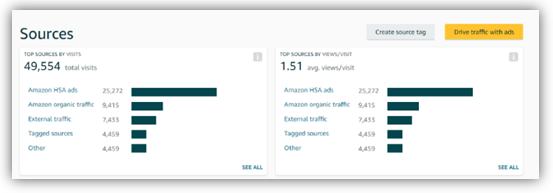
This helps pull data into Amazon but there are still issues for how to pull data OUT to other systems. It's not perfect, but it's more than we've had before, and it might be enough for folks to start exploring.
We've also discovered thatSellerly, a collection of Amazon business tools by Semrush, offers excellent marketing tools for Amazon listings designed to make selling on the marketplace easier and more effective. If Amazon's data insights are still not sufficient for you, give Sellerly a try!
Marketers understand that different ad types work better at different parts of the funnel. For example, Search is great at BOFu, Display at TOFu, etc. But what about how they work together?
Google released a report that marketers advertising on YouTube saw better conversion volume and rates from their Search campaigns. Specifically, Search conversions were 8% higher, conversion rates were 3% higher, and Search CPAs dropped 4%.
We all know that advertising on YouTube increases brand awareness and ad recall. The big questions are: Is this something driven by traditionally understood marketing practice? Or is Google itself actually influencing the algorithm to favor buyers who spend across multiple components of it's ad platform?
Regardless of what’s going on Google’s side, we recommend testing YouTube. Don’t just measure the direct performance, also measure the "halo effect" on other channels like Search & Social.

Yabba DABA Do!! Let’s discuss Facebook DABA campaigns. We think these campaigns have a lot of value for our clients.
Most folks think of Dynamic Ads as only supporting retargeting your website visitors and app users, limiting your audience size to the number of people who’ve interacted with you in the past. That’s why, despite the great performance, the possible investments advertisers have been able to make have been fairly restricted — typically, the biggest share of their budgets goes to acquiring new customers.
To help advertisers reach these audiences with top-performing ads, Facebook now offers the possibility to expand the reach of Dynamic Ads campaigns outside retargeting audiences.
Facebook’s Dynamic Ads for Broad Audiences (DABA) expands your dynamic ads to reach beyond your website or app visitors to generate demand. DABA campaigns serve personalized recommendations based on browsing activity and showcase the relevant inventory from your catalog to people likely to purchase.
Unlike lookalike audiences and retargeting site visitors, broad audience targeting captures intent in other places like:
DABA campaigns will have your potential customers saying….
What questions do you have for us? Have you tried DABA campaigns? Are you running YouTube ads? Comment below.


.svg)