
Organic search still drives roughly a third of all ecommerce website traffic. Yet most online stores leave that channel underbuilt -- relying on paid ads alone while competitors quietly capture high-intent buyers through search. A strong ecommerce SEO strategy changes that equation, turning your product catalog into a compounding traffic asset that reduces acquisition costs over time.
If you run a DTC brand or growth-stage store, this guide gives you the framework to build (or fix) your organic search foundation -- from keyword research through technical execution to the emerging AI search surfaces that now influence how shoppers discover products.
SEO for ecommerce websites is fundamentally different from SEO for content sites or SaaS companies. The challenges are specific:
These realities mean you need a purpose-built approach, not a generic checklist. The payoff is significant: organic traffic compounds month over month, and unlike paid channels, it does not reset to zero when you pause spend. For a deeper look at how search engine positioning directly impacts traffic volume, the data is clear -- ranking improvements translate directly to revenue.
Effective ecommerce keyword research starts with intent, not volume. Organize your keyword targets into three tiers:
| Intent Tier | Example Keywords | Target Page Type |
|---|---|---|
| Transactional | "buy organic cotton sheets queen" | Product page |
| Commercial investigation | "best organic cotton sheets 2026" | Category or comparison page |
| Informational | "organic cotton vs bamboo sheets" | Blog post or buying guide |
Practical steps to build your keyword map:
An experienced ecommerce SEO specialist will typically start here, because the keyword map dictates every optimization decision that follows.
Technical issues kill ecommerce sites quietly. A store can have great products and strong content, but if search engines cannot efficiently crawl and index the catalog, none of it surfaces in results.
Search engines allocate a finite crawl budget to each domain. Ecommerce sites waste that budget when faceted navigation creates thousands of parameter-based URLs that add no unique value. Address this by:
noindex or blocking them via robots.txtGoogle's Core Web Vitals remain a ranking factor, and for ecommerce, speed directly affects conversion rates. Key metrics to monitor:
Schema markup is no longer optional for ecommerce stores. Implementing Product schema enables rich results that display price, availability, ratings, and shipping information directly in search results.
Priority schema types for ecommerce:
Proper technical execution is where comprehensive ecommerce SEO packages deliver the most immediate impact, because these fixes often unlock rankings that content alone cannot achieve.
Your product and category pages are your money pages. Optimizing them correctly determines whether search traffic converts.
Category pages often have the highest ranking potential for competitive head terms. Strengthen them by:
Building brand trust through your SEO presence matters here -- shoppers who land on a well-structured category page with clear product information, reviews, and transparent policies are far more likely to convert.
Product pages alone will not capture the full range of search queries your buyers use. A content strategy fills the gaps, targeting informational and commercial investigation keywords that product pages cannot rank for.
High-performing content types for ecommerce:
Each piece should link to relevant product and category pages. This creates a content hub structure where blog posts feed authority and traffic into your commercial pages.
Content also plays a critical role in earning backlinks. Authoritative buying guides and original research attract links from publications, bloggers, and industry sites -- which strengthens your entire domain's ability to rank.
Search behavior is shifting. Buyers now discover products through AI-powered surfaces like Google's AI Overviews, ChatGPT, and Perplexity. This means your SEO for ecommerce websites strategy needs to account for how AI systems select and cite sources.
Key principles for AI search visibility:
This is still an emerging area, but brands that invest in structured, authoritative content now will have a meaningful advantage as AI search adoption continues to grow.
The strongest ecommerce search strategies do not treat SEO and paid search as separate channels. They work together. Paid search data reveals which keywords convert, informing your organic priority list. Organic rankings reduce your dependence on ad spend for branded and high-volume terms, freeing budget for prospecting campaigns.
For a detailed breakdown of how to build a balanced search marketing plan that combines SEO and SEM, the integrated approach consistently outperforms either channel in isolation.
Many brands work with an ecommerce SEO consultant or dedicated ecommerce SEO services team to run this combined model, because it requires coordination between content, technical SEO, and media buying -- disciplines that rarely sit in the same person's skillset. EmberTribe's SEO services are built around this integrated model, connecting organic performance directly to revenue outcomes.
Ecommerce SEO is not a one-time project. It is an ongoing system that compounds over time -- each technical fix, each optimized product page, each piece of content strengthens your store's ability to capture organic demand.
The priority order is clear:
Stores that treat SEO as infrastructure -- not a checkbox -- consistently see lower customer acquisition costs, more resilient traffic, and stronger brand positioning in their category. The work is methodical, but the results compound in ways that paid channels simply cannot replicate.


The team at EmberTribe is proud to introduce J.P. VanderLinden as our first Director of Digital Marketing. From day one, EmberTribe has been committed to providing every client with exceptional service from knowledgeable industry experts. Bringing J.P. on board reaffirms that commitment and raises the bar for what our clients can expect.
Building a growth marketing agency is not just about assembling a team of skilled practitioners. It is about finding people who share a fundamental belief in how marketing should work: fast, transparent, and results-driven. When we met J.P., it was immediately clear that his philosophy aligned with the core principles EmberTribe was built on.
As Director of Digital Marketing, VanderLinden leads our paid acquisition team as we continue to provide clients with real marketing results quickly and efficiently. He also works cross-functionally with our analytics and UX teams to amplify campaign results and provide clients with complete visibility into performance data.
This cross-functional approach is central to how EmberTribe operates. Paid acquisition does not exist in a vacuum. The best campaigns are informed by analytics, supported by strong creative, and validated by conversion rate optimization. J.P.'s role bridges these disciplines so that every dollar a client spends on ads is backed by data and strategic thinking.
We built EmberTribe based on the idea that companies should see results from their marketing agency in weeks, not months. By rapidly testing, iterating, and scaling campaigns, we have been able to expand and create new lead generation channels for many of our clients in just a few weeks. This agile style of marketing is what initially drew VanderLinden to EmberTribe.
"From our first conversation, it was clear that our brand of agile marketing is what gets this guy out of bed every morning," says Co-Founder Josh Sturgeon. "J.P.'s commitment to providing clients with rapid results is why the decision to bring him on board was such a no-brainer."
The traditional agency model often looks like this: sign a contract, wait three months for a strategy deck, wait another two months for campaign launches, and then wait even longer for meaningful data. That timeline does not work for growth-stage companies with limited runway and aggressive targets. EmberTribe's approach compresses that entire cycle into weeks, and J.P.'s expertise in paid acquisition and performance marketing makes him the ideal person to lead that charge.
Agile marketing at EmberTribe follows a structured but flexible framework:
This approach applies across Facebook and Instagram ads, Google Ads, TikTok, and every other channel in the paid media mix.
VanderLinden's seven years of digital marketing experience has allowed him to work with dozens of clients across multiple industries in areas such as social media, SEO, email marketing, analytics, and copywriting. However, VanderLinden sees his future, and the future of digital marketing, in paid acquisition and analytics.
"Facebook, Twitter, Google, and all of these other networks are the future of digital marketing," says VanderLinden. "As a marketer, my job is to figure out how I can best leverage these networks to reach the right audience with the right message. By merging paid acquisition with analytics, we can quickly tap into these networks to provide our clients with results that will move the needle for them in weeks, not months."
That integration of paid media and analytics is not just a nice-to-have. It is the foundation of every successful performance marketing program. Without clear attribution and measurement, even the most creative campaigns are flying blind. J.P. brings a rigorous analytical mindset to every engagement, ensuring that creative decisions are always grounded in data.
J.P.'s work at EmberTribe centers on several key areas that directly impact client growth:
Every hire at EmberTribe is made with one question in mind: will this person make our clients more successful? The digital marketing landscape is complex and constantly changing. Growth-stage companies and DTC brands need partners who can keep up with platform changes, algorithm shifts, and evolving consumer behavior.
That is why EmberTribe invests in people who are not just skilled executors but genuine students of the craft. J.P. exemplifies this trait. His deep curiosity about how platforms work, combined with hands-on experience managing significant ad budgets, makes him uniquely effective at translating strategy into measurable results.
VanderLinden also fits seamlessly into EmberTribe's remote-first culture. "Some people love being surrounded by an office environment. However, I love the freedom of working remotely. I can reserve all of my water cooler talk for Slack," he says.
Remote work is not just a perk at EmberTribe. It is a strategic advantage. By hiring the best talent regardless of geography, we assemble teams that would be impossible to build in any single city. Our distributed model also means that clients benefit from diverse perspectives and round-the-clock availability.
The values that guide our team are straightforward:
These values are not aspirational statements on a wall. They are operating principles that shape every campaign, every client interaction, and every hiring decision, including this one.
With J.P. leading our paid acquisition efforts, clients can expect faster campaign launches, more rigorous testing frameworks, and deeper analytical insights into campaign performance. His expertise in managing growth marketing channels across the full funnel means that acquisition campaigns are always aligned with broader business objectives.
VanderLinden is already providing results to some of EmberTribe's premier clients. Whether you are looking to scale Facebook ads, build out a multi-channel paid strategy, or simply need a fresh perspective on why your current campaigns are underperforming, the team is here to help.
If you would like to discuss how EmberTribe's agile approach to paid acquisition can accelerate your growth, reach out to our team to start the conversation.

Are your Instagram ads failing to generate the results you expected? Don't worry, you're not alone. Many businesses encounter difficulties when it comes to running successful Instagram and social media advertising campaigns. However, understanding the underlying reasons behind these setbacks is the first step towards improvement. In this article, we will delve into the basics of Instagram advertising, explore common reasons why your ads may not be working, discuss strategies to enhance your ad performance, and analyze case studies of successful Instagram ad campaigns. Let's get started!
Instagram advertising has become an essential tool for businesses to reach their target audience effectively. With its wide user base and engaging visual content, Instagram offers various advertising formats, including photo ads, video ads, carousel ads, and more. However, to make the most of your advertising efforts, it's crucial to have a solid understanding of how Instagram ads work and how to identify your target audience accurately.
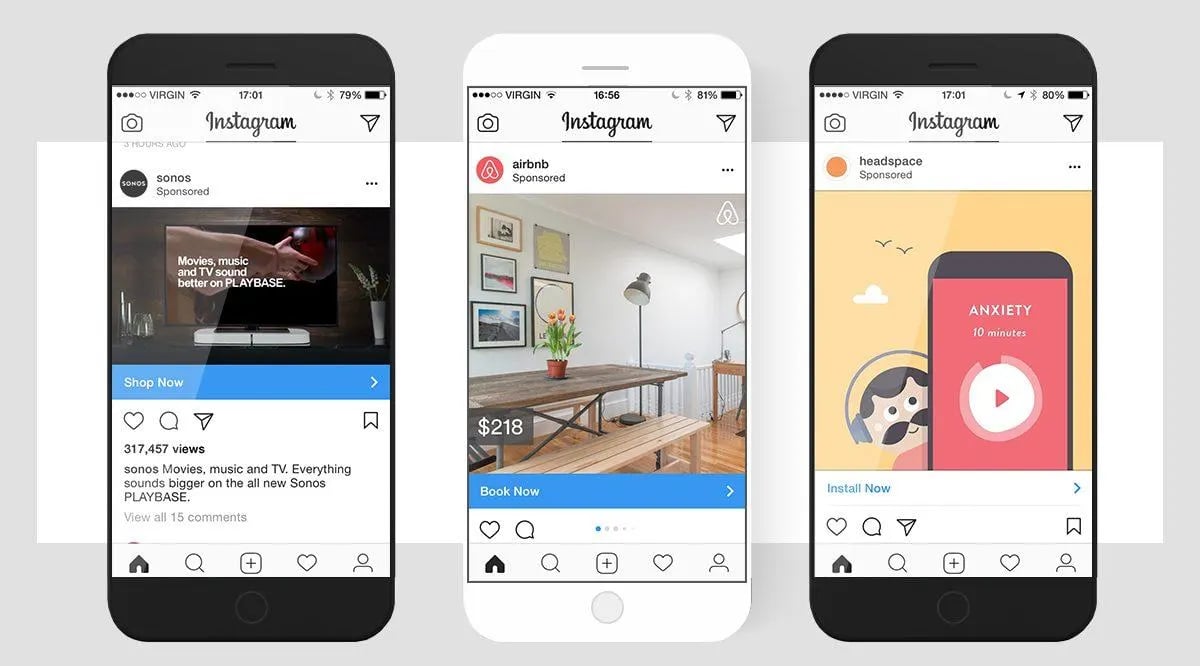
Instagram ads operate by leveraging the platform's vast user data and targeting capabilities. When businesses create an ad campaign, they can define specific parameters to ensure their ads are displayed to the right audience. These parameters include interests, behavior, demographics, and more. By utilizing this data, Instagram serves ads to users who are more likely to engage with the content, increasing the chances of achieving the desired results.
When users scroll through their Instagram feed, they may come across sponsored posts that seamlessly blend with the organic content. These ads are designed to capture attention and encourage users to take action, such as visiting a website, making a purchase, or engaging with the brand in some way. The visual nature of Instagram ads allows businesses to showcase their products or services creatively, making them more appealing to potential customers.
One of the key factors in running successful Instagram ad campaigns is accurately identifying your target audience. Understanding who your ideal customers are and tailoring your ads to their preferences and needs is crucial for achieving optimal results.
Identifying your target audience involves analyzing demographic data, understanding consumer behavior, and conducting specialized research. By diving deep into your audience's characteristics, interests, and habits, you can create highly targeted ads that resonate with them on a personal level. This level of personalization not only increases the chances of engagement but also helps build brand loyalty and trust.
Failure to define your target audience properly can lead to ineffective ad performance and wasted resources. If your ads are not reaching the right people, you may experience low engagement, high bounce rates, and a low return on investment. Therefore, investing time and effort in identifying your target audience is essential for the success of your Instagram advertising campaigns.
Are you frustrated with the lack of results from your Instagram ads? If so, you're not alone. Many businesses struggle to achieve the desired outcomes from their ad campaigns on this popular social media platform. In this article, we will explore some common reasons why your Instagram ads may not be working and provide insights on how to improve their performance.
One of the most common reasons for underperforming Instagram ads is a poorly defined target audience. If you haven't invested enough time and effort into understanding who your ideal customer is, it's challenging to create ads that resonate with them. It's like shooting in the dark without a clear target.
To address this issue, take a step back and revisit your audience segmentation. Dig deep into market research and customer profiling to gain a comprehensive understanding of your target audience's demographics, interests, and behaviors. By doing so, you can tailor your ad content to their specific needs and preferences, increasing the likelihood of engagement and conversions.
Another crucial factor affecting the performance of your Instagram ads is the quality of your ad content. Are your visuals eye-catching? Is your copy compelling? Do your ads effectively convey your message and call-to-action?
If your ad content fails to capture attention and engage your audience, it's unlikely to drive the desired results. To create more effective ad content, start by analyzing your target audience's preferences and interests. Craft visually appealing images or videos that align with their aesthetics and showcase the value your product or service provides.
Moreover, pay close attention to your ad copy. Use persuasive language that resonates with your audience and clearly communicates the benefits they can expect. Incorporate strong calls-to-action that prompt users to take the desired action, such as visiting your website, making a purchase, or signing up for a newsletter.
Ad placement plays a vital role in determining your ad's reach and visibility. Instagram offers different ad placements, such as feed ads, stories ads, explore ads, and more. Selecting the wrong placement can result in your ads being shown to the wrong audience or in an ineffective context.
Ensure you choose the most suitable placement for your audience and campaign goals. For example, if you're targeting a younger demographic, stories ads might be more effective as they are a popular feature among Instagram users in that age group. On the other hand, if you want to showcase your product or service in a more detailed manner, feed ads might be the better option.
Experiment with different ad placements and closely monitor their performance. Analyze the data and make data-driven decisions to optimize your ad placements for maximum impact.
By addressing these common issues, you can improve the performance of your Instagram ads and increase your chances of achieving your marketing objectives. Remember, success on Instagram requires a deep understanding of your target audience, compelling ad content, and strategic ad placement. Keep refining your approach and stay proactive in adapting to the ever-changing landscape of social media advertising.
When it comes to evaluating the performance of your Instagram ads, simply running them is not enough. You need to measure and analyze relevant metrics to gain a comprehensive understanding of how well your ads are performing. Luckily, Instagram provides a plethora of valuable insights that can help you make informed decisions and optimize your campaigns for better results.

One of the key metrics to look at when evaluating your Instagram ad performance is impressions. Impressions refer to the number of times your ad has been displayed to users. This metric gives you an idea of how many people have seen your ad, which is crucial in assessing its reach.
Another important metric to consider is reach. Reach measures the number of unique users who have seen your ad. It provides a more accurate representation of your ad's visibility and can help you gauge the effectiveness of your targeting strategies.
Engagement is yet another vital metric to analyze. It measures the level of interaction users have with your ad, such as likes, comments, and shares. By monitoring engagement, you can determine how well your ad resonates with your target audience and whether it is driving the desired actions.
Click-through rates (CTR) are also worth examining. CTR measures the percentage of users who clicked on your ad after seeing it. A high CTR indicates that your ad is compelling and successfully driving users to take action, such as visiting your website or making a purchase.
By closely monitoring these metrics, you can identify patterns and trends in your ad performance. For example, if you notice a high number of impressions but a low engagement rate, it may indicate that your ad is not resonating with your target audience. Armed with this knowledge, you can make data-driven decisions to optimize your campaigns and improve your results.
Instagram Insights is a powerful tool that provides a wealth of information about your audience and their behavior. By leveraging this data, you can gain valuable insights into your audience's demographics, interests, and preferences.
Demographic insights allow you to understand the age, gender, and location of your audience. This information is crucial for refining your targeting strategies and ensuring that your ads are reaching the right people. For example, if you discover that the majority of your audience is located in a specific city, you can tailor your ads to cater to their local interests or preferences.
Interest insights provide you with a deeper understanding of what topics and content your audience is interested in. This knowledge allows you to create more personalized and impactful ad experiences that resonate with your target audience. For instance, if you find that your audience is highly interested in fitness and wellness, you can create ads that highlight the health benefits of your products or services.
Furthermore, Instagram Insights also offers data on the days and times when your audience is most active on the platform. This information can help you schedule your ads to reach your audience at the most opportune moments, increasing the likelihood of engagement and conversions.
By utilizing Instagram Insights effectively, you can refine your targeting strategies, create more personalized ad experiences, and ultimately drive better results for your Instagram ad campaigns.
To increase the effectiveness of your Instagram ads, consider reevaluating and refining your target audience. Use the insights gained from your analytics and research to create detailed buyer personas and adjust your ad targeting accordingly. By accurately positioning your ads in front of the right people, you can significantly improve your campaign outcomes.
Amp up the quality and impact of your ad content to capture the attention of your audience. Invest in high-quality visuals, ensure your copy is concise and persuasive, and incorporate compelling calls-to-action. Experiment with different creative elements to find what resonates best with your audience and continuously optimize your ad content for maximum engagement.
Carefully consider where your ads are placed within the Instagram platform. Test different ad placements and closely monitor their performance. You may find that certain ad formats, such as stories ads, perform better for your target audience. By strategically optimizing your ad placement, you can increase visibility and reach users who are more likely to convert.

Having a strong online presence is essential for the success of any business, but knowing exactly what is holding your website back in search rankings is a different challenge entirely. An SEO audit is a comprehensive analysis of your website's search engine optimization performance, identifying the specific issues that are limiting your visibility and providing a clear roadmap for improvement.
While you can attempt to perform an SEO audit in-house, hiring an SEO audit agency provides significant advantages that directly impact your bottom line. Below, we explore three core reasons why partnering with a specialized agency is a smart investment for your online business.
An SEO audit is the process of systematically analyzing your website's performance across every factor that influences search engine rankings. It evaluates on-page optimization, off-page authority, technical infrastructure, and user experience to identify weaknesses and opportunities.

A thorough audit examines several critical dimensions of your site.
On-page optimization includes meta tags, keyword usage, heading structure, content relevance, and internal linking. Auditors assess whether your content is properly optimized for the search queries your audience actually uses, and whether your pages are structured in a way that search engines can easily interpret.
Off-page optimization involves analyzing your backlink profile, social media presence, and online reputation. The quality, relevance, and diversity of sites linking to yours directly influence how much authority search engines assign to your domain. A weak or toxic backlink profile can actively suppress your rankings.
Technical SEO covers site speed, mobile-friendliness, crawlability, indexation, structured data, and security. These are the infrastructure elements that determine whether search engines can efficiently access and understand your content. Technical issues are often invisible to site owners but can have an outsized impact on search engine positioning.
User experience factors include page load speed, mobile responsiveness, navigation clarity, and overall usability. Google has made it clear that user experience signals, including Core Web Vitals, are direct ranking factors. A site that frustrates visitors will struggle to rank regardless of how strong the content is.
An SEO audit provides a baseline understanding of where your website currently stands and what specific changes will have the greatest impact on visibility and traffic.
Without an audit, most businesses operate on assumptions about what is working and what is not. They might invest heavily in content production while a technical crawl error is preventing half their pages from being indexed. Or they might chase new backlinks while their existing content fails to target keywords with meaningful search volume.
An audit eliminates guesswork. It provides data-driven priorities that allow you to allocate time and budget to the changes that will move the needle most. Brands that conduct regular audits also stay ahead of algorithm updates and shifting competitive dynamics, maintaining their edge in search results over time.
An SEO audit agency brings specialized tools, experience, and objectivity that are difficult to replicate in-house. Their role extends beyond identifying problems to providing strategic recommendations, implementation guidance, and ongoing performance monitoring.
The primary function of an audit agency is to uncover the specific weaknesses limiting your search performance. This involves a systematic review of every SEO-relevant element of your website, from individual page-level optimization to site-wide technical health.
Agencies use enterprise-grade tools to crawl your entire site, analyze your backlink profile, benchmark your performance against competitors, and identify patterns that indicate underlying issues. They examine content quality and relevance, keyword targeting effectiveness, internal link structure, page speed across devices, and dozens of other factors.
The result is a comprehensive picture of your SEO health, with specific, prioritized issues ranked by their impact on performance.
Identifying problems is only half the equation. A strong audit agency translates findings into actionable recommendations with clear implementation steps.
These recommendations might include rewriting meta tags to improve click-through rates, restructuring site navigation to improve crawl efficiency, updating content strategy to target higher-value keywords, compressing images to improve page speed, or building a link acquisition plan to strengthen domain authority.
Effective agencies prioritize recommendations by expected impact and implementation difficulty, giving you a clear roadmap for which changes to tackle first. This strategic framework ensures that every dollar and hour invested in SEO improvements produces measurable results.
SEO is not a one-time project. Search algorithms evolve, competitors adjust their strategies, and user behavior shifts. A quality audit agency monitors key performance indicators including organic traffic, keyword rankings, conversion rates, and technical health metrics on an ongoing basis.
This continuous monitoring allows the agency to identify emerging issues before they become problems, spot new ranking opportunities, and adjust strategy in response to competitive or algorithmic changes. The result is a website that maintains and improves its search performance over time rather than experiencing the common cycle of improvement followed by gradual decline.
SEO is a complex and rapidly evolving field. The algorithms that determine search rankings incorporate hundreds of signals, and those signals change regularly. Keeping up with these changes while also running a business is a significant challenge.
An audit agency provides access to a team of specialists who dedicate their careers to understanding search engine behavior. These professionals have experience across dozens or hundreds of client sites, which gives them pattern recognition abilities that are impossible to develop working on a single website.
They understand the nuances of different industries, the competitive dynamics of various keyword landscapes, and the specific technical configurations that influence crawling and indexing. This depth of knowledge allows them to identify issues and opportunities that an in-house team without specialized SEO experience would likely miss.
The difference between generic SEO advice and expert analysis can be substantial. A specialist might identify that your site's JavaScript rendering is preventing Google from seeing your content, that your internal linking structure is diluting authority from your most important pages, or that your content is cannibalizing itself by targeting the same keywords across multiple pages. These are not issues that surface through basic analysis.
Google makes thousands of algorithm updates each year, including several major core updates that can dramatically shift rankings overnight. An audit agency actively monitors these changes, understands their implications, and adjusts recommendations accordingly.
This matters because SEO best practices evolve continuously. Tactics that were effective two years ago may be neutral or even harmful today. An agency ensures your strategy reflects the current state of search rather than outdated assumptions.
For example, Google's increasing emphasis on E-E-A-T (Experience, Expertise, Authoritativeness, Trustworthiness) has changed how content needs to be structured and attributed. An agency that understands these shifts can help you adapt your content strategy proactively rather than reactively.
Running an online business demands attention across product development, customer acquisition, operations, and support. Attempting to conduct a comprehensive SEO audit internally pulls focus from these core activities and often produces incomplete results.
Outsourcing your SEO audit allows you to maintain focus on what you do best while experts handle the technical analysis. The time savings extend beyond the audit itself. Without specialized knowledge, an in-house team might spend weeks researching and implementing changes that an agency can identify and recommend in days.
This is particularly relevant for growth-stage companies where the leadership team's time is the scarcest resource. Every hour spent trying to diagnose SEO issues is an hour not spent on product improvement, customer relationships, or strategic planning.
Audit agencies have established processes, specialized tools, and experienced teams that allow them to conduct thorough audits efficiently. What might take an in-house team weeks of trial and error, an agency can complete in a fraction of the time with greater accuracy.
They also have access to premium tools that would represent a significant investment for a single company. Enterprise crawlers, rank tracking platforms, backlink analysis databases, and competitive intelligence tools are all part of the standard agency toolkit. These tools provide data that is simply unavailable through free alternatives.
The perception that hiring an SEO audit agency is expensive often prevents businesses from making this investment. In reality, the cost of not having expert guidance typically far exceeds the cost of the agency engagement.
SEO mistakes can have serious and long-lasting consequences. A poorly executed site migration can destroy years of accumulated organic authority overnight. Targeting the wrong keywords can waste months of content production effort. Building low-quality backlinks can trigger penalties that take months to recover from.
An agency's expertise prevents these mistakes before they happen. They have seen what works and what backfires across hundreds of engagements, and they apply that experience to protect your investment. The cost of a single major SEO mistake, measured in lost traffic and revenue, can easily exceed the cost of years of agency partnership.
The ultimate measure of any marketing investment is ROI, and SEO consistently delivers some of the highest returns available. Unlike paid advertising where every visitor has an associated cost, organic traffic from SEO compounds over time. A single well-optimized page can drive thousands of visitors per month for years after it is published.
An audit agency helps you maximize this return by ensuring your SEO efforts are focused on the highest-impact opportunities. Rather than spreading resources thin across dozens of minor improvements, they help you identify the changes that will drive the most significant gains in traffic and conversions.
Consider this scenario: your site receives 10,000 organic visitors per month at a 2% conversion rate. An audit identifies technical issues and content optimization opportunities that improve both traffic and conversion rate. Even modest improvements, say 20% more traffic and a 0.5 percentage point increase in conversion rate, translate into meaningful revenue gains that far exceed the cost of the audit.
Not all agencies deliver equal value. When evaluating potential partners, look for these qualities:
Hiring an SEO audit agency for your online business is a strategic decision that pays dividends across every dimension of your digital presence. The combination of specialized expertise, time savings, and cost-effective strategy makes it one of the highest-ROI investments available to growth-stage brands.
The brands that consistently win in search are the ones that invest in understanding their current position, identifying the highest-impact opportunities, and executing systematically against a data-driven plan. An experienced audit agency provides all three.
The first step is straightforward: get a clear picture of where your website stands today. From there, every improvement is measurable, every investment is defensible, and every gain compounds over time.

Search advertising has become a popular strategy to drive traffic to websites and increase brand visibility. Two common approaches to search advertising are Dynamic Search Ads (DSA) and Responsive Search Ads (RSA). But which is better for your business? In this article, we will delve into the basics of search ads, explore the mechanisms behind DSA and RSA, compare their performance and costs, and provide insights to help you make an informed decision.
Search ads are a powerful tool for businesses to reach their target audience and increase their online visibility. By understanding the different types of search ads available, you can optimize your advertising strategy and maximize your return on investment.
Dynamic Search Ads, or DSA, are a type of search advertisement that relies on Google's algorithm to match relevant search queries with the content of your website. Instead of relying on specific keywords, DSA dynamically generates headlines and landing pages based on the information found on your website.

This automation allows for a more targeted and efficient advertising approach. With DSA, you can reach potential customers who are actively searching for products or services similar to what you offer, even if they are not using the exact keywords you have specified in your campaign.
DSA is particularly useful for businesses with large websites or frequently changing inventory. It saves time and effort by automatically creating and updating ads based on the content of your website. This means that as your website evolves, your ads will adapt accordingly, ensuring that your advertising remains relevant and up-to-date.
When a user enters a search query that matches the content on your website, Google's advanced algorithms come into play. These algorithms analyze the user's search intent and dynamically generate a headline and landing page for your ad. This process ensures that your ads are highly relevant to the user's search, increasing the chances of capturing their attention and driving them to click on your ad.
DSA takes advantage of Google's extensive web crawling technology, which continuously scans and indexes websites across the internet. This allows DSA to stay up-to-date with the latest content on your website, ensuring that your ads reflect the most current information available.
On the other hand, Responsive Search Ads, or RSA, are a flexible ad format that allows you to create multiple headlines and descriptions. Google will automatically test different combinations to determine the best-performing variations. With RSA, you can provide up to 15 different headlines and 4 descriptions, giving you a wide range of possibilities to tailor your ad to various search queries. This flexibility allows you to experiment with different messaging and calls to action, helping you find the most effective combination that resonates with your target audience.
The functioning of RSA is quite fascinating. When you provide multiple headlines and descriptions, Google's algorithm starts testing different combinations to see which ones resonate best with your target audience. It analyzes various factors such as user behavior, search intent, and historical performance to determine the most compelling ad variations.
As the algorithm learns and gathers insights about your audience, it adapts and optimizes your ads accordingly. This means that over time, your ads become more tailored and compelling, increasing the chances of driving higher engagement and conversions.

When it comes to performance, both Dynamic Search Ads (DSA) and Responsive Search Ads (RSA) have their strengths and offer unique benefits for advertisers.
DSA is well-suited for websites with a large inventory or frequently changing content. It automatically generates ads based on your website's content, saving you time and effort in creating individual ads for each product or service. This dynamic approach ensures that your ads are always up-to-date and relevant to what users are searching for.
At the same time, RSA allows for more ad customization and testing. With RSA, you can create multiple headlines and descriptions, and Google's machine learning algorithms will automatically test different combinations to find the most effective ad variations. This enables you to fine-tune your messaging based on user preferences and increase the chances of capturing the attention of potential customers.
Ultimately, the optimal approach may vary depending on your specific business needs and goals. If you have a large inventory or frequently changing content, DSA can be a powerful tool to ensure your ads are always relevant. If you prefer more control over your ad messaging and want to test different variations, RSA offers greater flexibility.
In terms of cost, both DSA and RSA operate under a pay-per-click (PPC) model, where you only pay when a user clicks on your ad. This means that you are not charged for impressions or views, but only for actual engagement with your ads.
While the actual costs can vary depending on factors such as competition and ad quality, both DSA and RSA offer a cost-efficient way to reach your target audience. With DSA, you can benefit from automatically generated ads that are tailored to the content of your website, potentially increasing the relevance and click-through rate of your ads. With RSA, the ability to test different ad variations can help you optimize your campaigns and improve your return on investment.
It's important to carefully monitor and optimize your campaigns, regardless of whether you choose DSA or RSA, to maximize your return on investment. Regularly reviewing your ad performance, adjusting your targeting options, and refining your ad messaging can help you achieve better results and make the most out of your advertising budget.

Advertising goals and customization:
Target audience and search intent:
Ultimately, the decision between DSA and RSA depends on your specific business needs and goals. Some businesses may benefit from a combination of both approaches, using DSA to capture a broad audience and RSA to tailor messaging for specific target segments. Regular analysis and optimization of your search ad campaigns will help you refine your strategy and achieve better results over time.

Note: We've put together a scorecard that you can download and use in your own quest to create "growth content". Check it out!
Content marketing feels like a crapshoot sometimes, doesn't it?
After hours of research, writing and re-writing, you hit “publish” with the expectation that thousands of visitors will come charging through the front doors of your blog, eager to read and share your work.
Hours pass, then days, then weeks, but there’s nothing. Nada. No one. Crickets.
But what if you were able to publish content that predictably drives measurable business value?
It's what we call growth content.
"Growth content" >>> Content that drives measurable business value in the form of new users, leads, or sales.
Our team spent hours sifting through some of the world's best growth content and then built a framework from these observations. Below are the five key factors common to every great piece of growth content.
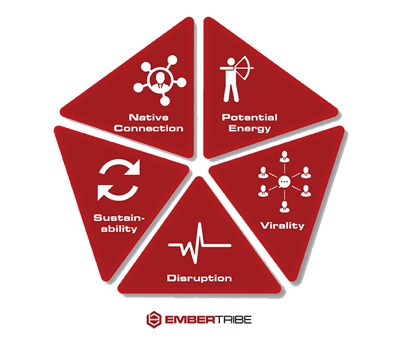
When a user first encounters your content, there's an obvious next step for them to take after reading: all roads point to your product or service. A “native connection” is a natural link between what you’re writing and what you sell.
The connection isn’t forced and the next steps for users to take is seamless. Content pieces that score high with native connection may not even make sense on their own without being able to reference a product.
At the very least, the value of the content would diminish greatly if the product did not exist. This is the case for Zapier, a technology company who has cracked the code on consistently finding that native connection.
Example: Zapier wrote anextensive blog post that unpacks the pros and cons of 25 different free CRMs. Their product helps connect apps that businesses use frequently to automate repetitive tasks. The bridges they build between apps for these tasks are called “zaps”.
Zapier built a widget that showcases zaps for each CRM solution, like this one for Google Sheets:
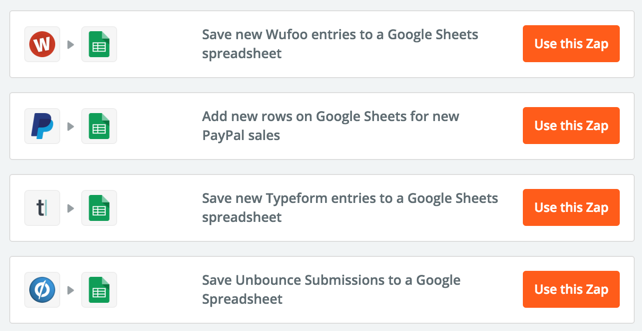
These zaps help users connect their website forms with the Google Sheets CRM option. This is brilliant, contextual placement for their product. It adds value to the content and provides a seamless next step for users to sign up for a free Zapier account.
Where does your content land on our native connection scorecard?
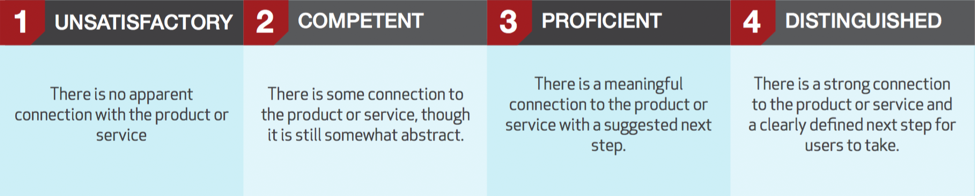
Download the entire scorecard here
Do you remember learning about potential energy in high school science? If you missed that class, let me refresh your memory. Potential energy describes the “stored” energy an object has due to its position. A bowling ball has potential energy when you hold it above your head (go ahead, let go of the ball to see what I mean).
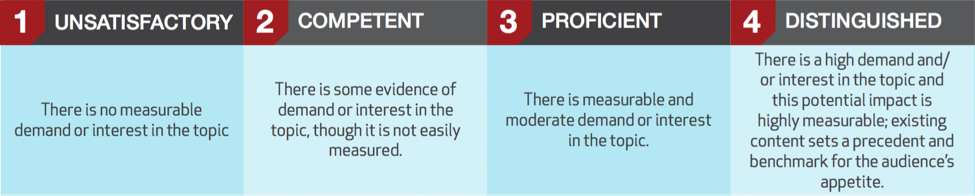
For content to have high potential energy, it must address a key problem, goal, or collective experience shared by many in your target audience.
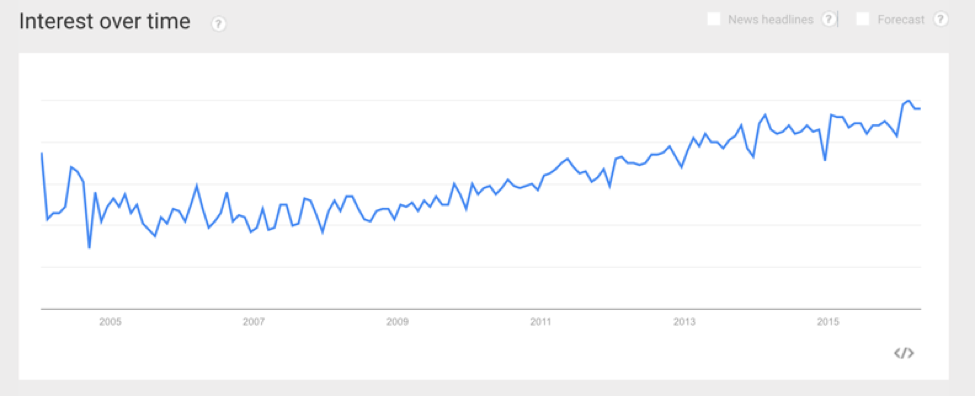
Potential energy might be measured by a high level of keyword search volume for the topic, a popular Q&A thread on sites like Quora, or a highly shared article on a similar topic.
Example: The Zapier content piece cited above targets over 50k searches per month on Google for queries related to "free CRM". Also, the interest in this topic is steadily rising, as reported by Google Trends:
Where does your content land on our potential energy scorecard?
Download the entire scorecard here
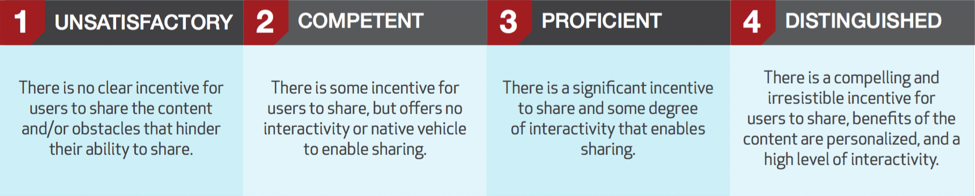
Viral content reproduces visits, shares or links, with exponential returns. If your content's got virality, it begs to be shared and provides a seamless and/or unique way for users to share it on social media.
In most cases, this means that the content piece features some degree of interactivity. The interactive nature of the piece demands action from a user.
The lowest leg of viral interactivity is a social sharing button. This is where most marketers begin and end.
Moving up the ladder, we see the likes of interactive quizzes and calculators. The basic formula for success that emerges here is giving users a highly personalized, upgraded version of the content they're reading.
Example: Zenni Optical created aquiz that helped people find a style of frames that suits their lifestyle.
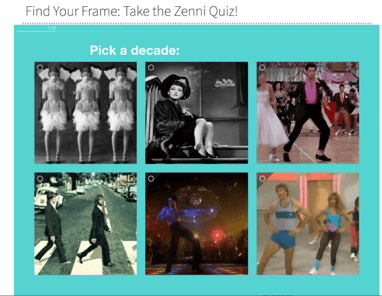
The quiz makes it easy for the user to share the personalized result on social media.
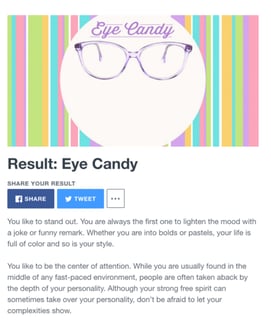
The results? 140,000 people took the quiz, 7,000 new email subscribers, and a $124,000 increase in revenue.
Where does your content land on our virality scorecard?
Download the entire scorecard here
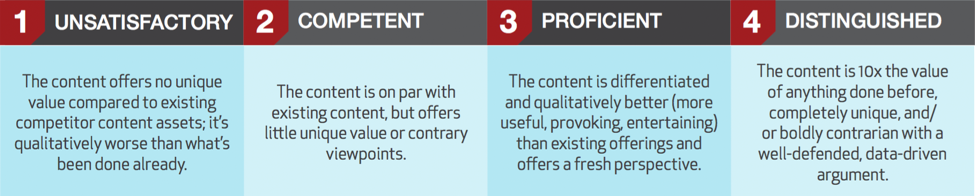
Content is disruptive if it provides unique value compared to what’s currently “on the market”. Extra points if that unique value is directly tied to your product or service.
Example: BuzzSumo's blog leverages its own proprietary data, to produce massive research studies, like, How To Improve Facebook Engagement: Insights From 1bn posts
Download the entire scorecard here
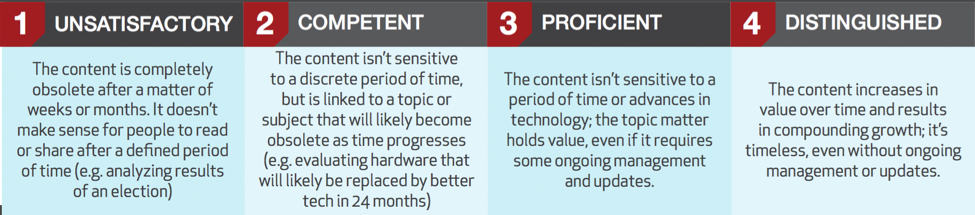
For content to be sustainable, it must be evergreen -- it has staying power long after it's introduced to the world. Thus it drives compounding growth over time, and isn't made obsolete after a news cycle or particular season ends.
The crown jewel of an evergreen piece is something that grows in value as time progresses. For example, a piece that leverages user-generated content like reviews or comments.
Just because something is evergreen doesn't mean it shouldn't be updated over time. In fact, some of the best evergreen content pieces lend themselves well to updates.
Example: Moz'sSearch Engine Ranking Factors is updated each year with a comprehensive outlook on what it takes to rank high in search results.
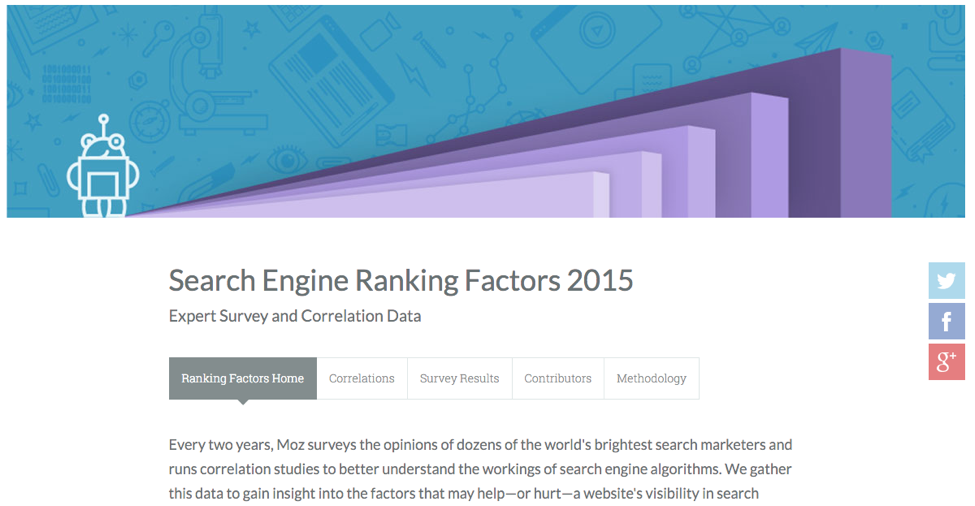
Moz draws on millions of data points that they've accumulated using their own product and technology, along with the opinions and experiences of top industry SEOs. While the URL remains the same each year, the title and data are updated and the content piece continues to drive thousands of new links, visits and customers.
Where does your content land on our sustainability scorecard?
Download the entire scorecard here
Think of this growth content framework as a strategic tool, rather than a diagnostic to grade the existing content in your inventory.
As you’re brainstorming fresh content ideas with the goal of driving new user acquisition or sales, use this framework to prioritize certain ideas over others.
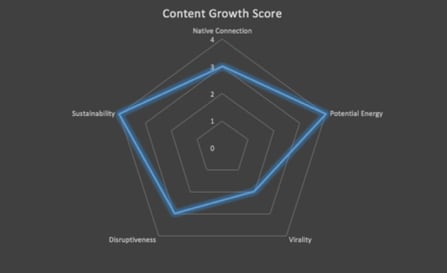
You can use the rubric we’ve created to grade your top contenders and visualize the grade like so:
Lastly, we recognize that not all content creation efforts should aim to produce growth content pieces. The needs of your audience are diverse and their path to purchase is unique. Plan appropriately for each stage in the buyer’s journey, but don’t neglect opportunities to include these attributes that are proven to drive exponential growth.
As businesses strive to connect with their target audience, Facebook Lead Ads have emerged as a valuable tool. Understanding the importance of Facebook Lead Ads and harnessing their benefits can significantly enhance your marketing strategy. Moreover, automating the integration of Facebook Lead Ads with Google Sheets can streamline your data management processes. This is where Zapier, a leading automation tool, comes into play.
Facebook Lead Ads have revolutionized the way businesses gather leads and interact with potential customers. With an aim to simplify the lead generation process, Facebook provides an efficient platform for businesses to showcase their products or services directly to their target audience. Unlike traditional lead generation methods, Facebook Lead Ads eliminate the need for users to fill out lengthy forms, resulting in higher conversion rates.
But what makes Facebook Lead Ads so effective? One key factor is the power of Facebook's extensive user base and advanced targeting capabilities. With over 2.8 billion monthly active users, Facebook allows businesses to precisely reach their desired audience. By leveraging demographic, geographic, and interest-based targeting options, businesses can ensure that their ads are seen by the right people at the right time. This precision targeting not only increases the chances of lead generation but also allows for a more efficient allocation of marketing resources, leading to improved ROI.
Besides, Facebook Lead Ads offer a seamless user experience. When a user clicks on a lead ad, a pre-populated form appears, already filled with their Facebook profile information. This eliminates the need for users to manually enter their details, making the process quick and convenient. By reducing friction in the lead generation process, Facebook Lead Ads significantly increase the likelihood of users completing the form and becoming leads.
Facebook Lead Ads have revolutionized the way businesses gather leads and interact with potential customers. Automating the integration of Facebook Lead Ads with Google Sheets brings numerous benefits to businesses. By eliminating the manual transfer of data from Facebook to Google Sheets, automation saves valuable time and reduces the risk of human error. This ensures accurate and up-to-date data in your Google Sheets, enabling you to make data-driven decisions with confidence.
Additionally, automation enables real-time data syncing. As new leads come in through Facebook Lead Ads, the information is automatically updated in your Google Sheets. This real-time access to leads empowers your sales and marketing teams to react promptly, improving response times and increasing the chances of lead conversion.
Moreover, automating the integration between Facebook Lead Ads and Google Sheets allows for seamless collaboration and data sharing within your organization. Multiple team members can access and work with the lead data simultaneously, fostering better teamwork and coordination.
Furthermore, automation opens up opportunities for advanced data analysis and reporting. With the lead data readily available in Google Sheets, businesses can leverage various data visualization tools and techniques to gain deeper insights into their lead generation efforts. This enables businesses to identify trends, patterns, and areas for improvement, ultimately optimizing their lead generation strategies, which, in the end, will enhance lead management process, save time, reduce errors, and enable data-driven decision-making.
Google Sheets is a powerful cloud-based spreadsheet tool that offers a wide range of features for data management and analysis. Whether you're dealing with simple lists or complex datasets, Google Sheets provides a user-friendly interface and robust functionality.
Google Sheets offers several advantages for businesses in terms of collaboration, accessibility, and integration. Firstly, multiple team members can work on the same sheet simultaneously, fostering collaboration and boosting productivity.
Secondly, Google Sheets provides seamless accessibility. As a cloud-based platform, it enables you to access your data from anywhere, ensuring that you are always in sync with the latest information.
Lastly, Google Sheets integrates smoothly with other Google Workspace tools. This integration allows for efficient data import/export processes and enables the utilization of additional analysis and visualization tools.
Google Sheets offers a wide array of functionalities that make data management a breeze. From data validation and conditional formatting to filtering and sorting capabilities, Google Sheets provides the tools you need to organize and analyze your data effectively.
Furthermore, Google Sheets supports powerful functions and formulas that enable complex calculations and data manipulation. These features empower you to derive insights from your data, enhancing your decision-making process.

Zapier is an automation platform that enables you to connect various apps and automate workflows without the need for coding. With its user-friendly interface and extensive app directory, Zapier streamlines repetitive tasks and enhances productivity.
Zapier operates on a simple principle: "If this, then that." This means that when a trigger event occurs in one app, Zapier performs the specified actions in another app. These automated actions, known as Zaps, enable seamless data transfer and task automation across multiple apps.
To connect your Facebook Lead Ads to Google Sheets, Zapier acts as the bridge between the two platforms. It monitors your Facebook Lead Ads for new leads and transfers the collected data to your specified Google Sheets, eliminating manual data entry.
Zapier offers several advantages when it comes to automating the integration of Facebook Lead Ads with Google Sheets. Firstly, Zapier provides a wide range of built-in integrations, including comprehensive support for Facebook Lead Ads and Google Sheets.
Secondly, Zapier's automation capabilities enable you to set up advanced workflows and perform complex actions. For example, you can apply filters and conditions to control which leads are transferred to Google Sheets, ensuring data accuracy and relevance.
Lastly, Zapier allows for seamless scalability. As your business grows and your automation needs evolve, Zapier provides the flexibility to adapt and integrate with additional apps, extending the automation capabilities of your workflow.
Setting up the automation between Facebook Lead Ads and Google Sheets with Zapier is a straightforward process. By following these steps, you can seamlessly integrate the two platforms and automate your lead management workflow.
Before setting up the integration, make sure you have a Facebook Page and an active Facebook Lead Ads campaign. Ensure that your lead form captures all the necessary information you require from your potential customers. To optimize your lead generation efforts, consider utilizing custom questions or multi-step forms that align with your specific business objectives.
Once your lead form is ready, you can move on to the next step of the integration process.
Next, create a Google Sheets document that will serve as the destination for your Facebook Lead Ads data. Define the columns in your spreadsheet to match the fields you would like to capture from your leads. This ensures that the data is organized in a structured manner, making it easier to analyze and utilize later on.
While setting up the integration between Facebook Lead Ads and Google Sheets with Zapier is generally straightforward, you may encounter some common issues. Knowing how to address these issues can help you ensure a seamless and uninterrupted automation process.
If your Zap encounters connection problems, double-check your account credentials for both Facebook and Google Sheets. Ensure that you have granted the necessary permissions to Zapier to access your accounts.
Verify that your Facebook Lead Ads campaign is active and that the lead form you selected is correctly linked to your Facebook Page. Similarly, confirm that your Google Sheets document exists and is accessible to your Google account.
If the problem persists, consult Zapier's support documentation or reach out to their customer support team for assistance.
To make the most of the automated integration between Facebook Lead Ads and Google Sheets, consider implementing the following tips:
Connecting your Facebook Lead Ads to Google Sheets automatically with Zapier offers numerous benefits for your marketing and data management efforts. By automating the integration, you can optimize your lead generation funnel, enhance data accuracy, and improve your overall lead management workflow. Take advantage of the power of Facebook Lead Ads, Google Sheets, and Zapier to unlock the full potential of your marketing strategy.
Facebook made its recommendation guidelines public, and there is a lot for marketers to unpack. With ongoing pressure on the platform to better manage problematic content, this move represents a significant step toward transparency for businesses and content creators operating on both Facebook and Instagram.
Understanding these guidelines is not optional for brands that rely on organic reach. Content that violates recommendation criteria will not be surfaced to new audiences -- effectively limiting your distribution to existing followers only. For growth-focused companies, that distinction can mean the difference between a post reaching 500 people and 50,000.
Before diving into the restrictions, it helps to understand what Facebook recommendations actually are. Recommendation experiences are the platform's algorithmic surfaces that introduce users to content from accounts they do not already follow. These include:
These recommendation surfaces represent some of the most valuable organic real estate on the platform. When your content qualifies for recommendations, it reaches users who are predisposed to engage with your brand -- but have not yet discovered you. Losing access to these surfaces significantly limits organic growth potential.
Facebook has organized its recommendation restrictions into five categories. Content in these categories is allowed to remain on the platform but will not be recommended to users who do not already follow the account.
This category targets content that, while not explicitly violating community standards, sits close enough to the line that Facebook does not want to amplify it. Examples include:
The resharing provision is particularly important for brands. Even if your original content is clean, resharing a borderline post from another account can affect your recommendation eligibility.

Facebook applies extra scrutiny to content in categories where misinformation can cause real-world harm:
For brands in the health, wellness, or financial services space, this means your content strategy needs to be built on substantiated claims and educational value rather than hype-driven messaging. Factual, well-sourced content is far more likely to qualify for recommendations than promotional material.
This category is essentially Facebook's war on engagement bait -- tactics that generate clicks and interactions but leave users feeling annoyed or deceived:
For marketers accustomed to using contests as a growth lever, this restriction changes the calculus. While contests are still allowed, they will not be amplified through recommendations. That means you need to weigh the value of engagement from existing followers against the loss of potential discovery by new audiences.
Facebook's quality standards target content that does not meet a minimum bar for originality and credibility:
This category reinforces the importance of original content creation. Brands that rely heavily on curating and resharing third-party content may find their recommendation eligibility declining over time. Investing in original thought leadership, proprietary data, and unique perspectives is the more sustainable path to organic reach.
The final category addresses factual accuracy:
For businesses, the practical implication is straightforward: ensure every claim in your social content is accurate and can be substantiated. A single post flagged by fact-checkers can impact your entire page's recommendation eligibility.
The recommendation guidelines create a clear dividing line between content that can grow your audience and content that only reaches people who already follow you. For brands investing in organic social as a growth channel, optimizing for recommendation eligibility is now a core strategic consideration.
Recommendation restrictions do not operate in isolation. Facebook's algorithm evaluates pages holistically, meaning a pattern of posting restricted content can suppress the recommendation eligibility of your entire page -- not just individual posts. One borderline post will not destroy your reach, but a consistent pattern will.
This is why regular content audits matter. Review your posting history through the lens of these five categories and remove or archive content that could be flagged. Think of it as maintaining your page's algorithmic credit score.
Brands that have been banned from Instagram Ads or Facebook Ads face additional penalties: their pages will not be recommended at all. This creates a compounding problem where advertising policy violations bleed into organic performance.
For brands running paid campaigns alongside organic content, maintaining clean ad accounts is now doubly important. An ad disapproval issue does not just affect your paid performance -- it can throttle your organic growth as well.
Based on these guidelines, here are actionable steps every social media team should implement.
Review your page's content history and align it with Facebook's recommendation criteria. Pay special attention to:
Remove or archive anything that could be pulling down your page's overall recommendation eligibility.
If your brand operates multiple Facebook pages that post identical or near-identical content, deactivate the redundant ones. Facebook's quality signals penalize pages that appear to exist solely to amplify the same content across multiple accounts.
Consolidate your social presence around a single authoritative page with original content.
Pages that have purchased likes, followers, or engagement in the past will not be recommended. If your page has a history of bought followers, consider whether the inflated follower count is actually hurting you more than helping. A page with 10,000 genuine followers will outperform a page with 100,000 purchased followers in the recommendation algorithm.
Follower quality also affects your engagement rate, which is a key input to Facebook's distribution algorithms. Low engagement rates signal to the algorithm that your content is not resonating -- further reducing reach.
The common thread across all five restriction categories is that Facebook wants to recommend content that genuinely benefits users. Content that educates, informs, entertains, or inspires will always outperform content designed to manipulate engagement metrics.
Practical ways to create recommendation-eligible content include:
Facebook regularly updates its recommendation guidelines as the platform evolves. What qualifies for recommendations today may not qualify tomorrow, and new surfaces for recommendations are added regularly.
Assign someone on your team to monitor the Facebook Business Help Center and adjust your content strategy as policies change. Proactive adaptation is always less costly than reactive damage control.
These recommendation guidelines reflect a broader shift across all social platforms toward quality-first content distribution. The algorithms that power content recommendations are increasingly sophisticated, and platforms are rewarding authenticity, originality, and user value while penalizing manipulation and low-effort content.
For brands that have always prioritized genuine value creation, these guidelines are not a threat -- they are a competitive advantage. As platforms tighten their criteria, brands that cut corners will lose distribution while those that invest in quality will gain it.
The bottom line: align your content strategy with what Facebook's algorithm wants to recommend, and the platform will do the distribution work for you. Fight against it, and you will find yourself paying for every impression.
If you have fundamental cracks in your business model, there is no Facebook targeting or performance strategy strong enough to build revenue on that foundation. That is the hard truth every eCommerce advertiser needs to hear before pouring more budget into Meta's ad platform.
There are a lot of great eCommerce ideas out there, started by some very smart entrepreneurs. And because Facebook has been a successful advertising platform for so many eCommerce businesses, it is tempting to think that Facebook advertising is the silver bullet that can sell anything.

But before you pour all of your hard-earned resources into Facebook ads, you need to take a step back and ask the hard questions about your business itself. The ads are rarely the problem. The business behind the ads usually is.
The data supports this. Across hundreds of eCommerce accounts, the campaigns that struggle the most share a common set of underlying business-level issues that no amount of audience targeting or bid optimization can fix. Let's dig into the most common reasons why Facebook ads fail for eCommerce brands, and what you can do about each one.
Ask yourself: Could people buy my product, or one almost exactly like it, somewhere else?
If you are a dropshipper, a reseller, or your product is just fairly common, it is critical that you know all other outlets where customers could buy your product. You need to have a solid answer to why someone should buy from you specifically, particularly if you are competing against trusted outlets like Amazon Prime or the option to stop at Target on the way home.
If price is your top hurdle for customers, you have a significant warning sign on your hands. With price as your primary differentiator, you are signed up for a race to the lowest possible dollar, slashing your margins. Matched against huge wholesalers and deep-pocket retailers online, it is a race that is incredibly difficult to win.
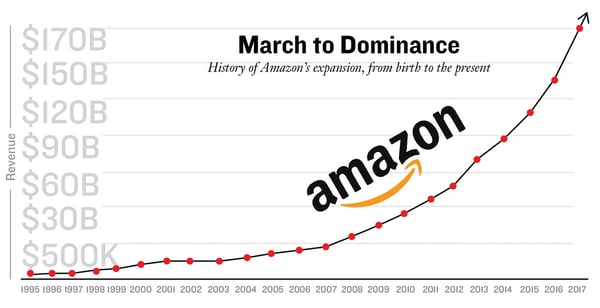
All too often, a business will run a great ad campaign, driving eager customers to their website, only to have most customers open another tab to their Prime account, enter a few search terms, and one-click purchase within seconds.
The solution: Build high-quality, descriptive landing pages.
Quality landing pages prominently displaying solid differentiators can go a long way in mitigating this. If you cannot compete on price, you have to find some other way to compete. It could be by highlighting great packaging, promoting a specific lifestyle, or going super niche with your audience focus.
Here are specific tactics to differentiate against commodity competition:
Keep testing and optimizing until you find the winning combination of audiences, ad creative, and campaigns.
Ask yourself: If people see 88 other websites today, will they really remember mine?
A staggering percentage of Facebook ad failures have nothing to do with the ads. The website users land on is uninspiring, and they immediately bounce, especially if the product is not particularly remarkable.
If you are selling water bottles, your website better make visitors excited enough to reach for their wallet immediately. The bar for eCommerce web design has risen dramatically. Shoppers expect fast load times, clean design, and a frictionless buying experience.
Take Welly for example. They sell bandages. Not exactly the most exciting product category. But they were able to make bandages not only look cool but also create a website that gets viewers genuinely excited about first aid kits. That is the power of strong brand design and storytelling.
The solution: Put your creative hat on and make your site the go-to destination for products like yours.
We recommend promoting curated bundles, product reviews, usage videos, comparison charts, and anything else to make the buying experience worth those few extra dollars and time in transit. Your website should answer three questions within five seconds of arrival: What do you sell? Why should I care? What do I do next?
Investing in conversion rate optimization on your site will compound the returns from every dollar you spend on Facebook ads. A 1% improvement in conversion rate can mean thousands in additional revenue per month.
Ask yourself: Is my unique value proposition really all that unique?
Can you immediately answer why your product is better than similar products? Or, if not your product, your brand, company, or story?
Do not expect people to spend money if your big UVP is warm sleeves on coats. People expect coats to be warm. However, if you sell coats with secret inner sleeve pockets designed for sneaking snacks into the movie theater, now you have something worth talking about.
Even if your product is fairly common, you can be strategic in your marketing. Identify the strongest benefits of your product and broadcast them. Your ads need to quickly communicate key differentiators and value-adds of the product or brand.

Do your homework and learn what your closest competitors are saying about their similar products, and stop trying to say the same things. Shake up the product dialog with features and selling points they cannot match.
The solution: Think about the problems your potential customers face and show how your product solves those problems. Try reading through customer comments, questions, and reviews. Do some brand soul-searching to figure out what makes your company distinctly unique.
Ask yourself: Do I have enough people to sell to?
There are probably a lot of left-handed people in snowy climates who would be thrilled to buy your glove-installed, left-handed, heavy-duty ice scraper. But you have already cut off a huge percentage of people to target. It will likely take a lot of testing audiences, creative, and placement to arrive at ads that will consistently sell something so niche.
Similarly, "shop local" can be a bad thing if you are too localized. There might be at least a dozen people in your neighborhood interested in your dog-walking service, but until you expand into other neighborhoods, you are capped from growth.
With hyper-specialization and micro-localization, your digital marketing is in a tough place. You need a broad enough audience to start gaining traffic and driving sales. Facebook's algorithm requires sufficient data volume to optimize effectively. If your potential audience is too small, the algorithm never exits the learning phase, and you spin your tires indefinitely.
Understanding upper funnel vs. lower funnel dynamics can help you build a broader top-of-funnel audience before narrowing down to converters.
The solution: Think of diverse ways to use your product or broader groups of people who can benefit.
Target auxiliary groups very specifically with messaging zeroed into reasons why this seemingly esoteric product could benefit them. Consider lookalike audiences based on your best existing customers to expand reach without sacrificing relevance.
Ask yourself: Would I scroll past my own creative assets?
Studies show that people see, on average, over 5,000 images a day. That is thousands of bland stock photos, manufacturer product catalog images, and stale advertising all competing for a fraction of your prospect's attention.


If you want your digital ads to catch a scroller's attention, provide imagery and creative assets that stop your target audience dead in their tracks. Think: product videos, boomerangs, animated gifs, slideshows, and lifestyle product photography.

We can point to countless creative tests and anecdotal examples where interesting creative drove engagement and sales, always beating out boring flat-lays and manufacturer-provided model images. Dropshippers, it is easy to just forward on white background product pics, but trust us: lifestyle or in-use imagery beats this out every single time. High-performing ad creative follows a consistent set of principles that any brand can implement.


The best-performing Facebook ad creative in 2026 generally falls into a few key categories:
Never lose sight of the story your creative is telling about your brand. What does your imagery say about the business and about the product?
Ask yourself: What is stopping a customer from clicking "Complete Purchase"?
People shop online because it is easy. Facebook ads can drive traffic to your site all day long, but if you have created any inconvenience for the buyer, you can count on losing sales, maybe even most of them.
The solution: Identify friction in your store or checkout process by doing a conversion rate optimization walkthrough.
If the issue is more abstract, like customers wanting to try on before they buy or feeling the quality firsthand before making a big-ticket purchase, brainstorm ways to remove the friction and turn the solution into a selling point.

Take Warby Parker, for instance. Many people are insecure about how glasses, particularly bold, trendy frames, will actually look on their face shape. Warby turns Free Shipping and Free Returns into a compelling value proposition: try on before you buy without ever having to visit the store. That reframing turned a common policy into a competitive advantage.
After working through these six common failure points, the takeaway should be clear: the answer to underperforming Facebook ads is almost never "spend more." The answer is to fix the business fundamentals that sit beneath the ads.

No matter where you stand on the spectrum of answers to these questions, brutally honest self-evaluation has the power to deliver creative solutions that can transform your business from a pretty good idea to a company that customers return to time and again, telling their friends and family about.
Before you adjust another bid or launch another campaign, run through this checklist:
If you answered "no" to any of these, you know where to focus your energy before scaling your ad spend. Comparing Facebook ads vs. alternatives like TikTok can also help you determine whether a different platform might be a better fit for your product and audience.
If you want an outsider's perspective about why your Facebook ads are not generating sales, reach out to our team for expert insights.
How Your Digital Content Strategy Can Generate Inexpensive Growth Through Organic Traffic
"Content is king." We have all heard it before, and every marketer understands the gravitational pull that good content exerts on audiences and search engines alike.
If you think that sounds like a dramatic claim, you might be surprised by the data behind it. Brands that invest consistently in content marketing generate roughly three times as many leads per dollar spent compared to paid channels alone, and those leads compound over time instead of disappearing the moment a budget is paused.
An effective digital content strategy serves a dual purpose: it gives your website ranking authority in search results while also appealing to audiences by providing genuinely valuable information. In other words, investing in good content will help draw inexpensive organic traffic through meaningful engagement.
When done right, your content can generate organic traffic with long-term ROI at a fraction of paid traffic costs.
If you are still not sold on the reigning power of content, here is our proclamation to declare that content is, indeed, still king -- and our manifesto for making it work.
Quality content and a healthy organic digital content strategy can increase web traffic at lower costs than running paid ads alone. You can grab the attention of visitors -- future customers -- through informative and engaging content that adds value to your brand.
Your organic content strategy will help inform a cohesive, multi-dimensional digital marketing strategy across all platforms and channels. If you are testing your content on organic first, you will know what performs well before investing more money into paid traffic.
One of the most compelling reasons to invest in content is the compounding nature of organic results. A single well-optimized blog post can generate traffic for months or even years after publication. Compare that to a paid ad, which stops delivering impressions the moment you turn off spending.
Over time, a library of strong content creates a moat around your brand. Each new piece adds to the site's domain authority, which lifts the performance of every other piece alongside it. This is why companies that commit to building brand trust through SEO see accelerating returns rather than diminishing ones.
Content does not exist in isolation. The insights you gain from organic performance -- which headlines resonate, which topics attract engagement, which formats hold attention -- become a playbook for your paid campaigns. Test messaging organically first, then pour budget behind what already works. This approach reduces wasted ad spend and shortens the feedback loop between creative ideation and data-driven optimization.
Who doesn't love a good story?
Content goes beyond selling your product or service to telling your story. What is your brand about? What passions, missions, and motivations drive your business? Your digital content should reflect your business's values and priorities.
Do not create content just to have content. It should have a purpose and a place within your digital content strategy. Overall, the content you produce should support direct response campaigns and build credibility among your audience.
Telling your story differentiates your business from the competition and helps solidify your brand in ways that product pages and transactional copy never will.
A strong brand story follows a pattern: identify the customer's problem, explain why that problem matters, and show how your brand delivers a solution others cannot. Every piece of content you produce should reinforce one of these three elements in some way. Blog posts might address the problem. Case studies prove the solution. Social content reminds audiences why the problem matters in the first place.
When executed well, brand storytelling creates emotional resonance that paid ads struggle to achieve. Customers who feel connected to a brand story are more likely to become repeat buyers and organic advocates.
Think about the content you have already produced. No doubt you have done significant work to create quality content for your audience. You do not have to throw away digital content you have invested in.
Content does not have to go to waste when it can be recycled and updated for more organic traffic. It is straightforward to keep good content evergreen by updating links, refreshing statistics, and repackaging information for multiple uses.

You can use past content to build better funnels, reinforce retargeting campaigns, and learn more about your own brand and audience.
Here is a repeatable framework for getting more mileage from every piece of content you create:
This approach ensures you are not starting from zero every time you sit down to create. Your search engine positioning will benefit as refreshed content signals relevance to Google's crawlers.
What if you were able to publish content that could predictably provide measurable business value? You can. This is what we call growth content.
Growth content drives measurable business value in the form of new users, leads, or sales.
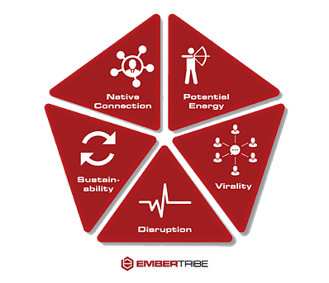
A growth content framework consists of five key attributes that help you optimize content creation efforts with an eye toward growth:
By adopting a growth content framework, you can use content strategically and measurably to add value to your digital content strategy. The impact extends across every marketing channel you leverage, from organic search to email to paid social.
Despite all of this talk about creating content, you might still be tempted to ignore the long-term organic content strategy for the quick returns of paid ads.
We cannot deny that paid ads are an effective way to drive traffic to your website. However, if you are seeking a long-term digital marketing strategy to increase traffic at a lower cost, good content is going to drive your organic traffic in valuable ways.
Even better, your content can be used to inform paid traffic and organic traffic alike. Brands that build a balanced search marketing plan combining SEO and SEM consistently outperform those that rely on a single channel.
A long-term content strategy needs structure. Here is how to build one:
Most brands give up on content marketing too early. They publish for three months, see modest results, and redirect budget to paid channels. The brands that win are the ones that stay consistent through the inflection point -- the moment when accumulated domain authority and content volume begin generating exponential returns.
The data supports patience. Companies that publish consistently for twelve or more months see organic traffic growth rates that outpace paid acquisition costs by a significant margin.

Content is not a marketing expense -- it is a business asset. Every piece you publish adds to a growing library that works for you around the clock, attracting prospects, educating leads, and building the kind of trust that no ad placement can replicate.
The brands that treat content as a strategic priority rather than a checkbox will be the ones that dominate their categories. Build your content marketing strategy with intention, measure what matters, and commit to the long game.
Long live good content.

Advertising on social media platforms has become essential for businesses to reach their target audience effectively. Within the realm of social media advertising, Facebook Carousel Ads have emerged as a powerful tool to capture users' attention and drive engagement. Together, we will explore the ins and outs of creating an engaging Facebook Ad, providing you with the best practices to enhance your advertising campaigns.
First and foremost, a Facebook Carousel Ad is a dynamic advertisement format that allows businesses to showcase multiple images or videos, each with its own link, in a single ad unit. The ad appears as a scrollable carousel, enabling users to swipe through the various media elements effortlessly. This ad format offers a visually appealing and interactive way to tell a story or present different products or features.

There are several compelling reasons to consider using Facebook Carousel Ads in your advertising strategy:
When it comes to increased engagement, Carousel Ads have proven to be highly effective. The scrollable format captures users' attention and encourages them to explore the different images or videos within the ad. This interactive experience creates a sense of curiosity and excitement, leading to higher click-through rates and longer time spent engaging with the ad.
Moreover, Carousel Ads offer businesses the opportunity to provide users with more information about their brand, products, or services. Instead of relying on a single image or video, Carousel Ads allow you to showcase a variety of visuals that highlight different aspects of your offerings. This enables users to gain a comprehensive understanding of what your brand represents and what you have to offer.
Storytelling is a powerful tool in advertising, and Carousel Ads provide the perfect platform for it. With the ability to present multiple images or videos in a sequential manner, businesses can take users on a journey, guiding them through a narrative that communicates their brand message effectively. This storytelling approach creates a deeper emotional connection with users, making your brand more memorable and relatable.
Carousel Ads can also significantly improve conversion rates. By including multiple links within a single ad, businesses can tailor the user experience based on their interests. For example, if a user is interested in a specific product showcased in the Carousel Ad, they can be directed to a landing page dedicated to that product. This personalized approach increases the likelihood of conversions as users are directed to the most relevant information and offerings.
Creating a successful Facebook Carousel Ad involves careful consideration of various elements. From high-quality images to compelling ad copy and attention-grabbing call-to-action (CTA) buttons, each component plays a vital role in captivating your audience and driving conversions.
When designing a Facebook Carousel Ad, the quality of your images is paramount. Clear, visually appealing images that align with your brand identity and messaging will help captivate your audience and encourage them to explore further. Imagine a carousel ad showcasing a stunning landscape, enticing travelers to embark on an adventure. The vivid colors and breathtaking scenery instantly transport viewers to a world of wanderlust, igniting their desire to learn more about the destination.
However, it's not just about aesthetics. Properly sized and well-lit images are essential to ensure optimal display across various devices and screen sizes. By investing time and effort into selecting and preparing high-quality images, you can enhance the overall impact of your carousel ad and leave a lasting impression on your target audience.
While images play a significant role in Carousel Ads, the accompanying ad copy should not be underestimated. The power of words can complement and reinforce the visual elements, effectively conveying your message to potential customers. Consider a carousel ad promoting a new line of skincare products. Alongside vibrant images showcasing the radiant effects of the products, the ad copy can highlight the key ingredients, emphasizing their nourishing properties and the resulting healthy, glowing skin.
When crafting ad copy, it's crucial to strike a balance between being concise and persuasive. Captivate your audience with compelling language that resonates with their needs and desires. By focusing on the unique features or benefits of your products or services, you can pique their interest and motivate them to take action. Additionally, incorporating a clear call-to-action (CTA) prompts users to engage further, whether it's making a purchase, signing up for a newsletter, or exploring more about your offerings.
CTA buttons serve as a crucial element in driving conversions through Carousel Ads. These buttons provide a clear and direct path for users to take the desired action. When selecting a CTA phrase, it's essential to choose impactful, action-oriented language that aligns with your campaign objectives. For instance, if you're running an e-commerce campaign, a CTA button saying "Shop Now" can create a sense of urgency and encourage users to explore your products further.
Make sure the CTA button stands out within the carousel ad, both in terms of design and placement. Consider using contrasting colors or bold typography to draw attention to the button. Additionally, strategically positioning the CTA button within the carousel sequence can increase the likelihood of user interaction. By creating a seamless user experience and making it effortless for users to take the desired action, you can maximize the effectiveness of your Carousel Ad campaign.
As you embark on creating engaging Carousel Ads, remember that each element, from high-quality images to compelling ad copy and attention-grabbing CTA buttons, contributes to the overall success of your campaign. By carefully crafting each component and ensuring they work harmoniously together, you can create a captivating and persuasive carousel ad that entices your audience and drives meaningful results.
Creating a successful Carousel Ad on Facebook requires careful consideration and attention to detail. A specialized Social Media Advertising Agency could help you implement a well-thought comprehensive strategy. By selecting the right images, writing effective ad text, and choosing the perfect call-to-action (CTA), your audience will be engaged and you will drive the desired actions. Let's dive deeper into each aspect to help you design a compelling Carousel Ad.
One of the key elements of a captivating Carousel Ad is the selection of images. High-resolution product photos can showcase the details and features of your offerings, enticing potential customers. Additionally, lifestyle images can help create a connection between your products or services and the aspirations of your target audience.
Consider going beyond static images and experiment with videos. Videos can bring your offerings to life, allowing viewers to see them in action. They can also be a powerful storytelling tool, capturing attention and conveying your brand's message effectively.
When choosing image combinations for your Carousel Ad, think about the visual appeal and the story you want to tell. Experiment with different sequences and arrangements to create a visually engaging flow that keeps viewers interested and encourages them to interact with your ad.
The ad text in your Carousel Ad plays a crucial role in conveying your message and enticing users to take action. To make the most impact, keep your ad text concise and compelling. Each ad card within the carousel should have a clear and focused message that complements the visuals.
Take the time to understand your target audience and tailor your ad text to resonate with their specific pain points or desires. By addressing their needs directly, you can create a sense of relevance and urgency, increasing the likelihood of engagement.
Consider using persuasive language, highlighting the unique benefits of your offerings, and incorporating social proof or testimonials to build trust. Remember, the goal is to capture attention and encourage users to take the desired action, whether it's making a purchase, signing up for a newsletter, or exploring more about your products or services.
The call-to-action (CTA) is the final piece of the puzzle in your Carousel Ad. It's the prompt that guides users to take the next step and convert. When selecting a CTA, it's essential to align it with the intended action you want users to take.
Start by considering the stage of the customer journey your target audience is in. Are they just discovering your brand, or are they already familiar with your offerings? Based on this understanding, choose a CTA that guides users towards the appropriate next step.
For example, if your goal is to drive immediate conversions, a CTA like "Shop Now" or "Buy Now" can be effective. On the other hand, if you're aiming to nurture leads and build a relationship, a CTA such as "Learn More" or "Sign Up" may be more suitable.
Remember to make your CTA visually prominent within the ad and ensure it stands out from the rest of the content. Use contrasting colors, compelling copy, and clear instructions to encourage users to click and take action.
By carefully selecting the right images, crafting impactful ad text, and choosing a compelling CTA, you can design a Facebook Carousel Ad that captures attention, engages your audience, and drives the desired actions. Start experimenting with these elements and monitor the performance of your ads to continuously optimize and improve their effectiveness.
For your Carousel Ads to be effective, it's crucial to target the right audience. Leverage Facebook's targeting options to define your ideal audience based on demographics, interests, behaviors, or even custom audiences. Refine your targeting strategy to maximize ad relevance and reach.
When setting your budget for Carousel Ads, consider the potential reach and the objectives of your campaign. Facebook offers various bidding options, such as cost per click (CPC) or cost per thousand impressions (CPM). Test different budget levels to find a balance between visibility and cost-effectiveness.

Regularly monitoring the performance metrics of your Carousel Ads is crucial to optimize their effectiveness. Pay attention to key metrics such as click-through rate (CTR), conversion rate, and engagement rate. Based on the insights gained, make data-driven adjustments to improve your ad campaign's performance and achieve the desired results.
By following these examples and best practices, you can create compelling and engaging Facebook Carousel Ads that captivate your audience, drive meaningful engagement, and help you achieve your marketing objectives. Remember to continuously iterate and refine your ad campaigns based on user feedback and data analysis, ensuring the ongoing success of your advertising efforts.

First things first. We cannot talk about Conversion Rate Optimization (CRO) without defining it. Simple, it refers to the systematic process of improving a website's conversion rate through data-driven decision-making. It involves certain processes, such as analyzing user behavior, conducting A/B tests, and implementing changes to optimize the website for better results. Easy, right?
But there is more. When it comes to CRO, it's essential to understand the customer journey and identify potential barriers that may prevent users from taking the desired action. By addressing these barriers and providing a seamless user experience, you can increase the likelihood of conversions.

CRO plays a fundamental role in digital marketing. It helps businesses maximize their return on investment (ROI) from their website traffic. By improving the conversion rate, you can generate more leads or sales without increasing your advertising budget.
Imagine if your website is receiving a significant amount of traffic, but only a small percentage of visitors are converting into customers. By implementing CRO strategies, you can unlock the true potential of your website and capitalize on the existing traffic.
CRO also ensures that your website provides a positive user experience, which leads to higher customer satisfaction and loyalty. When users find it easy to navigate your site, find the information they need, and complete their desired actions, they are more likely to become repeat customers and even recommend your business to others.
Becoming a successful Conversion Rate Optimization specialist requires a combination of technical skills and marketing knowledge. Here are some essential skills you should develop:
To enhance your skills and knowledge in CRO, consider enrolling in the following courses or earning relevant certifications:

While theoretical knowledge is important, gaining practical experience is equally crucial to becoming a successful CRO specialist. Here are two ways to gain hands-on experience:
Look for internship opportunities in companies that specialize in CRO. This will allow you to work closely with experienced professionals and learn industry best practices.
During your internship, you will have the chance to immerse yourself in the world of conversion rate optimization. You will be exposed to real-life projects and have the opportunity to work on actual client campaigns. This hands-on experience will not only enhance your understanding of CRO principles but also give you practical skills that can be applied in future roles.
Working alongside seasoned CRO specialists, you will gain valuable insights into the strategies and techniques they use to improve conversion rates. By observing their workflow and participating in team discussions, you will learn how to identify conversion barriers, conduct A/B tests, analyze data, and implement effective optimization strategies.
Study real-world case studies of successful CRO campaigns. Analyze the strategies and tactics implemented, the challenges faced, and the results achieved. This will give you valuable insights into the practical application of CRO principles.
By delving into case studies, you will gain a deeper understanding of the complexities involved in CRO. You will learn about different industries, target audiences, and unique challenges that CRO specialists encounter. This knowledge will help you develop a holistic approach to optimization and enable you to adapt strategies to diverse scenarios.
Besides, studying successful CRO case studies will allow you to identify patterns and trends that lead to positive outcomes. You will uncover common optimization techniques, such as improving website navigation, optimizing landing pages, and streamlining the checkout process, that consistently yield higher conversion rates.
Also, failure tends to be our biggest opportunity to learn. Examining unsuccessful CRO case studies is equally valuable. It provides an opportunity to understand the mistakes made and the lessons learned from those experiences. By analyzing the pitfalls and challenges faced by others, you can develop a proactive mindset and avoid similar pitfalls in your own CRO endeavors.
To be effective in CRO, you need to be proficient in using various CRO tools and software. Here is an overview of popular CRO tools:
When it comes to Conversion Rate Optimization (CRO), having the right tools at your disposal can make all the difference. These tools not only streamline the optimization process but also provide valuable insights into user behavior and preferences. Here are some of the most popular CRO tools:
A/B testing is a critical component of CRO. By conducting A/B tests, you can compare two versions of a web page or element to determine which one performs better in terms of conversions. Here are some steps to effectively use A/B testing tools like Google Optimize or Optimizely:
By mastering A/B testing tools and software, you can effectively optimize your website and drive higher conversion rates. Practice setting up experiments, defining goals, and analyzing the results to gain a deep understanding of your audience and make data-driven decisions.
Web analytics is an integral part of CRO. Understanding how to leverage web analytics tools will help you gain insights into user behavior and make data-driven decisions. Here's why web analytics is important:
Web analytics provides valuable data on user behavior, such as page views, bounce rates, and conversion rates. By analyzing this data, you can identify areas of improvement and make informed decisions to optimize your website's performance.
Google Analytics is one of the most widely used web analytics tools. Learn how to set up Google Analytics, create custom reports, and extract meaningful insights to drive CRO efforts.

Becoming a Conversion Rate Optimization specialist requires acquiring skills, gaining practical experience, mastering CRO tools, and understanding web analytics. By following these four steps, you can pave your way to becoming an expert in the field and help businesses maximize their conversion rates.
Earlier this year, Facebook announced a new user interface that would overtake so-called “classic Facebook” in September. This means bye-bye 👋 to the old look and hello to a refreshed, updated interface. One of the main motivations for switching to a new Facebook interface (or FB5 as they call it) is a company-wide pivot toward privacy-focused communications.
Another big motivation is simply that Facebook’s desktop UI has remained essentially unchanged for years, and what worked in 2012 doesn’t really translate to a great 2020 user experience. Oh, how time passes...

What the new design addresses:
Among the changes in the new interface:
Unfortunately for Facebook, the UI change has been received with very mixed reviews, and despite the months-long lead time on changes, it seems likely that people will continue to have to grapple with getting used to “new Facebook” for a while.
The new Facebook design has triggered quite a few (negative) emotions from users. The change was made permanent on September 1, 2020, so users and Facebook engineers will have to adapt and make the best of a new situation.
A quick search for “Facebook interface” on Twitter shows that a lot of people aren’t loving the updates, and some are even reporting issues with the desktop interface loading. Well, anyone who has ever done anything knows that it’s impossible to please everyone, so these mixed reviews are far from shocking.

Some common criticisms (so far):
Well, truth be told, our team feels pretty lukewarm toward these changes. However, since we’re in the business of paid social, a big interface change like this could have unexpected influence over Facebook advertising strategies. To put it plainly: the success of Facebook ads is intrinsically tied to the functionality and popularity of Facebook itself.

With web browsing increasingly trending toward mobile usage, this change seems like a warranted update to accommodate evolving preferences.
It’s hard to say right now if these changes will turn out to be positive for the overall user experience or anger frequent Facebook users to the point of no return. But from a personal point of view, if users haven’t been deterred by previous Facebook updates, scandals, and complaints, this remodeled UI seems unlikely to push users away.
For now, Facebook advertising is safe (and we love to see it!). If you're ready to run Facebook ads that get results, let's talk.


.svg)