






-1.jpg)
If you have fundamental cracks in your business model, there is no Facebook targeting or performance strategy strong enough to build revenue on that foundation. That is the hard truth every eCommerce advertiser needs to hear before pouring more budget into Meta's ad platform.
Why Facebook Ads Don't Work for Most eCommerce Brands
There are a lot of great eCommerce ideas out there, started by some very smart entrepreneurs. And because Facebook has been a successful advertising platform for so many eCommerce businesses, it is tempting to think that Facebook advertising is the silver bullet that can sell anything.
But before you pour all of your hard-earned resources into Facebook ads, you need to take a step back and ask the hard questions about your business itself. The ads are rarely the problem. The business behind the ads usually is.
The data supports this. Across hundreds of eCommerce accounts, the campaigns that struggle the most share a common set of underlying business-level issues that no amount of audience targeting or bid optimization can fix. Let's dig into the most common reasons why Facebook ads fail for eCommerce brands, and what you can do about each one.
1. Your Product Has Steep Competition
Ask yourself: Could people buy my product, or one almost exactly like it, somewhere else?
If you are a dropshipper, a reseller, or your product is just fairly common, it is critical that you know all other outlets where customers could buy your product. You need to have a solid answer to why someone should buy from you specifically, particularly if you are competing against trusted outlets like Amazon Prime or the option to stop at Target on the way home.
If price is your top hurdle for customers, you have a significant warning sign on your hands. With price as your primary differentiator, you are signed up for a race to the lowest possible dollar, slashing your margins. Matched against huge wholesalers and deep-pocket retailers online, it is a race that is incredibly difficult to win.
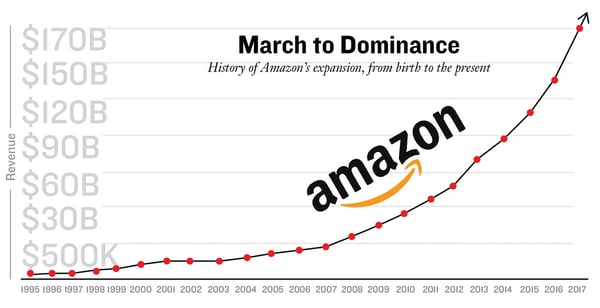
All too often, a business will run a great ad campaign, driving eager customers to their website, only to have most customers open another tab to their Prime account, enter a few search terms, and one-click purchase within seconds.
The solution: Build high-quality, descriptive landing pages.
Quality landing pages prominently displaying solid differentiators can go a long way in mitigating this. If you cannot compete on price, you have to find some other way to compete. It could be by highlighting great packaging, promoting a specific lifestyle, or going super niche with your audience focus.
Here are specific tactics to differentiate against commodity competition:
- Bundle strategically. Create product bundles that Amazon sellers cannot easily replicate. A curated gift set or a starter kit adds perceived value.
- Own your brand story. Communicate the origin, mission, and people behind your brand. Customers will pay a premium for a brand they connect with emotionally.
- Leverage social proof. Feature user-generated content, customer reviews, and real testimonials directly on your landing pages. Shoppers trust other shoppers more than they trust ad copy.
- Offer exclusive add-ons. Free personalization, extended warranties, or loyalty rewards give customers a reason to buy directly from you.
Keep testing and optimizing until you find the winning combination of audiences, ad creative, and campaigns.
2. Your Website Is Not Memorable
Ask yourself: If people see 88 other websites today, will they really remember mine?
A staggering percentage of Facebook ad failures have nothing to do with the ads. The website users land on is uninspiring, and they immediately bounce, especially if the product is not particularly remarkable.
If you are selling water bottles, your website better make visitors excited enough to reach for their wallet immediately. The bar for eCommerce web design has risen dramatically. Shoppers expect fast load times, clean design, and a frictionless buying experience.
Take Welly for example. They sell bandages. Not exactly the most exciting product category. But they were able to make bandages not only look cool but also create a website that gets viewers genuinely excited about first aid kits. That is the power of strong brand design and storytelling.
The solution: Put your creative hat on and make your site the go-to destination for products like yours.
We recommend promoting curated bundles, product reviews, usage videos, comparison charts, and anything else to make the buying experience worth those few extra dollars and time in transit. Your website should answer three questions within five seconds of arrival: What do you sell? Why should I care? What do I do next?
Investing in conversion rate optimization on your site will compound the returns from every dollar you spend on Facebook ads. A 1% improvement in conversion rate can mean thousands in additional revenue per month.
3. Your Unique Value Proposition Does Not Seem So Unique
Ask yourself: Is my unique value proposition really all that unique?
Can you immediately answer why your product is better than similar products? Or, if not your product, your brand, company, or story?
Do not expect people to spend money if your big UVP is warm sleeves on coats. People expect coats to be warm. However, if you sell coats with secret inner sleeve pockets designed for sneaking snacks into the movie theater, now you have something worth talking about.
Even if your product is fairly common, you can be strategic in your marketing. Identify the strongest benefits of your product and broadcast them. Your ads need to quickly communicate key differentiators and value-adds of the product or brand.

Do your homework and learn what your closest competitors are saying about their similar products, and stop trying to say the same things. Shake up the product dialog with features and selling points they cannot match.
How to Sharpen Your UVP
- Audit your competitors. Spend an hour reviewing the top five competitors in your space. Note the exact language they use in ads and on their sites.
- Find the gap. Identify what none of them are saying. That gap is your opportunity.
- Test your messaging. Run small-budget ad tests with different UVP angles. Let the data tell you which one resonates.
- Ask your customers. Survey existing buyers about why they chose you. Their language often reveals positioning angles you never considered.
The solution: Think about the problems your potential customers face and show how your product solves those problems. Try reading through customer comments, questions, and reviews. Do some brand soul-searching to figure out what makes your company distinctly unique.
4. Your Target Market Is Not Big Enough
Ask yourself: Do I have enough people to sell to?
There are probably a lot of left-handed people in snowy climates who would be thrilled to buy your glove-installed, left-handed, heavy-duty ice scraper. But you have already cut off a huge percentage of people to target. It will likely take a lot of testing audiences, creative, and placement to arrive at ads that will consistently sell something so niche.
Similarly, "shop local" can be a bad thing if you are too localized. There might be at least a dozen people in your neighborhood interested in your dog-walking service, but until you expand into other neighborhoods, you are capped from growth.
With hyper-specialization and micro-localization, your digital marketing is in a tough place. You need a broad enough audience to start gaining traffic and driving sales. Facebook's algorithm requires sufficient data volume to optimize effectively. If your potential audience is too small, the algorithm never exits the learning phase, and you spin your tires indefinitely.
Understanding upper funnel vs. lower funnel dynamics can help you build a broader top-of-funnel audience before narrowing down to converters.
The solution: Think of diverse ways to use your product or broader groups of people who can benefit.
Target auxiliary groups very specifically with messaging zeroed into reasons why this seemingly esoteric product could benefit them. Consider lookalike audiences based on your best existing customers to expand reach without sacrificing relevance.
5. Your Creative Is Uninspiring
Ask yourself: Would I scroll past my own creative assets?
Studies show that people see, on average, over 5,000 images a day. That is thousands of bland stock photos, manufacturer product catalog images, and stale advertising all competing for a fraction of your prospect's attention.


If you want your digital ads to catch a scroller's attention, provide imagery and creative assets that stop your target audience dead in their tracks. Think: product videos, boomerangs, animated gifs, slideshows, and lifestyle product photography.

We can point to countless creative tests and anecdotal examples where interesting creative drove engagement and sales, always beating out boring flat-lays and manufacturer-provided model images. Dropshippers, it is easy to just forward on white background product pics, but trust us: lifestyle or in-use imagery beats this out every single time. High-performing ad creative follows a consistent set of principles that any brand can implement.


Creative Formats That Drive Results
The best-performing Facebook ad creative in 2026 generally falls into a few key categories:
- User-generated content (UGC). Real customers using your product in authentic settings consistently outperforms polished studio shots. UGC ads build trust and drive action.
- Short-form video. Fifteen-second videos that hook in the first two seconds and deliver a clear message outperform static images in most categories.
- Before-and-after sequences. Show the transformation. This format taps into the buyer's desire for results.
- Carousel ads. Use them to tell a story, showcase a product line, or walk through benefits one card at a time.
Never lose sight of the story your creative is telling about your brand. What does your imagery say about the business and about the product?
6. Your Ads Get Traffic but Not Completed Purchases
Ask yourself: What is stopping a customer from clicking "Complete Purchase"?
People shop online because it is easy. Facebook ads can drive traffic to your site all day long, but if you have created any inconvenience for the buyer, you can count on losing sales, maybe even most of them.
The solution: Identify friction in your store or checkout process by doing a conversion rate optimization walkthrough.
- Check site functionality and the shop flow with a fine-tooth comb. Look for lengthy load times, forced logins, clunky checkouts, snags in payment input, and any copy that makes the flow confusing. Any friction whatsoever can cost you the sale.
- Shore up your inventory. If your ads drive to a product that is out of stock, you have lost the sale and disappointed a potential customer. Forecast carefully and keep your ads up to date.
- Simplify your checkout. Reduce the number of form fields, offer guest checkout, and display trust badges prominently. Every extra step in the checkout process causes a measurable drop in conversions.
If the issue is more abstract, like customers wanting to try on before they buy or feeling the quality firsthand before making a big-ticket purchase, brainstorm ways to remove the friction and turn the solution into a selling point.

Take Warby Parker, for instance. Many people are insecure about how glasses, particularly bold, trendy frames, will actually look on their face shape. Warby turns Free Shipping and Free Returns into a compelling value proposition: try on before you buy without ever having to visit the store. That reframing turned a common policy into a competitive advantage.
Honest Evaluation Produces Better Results Than Bigger Budgets
After working through these six common failure points, the takeaway should be clear: the answer to underperforming Facebook ads is almost never "spend more." The answer is to fix the business fundamentals that sit beneath the ads.

No matter where you stand on the spectrum of answers to these questions, brutally honest self-evaluation has the power to deliver creative solutions that can transform your business from a pretty good idea to a company that customers return to time and again, telling their friends and family about.
A Quick Diagnostic Checklist
Before you adjust another bid or launch another campaign, run through this checklist:
- Can a customer buy my exact product more easily somewhere else?
- Would a first-time visitor remember my website tomorrow?
- Can I articulate my UVP in one sentence?
- Is my addressable audience large enough for Facebook's algorithm to optimize?
- Would I stop scrolling for my own ad?
- Can a customer complete a purchase in under 60 seconds?
If you answered "no" to any of these, you know where to focus your energy before scaling your ad spend. Comparing Facebook ads vs. alternatives like TikTok can also help you determine whether a different platform might be a better fit for your product and audience.
If you want an outsider's perspective about why your Facebook ads are not generating sales, reach out to our team for expert insights.

.webp)

.svg)


