
Most brands hit a wall at some point: traffic is growing, ad spend is holding steady, but revenue isn't following. The issue isn't usually the volume of visitors. It's what happens after they arrive. A conversion rate optimisation agency solves exactly this problem, turning existing traffic into more leads, purchases, and revenue without requiring more spend to acquire that traffic.
This guide covers what a CRO agency actually does, what services to expect, how to evaluate candidates, what good results look like, and how to know when hiring makes sense for your stage.
A CRO agency studies why visitors leave without converting and then runs structured experiments to fix those friction points. The work spans research, design, development, and statistical analysis, which is why most in-house teams struggle to run it properly alongside their other responsibilities.
Every credible CRO engagement follows a similar arc. The agency starts with a deep diagnostic phase: reviewing analytics data, auditing goal tracking, mapping your funnel, and identifying where the largest drop-offs occur. That quantitative analysis is paired with qualitative research (heatmaps, click maps, scroll-depth analysis, session recordings, and user surveys) to understand the why behind the numbers.
From there, the agency builds a prioritized hypothesis backlog. Each hypothesis is a testable idea: "If we move the CTA above the fold on the product page, we expect checkout starts to increase by X%." Testing is where the agency earns its fees. Well-run A/B and multivariate tests separate signal from noise and produce wins you can compound over time.
The specific services offered vary by agency, but most full-service conversion optimization agencies cover:
Boutique shops typically focus on A/B testing and landing pages. Full-service CRO teams include UX researchers, data analysts, copywriters, designers, and developers working together on every conversion touchpoint. Understanding which model fits your needs is part of the evaluation process.
The CRO industry has no formal certification that guarantees quality, so evaluation comes down to evidence. Here's what separates strong agencies from ones that will run a few tests and report inconclusive results.
Ask how they build and prioritize a hypothesis backlog. A serious agency uses frameworks like PIE scoring (Potential, Importance, Ease) or ICE scoring to prioritize experiments by potential impact and implementation cost. If they can't articulate a structured methodology, expect ad hoc testing that wastes months.
Running a test and calling a winner is not CRO. The results need statistical significance before you can trust them, and a good agency will explain their significance thresholds and minimum sample size requirements before a test begins. Agencies that declare winners after two days of data are giving you noise, not insight.
Ask for case studies with before-and-after conversion rates, traffic volumes, and test durations. Generic claims like "we improved conversions by 47%" mean little without context. Specifics matter: which page, what was the change, how long did the test run, and how large was the sample?
A proper CRO engagement starts with confirming your analytics are trustworthy. If an agency skips the tracking audit, they're building experiments on bad data. This matters significantly for DTC and ecommerce brands where small measurement errors can mislead an entire testing program. Our guide on ecommerce analytics covers what a clean measurement foundation looks like.
You should receive regular reports that connect test outcomes to business metrics, not just conversion rate changes. A good agency explains what a win means for revenue, not just which variant performed better.
CRO agency pricing varies considerably based on scope, traffic volume, and the seniority of the team you're accessing. Rough ranges for 2026:
| Agency Tier | Monthly Retainer |
|---|---|
| Entry-level / newer teams | $2,000 - $5,000 |
| Mid-tier with solid track record | $5,000 - $8,000 |
| Senior full-service agencies | $10,000 - $35,000+ |
Most engagements run on a monthly retainer model with a minimum 6-month commitment. That minimum exists for a reason: CRO requires time to build a hypothesis backlog, run tests to statistical significance, and implement wins. Agencies that offer month-to-month engagements with no minimum are often running too few tests to generate meaningful results.
Some agencies offer hybrid models that combine a lower base retainer with a performance component tied to conversion improvements. These reduce upfront risk but require agreed attribution methodology and clean baseline tracking before the engagement starts.
One-time audits are also available, typically ranging from $3,000 to $10,000, and can be a useful starting point if you want to understand your conversion gaps before committing to a full retainer.
Benchmarks help calibrate expectations. The global average website conversion rate sits around 3.68%, while top-performing sites achieve 11% or higher. For ecommerce, average rates vary significantly by vertical and traffic source.
What a well-run CRO program should produce:
These numbers assume your analytics are clean, your traffic volume supports statistical significance, and the agency is running tests with proper rigor. Lower traffic sites require longer test durations and may see slower progress.
Understanding how your marketing analytics tools feed into the testing process makes a material difference in how quickly you can generate reliable results.
CRO agencies aren't right for every stage. Here are the clearest signals that hiring makes sense:
Traffic exists but conversions have plateaued. If you're generating meaningful traffic but revenue isn't scaling proportionally, the problem is almost certainly in what happens after the click. More ad spend compounds the problem rather than solving it.
Your ROAS is declining and you've already optimized your ads. Once campaigns are dialed in, the next lever is on-site performance. Paid traffic that doesn't convert is just an expensive way to build session data. Our broader overview of conversion optimization maps out the full system.
You're investing in paid acquisition at scale. The larger your ad budget, the more a 1-2% conversion rate improvement is worth. At $100,000 per month in paid spend, doubling your conversion rate has the same effect on revenue as doubling your budget.
You have enough traffic to run valid tests. A/B tests require meaningful sample sizes to reach statistical significance. As a general rule, you need at least 1,000 monthly conversions per page to run tests that produce reliable results in a reasonable timeframe. Smaller sites can still benefit from CRO audits and qualitative research, but the testing cadence will be slower.
You've exhausted what your in-house team can execute. CRO requires skills across analytics, UX, design, copywriting, and development. Most in-house teams are strong in one or two areas. Agencies bring the full stack.
A conversion rate optimisation agency has a narrower focus than a full-service growth marketing partner. CRO agencies specialize in on-site behavior and experiment design. Growth marketing spans acquisition, retention, and the full customer lifecycle.
For many brands, the right answer is both: a growth agency managing acquisition channels while CRO work runs in parallel, maximizing the value of every visitor driven by paid and organic efforts. For brands at earlier stages, growth consulting often makes more sense as a starting point before isolating CRO as a dedicated workstream. Understanding how your analytics stack connects those two disciplines helps ensure the insights from one feed directly into the other.
The best CRO agency for your business is the one that matches your traffic volume, funnel complexity, and internal bandwidth. A boutique shop focused on ecommerce A/B testing is a poor fit for a B2B SaaS company with a multi-touch sales cycle. A full-service enterprise team is overkill for a DTC brand with $50K in monthly revenue.
Before any sales call, clarify: their experience with your business model, their testing methodology, minimum sample size requirements, reporting cadence, and what happens when a test is inconclusive. The answers will tell you more than any case study deck.
If you're evaluating whether CRO fits your current growth phase or want to understand what a data-driven optimization program looks like in practice, EmberTribe works with DTC and growth-stage brands to build and execute programs that compound over time.
Most brands hit a wall at some point: traffic is growing, ad spend is holding steady, but revenue isn't following. The issue isn't usually the volume of visitors. It's what happens after they arrive. A conversion rate optimisation agency solves exactly this problem, turning existing traffic into more leads, purchases, and revenue without requiring more spend to acquire that traffic.
This guide covers what a CRO agency actually does, what services to expect, how to evaluate candidates, what good results look like, and how to know when hiring makes sense for your stage.
A CRO agency studies why visitors leave without converting and then runs structured experiments to fix those friction points. The work spans research, design, development, and statistical analysis, which is why most in-house teams struggle to run it properly alongside their other responsibilities.
Every credible CRO engagement follows a similar arc. The agency starts with a deep diagnostic phase: reviewing analytics data, auditing goal tracking, mapping your funnel, and identifying where the largest drop-offs occur. That quantitative analysis is paired with qualitative research (heatmaps, click maps, scroll-depth analysis, session recordings, and user surveys) to understand the why behind the numbers.
From there, the agency builds a prioritized hypothesis backlog. Each hypothesis is a testable idea: "If we move the CTA above the fold on the product page, we expect checkout starts to increase by X%." Testing is where the agency earns its fees. Well-run A/B and multivariate tests separate signal from noise and produce wins you can compound over time.
The specific services offered vary by agency, but most full-service conversion optimization agencies cover:
Boutique shops typically focus on A/B testing and landing pages. Full-service CRO teams include UX researchers, data analysts, copywriters, designers, and developers working together on every conversion touchpoint. Understanding which model fits your needs is part of the evaluation process.
The CRO industry has no formal certification that guarantees quality, so evaluation comes down to evidence. Here's what separates strong agencies from ones that will run a few tests and report inconclusive results.
Ask how they build and prioritize a hypothesis backlog. A serious agency uses frameworks like PIE scoring (Potential, Importance, Ease) or ICE scoring to prioritize experiments by potential impact and implementation cost. If they can't articulate a structured methodology, expect ad hoc testing that wastes months.
Running a test and calling a winner is not CRO. The results need statistical significance before you can trust them, and a good agency will explain their significance thresholds and minimum sample size requirements before a test begins. Agencies that declare winners after two days of data are giving you noise, not insight.
Ask for case studies with before-and-after conversion rates, traffic volumes, and test durations. Generic claims like "we improved conversions by 47%" mean little without context. Specifics matter: which page, what was the change, how long did the test run, and how large was the sample?
A proper CRO engagement starts with confirming your analytics are trustworthy. If an agency skips the tracking audit, they're building experiments on bad data. This matters significantly for DTC and ecommerce brands where small measurement errors can mislead an entire testing program. Our guide on ecommerce analytics covers what a clean measurement foundation looks like.
You should receive regular reports that connect test outcomes to business metrics, not just conversion rate changes. A good agency explains what a win means for revenue, not just which variant performed better.
CRO agency pricing varies considerably based on scope, traffic volume, and the seniority of the team you're accessing. Rough ranges for 2026:
| Agency Tier | Monthly Retainer |
|---|---|
| Entry-level / newer teams | $2,000 - $5,000 |
| Mid-tier with solid track record | $5,000 - $8,000 |
| Senior full-service agencies | $10,000 - $35,000+ |
Most engagements run on a monthly retainer model with a minimum 6-month commitment. That minimum exists for a reason: CRO requires time to build a hypothesis backlog, run tests to statistical significance, and implement wins. Agencies that offer month-to-month engagements with no minimum are often running too few tests to generate meaningful results.
Some agencies offer hybrid models that combine a lower base retainer with a performance component tied to conversion improvements. These reduce upfront risk but require agreed attribution methodology and clean baseline tracking before the engagement starts.
One-time audits are also available, typically ranging from $3,000 to $10,000, and can be a useful starting point if you want to understand your conversion gaps before committing to a full retainer.
Benchmarks help calibrate expectations. The global average website conversion rate sits around 3.68%, while top-performing sites achieve 11% or higher. For ecommerce, average rates vary significantly by vertical and traffic source.
What a well-run CRO program should produce:
These numbers assume your analytics are clean, your traffic volume supports statistical significance, and the agency is running tests with proper rigor. Lower traffic sites require longer test durations and may see slower progress.
Understanding how your marketing analytics tools feed into the testing process makes a material difference in how quickly you can generate reliable results.
CRO agencies aren't right for every stage. Here are the clearest signals that hiring makes sense:
Traffic exists but conversions have plateaued. If you're generating meaningful traffic but revenue isn't scaling proportionally, the problem is almost certainly in what happens after the click. More ad spend compounds the problem rather than solving it.
Your ROAS is declining and you've already optimized your ads. Once campaigns are dialed in, the next lever is on-site performance. Paid traffic that doesn't convert is just an expensive way to build session data. Our broader overview of conversion optimization maps out the full system.
You're investing in paid acquisition at scale. The larger your ad budget, the more a 1-2% conversion rate improvement is worth. At $100,000 per month in paid spend, doubling your conversion rate has the same effect on revenue as doubling your budget.
You have enough traffic to run valid tests. A/B tests require meaningful sample sizes to reach statistical significance. As a general rule, you need at least 1,000 monthly conversions per page to run tests that produce reliable results in a reasonable timeframe. Smaller sites can still benefit from CRO audits and qualitative research, but the testing cadence will be slower.
You've exhausted what your in-house team can execute. CRO requires skills across analytics, UX, design, copywriting, and development. Most in-house teams are strong in one or two areas. Agencies bring the full stack.
A conversion rate optimisation agency has a narrower focus than a full-service growth marketing partner. CRO agencies specialize in on-site behavior and experiment design. Growth marketing spans acquisition, retention, and the full customer lifecycle.
For many brands, the right answer is both: a growth agency managing acquisition channels while CRO work runs in parallel, maximizing the value of every visitor driven by paid and organic efforts. For brands at earlier stages, growth consulting often makes more sense as a starting point before isolating CRO as a dedicated workstream. Understanding how your analytics stack connects those two disciplines helps ensure the insights from one feed directly into the other.
The best CRO agency for your business is the one that matches your traffic volume, funnel complexity, and internal bandwidth. A boutique shop focused on ecommerce A/B testing is a poor fit for a B2B SaaS company with a multi-touch sales cycle. A full-service enterprise team is overkill for a DTC brand with $50K in monthly revenue.
Before any sales call, clarify: their experience with your business model, their testing methodology, minimum sample size requirements, reporting cadence, and what happens when a test is inconclusive. The answers will tell you more than any case study deck.
If you're evaluating whether CRO fits your current growth phase or want to understand what a data-driven optimization program looks like in practice, EmberTribe works with DTC and growth-stage brands to build and execute programs that compound over time.
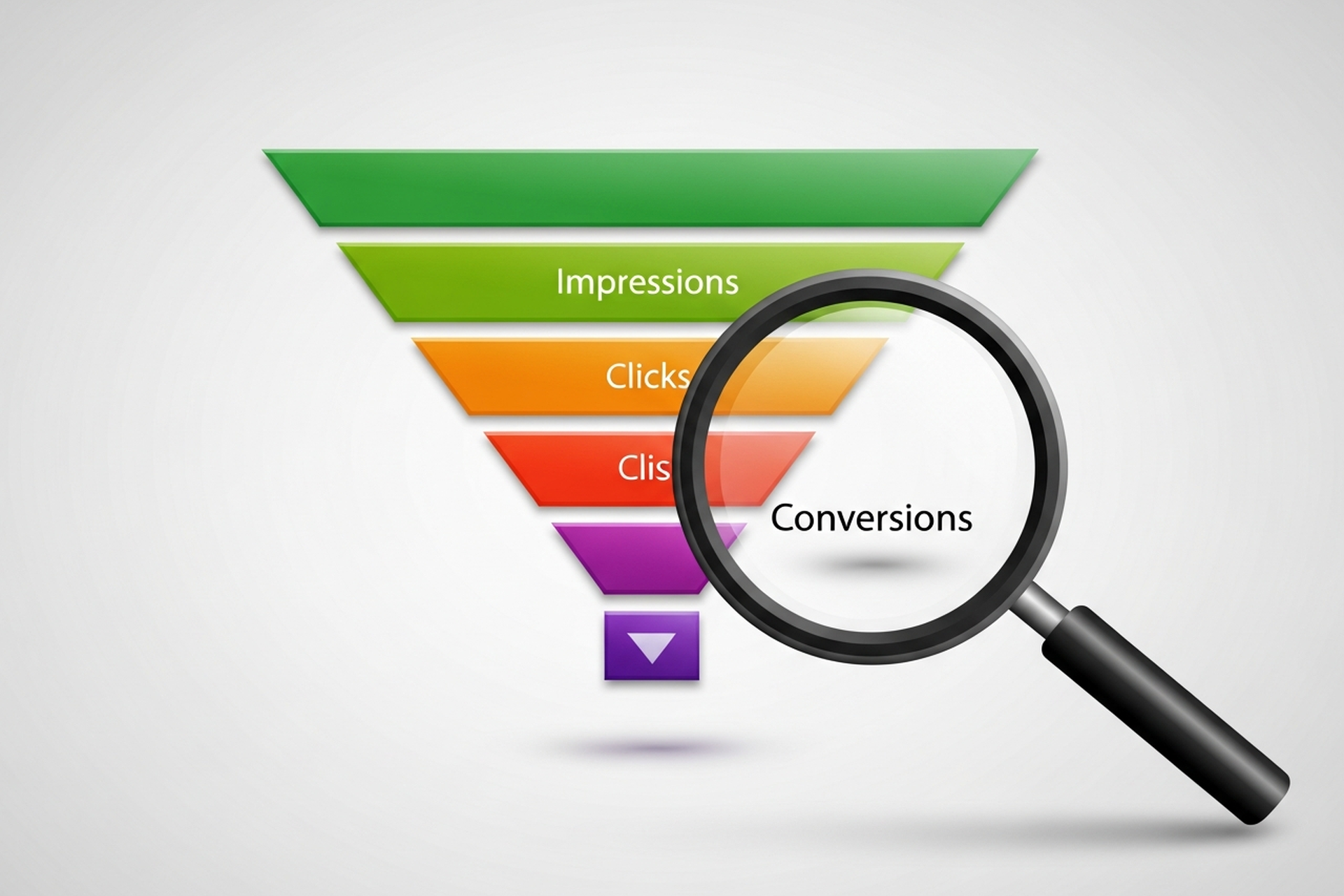
If you're spending money on paid media or investing in content to drive organic traffic, conversion rate optimisation is the discipline that determines whether that traffic actually turns into revenue. Done well, CRO compounds your existing acquisition investment — you get more customers from the same traffic, without needing proportionally more spend.
Conversion rate optimisation (note the British spelling — this is how the keyword is commonly searched, and how teams across the UK, Australia, and much of Europe refer to the practice) is one of the highest-ROI investments a growth-stage brand can make. Yet it's often deprioritised in favour of acquisition channels that are more immediately visible.
This guide explains what conversion rate optimisation actually is, how it works in practice, which tools matter, and how to build a CRO programme that generates compounding returns.
Conversion rate optimisation is the systematic process of increasing the percentage of website visitors who complete a desired action — a purchase, a sign-up, a demo request, a form submission.
The conversion rate itself is simple to calculate:
Conversion Rate = (Conversions ÷ Total Visitors) × 100
If your store receives 10,000 visitors per month and 200 of them purchase, your conversion rate is 2%. CRO is the discipline of understanding why the other 9,800 didn't convert — and systematically fixing it.
What CRO is not is a collection of random button-colour tweaks. Real conversion rate optimisation is a research-driven, hypothesis-led methodology that produces learning as well as results. Even a test that doesn't improve conversion rate is valuable if it teaches you something about why visitors behave the way they do.
The economics of CRO are compelling compared to acquisition-focused alternatives.
Doubling your traffic through paid media doubles your ad spend. Doubling your conversion rate doubles your revenue from the same traffic. In practice, getting from a 1.5% to a 3.0% conversion rate is faster and cheaper than doubling your qualified traffic — and the improvement is permanent rather than dependent on ongoing spend.
Consider a store with 20,000 monthly visitors, a 1.5% conversion rate, and a £60 AOV:
A one percentage point improvement in conversion rate produces £12,000 in additional monthly revenue without a single additional pound of ad spend. That's the return profile that makes CRO so powerful for growth-stage ecommerce and DTC brands.
The best conversion rate optimisation teams operate as a structured research function, not a testing team. The process looks like this:
Before you test anything, you need to understand where and why visitors are dropping off. This means:
This research phase is where most CRO programmes stumble. Teams jump to testing without first understanding the actual problem — and end up testing solutions to problems that don't exist.
A good CRO hypothesis follows a specific structure:
"We believe that [specific change] will [expected outcome] because [evidence or reasoning]. We'll know it worked if [measurable metric] improves."
For example: "We believe that adding a 30-day returns guarantee to the product page hero will increase add-to-cart rate because customer interviews show purchase hesitation is primarily driven by returns uncertainty. We'll know it worked if add-to-cart rate improves by 10%+."
This structure keeps experiments focused and ensures that every test — whether it wins or loses — produces actionable learning.
The most common CRO test format is A/B testing — showing one version of a page to 50% of visitors and a variant to the other 50%, then measuring which version produces a higher conversion rate.
For more complex changes involving multiple elements, multivariate testing allows you to test combinations simultaneously — but requires significantly more traffic to reach statistical significance.
A common mistake is running tests for too short a period. Traffic and conversion patterns vary by day of week, time of month, and seasonal factors. Most tests need a minimum of two full business cycles (typically two to four weeks) before results are reliable.
When a test concludes, the analysis should go beyond "did it win or lose?" Ask:
A test that loses overall may reveal that a specific user segment (mobile users, returning visitors, users from organic search) responded positively — leading to a more targeted follow-up test.
Winning tests should be implemented permanently and documented clearly. Every CRO programme should maintain a library of test results that new experiments can reference — so the programme builds on its own learning over time rather than starting from scratch with each test cycle.
Not all pages and elements are equal. The areas that typically yield the greatest conversion rate improvement:
Product pages: Hero imagery, trust signals (reviews, guarantees, security badges), product descriptions focused on outcomes rather than features, variant selection clarity
Checkout flow: Form length, payment method options, shipping cost transparency, order summary clarity, guest checkout availability
Landing pages: Headline and value proposition alignment with traffic source, above-the-fold CTA clarity, page load speed on mobile
Cart and bag pages: Abandoned cart drivers (shipping cost shock is the most common), cross-sell placement, urgency signals
Site navigation and search: Can users find what they're looking for? Poor navigation is a conversion killer that's easy to overlook.
A complete CRO tech stack typically requires four categories of tools:
Google Analytics 4 — free, covers traffic, funnel events, and conversion tracking. Essential baseline for any CRO programme.
Hotjar or Microsoft Clarity (free) — heatmaps, session recordings, and on-site surveys. These tools show you how users interact with pages, which quantitative analytics alone can't reveal.
VWO (Visual Website Optimizer) — a full-stack testing platform that covers A/B testing, multivariate tests, split URL tests, and personalisation. One of the most widely used CRO platforms across ecommerce and SaaS. Other options include Optimizely (enterprise) and AB Tasty.
On-site survey tools (Hotjar, Typeform, or Medallia) that capture exit intent and post-purchase feedback. The qualitative data from surveys often generates the most actionable hypotheses.
Testing too many changes at once: If you change the headline, the hero image, the CTA colour, and the product description simultaneously, you won't know which change drove the result.
Stopping tests too early: A test that appears to be winning in week one often converges toward parity by week three. Statistical significance requires patience.
Ignoring mobile: In most ecommerce categories, mobile accounts for 60–70%+ of traffic. A page that converts well on desktop but fails on mobile is still failing.
Treating all traffic equally: A visitor arriving from a branded search query has very different intent than one arriving from a generic informational post. Conversion rate benchmarks should be segmented by traffic source, not just measured as a site-wide average.
Skipping the research phase: Running tests without first understanding why users aren't converting is like writing solutions before diagnosing the problem. The research phase isn't optional — it's what makes your tests likely to succeed.
Individual test wins are valuable. A systematic CRO programme is transformative. The difference is whether your testing generates accumulated learning — a growing body of insight about your specific customers, their objections, their decision triggers, and what makes them trust your brand.
At EmberTribe, conversion rate optimisation sits at the centre of how we approach growth for ecommerce and DTC clients — because improving conversion makes every other channel more efficient. A higher CVR means paid media generates more revenue from the same spend, organic traffic converts into customers at a higher rate, and email flows close more of the customers who were already considering.
The goal isn't a single winning test. It's a programme that makes your business structurally more profitable over time.
For more on applying CRO principles in practice, see our guide to ecommerce conversion rate optimisation tactics and our breakdown of the ecommerce analytics metrics that drive decisions.
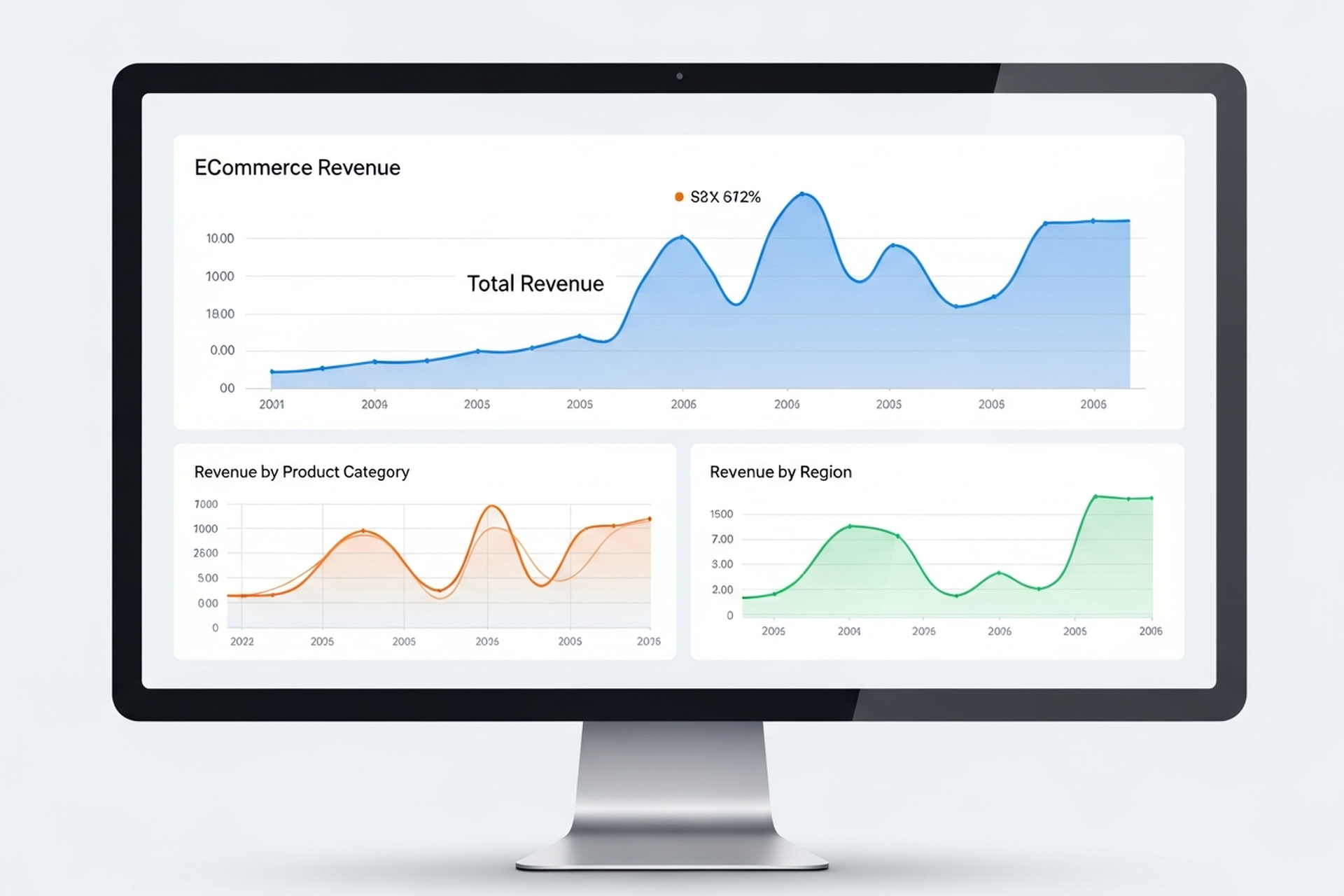
Most ecommerce stores are drowning in data and starving for insight. GA4 dashboards are full of sessions, bounce rates, and pageviews — numbers that describe what happened but don't tell you what to do next. Meanwhile, the metrics that actually drive growth decisions are either buried three reports deep or not being tracked at all.
Ecommerce analytics, done well, narrows your focus to the numbers that connect directly to revenue, margin, and sustainable growth. This guide covers the metrics worth your attention, the tools that surface them, and — most importantly — how to translate data into decisions.
The problem isn't usually a lack of data. It's a lack of a measurement framework. Without one, teams end up tracking everything equally and acting on nothing consistently.
A useful ecommerce analytics setup starts with a clear hierarchy: a small number of primary KPIs that define whether the business is healthy, a second layer of diagnostic metrics that explain why those KPIs are where they are, and a third layer of operational metrics that guide day-to-day decisions.
Most stores invert this — they optimize for operational metrics (sessions, ad clicks, open rates) without connecting them to the primary KPIs that determine whether the business is actually growing.
CVR is the percentage of visitors who complete a purchase. It's the foundational measure of how well your store turns traffic into revenue.
Formula: (Orders / Sessions) × 100
Benchmark: ecommerce conversion rates by industry vary, but a 2–3% conversion rate is a reasonable baseline for most direct-to-consumer stores. Stores above 3.5% have typically invested meaningfully in CRO and UX.
A low CVR tells you that something between arrival and checkout is breaking down — whether that's product-market fit, pricing, trust signals, site speed, or checkout friction. CVR is the best single indicator of your store's health at the mid-funnel level.
AOV measures how much customers spend per transaction. It's one of the fastest levers to pull when you want to grow revenue without acquiring more customers.
Formula: Revenue / Number of Orders
Even a 10% improvement in AOV compounds quickly across your customer base. The highest-impact tactics for increasing AOV are typically product bundling, cross-sell recommendations at cart, free shipping thresholds set slightly above your average transaction size, and subscription upsells where the product fits.
The critical nuance: don't chase AOV at the expense of conversion rate. If discounting or offer changes are required to move AOV, you may be eroding the margin gains you're trying to create.
LTV predicts how much total revenue a customer will generate over their relationship with your brand. It's the most important metric for evaluating the long-term health of your acquisition strategy — and the one most often ignored in early-stage growth.
Basic formula: AOV × Purchase Frequency × Customer Lifespan
In 2026, sophisticated ecommerce teams go further: they segment LTV by acquisition channel, product category, and cohort to understand which customers are actually profitable — not just which ones ordered the most. A customer acquired through a 40%-off promotion often has a dramatically different LTV than one acquired through organic search.
LTV compared to CAC is the ratio that matters most for sustainable growth. A healthy benchmark is LTV:CAC of 3:1 or higher — meaning you recover your acquisition cost three times over. Below 2:1 and you're likely under-investing in retention. Above 5:1 and you may be under-investing in acquisition.
CAC tells you how much you're spending to bring in each new customer. It's only meaningful in context — specifically in relation to LTV.
Formula: Total Marketing and Sales Spend / New Customers Acquired
A common mistake is calculating CAC only against paid channels. Blended CAC — total acquisition spend (paid media, influencer, affiliate, content, brand) divided by all new customers — gives a more accurate picture of what growth is actually costing you.
Tracking CAC by channel lets you see where acquisition efficiency is improving or degrading over time, which informs budget allocation decisions.
ROAS measures revenue generated per dollar of ad spend. It's useful for evaluating campaign-level efficiency but should never be used as a standalone measure of business health — it ignores margin, CAC, and LTV.
Formula: Revenue from Ads / Ad Spend
A 3× ROAS sounds strong but may be unprofitable if your gross margin is 30% and shipping costs are high. Focus on ROAS as a directional signal and contribution margin as the business truth.
This is the metric that most ecommerce brands undertrack and should be reporting first. Contribution margin is what remains after all variable costs — COGS, shipping, fulfillment, returns, and ad spend — are subtracted from revenue.
It tells you whether growing revenue is actually building value or just moving money through a leaky system at scale. If contribution margin is negative, growth is destruction. If it's positive and growing, you have a business worth scaling.
Beyond the primary KPIs, a second layer of metrics helps explain why primary metrics are moving:
You don't need an expensive tech stack to get started. The hierarchy of tools:
Layer 1 — Traffic and Behavior (Free) Google Analytics 4 covers sessions, traffic source, conversion events, and basic funnel analysis. It requires setup investment to be useful (proper event tracking, conversion goals, channel groupings) but is the right starting point for stores under $1M in revenue.
Layer 2 — Attribution and Profit Analytics As ad spend scales, platform-reported ROAS becomes unreliable due to overlapping attribution windows. Tools like Triple Whale, Northbeam, or Rockerbox give you a unified view of channel contribution across Meta, Google, TikTok, and email. These are worth the investment once you're spending $20K+/month on paid media.
Layer 3 — Behavior Analytics Heatmaps and session recordings (Hotjar, Microsoft Clarity) show you where users drop off and why — information that quantitative analytics alone can't surface. Pair these with CRO testing methodology to systematically improve conversion.
Layer 4 — Customer Analytics Platforms like Klaviyo (for email/SMS data) and Lifetimely or Glew (for LTV and cohort analysis) layer customer intelligence on top of transaction data. They're essential for understanding which acquisition channels actually produce high-value customers over time.
Data only earns its keep when it leads to action. A practical framework:
Weekly: Review CVR, ROAS, and ad spend pacing against targets. Flag outliers.
Monthly: Review AOV trends, return rate, email revenue contribution, and new vs. returning customer split. Identify one or two specific hypotheses for the month's optimization focus.
Quarterly: Run a cohort analysis. Compare LTV:CAC by acquisition channel. Evaluate where you're deploying budget relative to where your highest-LTV customers are actually coming from.
This rhythm prevents two failure modes: over-reacting to weekly noise and under-reacting to slow-moving problems (like a gradually declining repeat purchase rate) that only become obvious at the quarterly view.
The most common mistake growth-stage ecommerce brands make is scaling ad spend before their analytics foundation is solid. If you can't attribute revenue accurately, calculate a reliable CAC, or measure LTV by cohort, you're making acquisition decisions based on incomplete information — and the errors compound as spend increases.
Getting ecommerce analytics right — clean tracking, meaningful reporting, and a consistent review cadence — is the prerequisite for efficient growth. At EmberTribe, we treat the analytics audit as the first step in any engagement with an ecommerce brand, because the data quality determines the quality of every decision that follows.
The goal isn't more dashboards. It's fewer metrics, better understood, acted on consistently.
For more on turning your analytics into growth, see our framework for scaling your ecommerce store efficiently and our breakdown of ecommerce CRO tactics that improve conversion.

First things first. We cannot talk about Conversion Rate Optimization (CRO) without defining it. If you want a thorough explanation of what CRO means in practice, we cover that in detail separately — but in short, it refers to the systematic process of improving a website's conversion rate through data-driven decision-making. It involves certain processes, such as analyzing user behavior, conducting A/B tests, and implementing changes to optimize the website for better results. Easy, right?
But there is more. When it comes to CRO, it's essential to understand the customer journey and identify potential barriers that may prevent users from taking the desired action. By addressing these barriers and providing a seamless user experience, you can increase the likelihood of conversions.

CRO plays a fundamental role in digital marketing. It helps businesses maximize their return on investment (ROI) from their website traffic. By improving the conversion rate, you can generate more leads or sales without increasing your advertising budget.
Imagine if your website is receiving a significant amount of traffic, but only a small percentage of visitors are converting into customers. By implementing CRO strategies, you can unlock the true potential of your website and capitalize on the existing traffic.
CRO also ensures that your website provides a positive user experience, which leads to higher customer satisfaction and loyalty. When users find it easy to navigate your site, find the information they need, and complete their desired actions, they are more likely to become repeat customers and even recommend your business to others.
Becoming a successful Conversion Rate Optimization specialist requires a combination of technical skills and marketing knowledge. Here are some essential skills you should develop:
To enhance your skills and knowledge in CRO, consider enrolling in the following courses or earning relevant certifications:

While theoretical knowledge is important, gaining practical experience is equally crucial to becoming a successful CRO specialist. Here are two ways to gain hands-on experience:
Look for internship opportunities in companies that specialize in CRO. This will allow you to work closely with experienced professionals and learn industry best practices.
During your internship, you will have the chance to immerse yourself in the world of conversion rate optimization. You will be exposed to real-life projects and have the opportunity to work on actual client campaigns. This hands-on experience will not only enhance your understanding of CRO principles but also give you practical skills that can be applied in future roles.
Working alongside seasoned CRO specialists, you will gain valuable insights into the strategies and techniques they use to improve conversion rates. By observing their workflow and participating in team discussions, you will learn how to identify conversion barriers, conduct A/B tests, analyze data, and implement effective optimization strategies.
Study real-world case studies of successful CRO campaigns. Analyze the strategies and tactics implemented, the challenges faced, and the results achieved. This will give you valuable insights into the practical application of CRO principles.
By delving into case studies, you will gain a deeper understanding of the complexities involved in CRO. You will learn about different industries, target audiences, and unique challenges that CRO specialists encounter. This knowledge will help you develop a holistic approach to optimization and enable you to adapt strategies to diverse scenarios.
Besides, studying successful CRO case studies will allow you to identify patterns and trends that lead to positive outcomes. You will uncover common optimization techniques, such as improving website navigation, optimizing landing pages, and streamlining the checkout process, that consistently yield higher conversion rates.
Also, failure tends to be our biggest opportunity to learn. Examining unsuccessful CRO case studies is equally valuable. It provides an opportunity to understand the mistakes made and the lessons learned from those experiences. By analyzing the pitfalls and challenges faced by others, you can develop a proactive mindset and avoid similar pitfalls in your own CRO endeavors.
To be effective in CRO, you need to be proficient in using various CRO tools and software. Here is an overview of popular CRO tools:
When it comes to Conversion Rate Optimization (CRO), having the right tools at your disposal can make all the difference. These tools not only streamline the optimization process but also provide valuable insights into user behavior and preferences. Here are some of the most popular CRO tools:
A/B testing is a critical component of CRO. By conducting A/B tests, you can compare two versions of a web page or element to determine which one performs better in terms of conversions. Here are some steps to effectively use A/B testing tools like Google Optimize or Optimizely:
By mastering A/B testing tools and software, you can effectively optimize your website and drive higher conversion rates. Practice setting up experiments, defining goals, and analyzing the results to gain a deep understanding of your audience and make data-driven decisions.
Web analytics is an integral part of CRO. Understanding how to leverage web analytics tools will help you gain insights into user behavior and make data-driven decisions. Here's why web analytics is important:
Web analytics provides valuable data on user behavior, such as page views, bounce rates, and conversion rates. By analyzing this data, you can identify areas of improvement and make informed decisions to optimize your website's performance.
Google Analytics is one of the most widely used web analytics tools. Learn how to set up Google Analytics, create custom reports, and extract meaningful insights to drive CRO efforts.

Becoming a Conversion Rate Optimization specialist requires acquiring skills, gaining practical experience, mastering CRO tools, and understanding web analytics. By following these four steps, you can pave your way to becoming an expert in the field and help businesses maximize their conversion rates.


.svg)