
The search for the best digital marketing firms typically starts after a growth plateau or a failed agency relationship. By that point, most teams have already learned what a generic vendor looks like: broad service menus, account manager overhead, and reporting that describes activity rather than results. Finding a firm that actually moves revenue requires a different evaluation framework, starting with specialization and structure before getting to price.
The distinction between a "firm" and an "agency" is largely semantic in marketing, but it signals something about positioning. Firms tend to imply structured engagements, deeper specialization, and senior-level execution rather than delegated account management. What matters more than the label is whether the vendor demonstrates vertical experience in your business model.
Retainer engagements are the clearest proxy for client satisfaction. Clients on retainer contracts stay an average of 56 months versus 24 months for project-based clients, according to InfluenceFlow's 2026 agency benchmarking report, and retainer clients churn at 18% annually versus 42% for project clients. Firms with strong retainer books are building long-term relationships because they deliver measurable outcomes. Firms that default to project work often do so because their results do not justify ongoing investment.
Full-stack firms manage multiple channels: paid search, paid social, SEO, email, and content, all under one roof. They make sense for brands that want integrated execution and attribution without coordinating multiple vendors. The risk is diluted specialization: a firm that runs everything may not be best-in-class at any single channel.
Channel-specific specialists focus on one or two channels and go deep. A paid social firm that manages Meta, TikTok, and Pinterest campaigns exclusively develops pattern recognition across thousands of accounts that a generalist cannot replicate. SEM agencies operating purely in paid search build Google Ads account structures and bidding strategies that general firms rarely match. The tradeoff is coordination complexity when you need multiple channels covered simultaneously.
Vertical specialists focus on a specific business model: DTC ecommerce, B2B SaaS, healthcare, or local services. This is the highest-signal category when the vertical matches your business. A firm that has scaled 30 Shopify brands to $10 million understands creative fatigue cycles, contribution margin targets, and LTV models in ways that a generalist cannot replicate. At the $5 million to $20 million ARR inflection point for DTC brands, vertical expertise begins to matter more than channel depth, because strategic decisions require business model understanding, not just platform mechanics.
The evaluation framework differs significantly between B2B and DTC brands, and the best firms in each category are usually not the same firms.
For DTC and ecommerce brands, creative capability is the most important signal. Creative drives 60 to 70 percent of campaign performance on paid social platforms, according to internal Google data cited by Darkroom Agency. Meta's Andromeda algorithm has further shifted the platform away from audience signals toward creative signals, meaning a firm that produces strong ad creative outperforms one that excels at audience segmentation. Firms that combine performance media buying with in-house creative production are specifically built for this environment.
For B2B brands, account-based marketing capability is the differentiating factor. B2B companies that deploy ABM strategies see 87% higher ROI than those using broad-based approaches, per Forrester Research. The ABM services market reached $1.2 billion in 2024, reflecting how much B2B marketing has shifted toward precision targeting over volume. Firms with ABM-specific expertise (intent data integration, targeted account programs, and sales-marketing alignment) serve a fundamentally different need than firms optimized for DTC acquisition.
Digital marketing firms price in three main structures: flat monthly retainer, percentage of spend, or hybrid. The right structure depends on your stage and the channels being managed.

Flat retainers are common for content, SEO, and full-service engagements. Percentage of spend (typically 10 to 20 percent) is standard for paid media management, where the fee scales with the media budget. Hybrid models split a flat strategy fee from a variable media management fee. Seventy-eight percent of digital marketing firms use retainer pricing as their primary model, per InfluenceFlow 2026, which creates predictable cost for the client and stable revenue for the firm.
Pricing signals something beyond cost. A growth-stage firm charging $2,000 per month for full-service management is almost certainly understaffed or using offshore execution layers. Firms operating in the $3,000 to $7,000 monthly range for growth-stage brands can typically support senior execution on your account.
Boutique marketing agencies with narrow specializations often deliver more output per dollar at this tier than larger shops carrying account management overhead. Understanding how to choose the right marketing agency for your stage matters more than maximizing channel coverage per dollar spent.
The evaluation process should filter on fit, not just capability. These six questions surface the information that separates genuinely strong firms from ones that present well:
What is the average annual revenue of your current clients in my category? The answer reveals whether the firm has pattern recognition at your stage or is learning on your budget.
How many accounts does each strategist manage? More than eight accounts typically means reactive management rather than proactive optimization, regardless of how the firm describes its team structure.
Can you walk through your attribution methodology? Firms that cannot explain how they connect spend to pipeline or revenue are reporting activity, not outcomes.
What was your average client retention period over the last three years? A number below 18 months signals a client satisfaction problem. Strong firms can produce this number without hesitation.
Who specifically will work on my account, and can I meet them before signing? The most common complaint in agency relationships is senior sellers handing off to junior executors after the contract is signed. Insist on meeting the actual execution team.
What does success look like in 90 days, and how will you measure it? Firms that cannot define measurable 90-day milestones are not outcomes-oriented. Clear short-term benchmarks reveal whether the firm has realistic expectations for your category.
Guaranteed ROAS or ranking promises are the most visible red flag in any firm pitch. Results depend on competitive conditions, creative quality, and spend levels that no firm controls entirely. Long-term contracts of 12 or more months with no performance clauses lock clients into underperforming relationships with no recourse. Firms that lead with proprietary technology platforms rather than strategy are often selling software subscriptions with thin service wrappers on top.
Reporting dashboards that show impressions and clicks without connecting to revenue or pipeline are designed to demonstrate activity, not outcomes. A firm worth hiring can explain which dollars drove which results, even approximately. The best digital marketing agencies share the same quality signals regardless of size: they push back on unrealistic expectations, define measurable outcomes before starting, and surface problems before clients notice them.
The strongest predictor of a productive firm relationship is vertical alignment. A firm that has worked with 20 brands at your stage and business model has already encountered your specific problems. They know which channels work at your spend level, where creative bottlenecks typically appear, and what realistic performance looks like in your category. The evaluation time invested in finding vertical alignment pays back in avoided ramp time and failed experiments.
For growth-stage ecommerce and DTC brands evaluating demand generation partners, EmberTribe works on the content and paid media programs that build compounding pipeline rather than isolated campaign spikes.
Check out this TribeTalk from our Marketing Specialist, Kathryn Betancourt chatting with one of our Growth Specialists, Courtney Corner and one of our Project Managers, Deanna Spallone.
Instead of discussing paid traffic, today's TribeTalk focuses on another element we talk about often here at EmberTribe, EMAIL.
We answer questions such as: "Where to start with email?", "What should you test?", and "How can you easily create consistency?".
Where do I start?
Choose a platform for your email marketing. A few suggestions if you haven’t chosen one already are HubSpot, Klaviyo, or Mailchimp. FYI, you will have to pay for a tool to integrate your Shopify.
Next, you’ll want to build your list by capturing emails. Where should you start capturing emails? You can build your list with a subscribe option on your website, information from purchases, and run a campaign to opt-in for a chance to win a gift/shopping spree.
For your Initial email campaigns, start with a welcome series for services/Cart abandonment. For eComm businesses, these are people with high intent so use email here to push them over the line to purchase with a time-sensitive discount, creating urgency. You want people to make a decision to purchase so they don’t miss out on such a sweet offer.

Now that you got that setup, what’s next?
Build out more campaigns and test everything! Send yourself a test of each email and make sure to click photos, CTAs, links, check different devices, etc. before launching. The last thing you want is a mass email with your CTA button going to your “Summer Sale” page when you are trying to push your new “Fall Catalog”.
Pro-tip, a few tools for testing your emails that we like to use are EmailOnAcid and Litmus PutsMail.
Keep in mind mobile-friendly content! 60% of people open their emails on their phones. Something to consider is the subject line has to be shorter for it to fully appear on a mobile device. They usually show about 70 characters depending on the device.
Increase ROI by using customer-centric strategies such as personalization, segmentation, and responsive design (vs. hard sales and email blasts). We recommend using personalization across all automations, transactions, promotional streams. For context, emails with first names in the subject line often have up to 2x higher open rates.
Use automation to be the trigger for campaigns to send an upsell, cross-sell, delight, or to request a review. Triggered emails result in higher CTR.
Win-backs such as a birthday or annual gift just for being a loyal customer go a long way. Who doesn’t appreciate a good birthday gift from your favorite brand?!

Make sure to include reviews and user-generated photos. These will build your brand's credibility and authenticity as current and potential customers view what others are saying about your business.
For ongoing emails that are not automated focus on creating consistency. Make a calendar plan. Have template(s) pre-built to save time. Stick with themes so that you aren’t having to recreate the wheel every day i.e. Friday promos, Monday tips, etc.
Have specific promos just for email subscribers that you don’t run on social. Give them first access to upcoming promos (save the date/or early access) and then use this exclusivity as a hook to get more subs for your email list.
Don’t Stop Experimenting...
Try testing things like timing, segments, offers, and triggers unique to your industry/client (each with unique benchmarks).
If you want to go further, run A/B tests on subjects or design. Then compare the results of campaigns by the open rate for subject lines or CTR/conversion rate for design.
Check Google Analytics to leverage which day/time is best for sales, average repeat purchase information, and potential segments to test.
What are you testing with your marketing emails? Leave us a comment below.
In this post:
Check out this TribeTalk from our Marketing Specialist, Kathryn Betancourt chatting with our Director of Operations, J.P. VanderLinden, and one of our Growth Specialist, Melanie D'Angelo.
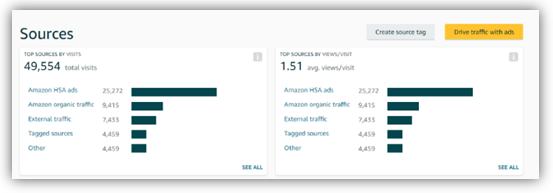
This helps pull data into Amazon but there are still issues for how to pull data OUT to other systems. It's not perfect, but it's more than we've had before, and it might be enough for folks to start exploring.
We've also discovered thatSellerly, a collection of Amazon business tools by Semrush, offers excellent marketing tools for Amazon listings designed to make selling on the marketplace easier and more effective. If Amazon's data insights are still not sufficient for you, give Sellerly a try!
Marketers understand that different ad types work better at different parts of the funnel. For example, Search is great at BOFu, Display at TOFu, etc. But what about how they work together?
Google released a report that marketers advertising on YouTube saw better conversion volume and rates from their Search campaigns. Specifically, Search conversions were 8% higher, conversion rates were 3% higher, and Search CPAs dropped 4%.
We all know that advertising on YouTube increases brand awareness and ad recall. The big questions are: Is this something driven by traditionally understood marketing practice? Or is Google itself actually influencing the algorithm to favor buyers who spend across multiple components of it's ad platform?
Regardless of what’s going on Google’s side, we recommend testing YouTube. Don’t just measure the direct performance, also measure the "halo effect" on other channels like Search & Social.

Yabba DABA Do!! Let’s discuss Facebook DABA campaigns. We think these campaigns have a lot of value for our clients.
Most folks think of Dynamic Ads as only supporting retargeting your website visitors and app users, limiting your audience size to the number of people who’ve interacted with you in the past. That’s why, despite the great performance, the possible investments advertisers have been able to make have been fairly restricted — typically, the biggest share of their budgets goes to acquiring new customers.
To help advertisers reach these audiences with top-performing ads, Facebook now offers the possibility to expand the reach of Dynamic Ads campaigns outside retargeting audiences.
Facebook’s Dynamic Ads for Broad Audiences (DABA) expands your dynamic ads to reach beyond your website or app visitors to generate demand. DABA campaigns serve personalized recommendations based on browsing activity and showcase the relevant inventory from your catalog to people likely to purchase.
Unlike lookalike audiences and retargeting site visitors, broad audience targeting captures intent in other places like:
DABA campaigns will have your potential customers saying….
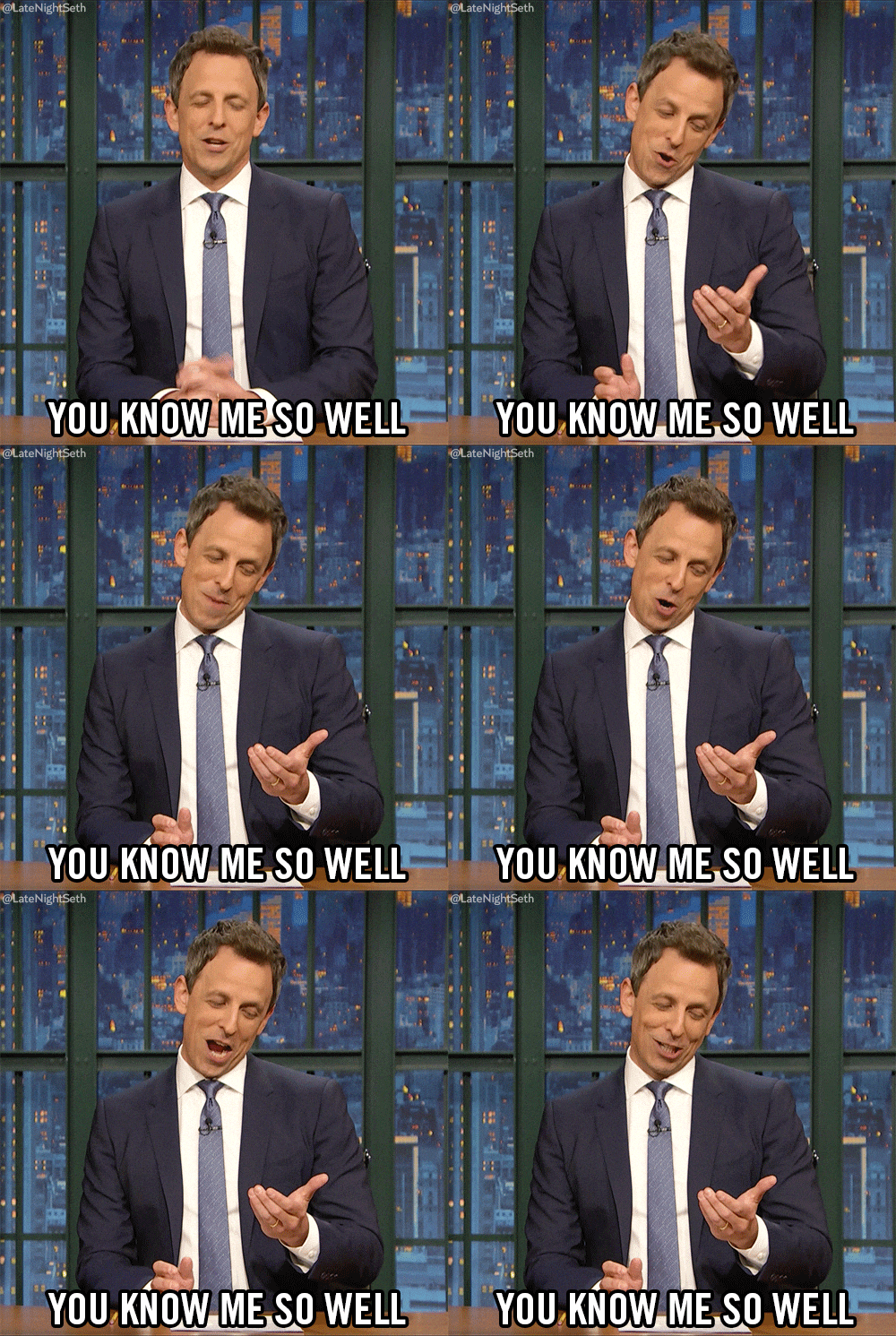
What questions do you have for us? Have you tried DABA campaigns? Are you running YouTube ads? Comment below.
Today, my guest is Beau Lebens.
You guys are in for a real treat.
Beau is the Head of Product Engineering for Jetpack at Automattic. Automattic is the company behind WordPress.com, which currently powers 1/3 of the web.
Beau was employee #35 at a company that is now a staggering 855 team members and counting. Automattic is valued north of $1B and operates as a 100% distributed team.
Beau started coding back as a teenager while growing up in a small town in Western Australia. But as his skills & experience continued to grow, his travels brought him to Hawaii, San Francisco, Brooklyn and now Denver, Colorado.
He oversees what I believe to be one the most dynamic product teams in the world. And in this episode there’s a ton of takeaways, from understanding the seemingly “unscalable” hiring process all the way to what is arguably the most robust tech stack I’ve ever seen for a distributed team.Listen On Apple Podcasts

Brand awareness is the foundation of every marketing funnel. Before a prospect can evaluate your product, request a demo, or make a purchase, they need to know you exist. Social media remains one of the most effective and cost-efficient channels for building that initial awareness, particularly for DTC brands and growth-stage companies operating with limited budgets.
But posting content and hoping for the best is not a strategy. Building brand awareness through social media requires deliberate choices about platforms, content formats, community management, and measurement. Below is a framework for doing it well.
Many growth teams focus exclusively on bottom-of-funnel metrics: cost per acquisition, ROAS, and conversion rates. These metrics matter, but they measure the output of a system that depends on a healthy top of funnel. Without sustained brand awareness efforts, your bottom-of-funnel campaigns gradually lose efficiency as audiences fatigue and acquisition costs climb.
Brand awareness creates three compounding advantages:
Understanding where awareness sits in the marketing funnel helps you allocate budget and creative resources appropriately across the customer journey.
Not every social platform serves every brand equally. The right platform depends on where your target audience spends time, what content format suits your product, and how much creative capacity your team can sustain.
The biggest mistake brands make is spreading themselves across every platform simultaneously. Start with one or two platforms where your audience is most concentrated, build a sustainable publishing cadence, then expand once you have validated your content approach.
Awareness content is not sales content. The goal at the top of the funnel is to deliver value, entertain, or educate, not to push a product. Brands that lead with value earn attention. Brands that lead with sales pitches get ignored.
Allocate roughly 80 percent of your social content to value-driven posts (education, entertainment, community engagement) and 20 percent to direct promotion (product launches, sales, offers). This ratio builds trust and keeps your audience engaged rather than fatigued by constant selling.
Educational Content. Teach your audience something useful that connects to your product category. A skincare brand might explain how to read ingredient labels. A marketing agency might share a framework for ad creative testing. Educational content positions your brand as an authority and creates shareability.
Behind-the-Scenes Content. Show how your product is made, introduce team members, or document the building of a new feature. This type of content humanizes your brand and creates emotional connection. People buy from brands they feel they know.
User-Generated Content (UGC). Customers sharing their experience with your product is the most credible form of social proof. Encourage UGC through branded hashtags, post-purchase emails requesting reviews, and re-sharing customer content with credit. UGC also performs exceptionally well as paid ad creative.
Trend Participation. Engaging with trending audio, challenges, and formats on TikTok and Reels puts your brand in front of audiences who are not yet following you. The key is relevance - participate in trends that connect naturally to your brand rather than forcing a fit.
Community and Engagement Posts. Polls, questions, this-or-that comparisons, and reply-bait posts generate comments and shares, which signal engagement to algorithms and extend organic reach.
There is a critical difference between an audience and a community. An audience watches. A community participates. Brands that build community around their product create a self-sustaining awareness engine where members introduce new people to the brand organically.
Community building is a long game. It does not produce overnight spikes in follower count. But the brands with the strongest communities have the lowest acquisition costs and the highest lifetime customer values.
Influencer marketing, when done correctly, is one of the fastest ways to generate brand awareness with a target audience you have not yet reached. The key phrase is "when done correctly." Poorly aligned partnerships waste budget and can damage brand perception.
Organic reach on most social platforms has declined significantly over the past several years. Brands that rely exclusively on organic posting limit their awareness ceiling. A smart paid amplification strategy extends the reach of your best-performing organic content to new, targeted audiences.
The combination of strong organic content and strategic paid amplification creates a growth marketing channel that scales efficiently. Organic builds the content engine. Paid extends its reach.
Brand awareness is harder to measure than direct response, but it is not unmeasurable. The key is identifying the right leading indicators and tracking them consistently over time.
Avoid vanity metrics in isolation. A million impressions mean nothing if those impressions do not reach your target audience. Align your awareness metrics with business outcomes by tracking the correlation between awareness activity and downstream conversion rates.
Social media brand awareness is not built overnight. It is built through consistent, value-driven content published on the right platforms, supported by community engagement and strategic paid amplification. The brands that invest in awareness today build the audience that sustains growth tomorrow.
Choose one or two platforms, commit to a sustainable content cadence, engage authentically with your community, and measure what matters. Brand awareness is not a vanity exercise. It is the foundation of a marketing engine that compounds over time.

A landing page has one job: convert a visitor into a lead or customer. Unlike a homepage, which serves multiple audiences and objectives, a landing page exists to drive a single action. That simplicity is its strength, but only when the page is built with deliberate, tested best practices.
Whether you are running paid ads, email campaigns, or organic content that funnels traffic to a dedicated page, the principles below will help you capture more conversions without increasing your traffic budget.
The number one reason landing pages underperform is message mismatch. When a visitor clicks an ad promising "50% Off Running Shoes," the landing page headline must reinforce that exact promise. If the visitor lands on a generic page with a headline about your brand story, they bounce.
A strong headline-to-ad match can improve your conversion rate by 30 percent or more simply by reducing cognitive friction.
Landing pages fail when they ask the visitor to do too many things. Every additional link, navigation item, or secondary CTA dilutes attention and reduces the probability that the visitor completes the primary action.
Visitors do not care about your product's technical specifications until they understand what those specifications do for them. Lead with the transformation or outcome, then support it with feature details.
Trust is the invisible barrier between a visitor and a conversion. Social proof, including customer testimonials, brand logos, review scores, and case study results, reduces perceived risk and validates the purchase decision.
Social proof is especially important for brands running cold traffic campaigns where the visitor has no prior relationship with your company. The principles of conversion rate optimization all point back to reducing friction, and social proof is one of the most effective friction reducers available.
Every additional second of load time costs conversions. Research consistently shows that pages loading in under two seconds convert at significantly higher rates than slower pages. For mobile traffic, which now accounts for the majority of clicks on most paid campaigns, speed is even more critical.
If more than half of your landing page traffic comes from mobile devices, and for most paid social campaigns it does, your page must be designed mobile-first rather than adapted from a desktop layout after the fact.
A well-designed landing page guides the visitor's eye from headline to supporting content to CTA in a natural, effortless flow. Poor visual hierarchy forces the visitor to work to understand what the page offers, and most will not bother.
Every form field is a micro-decision that requires effort from the visitor. The more effort required, the fewer completions you will see. The goal is to collect only the information you need to take the next step in the relationship.
Form optimization is a critical part of optimizing your sales funnel from top to bottom. Small reductions in form friction compound into significant conversion lifts over time.
No amount of best-practice advice replaces empirical testing on your specific audience. What works for a SaaS product may not work for a DTC supplement brand. The only way to know what converts is to test.
The conversion is not the finish line. What happens immediately after the visitor submits the form or clicks "Buy" shapes their perception of your brand and determines whether they become a repeat customer or a one-time transaction.
A strong post-conversion experience reduces buyer's remorse, increases lifetime value, and turns customers into advocates. It is also a factor that most competitors neglect, which makes it an easy differentiation point.
Landing page optimization is not a one-time project. It is an ongoing discipline of testing, measuring, and refining. The brands that treat landing pages as living assets, rather than static pages set and forgotten, consistently outperform competitors who spend more on traffic but neglect the conversion experience.
Start with the practices above, prioritize the areas where your current pages fall shortest, and build a cadence of continuous improvement. More traffic is expensive. Better conversion rates are earned through craft and attention to detail.

Managing over $200 million in Facebook ad spend across dozens of accounts and industries changes the way you think about paid social. Patterns emerge that you cannot see at smaller budgets. Assumptions get challenged. And the lessons that stick are rarely the ones you expect.
This is not a theoretical framework or a list of best practices pulled from documentation. These are the lessons we learned by spending real money, making real mistakes, and tracking real results across ecommerce, SaaS, and lead generation campaigns.
Whether you are spending $500 a month or $50,000, these principles apply. The scale may differ, but the underlying mechanics of what makes Facebook advertising work have remained remarkably consistent.
The single biggest threat to campaign performance is not audience saturation, algorithm changes, or rising CPMs. It is creative fatigue.
When the same audience sees the same ad too many times, performance does not decline gradually. It falls off a cliff. Click-through rates drop, cost per acquisition spikes, and the algorithm begins deprioritizing delivery because engagement signals weaken.
Across our accounts, we found that most static image ads begin to fatigue after 7-10 days of consistent delivery at moderate budgets. Video ads tend to last slightly longer, around 14-21 days, because they offer more visual variety within a single asset.
We built a creative rotation system that ensures fresh ads enter the mix before existing ones fatigue. The practical approach:
The brands that sustained performance at scale were the ones that treated creative production as an ongoing operation, not a one-time project.
One of the most common scaling mistakes we observed was trying to push more budget into audiences that were too small to absorb it. Facebook's auction system becomes less efficient when your audience pool is exhausted, driving up costs and reducing delivery quality.
Through testing across multiple accounts, we identified practical audience size thresholds:
When we hit scaling ceilings, the solution was almost never to increase the budget on the same audience. Instead, we expanded horizontally by adding new audience segments, testing new lookalike sources, or broadening interest targeting.
At high spend levels, audience overlap between ad sets becomes a significant issue. Two ad sets targeting different interest groups might share 60% or more of the same people. This creates internal auction competition, inflates CPMs, and wastes budget.
We learned to run overlap analyses monthly and consolidate ad sets that shared more than 30% of the same audience. This single practice consistently reduced CPMs by 10-20% across accounts.
At lower budgets, the difference between bid strategies is marginal. At higher spend levels, the wrong bid strategy can cost you thousands.
Our testing revealed clear patterns:
The critical mistake we saw repeatedly was using lowest cost bidding at scale. As budgets increase, Facebook's algorithm broadens its targeting to spend the full budget, which often means reaching less qualified users. Cost caps force the algorithm to maintain efficiency even at higher spend levels.
Every new ad set enters a learning phase where Facebook's algorithm is still figuring out who to show your ads to and when. During this phase, performance is volatile and CPAs are typically 20-50% higher than steady state.
We learned the hard way that interrupting the learning phase is one of the most expensive mistakes you can make. Making significant edits to an ad set, including budget changes greater than 20%, audience modifications, or creative swaps, resets the learning phase entirely.
Interest targeting, behavioral targeting, and demographic targeting all have value. But nothing comes close to the performance of custom audiences built from your own first-party data.
Across every account we managed, the highest ROAS consistently came from:
The accounts that invested in building and maintaining their first-party data assets, including keeping their pixel well-trained, uploading enriched customer lists, and segmenting email subscribers by engagement, consistently outperformed those relying primarily on Facebook's built-in targeting.
How you set your attribution window fundamentally changes what the data tells you. A 7-day click, 1-day view attribution window will show dramatically different ROAS numbers than a 1-day click only window.
After extensive testing, we standardized on these attribution practices:
The key insight is that your attribution window should match your buyer's actual purchase timeline. Using the wrong window either over-attributes or under-attributes revenue to your Facebook campaigns, leading to misallocated budget.
Over the course of managing $200 million in spend, we navigated iOS 14.5 privacy changes, the deprecation of detailed targeting options, the rise and maturation of Advantage+ campaigns, and multiple algorithm updates.
The accounts that maintained performance through these changes shared one trait: they adapted quickly. They did not cling to strategies that worked before the change. They tested new approaches aggressively and doubled down on what the new environment rewarded.
Specifically, the shift toward broader audiences, first-party data reliance, and creative volume has been the most significant strategic evolution. The advertisers who embraced these trends early gained a meaningful competitive advantage.
You do not need a massive budget to benefit from these insights. Here is how to apply them at any scale:
$200 million in ad spend did not teach us any single magic tactic. What it taught us is that sustainable Facebook advertising performance comes from systems, not hacks. The brands that win are the ones that build disciplined processes around creative production, audience management, data quality, and continuous testing.
The tactics will keep evolving. The fundamentals will not.
Most business owners running digital ads are trained early on to focus on ROAS. By definition, “return on ad spend” sounds like it MUST be the holy grail metric of digital marketing. You’ve spent money on advertising with the expectation that in return, you will receive revenue.
However, few words sum up the panic and despair you feel when, in the early days of your ad campaigns, you see $150 in Shopify revenue on one tab and $500 in ad spend on the other.
⬆️ Level up your ROAS with Snapchat ads. →
For most business owners, it’s impossible not to lose sight of the long-term goals.

In that moment, it’s important to take a step back and consider the bigger picture of what you’re trying to achieve, both as a company and in your digital campaigns.
The digital marketplace is complex. There are countless variables that influence whether or not someone buys from you.
😱 Are your analytics lying to you? →
Ad creative, ad copy, price, promotions, free shipping, the purchase process, trust in the brand, trust in the website, customer service, other sites selling the same product, other sites selling similar products, people who sit on a cart to decide – and then forget.
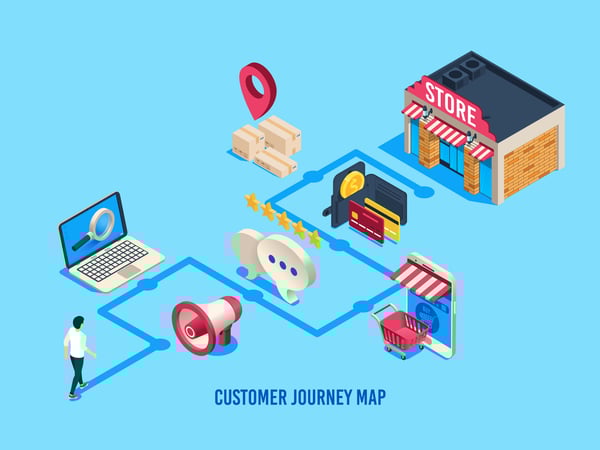
Every one of these variables – and many more – have a direct impact on whether you will get a return on your ad spend. And whether your company will be around in 6 months.
However it’s impossible to know, much less get these critical factors, right if your sole mission statement is to increase ROAS month over month.
Knowing and understanding what creates a growing and sustainable buying process requires time, iterating, testing and repeating – all of which require some ad spend.
No one wants to hear this: investing money to know your buyers’ process and what will make your company successful will lower your ROAS, as some of your money is diverted to testing. But invest, you must.

Founders are engineered to trust their gut, sometimes to a fault. They don’t want to spend money – or time – on iterating and testing because they are sure their assumptions are correct.
💊 Hard to swallow pill: Facebook ads don't always work. Here's why. →
The unfortunate reality is that the longer you begrudge ad spend on testing, the more money you waste on less effective ads, the lower your ROAS, and the longer you’re wasting money and suffering a low ROAS.
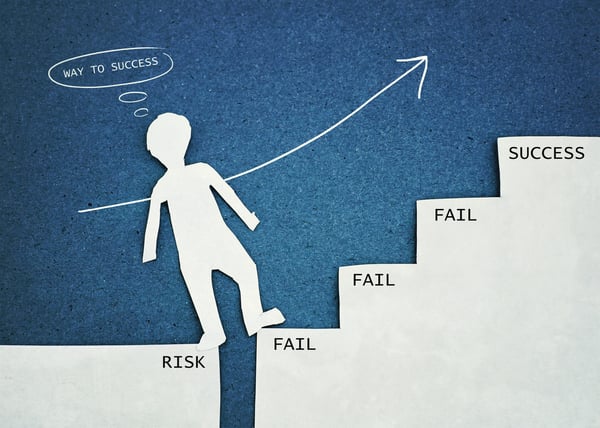
For instance, you may have perfected a BBQ rub that you sell out of every weekend at the local farmer’s marketing. You’re positive that as soon as you get your online store up and some ads running, your greatest obstacle will be keeping up with inventory. I mean, people LOVE this stuff. 😋
You get a Shopify account and start to run some ads. The ads are driving a lot of traffic to your site – you may even be getting some adds to cart. Unfortunately, your orders are bumping around 3 a day.
You may have forgotten to account for some of those critical variables or external factors we mentioned – like trust-building elements, shopping flow, technical issues and shipping issues. No one is buying from you for one or many reasons.
This is a classic case of "You don’t know what you don’t know."
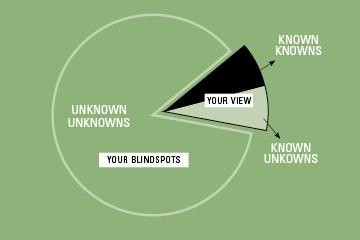
Credit: peerinsight.com
However, now that ads are driving traffic to the site, testing various usual suspects, you come to understand that people need some convincing with testimonials, BBQ awards logos, reviews, free samples – and they need free shipping to push past the finish line.
🍨 Get the scoop on conversion rate optimization. →
These external factors can be smoked out as quickly as possible (pun intended, see what we did there?), removing obstacles to people buying – and increasing that flow of ROAS back to you. But more importantly, you’re building a stronger company and a brand with staying power. You now know what’s important to your customers and are removing barriers that frustrate them. This is an exercise in growth marketing!
Let’s say your investment in market research by way of ad traffic pays off, and you get to a comfortable ROAS. It’s tempting to assume you’re good to coast into retirement on the back of your world class BBQ blend.
You may have hit a ROAS that makes you happy, but it’s important to continue viewing that number as one indicator metric of many. Even when it’s trending upward, it cannot become the focal point of your business.

As a growing company, it’s important to turn your attention and an allotment of your ad spend to understanding bigger metric fish: like the lifetime value of each customer.
And what makes one customer more valuable than another, and how do you specifically target more valuable customers?
Which customers are more likely to advocate for your product, resulting in more customers and more sales?
FEATURED RESOURCE: Use this spreadsheet to calculate critical KPIs like CPA, target ROAS, and gross profit.
Your main objective for the first few months of any digital campaign should be to come away with a deadly accurate pulse on your market conditions, your purchasing audience, what compels them to pay for your product and any obstacles getting in the way of paying for your product.
Armed with this knowledge, you can make critical decisions around HOW to market your product in digital ads, through a keen understanding of your audience’s pricing tolerance, preferred messaging and detailed targeting.
For the first phase of your digital campaign, ROAS is simply the cherry on top. You’re building the sundae from the bottom up, starting with:
While any business owner would jump at the above information, few actually get there. Far too many are dissuaded from the testing it takes to uncover this valuable information by one difficult truth: These kinds of objectives are often at odds with increasing short-term ROAS.
Unlocking seven or eight figures of revenue might mean taking a hit on the first few months of ad spend. Brace yourself – it may be even more with big ticket items or those with a long purchase path. That's not a bad thing if you're laying the foundations for long-term success!
🏫 Want to get schooled? Check out our free training resources. →
Entrepreneurship has become a fantasy for many young men and women.
You don’t have to look far to find millions of posts that circulate every week, hashtagged with #entrepreneur #startup #girlboss.
But despite this pop-culture dressing, a dark truth lurks in the shadows: startup founders are disproportionately impacted by mental health challenges.
According to a recent study%204-17-15.pdf) conducted by UC Berkeley, 72% of entrepreneurs surveyed report mental health concerns.
By comparison, only 32% of adults in the United States report having been diagnosed with some form of mental illness.
At EmberTribe, we work firsthand with founders across tech, eCommerce, and the service sector. We’ve observed the frenetic pace at which they work towards milestones, whether they be sales figures, fundraising goals or product development.
We’ve also experienced what it’s like to take risks with our family’s well being. We know what it’s like to live in a state of uncertainty, while being accountable to payroll and a team that trusts you with their financial future.
All of these challenges come with the territory, but the debilitating (and potentially life-threatening) impact of depression and anxiety doesn’t have to be a new normal for entrepreneurs and their teams.
Mental health isn’t our area of expertise and we don’t claim to have the answers to this looming crisis.
But one thing we do know...
Isolation is the enemy of wellness.
My co-founder, T.J., and I brainstormed ways that we could be a better ally to startup founders and their teams. Something that goes beyond our normal scope of service.
Here is an email we shared with our current clients last week:
Dear Client,
At EmberTribe, we've worked with hundreds of founders and their teams.
We know through direct experience that entrepreneurship can be a lonely and brutal sport.
Pop-culture idolizes fearless founders, who with steely determination, overcome any obstacle in their way with superhuman, stoic resolve.
But do you know what hasn't made enough headlines?
The mental health struggles that are plaguing the startup ecosystem.
The University of California concluded that 72% of entrepreneurs surveyed report mental health concerns.
That's a lot.
The truth is, many of our peers are quietly suffering from depression and anxiety. And not enough people are talking about it.
My co-founder, T.J. and I have both personally been impacted by this during the course of our careers.
Today, we want to take action and play a small role in bringing more health and balance to the startup ecosystem.
We've chosen to partner with Talkspace, a platform that facilitates discreet, online therapy.
Here's how it works: If you or someone close to you on your team is looking for help in any way, we're sponsoring 100% of a month's worth of sessions on Talkspace.
You can privately request this support by emailing: **@embertribe.com. We'll simply reply with a code that you can use to redeem for the month's sessions. No questions asked.
We're grateful for your partnership and excited for your growth.
With gratitude,
Josh & T.J., Co-founders, EmberTribe
There’s nothing grand about this gesture. It’s just a simple offer to encourage those quietly suffering alone to step out from isolation.
The startup ecosystem includes a diverse group of men and women across different backgrounds and ethnicities. We are a community with shared values of innovation and growth. We hold a unique vision of what the world could be like.
The challenge is, will we support one another when it really counts? Will we listen when it’s uncomfortable or potentially awkward? Will we openly embrace the dark moments of anxiety and depression alongside epic idealism and optimism?
It takes buy-in from founders, investors, strategic partners, consultants, family and friends
Because pursuing growth at all costs is too expensive.
Let’s get to work.
You can create ads built for faster approval , and we can tell you how.
Read on to learn:
Thanks to a long list of Facebook Ad guidelines and strict ad approval process, many marketers using Facebook advertising tools enter the land of confusion.
Population: 90% of Facebook Advertisers.
When working with Facebook Ads, it’s been always been difficult to find answers when you run into trouble. Dealing with Facebook ads that haven't been approved is no exception.
With little information provided from Facebook, you can often end up wasting time, money and ultimately, after enough disapprovals, can risk your ad account being flagged.
No artistic or educational images are allowed, even if not explicitly sexual. This includes:
The fix: When working in underwear, bathing suits, or any other industries that might get flagged—the more clothing the better. No tight cropping on individual “areas” (as mentioned above), and no poses that are “suggestive”. If possible, flat lays of the product are a great workaround. Once the item is on the model, you start to have a longer approval process and leave yourself open to the possibility of disapprovals, as well.
🔍 Find more expert tips and videos to boost your Facebook ad performance. →
As we mentioned earlier, these are some of the most common issues we’ve seen while running Facebook Ads. However, according to Facebook’s Advertising Policies, there are many other reasons why your ad may get disapproved.
Things like:
Disapprovals You Can’t Fix
Unfortunately, there are some disapprovals you can’t fix when working with Facebook Ads. Typically these disapprovals have to do with the product or service you’re promoting either has a general restriction, or more in-depth requirements within the ad targeting.
Some products that you can’t advertise on Facebook include:
“The Next Tinder”— Dating“Win Big in New York”— State Lotteries
“Get your Prescription Filled Fast”— Online Pharmacies“Buy Dogecoin, Bitcoin”, etc. — Cryptocurrency Products and Services“Visit Recovery Haven” — Drug and Alcohol Addiction Treatment Centers
Since the approval process for an individual ad can take up to 24 hours (sometimes longer in other cases), be sure to be mindful and double-check your work.
Avoid having to go through the whole approval process all over again because of a simple and fixable word misuse.
As with everything else, building Facebook Ads takes practice. Especially when just starting out or implementing new campaigns, it’s important to not let disapprovals discourage you. The majority of disapprovals we see are typically small mistakes that can be solved with quick fixes. Dropping the “you” in the headline, or making the ad copy less sensational gives you an easier starting point and can minimize future disapprovals.
At the end of the day, Facebook’s main goal is “to keep Facebook safe for people.” Keeping that goal in mind and being ready to make small tweaks to bring your ad into alignment with Facebook’s Ad Policies can have you back on the road to Facebook ad success.
If you're tired of spending time wandering the Facebook ads maze, why not bring on some help? Book a call with a growth expert to learn more about maximizing Facebook ads with the help of a top growth marketing agency.
When am I going to start seeing results?
How fast can we scale to $25,000?
How much am I going to spend on testing?
These questions (and more) come up frequently as we're talking to companies who are considering working with us to grow their business. Whether they are just starting out on a new eCommerce store or looking to increase their app signups 3x in Q2, the underlying question is really the same.

Let's face it: digital marketers (and marketing agencies) have really turned their approach into a "black box" over the years. Whether they do it by hiding behind jargon, slapping clever branding over the top, or creating complex or confusing diagrams, the end result is confused business owners who don't really understand what their dollars are going towards, or why.
Now, take a deep breath.
For you, with us, that stops here.
We're about to open the box.
I have two little kids, one preschooler and one toddler. Both are (alarmingly) ambulatory, moving all over the house and getting into everything they aren't supposed to. The older one can unlock deadbolts, push open screen doors, climb ladders and stairs, while the younger is content with simple seeing how fast she can get her body moving in a single direction before she either topples forward or encounters an object that refuses to budge when she slams into it.
Why do I bring this up? Because they didn't start this way.
Yes, it's a tired cliche, but it's so true: you have to walk before you can run.
If your business has never run an ad before, never used marketing to sell, never attempted to convince someone unfamiliar with the brand, product, or service that they should part with their hard-earned Benjamin Franklins, then your first question should not be, "How much can I make?"
You don't have TRACTION yet.
By traction I mean a pattern of desired behavior occurring in a consistent, somewhat predictable fashion. This could mean generating leads, getting purchases, onboarding new users or whatever else your business goal, it doesn't matter. The point is that you need to be able to say that you can cause it to happen, repeatedly, with your efforts.
When we work with clients who have never run ads before, or who are just starting out, our first forays out into the marketplace are focused on finding who will buy and what will cause them to buy. Put another way, this is about audience and creative/offer.
Let's bust a myth: just because you have a product or service does not mean people will buy it. This is not Field of Dreams.
On the contrary, you have to wade through scores of unqualified or uninterested people to find your best candidates, and then test multiple different messages, angles, images, videos, taglines and more in order to find traction.
"Okay, but how long does that take?"
Well, that depends.
I know, that's not what you were hoping for. And if I can tell you that it would take 2 weeks or 2 months or whatever, I definitely would. Instead, here's what I can tell you:
When you work with us, you aren't hiring wizards (or gurus or ninjas) - you're hiring data-driven marketers. So we're going to test, and test, and test, and generate lots of data, and then we're going to do what the data tells us.
👉 Set up your campaigns to get more qualified leads. →
Sometimes it's fast, and we see traction in just a few weeks. Sometimes it takes less time, sometimes it takes longer. All the factors above impact that.
But the good news is, once you have TRACTION, you can move on to start thinking about...
Too many times we'll talk to a business owner who is putting money into ads and wants to see immediate return. If they don't get a certain CPA or ROAS in the first 3 weeks, they think there's something "wrong" with the ads. They don't realize they are trying to run before walking, that you can't build a house without the foundation, or whatever analogy you best identify with.
💡 ROAS isn't everything, it's just a part of the equation. →
Once we help our clients find TRACTION, then (and only then) is it time to start discussing PROFIT.
Why?
If you don't have enough data points, you can't optimize.
Put another way, if you don't have anyone buying from you, how do you know who your best customers are?
Getting this data and acting on it is the basis of improving your PROFIT metrics. If you want a better CPA, you need to find out which creative gets the best response and then test small optimizations on it - a new emoji, a different headline, a carousel vs a static image. If you want better ROAS, you can segment by device type or placement or time of day that gives you the best baseline.
The key to the PROFIT stage is having goals. And I don't mean "I want to retire and sleep on a bed of Andrew Jacksons every night" type goals, more like "If I can generate new users for $20 each that means I'm profitable and am basically printing money" goals.
We help our clients walk through some simple calculations to set their goals. For an eCommerce store this might include repeat purchase rate, average order value (AOV), and cost of goods sold (COGS). For a SaaS client, we would consider lifetime value (LTV), profit margins, and upsells. Whatever the case, we want to end up with a single number.
That number is our PROFIT goal. If we can hit that goal with consistency, it unlocks us to move on the third and final stage.
Ah yes, scaling. The magical, mystical land of unicorns and rainbows where you trade $1 for $4 ten thousand times while eating ice cream in your pajamas.
Okay, well, not quite, but that's how the "get rich quick" YouTube personalities pitch it. Sounds fun, huh?
Truth is, scaling isn't the end - it's the beginning.
When this client partnered with EmberTribe, their goal was to find strategies to scale sales. Now our client has experienced scale from $18K to $370K lifetime revenue, with an $111K lifetime spend.
You can't start putting more dollars into your campaigns until they are making you money back consistently, and you can't do that until you build a system of repeatable client generation. Hence the reason it's the final step. But there's another reason we counsel clients to be smart about getting to this stage: the game changes.
If you want to triple your investment in ads, especially on a channel like Facebook Ads, just about the worst thing you can do is start jacking your budgets up quickly.
😑 Facebook ads not working? This could be why. →
This causes the algorithm to have to start relearning, and oftentimes can tank your PROFIT, forcing you to go back to the drawing board. Instead, you have to be intentional, constantly revisiting your PROFIT goals and testing new TRACTION experiments to widen your funnel. And this is why we insist on walking through the process with clients - because failing to do the hard work on the front end ends up in a house of cards that falls apart, leaving everyone unhappy.
Some of our best success stories are clients who did things the right way, worked with us to build a repeatable system for growth and testing, and then let us run wild with new audiences, creative, automation, rules and more. Their accounts grew from 5 to 7 figures in ad spend profitably not by some mystical proprietary technology or the wizardry of a paid acquisition savant, but by being intentional, creating a solid foundation, and trusting the process.
It's not easy. It's not as fast as we'd like. But the results are worth it, and the potential that it opens up are amazing.
No black box. No magic. No single genius with the inside track on the algorithm.
Just lots of testing, patience, observation, analysis, failure, growth and consistency.
That's the secret sauce of EmberTribe, and it's one of the reasons we've had such great success for ourselves and our clients since our inception: a three-step process of TRACTION, PROFIT, SCALE that works across industries, across business models, regardless of the age or success of the business to date.
If you have fundamental cracks in your business model, there is no Facebook targeting or performance strategy strong enough to build revenue on that foundation. That is the hard truth every eCommerce advertiser needs to hear before pouring more budget into Meta's ad platform.
There are a lot of great eCommerce ideas out there, started by some very smart entrepreneurs. And because Facebook has been a successful advertising platform for so many eCommerce businesses, it is tempting to think that Facebook advertising is the silver bullet that can sell anything.

But before you pour all of your hard-earned resources into Facebook ads, you need to take a step back and ask the hard questions about your business itself. The ads are rarely the problem. The business behind the ads usually is.
The data supports this. Across hundreds of eCommerce accounts, the campaigns that struggle the most share a common set of underlying business-level issues that no amount of audience targeting or bid optimization can fix. Let's dig into the most common reasons why Facebook ads fail for eCommerce brands, and what you can do about each one.
Ask yourself: Could people buy my product, or one almost exactly like it, somewhere else?
If you are a dropshipper, a reseller, or your product is just fairly common, it is critical that you know all other outlets where customers could buy your product. You need to have a solid answer to why someone should buy from you specifically, particularly if you are competing against trusted outlets like Amazon Prime or the option to stop at Target on the way home.
If price is your top hurdle for customers, you have a significant warning sign on your hands. With price as your primary differentiator, you are signed up for a race to the lowest possible dollar, slashing your margins. Matched against huge wholesalers and deep-pocket retailers online, it is a race that is incredibly difficult to win.
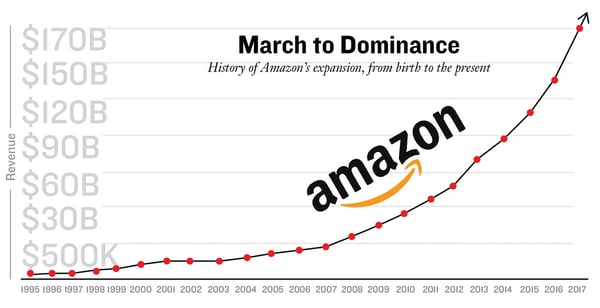
All too often, a business will run a great ad campaign, driving eager customers to their website, only to have most customers open another tab to their Prime account, enter a few search terms, and one-click purchase within seconds.
The solution: Build high-quality, descriptive landing pages.
Quality landing pages prominently displaying solid differentiators can go a long way in mitigating this. If you cannot compete on price, you have to find some other way to compete. It could be by highlighting great packaging, promoting a specific lifestyle, or going super niche with your audience focus.
Here are specific tactics to differentiate against commodity competition:
Keep testing and optimizing until you find the winning combination of audiences, ad creative, and campaigns.
Ask yourself: If people see 88 other websites today, will they really remember mine?
A staggering percentage of Facebook ad failures have nothing to do with the ads. The website users land on is uninspiring, and they immediately bounce, especially if the product is not particularly remarkable.
If you are selling water bottles, your website better make visitors excited enough to reach for their wallet immediately. The bar for eCommerce web design has risen dramatically. Shoppers expect fast load times, clean design, and a frictionless buying experience.
Take Welly for example. They sell bandages. Not exactly the most exciting product category. But they were able to make bandages not only look cool but also create a website that gets viewers genuinely excited about first aid kits. That is the power of strong brand design and storytelling.
The solution: Put your creative hat on and make your site the go-to destination for products like yours.
We recommend promoting curated bundles, product reviews, usage videos, comparison charts, and anything else to make the buying experience worth those few extra dollars and time in transit. Your website should answer three questions within five seconds of arrival: What do you sell? Why should I care? What do I do next?
Investing in conversion rate optimization on your site will compound the returns from every dollar you spend on Facebook ads. A 1% improvement in conversion rate can mean thousands in additional revenue per month.
Ask yourself: Is my unique value proposition really all that unique?
Can you immediately answer why your product is better than similar products? Or, if not your product, your brand, company, or story?
Do not expect people to spend money if your big UVP is warm sleeves on coats. People expect coats to be warm. However, if you sell coats with secret inner sleeve pockets designed for sneaking snacks into the movie theater, now you have something worth talking about.
Even if your product is fairly common, you can be strategic in your marketing. Identify the strongest benefits of your product and broadcast them. Your ads need to quickly communicate key differentiators and value-adds of the product or brand.

Do your homework and learn what your closest competitors are saying about their similar products, and stop trying to say the same things. Shake up the product dialog with features and selling points they cannot match.
The solution: Think about the problems your potential customers face and show how your product solves those problems. Try reading through customer comments, questions, and reviews. Do some brand soul-searching to figure out what makes your company distinctly unique.
Ask yourself: Do I have enough people to sell to?
There are probably a lot of left-handed people in snowy climates who would be thrilled to buy your glove-installed, left-handed, heavy-duty ice scraper. But you have already cut off a huge percentage of people to target. It will likely take a lot of testing audiences, creative, and placement to arrive at ads that will consistently sell something so niche.
Similarly, "shop local" can be a bad thing if you are too localized. There might be at least a dozen people in your neighborhood interested in your dog-walking service, but until you expand into other neighborhoods, you are capped from growth.
With hyper-specialization and micro-localization, your digital marketing is in a tough place. You need a broad enough audience to start gaining traffic and driving sales. Facebook's algorithm requires sufficient data volume to optimize effectively. If your potential audience is too small, the algorithm never exits the learning phase, and you spin your tires indefinitely.
Understanding upper funnel vs. lower funnel dynamics can help you build a broader top-of-funnel audience before narrowing down to converters.
The solution: Think of diverse ways to use your product or broader groups of people who can benefit.
Target auxiliary groups very specifically with messaging zeroed into reasons why this seemingly esoteric product could benefit them. Consider lookalike audiences based on your best existing customers to expand reach without sacrificing relevance.
Ask yourself: Would I scroll past my own creative assets?
Studies show that people see, on average, over 5,000 images a day. That is thousands of bland stock photos, manufacturer product catalog images, and stale advertising all competing for a fraction of your prospect's attention.


If you want your digital ads to catch a scroller's attention, provide imagery and creative assets that stop your target audience dead in their tracks. Think: product videos, boomerangs, animated gifs, slideshows, and lifestyle product photography.

We can point to countless creative tests and anecdotal examples where interesting creative drove engagement and sales, always beating out boring flat-lays and manufacturer-provided model images. Dropshippers, it is easy to just forward on white background product pics, but trust us: lifestyle or in-use imagery beats this out every single time. High-performing ad creative follows a consistent set of principles that any brand can implement.


The best-performing Facebook ad creative in 2026 generally falls into a few key categories:
Never lose sight of the story your creative is telling about your brand. What does your imagery say about the business and about the product?
Ask yourself: What is stopping a customer from clicking "Complete Purchase"?
People shop online because it is easy. Facebook ads can drive traffic to your site all day long, but if you have created any inconvenience for the buyer, you can count on losing sales, maybe even most of them.
The solution: Identify friction in your store or checkout process by doing a conversion rate optimization walkthrough.
If the issue is more abstract, like customers wanting to try on before they buy or feeling the quality firsthand before making a big-ticket purchase, brainstorm ways to remove the friction and turn the solution into a selling point.

Take Warby Parker, for instance. Many people are insecure about how glasses, particularly bold, trendy frames, will actually look on their face shape. Warby turns Free Shipping and Free Returns into a compelling value proposition: try on before you buy without ever having to visit the store. That reframing turned a common policy into a competitive advantage.
After working through these six common failure points, the takeaway should be clear: the answer to underperforming Facebook ads is almost never "spend more." The answer is to fix the business fundamentals that sit beneath the ads.

No matter where you stand on the spectrum of answers to these questions, brutally honest self-evaluation has the power to deliver creative solutions that can transform your business from a pretty good idea to a company that customers return to time and again, telling their friends and family about.
Before you adjust another bid or launch another campaign, run through this checklist:
If you answered "no" to any of these, you know where to focus your energy before scaling your ad spend. Comparing Facebook ads vs. alternatives like TikTok can also help you determine whether a different platform might be a better fit for your product and audience.
If you want an outsider's perspective about why your Facebook ads are not generating sales, reach out to our team for expert insights.
If you think about what makes modern marketing so powerful, all roads lead to one thing: personalization.
Facebook ads are powerful because of how precisely we can target an audience. Search ads are powerful because we can target the intent of a potential customer based on what they're searching for in Google.
This high degree of personalization turns advertisers into snipers who find the right people at the right time with the right offer.
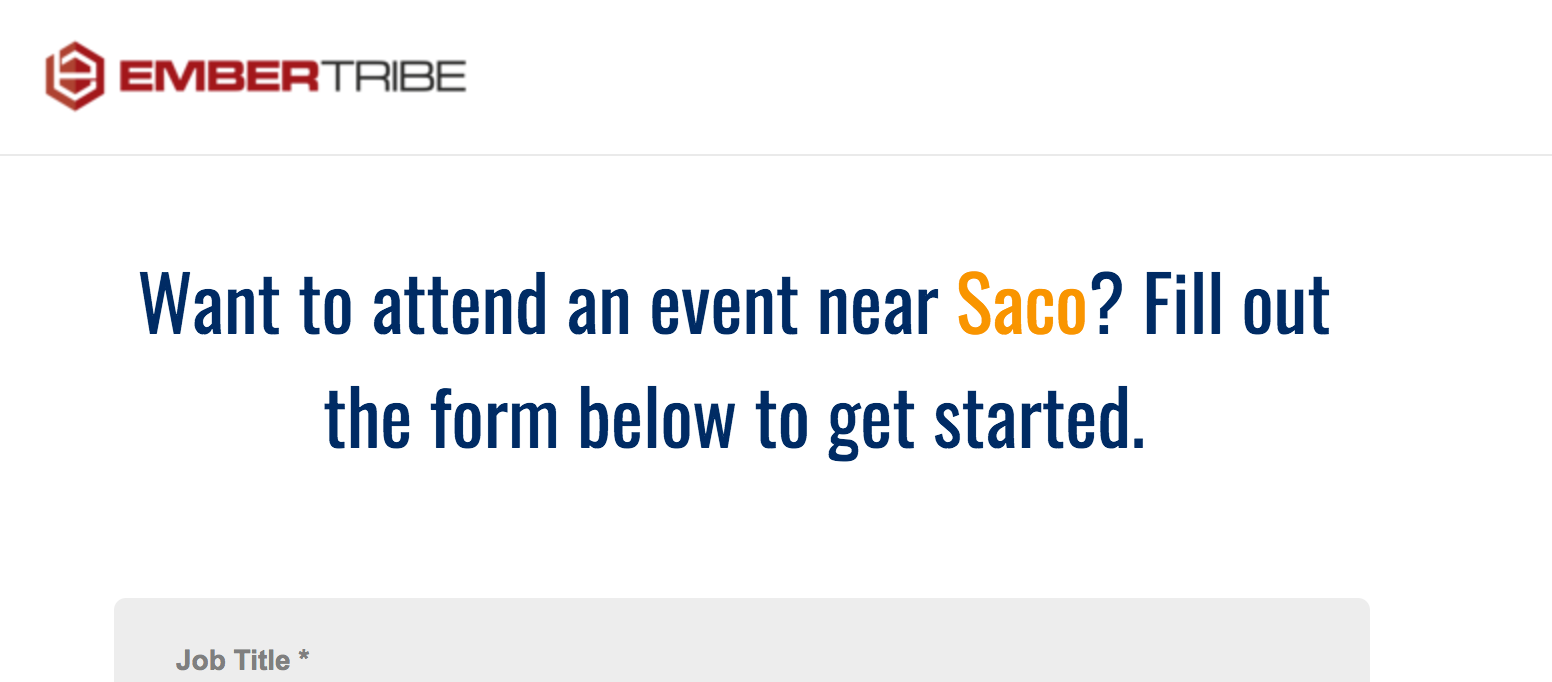
Let's get started.
Big picture
We're going to:
You don't have to be a technical whiz. Just follow the directions and you'll do great.
We wrote a script that calls on a free service, Snoopi.io. Snoopi.io detects the visitor's IP address, then looks it up in a database to find the city and state names. It also can find things like latitude and longitude, ISP provider, if the user is using a mobile device; which is cool if you wanted to geek out and show a map with a user's current location or get additional information to help with marketing efforts.
The script we wrote acts as a bridge between this service and your landing page, so you can store and use that information in your landing page's content.
NOTE: To use this lookup service, you'll need to create a free account and get an API key which allows 10k free requests per month. API key is not required for testing purposes.
We're using Unbounce for this particular tutorial, but any platform will do just fine, provided you have the ability to add Javascript to your pages.
Now that you downloaded the script in the step above, add it to your landing page.
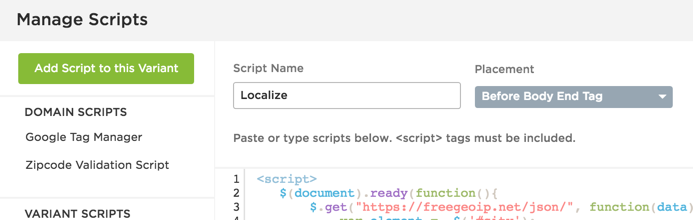
So remember, we called up Snoopi.io to retrieve the city name, we grabbed that information with the script, now we need to tell the script where to put it on your page.
Typically, we'd recommend adding a user's location somewhere in the headline of your page so that it stands out. But you can also get creative, and work it into other places like your CTA button text. The key here is to make it as natural as possible, so the user feels like you created this lander just for them.
In any case, we're going to use a tag to identify where the script should insert the city name.
Name the span id "location".
Let's clarify what's happening here. You're adding this element right within the HTML of a headline. Think of that entire span tag as the city name. In the example above, you can see that we added a contrasting color for it to pop.
The script is looking for the id "location" if you've followed these instructions. But if you want to add the city to some other element, you just have to change the "id" in the script to look for that element.
If the IP lookup service can't find a city name in their database, our script will fall back on a state name. So keep that in mind when using the script to avoid any awkward phrasing.
Here is an overview video to help with implementation...
Just because you can do something doesn't mean you should. Is your offer dependent on location? Then it might make sense to add it dynamically to your landing page. Think: events, job openings, dating, etc.
🤔 Can I optimize my landing page too much? Turns out, yes. →
If a user's location has no bearing on the offer, don't force it. We've seen instances where using this tactic can actually lower conversion rates if it's out of place.
Don't forget that once you're able to capture location, that's where the fun begins. Adding a city name as text to your copy is only one simple application, but the possibilities are endless: pre-populating form fields, customizing a checkout experience, etc.
Now go forth and personalize!


.svg)