
Most Shopify stores are not under-tracked. They are over-reported. GA4 shows one revenue number, Shopify shows another, Meta claims it drove the sale, and Klaviyo claims credit too.
The average ecommerce team runs 17 to 20 platforms in their martech stack, yet 65% still cite data integration as their single biggest barrier to effective measurement. The problem is rarely a shortage of data. It is a shortage of the right tools, configured for the right questions.
This guide organizes the best ecommerce analytics tools by function so you can match each one to your business stage and budget, instead of buying everything at once and measuring nothing well.
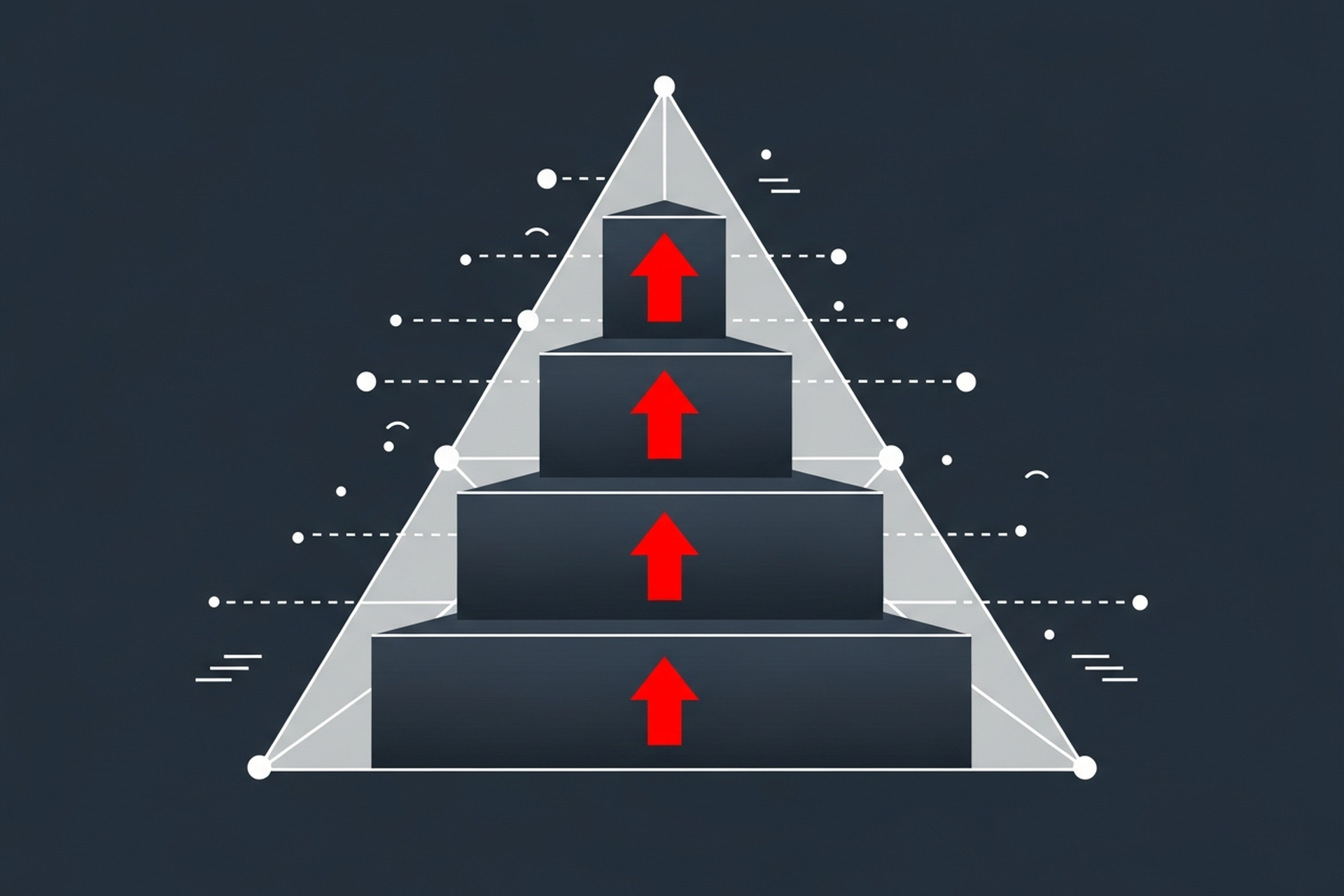
Ecommerce analytics tools fall into four layers, and each layer answers a different question. Buying a Layer 4 profit analytics platform before you have clean Layer 1 tracking is like installing a turbocharger on a car with a broken engine.
The framework below moves from foundational to advanced. Most brands should start at Layer 1, validate that tracking is accurate, then add each subsequent layer as revenue and ad spend scale.

Google Analytics 4 is the standard starting point for any ecommerce store. It covers sessions, traffic source, conversion events, and basic funnel analysis at no cost. The trade-off is configuration overhead: GA4 requires proper event tracking, conversion goal setup, and custom channel groupings to be genuinely useful.
For stores under $1M in annual revenue, GA4 is the right primary analytics tool. For stores spending $20K or more per month on paid media, it is a necessary foundation but not a sufficient attribution solution.
Shopify's native analytics dashboard is included with every plan and requires no setup. It surfaces sales by channel, customer reports, and conversion rates directly from your store's transaction data. The limitation is scope: it only sees what happens inside Shopify, not the full marketing picture that drives customers there.
Use Shopify Analytics for operational decisions (top products, peak times, return rates) and a dedicated attribution tool for channel-level decisions.
Microsoft Clarity provides heatmaps and session recordings for free. It shows where users drop off, which elements get clicks, and how far people scroll on product and checkout pages. For diagnosing conversion problems, it is one of the highest-leverage free tools available. Pair it with your CVR data from Shopify to form testable hypotheses before running CRO experiments.
Once you are spending consistently on paid media across Meta, Google, and TikTok, platform-reported ROAS becomes unreliable. Each platform takes credit for conversions with overlapping attribution windows, inflating individual channel numbers by 20 to 60%. This is where purpose-built attribution tools become essential.
For a broader comparison of attribution approaches, see our breakdown of analytics platforms for DTC and SaaS brands.
Triple Whale is the dominant attribution platform for Shopify-first DTC brands. It pulls data from Shopify, Meta, Google, TikTok, and email into a single dashboard with real-time reporting and sub-3-second load times. Pricing starts at $129 per month, making it accessible for brands at the $500K to $5M revenue stage.
Triple Whale's strength is its unified "Pixel" that tracks individual purchase journeys across channels, giving you a single view of blended CAC and true ROAS. It also includes creative analytics so you can see which ad creatives are actually driving revenue, not just clicks.
Northbeam takes a different approach, combining multi-touch attribution with media mix modeling (MMM). It is built for brands with complex, multi-channel marketing setups and starts at around $1,000 per month. The investment makes sense once you are spending $100K or more per month on paid media and need modeling-level precision for budget allocation.
Northbeam is more configurable and better suited to brands that run both direct-response and brand-building campaigns simultaneously. For straightforward Shopify DTC operations, Triple Whale typically offers better value at lower spend levels.
Rockerbox sits between GA4 and Northbeam in terms of complexity and cost. It excels at unifying ad platform data with Shopify revenue in a clean, rules-based attribution model. It is a strong choice for brands that want more than GA4 offers but are not yet ready for the investment of Northbeam.
Owned channel performance belongs in a separate category because it answers a different question: how much of your revenue comes from customers you already have?
Klaviyo is the standard email and SMS platform for Shopify brands, and its analytics layer is more useful than most teams realize. Klaviyo attributes revenue directly from campaign to purchase with segment-level granularity, showing you which flows and campaigns are driving repeat purchases and which audience segments have the highest LTV.
Healthy ecommerce stores derive 25 to 40% of total revenue from email and SMS. If your owned channel share is below 15%, Klaviyo's analytics will quickly show you where the opportunity lies. Pricing is free up to 250 contacts, making it accessible at every stage.
For a deeper look at how analytics and email work together to build retention, see our guide on ecommerce analytics metrics that drive growth.
For brands running dedicated SMS programs, both Postscript and Attentive provide channel-level revenue attribution, opt-in source tracking, and A/B testing for SMS campaigns. The distinction matters because SMS subscribers often convert at 2 to 4 times the rate of email subscribers, and understanding which acquisition sources produce the highest-value SMS subscribers requires platform-native analytics.
This layer answers the question that earlier layers cannot: are the customers you are acquiring actually profitable over time?
Lifetimely is purpose-built for Shopify profit and customer analytics. It tracks contribution margin per order (factoring in COGS, shipping, and ad spend), runs cohort LTV analysis by acquisition source, and produces a profit and loss view that connects marketing spend to net margin. This is the tool that reveals whether a high-ROAS channel is actually generating profitable customers or just high-frequency returners.
Ecommerce brands should target a 3:1 LTV to CAC ratio as a baseline health benchmark. Lifetimely makes that calculation visible at the channel and cohort level, not just as a business-wide average.
BeProfit and Glew serve similar functions: pulling Shopify order data, COGS, and ad spend into profitability dashboards. BeProfit is more focused on unit economics per SKU and order, while Glew adds broader customer segmentation and channel analytics. Both are strong choices for brands that want profitability visibility without building custom data infrastructure.
StoreHero is a newer entrant focused on connecting ad efficiency to unit economics in a single dashboard. It is particularly useful for brands running multiple channels simultaneously and wanting to see contribution margin impact by campaign in near-real-time.
Choosing tools based on current revenue and ad spend avoids over-investing in complexity before you need it.
Under $500K ARR: GA4, Shopify Analytics, Microsoft Clarity. Focus on clean event tracking and understanding where conversion is breaking down before spending on attribution tools.
$500K to $2M ARR: Add Triple Whale once paid ad spend reaches $10K to $20K per month. Add Klaviyo from day one if you are running email. This stack answers the core questions at a cost that makes sense.
$2M to $10M ARR: Add Lifetimely or BeProfit for profitability visibility. Evaluate Northbeam if you are running heavy cross-channel campaigns and need media mix modeling. Your analytics budget at this stage should be 1 to 3% of total ad spend.
$10M and above: Consider a dedicated data warehouse (Snowflake or BigQuery) with a BI layer on top. At this stage, custom reporting built on first-party data often outperforms any off-the-shelf tool. For a broader view of how enterprise analytics stacks are assembled, see our guide to marketing analytics tools and how to choose the right stack.
The most common failure is purchasing attribution tools before fixing the tracking underneath them. If GA4 is missing conversion events, if Shopify orders are not being attributed to the right source, or if UTM parameters are inconsistently applied across campaigns, every layer on top of that foundation will report inaccurate data.
Before evaluating Triple Whale or Northbeam, audit your GA4 setup for event tracking completeness, verify that your Shopify order data is clean, and confirm that all paid campaigns use consistent UTM conventions. Attribution tools surface and amplify what is already in your data. They cannot fix a broken foundation.
A solid analytics stack built on accurate first-party data is the foundation of every paid media decision, budget allocation, and retention strategy that scales. The tools are available at every price point. The discipline to configure them correctly, and to act on what they report, is the actual differentiator.
Most ecommerce SEO packages are built for content sites with shopping carts bolted on. They default to blog post counts and keyword ranking PDFs because those are easy to produce and easy to report. Meanwhile, your category pages sit under-optimized, your faceted navigation burns through crawl budget, and your product schema hasn't been touched since launch.
A real ecommerce SEO package is built differently. It treats your catalog as an organic growth asset, prioritizes the pages that actually convert, and reports on revenue, not traffic.
A standard SEO engagement manages a few hundred pages. An ecommerce engagement manages thousands, with structural challenges that don't exist on content sites. Four specific issues make ecommerce SEO a different problem:
Most agencies pitch packages heavy on blog posts because they're easy to produce and easy to count. But here's where ecommerce organic revenue actually comes from.

Category pages generate 3–5x more organic revenue than individual product pages, yet most packages treat them as an afterthought. A well-optimized category page targets high-volume commercial terms, includes supporting copy that doesn't bury the products, and is structured for faceted filtering without creating crawl waste. For most DTC brands, ranking a handful of high-priority category pages is worth more than ranking 50 long-tail blog posts.
Product detail pages capture long-tail, purchase-ready traffic. Someone searching "women's merino wool crew neck sweater grey medium" is not browsing. They're buying. PDP optimization covers title tags, meta descriptions, structured data, UGC integration (reviews, Q&A as indexable content), and image alt text at scale. Research on ecommerce SEO benchmarks shows only 73% of top ecommerce brands systematically optimize UGC for SEO. The other 27% leave that traffic on the table.
Blog and buying guide content supports category authority and captures pre-purchase research queries. It's valuable, but it's the last place most DTC brands should invest their first ecommerce SEO dollars. It's also the first thing most packages lead with.
The right tier depends on your catalog size, competitive intensity, and technical baseline, not just your monthly budget.
Best for stores under 500 SKUs with a clean technical baseline and moderate competition.
Covers: initial technical audit, priority on-page fixes, 2–4 content pieces per month, basic keyword tracking, and a monthly traffic + rankings report.
What's typically missing at this tier: active link building, schema implementation at scale, crawl budget governance, and any work on category page architecture. If your catalog is simple and your competition is low, this is a reasonable starting point. If you're in a competitive DTC vertical, it's not enough.
Best for stores with 500–5,000 SKUs in competitive verticals: apparel, beauty, supplements, home goods.
Covers: ongoing technical monitoring including crawl governance and Core Web Vitals tracking, broader on-page coverage across category and PDP pages, 6–10 content pieces per month, active link building (5–15 links monthly), schema implementation (Product, Breadcrumb, FAQ), and organic revenue reporting tied to your actual checkout data.
This is where the DTC-specific work lives. The difference between a good and average package at this tier comes down to crawl budget strategy, how faceted navigation is handled, and whether the monthly report shows organic-attributed revenue or just traffic and rankings.
Best for stores with 5,000+ SKUs, multi-site or international operations, highly competitive markets, or upcoming platform migrations.
Covers everything in the Growth tier plus dedicated development support, large-scale content operations (often 20+ pieces per month), aggressive link acquisition, international SEO with hreflang implementation, log file analysis to find crawl waste, and full migration support with pre/post traffic monitoring.
Most enterprise engagements also include a one-time setup fee of $1,000–$5,000 for the initial technical audit and foundational fixes before the ongoing retainer begins.
A proposal that looks comprehensive can still be built for the wrong store. These questions reveal whether it's actually scoped for yours.
"How do you handle faceted navigation and crawl budget?" If the answer is vague or nonexistent, the agency hasn't thought about your catalog structure. This is a technical problem that directly affects how quickly your pages rank, and it requires a specific solution.
"What's your approach to product schema implementation?" A meaningful answer names the schema types they'll implement (Product, Offer, AggregateRating), describes the implementation method (manual, plugin, custom feed), and explains how it's maintained as your catalog changes.
"How do you report on organic revenue, not just traffic?" You want to see a methodology that connects organic sessions to purchases in your analytics platform. GA4 + Google Search Console can do this. Any agency that can't describe this connection is measuring the wrong thing.
"What do you prioritize: category pages, PDPs, or content?" If the answer is immediately "content," push back. For most ecommerce stores, category and PDP optimization has higher revenue leverage than blog content, especially in the first six months.
Some proposals sound thorough but have structural weaknesses that predict poor results.
No mention of crawl budget or technical architecture. A package scoped only for on-page and content work will quietly fail for any catalog over a few hundred pages. Technical infrastructure is not optional at scale.
Link building listed as "available on request" or priced separately. Organic rankings for competitive ecommerce terms require domain authority. A package that treats link acquisition as an add-on isn't built to compete in tough markets.
Reporting that shows only rankings and traffic. According to First Page Sage's ecommerce SEO ROI report, ecommerce SEO delivers 317% ROI with a 9-month break-even. You can only verify those numbers with revenue attribution, not keyword position charts.
Content-first proposals for large catalogs. If 80% of the proposed deliverables are blog posts and the catalog has thousands of SKUs with thin category pages, the priorities are backwards. Ask specifically how many hours per month are allocated to technical and on-page work versus content.
Organic search drives 43% of all ecommerce traffic and is expected to reach 53% of all web traffic by 2026. According to ecommerce SEO benchmarks from Charle Agency, organic traffic converts at roughly 2.8–4%, outperforming social, display, and most paid channels outside of branded search.
Those conversion rates hold because organic traffic is intent-driven. Someone who found your site by searching a specific product query has already done most of their buying research. The page just needs to complete the job.
The timeline to those returns requires patience. Most ecommerce SEO programs reach break-even around nine months, with compound returns building from there. The brands that stick with it long enough to reach that inflection point are the ones that see the channel become their most cost-efficient acquisition source.
The right ecommerce SEO package for a 200-SKU DTC brand looks nothing like the right package for a 5,000-SKU multi-site operation. Price comparison without catalog context is meaningless. What matters is whether the package you're evaluating is built for how your store actually works: catalog architecture, competitive intensity, and revenue attribution included.
If you want to audit what your current or prospective ecommerce SEO package is actually optimizing for, EmberTribe works with DTC and growth-stage ecommerce brands to build organic programs that trace directly to checkout.

Global ecommerce sales reached $6.86 trillion in 2025, and ecommerce now accounts for more than 20% of all retail worldwide. For any brand selling online, ecommerce digital marketing is the core operating system of growth. The challenge is not whether to invest, but knowing which channels to prioritize, how to allocate budget, and how to build a system that compounds over time.
This guide covers every major channel, what the data says about ROI, and how to build a marketing strategy that scales.
Marketing for an online store differs meaningfully from B2B or lead-generation marketing. The sales cycle is shorter, purchase decisions are more impulsive, and the economics are driven by metrics like average order value, customer acquisition cost, and lifetime value rather than pipeline velocity or cost per lead.
Ecommerce brands also face a structural challenge: acquiring new customers continuously while retaining existing ones. According to Shopify's global ecommerce report, retention-focused brands consistently outperform acquisition-only brands on profitability. That tension shapes how every channel should be used.
The other key difference is attribution complexity. A customer might discover a product through a TikTok ad, research it via organic search, and convert through an email. Each channel played a role, and a single-touch attribution model will misrepresent the economics of every one of them.
Email marketing delivers the highest ROI of any digital channel available to ecommerce brands. Omnisend data shows merchants averaged $79 in revenue for every $1 spent on email in 2025, with the industry benchmark at $36 to $42 per dollar. Automated flows, including welcome sequences, abandoned cart emails, and post-purchase sequences, drove 37% of all email-attributed revenue while representing only 2% of total sends.
SMS marketing is growing fast alongside email. Sixty-seven percent of businesses increased their SMS budgets in 2025, recognizing it as a high-conversion complement to email, particularly for time-sensitive offers and cart recovery. The key to email and SMS performance is list quality and segmentation. A large, unsegmented list with poor deliverability will underperform a smaller, highly engaged one.
For brands building their email program from scratch, see our guide to email marketing for ecommerce.
SEO is the channel most likely to transform the economics of an ecommerce business over a 12-to-24-month horizon. First Page Sage's 2026 report puts ecommerce SEO ROI at approximately $22 per dollar spent, driven by compounding traffic gains and decreasing marginal cost over time. Unlike paid channels, organic rankings do not disappear when you stop spending.
For DTC brands, SEO works at two levels: product and category page optimization for transactional queries, and content marketing for informational queries that build brand authority. A brand that ranks for "best running shoes for wide feet" and "how to choose running shoes" captures customers at every stage of the funnel. For a deeper look at how to build this foundation, see our ecommerce growth strategy guide.
Paid search delivers immediate, scalable traffic with measurable intent. Google Ads median ROAS in ecommerce sits around 2.95, meaning roughly $2.95 in revenue per dollar of ad spend. Google Shopping campaigns surface product ads directly in search results and typically outperform standard text ads because they match how shoppers visually compare prices and products.
CPCs in competitive categories have increased steadily, compressing margins. Paid search works best as a complement to organic search, capturing demand that SEO cannot yet capture and retargeting visitors who discovered the brand through other channels.
Paid social is the primary new-customer acquisition channel for most DTC brands. Meta (Facebook and Instagram) remains the dominant platform for ecommerce advertising based on targeting precision and purchase intent data, though TikTok has become essential for brands with a visual or lifestyle angle. Typical ROAS on paid social ranges from 2x to 4x for well-optimized campaigns, though this varies significantly by category, creative quality, and audience maturity.
The creative is the variable that matters most on paid social. A mediocre offer with exceptional creative will almost always outperform the reverse. Brands that treat creative as a fixed cost rather than a testing discipline consistently underperform. For brands considering outsourcing this work, our guide to choosing a paid social media agency covers what to look for.
Influencer marketing has matured into a measurable performance channel rather than a brand-awareness luxury. Macro-influencer sales programs deliver 200% to 400% ROI on average, and micro-influencer programs targeting niche audiences often outperform on cost per acquisition. The shift toward creator content has also blurred the line between influencer marketing and content production, as brands repurpose creator-generated content into paid social ads with strong performance lift.
The key discipline here is tracking. Unique discount codes, UTM parameters, and affiliate links are the minimum required to measure performance. Brands that cannot attribute revenue to individual creators cannot optimize their programs.
Retention marketing is the lever most ecommerce brands underinvest in relative to its impact on profitability. Acquiring a new customer typically costs five to seven times more than retaining an existing one. Loyalty programs, post-purchase email sequences, subscription models, and VIP tier structures all drive repeat purchase rates and extend customer lifetime value.
According to research cited in our customer loyalty program guide, brands with structured loyalty programs see repeat purchase rates 30% to 40% higher than those without. For growth-stage DTC brands, building retention infrastructure early is one of the highest-leverage decisions available.
The table below summarizes the five core channels by ROI, best use case, and relative cost:
The most common mistake ecommerce brands make is treating channels as independent programs rather than a coordinated system. A customer's path to purchase rarely involves a single touchpoint, and optimizing each channel in isolation without considering how they interact will produce suboptimal results across the board.
A sound strategy starts with the funnel. Paid social and influencer marketing build awareness, while SEO captures existing demand and educates researchers. Paid search closes high-intent buyers, and email retains customers for repeat purchases. Each channel feeds the next, and measurement should reflect that interdependence.
Budget allocation should follow a simple principle: maximize spend in channels with proven ROI before expanding into experimental ones. For most ecommerce brands at the $1M to $10M revenue stage, that means owning email, building SEO, and scaling one paid channel before diversifying. Getting the foundational channels right compounds over time. Spreading budget thin across every channel simultaneously produces mediocre results in all of them.
For brands just getting started, our guide on how to start an ecommerce business covers the foundational steps before marketing investment makes sense.
Tracking the right metrics prevents the common trap of optimizing for vanity numbers. For ecommerce digital marketing, the metrics that drive actual business decisions are:
Customer acquisition cost (CAC) by channel, customer lifetime value (LTV), LTV:CAC ratio, email revenue as a percentage of total revenue, blended ROAS across paid channels, and organic traffic as a percentage of total sessions. A healthy DTC brand typically targets an LTV:CAC ratio of 3:1 or higher and derives at least 25% to 30% of revenue from owned channels like email and SMS.
HubSpot's 2026 marketing benchmarks confirm that brands with the strongest LTV:CAC ratios are disproportionately invested in retention and organic channels, with paid channels used to scale rather than sustain.
Building and executing a multi-channel ecommerce marketing strategy requires both technical expertise and creative judgment. The brands that grow fastest are the ones that invest in the right channels early and build measurement infrastructure that gives them a real feedback loop.
If you are ready to build a marketing strategy that compounds, EmberTribe works exclusively with DTC and ecommerce brands. Visit embertribe.com to see how we approach growth.

Building an ecommerce business that survives launch is one challenge. Building one that compounds past $1 million, scales past $5 million, and still grows at $10 million is a completely different problem. The data confirms this: roughly 80 to 90% of ecommerce businesses fail within their first few years, and of those that survive, only a fraction break through meaningful revenue thresholds.
The gap between stores that plateau and brands that scale is not product quality. It is structural, rooted in business model selection, unit economics discipline, and the specific levers operators pull at each growth stage.
This post is not about how to get started. It focuses on how to build for longevity once you are past the initial setup and ready to grow deliberately.
The business model you choose determines your ceiling before you acquire a single customer. Each model carries distinct margin structures, scalability characteristics, and unit economics requirements. Choosing the wrong one for your product category and capital position is one of the most common and costly early mistakes.
Direct-to-consumer (DTC) is the highest-potential model for brands with differentiated products and strong creative capabilities. Gross margins typically run 50 to 70%, and the brand owns the customer relationship entirely. Customer acquisition costs average $68 to $84 across ecommerce categories in 2025, according to Swell's DTC ecommerce benchmark report, and those costs have risen 40 to 60% since 2023. DTC rewards brands that generate organic demand, not just those buying paid traffic.
Marketplace selling (Amazon, Walmart, Target Plus) trades margin for distribution. Gross margins compress to 20 to 40% after fees, but the built-in traffic removes much of the acquisition cost burden. The fundamental limitation: the customer belongs to the marketplace, not the brand. Marketplace brands that do not build a parallel DTC presence are renting their customer base indefinitely.
Subscription is the highest-LTV model when executed in the right category. Replenishment products, curated boxes, and software-adjacent physical goods all work well in this structure. Gross margins of 60 to 80% are achievable, and the predictable recurring revenue dramatically improves cash flow planning. The challenge is churn: brands that grow subscriber counts without managing churn simply acquire and replace customers in an expensive loop.
Dropshipping has the lowest barrier to entry and the lowest ceiling. Gross margins of 10 to 30% leave almost no room for paid acquisition at current CAC levels. According to TrueProfit's 2026 dropshipping analysis, only 1 to 5% of dropshippers build a profitable, sustainable business. The model can work as a low-capital test vehicle but rarely supports a brand at meaningful scale.
B2B ecommerce offers the strongest LTV by absolute dollar amount. Longer sales cycles extend CAC payback to 120 to 365 days, but deal sizes and contract values compress LTV:CAC ratios to 4:1 to 8:1 once accounts are established. B2B ecommerce rewards brands that can build product catalogs and customer portals that reduce reorder friction.
The table below summarizes the key unit economics benchmarks by model.
Most ecommerce businesses that plateau are not failing at marketing. They are failing at math. The brands that scale have a clear, repeatable understanding of three numbers: gross margin per order, LTV:CAC ratio, and CAC payback period.
Gross margin is the foundation. Before any marketing spend, the product needs to carry enough margin to support acquisition, fulfillment, and platform costs while leaving a contribution to growth. For DTC brands targeting paid social as a primary channel, gross margins below 50% create a structural problem: there is not enough margin per unit to absorb rising ad costs and still generate profit. Brands with margins below 40% typically need either very high purchase frequency (subscription mechanics) or very low CAC (strong organic channels) to make the math work.
LTV:CAC ratio is the measure of business model health. A 3:1 ratio means the brand generates three dollars of lifetime revenue for every dollar spent acquiring a customer. According to Eightx's 2026 LTV:CAC guide, 3:1 is the minimum threshold for sustainable growth, and 4:1 or higher signals a strong model. Ratios below 3:1 require either lower CAC (better creative, organic channels) or higher LTV (improved retention, higher AOV, cross-sell penetration).
CAC payback period is the timing metric that determines cash requirements. A brand paying $80 to acquire a customer who generates $30 in gross margin on the first order needs 2.7 orders before recovering acquisition cost. If those orders take 18 months, the brand needs enough capital to fund that gap across its entire customer base. Compressing payback by improving conversion rates, increasing AOV through bundles, and activating repeat purchase flows within 30 to 60 days is one of the highest-leverage moves available to growth-stage operators.
Repeat purchase rate is the underlying driver of all three metrics. Health and beauty brands achieve repeat purchase rates around 21.5% in the first year, according to AdZeta's LTV:CAC benchmark analysis. Brands with structured post-purchase flows, SMS programs, and loyalty mechanics see rates 30 to 50% higher than category averages.
For context on what those flows look like in practice, the ecommerce digital marketing framework covers the channel mix that drives repeat purchase at each stage.
Ecommerce brands that scale past $5 million are almost always doing at least two of the following four things systematically.
Owned channel depth. Brands that scale have large, engaged email and SMS lists. These are not vanity metrics. Every subscriber on a retention channel is a future customer who costs near zero to re-engage. Brands allocating 25 to 30% of marketing resources to owned channel growth consistently outperform acquisition-only operators on efficiency metrics.
The customer loyalty program framework is one structured approach to building owned channel depth alongside transactional retention.
Creative velocity. Paid acquisition at scale is a creative problem, not a targeting problem. Brands that maintain a library of 15 to 25 tested creative concepts, rotate regularly, and have a production system for net-new assets sustain paid channel efficiency far longer than brands running two or three ads. Creative fatigue is the primary driver of paid CAC increases at the $500,000 to $2 million annual spend level.
Product expansion with retention in mind. The brands that move from $2 million to $10 million almost always have expanded their product line to increase purchase frequency or introduced a subscription or replenishment mechanic. A one-product brand cannot increase purchase frequency, which means it depends entirely on new customer acquisition to grow. Every dollar of revenue requires a new customer. A product line that gives customers a reason to return every 60 to 90 days changes the economic model entirely.
Margin protection at scale. This one is counterintuitive. Many ecommerce brands that hit $3 to $5 million in revenue see margins compress because they discount aggressively to hit revenue targets, or because unit costs fail to improve with volume. Brands that scale sustainably protect gross margins by negotiating supplier terms at volume and reducing returns through better sizing and photography. Discounting as the primary retention lever trains customers to wait for sales and permanently erodes the margin structure the business was built on.
The ecommerce growth data consistently points to the same pattern: brands that scale through $1 million, $5 million, and $10 million thresholds have built systems, not just stores. They have a documented acquisition channel with known CAC and conversion benchmarks. They have a retention stack that activates automatically after every purchase.
They also have a gross margin floor below which no promotional activity is approved, and a product expansion strategy that increases LTV without increasing acquisition cost.
The brands that plateau have usually succeeded at product selection and initial launch, but have not built the operational and financial infrastructure to grow without proportionally increasing headcount and spend. Every incremental dollar of revenue costs roughly the same as the last because nothing compounds. The difference between those two states is almost always one of deliberate systems investment, not better marketing or better products.
For ecommerce brands working on the content and performance marketing infrastructure that drives compounding growth, EmberTribe builds the acquisition and retention programs that move the metrics above the thresholds that predict scale.
The ecommerce statistics that matter most are not the ones that confirm what you already believe. They are the ones that force you to reconsider where to invest, how to price, and which channels to prioritize. This post compiles verified 2025-2026 data across market size, mobile, social commerce, and conversion benchmarks so you can make decisions grounded in evidence.
Before diving into each category, here is a summary of the most actionable benchmarks for DTC and growth-stage ecommerce brands in 2026.
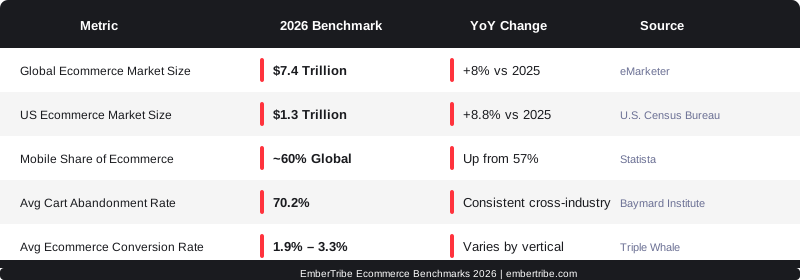
Global ecommerce sales are projected to reach $7.4 trillion in 2026, up roughly 8% from an estimated $6.86 trillion in 2025, according to eMarketer. Ecommerce now accounts for approximately 20.5% of all global retail sales, up from 19.9% in 2024. China's outsized online retail penetration is lifting the global average significantly.
For brands building long-term plans, Grand View Research projects a CAGR of 21.6% from 2026 to 2033 for the broader ecommerce ecosystem when alternative commerce models (marketplaces, social, B2B digital) are included. The takeaway: the market is expanding faster than most incumbent retail categories, but that also means competitive pressure on customer acquisition is rising in parallel.
If you are building an ecommerce strategy from scratch or looking to expand internationally, understanding the scope of the market is a prerequisite. See our guide to building an ecommerce business for a framework on how to position within this landscape.
The United States ecommerce market reached approximately $1.23 trillion in 2025, and 2026 projections point to $1.3 trillion, representing growth of around 8.8%, per the U.S. Census Bureau's quarterly retail ecommerce report. That compares to total retail sales growth of just 2.8% in the same period, underscoring how consistently ecommerce is outpacing in-store shopping.
US ecommerce penetration as a share of all retail is expected to reach 18% in 2026, up from approximately 17.1% in 2025. The gap between online and offline growth is narrowing year over year, which means brands that have already built their digital infrastructure are better positioned than those still catching up.
Mobile commerce accounted for approximately 60% of global ecommerce sales in 2026, up from 57% the prior year. In the US, mobile's share sits at 44.6%, reflecting a market where desktop still drives meaningful volume but mobile is clearly the channel of first contact. During the 2025 holiday season, mobile represented 56.4% of all online sales (November 1 through December 31), up from 54.5% in 2024.
Approximately 1.65 billion people will shop via smartphone in 2026, nearly one in three internet users globally. For DTC brands, that number has a direct implication: your mobile checkout experience is not a secondary priority. Slow load times, multi-step forms, and non-native payment options (no Apple Pay or Shop Pay) are conversion killers at scale.
The mobile commerce market itself is projected to grow from $2.42 trillion in 2026 to over $5 trillion by 2034 at a CAGR of 9.5%. Brands that invest in mobile-first site performance now are building durable advantages.
Social commerce is maturing from a novelty into a reliable channel. TikTok Shop's global gross merchandise value (GMV) reached $64.3 billion in 2025, nearly doubling from $33.2 billion in 2024, and the platform is projected to hit $112.2 billion in GMV by 2026. In the US, TikTok Shop generated $15.82 billion in GMV in 2025, representing 120% annual growth.
TikTok Shop now holds approximately 20% of total social commerce in the US, per eMarketer. The platform counts over 15 million active merchants globally and 475,000 US-based shops as of 2026. Nearly 58% of TikTok's 2 billion active users have shopped directly within the app.
For DTC brands, TikTok Shop is no longer optional to evaluate. The brands capturing share are those building authentic content pipelines (not just paid ads) and integrating creator affiliate programs with real product economics. The channel also compresses the discovery-to-purchase funnel in ways that traditional paid social cannot replicate. For a broader view of how to integrate social into your full funnel, see our breakdown of ecommerce digital marketing.
The global average ecommerce conversion rate sits between 1.9% and 3.3%, depending on vertical and traffic source. Shopify stores typically land in the 2.5% to 3% range. Reaching 4% or higher generally requires a combination of strong brand awareness, optimized UX, and consistent CRO investment, according to Triple Whale's 2025 benchmark data.
Industry-level variation is substantial. Food and beverage converts at 3.21% on average, beauty and personal care sits at 2.98%, and electronics drops to 2.71%, partly due to higher price points and longer consideration cycles.
AOV is one of the strongest predictors of conversion rate: stores selling products under $60 see median conversion rates of 4.63%, while stores with average orders above $200 see median rates closer to 0.95%.
Cart abandonment remains a persistent challenge. Baymard Institute's aggregated research, compiled from 50 studies, puts the average cart abandonment rate at 70.2%. The primary drivers are unexpected shipping costs at checkout (cited by 55% of abandoners), complicated checkout flows (21%), and trust concerns (17%). Abandoned cart email sequences still represent one of the highest-ROI recovery tactics available, with open rates around 41.8% and conversion rates near 10.7%.
Acquisition cost pressure makes retention economics more critical than ever. The average ecommerce repeat purchase rate is 28.2%, meaning slightly over one in four customers returns without additional acquisition spend. Brands above 40% are typically operating with subscription mechanics or high-frequency consumable products.
The financial case for retention is straightforward: the top 20% of customers typically account for around 80% of sales, and retained customers spend up to 67% more than new ones over time. For DTC brands scaling past $5M in annual revenue, a retention strategy is not an optional optimization, it is a core P&L lever.
Understanding how to sustain this growth over time requires a clear view of the trajectory. See our analysis of ecommerce growth strategies for brands moving into their next revenue tier.
The macro numbers confirm that ecommerce is growing, but the operational benchmarks are where the real decisions live. A 70% cart abandonment rate means that on average, seven out of ten shoppers who intend to buy do not complete the transaction. A 2% conversion rate means 98 out of 100 visitors leave without purchasing. These are not alarming outliers; they are the baseline most brands operate against.
The brands that compound growth are the ones that treat these benchmarks as specific problems to solve, not background noise. That means investing in mobile UX before mobile revenue justifies it, building TikTok Shop infrastructure before competitors saturate it, and building email and SMS retention programs before paid CAC forces the issue.
If you want to understand how your current metrics stack up and where to prioritize, EmberTribe works with DTC and growth-stage ecommerce brands to build data-driven marketing strategies that improve conversion, retention, and channel efficiency. The numbers above are the benchmark. The goal is to beat them.
The biggest ecommerce news story of 2026 is not a single event. It is a set of structural shifts that are changing how brands acquire customers, fulfill orders, and compete for attention. Global online retail is closing in on $7 trillion in annual sales, and the platforms, technologies, and regulations shaping that market look meaningfully different than they did two years ago.
For DTC brands and growth-stage companies, staying current with the ecommerce industry news that actually matters requires filtering signal from noise. This post covers the five shifts with the most direct impact on how brands operate and grow in 2026.
The numbers are large, but the trajectory is what matters. According to Statista's ecommerce market forecast, global ecommerce sales reached $6.86 trillion in 2025, representing 8.3% year-over-year growth. The 2026 projection lands at $6.88 trillion, accounting for 21.1% of all global retail, up from 19.9% in 2024.
The US market continues to grow, but the fastest-moving regions are Southeast Asia (18.6% projected growth, on track for $230 billion GMV) and Latin America. These numbers matter for US-based brands building international expansion strategies.
The share-of-retail figure is the more important benchmark. Crossing 21% means ecommerce is no longer a secondary channel for most categories. It is the primary or co-primary sales environment. Brands that still treat their online store as a supplement to physical retail are increasingly out of step with where their customers are buying.
Online retail is also concentrating. Amazon, Walmart, and a small number of major platforms continue to capture a disproportionate share of volume, which makes owned-channel strategy, particularly direct-to-consumer email and loyalty, more valuable for independent brands.
For a detailed breakdown of how to build a growth engine on top of these trends, see our guide to ecommerce growth.
The social commerce story in 2026 is largely a TikTok Shop story. According to EMARKETER, TikTok Shop grew US sales by 407% in 2024, then added another 108% in 2025, reaching $15.82 billion. 2026 projections put US sales above $20 billion. Globally, TikTok Shop's GMV is forecast to hit $112.2 billion in 2026.
The platform now commands 18.2% of total US social commerce, with that share expected to climb to 24.1% by 2027. More than half of US social media shoppers will make a purchase on TikTok in 2026, a milestone that shifts the platform from "emerging channel" to a required consideration in most consumer brands' channel mix.
What makes this different from earlier social commerce attempts is the native purchase flow. Users discover, evaluate, and convert without leaving the app. That shortens the funnel dramatically and changes the economics of content investment. Brands that can produce authentic short-form video consistently are seeing cost-per-acquisition advantages that paid search and display cannot match in certain demographics.
The practical implication: social commerce is not a replacement for owned channels, but ignoring it means ceding reach to competitors who have figured out the format. The brands winning on TikTok Shop in 2026 treated it as a distribution channel with its own content logic, not an extension of their existing ad creative.
AI in ecommerce moved from a competitive advantage to a baseline operational expectation faster than most forecasts predicted. According to data from EComposer's analysis of AI ecommerce statistics, 77% of ecommerce professionals now use AI tools daily, and 84% of ecommerce businesses are either actively integrating AI or in active planning to do so.
The revenue impact is measurable. Businesses implementing AI personalization report an average revenue lift of 10-40%, and 89% report positive ROI with a payback period averaging nine months. Personalized product recommendations alone can drive up to 31% of a store's revenue.
The highest-value applications in 2026 are not the most visible ones. Personalization engines, AI-driven product search, and dynamic pricing models are delivering the most consistent ROI. Customer service automation is reducing support costs meaningfully without degrading satisfaction scores when implemented with appropriate human escalation paths.
The threshold question for most brands is no longer whether to adopt AI tools but which ones integrate with their existing stack and which problems have the clearest return. For brands just beginning to evaluate options, our guide to ecommerce digital marketing covers how AI is changing channel strategy specifically.
Consumer expectations around delivery have reset. The ShipBob 2026 Fulfillment Trends Report shows that 80% of consumers now expect same-day delivery options, 67% of US consumers consider same-day availability a factor in purchase decisions, and 28% have abandoned a cart because estimated delivery was too slow.
The same-day delivery market reached $14.7 billion in 2025, growing at 20.8% annually. Amazon's continued investment in one-day and same-day Prime shipping has effectively set the delivery standard that independent brands now have to compete with or at least narrow the gap on.
The strategic response for independent DTC brands is distributed inventory. Rather than fulfilling from a single warehouse, more brands are pre-positioning inventory in regional fulfillment centers close to population clusters. This reduces transit times and shipping costs simultaneously. Third-party logistics providers have built infrastructure around this model, making it accessible to brands that are not at Amazon-scale volume.
Automation is also accelerating inside fulfillment operations. Robotic picking and AI-driven demand forecasting are reducing labor costs and improving order accuracy. The 87% same-day fulfillment rate benchmark from 2025 peak season data illustrates what well-resourced operations can achieve when technology and distributed inventory work together.
For brands earlier in their operations journey, the first priority is not robotics. It is choosing fulfillment partners with the network density to enable two-day shipping to most US addresses at a cost that preserves margin.
The privacy landscape in 2026 is the most complex it has ever been for US ecommerce operators. Three states (Indiana, Kentucky, and Rhode Island) added comprehensive consumer data privacy laws on January 1, 2026, bringing the total number of active US state privacy statutes to more than two dozen. The pattern across all of them is consistent: expanded consumer rights over personal data, stricter limits on data sale and sharing, and new duties for businesses collecting that data.
Several developments have direct operational implications for ecommerce brands. California's CCPA updates, effective January 1, 2026, expanded the definition of sensitive personal information, added cybersecurity audit requirements, and strengthened protections for data involving minors. Oregon now bans the sale of precise location data. Multiple states require opt-in or opt-out mechanisms for targeted advertising to users under 16.
The Global Privacy Control (GPC) signal is now effectively mandatory in California, Colorado, Connecticut, and Oregon. Brands that have not implemented GPC compliance face real enforcement risk. According to IAPP's coverage of the new state requirements, 2026 marks a shift from law creation to law enforcement, with regulators now applying the settlement precedents and technical expectations established over the last two years.
For brands running retargeting, behavioral advertising, or third-party data partnerships, an audit of data practices against current state requirements is not optional. The Ketch 2026 privacy law overview provides a useful state-by-state reference. The cost of non-compliance, including potential seven-figure settlements for GPC failures, now exceeds the cost of getting compliant.

The five trends above are not separate stories. They interact. A brand that adopts AI personalization but ignores privacy compliance is building on a foundation that regulators will challenge. A brand that masters social commerce but lacks the fulfillment speed to deliver within two days will lose repeat purchase rate to competitors who do.
The ecommerce updates that matter most in 2026 are the ones where multiple forces converge.
For brands assessing where to start, the highest-leverage moves are:
First, audit your data practices against current state privacy requirements before adding new tracking or retargeting capabilities. Compliance is cheaper before an investigation than after. Second, evaluate your fulfillment network against the same-day and two-day benchmarks your customers now expect.
Third, prioritize AI tools that have clear, measurable ROI within your existing stack rather than deploying AI broadly. Fourth, develop a content strategy for at least one social commerce channel, even if TikTok Shop is not your primary revenue driver today.
Understanding how the ecommerce industry news cycle translates into specific business decisions is something we work through with brands at every stage. If you are building a DTC operation or scaling an existing one, how to start an ecommerce business covers the foundational decisions that upstream all of the trends covered here.
EmberTribe partners with DTC brands and growth-stage ecommerce companies to build content and marketing systems that compound over time. If the trends in this post are shaping decisions you are navigating right now, we would like to talk. Visit embertribe.com to learn more about how we work.

Hiring a shopify design agency is not the same as hiring a Shopify development firm that happens to offer design services. The distinction matters more than most DTC brands realize, and confusing the two is one of the most common reasons ecommerce redesigns underperform. This guide breaks down what design-forward agencies actually do, how to read their portfolios, what projects cost, and where the tradeoffs between agency types fall.
A Shopify design agency leads with brand identity, user experience, and conversion architecture. Development is part of the output, but it flows from the design decisions rather than driving them. The agency starts by understanding how your customers think and what makes them convert, then builds a visual and structural system around that understanding.
Core deliverables from a true design agency include a complete design system (typography, color, spacing, component library), page-level UX architecture, and conversion-focused layouts for homepage, collection, product detail, and checkout. These are distinct from what most dev shops deliver. A development shop will often hand you a well-coded theme; a design agency hands you a brand experience that happens to run on Shopify.
This post focuses on what design agencies specifically do and how to evaluate them. For a broader look at the company selection process itself, see our Shopify website design company guide. The separation matters because design decisions affect revenue directly.
According to Shopify's own conversion rate benchmarks, the average Shopify store converts at around 1.4%, while optimized stores hit 3 to 6%. That gap is largely a design and UX problem, not a development problem.
The easiest way to identify the difference is to look at who leads discovery. At a design agency, your first few calls will involve brand strategy questions: who is your customer, what do they believe, what does your brand stand for, where do competitors fall short in the visual experience. At a dev shop with design capabilities, discovery tends to focus on functionality: what pages do you need, what apps do you use, what integrations are required.
Neither approach is wrong. But if your primary challenge is visual differentiation, weak brand identity, or a conversion funnel that leaks at the product page level, a design-first agency is the right match. If your challenge is primarily technical, a Shopify development agency with solid design execution may serve you better.
The table below summarizes where each type of partner tends to excel:
A few practical signals to watch for when reviewing agency websites. Design agencies typically publish case studies that discuss brand positioning and conversion outcomes, not just screenshots of finished sites. They show Figma files, design system components, and before/after UX audits. Dev shops tend to show finished sites without the strategic backstory, which tells you something about what they prioritize.
Portfolio review is where most brands make evaluation mistakes. They look for work that resembles their aesthetic, when they should be looking for evidence of outcomes. A beautiful portfolio full of stores that converted poorly is not a strong portfolio.
When reviewing agency case studies, look for these signals:
Specific conversion metrics. Strong agencies share numbers: conversion rate before and after redesign, average order value changes, bounce rate improvement on key pages. Vague language like "improved the shopping experience" is a red flag.
Evidence of the design process. Case studies that show wireframes, user research, and design rationale indicate an agency that follows a repeatable process rather than relying on aesthetic instinct. Baymard Institute's UX research consistently shows that checkout usability alone can recover up to 35% of otherwise-lost orders, and you want an agency familiar with that kind of research.
Relevant vertical experience. A Shopify design agency that has worked in your category (apparel, beauty, supplements, home goods) will recognize your customers' mental models faster. That means less discovery time and fewer false starts.
Shopify Partner status. Agencies with Shopify Partner or Shopify Plus Partner credentials have been vetted for platform expertise. Premier and Platinum tier partners have additional requirements around active project volume and client outcomes. Partner status does not guarantee design quality, but its absence from a serious agency should raise questions.
Post-launch data. The best agencies build in post-launch monitoring: heat maps, session recordings, A/B testing. If an agency's process ends at launch, you are paying for a finished product rather than a growth system.
Standard Shopify and Shopify Plus have different design constraints, and not every agency is equipped to handle both well. On standard Shopify, design agencies work within the constraints of Shopify Online Store 2.0: section-based themes, metafields, and app blocks. Most design work is theme-level customization, with custom Liquid for more complex layouts.
Shopify Plus opens additional design territory. Checkout extensibility (the replacement for checkout.liquid) allows design-forward customizations to the checkout flow itself, which is where most purchase decisions finalize. Multi-currency, multi-market storefronts, and B2B gated catalogs also require Plus-specific architecture.
If you are on Plus or moving toward it, confirm that your agency has delivered Plus projects at comparable complexity. According to Shopify's partner documentation, Plus-certified agencies are specifically evaluated on their experience with enterprise-level builds.
For brands still on standard Shopify, this is worth keeping in mind as you grow. Choosing an agency that has Plus experience from day one means your design system is built to scale without a full rebuild later. Our guide to ecommerce growth covers the platform scaling decision in more detail.
Shopify design agency projects fall into two primary structures: fixed-scope projects and ongoing retainers. Understanding which model fits your situation is as important as choosing the agency itself.
Project-based engagements are the right choice for a full redesign, a platform migration with design overhaul, or a new store build. Costs for a professional design agency typically range from $15,000 to $80,000 for a custom Shopify design project, with Shopify Plus engagements often running $40,000 to $150,000 or more depending on scope. Blackbelt Commerce's pricing analysis notes that project-based work from specialist agencies runs $25,000 to $250,000 depending on scope and partner tier.
Retainer engagements make sense once the core design system is established and you need continuous iteration: A/B testing new page variants, refreshing collection pages seasonally, running CRO experiments, and maintaining design consistency as the product catalog evolves. Monthly retainers for design-focused work typically run $2,500 to $10,000, depending on output volume and agency seniority.
A hybrid structure, where the project engagement includes a defined post-launch CRO phase, is increasingly common among growth-stage DTC brands. This approach acknowledges that the most valuable design work often happens after real users interact with the store and surface friction points that no amount of pre-launch testing fully predicts.
The best Shopify design agencies are opinionated. They will push back on requests that undermine conversion, advocate for mobile-first layouts even when a client is focused on desktop aesthetics, and refuse to bolt on features that slow page load. Google's Core Web Vitals data shows that page load speed directly affects both search ranking and conversion rate, and a design agency that ignores performance is working against your interests.
Strong agencies also invest in discovery before any design work starts. They want to understand your customers' purchase intent, where they arrive from, what objections they carry, and what your highest-converting SKUs are. That information shapes every design decision, from the hero layout to the product page call-to-action hierarchy.
For brands building on Shopify for the first time, our how to start an ecommerce business guide covers the foundational decisions that should inform your agency brief. The clearer your brief, the more effectively a design agency can allocate project time to what matters.
EmberTribe works with DTC brands and growth-stage ecommerce companies to build Shopify stores that convert, scale, and reflect the brand with precision. We combine design strategy with Shopify platform expertise, bringing both to the same engagement rather than treating them as separate workstreams.
If you are evaluating a redesign, a new build, or a CRO-focused refresh of an underperforming store, we would like to hear about it. Reach out at embertribe.com to start the conversation.

Picking the right shopify website design company is one of the most consequential decisions a DTC brand makes before launch. A well-designed Shopify store is not just a pretty front end; it is a conversion system built around how real shoppers browse, decide, and buy. This guide covers what design companies actually deliver, how to evaluate them, what projects cost, and the mistakes that derail brands every year.
A Shopify website design company is distinct from a Shopify development agency. Where development agencies focus on code, integrations, and platform engineering (covered in our Shopify development agency guide), design companies lead with user experience, visual identity, and conversion architecture.
The core deliverables fall into three categories:
Custom theme design. This means creating a storefront that matches your brand at the component level: typography, color system, product grid layouts, sticky headers, mobile navigation, and page hierarchy. The output is a design system, not just a Figma file. Agencies translate that system into Shopify Liquid, either by extending a base theme (Dawn, Prestige, Impulse) or building from scratch.
UX and information architecture. How a customer moves from landing page to product page to checkout is a design problem before it is a technical one. A strong design company maps out that journey, identifies friction points, and structures the site so each page answers the right question at the right moment. According to Shopify's conversion rate data, even modest UX improvements can push conversion rates from the 1.4% industry average toward 3 to 6% for optimized stores.
Conversion rate optimization (CRO) integrated into the design process. Agencies that treat design as an aesthetic exercise and agencies that treat it as a revenue lever produce very different stores. The better firms make decisions based on heatmaps, session recordings, A/B test data, and purchase funnel analytics, not just brand preferences. This distinction is what separates a design company worth hiring from one that will hand you a beautiful but underperforming store.
The Shopify Partner Program tiers agencies into five levels: Registered, Select, Plus, Premier, and Platinum. Partner status confirms the agency has met Shopify's requirements and has access to the right development tools. It is a filter, not a guarantee of quality, but it rules out agencies that lack legitimate platform experience.
In 2025 and 2026, Shopify updated its Partner Program to align tiers more closely with performance metrics. An agency at the Select or Plus tier has a verified track record of completing client projects on the platform.
A portfolio of good-looking stores tells you almost nothing about whether those stores actually sell. When reviewing agency portfolios, ask for:
If an agency's portfolio is full of fashion brands and you sell home goods, ask specifically whether they have experience with your category. Shopify design patterns for high-volume SKU catalogs differ significantly from single-product landing pages.
Visually compelling design that ignores conversion mechanics is a common failure mode. Ask each agency how they handle the following before any design work begins: buyer journey mapping, mobile-first wireframing, above-the-fold hierarchy, and checkout flow simplification. Agencies that cannot give specific answers to these questions are likely aesthetic-first, results-second. The right partner references data, user testing, and iteration cycles as a core part of their process, not an add-on.
Many brands discover too late that their design agency disappears after final payment. Before signing, confirm what post-launch support looks like: is there a defined support window, hourly rate for changes, or retainer option? Also test communication responsiveness during the sales process. An agency that takes four days to reply to a proposal inquiry will not get faster once you are a client.
Pricing ranges widely depending on project complexity, agency tier, and geographic market. The table below reflects current US-based agency rates.

Theme customization is the entry point for brands that already have a functioning store but need stronger brand alignment or UX improvements. Custom builds are appropriate for brands launching fresh or replatforming, where the store needs to serve as a long-term design foundation. Shopify Plus projects add checkout extensibility, custom storefronts, and enterprise-grade UX that the standard plan does not support. According to OuterBox's 2026 Shopify pricing breakdown, hourly rates for specialized Shopify Plus agencies range from $150 to $250 per hour.
CRO retainers are often the highest-ROI engagement after launch. Ongoing testing and iteration based on real traffic data compounds over time. For brands generating meaningful revenue, a $3,000 monthly retainer that lifts conversion rate by half a point can pay for itself within weeks.
Prioritizing aesthetics over conversion metrics. An agency's portfolio should include data, not just screenshots. If they cannot tell you what happened to the stores they designed after launch, they are not measuring what matters.
Confusing design companies with development agencies. Some brands hire a Shopify design company expecting them to also build custom app integrations or handle complex data migrations. Most design-focused firms are not equipped for that work. Clarify scope before signing. If you need both, look for an agency that has explicit expertise in both disciplines, or plan to bring in a separate development partner.
Skipping the discovery phase. Agencies that skip formal discovery and jump straight to design are a red flag. A proper discovery process includes stakeholder interviews, competitive analysis, current site analytics review, and customer behavior data. Without it, design decisions are based on assumptions rather than evidence. Brands that build ecommerce businesses with strong data foundations from the start give their design partners far better material to work with.
Not scoping ongoing support. Many brands launch a new Shopify store and immediately need small updates: a seasonal homepage banner, a new collection page, a modified product layout. If post-launch support is not in the contract, every change becomes a new negotiation. Build a clear support model into the agreement before work begins.
Choosing based on price alone. Low-cost design work frequently leads to themes that do not meet Shopify's Online Store 2.0 standards, load slowly, or require a full rebuild within 12 months. The cost of redoing design work typically exceeds what a mid-tier agency would have charged to do it right the first time.
The brands that consistently outperform on ecommerce growth metrics treat design and conversion as one discipline, not two parallel tracks. Visual decisions (font weight, button placement, image aspect ratio, mobile spacing) are also conversion decisions. An agency that separates "design" from "optimization" is missing how the best-performing stores are actually built.
The practical implication: when evaluating a Shopify web design company, ask specifically how their design process incorporates conversion data. Do they review your Google Analytics before wireframing? Do they run A/B tests post-launch? Do they hand off documented design rationale so your team understands why each element was built the way it was?
The answers will tell you whether you are hiring a creative studio or a revenue-focused design partner.
EmberTribe works with DTC brands and growth-stage ecommerce companies to build Shopify stores that are designed for conversion from the first wireframe. Every project starts with analytics review and buyer journey mapping, not a mood board. If you are evaluating a Shopify website design company and want to understand what a data-first design process looks like in practice, visit embertribe.com to see our approach.

Hiring a shopify development agency is one of the highest-leverage decisions a growing ecommerce brand can make. The right partner accelerates your roadmap; the wrong one costs you months of rework and a codebase that no one else wants to touch. This guide covers what Shopify dev agencies actually do, what they charge, how to evaluate their credentials, and the red flags that signal you should keep looking.
Most brands assume any agency that mentions Shopify can do everything. That is rarely true. A specialized Shopify developer agency typically operates in four core areas:
Custom theme development. Agencies build bespoke Liquid themes from the ground up or extend existing themes (Dawn, Prestige, Impulse) with custom sections, metafield-driven layouts, and performance-tuned assets. This is distinct from simply installing a theme from the Theme Store.
App integrations and custom app development. Connecting Shopify to ERPs, 3PLs, subscription platforms, loyalty programs, and review tools requires precise API work. Some agencies also build private Shopify apps when no off-the-shelf solution fits. According to Shopify's partner documentation, certified technology partners are vetted specifically for this kind of integration expertise.
Platform migrations. Moving from WooCommerce, Magento, or BigCommerce to Shopify involves product data migration, URL redirect mapping, order history preservation, and post-launch SEO validation. This work is scoped as a fixed project and typically runs 6 to 14 weeks depending on catalog size.
Shopify Plus architecture. Shopify Plus unlocks Checkout Extensibility, Shopify Functions, Flow automation, and B2B features that are simply unavailable on standard plans. A qualified Shopify Plus development company understands how to architect these capabilities, not just enable them in the admin.
What agencies generally do not handle: ongoing paid media, SEO copywriting, product photography, or fulfillment strategy. If an agency pitches you on all of those plus development, ask pointed questions about who actually executes each service.
Pricing varies widely based on agency size, geography, and project complexity. Here is a practical framework:
Theme customization covers layout edits, typography, color system updates, and homepage section builds. Budget $1,000 to $3,500 for this scope. It is a fixed project engagement and should have a defined deliverable list.
Custom theme builds include a full design-to-development workflow: wireframes, mockups, Liquid development, and third-party app integration. Established agencies price these between $5,000 and $20,000. Agencies charging less than $4,000 for a "custom" build are usually delivering a modified Shopify theme with minimal original work.
Platform migrations carry a wide range. A mid-size catalog migrating from WooCommerce might run $8,000 to $15,000. A complex Magento 2 migration with custom pricing rules and multi-currency support can reach $25,000 or more.
Shopify Plus builds start around $40,000 and scale past $120,000 for full enterprise implementations with ERP sync, custom checkout logic, and B2B portal development, according to Storetasker's 2025 developer rate analysis.
Retainer engagements typically run $3,000 to $15,000 per month and cover continuous feature development, conversion rate optimization, A/B testing, and platform maintenance. Retainers make sense once your store is live and generating enough revenue to fund iterative improvements.
Agency hourly rates range from $95 to $200 per hour for US-based firms. Offshore agencies run $30 to $70 per hour but introduce communication overhead and QA risk that you should factor into the total cost.
Credentials alone do not tell you whether an agency can execute on your specific project. Use these evaluation criteria:
Shopify Partner and Plus Partner status. Shopify's partner directory lists agencies that have met minimum qualification thresholds. Shopify Plus Partners operate in five tiers (Registered through Platinum), with Platinum reserved for a small number of agencies globally. Verify status directly in the Shopify Partner directory, not just from the agency's website.
Portfolio specificity. Ask to see case studies from brands in your vertical and at your revenue scale. A portfolio full of fashion brands tells you little about B2B wholesale capability. Look for before-and-after metrics: load time improvements, conversion rate lifts, or migration timelines.
Team composition and continuity. Some agencies staff projects with rotating contractors. Ask directly who will work on your project and whether those individuals hold Shopify developer certifications. Individual certifications through the Shopify Partner Academy carry more weight than company-level claims.
Discovery process. Quality agencies run a structured discovery phase before scoping. If an agency sends you a proposal within 24 hours of an initial call without asking detailed questions about your tech stack, integrations, and growth roadmap, that is a warning sign.
Post-launch support terms. Define what "support" means in writing. Does it include bug fixes for 30 days? Ongoing SLA? Emergency response time? Ambiguity here creates conflict later.
If you are earlier in your ecommerce journey and evaluating broader strategy before committing to a development partner, our guide on how to start an ecommerce business provides a useful foundation.
Yes, significantly. Shopify Plus is not a faster version of standard Shopify. It is a different product with a different API surface. Checkout Extensibility, Shopify Functions, and the B2B commerce suite require developers who have built with these tools before, not ones who are learning on your project budget.
If you are on standard Shopify plans (Basic, Grow, Advanced), most experienced Shopify agencies can handle your work. Once you move to Plus, the agency must hold Shopify Plus Partner status and be able to demonstrate specific Plus project experience. Ask for references from current Plus merchants, and call those references.
The stakes also change at Plus. A poorly architected checkout extension on a store doing $10M per year costs real money in lost conversions and engineering rework. The premium for a qualified Plus agency is justified at that scale.
Guaranteed rankings or conversion rates. No agency can guarantee specific outcomes. Promises of guaranteed revenue lifts or SEO results are either misleading or tied to clauses that void the guarantee easily.
No clear scoping process. If an agency cannot articulate what is in scope versus out of scope before signing a contract, change orders will surprise you mid-project.
All-in-one pitches without specialization. An agency pitching development, SEO, paid media, email, and influencer marketing with a ten-person team is unlikely to execute any of them at a high level. Specialization matters. Pair a focused Shopify dev agency with a marketing agency that has a distinct specialty.
Vague portfolio metrics. "We increased conversions" without a baseline and timeframe is not a case study. It is a marketing claim. Ask for specific numbers and verify them with a reference call.
Fixed price with no change-order policy. Every complex project encounters scope changes. An agency without a clear change-order process will either absorb cost silently and cut corners, or surprise you with large unexpected invoices.
Choosing a Shopify development agency is not a one-time procurement decision. The best brands treat their dev agency as a long-term partner that grows with them. Start with a well-scoped fixed project to evaluate execution quality before committing to a retainer, define success metrics before kickoff, and make sure your internal team has someone who can review technical decisions, not just approve invoices.
For a broader look at how development fits into your overall ecommerce growth strategy, see our ecommerce growth resource.
If you are evaluating development partners alongside other agency needs, our breakdown of best digital marketing firms covers what to look for in a broader agency stack.
EmberTribe works with DTC brands at the growth stage to connect technical development decisions with revenue outcomes. If you are ready to discuss your Shopify roadmap, reach out at embertribe.com.
Shopping for ecommerce SEO packages is harder than it looks. Agencies present tiers with similar-sounding names, pricing ranges vary by a factor of ten, and the deliverables listed often describe activities rather than outcomes. For a store owner trying to evaluate options, the variation is genuinely confusing.
This guide breaks down what ecommerce website SEO packages actually contain, how tier structures are typically organized, what realistic pricing looks like, and which signals separate a credible package from one that will waste your budget.
A well-structured ecommerce SEO package covers five core service areas. If a proposal is missing any of them without a clear explanation, push back.
Technical SEO is the starting point for any legitimate package. For ecommerce sites specifically, this means addressing problems that content sites rarely face at scale: crawl budget waste from faceted navigation and filter parameters, duplicate content created by product variants and category pagination, site speed issues caused by large image libraries and unoptimized themes, and structured data markup for product schema and review snippets.
The audit phase produces a prioritized list of issues. Ongoing technical maintenance, which better packages include monthly, keeps new problems from accumulating as the catalog grows or platform updates roll out. Google's technical SEO requirements for site owners provide a useful baseline for what your site needs to meet before content and links can move the needle.
On-page work covers title tags, meta descriptions, heading structure, product descriptions, image alt text, and URL patterns across product and category pages. For ecommerce, this work is particularly impactful on category pages, which target higher-volume keywords and sit higher in the purchase funnel than individual product pages.
A meaningful on-page package specifies how many pages get optimized per month, not just that optimization is included. Vague deliverables here are a sign that the agency has not thought through execution at catalog scale.
Content supports ecommerce SEO by capturing informational intent, building topical authority, and creating internal linking opportunities to product and category pages. Buying guides, comparison posts, and how-to content that connects to product categories drive traffic with purchase intent that converts better than generic blog audiences.
Packages vary significantly here. Entry-level tiers might include two to four blog posts per month. Growth tiers typically include six to ten, plus optimization of existing content as the catalog and keyword landscape evolve.
Link acquisition is what separates sites that rank from sites that do not, all else being equal. Ecommerce link building targets editorial placements, digital PR, supplier and partner links, and category-relevant publications, not directory submissions or link farms.
The cadence matters: a package that promises ten links a month at $800/month total is not building quality links. A realistic growth-tier package might target four to eight high-quality placements per month, with transparency about targets, outreach process, and placement quality.
Every package should include monthly reporting that covers organic traffic, keyword rank movement for priority product and category pages, indexed page counts, and conversion data from organic sessions. Reporting that only shows traffic without tying movement to revenue or conversions is not enough for an ecommerce brand.
You should also have direct access to your own Search Console, analytics platform, and any rank tracking dashboard the agency uses. An agency that reports results through their own portal without giving you direct data access creates a dependency worth avoiding.
Most ecommerce SEO packages follow a three-tier model, though naming varies by agency.
Designed for smaller stores with under 500 SKUs, limited catalog complexity, and lower competition categories. Typical scope includes an initial technical audit, on-page optimization for priority pages, and two to four content pieces per month, usually without dedicated link building or with a minimal acquisition allotment.
Starter packages run $1,500 to $3,500 per month. They are appropriate for stores in early SEO investment stages, stores with clean technical foundations that need content and keyword strategy more than structural fixes, and brands whose categories have moderate organic competition.
The growth tier is where most mid-market ecommerce brands should be operating. Scope expands to include ongoing technical monitoring, broader on-page coverage across product and category pages, six to ten content pieces per month, active link building, and more detailed reporting tied to revenue metrics.
Growth tier pricing runs $3,500 to $7,500 per month. At this level, an agency should be assigning dedicated account management, not rotating staff, and deliverables should be scoped to your specific catalog and competitive landscape rather than a templated monthly checklist.
Enterprise packages serve stores with thousands of SKUs, complex technical environments (multi-market, multi-language, headless CMS, or custom platform builds), and competitive categories where organic visibility translates directly to significant revenue.
Enterprise-level ecommerce SEO starts at $7,500 per month and scales past $20,000 for large catalog operations or brands competing in categories with high organic competition density. At this tier, expect full-team engagement, platform engineers who understand your stack, and content production at a volume that builds meaningful topical authority month over month.
For a detailed breakdown of how these tiers are priced across agencies, ecommerce SEO pricing benchmarks offer a useful reference. WebFX also publishes ecommerce SEO pricing tiers with transparent tier comparisons.
Low-cost packages are not just a budget trade-off. Many create problems that cost more to fix than the money saved.
Guaranteed rankings. No agency controls Google's algorithm. Any package that guarantees specific rank positions is either uninformed or misleading. Rankings are an output of quality work over time, not a deliverable that can be promised.
Link volume without link quality. A package that promises 50 or 100 backlinks per month at entry-level pricing is building links through private blog networks, paid directories, or mass submission tools. These tactics generate short-term gains at best and manual penalty risk at worst. Quality link acquisition is slow, expensive, and relationship-driven by nature.
Templated deliverables. If a proposal describes the same monthly activities regardless of your store's size, platform, catalog structure, or category, the agency is not doing ecommerce SEO. They are running a playbook that may or may not apply to your situation. Ecommerce SEO is specific, and the deliverables should reflect your store's actual technical state and competitive position.
No attribution to revenue. Traffic growth alone is not a success metric for ecommerce. If an agency cannot explain how their work connects to organic revenue or assisted conversions, they are tracking the wrong things.
Vague reporting with no data access. You should own your data. If an agency summarizes results in a PDF without giving you direct access to Search Console, analytics, and rank tracking, they control information you have a right to see in real time.
Matching a package to your store comes down to three variables: catalog size, competitive pressure, and where you are in your SEO maturity curve.
Catalog size determines how much technical maintenance you need. A 50-product store with a clean URL structure has minimal ongoing technical work. A 5,000-SKU store with faceted navigation, seasonal inventory, and multiple product variants needs active technical oversight built into the retainer, not just a one-time audit.
Competitive pressure determines how much link building the package needs to include. Categories like apparel, supplements, consumer electronics, and home goods have well-funded competitors with years of domain authority. Competing in these verticals requires consistent link acquisition, not occasional outreach. Lower-competition niches can move rankings with less link investment and more content.
SEO maturity determines where the agency should focus first. If your site has never had a technical audit, the first several months of any engagement will be dominated by fixes. If your technical foundation is solid and you have some organic traction, the package can shift toward content and link building faster.
For stores just starting to invest in organic search, our ecommerce SEO guide covers the foundational concepts worth understanding before you sign a package. If you are also evaluating individual consultants vs. agency teams, our guide to ecommerce SEO consulting options walks through how to think about that decision.
When comparing packages across ecommerce SEO companies, treat the deliverable list as the minimum standard for evaluation, not the selling point. Ask agencies to explain how each deliverable connects to rankings and revenue for stores at your catalog size. Ask for examples of work at similar scale. Ask how they handle the technical challenges specific to your platform.
The right package is the one scoped to your actual situation, not the one with the most items on the list.
Understanding which package components actually drive results helps you evaluate proposals more honestly.
Technical SEO unlocks indexing. If Googlebot cannot efficiently crawl your category and product pages, content and links cannot help. Technical work is the prerequisite, not the value-add.
Content builds topical authority and captures informational intent. Stores that rank well in competitive categories almost always have content programs that match their product depth. A store selling running gear that publishes high-quality training, gear selection, and injury prevention content signals to search engines that it belongs in that category.
Link building accelerates authority accumulation. Content and technical SEO determine whether you should rank. Links determine whether you do rank, relative to competitors with similar technical quality and content depth.
Reporting that ties all of this to revenue closes the loop. The stores that get the most from SEO packages are the ones that review performance monthly, ask hard questions about which work moved which metrics, and adjust scope when the data suggests it.
EmberTribe works with ecommerce brands on SEO strategy and execution across each of these areas. If you are evaluating where to invest, our ecommerce growth strategy frameworks cover how organic search fits into a broader acquisition mix. For brands comparing agency options, our guide to top ecommerce marketing agencies covers what to look for beyond the SEO package pitch.

There is a meaningful difference between someone who does SEO and someone who specializes in ecommerce SEO. The tools overlap. The terminology is the same. But the specific problems an online store faces (crawl budget erosion from faceted navigation, duplicate content at scale, product page optimization for transactional queries, category architecture across thousands of SKUs) are not problems a generalist SEO encounters often enough to solve quickly.
This post covers what an ecommerce SEO specialist actually does, the technical and strategic skills that define the role, and how to tell whether someone calling themselves one has the depth to back it up.
Standard SEO advice (write good content, build links, fix technical errors) applies to ecommerce stores the same way it applies to any website. The difference is that ecommerce sites create SEO problems at a scale and speed that most other site types do not.
A 500-product store with size, color, and brand filters can generate hundreds of thousands of indexable URL combinations before a single piece of content is written. That is not a content problem. It is a structural problem that requires a specialist to solve. Category pages need to rank for head terms while product pages rank for long-tail, transactional queries, and both page types need to be optimized without cannibalizing each other.
Google's own SEO starter guide makes the point that the fundamentals apply across all site types, but ecommerce sites present execution challenges that require domain-specific experience to navigate at scale.
An ecommerce SEO specialist is a practitioner who has built enough experience working specifically with online stores that they can diagnose these problems accurately and prioritize work that moves revenue, not just rankings.
Technical SEO is where most ecommerce sites have the most leverage, and where the most experience is required. A qualified specialist understands:
Crawl budget management. Search engines allocate a finite crawl budget to each site. On large ecommerce sites, that budget can be exhausted on pagination, filter pages, and session-parameterized URLs before Googlebot reaches the product pages that actually matter. A specialist will audit which URLs are being crawled, configure robots.txt and canonical tags to direct crawl budget to high-value pages, and verify the result in Google Search Console.
Faceted navigation. Filtering by size, color, price, and brand creates URL permutations that often produce duplicate content at scale. The right approach depends on the platform, the number of filter combinations, and which filters have meaningful search volume. There is no universal rule: it requires judgment built on experience.
Site speed and Core Web Vitals. Slow product pages cost rankings and conversions simultaneously. An ecommerce specialist will identify the actual causes of page slowness, from uncompressed images and render-blocking scripts to third-party app overhead, and prioritize fixes by impact rather than by ease.
Structured data. Product schema, review aggregation markup, and availability data feed rich results directly in Google Search. A specialist knows how to implement these correctly and how to test them before deployment.
Keyword research for an online store is not the same as keyword research for a content site. The priority is identifying commercial and transactional intent at every level of the catalog: category-level head terms, subcategory midtail queries, and product-level long-tail searches where buyers are close to a purchase decision.
A strong ecommerce SEO specialist approaches keyword research with the store's catalog architecture in mind. The question is not just which keywords have volume. It is which keywords belong on category pages versus product pages, and whether the store's current architecture can support the targeting strategy without creating internal competition between pages.
They also understand seasonal demand patterns, which matter differently in ecommerce than in publishing. A product category that spikes 400% in November needs a different ranking timeline and content calendar than an evergreen category with steady monthly volume.
For a closer look at how keyword strategy fits into the broader discipline, our ecommerce SEO guide covers the full framework from technical foundation to content execution.
This is where ecommerce SEO differs most visibly from other forms of SEO. Ahrefs' research on ecommerce SEO fundamentals shows that category and product pages are where most of the ranking opportunity lives, and most stores underinvest in them relative to blog content.
A specialist will work through:
Category page copy. Most ecommerce platforms leave category pages with a product grid and no descriptive content. Adding unique, keyword-informed copy above or below the grid gives search engines context for the page's topic and can significantly lift rankings for category-level head terms.
Product page optimization. Title tags, meta descriptions, H1s, and product descriptions all need to work together for transactional keywords. Manufacturer descriptions duplicated across multiple retailers are a persistent problem. Unique descriptions written specifically for each product create both SEO differentiation and conversion benefit.
Shopify's breakdown of product page SEO best practices covers the mechanics of individual product page optimization in detail, from structured data to image alt text to internal link structure.
Internal link architecture. How category pages link to subcategory and product pages, and how product pages reference related items, is a meaningful ranking signal that most stores set and forget during site launch. A specialist audits and rebuilds this as the catalog grows.
Domain authority matters for ecommerce stores competing in crowded categories. A specialist understands the link-building strategies that work specifically for online retailers: product PR campaigns that earn coverage in vertical publications, digital asset development (size guides, comparison tools, buying guides) that attract links naturally, and supplier or manufacturer link programs.
The approach changes based on the store's niche, its current domain rating, and the competitive landscape. A specialist has a framework for assessing what kind of link profile is needed to compete for the target keywords and a realistic sense of how long it takes.
An ecommerce SEO specialist should be able to connect organic traffic to revenue in your analytics platform. That means configuring GA4 correctly for ecommerce tracking, setting up Google Search Console properly, and building reports that show which pages are driving sessions, which sessions are converting, and what that revenue attribution looks like against the baseline.
Without this, there is no way to know whether the SEO work is moving the right metrics. A specialist who cannot set up or interpret ecommerce analytics is missing a core competency.
The surface-level tasks look similar: keyword research, on-page optimization, link building, technical audits. The difference is in pattern recognition. An ecommerce specialist has seen the same categories of problems (duplicate content from variants, crawled-but-not-indexed product pages, cannibalizing category and product pages targeting the same keyword) enough times to diagnose them quickly and skip the experimentation that a generalist needs.
Time-to-diagnosis matters more than most brands expect when they first hire for SEO. A generalist might spend months ruling out causes that a specialist would have identified in the first audit. That gap translates directly into delayed results and wasted retainer months.
The distinction between an ecommerce SEO specialist and an agency or consultant is one of format, not necessarily skill.
A specialist can operate as an in-house hire, an independent consultant, or as a practitioner within a larger agency. What distinguishes any of these is whether the person doing the actual work has deep ecommerce-specific experience, not which employment arrangement they are under.
If you are evaluating agencies, our breakdown of ecommerce SEO companies covers what to look for before you sign a contract. If you are considering an independent practitioner, the ecommerce SEO consultant guide covers how to scope, vet, and price that engagement.
The key point: regardless of format, you want the person doing the SEO work to have direct, verifiable experience with online stores at a scale similar to yours.
When interviewing or vetting an ecommerce SEO specialist, the questions that reveal real depth are the ones that require specific, experience-based answers:
"Walk me through how you handle faceted navigation for a large catalog." There is no single correct answer, but the response should demonstrate that they understand the crawl budget and duplicate content tradeoffs and have made real decisions about them on real sites.
"What does your technical audit process look like for a new client?" A strong answer includes specific tooling (Screaming Frog, Google Search Console, PageSpeed Insights, a backlink analysis tool), a defined prioritization framework, and an output format, not a vague statement about "looking at everything."
"Can you show me a case where organic traffic improved and explain what drove it?" This one separates specialists from people who were present during a traffic increase. Look for specificity about which pages improved, which keywords moved, and what changes preceded the movement.
"How do you handle a site migration for a store moving platforms?" Ecommerce platform migrations carry enormous SEO risk. A specialist should have a clear pre-migration, redirect mapping, and post-migration monitoring process.
SEO timelines for ecommerce stores depend on the site's current technical state, the domain's existing authority, the competitive intensity of the target keywords, and how aggressively execution can move.
For stores with significant technical debt (crawl errors, duplicate content, thin product pages), the first three to six months should focus on remediation and on-page optimization. Ranking movement is possible in this phase but is not the primary signal. The primary signal is whether the underlying issues are being resolved.
For stores with a clean technical foundation, ranking movement on product and category keywords can begin within three to six months. Head terms in competitive categories take longer, often twelve to eighteen months of consistent work.
Anyone guaranteeing specific ranking outcomes within a fixed timeline is not being straight with you. A specialist who gives you a realistic timeline and shows you how they will measure progress is the one worth working with.
Ecommerce SEO done well compounds over time. The category pages optimized this quarter do not stop ranking when the retainer ends. A specialist who understands the role is building an asset, not running a campaign.
If you want to talk through what ecommerce SEO looks like in practice, EmberTribe works with growth-stage stores on exactly this. See ecommerce growth strategy guide to understand where it fits in the broader picture.
Not every ecommerce store needs to hire a full-service SEO agency. For many growth-stage brands, bringing in an ecommerce SEO consultant is the smarter, faster, and more cost-effective move. The question is knowing when that's true and how to find someone who can actually deliver.
This guide breaks down what ecommerce SEO consultants do, how they differ from agencies and in-house hires, when each model makes sense, what to pay, and how to vet candidates before signing anything.
An ecommerce SEO consultant is an independent practitioner who provides strategic SEO guidance, technical auditing, and execution support specifically for online stores. They typically work with a limited number of clients at a time and operate without the overhead of a full agency.
The core responsibilities of a qualified ecommerce SEO specialist include:
Technical SEO auditing. Identifying and prioritizing crawl errors, indexing problems, site speed issues, Core Web Vitals gaps, duplicate content from faceted navigation, and structured data gaps. Technical health is the foundation. Without it, content and links cannot move rankings.
Keyword and content strategy. Mapping search demand to product categories, collections, and informational content. Ecommerce keyword research requires understanding purchase intent at each stage of the funnel, not just search volume.
Product and category page optimization. Writing and optimizing title tags, meta descriptions, headings, and on-page copy for high-value pages where organic traffic converts directly to revenue.
Link profile analysis. Identifying gaps in domain authority and recommending link-building approaches appropriate for the store's niche and budget.
Analytics setup and reporting. Connecting organic traffic to revenue in GA4, configuring Google Search Console, and building dashboards that show whether SEO is actually working.
For a deeper look at the full discipline, our ecommerce SEO guide covers the complete framework from technical foundation to content execution.
These three models are not interchangeable. Each has a different cost structure, scope of capability, and fit for different stages of business.
Ecommerce SEO consultant. Works independently. Lower overhead, higher flexibility. Best for scoped projects, audits, strategy work, or situations where you need a senior practitioner without paying for an entire agency team. Consultants are accountable only to you and tend to communicate faster and more directly.
Full-service SEO agency. A team of specialists handling technical SEO, content, link building, and reporting under one contract. Better for brands that need full execution bandwidth across multiple workstreams simultaneously. The tradeoff is cost, longer onboarding, and account manager layers that can create distance from the actual work. If you're still evaluating this model, see our breakdown of what ecommerce SEO companies actually deliver before you choose.
In-house SEO hire. A full-time employee embedded in your team. Best suited for stores with significant organic revenue, a large content operation, or a complex technical stack that requires dedicated ongoing attention. The cost per year (salary, benefits, tools) typically exceeds $80,000 to $120,000 before considering training and ramp time.
Hiring a consultant tends to be the correct call in specific situations:
You need a diagnostic before committing to ongoing spend. If your organic traffic is flat or declining and you don't know why, an audit from an experienced ecommerce SEO consultant gives you a prioritized list of what's broken before you pay a retainer for execution work that may target the wrong problems.
Your scope is contained. Launching a new product line, migrating to a new platform, or optimizing a specific category for a key season are all bounded projects. A consultant can scope and execute these without a long-term agency contract.
You have an internal team that needs strategic direction. Many growth-stage ecommerce brands have marketing generalists who can execute SEO tasks but lack the expertise to set strategy. A consultant can work alongside your team as a fractional expert without replacing anyone.
Your budget does not support an agency retainer. Full-service ecommerce SEO agencies typically start at $3,000 to $5,000 per month. If that range exceeds your current growth budget, a consultant working on a project basis or a lower hourly engagement gives you access to senior expertise at a fraction of the cost.
Consultants have limits. If you need simultaneous execution across technical SEO, content production at scale, and active link building, a single consultant will hit capacity constraints quickly. Agencies are better suited when:
For guidance on evaluating agency candidates, our guide to finding SEO experts applies directly to agency vetting as well.
Pricing for ecommerce SEO consulting varies by engagement model, the consultant's track record, and the complexity of your store.
Hourly rates. Most experienced ecommerce SEO consultants charge between $150 and $300 per hour. Entry-level practitioners may charge $75 to $125, though this range often reflects limited ecommerce-specific experience. According to SEO consultant rate benchmarks, the most common range for senior SEO consulting is $150 to $250 per hour.
Project-based engagements. A full technical SEO audit for a mid-size ecommerce store typically runs $2,500 to $7,500 depending on catalog size and site complexity. A platform migration project can run $5,000 to $15,000 or more. Project fees give you a defined deliverable and a clear end point.
Monthly retainers. Consultants working on an ongoing basis typically charge $1,500 to $4,500 per month for a defined scope of hours and deliverables. This is lower than a full agency retainer but assumes the consultant is not doing full-bandwidth execution across all SEO channels.
For a broader look at how these numbers compare to full-agency pricing, this ecommerce SEO pricing breakdown and a detailed SEO cost guide both provide useful market context. An ecommerce SEO scope comparison covers what different price points typically include.
Credentials and testimonials are not sufficient. These are the criteria that actually indicate competence.
Live store results. Ask for specific examples of ecommerce stores they've worked on, the starting organic traffic and revenue, what they did, and the result over a defined period. Bonus points if they can show you the Google Search Console data directly. Anyone who cannot point to measurable outcomes from past clients is a risk.
Technical depth. Ask how they would approach a faceted navigation audit for a store with 10,000 SKUs. Or how they diagnose crawl budget problems on a large catalog. A consultant with real ecommerce SEO experience will give you a specific, structured answer. A generalist will give you a vague one.
Platform familiarity. Shopify, BigCommerce, Magento, and WooCommerce all have different technical SEO considerations. Confirm the consultant has hands-on experience with your specific platform, not just familiarity with ecommerce in general.
Process documentation. Ask what their audit deliverable looks like. Ask for a sample (redacted is fine). A well-structured ecommerce SEO audit includes prioritized findings tied to specific URLs, severity ratings, and recommended fixes. A printout from a free tool is not an audit.
Communication standards. How often will they report? What does a monthly update include? Who do you contact with questions? A consultant who is unclear about these basics before the engagement starts will be harder to manage once you're paying them.
These questions surface what you need to know before signing an agreement:
These signals should end the conversation or significantly increase your skepticism:
Guaranteed rankings. No one controls Google's algorithm. Legitimate consultants commit to process and effort, not specific rank positions. A guarantee of "page one in 30 days" is a sign of either deception or ignorance.
Traffic-only metrics. If their success metrics are visits and impressions without any connection to revenue, leads, or conversion rate, they're optimizing for inputs that look good in a deck but may not reflect business outcomes.
No ecommerce-specific examples. A general SEO background is not ecommerce SEO experience. The technical challenges of faceted navigation, product schema, crawl budget management, and category page optimization are distinct. If they cannot show ecommerce work specifically, assume they're learning on your dime.
Vague process answers. Experienced consultants can describe exactly what they do, in what sequence, and why. Vague answers about "holistic strategy" and "comprehensive optimization" suggest a lack of structured methodology.
Reluctance to share references. Any legitimate consultant should be able to connect you with one or two past clients willing to speak honestly. If references are unavailable or inaccessible, that is a meaningful signal.
Pricing that is dramatically below market. Very low rates may indicate the consultant is early in their career, outsourcing to junior labor, or using automated tools in place of real analysis. This is especially risky for ecommerce stores where technical errors can do measurable damage.
Whether you hire an ecommerce SEO consultant for a one-time audit, a platform migration, or ongoing strategic guidance, the engagement works best when the scope is specific and the success metrics are defined before work begins. Vague briefs produce vague outcomes.
Start with a bounded project. Get a technical audit. Evaluate the quality of the work before committing to a longer retainer. Consultants who are confident in their results welcome this structure because they know what they're capable of showing you.
EmberTribe works with ecommerce brands across both consultant-style strategy engagements and full content execution programs, depending on what the store actually needs.
For context on how ecommerce SEO fits into broader growth planning, see our ecommerce growth strategy guide and our deep dive into technical SEO agencies for stores that need hands-on execution beyond strategy.

Most online stores have tried SEO at some point. Many have hired someone to help. A smaller number have hired the right someone. The gap between a generic SEO agency and a specialist ecommerce SEO company is wide, and choosing the wrong one costs more than money: it costs 6 to 12 months of ranking ground that competitors are happy to take.
This guide breaks down what ecommerce SEO companies actually do, how to evaluate them, what packages and pricing look like, and which warning signs should end a conversation immediately.
General SEO agencies optimize websites for search visibility. Ecommerce SEO companies do that too, but the technical challenges are fundamentally different.
A content blog with 50 pages is a manageable SEO target. An online store with 500 SKUs, faceted navigation, color variants, and seasonal collections can generate tens of thousands of indexable URLs before anyone writes a single piece of content. The scale alone creates problems that most generalist agencies are not equipped to solve.
Ecommerce SEO also targets a different type of searcher. A shopper searching "black leather work boots size 11" is in the decision phase. A generalist blog reader searching "best boots for work" is still gathering information. The keyword strategies, page structures, and conversion priorities are entirely different.
For a deeper look at how ecommerce SEO operates as a discipline, see our ecommerce SEO guide.
A qualified ecommerce SEO company should offer a defined scope across five core areas. If any of these are missing from a proposal, ask why.
Technical SEO is the foundation. Before content or links can move rankings, search engines need to crawl and index your site without errors. For ecommerce sites, that means managing:
For more on what technical work looks like in practice, see our guide to technical SEO agencies before you hire.
Product pages are where ecommerce stores win or lose organic revenue. An ecommerce SEO specialist will audit and optimize:
Shopify's research on ecommerce product page SEO fundamentals shows how much ranking potential lives in page-level execution details most stores skip.
Category pages are often the highest-value pages on an ecommerce site. They target broader, higher-volume keywords and funnel traffic to the right products. A specialist will optimize category page copy, heading structure, internal links, and pagination handling, all work that generalist agencies routinely undervalue.
Ecommerce link building differs from content site link building. The goal is to build topical authority around product categories and brand, not just collect backlinks to blog posts. Look for agencies that pursue editorial placements, supplier links, and digital PR, not link farms or paid directories.
Blog content supports ecommerce SEO by capturing informational intent and building topical relevance. An ecommerce SEO company should tie content to the purchase funnel: comparison guides, gift guides, how-to content, and buying guides that link to category and product pages with commercial intent.
A generalist agency can do ecommerce SEO. The question is whether they do it well enough to compete in your category.
When a generalist agency makes sense:
When you need an ecommerce specialist:
The specialist premium is real: agencies with deep ecommerce expertise typically charge 30 to 50 percent more than generalists. In competitive categories, the ROI difference justifies it.
Pricing varies widely based on store size, catalog complexity, competition level, and scope of services. Here are the benchmarks to know.
Monthly retainers are the most common engagement model. For ecommerce brands:
Hourly rates for ecommerce SEO specialists typically run $75 to $150 per hour for agency teams. Freelance ecommerce SEO specialists can be found at $50 to $100/hour, though vetting requirements are higher.
Project-based work (technical audits, migration support, one-time optimization sprints) typically runs $2,500 to $15,000 depending on store size and scope.
A detailed ecommerce SEO pricing breakdown is worth reviewing before you budget. WebFX also publishes transparent ecommerce SEO pricing tiers by service level as a useful reference point.
Be cautious of packages priced significantly below these ranges. Sub-$1,000/month ecommerce SEO almost always means templated deliverables, offshore execution, or tactics that create technical debt.
Getting proposals is easy. Knowing which one to trust takes more work.
Ask for case studies that show results for stores, not content sites or SaaS companies. The metrics you want to see: organic revenue growth, keyword rank movement for category and product pages, indexed page counts, and conversion rate impact from organic traffic. A case study that only shows traffic growth without tying it to revenue is incomplete.
Specifically, ask how they handle faceted navigation, duplicate content from manufacturer descriptions, and out-of-stock product pages. These are table-stakes problems in ecommerce SEO. An agency that hedges or gives vague answers on any of these has not solved them at scale.
Before signing a retainer, ask for a sample technical audit or content brief from a previous client (redacted is fine). This shows the quality of their process and what you'll actually receive each month.
Ask whether they have specific experience with your platform, whether Shopify, WooCommerce, Magento, or BigCommerce. Platform-specific SEO work (URL structures, theme limitations, app conflicts) varies meaningfully. An agency that has only worked on one platform may struggle with another.
Google's technical SEO guidance for site owners is also useful context for understanding what baseline technical compliance looks like, so you can assess whether an agency's process covers it.
For a broader look at hiring for search, our guide to SEO expert evaluation covers frameworks that apply across specializations.
Ask what percentage of their link building is editorial vs. paid placement. Ask for examples of placements from the last 90 days. Link building that relies on paid directories, private blog networks, or mass outreach with templated pitches creates risk, not results.
Some signals are not worth investigating further:
Rank guarantees. No agency can guarantee specific rankings. Google's algorithm is not negotiable. Any agency promising "#1 rankings" for target keywords is either uninformed or deliberately misleading.
Vague deliverables. A proposal that lists "SEO optimization" without specifying what gets optimized, at what cadence, and measured by what metrics is not a plan. Push for a line-itemized scope.
No transparent reporting. You should own access to your own analytics, Search Console, and any rank tracking dashboards. An agency that resists sharing direct access to these tools is controlling information you have a right to.
Cheap link building. Links from link farms, paid directories, or private blog networks can trigger manual penalties that take months to recover from. If a package includes "500 backlinks" for $300, that is the entire budget going to tactics that damage your site.
No attribution to revenue. Traffic is not the goal. If an agency cannot explain how their work connects to organic revenue or conversion rate improvement, they are not operating at the level ecommerce brands need.
Search Engine Land's guide on hiring an SEO agency covers additional vetting criteria worth reviewing before you sign anything.
The best ecommerce SEO companies combine technical depth, platform expertise, and a clear content strategy. They ask about your catalog structure before they pitch. They want to understand your margin profile and which product categories have the most ranking potential. They tie everything back to revenue.
If you are comparing agencies, use the services list, pricing benchmarks, and red flags above as your filter. The right partner will pass every check.
EmberTribe works with DTC brands and growth-stage ecommerce companies on SEO strategy and execution. If you are building or fixing your organic search foundation, our ecommerce growth frameworks are a good starting point.


.svg)