






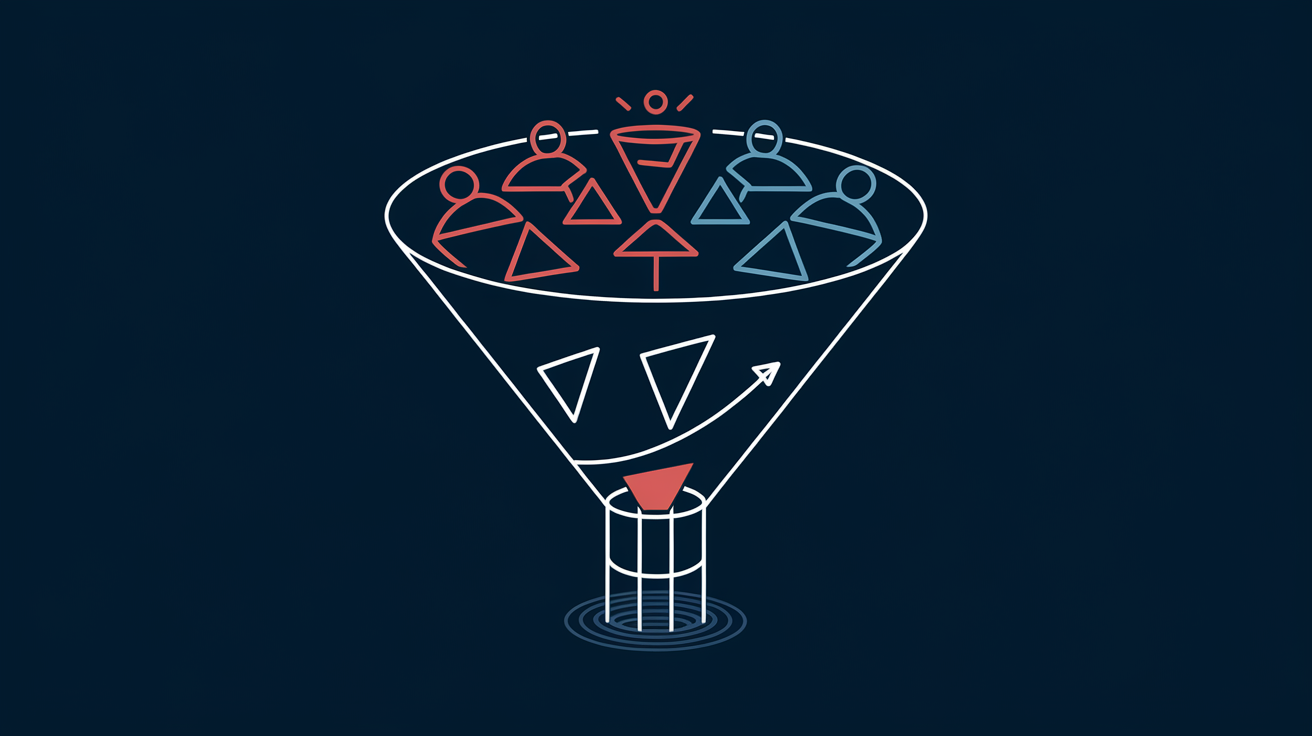
Most B2B SaaS companies don't have a lead generation problem. They have a lead quality problem. The top of the funnel is full - demo requests, MQLs, content downloads - but the pipeline stays thin because the wrong people are converting.
B2B SaaS lead generation done well is about attracting buyers at the right stage, moving them efficiently through the funnel, and handing sales a set of leads that are actually ready to evaluate. That requires more than adding a contact form and running ads. It requires a playbook.
Why SaaS Lead Generation Is Different
Traditional B2B lead gen focuses on volume: get enough contacts, work the phones, close what sticks. SaaS doesn't work that way. The unit economics - CAC, LTV, payback period - are unforgiving. A high-CAC lead from a low-fit account doesn't just fail to close; it drags down metrics for months.
Three dynamics make SaaS lead generation distinct:
Subscription economics demand fit over volume. A closed deal from a poor-fit company churns in 6 months. The acquisition cost stays on the books; the revenue doesn't.
Trial and freemium create a parallel funnel. Product-qualified leads (PQLs) - users who've hit activation milestones - often convert at 2–5x the rate of marketing-qualified leads, according to OpenView Partners. If you're ignoring PQL data in your lead gen strategy, you're leaving the most reliable signal on the table.
Buying committees are larger than they look. Gartner research shows the average B2B purchase involves 6–10 decision makers. Your lead gen strategy has to reach the economic buyer, the technical evaluator, and the end user - often with different content and messages.
The Three-Channel Foundation
No SaaS company can be excellent at every channel. The most consistent pipeline comes from picking a primary channel and making it work before expanding.
Channel 1: Content + SEO
The long game, but the one with the best compounding returns. B2B SaaS companies that invest in content early build a lead generation asset that doesn't stop working when ad spend stops. The key is targeting bottom-of-funnel and middle-of-funnel keywords - comparison pages, "best X for Y" queries, and integration guides - not just top-of-funnel informational content.
A well-executed SaaS SEO strategy targets keywords where the searcher already has a problem and is actively evaluating solutions. Those are the leads worth having.
Channel 2: Paid Search
The fastest path to qualified pipeline for most B2B SaaS companies, and the most expensive. Google Ads for SaaS works best when:
- You're bidding on high-intent terms (competitor names, "[category] software", "best [solution] for [use case]")
- Your landing pages are conversion-optimized with clear value propositions
- You're capturing leads into a nurture sequence, not dumping them straight into sales
Paid search generates leads; it doesn't generate trust. Lead scoring and nurture sequences bridge the gap between a paid click and a sales-ready conversation.
Channel 3: Outbound (SDR or Founder-Led)
Outbound isn't dead in SaaS - it's evolved. Cold email and LinkedIn outreach still work at the right ICP fit, with the right message, at the right volume. The modern approach is signal-based outreach: triggering sequences based on behavioral data (website visits, content downloads, G2 profile views) rather than spraying generic sequences at a contact list. Tools like Apollo.io and Clay make signal-based outbound accessible for teams without large SDR headcounts.
Lead Scoring: Stop Treating Every Lead the Same
Most SaaS companies apply the same urgency to every lead regardless of fit or intent. That burns sales capacity and teaches reps to distrust marketing-generated leads.
A simple two-axis scoring model changes the dynamic: *Low IntentHigh IntentHigh FitNurture aggressivelyRoute to sales immediatelyLow Fit*Do not pass to salesRoute to sales with a flag
Fit scores on firmographic data: company size, industry, tech stack, and existing tooling. Intent scores on behavioral data: pages visited, emails opened, content downloaded, product trial actions.
The thresholds depend on your sales motion. A PLG company with a low-touch model has different routing rules than an enterprise company with a six-month sales cycle. Define the criteria explicitly, document them in your CRM, and revisit them quarterly.
Funnel Design: Where Most SaaS Companies Leave Pipeline on the Table
Three gaps that show up repeatedly in B2B SaaS lead funnels:
The mid-funnel vacuum. Most companies have awareness content (blog posts, social) and a bottom-funnel offer (demo, free trial). There's nothing in between to capture leads who are interested but not ready to evaluate. Case studies, ROI calculators, comparison guides, and email sequences fill this gap.
No content for the technical buyer. In SaaS, the technical evaluator often has veto power. Integration documentation, security pages, API references, and architecture guides exist to win their trust - but they rarely appear in a marketing team's content plan. They should.
Weak activation-to-PQL path. If you have a trial or freemium tier, the journey from signup to first meaningful activation is your most important funnel. Track where users drop off and what actions correlate with conversion. Then engineer the product and messaging to get more users to those activation points.
The Metrics That Actually Matter
Vanity metrics - site traffic, total leads, email list size - tell you what happened at the top of the funnel. Pipeline metrics tell you whether the funnel is working. MetricWhat It Tells YouMQL-to-SQL rateWhether marketing and sales are aligned on lead qualitySQL-to-opportunity rateWhether sales is qualifying effectivelyPipeline coverage ratioWhether you have enough pipeline to hit revenue targetsCAC by channelWhich acquisition channels are actually efficientPQL conversion rateHow well the product funnel is converting activated users
If you're only tracking traffic and lead volume, you can be wildly off on pipeline quality and not know it for quarters. Add SQL and opportunity conversion to your standard reporting and the picture changes fast.
Putting It Together
Consistent B2B SaaS lead generation isn't a one-channel bet. It's a system: ICP clarity at the top, content and paid channels filling the funnel, lead scoring routing the right leads to the right next step, and pipeline metrics keeping the whole system honest.
The companies that get this right early - before Series B - build a compounding advantage. Every piece of content, every scored lead, every closed-won data point makes the model more precise. Start with one channel, get it working, then expand.
If you're still evaluating which marketing partner can help build this system for your stage, the post on choosing the right SaaS marketing agency covers the criteria that matter most for growth-stage companies.

.webp)

.svg)


