








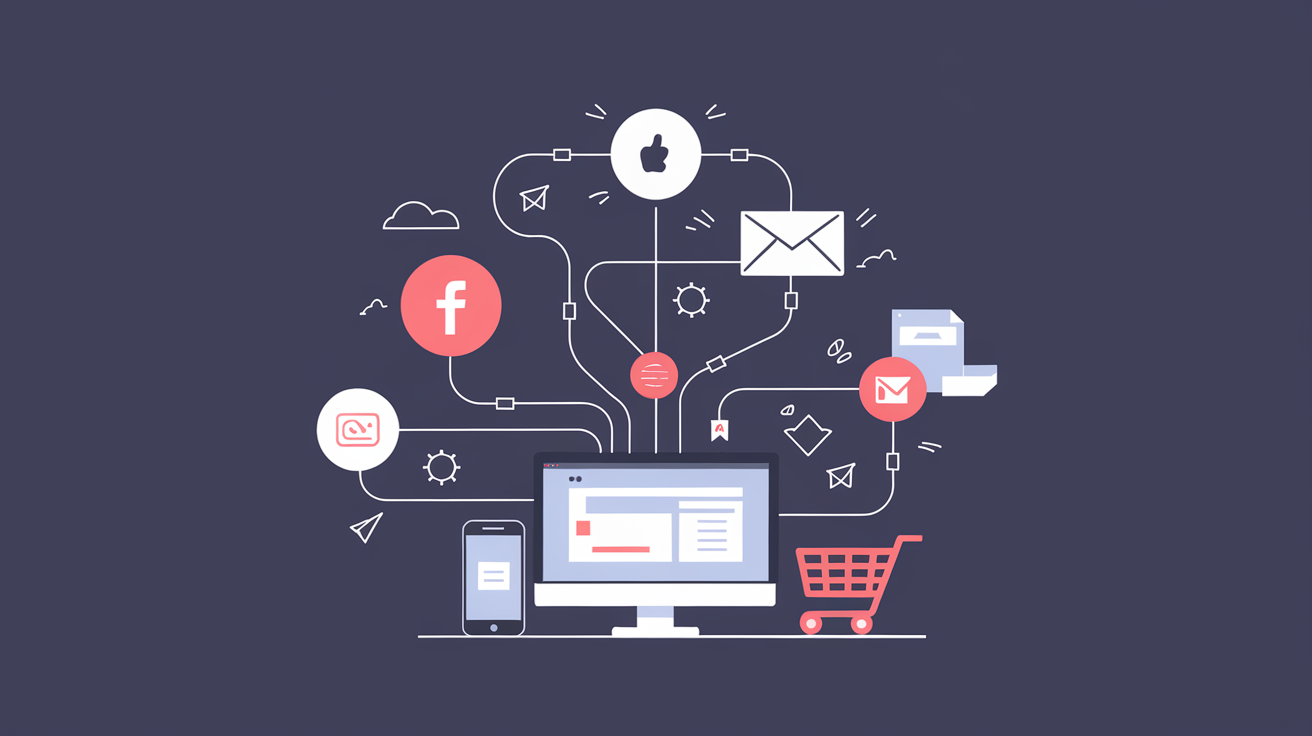
Your customers move between five or more channels before making a purchase. If those channels feel disconnected, you lose them. An omnichannel marketing strategy eliminates the gaps between touchpoints so every interaction builds toward conversion, not confusion.
For ecommerce brands scaling past seven figures, omnichannel is no longer a competitive advantage. It is the baseline expectation. The question is not whether to pursue it, but how to execute it without burning budget on channel sprawl.
Why Multichannel Ecommerce Falls Short
Most ecommerce brands already operate across multiple channels. They run paid social, send email campaigns, maintain an organic search presence, and maybe show up on a marketplace or two. That is multichannel. But multichannel alone creates a fragmented experience.
Multichannel means being present on multiple platforms. Omnichannel means those platforms talk to each other. The distinction matters because customers do not think in channels. They think in experiences. A shopper who clicks a Facebook ad, browses on mobile, and completes a purchase on desktop expects the brand to recognize them at every step.
When channels operate in silos, you see these problems:
- Inconsistent messaging across paid, organic, and email
- Redundant retargeting that wastes ad spend on already-converted users
- Broken attribution that makes it impossible to know what drove the sale
- Customer friction from disjointed experiences between platforms
Avoiding common mistakes around channel consistency is step one. Building a connected system is step two.
The Core Components of an Omnichannel Marketing Strategy
A working omnichannel marketing strategy requires four structural elements. Miss any one of them and you end up with expensive multichannel instead of coordinated omnichannel commerce.
1. Unified Customer Data
Every channel generates data. The problem is that most brands store it in separate systems. Your email platform knows purchase history. Your ad platform knows click behavior. Your site analytics know browsing patterns. None of them share the full picture.
A customer data platform (CDP) or a well-configured CRM solves this. Tools like Segment or Klaviyo can unify identity resolution across devices and channels, giving you a single customer view that powers every marketing decision.
What unified data enables:
- Suppressing purchasers from acquisition campaigns in real time
- Triggering email sequences based on on-site behavior
- Personalizing ad creative based on purchase stage
- Measuring true cross-channel attribution
2. Consistent Brand Experience
Omnichannel does not mean identical content on every platform. It means a consistent brand story adapted to each channel's native format. Your Instagram creative should feel like it belongs to the same brand as your email campaigns and your product pages.
This requires:
- Centralized brand guidelines accessible to every team and agency
- Shared creative assets that maintain visual consistency
- Aligned messaging frameworks across acquisition and retention
3. Channel Orchestration
Orchestration is the difference between sending a customer five disconnected messages and guiding them through a coordinated journey. It means your paid media, email, SMS, and on-site experience work together rather than competing for the same conversion.
Effective orchestration looks like this: StagePaid MediaEmail/SMSOn-SiteAwarenessProspecting ads with social proofWelcome sequence after lead captureBlog content with category CTAsConsiderationRetargeting with product-specific creativeBrowse abandonment flowsPersonalized recommendationsPurchaseDynamic product adsCart abandonment seriesUrgency messaging and reviewsRetentionLookalike suppression, loyalty offersPost-purchase and replenishment flowsAccount dashboard and reorder prompts
Choosing the right mix of channels matters enormously. Understanding how different growth marketing channels impact your business helps you prioritize where to invest before you orchestrate.
4. Measurement That Connects the Dots
Single-channel attribution is a relic. If you only credit the last click, you will systematically undervalue the channels that introduce customers to your brand and overvalue the ones that close them.
Modern omnichannel measurement requires:
- Multi-touch attribution models (data-driven or position-based)
- Incrementality testing to isolate true channel impact
- Blended ROAS targets that evaluate the full media mix
- Cohort analysis to track customer lifetime value across acquisition sources
Tools like Triple Whale and Northbeam specialize in cross-channel attribution for ecommerce brands.
Building Your Omnichannel Platform Stack
You do not need a single platform that does everything. You need a stack where data flows freely between tools. Here is a practical framework for assembling your omnichannel platform:
Data Layer: CDP or CRM that serves as the single source of truth. This is the hub that connects everything else.
Acquisition Layer: Paid social (Meta, TikTok), paid search (Google, Bing), and programmatic display. These channels should share audience and conversion data with your data layer.
Retention Layer: Email and SMS platforms with behavioral triggers. These should fire based on real-time customer actions, not static schedules.
Commerce Layer: Your ecommerce platform (Shopify, BigCommerce, or custom) feeding product, inventory, and order data back to the data layer.
Analytics Layer: Cross-channel attribution and reporting that pulls from all of the above.
The key criterion for every tool in the stack: does it integrate cleanly with the rest? A best-in-class tool that creates a data silo is worse than a good tool that plays well with others.
Omnichannel Marketing Mistakes That Stall Growth
Even brands with the right intent get tripped up by execution errors. Here are the most common:
Expanding channels before mastering existing ones. Adding TikTok Shop because it is trending, while your email flows are still template-based and your paid social creative has not been refreshed in months, is a recipe for diluted effort. Master two or three channels before adding more.
Treating personalization as a feature, not a strategy. Dropping a first name into a subject line is not personalization. True personalization means adjusting the offer, the timing, and the channel based on where a customer sits in their journey. When done right, this keeps your sales funnel consistent across every touchpoint.
Ignoring post-purchase as a channel. The transaction is not the end of the customer relationship. Post-purchase email, SMS, and on-site experiences drive repeat purchase rate and lifetime value. Brands that treat omnichannel as an acquisition-only strategy leave significant revenue on the table.
Over-indexing on technology, under-indexing on process. Buying a CDP does not make you omnichannel. Having a clear process for how data flows, who owns each channel, and how campaigns are coordinated across teams is what makes it work.
What This Means for Your Brand
Omnichannel marketing is not a project with a finish line. It is an operating model. The brands that win are not the ones with the most channels. They are the ones where every channel reinforces the same customer journey.
If you are running paid, email, and organic as separate workstreams with separate teams and separate dashboards, start here:
- Audit your current data flow. Map where customer data lives and identify the gaps between systems.
- Pick your highest-leverage integration. For most ecommerce brands, connecting your ad platforms to your email/SMS platform delivers the fastest ROI.
- Establish shared KPIs. Move your teams from channel-specific metrics to blended targets like customer acquisition cost and lifetime value.
- Test orchestration on one journey. Start with cart abandonment or post-purchase. Get one cross-channel flow working well before scaling to the full funnel.
The shift from multichannel to omnichannel is not about doing more. It is about making what you already do work together. The brands that figure this out first will compound their advantage over the ones still running disconnected campaigns across disconnected platforms.
Omnichannel commerce is where ecommerce is heading. The only variable is how quickly your brand gets there.

.webp)

.svg)


