
In the age of rapid digital transformation, AI has seeped into almost every industry, revolutionizing how we conduct business, design products, and even create content. The ClusterMagic service is a great example, which seamlessly integrates AI for content generation in a hybrid model, providing significant benefits in the SEO results of brands seeking a massive increase in organic traffic. But while AI holds immense promise, it has its limitations. Let's explore the pros and cons of using AI for content creation and understand why a hybrid approach might be the way forward.
Major publishers in sensitive niches like CNET.com, Bankrate.com, and Creditcard.com have already integrated AI-generated content. Other large companies, such as CNN and Forbes, might also be doing so. Countless smaller companies and publishers are utilizing AI, not only on their websites but also on social media, in email marketing, and virtually everywhere else.
Google's stance on AI-generated content is neutral, emphasizing that content should primarily be user-centric. In fact, Google's September 2023 Helpful Content Update removed the mention of "written by people" from their helpful content system guidelines.
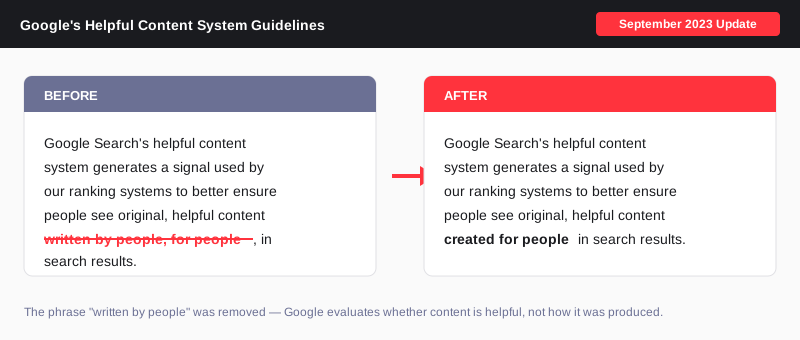
The message is clear: for content to rank well, it must be informative, answer users' queries satisfactorily, and showcase genuine expertise - regardless of how it's created.
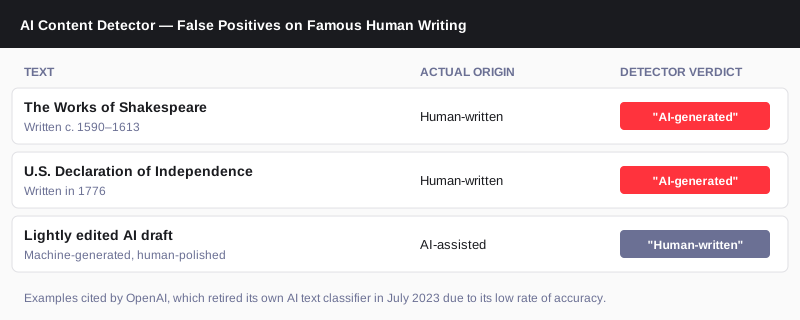
AI Content Detectors like GPTZero, ZeroGPT, and many others are not reliable. Even OpenAI has said as much. They consistently produce false positives about human-written content. Conversely, they can be easily fooled with creative prompting or a bit of human editing.
An interesting note from OpenAI: "we found that it labeled human-written text like Shakespeare and the Declaration of Independence as AI-generated."
Anecdotal evidence and real-life ranking data suggest that while AI-generated content isn't penalized by search engines, it might only achieve high rankings if it meets the above criteria. The role of AI in content creation is still a developing narrative, and its significance is indispensable for maintaining a competitive edge in the future.
At EmberTribe, the understanding is clear - AI serves as a foundation, not the final product. With ClusterMagic, while AI aids in the initial draft based on expert-driven keyword research, human experts step in for the crucial phases of editing, fact-checking, and final review. This hybrid approach ensures the content is accurate and helpful, has the potential to rank, and truly represents their business.

Businesses that run Google Ads well earn an average of $2 for every $1 spent, and Google itself estimates the platform can deliver up to 800% ROI for advertisers who structure their campaigns correctly. The gap between those results and the advertisers who burn through budget without traction almost always comes down to setup decisions made in the first few hours. This guide walks you through every step, from opening your account to launching a campaign built to convert.
Before logging into Google Ads, two things need to be in place: a Google account linked to your business and a clear conversion goal. That goal could be a purchase, a form submission, a phone call, or a page visit. Without it, you have no signal to optimize toward and no way to know whether your spend is working.
You also need a landing page that matches your ad's promise. Sending traffic to a generic homepage is one of the most common reasons new campaigns underperform. The page a user lands on should directly address whatever the ad offered.
Go to ads.google.com and sign in with your Google account. Google will walk you through a "Smart campaign" setup by default, but skip past it to access Expert Mode. Expert Mode gives you access to all campaign types, full bidding controls, and manual keyword management, which is what you need to run campaigns that scale.
Set your billing country, time zone, and currency carefully. These settings cannot be changed after account creation and affect how your reporting data lines up with your business records.
Conversion tracking is the most important step in this entire process, and it comes before you create a single campaign. In Google Ads, go to Tools, then Measurement, then Conversions. Define your conversion action, whether that is a purchase, a lead form, or a button click.
Install the Google tag on your site and set up the specific conversion event. For purchase-based businesses, enhanced conversions are worth enabling immediately. Enhanced conversions use hashed first-party data to improve measurement accuracy by 20 to 30%, which means your bidding algorithms have better data to work with from day one. Without solid conversion tracking, automated bidding strategies have nothing to learn from.
Google Ads offers several campaign types, each suited to a different goal. For most brands running their first campaign, Search is the right starting point.
Search campaigns show text ads to people actively searching for your product or service. They capture high-intent traffic, and the keyword control makes them easier to manage than other formats. Understanding the full landscape of search advertising helps you fit Search campaigns into a broader paid media strategy.
Performance Max campaigns run across all Google inventory, including Search, Display, YouTube, Gmail, and Shopping, using Google AI to allocate budget. They work best when you already have conversion history and creative assets ready. Starting a brand-new account with PMax before you have conversion data usually leads to wasted spend in the first few weeks.
Shopping campaigns are built for ecommerce and pull product data from your Merchant Center feed. If you sell physical products, a well-structured ecommerce PPC approach treats Shopping and Search as complementary rather than competing channels.
Display and Video campaigns run on Google's network of websites and on YouTube. They are better suited for awareness and retargeting than for direct response in most cases.
Campaign structure directly affects your Quality Score, your budget efficiency, and your ability to read performance data. A common mistake is putting every keyword into one ad group with generic ad copy. Tight structure prevents this.
Organize campaigns around a single product category, service line, or funnel stage. Inside each campaign, create ad groups around tightly related keyword themes. Each ad group should have five to fifteen closely related keywords and ad copy that speaks directly to that specific intent. When your keywords, ads, and landing page all point to the same topic, Google rewards you with a higher Quality Score, which lowers your cost per click.
Keywords are the mechanism that connects your ads to the right search queries. Start with terms your customers actually use, not internal product terminology. Tools like Google Keyword Planner are built into your account and show estimated search volume and bid ranges for any term.
Use a mix of match types strategically. Exact match gives you precise control over which queries trigger your ads. Phrase match expands reach to queries containing your keyword phrase. Broad match, especially when paired with Smart Bidding, lets Google's algorithm discover related queries, but it requires enough conversion data to work well.
Negative keywords are just as important as your target keywords. Add irrelevant terms from the start so your budget is not wasted on queries that will never convert. Review your search terms report weekly in the early weeks of a campaign to catch new negatives before they accumulate cost.
If you want to see what queries are driving results for competitors, reverse-engineering a competitor's keyword strategy can surface opportunities you would not have found through keyword tools alone.
Google Search ads use a Responsive Search Ad format. You provide up to fifteen headlines and four descriptions, and Google tests combinations to find what performs best. Write headlines that include your primary keyword, a specific benefit, and a call to action. Avoid vague phrases like "great service" or "learn more." Specificity converts better.
Pin a headline only when accuracy requires it, such as a brand name or a specific offer. Otherwise, letting Google rotate through combinations gives the algorithm more data to optimize. Include at least one description that provides proof, whether that is a number, a guarantee, a result, or a customer outcome.
Enable ad extensions, now called assets, across the board. Sitelinks, callouts, structured snippets, and call assets expand your ad's footprint on the search results page and improve click-through rate without adding cost per click.
Bidding strategy determines how Google spends your budget and how aggressively it competes in each auction. The right strategy depends on where your account is in its data lifecycle.
For a new account with no conversion history, start with Maximize Clicks with a cost-per-click cap. This gets impressions and clicks while limiting exposure until your tracking is validated. Once you have at least 30 conversions in a 30-day window, switch to Maximize Conversions. After you reach 50 or more weekly conversions consistently, you can layer in a Target CPA to hold Google to a specific cost per acquisition.
Target ROAS is the right choice once you have consistent purchase data and want to optimize for revenue rather than conversion volume. It works well for ecommerce brands where order values vary and you want Google to prioritize higher-value transactions. According to Google's own bidding guidance, Smart Bidding strategies perform best when campaigns are given enough conversion data and are not interrupted by frequent structural changes.
Set a daily budget at the campaign level. A realistic starting budget for Search is enough to generate at least ten to twenty clicks per day based on the average CPC in your category. The average CPC across all industries in Google Ads is $4.22, so a $50 to $100 daily budget gives you enough volume to start seeing meaningful data within a week.
Review your campaign settings before going live. Confirm that your location targeting is set to your actual service area, not a broader default. Check that the Google Search Network is included and that Search Partners and Display Network are turned off until you have baseline data.
Set an ad schedule only if you have a specific business reason to limit hours. Otherwise, let the campaign run and use the data to identify any time-of-day patterns worth acting on.
Google Ads is not a set-it-and-forget-it channel. The first two weeks are about validating your tracking and catching early issues. After that, shift to a weekly optimization rhythm.
Each week, review your search terms report and add negatives, check quality scores by ad group, and compare conversion rates across keywords. Pause keywords that have spent beyond three times your target CPA without converting. Test one new headline or description variant per ad group per month rather than changing everything at once. Isolating variables is the only way to know what actually moved the needle.
Monthly, assess campaign-level performance against your goals, review impression share to understand whether budget or bid constraints are limiting reach, and consider whether your landing pages need updates based on the traffic data you are collecting.
For brands that want support building campaigns from scratch or scaling an existing account, EmberTribe's Google Ads management services cover full-funnel paid search strategy built around measurable growth.
Google Ads excels at capturing demand that already exists. When someone searches for what you offer, Search campaigns put your brand in front of them at exactly the right moment. That makes it one of the most efficient channels for converting high-intent prospects.
What it cannot do is create demand for something people are not actively searching for. If your product or category is new to the market, you may need Display or Video campaigns to build awareness before Search campaigns can reach their potential. Understanding how Google Ads works as a platform gives you a sharper view of where it fits in your overall growth model.
The brands that get the most from Google Ads treat it as a data system, not just an advertising channel. Every campaign generates information about what your customers are searching for, what language converts, and which offers drive action. Run it with that lens and you are building an asset that compounds over time.
Sources:

Paid search spending in the US crossed $110 billion in 2025, and the agency you choose to manage that investment will either compound your returns or quietly drain them. Most SEM agencies pitch the same credentials: Google Partner badges, certified specialists, and case studies from a different industry than yours. The difference between a good partner and an expensive mistake shows up in the details of how they structure campaigns, report results, and respond when performance slides.
This guide covers what search engine marketing agencies actually do, how pricing works, what to expect from the best ones, and the questions that reveal which category an agency falls into before you sign a contract.
A search engine marketing agency manages paid placement in search engine results, primarily through Google Ads and Microsoft Advertising. The core service covers campaign strategy, keyword research, ad copy development, bid management, and performance reporting. Most agencies also handle conversion tracking setup, audience segmentation, and landing page recommendations.
The scope has expanded significantly in recent years. Campaigns that once lived cleanly in keyword-based search now intersect with Performance Max, which blends Search, Shopping, Display, YouTube, and Discover into a single AI-managed budget. A competent search engine marketing services provider understands how to structure these campaigns, what signals to feed the algorithm, and where human judgment still outperforms automated defaults.
Beyond campaign mechanics, a strong SEM agency functions as a growth partner. They bring competitive intelligence, audience insights, and creative testing disciplines that translate raw ad spend into measurable revenue outcomes.
Pricing varies based on agency size, campaign complexity, and the fee structure the agency uses. Understanding the model matters because incentives differ across structures.
Percentage of ad spend is the most common model, typically ranging from 10% to 20% of monthly ad spend. At lower spend levels, a minimum monthly management fee usually applies, often between $1,500 and $3,000. This model aligns the agency's revenue with your spend, which creates a potential conflict: agencies benefit when you spend more, whether or not that additional spend is efficient.
Flat monthly retainer removes the spend-based incentive. Retainers for small to mid-market businesses typically range from $2,000 to $6,000 per month and are more common for agencies with defined service packages. This structure works well when budgets are stable and the scope of work is clearly defined.
Hourly billing is common for project-based engagements, audits, and consulting work. Rates from experienced SEM specialists run $100 to $300 per hour. Hourly arrangements are harder to budget for ongoing management but appropriate for discrete work.
Performance-based models tie fees to business outcomes rather than spend or time. These arrangements typically include a base retainer plus a variable component tied to revenue or leads. They are less common because measurement alignment is difficult to establish upfront, but they signal an agency confident enough in their work to share the risk.
For most growth-stage businesses, expect to pay $2,500 to $8,000 per month in management fees on top of ad spend. Budget less than that and you are either working with a small specialist or accepting a lower tier of service.
The technical baseline is not the differentiator. Any credentialed agency can build campaign structure, set up conversion tracking, and write ad copy. What separates the best search engine marketing companies is the quality of judgment they apply when the data is ambiguous, performance shifts, or the platform changes the rules.
Conversion architecture depth. Smart Bidding optimizes toward whatever signal you define as a conversion. The strongest agencies audit conversion definitions before launching anything, deduplicate events, apply value rules by customer segment, and build feedback loops from CRM data when the business goal is qualified leads rather than raw form fills. An agency that takes your existing conversion tracking at face value is skipping the most important upstream work.
Creative velocity. Performance Max and Demand Gen campaigns reward agencies that ship high volumes of creative across formats. Video assets, image variants, and headline combinations need regular refresh cycles, not quarterly updates. The best partners treat creative as a standing production workflow.
Negative keyword discipline. Broad match and Performance Max surface queries beyond your explicit keyword list. Without aggressive negative keyword management, spend leaks into irrelevant traffic, branded terms get cannibalized, and the algorithm learns from bad conversion signals. Weekly search term reviews are table stakes.
Diagnostic precision. When ROAS drops or CPA spikes, the explanation matters as much as the response. A strong agency can isolate whether the cause is auction pressure, match type drift, creative fatigue, landing page degradation, or tracking failure. Agencies that blame "the algorithm" or recommend increasing budget as a first response are operating without real diagnostic capability.
Platform currency. The paid search landscape changed substantially between 2024 and 2026. Agencies still pitching tightly themed exact-match ad groups and manual bidding as core strategy are a product cycle behind.
The right questions reveal operational capability faster than reviewing case studies or badge counts. Use these across any sem agency evaluation.
Ask the agency to walk through their first 30 days on a new account. A strong answer covers conversion audit, baseline performance benchmarking, campaign structural review, audience analysis, and a testing roadmap. A weak answer jumps immediately to campaign builds without mentioning measurement.
Ask how they handle Performance Max budget share versus standard Search campaigns for a business like yours. The answer should be specific to your situation, not a default recommendation.
Ask what they report on and how often. Look for a combination of leading indicators (CTR, Quality Score, impression share) and business outcomes (CPA, ROAS, revenue, lead quality). If the answer centers exclusively on clicks and impressions, that agency is not measuring what drives business results.
Ask what attribution model they use and why. There is no single right answer, but an agency that cannot articulate the tradeoffs between last-click, data-driven, and third-party attribution lacks the measurement sophistication your spend requires.
Ask whether you own the ad accounts and data if you end the relationship. Any reputable search marketing agency will confirm account ownership belongs to you. An agency that builds campaigns in their own MCC and withholds accounts on exit has engineered a lock-in, not a partnership.
Ask who specifically will work on your account and whether the senior person who sold you walks away after onboarding, leaving a junior coordinator to manage the day-to-day.
Ask how they communicate performance anomalies. A proactive agency surfaces problems before you notice them and brings a hypothesis alongside the alert. An agency that waits for you to ask is reactive by design.
If the agency cannot clearly explain where every dollar goes and what it is optimizing toward, that transparency gap will cost you.
Start with agencies that specialize in your business model. A DTC ecommerce brand has different campaign architecture needs than a B2B SaaS company or a local service business. Generalist agencies can be competent, but vertical specialists bring pattern recognition that shortens the optimization learning curve.
Check whether they use your ad budget to experiment on your behalf or charge separately for testing. The best agencies build creative and landing page testing into the core engagement, not as an upsell.
Ask for references from clients in a similar growth stage. Case studies from enterprise brands do not tell you how the agency operates when the monthly budget is $20,000 rather than $2 million. Understanding what is Google Adwords and how it connects to a broader growth strategy is the foundation any good SEM partner builds on.
Look for agencies that can speak fluently to your full growth picture. Paid search does not operate in isolation. The best partners understand how paid search interacts with SEO, landing page conversion rates, and customer lifetime value in ways that make their channel contribution legible.
Before engaging an agency, WordStream's paid search resource center and the Google Ads Help Center provide useful grounding on what the channel covers.
The first three months with any SEM agency should follow a clear progression. The first 30 days are diagnostic: account audit, conversion verification, baseline benchmarking, and initial campaign restructuring if needed. Days 31 through 60 introduce new tests, clean up technical issues, and begin generating performance data under the agency's management. By day 90, you should have enough signal to evaluate whether their strategic hypotheses are translating to improved outcomes.
If an agency promises significant revenue impact in the first 30 days, treat that with skepticism. Smart Bidding systems require conversion data volume to optimize accurately, and account restructuring often causes short-term performance dips before performance improves. An agency that sets realistic early expectations is more trustworthy than one that overpromises to close the deal.
The right SEM agency brings a point of view on your business, not just your campaigns. When the prospecting calls focus entirely on what they will do inside the platform and nothing on how they will understand your margins, customer quality, and revenue model, that conversation is telling you something important about how the engagement will go.

Most brands shopping for search engine marketing services hit the same problem: every agency sounds identical. The deliverables list looks the same. The pricing page uses the same buzzwords. The difference only becomes obvious after a few wasted months and a depleted ad budget.
This post breaks down what SEM services actually include at each level of engagement, how the main pricing models work in practice, and what signals separate a service worth buying from one that will cost you more than it generates.
SEM is a paid channel. The core mechanism is bidding on keywords so your ads appear in search results ahead of organic listings. But the service wrapping that mechanism varies enormously depending on scope and provider.
A complete SEM engagement typically covers six functional areas:
Keyword research and intent mapping. This is the foundation. A provider should map keywords to buyer intent stages: informational, navigational, and transactional. Targeting only high-volume terms without intent qualification is one of the fastest ways to burn spend on clicks that never convert.
Campaign architecture. This covers how campaigns, ad groups, and keyword match types are structured. Poor architecture leads to keyword cannibalization, quality score problems, and ad relevance issues. Google's own campaign structure guidance emphasizes tight thematic grouping because it directly affects your Quality Score and cost per click.
Ad copy creation and testing. Effective services include ongoing A/B testing of headlines and descriptions, not just a single set of ads written at launch. Ad copy decays. What performs in month one rarely performs at month six.
Bid strategy management. This includes choosing the right bidding method (manual CPC, target ROAS, maximize conversions, target CPA) and adjusting it as campaign data matures. According to WordStream's research, average Google Ads conversion rates vary significantly by industry. Bidding strategy must be calibrated to your actual numbers, not category averages.
Conversion tracking and attribution. You cannot optimize what you cannot measure. A credible SEM service sets up and audits conversion tracking as a first-order priority, not an afterthought. This includes verifying that Google Ads conversion events match what's being tracked in GA4 or your analytics platform.
Reporting and strategic review. Monthly reports should go beyond impressions and clicks. Look for cost per acquisition (CPA), return on ad spend (ROAS), impression share, and quality score trends. Providers who lead with CTR as the headline metric are often obscuring underperformance elsewhere.
Pricing for SEM services reflects both scope and the level of strategic attention your account receives. Here's how it generally breaks down in 2026:
Starter ($1,500 to $3,000/month in management fees). This tier covers the basics: keyword research, initial campaign setup across one or two campaigns, and a monthly performance report. Ad copy testing is limited and bid management is largely manual. It works for brands with a single product line and a straightforward conversion path.
Growth ($3,000 to $7,000/month). At this level, providers can manage multiple campaigns across search and potentially shopping, run ongoing A/B tests on ad copy, build out audience targeting layers, and deliver more frequent optimization cycles. Conversion tracking setup and reporting become more rigorous. This tier fits brands scaling past $20,000 in monthly ad spend.
Full-service ($7,000+/month). This level includes everything in the growth tier plus Performance Max campaigns, Shopping feed management, custom attribution modeling, and a dedicated strategist. Some providers also integrate SEM with paid social for unified budget allocation. WebFX's 2025 SEM pricing research confirms that management fees above $7,000/month typically coincide with ad budgets over $50,000/month.
Note: these are management fees only. Ad spend is billed separately and typically represents the larger share of total SEM cost.
Three primary models dominate the market. Each has different incentive structures that affect how your account is managed.
Percentage of ad spend. The agency charges 10 to 20 percent of your monthly ad budget as a management fee. This model creates a structural misalignment: the agency earns more when you spend more, regardless of whether that spend produces proportional returns. Scrutinize it closely if your budget is being pushed upward without corresponding ROAS improvement.
Flat monthly retainer. A fixed fee regardless of ad spend. This aligns the agency's incentive with efficiency rather than volume, and works best when scope is well-defined and campaigns are stable. The risk: flat fees can cause agencies to under-resource fast-growing accounts that generate more management work than the retainer covers.
Hybrid (flat plus performance). Agencies combine a base retainer with a performance bonus tied to hitting CPA or ROAS targets. A 2026 agency pricing survey cited by get-ryze.ai found that 27% of agencies now use hybrid models. For DTC brands with clear revenue attribution, this structure surfaces the most honest read on whether an agency's work is generating returns.
Deliverables lists and case studies only go so far. The most reliable evaluation signal is how a provider talks about your account before they have it.
A credible provider will ask about your current conversion tracking setup on the first call, not after the contract is signed. They will ask what your acceptable CPA or target ROAS is, not assume they know what success looks like. They will tell you what they cannot do as readily as what they can.
Red flags worth noting: proposals that lead with impressions or traffic volume rather than conversion metrics; agencies that cannot show account-level ROAS data from comparable clients; and contracts that lock you into 12-month minimums before any performance data exists.
For brands evaluating whether SEM fits into a broader paid search strategy, our breakdown of Google Ads management covers how campaign types and budget allocation interact at the account level. If you're still deciding between building an in-house capability versus outsourcing, the SEM marketing agency comparison is a useful starting point.
One benchmark worth keeping in mind: Google Ads average cost per click reached $5.26 in 2025, a 12.88% year-over-year increase. Efficient campaign management is what separates brands that scale profitably from those that just spend more.
The SEM services market is crowded. Narrowing your evaluation comes down to three questions:
First, does the provider have category experience in your vertical? Bid dynamics, average CPCs, and conversion rates vary significantly by industry. An agency with demonstrated results in ecommerce or DTC carries less onboarding risk than a generalist.
Second, is their reporting built around your business metrics or their platform metrics? Providers who optimize toward your CPA and ROAS targets, not their own quality scores, are the ones who stay.
Third, how do they handle underperformance? The answer to this question tells you more about fit than any case study. Agencies that have clear protocols for diagnosing and reversing performance declines are worth more than agencies that only know how to scale what's already working.
If you're ready to pressure-test your current paid search setup or evaluate whether outsourcing makes sense for your stage of growth, EmberTribe works with DTC and growth-stage brands on SEM strategy, campaign management, and performance-focused search marketing. Start with a conversation about your current numbers and where you want them to go.

Picking the right sem marketing agency is one of the highest-leverage decisions a growth-stage brand can make. Get it right and paid search becomes a scalable, predictable acquisition channel. Get it wrong and you burn budget on clicks that never convert while the agency sends you a PDF with a rising impressions chart. This guide breaks down exactly what to look for, what to avoid, and how to structure the conversation before you sign anything.
Search engine marketing agencies manage paid search campaigns across platforms such as Google Ads and Microsoft Advertising. The core work includes keyword research, bid strategy, ad copy creation, landing page recommendations, audience targeting, and ongoing optimization. Most agencies also handle conversion tracking setup, which is the foundation everything else depends on.
The scope varies considerably by agency size and specialty. A boutique paid search agency might embed directly in your growth team and act as a strategic partner. A larger, full-service shop might assign you to an account manager who runs dozens of accounts simultaneously. What matters most is the ratio of strategic attention to the retainer you are paying.
In-house teams have one advantage over agencies: institutional knowledge. They understand your product margins, your seasonal patterns, and your customer segments. A strong SEM agency closes that gap through a rigorous onboarding process, clear documentation, and regular communication. If an agency skips discovery and launches campaigns in week one, that is your first warning sign.
The paid search market has grown considerably. According to AgencyHandy's 2026 SEM statistics report, the global SEM services market is projected to expand from roughly $120 billion in 2024 to over $278 billion by 2034, a compound annual growth rate of approximately 8.8%. AI-powered campaign automation, smarter audience segmentation, and intensifying competition for high-intent keywords are all driving that growth.
For brands competing in ecommerce and direct-to-consumer categories, that growth in the market means more advertisers bidding on the same keywords. Cost-per-click rates have increased in most verticals over the past two years. A competent SEM agency helps you maintain profitable returns by tightening targeting, improving quality scores, and building out the long-tail keyword structure that most brands neglect.
Pricing is where a lot of brands get confused or, worse, overcharged. There are four common models. Understanding each one before your first agency conversation puts you in a much stronger negotiating position.
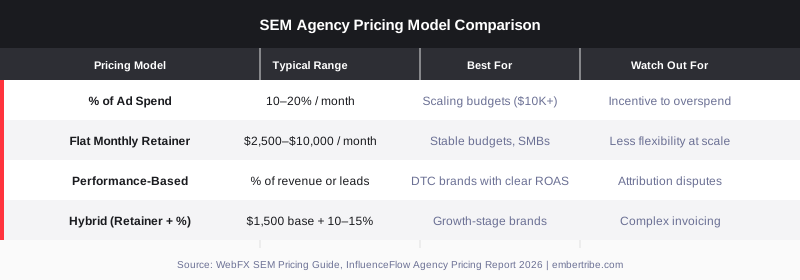
According to WebFX's SEM pricing guide, about 70% of businesses spend between $251 and $10,000 per month on SEM management, not including the actual ad spend. Most agencies charge either a flat retainer, a percentage of ad spend, or some combination of both.
Percentage of ad spend is the most common model for performance agencies. Rates typically fall between 10% and 20% monthly. At lower spend volumes (under $25K per month), you will often see a minimum fee apply because the account still requires the same hours regardless of how much you are spending. One structural downside of this model: an agency paid on percentage has a financial incentive to increase your budget even when the marginal return does not justify it.
Flat monthly retainers offer more predictability for brands with stable budgets. The InfluenceFlow 2026 agency pricing report puts the typical range for a small to mid-sized business SEM engagement at $2,500 to $10,000 per month. Mid-market companies managing $50,000 or more in monthly ad spend often pay $10,000 to $25,000 in management fees.
Performance-based pricing ties fees to results such as a target ROAS, cost per acquisition, or revenue generated. This model aligns incentives better, but attribution becomes a point of contention quickly. Clarify exactly how conversions are counted before agreeing to any performance clause.
Hybrid models combine a lower base retainer with a percentage component. This is increasingly common among growth-focused agencies because it reduces risk for both parties during ramp-up and scales fees alongside results.
Return on ad spend benchmarks vary widely by industry and by the maturity of your campaigns. A brand new to paid search will rarely hit efficient ROAS in month one. Healthy accounts take 60 to 90 days of learning before performance data is statistically meaningful.
According to First Page Sage's ROAS statistics report, ecommerce brands average approximately 2.05x ROAS on paid search. That number represents the mean across a broad range of verticals and campaign types. DTC brands with strong creative, tight audience targeting, and well-optimized landing pages routinely exceed that benchmark.
A more practical frame: calculate your break-even ROAS before you set any agency targets. If your gross margin is 50%, you need at least a 2x ROAS to break even on the ad spend alone, before accounting for management fees. Factor in the agency fee and you need to perform considerably higher just to stay profitable. Be explicit with any agency about your break-even ROAS, because an agency unwilling to anchor their strategy around your margin reality is not the right partner.
Evaluating a sem agency is not just about reviewing a pitch deck. The best agencies reveal themselves through the quality of their discovery questions, not their case study slides. Here is a practical framework for the evaluation process.
Ask every agency candidate the same set of questions and compare responses directly. The consistency of the process matters as much as any individual answer.
An agency that answers these questions with specificity and without hesitation has processes in place. An agency that pivots to case studies without addressing the mechanics of their process is giving you a sales pitch, not an operational preview.
According to Accelerated Digital Media's SEM agency red flags guide, the most consistent warning signs fall into three categories: communication, strategy, and reporting.
On communication: if you cannot get direct answers on calls and response times are consistently slow before you sign, expect that pattern to continue after you sign. On strategy: agencies that are always in "maintenance mode" without proactively testing new approaches are not earning their retainer. On reporting: if your monthly report is a static PDF showing impressions and click-through rate without connecting to revenue or conversions, your agency is optimizing for optics, not outcomes.
Other concrete red flags to watch for:
Owning your ad account is non-negotiable. If an agency insists on running campaigns through their own account rather than granting access to yours, walk away. You would be renting access to your own campaign history.
For most growth-stage brands spending under $500,000 per year in ad budget, a specialized digital marketing agency will outperform an in-house hire on a cost-adjusted basis. A senior paid search manager carries a total cost of $90,000 to $130,000 per year in salary plus benefits, and they still need tools, training, and management overhead.
An agency at a comparable cost brings a full team: strategist, account manager, conversion rate specialist, and creative support. The leverage is real, particularly in the early stages when your account needs more active optimization than a single in-house hire can provide.
The calculus shifts at scale. Brands spending $2 million or more annually in paid search often benefit from bringing core channel ownership in-house while using an agency for specific functions such as creative testing or international expansion.
Whatever pricing model you choose, get these terms in writing before you start:
Getting these terms defined before the relationship starts protects you from the most common agency disputes. Related reading: our full breakdown of what to look for in PPC companies covers the contract terms that matter most for paid channels.
Start by defining what "right" means for your specific situation. A brand spending $15,000 per month on Google Ads needs a different type of partner than one scaling toward $200,000 per month. Consider:
Once you have that picture, evaluate three to five agencies using the framework above. Ask for references from clients in similar verticals, not just from whoever they feature in the case study section of their website.
EmberTribe works specifically with DTC and ecommerce brands that are ready to scale paid search beyond the basics. Our approach is built around margin-aware ROAS targets, rigorous testing cadences, and transparent reporting that connects directly to revenue. If you are evaluating SEM partners for 2026, we would like to talk. Visit embertribe.com to learn more about how we work and what we focus on.

When someone searches for "ppc marketing services," they're usually not looking for a definition. They already know what pay-per-click is. What they're trying to figure out is whether PPC fits into their marketing mix, what working with a provider actually looks like, and whether the investment makes sense for where their business is right now.
Those are the questions worth answering.
Paid search is one channel among several, and it plays a specific role that other channels don't replicate well.
SEO builds long-term organic visibility. Content marketing generates authority and educates prospects over time. Social media builds brand awareness and community. PPC does something different: it generates demand capture at the exact moment a buyer is searching for a solution. That immediacy is the core of what paid search offers that no other channel can match at the same speed.
The distinction matters because businesses sometimes approach PPC as a replacement for other channels, or as a last resort when organic growth is too slow. Neither framing serves them well. Pay-per-click fundamentals are straightforward: you bid for placement in search results, you pay per click, and you control targeting. But how PPC fits into your broader strategy depends on factors that go well beyond the mechanics of the channel itself.
At a strategic level, PPC works best when:
If any of those conditions aren't met, PPC spending can accelerate a problem rather than solve it. This is one reason evaluating channel fit before engaging PPC marketing services matters more than most agencies will tell you upfront.
A managed PPC engagement is not just someone logging into Google Ads on your behalf. Done well, it spans several distinct phases, each with its own deliverables.
Discovery and audit. Before any campaign launches or restructures, a good provider assesses your current account (if one exists), your competitive landscape, keyword opportunity, and your conversion infrastructure. This phase often surfaces issues that have been suppressing performance long before the engagement began. For a deeper look at how Google Ads actually works at the auction level, Google Ads auction mechanics provides useful grounding.
Strategy and structure. Campaign architecture matters as much as budget. How campaigns are segmented by intent, product line, or audience affects quality scores, cost efficiency, and reporting clarity. This phase also includes match type strategy, negative keyword development, and bidding framework decisions.
Creative and landing page alignment. Ad copy has to match the intent behind the keyword and the promise of the landing page. Mismatches at any point in this chain drive up cost-per-click without improving conversion rates. PPC marketing services that don't review landing page performance as part of their scope are leaving real efficiency gains on the table.
Execution and management. Once live, campaigns require ongoing management: bid adjustments, search term review, audience layering, ad testing, and budget pacing. Google's Smart Bidding strategies can automate some of this, but they need proper conversion signals to optimize against. Setting up conversion tracking correctly is non-negotiable before any automated bidding strategy will function as intended.
Reporting and iteration. The output of a PPC engagement should be more than a monthly PDF with impressions and clicks. Performance reporting should connect ad spend to business outcomes: leads generated, revenue attributed, cost per acquisition trends, and how results are shifting over time. Providers offering performance metrics beyond ROAS give clients a fuller picture of what the channel is actually contributing.
PPC is not stage-agnostic. The same mechanics that work for a mature ecommerce brand with a proven offer and established conversion rates can burn through budget fast for a business still figuring out product-market fit.
Consider the following before committing to a paid search investment:
Offer clarity. If you can't clearly articulate what you sell, who it's for, and why they should choose you over alternatives, no amount of ad spend will fix that. PPC amplifies your offer, for better or worse.
Conversion infrastructure. Traffic without a converting landing page is wasted spend. Before scaling paid search, you need a page that has been tested at some baseline traffic volume and converts at a rate that supports your economics.
Budget runway. PPC requires time to optimize. Campaigns need data to improve, and data takes clicks, and clicks cost money. Entering a PPC engagement expecting immediate profitability at minimal spend usually leads to disappointment and early exit, before the account has had time to learn.
Competitive environment. Some industries have high CPCs driven by well-funded incumbents. That doesn't mean PPC isn't viable, but it does mean your cost-per-acquisition math needs to account for realistic click costs, not idealized ones.
For businesses at an earlier stage where organic search is a viable path, the SEO and PPC services combination often makes more strategic sense than going all-in on paid before organic has been developed at all.
One dynamic worth understanding is how paid search and organic search interact as a marketing program matures.
Early in a business's life, PPC often carries more of the acquisition load. Organic rankings take months to establish, content authority builds slowly, and PPC provides the immediate traffic needed to generate revenue and learn from real customers. This is the phase where PPC marketing services are often most critical.
As organic search develops, the relationship shifts. Well-ranked organic pages capture lower-funnel searches at no marginal cost per click. PPC can then concentrate on higher-value queries, competitor terms, or new product lines where organic coverage doesn't yet exist. The two channels complement each other rather than compete.
Over time, a well-run ecommerce or lead gen program uses data from PPC, including which keywords convert and at what value, to inform content strategy and SEO priorities. The paid channel effectively becomes a real-time research tool that feeds the organic program. For businesses thinking through the full arc of a growth strategy, ecommerce growth strategy principles apply whether you're running paid, organic, or both.
Not all PPC agencies or service providers operate the same way. The differences that matter most tend to be structural and strategic rather than surface-level.
Transparency on strategy and access. You should own your Google Ads account, have admin access, and be able to see exactly what's happening and why. Providers who retain account ownership or obscure campaign logic are a risk to your business continuity.
Specialization that matches your model. B2B lead gen PPC looks different from ecommerce PPC. Service-based businesses have different conversion structures than product companies. A provider with experience in your specific model will move faster and make fewer expensive mistakes. See how PPC management company structures differ in practice.
Conversion-first thinking. Traffic is a means, not an end. Providers who lead with click volume or impression share as primary metrics are optimizing for the wrong outcomes. Conversion tracking, CPA targets, and ROAS goals should be part of any initial strategy conversation.
Clear scope and reporting cadence. What's included, what triggers additional cost, how often you'll meet, and how results will be communicated should be explicit upfront. Vague retainer agreements tend to lead to scope disputes and misaligned expectations.
Willingness to say when PPC isn't the right move. A provider confident enough in their positioning to tell you when paid search isn't the right channel for your current stage is one worth working with. One that pitches PPC regardless of your situation is optimizing for their revenue, not yours.
For a broader view of how paid search agencies structure engagements and what questions to ask in a selection process, that's a useful reference point before committing to any provider.
PPC marketing services cover a lot of ground, from initial audit through ongoing optimization and reporting. The businesses that get the most from the channel tend to enter it with a clear offer, proper conversion tracking, and a realistic timeline for optimization. Those that treat it as a quick fix often find themselves with a depleted budget and limited insight into why it didn't work.
If you're evaluating whether paid search fits your current strategy and want a direct assessment rather than a pitch, the team at EmberTribe is straightforward about both fit and scope before any engagement begins.

Choosing a PPC management company is one decision. Getting value from that relationship over months and years is a different challenge entirely.
Most content on this topic focuses on how to pick an agency. This guide covers what comes after: what a healthy ongoing engagement looks like, how to recognize when management has gone stale, and how to hold your agency accountable without micromanaging them.
If you're still in the selection stage, the PPC management companies overview covers what these agencies do and how to evaluate your options before hiring.
The first three months set the tone for everything that follows. A good PPC management company treats this period as structured onboarding, not a slow ramp.
Weeks 1–2: Account audit and strategic alignment. If you have an existing account, the agency should audit it and document what they found: campaign architecture issues, wasted spend, missing negative keywords, conversion tracking gaps. If it's a new account, they should be mapping out campaign structure, defining success metrics, and confirming conversion tracking setup before the first dollar is spent.
Weeks 3–4: Campaign launch or restructure. Not "we're still learning your business." A competent agency moves fast in the early weeks because the structure they build upfront determines how well the account can scale later.
Month 2–3: Performance baseline. Paid search needs time to collect data, especially if you're using Smart Bidding strategies that require conversion volume to optimize effectively. But "data collection" isn't a reason to avoid accountability. You should have a clear view of what metrics will be tracked, what targets the agency has committed to, and what the expected timeline to hitting those targets looks like.
By the end of month three, the relationship should feel like a partnership with a shared strategy, not a vendor relationship where you're waiting for monthly reports.
Once past the initial setup, a well-run PPC engagement follows a consistent operating rhythm. Here's what that looks like in practice.
Good agencies don't just send reports; they interpret them. A monthly report that lists impressions, clicks, and spend without explaining what changed and why is a report designed to look like work rather than communicate it.
You should receive, at minimum, a monthly summary that covers:
For higher-spend accounts, weekly check-ins or updates make sense. Understanding paid search agency standards helps you evaluate whether the reporting you're receiving is moving you in the right direction.
There's a common pattern where PPC management becomes account maintenance: the agency keeps things running, makes small optimizations, and responds to your questions. That's not management. That's caretaking.
Proactive management looks different. Your agency should be:
If you're consistently the one raising new ideas, the agency is behind the curve.
Spend, clicks, and CTR are easy to report. Cost per acquisition, lead quality, and revenue attribution are harder. A PPC management company that defaults to surface-level metrics may be avoiding a conversation about whether the account is actually producing business results.
This is especially relevant if you're in a B2B or long sales cycle context. A B2B PPC agency should be tracking metrics like MQL volume and pipeline contribution, not just form fills. A SaaS-focused PPC agency should be connecting paid traffic to trial signups and downstream conversion rates.
If your agency isn't pushing you toward better measurement, ask them to. The conversation about going beyond ROAS is one worth having early in an engagement.
Good paid search management includes ongoing testing. Ad copy tests, landing page variants, bid strategy experiments, and audience layering are all part of keeping an account improving over time.
Ask your agency how many tests are active in the account at any given time. A healthy answer is at least two or three. "We're not actively testing anything right now" is a signal that the account has shifted into maintenance mode.
If you've been working with a PPC management company for six months or more, you're in a position to evaluate the relationship honestly. Here are the questions worth asking.
Is the account performing better than when they took over? This sounds obvious, but many advertisers never run the comparison. Pull the account's performance data from before the agency started and compare key metrics: cost per conversion, conversion rate, impression share on priority campaigns. Improvement doesn't have to be dramatic in year one, but there should be a clear trajectory.
Can you articulate what the agency's strategy is? If you were asked to explain your current PPC strategy to your leadership team, could you do it? If not, the agency hasn't communicated clearly enough, or they don't have a clear strategy to communicate.
Are you learning anything from the relationship? A good agency raises your own understanding of the channel over time. If you understand paid search better now than when you started working with them, that's a sign of a healthy relationship.
Does your agency understand your business? A Google Ads agency that doesn't understand your sales cycle, margin structure, or competitive landscape will optimize for the wrong things. After six months, they should know your business well enough to make recommendations without being prompted.
Not every problem is a reason to switch agencies. Some issues are fixable with a direct conversation. Others are signs of a structural problem that won't resolve on its own.
Reasons to address, not switch:
Reasons to consider switching:
One diagnostic worth running: ask your agency whether they hold Google Partner status. Partner agencies meet Google's requirements for ad spend management and account performance, and the certification requires annual renewal. It's not a guarantee of quality, but it's a minimum bar worth checking.
The most common reason advertisers stay too long is inertia. Switching agencies has real costs: transition time, loss of account history context, a new ramp period. But staying with an agency that's delivering low value has costs too, they're just slower and harder to see. A useful benchmark on PPC management pricing models can help you assess whether what you're paying aligns with what you should be getting.
The goal isn't to manage your agency's day-to-day work. It's to create the conditions where accountability is built into the engagement.
A few practices that work well:
Agree on KPIs at the start. Before the first month is over, you and your agency should have written agreement on the metrics that matter, the current baseline, and the targets you're working toward. Revisit these quarterly.
Own your own access. Always maintain admin access to your Google Ads account. Your account history, campaign data, and audience lists belong to you. An agency that discourages direct access is a red flag.
Run quarterly reviews. Every three months, step back from the monthly reporting cycle and evaluate progress against the original targets. This creates a natural checkpoint for strategic decisions.
Separate operational updates from strategic conversation. A monthly report covers what happened. A quarterly review covers whether the strategy is working. Don't let one substitute for the other.
Paid search is a channel that rewards both technical precision and strategic thinking. The agencies that deliver long-term value are the ones that bring both, and that operate transparently enough for you to see the difference. EmberTribe works with clients at this strategic level, building paid search programs that connect to real business metrics rather than dashboard vanity.
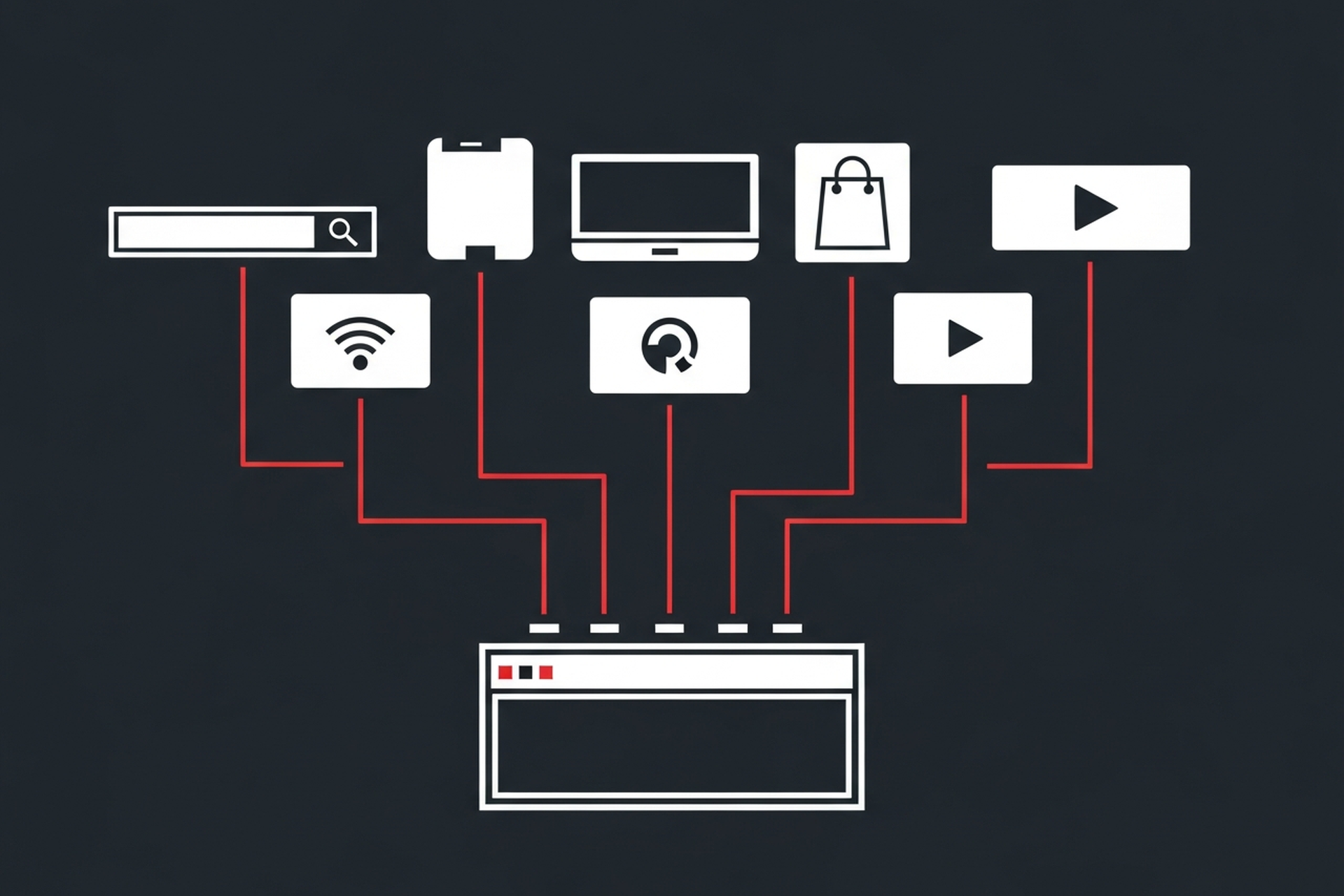
PPC advertising services is a broad term. It gets used to describe everything from running a single Google Search campaign to managing multi-platform paid media programs across five different ad networks. Before you can meaningfully compare providers or evaluate what you're paying for, you need to understand what actually falls under the category and what the different service configurations look like in practice.
This post covers the platform landscape, the service types, what each configuration includes, and the metrics that actually matter when you're evaluating performance.
Pay-per-click advertising means you pay each time someone clicks your ad. But the platforms, formats, and targeting mechanisms vary substantially depending on where those ads run.
When someone offers PPC advertising services, they're typically referring to one or more of the following:
Google Search Ads. The core of most PPC programs. Text ads that appear when users search specific keywords. Targeting is intent-driven: your ad appears when someone actively searches for what you sell. Google Search is the highest-intent paid channel available for most product and service categories.
Google Shopping. Product-based ads that show images, prices, and store names directly in search results. Shopping campaigns are managed through a product feed linked to Google Merchant Center. Essential for ecommerce businesses; not relevant for service companies. Understanding how Google Ads work across both Search and Shopping is a prerequisite for managing either well.
Performance Max. Google's campaign type that serves ads across Search, Shopping, Display, YouTube, Gmail, and Maps from a single campaign. Google's automation controls placement and bidding. Performance Max campaigns require quality creative assets and strong conversion tracking to perform. Accounts with thin data or poor creative rarely see strong results from this format.
Microsoft Advertising. Bing, Yahoo, and DuckDuckGo search ad placements. Smaller audience than Google, but often lower CPCs and an older, higher-income demographic skew that matters in specific verticals. Many providers either exclude Microsoft entirely or treat it as an add-on. If your audience skews 35+, it's worth including.
LinkedIn Ads. The primary paid channel for B2B companies targeting by job title, company, seniority, or industry. CPCs are significantly higher than Google Search, but the targeting precision for B2B audiences is unmatched. LinkedIn advertising includes sponsored content, message ads, dynamic ads, and text ads, each suited to different funnel stages.
Amazon Ads. Relevant only if you sell products on Amazon. Amazon Sponsored Products are cost-per-click ads that promote individual listings inside Amazon search results. The mechanics differ from Google: bidding is keyword-based, but the "quality score" equivalent factors in conversion rate, sales velocity, and review count. Amazon advertising is a specialty that most Google-focused agencies don't have genuine depth in.
Each of these platforms requires different expertise. An agency that's strong on Google Search may have little actual experience with LinkedIn or Amazon. When you're evaluating PPC advertising services, the first question is which platforms are included and whether the provider has verifiable experience on each.
The term "PPC management" can describe vastly different service configurations. Here's how service scope typically breaks down:
The provider develops the account architecture, campaign structure, keyword strategy, bidding approach, and audience targeting plan. Execution is either handled in-house or by a separate team. This is uncommon for smaller accounts, but larger organizations sometimes hire strategic consultants to audit and rebuild their paid media strategy without transferring day-to-day management.
The most common engagement model. The provider handles everything: account setup or restructuring, campaign build-out, keyword selection, ad copywriting, bid management, audience targeting, landing page recommendations, and monthly reporting. Ongoing management includes monitoring performance, adjusting bids and budgets, testing new ad variations, managing negative keyword lists, and making structural changes as campaigns scale.
This is the default service model most businesses are buying when they hire a PPC management company.
Includes everything in full management plus paid social creative: static images, video scripts, ad design, or motion graphics. Most relevant for LinkedIn, Meta, and YouTube campaigns where creative quality drives performance more than targeting precision. For Google Search, creative usually means ad copy, which most management-only engagements include. For display and social, creative is often a separate workstream with separate pricing.
A one-time engagement where the provider audits an existing account, identifies structural problems, and rebuilds campaigns. Accounts that have been poorly managed for years often have significant waste built in: redundant keyword match types, missing negative keywords, poorly structured ad groups, and bidding strategies misaligned with actual business goals. An audit-and-rebuild is appropriate when you have an active account with budget but suspect (or know) that performance has been poor.
The provider helps your internal team improve their own management capabilities. This includes account reviews, keyword strategy sessions, and coaching on bidding and structure. Common in companies that have an internal marketing team but lack deep PPC expertise.
Before diving into how to evaluate providers, it's worth understanding the category landscape. A paid search agency is different from a large full-service digital agency that offers PPC as one of many services. The former typically has deeper paid-search specialization; the latter may have broader channel coverage but less technical depth.
Similarly, B2B PPC agencies operate differently from ecommerce-focused providers. B2B campaigns optimize toward pipeline and revenue, require integration with CRM systems, and involve significantly longer measurement cycles. SaaS PPC agencies have their own pattern: typically combining Google Search, LinkedIn Ads, and sometimes retargeting, with optimization toward trial signups or demo requests rather than direct purchase.
When comparing providers, here's what actually differentiates them:
Platform coverage vs. depth. Ask which platforms the provider actively manages and how many of their current accounts run on each. A provider claiming expertise across six platforms who has three active LinkedIn accounts is not a LinkedIn expert.
Account structure approach. How does the provider organize campaigns: by match type, by intent tier, by product line? Strong PPC practitioners have a coherent structural philosophy and can explain the reasoning behind it.
Bidding strategy. Manual bidding, target CPA, target ROAS, or Smart Bidding via Google's automated systems. Each has appropriate use cases, and a provider who defaults to automated bidding on every account without explaining why is using a shortcut, not a strategy.
Reporting and attribution. What gets reported, how often, and how it connects to business outcomes. Clicks and impressions are not business outcomes. Revenue, pipeline, cost per acquisition, and return on ad spend are. Ask to see an example of how the provider reports performance to a current client.
Integrated channel approach. Some buyers want PPC advertising services alongside SEO. If that's you, see our overview of SEO and PPC services combined for what integrated programs typically look like and where the two channels complement each other.
The metrics a provider focuses on tell you a lot about how they operate. Here's what's worth tracking versus what often gets reported in lieu of real results:
Click-through rate (CTR). A useful diagnostic metric. Low CTR on search ads usually signals a relevance problem: your ad isn't compelling enough for the query triggering it. But CTR is not a business outcome metric. High CTR with poor conversion rates means you're driving unqualified traffic.
Conversion rate. The percentage of clicks that convert into a desired action (form fill, purchase, call, trial signup). This measures the combination of targeting quality and landing page effectiveness. Improving conversion rate often requires landing page work, not just ad changes.
Cost per acquisition (CPA). What you pay, on average, for each conversion. CPA is meaningful only if your conversion event is meaningful. If you're optimizing toward form fills but your sales team qualifies out 80% of those leads, CPA is measuring the wrong thing.
Return on ad spend (ROAS). Revenue generated per dollar spent on ads. The most direct performance metric for ecommerce accounts where purchase value is trackable. Requires solid conversion tracking tied to actual revenue, not just purchase events without value data.
Cost per qualified lead (CPQL). More useful than CPA for B2B companies. Requires passing lead quality data from your CRM back to the advertising platform, which many providers don't set up. Providers who optimize toward CPQL rather than raw lead volume are typically running more sophisticated programs.
Impression share. The percentage of eligible impressions your ads are actually showing for. Low impression share can indicate a budget constraint, a Quality Score issue, or a bid that's too low for your target keywords. This is a diagnostic metric, not a success metric.
Attribution model. How credit gets assigned across touchpoints matters as much as any individual metric. Last-click attribution tends to over-credit bottom-funnel keywords and under-credit brand awareness activity. If you're running LinkedIn at the top of the funnel and Google Search at the bottom, last-click will make Search look better and LinkedIn look worse than either deserves.
A few questions that separate providers worth evaluating from those worth skipping:
The answers reveal whether a provider is running the same playbook for every account or building programs specific to how your business actually works.
If you're looking for a starting point on provider selection, the PPC agency overview covers the selection process in more detail. EmberTribe works with businesses across Google Ads, Microsoft Advertising, and LinkedIn, building paid media programs tied to pipeline and revenue rather than vanity metrics. Reach out if you want a direct conversation about what your specific situation warrants.

Most businesses shopping for paid search help are really shopping for someone to run their Google Ads account. They want cleaner campaigns, better Quality Scores, lower cost-per-click. Those are reasonable things to want. But they describe execution, not strategy.
A paid search marketing agency approaches the channel differently. It treats search advertising as a marketing discipline, one with implications for how you position your brand, what content you create, where you focus sales conversations, and how you measure success across every channel you run. The distinction sounds subtle. In practice, it changes nearly everything about what you get from the engagement.
Paid search is unique among digital channels because it captures intent at the moment it forms. When someone types "enterprise document management software" or "emergency HVAC repair near me," they are telling you exactly what problem they have, how urgently they have it, and roughly where they are in a buying decision.
A pure execution shop uses that signal to win auctions. A paid search marketing agency uses it to understand markets.
The search queries flowing through an account represent one of the most reliable demand datasets available to any marketing team. Which problems are people trying to solve? What language do they use to describe them? Are searches for your core category growing or contracting? Are competitor brand terms spiking in ways that suggest a pricing change or a product launch on their end?
These questions go well beyond bid management. The answers inform content strategy, landing page messaging, sales enablement, and even product positioning. An agency that reads search data as marketing intelligence, not just auction input, will surface insights that reshape how you think about your market, not just your campaigns.
This is where the gap between an execution shop and a true paid search marketing agency becomes most visible. Consider a few scenarios.
Content and SEO: The query-level data in a mature paid search account is a direct window into buyer language. If paid search is converting on "automated accounts payable for mid-market companies" but your blog and organic pages are all optimized around "AP automation software," there's a language mismatch that's hurting SEO reach and content relevance. A strategic agency flags that gap. An execution shop never sees it as their problem. SEO and PPC working together from a shared data pool consistently outperforms either channel running independently.
Sales enablement: High-converting search queries often reveal objections. "Is [competitor] better than [your product]" and "alternatives to [incumbent vendor]" tell you what deals are competitive and what doubts buyers carry into sales conversations. A paid search marketing agency shares this language with sales teams so they can address objections earlier in the process.
Brand strategy: Seasonal shifts in search volume for your category, or sudden spikes in informational queries, often signal a market education moment. A strategic agency identifies these patterns and recommends content or PR investment to capture the wave, rather than simply watching the auction dynamics change.
Campaign coordination across channels: When a prospect clicks a paid search ad, bounces, and later sees a retargeting display ad, the message in that display ad should reflect what the original search intent was. Agencies that think across channels design these handoffs intentionally. Agencies focused only on search don't.
When you interview a paid search marketing agency, the tactical questions are easy to ask: Which Smart Bidding strategies do you prefer for lead generation? How do you handle conversion tracking across long sales cycles? What's your approach to Performance Max?
Those questions have answers that distinguish experienced operators from novices. But they don't tell you whether the agency thinks strategically. For that, you need a different line of questioning.
Ask: "How does search data inform what you recommend outside the account?" An execution shop will pause at this question because their mandate ends at the account boundary. A strategic agency will have concrete examples: keyword gaps that became content briefs, query language that reshaped landing page copy, intent shifts that triggered a campaign pivot before performance dipped.
Ask: "How do you define success beyond ROAS?" Return on ad spend is a useful metric, but it's also incomplete. Looking beyond ROAS means understanding how paid search contributes to pipeline velocity, average deal size, and brand category share. Agencies that can only talk in ROAS terms are optimizing a dashboard, not a business.
Ask: "How do you structure campaigns to generate learning, not just conversions?" Strategic agencies design account structures that segment intent signals cleanly, so they can read market behavior from the data. That means thoughtful match type strategies, meaningful negative keyword taxonomy, and campaign segmentation that reflects how buyers actually move through a purchase.
Ask about their team structure. Does a strategist review the account alongside the campaign manager? Is there someone thinking about messaging and positioning, or just someone adjusting bids? The answer tells you what kind of thinking the agency has institutionalized.
For a more detailed guide to agency selection criteria, see our paid search agency selection guide and our Google Ads agency overview.
The mechanics of a well-run paid search engagement in 2026 look different from five years ago, partly because Google's automation has absorbed much of the manual bidding work that once defined the category.
Smart Bidding and automated campaign types handle real-time bid adjustments better than any human can at scale. Google Partner certification has become a baseline indicator of technical competence, not a differentiator. Performance Max has consolidated channel coverage within a single campaign type. The practical effect is that agencies competing purely on execution skill are increasingly competing on a commoditizing skill set. The agencies that remain genuinely valuable are the ones that have shifted their emphasis toward strategy, audience design, and cross-channel coordination.
In practice, a modern engagement at a strategic paid search marketing agency tends to include:
Discovery and positioning work. Before campaigns launch or restructure, a strategic agency audits the existing account for intent signal patterns, benchmarks query share against category volume, and aligns campaign structure to real buying stages. This is not just a technical audit. It's a marketing exercise.
Audience architecture alongside keyword strategy. B2B paid search in particular has shifted toward audience layering, where first-party CRM data, in-market audiences, and remarketing pools work alongside keyword targeting to sharpen relevance. Strategic agencies design these layers intentionally and update them as the account generates data.
Integrated reporting that connects search to revenue. Impression share, click-through rate, and conversion volume are campaign metrics. Pipeline contribution, cost per qualified lead, and influenced revenue are business metrics. A strategic agency builds reporting that connects the two, so the conversation with your leadership team is about business outcomes, not platform performance.
Regular strategy reviews, not just optimization updates. Execution-focused agencies send monthly reports showing what changed. Strategic agencies bring a point of view: here's what the data is telling us about the market, here's what we think you should do about it, here's what we want to test next quarter. The cadence of strategic review is what separates an agency partner from a vendor.
For a broader picture of what to expect from PPC management companies, the evaluation framework above applies across the category. The same strategic questions surface the same quality gaps.
When you hire a paid search marketing agency rather than a pure execution shop, you're making a specific bet: that the strategic value of reading search as a marketing signal is worth more to your business than marginal improvement in cost-per-click.
For most businesses running more than a few thousand dollars a month in paid search, that bet pays. The intent data flowing through a mature account is genuinely valuable. Most companies leave it mostly unread because their agency only looks at it through the lens of auction performance.
Understanding how Google Ads work at a mechanical level matters. But the teams that extract the most value from the channel are the ones who treat every search query as a question their market is asking, and who build their marketing strategy around answering those questions better than anyone else.
EmberTribe works with B2B and DTC brands as a paid search marketing agency focused on strategic account management and cross-channel coordination. If your current agency is optimizing your campaigns but not informing the rest of your marketing, that's worth a conversation.

Choosing a paid search agency is one of the higher-stakes vendor decisions a growth-stage brand can make. Done right, search campaigns become a predictable, scalable revenue channel. Done wrong, you spend months of budget feeding an underperforming account while the agency points to impressions and click-through rates as evidence of progress.
This guide covers what paid search agencies actually do, how they differ from generalist digital marketing firms, what you should pay, and the questions that surface the real operators from the resellers.
A paid search agency manages advertising on search engines -- primarily Google Ads and Microsoft Advertising -- with the goal of capturing purchase-ready demand. When someone searches for a product or service you offer, search ads position your brand at the top of those results before organic listings appear.
The scope of work goes well beyond buying clicks. A strong paid search agency handles:
Campaign architecture. Structuring campaigns, ad groups, and keyword lists to match how your buyers search. This includes match type strategy, negative keyword management, and query mining to find new profitable terms.
Shopping and Performance Max. For ecommerce brands, Performance Max campaigns blend Search, Shopping, YouTube, Display, and Discover into a single AI-managed surface. A search specialist builds the asset library, conversion structure, and audience signals the model needs to allocate budget well.
Bid management. Smart Bidding strategies like Target ROAS and Target CPA automate in-auction bid adjustments based on hundreds of contextual signals. The agency's job is to set the right conversion definitions, value rules, and budget guardrails -- not just flip the strategy toggle and wait.
Ad copy and creative. Writing and testing headlines, descriptions, and extensions. With responsive search ads accepting up to 15 headlines that Google rotates and tests automatically, copy velocity matters. Weak agencies set it and forget it.
Conversion tracking. Defining what a conversion is, installing the tracking correctly, and reconciling platform-reported numbers with your actual CRM or revenue data. This is where most agencies cut corners.
Reporting and diagnosis. When performance dips, a qualified agency can isolate whether the cause is auction inflation, creative fatigue, landing page drop-off, feed errors, or attribution gaps. Generalists default to "the algorithm changed."
If you want a broader picture of how search advertising fits into a full pay-per-click program, PPC management companies often cover the same core services with different scopes depending on the firm.
A general digital marketing agency handles a wide range, including SEO, social, email, content, and sometimes paid ads as one of many service lines. That breadth is useful for brands that need a single vendor to manage multiple channels. But breadth usually means shallower execution on any single channel.
Paid search is technically specific. Google Ads changes more in 18 months than most channels change in five years. Performance Max, Smart Bidding, and AI Max for Search have rewritten the operating model in the last two years alone. An agency where paid search is one of eight service lines is unlikely to have a team tracking those changes closely enough to stay ahead of them.
Paid search vs. paid social is a separate distinction worth understanding. Paid social (Meta, TikTok, LinkedIn) runs on interest and behavior targeting -- you reach people who match a profile whether or not they are actively looking. Paid search captures people at the moment of expressed intent -- they typed a query. The skill sets overlap but the mechanics differ enough that specialists in each tend to outperform generalists in both. The right combination of SEO and PPC services can drive compounding returns because search intent data from paid campaigns informs organic strategy and vice versa.
A paid search specialist makes sense when:
A generalist agency can work earlier in the journey, when you are testing multiple channels simultaneously and do not yet have enough search spend to justify dedicated specialization. As spend scales and search becomes a primary channel, the case for a specialist grows.
Google Partner status requires agencies to maintain certified team members, meet minimum managed spend thresholds, and demonstrate portfolio performance. Premier Partner status goes further and is reserved for the top agencies by Google's metrics.
Partner status is a baseline check, not a guarantee of quality. It confirms the agency meets Google's minimums. It does not confirm they are the right fit for your category or budget level. Use it as a filter, not a decision.
Ask specifically: how do you set up conversion tracking for a new client, and how do you validate it? Strong agencies will talk about confirming firing conditions, deduplication, and reconciling platform numbers with GA4 or CRM data. Weak ones will mention installing a tag and moving on.
You should have direct access to your Google Ads account at all times. Reports should pull from raw account data, not a proprietary dashboard that abstracts the numbers. Ask to see a sample report before you sign -- the format reveals how an agency thinks about performance.
Non-negotiable: you own the account. The Google Ads account should be created under your own Google login or MCC, with the agency granted admin access. If the agency insists on owning the account, walk away. Agencies that hold account ownership hold your data, your history, and your leverage hostage if the relationship ends.
For more on what to ask and how different agency models structure their work, the Google Ads agency guide covers the evaluation process in depth.
Three pricing models are standard across the industry:
Percentage of spend. The agency charges 10-20% of your total monthly ad budget. This model scales with your investment and is common for accounts spending $10,000 per month or more. At higher spend levels, the percentage often steps down: 20% below $50K, 15% at $50-150K, 10% above $150K.
Flat retainer. A fixed monthly fee regardless of spend, typically $1,500-$10,000 per month for mid-market accounts. This model is cleaner for budget planning and avoids the conflict of interest where the agency benefits from inflating your spend. It is common for accounts with stable, predictable budgets.
Hybrid. A base retainer plus a percentage of spend above a threshold. For example, $2,000 per month plus 12% of spend. This structure aligns agency incentives with growth without exposing the client to unlimited fee scaling. Most established agencies settle here as accounts mature.
According to PPC management pricing research, mid-market accounts spending $10,000-$50,000 per month typically pay $1,500-$5,000 in management fees. Enterprise accounts above $100,000 in monthly spend commonly see fees of $8,000-$15,000 or more. PPC agency pricing benchmarks show that the percentage model remains most common at smaller budgets, while flat or hybrid structures dominate at scale.
Setup fees are normal. Expect $500-$2,500 for onboarding depending on account complexity.
If a candidate agency cannot give concrete, specific answers to the tracking and diagnosis questions, that is your signal to keep looking. Understanding how Google Ads work at a mechanical level helps you assess whether the agency's answers reflect real expertise or rehearsed talking points.
EmberTribe works with DTC brands and growth-stage companies on paid search strategy, and has found that the biggest performance gaps at new client onboards are almost always measurement problems: wrong conversion definitions, double-counted events, or platform-reported ROAS that has no relationship to back-end revenue.
The paid search landscape has more capable independent specialists and boutique agencies than it did five years ago, which makes the market both more competitive and harder to navigate. The firms worth working with tend to have strong opinions about measurement, take account ownership seriously, and can explain bid strategy decisions in plain language without hiding behind "the algorithm."
Use the questions and red flags above to structure your evaluation. A weak agency looks credible in a pitch deck. The gap shows up in the account.
For a broader look at how paid search fits into a multi-channel program, the PPC agency guide covers the full spectrum of pay-per-click services across Google, Microsoft, and retail media.

Choosing a b2b ppc agency is a fundamentally different decision than hiring a general paid media shop. B2B buying cycles are longer, decision-making involves multiple stakeholders, and the metrics that matter -- pipeline quality, cost per qualified lead, CRM-attributed revenue -- require a specialist skill set that most generalist agencies don't carry.
This guide covers what B2B PPC agencies actually do, how they differ from the alternatives, what you should pay, and the questions that separate genuine B2B operators from agencies that happen to run B2B accounts.
B2C paid search is largely a direct-response channel. Someone searches, clicks, buys. The attribution is clean, the sales cycle is short, and success correlates tightly with ROAS.
B2B paid search works differently at every layer.
Longer sales cycles. The average B2B sales cycle runs four to six months, and in enterprise SaaS it can exceed a year. That means a click you pay for today might not show up as closed revenue for two or three quarters. Agencies that optimize purely on immediate conversion metrics -- form fills, demo requests -- often drive the wrong leads at scale.
Multiple decision-makers. A typical B2B software purchase involves five to seven stakeholders. The person clicking your ad may not be the budget holder, the technical evaluator, or the economic buyer. Campaigns need to speak to different personas at different funnel stages rather than hammering a single offer.
Higher CPCs, higher deal values. B2B keywords are expensive. Average CPCs in competitive B2B categories -- software, professional services, financial services -- routinely run $8-$15 or more per click. In some niches they exceed $50. The unit economics only work if your average deal size and retention justify that acquisition cost. A B2B PPC agency that understands your LTV-to-CAC ratio will structure campaigns around profit, not volume.
Lead quality over lead volume. A B2C team optimizing for conversions at the lowest CPL will flood your CRM with unqualified contacts. B2B success means generating SQLs and pipeline, not raw form submissions. The agency needs to understand -- and ideally integrate with -- your lead scoring model and sales process.
Account-based targeting. The best B2B campaigns go beyond keyword intent and layer in firmographic signals: company size, industry, job title, revenue band. LinkedIn's professional targeting tools let you target by seniority, function, and employer directly. Google campaigns can be reinforced with Customer Match lists and job title and intent targeting to narrow reach toward actual buyers.
A qualified B2B paid search partner covers more than buying keywords. The scope typically includes:
Google Search campaigns. Capturing high-intent demand from buyers actively researching solutions. This includes keyword strategy, match type management, negative keyword pruning, query mining, and ad copy testing -- all calibrated to B2B intent signals rather than consumer purchase behavior. For a broader look at what this engagement covers, see our guide on paid search agency partnerships.
LinkedIn Ads. For B2B, LinkedIn often complements or outperforms Google for upper-funnel awareness and retargeting. Sponsored Content, Message Ads, and Dynamic Ads let you reach decision-makers by company, seniority, and function -- targeting that doesn't exist on the Google network.
Retargeting and nurture sequences. B2B buyers rarely convert on the first visit. A strong agency builds retargeting audiences segmented by page visited, content consumed, and funnel stage, then serves different creative to prospects who looked at your pricing page versus your blog. This keeps your brand visible across a months-long research cycle.
Conversion tracking and attribution. B2B attribution is hard. A buyer who clicks a Google ad in January, downloads a whitepaper through LinkedIn in March, and requests a demo in April represents three touchpoints. The agency needs to configure Google's conversion tracking with appropriate attribution windows and connect ad platform data to your CRM so you know which campaigns actually produce revenue -- not just leads.
Bid strategy and smart automation. Platforms like Google Ads offer automated bid strategies -- Target CPA, Target ROAS, Maximize Conversions -- that use machine learning to optimize bids at auction time. But these systems require sufficient conversion volume and correctly configured goals to work. See Google's Smart Bidding documentation for how the signals work. A B2B agency knows when to trust automation and when to override it.
Lead quality feedback loops. The best setups pipe CRM disposition data (qualified vs. disqualified, deal size, close rate by source) back into the ad platforms as offline conversions. This trains bidding algorithms on revenue signals rather than raw lead counts -- a major performance difference over time.
A generalist PPC management company can run B2B accounts competently at the tactical level -- keywords, bids, ad copy. The gap shows up in strategy and measurement.
Hire a B2B specialist when:
A generalist may be fine when you're early-stage, testing basic demand capture, or running a relatively transactional B2B offer with short sales cycles and a clear, direct conversion.
Demonstrated B2B portfolio. Ask for case studies from clients with similar deal sizes, sales cycles, and buyer personas. An agency with strong ecommerce case studies and one B2B client isn't a B2B agency.
CRM integration experience. The agency should have direct experience connecting Google Ads and LinkedIn to Salesforce, HubSpot, or your CRM of choice. If they talk about leads but can't explain offline conversion imports, move on.
Lead quality reporting. Go beyond CTR and CPL. Ask what their standard reporting includes: SQL conversion rates, pipeline by campaign, cost per opportunity, CAC by channel. If they can't show you pipeline data from past clients, they haven't built it.
Conversion window understanding. An agency that sets a 30-day conversion window for a product with a six-month sales cycle is flying blind. Confirm they configure attribution windows to match your actual sales process.
B2B-specific keyword strategy. B2B keywords span informational ("what is account-based marketing"), comparative ("HubSpot vs. Salesforce"), and transactional ("marketing automation software pricing") intent. A strong agency builds campaigns around this intent progression, not just the highest-volume terms.
Alignment with your demand gen team. B2B paid search doesn't operate in isolation. The best agencies integrate with your content, SDR, and ops teams to ensure landing pages, lead routing, and follow-up sequences are built to convert the traffic they're generating. This connects directly to how you measure customer acquisition cost across channels.
Pricing structures vary, but the most common models for B2B accounts:
Percentage of ad spend. Typically 10-20% of monthly ad spend with a minimum retainer floor. Common for agencies managing larger accounts where spend scales. At $20,000/month in ad spend, expect $2,000-$4,000 in management fees.
Flat monthly retainer. Most small-to-midsize B2B engagements run $1,500-$5,000/month for management fees, independent of ad spend. Accounts with more complexity -- multiple platforms, ABM targeting, CRM integration -- sit at the higher end or above it.
Performance tiers. Some B2B agencies structure fees around pipeline or revenue milestones. These can align incentives well but require clean attribution infrastructure on both sides.
Expect to budget $2,500-$6,000/month in management fees for a competent B2B specialist handling Google Ads and LinkedIn with proper attribution setup. Boutique or enterprise-focused agencies with deep industry experience will price above that range.
Reporting that leads with impressions and clicks. These are operational metrics. A B2B agency should lead with pipeline and CPL, not vanity numbers.
No access to your own accounts. You should own your Google Ads and LinkedIn Campaign Manager accounts directly. Agencies that hold account ownership are a structural risk -- if you part ways, you lose your data and history.
Guaranteed results. No legitimate agency guarantees specific lead volumes or CPLs before understanding your market, budget, and conversion infrastructure. Guarantees are a sales tactic, not a service commitment.
Optimizing for form fills, full stop. If the agency's KPI is cost per form submission without any connection to lead quality or pipeline, they will generate cheap leads that your sales team won't close.
Lack of B2B case studies. Ecommerce results don't transfer to B2B. Ask specifically for clients with longer sales cycles, higher AOVs, or multi-stakeholder buying processes.
One-size-fits-all reporting. B2B measurement requires custom attribution windows, CRM integration, and pipeline-stage reporting. Agencies using templated dashboards without CRM data are measuring the wrong things.
The best b2b ppc agency for your business is the one that treats pipeline as the primary metric from day one -- not the agency that promises the lowest CPL or the most leads per month.
Vet them on attribution rigor, B2B portfolio depth, and their ability to speak your sales team's language. Those three filters eliminate most of the field. EmberTribe works with growth-stage B2B companies to build paid search programs built around qualified pipeline, not vanity metrics.
For more on how paid search fits into a broader demand generation strategy, see our guide on B2B lead generation and how paid channels integrate with SEO and content.

The debate between SEO and PPC has been running for over a decade, and it largely misses the point. The real question isn't which channel to choose — it's how to sequence and combine them to maximize results across different time horizons.
Most growth-stage companies either go all-in on paid search (fast traffic, high cost, zero long-term equity) or commit exclusively to SEO (slow ramp, compounding returns, poor short-term results). The businesses that outperform their competitors in search understand that SEO and PPC services serve different functions in the same growth system, and that they're more effective together than either is alone.
This guide breaks down when each approach works, when to combine them, and what a coordinated SEO and PPC strategy actually produces.
Before comparing them, it's worth being precise about what each channel does.
SEO (Search Engine Optimization) improves your organic search rankings through content quality, technical site health, and authority signals (backlinks). It costs primarily in time and labor, delivers no results for months, and then compounds as rankings accumulate and traffic grows without additional spend.
PPC (Pay-Per-Click) places paid ads at the top of search results through Google Ads or Microsoft Advertising. You pay each time someone clicks. Results are immediate and highly controllable, but the moment you stop spending, the traffic stops completely. There's no residual asset.
The core trade-off: PPC buys attention now; SEO builds ownership of attention over time.
PPC services are the right primary investment when:
You need immediate traffic or leads. A new product launch, a seasonal campaign, or a business that simply can't wait 6–12 months for organic results. Google Ads can deliver first-page visibility the same day a campaign goes live.
You're testing messaging and offers. PPC is the fastest feedback loop in digital marketing. You can test five different value propositions, landing page variants, and calls to action against real buyer behavior within weeks — data that would take months to accumulate organically.
You're targeting high-intent, bottom-of-funnel searches. Terms like "buy [product] online," "emergency [service] near me," or "[software] pricing" signal immediate purchase intent. Capturing these through paid ads while your organic rankings develop is a sound strategy.
The competitive landscape makes fast organic gains unlikely. If you're entering a category dominated by established brands with years of SEO investment, the gap to organic Page 1 may be too large to close quickly. PPC lets you compete in the meantime.
SEO services deliver the best returns when:
You're playing a long-term game. Research consistently shows that beyond the 12-month mark, organic traffic typically costs significantly less per lead than paid traffic — because you've already made the investment and rankings continue generating traffic without additional spend.
Your content can create demand, not just capture it. Some buying journeys start with educational questions, not product searches. A potential customer searching "how do I reduce customer churn" is earlier in the funnel than one searching "best customer success software," but they're still a valuable audience. SEO content targeting these earlier-stage queries builds brand awareness and trust before the buying decision happens.
Your category has high sustained search volume. Industries where buyers consistently search for the same terms — ecommerce, SaaS, professional services — have the stable search demand that SEO compounds best against.
For a deeper look at organic search strategy for online retailers, our ecommerce SEO guide covers the full framework.
The most significant insight from running both channels is what happens when you appear in both paid and organic positions on the same keywords.
Aligning SEO and PPC on the same queries means your brand occupies more real estate on the SERP — and the combined presence is greater than the sum of its parts. Dominant presence in both organic and paid results creates authority signals that increase trust, reduces the share of clicks going to competitors, and compounds the value of ranking in either channel.
One of the most underused benefits of running SEO and PPC services simultaneously is the intelligence flow between them.
PPC campaigns generate granular conversion data at the keyword level within days. You can see exactly which search terms are generating form submissions, calls, or purchases — and at what cost. This data is directly actionable for SEO: the highest-converting PPC keywords are the ones most worth pursuing in organic, because you've already validated they convert.
Running both channels simultaneously creates a compounding data advantage. PPC validates which organic terms to pursue. Organic data shows which content topics resonate with your audience, which informs better PPC ad copy. Each channel improves the other.
The right balance between SEO and PPC investment changes over time:
Early stage (0–6 months): PPC-heavy. Get traffic and conversion data quickly. Use that data to identify which organic content to build. Begin foundational SEO work in parallel.
Growth stage (6–18 months): Balanced. Continue PPC for high-intent terms while organic rankings start delivering for mid-funnel content terms. Shift budget from PPC toward SEO on any terms where organic has achieved Page 1 ranking.
Mature stage (18+ months): SEO-heavy with PPC as amplifier. Use paid search for competitive terms where organic ranking is difficult, seasonal campaigns, and new offer launches. Let organic carry the bulk of consistent traffic at lower cost.
Beyond budget allocation, here are the specific ways coordinated SEO and PPC services produce better results than either channel managed in isolation:
Keyword intelligence sharing. PPC keyword reports identify converting terms for SEO targeting. Organic ranking data identifies terms worth bidding on for brand protection.
Landing page testing. PPC campaigns can A/B test landing pages at a pace SEO can't match. High-converting PPC landing pages become templates for organic content pages.
Retargeting organic visitors. Users who found you through organic search can be retargeted with paid ads — bringing them back into your funnel with a more specific offer than their original informational search.
Coverage on competitor terms. SEO can't rank for a competitor's brand name organically. PPC can run ads on competitor keywords, capturing buyers who are actively evaluating alternatives.
Seasonal and launch campaigns. Even brands with strong organic rankings benefit from PPC for product launches, limited-time offers, or seasonal spikes where you need to reach people who aren't already in your organic audience.
When looking for agencies or consultants to manage these services, a few key questions separate good providers from mediocre ones:
For growth-stage ecommerce brands, our post on PPC management for ecommerce covers how to evaluate paid search partners for your specific context.
When SEO and PPC run in parallel, the metrics that matter most are cross-channel:
The goal of combined SEO and PPC services isn't to reduce one channel while growing the other — it's to grow total search-driven revenue while improving efficiency over time as organic compounding reduces dependence on paid spend.
The brands winning in search in 2026 aren't choosing between SEO and PPC — they're sequencing them intelligently and using each to improve the other.
PPC delivers immediate results and conversion data. SEO builds compounding organic equity. Run together, they create SERP dominance that neither channel achieves alone, plus an intelligence-sharing feedback loop that makes both more efficient.
The right balance depends on your stage, timeline, and available budget. But in most cases, the answer to "should we do SEO or PPC?" is: start with both, calibrate the ratio over time, and let the data from each channel drive the strategy in the other.

Hiring the wrong paid search help is expensive — not just in fees, but in wasted ad spend. If you're evaluating whether to bring in a search engine marketing consultant, you've probably already noticed that the market is noisy: freelancers, boutique agencies, and generalist consultants all claim to do the same work. They don't.
This guide breaks down what a search engine marketing consultant actually does, how they differ from an agency, what realistic costs look like, and the specific qualities that separate effective consultants from expensive ones.
A search engine marketing (SEM) consultant is a specialist who manages, optimizes, and strategizes paid search programs — primarily Google Ads and Microsoft Ads — for companies that want measurable returns from their ad spend.
Unlike a general digital marketing consultant who operates at a broad strategic level, an SEM consultant goes deep on a single channel. Their core responsibilities typically include:
Some SEM consultants also handle SEO, but the best ones specialize. If you need both, you'll often get better results hiring specialists for each or working with an integrated growth agency.
This is the most common question brands ask when they're scaling their paid search. Here's an honest breakdown.
Consultants tend to be more agile, more affordable, and more personally invested in results. The tradeoff is capacity: a solo consultant has limits on how many accounts they can actively manage at quality.
The middle ground — boutique growth marketing agencies — often gives you the best of both worlds: specialist-level expertise with the team infrastructure to execute at scale.
Pricing varies significantly based on experience, scope, and engagement type. Current benchmarks:
Hourly rates: $75–$200/hour is the typical range for experienced SEM consultants. Junior consultants start around $50/hour; seasoned specialists with a strong track record bill $150–$250+.
Monthly retainers: For ongoing account management and optimization, expect $1,500–$5,000/month for small-to-mid-size accounts. Accounts with $50K+ in monthly ad spend often warrant $5,000–$10,000/month.
Project-based work: One-time audits typically run $500–$2,500 depending on account complexity. Full strategy buildouts and onboarding projects generally fall in the $2,000–$8,000 range.
In-house alternative: For comparison, a full-time paid search manager in the US costs $70,000–$110,000 in annual salary before benefits, tools, and management overhead. A consultant is almost always more cost-efficient until your account volume justifies a dedicated hire.
The credentials that matter aren't always the ones consultants lead with. Here's what to actually evaluate:
Ask for real examples — not case studies, not screenshots, but a live walkthrough of an account they've managed. You want to see how they think about structure, how they handle underperforming campaigns, and what questions they ask before making changes.
If a consultant can't tell you exactly how they'll verify your conversion tracking before touching your campaigns, walk away. Bad attribution is the source of most wasted ad spend, and it requires a methodical approach to fix.
Paid search isn't instant. New campaigns typically need 60–90 days to exit the learning phase and generate reliable data. Any consultant promising results in two weeks is either managing expectations poorly or setting you up for disappointment.
You should own your data. The consultant should be working in your Google Ads account (not a separate one they control), and reporting should be tied to metrics that connect to revenue — not just impressions or clicks.
Google Ads certification is a baseline, not a differentiator. More meaningful signals include: active management of at least 5–10 live accounts, direct experience in your industry vertical, and a track record of improving ROAS or CPA over a 6–12 month window.
At EmberTribe, we work with growth-stage DTC brands that need their paid search programs tied directly to revenue — not managed in isolation from their broader marketing system. That means SEM strategy built around conversion tracking, landing page performance, and audience segmentation that connects paid and organic channels together.
If you're evaluating whether paid search is underperforming or if you're starting from scratch, the first step is usually an account audit — diagnosing what's working, what's wasted, and where the clearest growth levers are.
The best SEM consultants are usually too busy to be actively promoting themselves. The most reliable sourcing paths:
Before hiring, run a paid interview: pay them for a 2-hour account audit. You'll learn more from that session than from any proposal or reference call.
A skilled search engine marketing consultant can deliver significant ROI — but only if the fit is right for your stage, scope, and goals. The consultant-vs-agency decision isn't about prestige; it's about matching the level of execution you need with someone who can actually deliver it. Vet on process, track record, and transparency. The right hire makes your ad spend dramatically more efficient; the wrong one costs you months and budget you won't easily recover.
For brands that want SEM embedded in a broader paid and organic growth system, exploring how paid search integrates with channels like ecommerce CRO and conversion optimization and ecommerce growth strategy often surfaces the fastest wins.


.svg)