
Most SaaS companies focus heavily on performance channels: paid search, retargeting, sales sequences. Those channels produce leads, but they produce leads from people who already knew to look. Brand building is how you get on the radar before the search happens. SaaS PR is one of the most underused levers in growth-stage marketing, and the companies that master it build durable competitive advantages that performance spend alone cannot replicate.
This post breaks down how to build SaaS brand awareness through PR, thought leadership, and content, with specific tactics you can act on rather than principles you already know.
The SaaS market has matured significantly. In most categories, a prospect can name three to five competitors before they ever book a demo. When buyers research solutions, they are not discovering your product from scratch. They are filtering a pre-formed list.
Brand building determines whether you make that list. According to research cited by Growfusely, buyers in 2026 are also increasingly influenced by AI-generated responses when forming that shortlist. Getting cited by AI assistants like ChatGPT and Perplexity now functions similarly to getting coverage in top-tier media: it validates your brand as a credible source in your category. The companies that earn consistent brand mentions across trusted publications, analyst reports, and high-authority sites are the ones AI tools surface in response queries.
There is also a pipeline effect that operates over a longer arc. PRLab notes that most SaaS companies see non-referral inquiry increases within two to three months of active PR campaigns, with revenue impact materializing between months three and six. Brand building is not slow, but it rewards consistency over bursts.
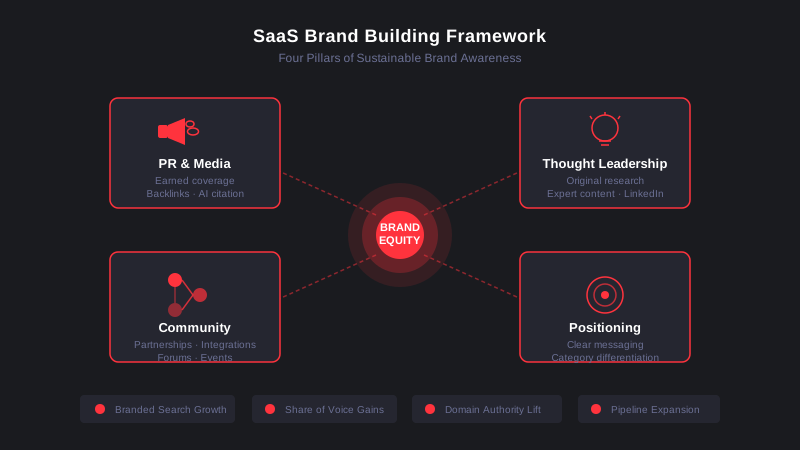
SaaS brand building is not a single tactic. It is a coordinated system across four channels: media coverage, thought leadership content, community presence, and strategic positioning. Each one reinforces the others.
Traditional PR means pitching journalists. Modern SaaS PR is broader: it includes digital coverage, backlinks, podcast appearances, analyst relations, and any earned placement that builds credibility at scale.
A strong SaaS PR program starts with a clear editorial angle. Journalists covering SaaS do not want to write about software features. They want to write about market trends, founder perspectives, funding rounds, customer outcomes, and proprietary data. The companies that land consistent coverage are the ones that give journalists something worth writing about.
Practical starting points:
The SEO value of earned media is significant on its own. A placement in a high-authority publication generates backlinks that compound over time, improving your domain authority and the ranking potential of every other page on your site. For growth-stage SaaS companies, that dual benefit of brand and SEO is one of the strongest ROI arguments for investing in PR.
Thought leadership is not blogging more. It is publishing perspectives that only your company is positioned to share, because of your data, your customer base, or your founders' specific expertise.
Research from the B2B Institute shows that B2B decision-makers are 48% more likely to do business with a company that produced thought leadership content they found valuable, and 54% more likely to purchase from them. Those numbers reflect a buyer behavior that SaaS marketers often underestimate: content builds trust before a prospect is ready to evaluate products, and that trust influences vendor selection when they finally are ready.
Effective SaaS thought leadership looks like:
For a deeper look at how content fits into SaaS growth, see our guide to content marketing as a full-funnel channel.
Brand awareness builds fastest in communities where your buyers already spend time. That means participating in industry communities, partnering with non-competing tools your customers use, and showing up at the events, forums, and Slack groups that matter in your category.
Integration partnerships are especially effective for early and mid-stage SaaS. If your product connects to tools your customers already trust, being listed in those tools' marketplaces puts your brand in front of buyers who are already qualified by context. Being featured by a larger partner also carries implicit endorsement.
Community presence compounds. A SaaS brand that is consistently visible in the forums, newsletters, and podcasts that serve its target market builds familiarity that makes every downstream touchpoint more effective. Cold outreach converts better, demo requests require less explanation, and sales cycles shorten because the brand has already done part of the work.
PR and content only work if the underlying brand positioning is clear. According to SaaS branding experts surveyed by Overpass Studio, the biggest branding priority for SaaS companies in 2026 is clarity: being instantly understood, not louder. When a prospect encounters your brand for the first time, the message needs to answer three questions immediately: what problem do you solve, who do you solve it for, and why are you the best answer to that problem.
Vague positioning is a brand building killer. Generic messages like "the all-in-one platform for teams" or "the smarter way to manage X" do not create memory. Specific positioning does. If your messaging cannot fit on a single note card and be understood by a cold reader in under ten seconds, your PR and content spend will underperform because no amount of coverage fixes a blurry brand.
Brand building has a reputation for being expensive and slow. Neither is necessarily true for SaaS companies that are strategic about it.
The highest-leverage early moves tend to be:
For companies building a more complete go-to-market system, these PR and brand tactics connect directly to the broader frameworks we cover in our growth strategy consulting content.
Brand awareness is measurable, though the metrics require a different lens than performance campaigns. The key signals to track:
For a full breakdown of how to connect brand metrics to growth KPIs, see our SaaS marketing metrics and KPIs guide.
The brands that win in SaaS are not always the ones with the best product. They are the ones that made it easiest for buyers to trust them before the buying process started. PR and brand building are how you do that at scale, starting with a clear position, finding the channels where your buyers pay attention, and publishing content worth citing. The compounding effect takes time, but it builds a moat that paid channels cannot replicate.
Most SaaS companies focus heavily on performance channels: paid search, retargeting, sales sequences. Those channels produce leads, but they produce leads from people who already knew to look. Brand building is how you get on the radar before the search happens. SaaS PR is one of the most underused levers in growth-stage marketing, and the companies that master it build durable competitive advantages that performance spend alone cannot replicate.
This post breaks down how to build SaaS brand awareness through PR, thought leadership, and content, with specific tactics you can act on rather than principles you already know.
The SaaS market has matured significantly. In most categories, a prospect can name three to five competitors before they ever book a demo. When buyers research solutions, they are not discovering your product from scratch. They are filtering a pre-formed list.
Brand building determines whether you make that list. According to research cited by Growfusely, buyers in 2026 are also increasingly influenced by AI-generated responses when forming that shortlist. Getting cited by AI assistants like ChatGPT and Perplexity now functions similarly to getting coverage in top-tier media: it validates your brand as a credible source in your category. The companies that earn consistent brand mentions across trusted publications, analyst reports, and high-authority sites are the ones AI tools surface in response queries.
There is also a pipeline effect that operates over a longer arc. PRLab notes that most SaaS companies see non-referral inquiry increases within two to three months of active PR campaigns, with revenue impact materializing between months three and six. Brand building is not slow, but it rewards consistency over bursts.
SaaS brand building is not a single tactic. It is a coordinated system across four channels: media coverage, thought leadership content, community presence, and strategic positioning. Each one reinforces the others.
Traditional PR means pitching journalists. Modern SaaS PR is broader: it includes digital coverage, backlinks, podcast appearances, analyst relations, and any earned placement that builds credibility at scale.
A strong SaaS PR program starts with a clear editorial angle. Journalists covering SaaS do not want to write about software features. They want to write about market trends, founder perspectives, funding rounds, customer outcomes, and proprietary data. The companies that land consistent coverage are the ones that give journalists something worth writing about.
Practical starting points:
The SEO value of earned media is significant on its own. A placement in a high-authority publication generates backlinks that compound over time, improving your domain authority and the ranking potential of every other page on your site. For growth-stage SaaS companies, that dual benefit of brand and SEO is one of the strongest ROI arguments for investing in PR.
Thought leadership is not blogging more. It is publishing perspectives that only your company is positioned to share, because of your data, your customer base, or your founders' specific expertise.
Research from the B2B Institute shows that B2B decision-makers are 48% more likely to do business with a company that produced thought leadership content they found valuable, and 54% more likely to purchase from them. Those numbers reflect a buyer behavior that SaaS marketers often underestimate: content builds trust before a prospect is ready to evaluate products, and that trust influences vendor selection when they finally are ready.
Effective SaaS thought leadership looks like:
For a deeper look at how content fits into SaaS growth, see our guide to content marketing as a full-funnel channel.
Brand awareness builds fastest in communities where your buyers already spend time. That means participating in industry communities, partnering with non-competing tools your customers use, and showing up at the events, forums, and Slack groups that matter in your category.
Integration partnerships are especially effective for early and mid-stage SaaS. If your product connects to tools your customers already trust, being listed in those tools' marketplaces puts your brand in front of buyers who are already qualified by context. Being featured by a larger partner also carries implicit endorsement.
Community presence compounds. A SaaS brand that is consistently visible in the forums, newsletters, and podcasts that serve its target market builds familiarity that makes every downstream touchpoint more effective. Cold outreach converts better, demo requests require less explanation, and sales cycles shorten because the brand has already done part of the work.
PR and content only work if the underlying brand positioning is clear. According to SaaS branding experts surveyed by Overpass Studio, the biggest branding priority for SaaS companies in 2026 is clarity: being instantly understood, not louder. When a prospect encounters your brand for the first time, the message needs to answer three questions immediately: what problem do you solve, who do you solve it for, and why are you the best answer to that problem.
Vague positioning is a brand building killer. Generic messages like "the all-in-one platform for teams" or "the smarter way to manage X" do not create memory. Specific positioning does. If your messaging cannot fit on a single note card and be understood by a cold reader in under ten seconds, your PR and content spend will underperform because no amount of coverage fixes a blurry brand.
Brand building has a reputation for being expensive and slow. Neither is necessarily true for SaaS companies that are strategic about it.
The highest-leverage early moves tend to be:
For companies building a more complete go-to-market system, these PR and brand tactics connect directly to the broader frameworks we cover in our growth strategy consulting content.
Brand awareness is measurable, though the metrics require a different lens than performance campaigns. The key signals to track:
For a full breakdown of how to connect brand metrics to growth KPIs, see our SaaS marketing metrics and KPIs guide.
The brands that win in SaaS are not always the ones with the best product. They are the ones that made it easiest for buyers to trust them before the buying process started. PR and brand building are how you do that at scale, starting with a clear position, finding the channels where your buyers pay attention, and publishing content worth citing. The compounding effect takes time, but it builds a moat that paid channels cannot replicate.

Most advertisers pour budget into Google Search and Display campaigns while overlooking one of the most targeted placements in the entire Google Ads ecosystem: Gmail. Google Sponsored Promotion (GSP) ads appear directly in a user's Gmail Promotions tab, formatted to look like a native email. When a user clicks the collapsed ad, it expands into a full-width creative that can include images, video, and a clear call to action.
The strategic advantage of Gmail ads is simple. Because you can target users based on the emails they receive, you can place your brand directly in front of people who are already engaged with your competitors or complementary products. You are not interrupting a random browsing session. You are reaching someone who has an active relationship with a company in your space and showing them a better alternative.
For brands looking to grow market share without inflating search CPCs, Gmail ads offer a low-cost, high-intent channel that most competitors are not even thinking about.
The real power of GSP ads is not the ad format itself. It is the targeting model. There are two categories of businesses you should be targeting with Gmail campaigns:
Complements are businesses, tools, or services that your target audience uses alongside your product. They are not direct competitors, but they serve the same buyer profile. For example, if you sell a landing page builder, your complements might include email marketing platforms like Mailchimp, ConvertKit, or ActiveCampaign. Users of those tools almost certainly need a landing page solution, making them a high-quality audience.
Competitors are the brands that sell directly against you. By targeting their domain in your Gmail campaign, your ad will appear in the inboxes of users who receive their marketing emails, onboarding sequences, and promotional offers. This is the digital equivalent of placing a billboard outside your competitor's storefront, except it is personalized, measurable, and far less expensive.
The combination of complement and competitor targeting gives you access to a pre-qualified audience. These users have already demonstrated interest in your category through their existing email subscriptions and purchasing behavior.
Gmail campaigns should not operate in isolation. They work best as part of a multi-channel growth marketing strategy where each channel plays a distinct role:
By positioning Gmail ads in the awareness-to-consideration phase, you create an additional touchpoint that warms up prospects before they ever search for your brand or product category.
Follow these steps to create your first GSP campaign targeting competitor and complement audiences.
In your Google Ads account, click "Create a New Campaign" and select "Display Network Only." Gmail ads run through the Display network, so this is your starting point.

Enter your campaign name, select your target location, and set your bidding strategy and daily budget. For Gmail campaigns, start with a Manual CPC bidding strategy so you maintain control over costs while gathering initial performance data. A daily budget of $20 to $50 is a reasonable starting point for testing.

Click "Save and continue" to move to the ad group configuration.
Create a naming convention that maps each ad group to a specific competitor or complement. For example: "GSP - Competitor - Mailchimp" or "GSP - Complement - LeadPages." This structure makes it easy to compare performance across targets and scale the campaign over time.
Start with a max CPC between $0.10 and $0.50. Gmail clicks tend to be significantly cheaper than Search clicks, so you do not need to bid aggressively to win placements. You can adjust bids up or down based on initial performance.
Under targeting options, choose "Display keywords" and enter the website URL of your competitor or complement. This is the critical step that defines who sees your ad.
When you enter a domain like "mailchimp.com" as a display keyword, Google will show your ad to Gmail users who have received emails from that domain. This is how you reach an audience that is already engaged with a competing or complementary brand.

Click "Narrow your targeting further" and choose "Placements" as your targeting method. This is a step many advertisers miss, and skipping it will cause your ads to show across the entire Display network rather than exclusively in Gmail.

Search for "mail.google.com" and add it as your placement target. This ensures your ads appear only within Gmail inboxes and nowhere else on the Display network.

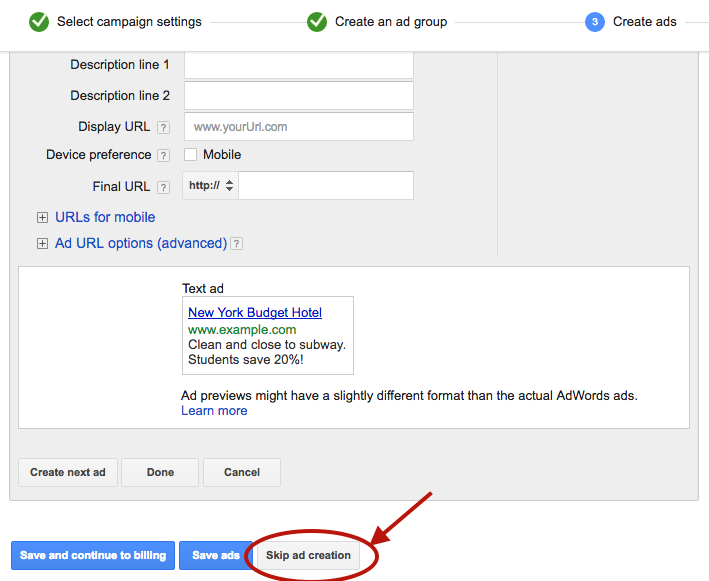
Click "Save and continue." On the Ad Creation page, click "Skip ad creation." Gmail ads cannot be created in the standard ad builder, so you will need to use the Ad Gallery.
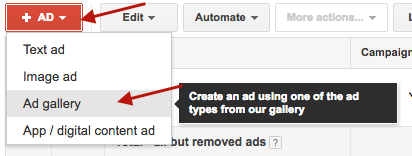
Navigate to the "Ads" tab in your account, click the red "Ad" button, and select "Ad Gallery" from the dropdown menu.
In the Ad Gallery, click "Gmail Ads" to access the Gmail-specific ad templates.

Select "Gmail image template" for the simplest and most effective format. Other template options are available, but the image template provides the best combination of visual impact and ease of setup.

Fill in the template fields:

One of the strongest advantages of Gmail ads is the ability to split-test variations of every element. Create at least two to three versions with different subject lines, images, and descriptions. Test one variable at a time to isolate what drives performance.
Click "Save" to finalize your ad. Your campaign is now live and will begin serving to Gmail users who match your targeting criteria.
Your Gmail ad appears alongside real emails. If your subject line reads like an advertisement, users will skip it. Study the subject line patterns that perform well in email marketing: curiosity-driven questions, specific numbers, and clear benefit statements all tend to outperform generic promotional copy.
The expanded Gmail ad is only the first click. If users land on a generic homepage after clicking a specific offer, you will lose them. Create dedicated landing pages that match the messaging and offer in your Gmail ad. This alignment improves both conversion rates and Quality Score.
Once you validate that your initial targets are producing cost-efficient clicks and conversions, expand your campaign by adding new competitor and complement domains as separate ad groups. Each new domain you add opens up an entirely new audience segment.
Performance will vary significantly across targets. A competitor with a large, engaged email list will generate more impressions and clicks than a smaller complement. Review performance at the ad group level weekly and adjust bids to allocate more budget toward your top-performing targets.
Gmail ad clicks are top-of-funnel interactions. Most users will not convert on the first visit. Make sure your remarketing pixel fires on the landing page so you can follow up with Display, Search, and social remarketing ads that bring these users back to convert.
Gmail ads do not generate the immediate volume of Search campaigns or the flashy creative opportunities of video and social ads. They are a surgical targeting tool that delivers incremental reach at a fraction of the cost. Because they require a different setup workflow and a targeting mindset rooted in competitive intelligence, most advertisers never bother.
That is exactly why they work. Low competition means lower CPCs, higher impression share, and the opportunity to reach your competitors' most engaged audiences before they even start searching for alternatives.
If you are looking for new growth channels that deliver qualified traffic without bidding wars, Gmail ads deserve a place in your paid media mix.


.svg)