

Marketing for SaaS (Software as a Service) companies can often be challenging. With the increasing number of competitors and evolving consumer expectations, it's crucial for SaaS companies to stay ahead of the game to maximize their growth potential. In this article, we will explore seven essential tips for marketing your SaaS company effectively and driving sustainable growth.
It's important to understand the fundamentals of SaaS marketing and its significance. SaaS marketing refers to the process of promoting and selling software products on a subscription model. Unlike traditional software sales, SaaS companies focus on building long-term relationships with customers. It involves a strategic approach to attract, engage, and retain customers in a highly competitive market.
Successful SaaS marketing goes beyond simply selling a product; it involves creating a comprehensive marketing strategy that encompasses various elements such as branding, content creation, lead generation, and customer relationship management.
Developing a successful SaaS marketing strategy requires careful planning and execution. Here are some key elements to consider:
These elements form the foundation of a successful SaaS marketing strategy. By incorporating them into your overall marketing plan, you can effectively reach your target audience, generate leads, and drive business growth.
Remember, SaaS marketing is an ongoing process that requires constant adaptation and optimization. Stay up-to-date with industry trends, monitor competitor strategies, and regularly evaluate and refine your marketing tactics to stay ahead in the ever-evolving SaaS landscape.
A distinct and memorable brand identity is essential for attracting and retaining customers in the competitive SaaS industry. In order to stand out from the crowd and establish a strong presence in the market, there are several key aspects to consider.
Your unique selling proposition (USP) is what sets your SaaS company apart from competitors. It is the foundation upon which your brand identity is built. Clearly defining your USP is crucial in order to effectively communicate the value your product provides to customers.
When defining your USP, it is important to consider the key features, benefits, and value that your product offers. What makes your SaaS company unique? How does your product solve a problem or fulfill a need that other competitors cannot? These are the questions you need to answer in order to create a persuasive message that resonates with your target audience.
By highlighting the uniqueness of your offering, you can differentiate yourself from the competition and attract customers who are specifically looking for the benefits that your product provides. This will not only help you acquire new customers but also retain them in the long run.

Consistency is key when it comes to building a strong brand image. In order to establish a recognizable and memorable brand, it is important to ensure that your brand elements are consistently applied across all marketing channels.
One of the most important brand elements is your logo. Your logo should be visually appealing and reflect the essence of your brand. It should be placed prominently on all marketing materials, including your website, social media profiles, and promotional materials.
In addition to your logo, your color scheme, typography, and tone of voice also play a crucial role in creating a consistent brand image. Choose colors that align with your brand values and evoke the desired emotions in your target audience. Select fonts that are easy to read and reflect the personality of your brand. And finally, develop a tone of voice that is consistent across all communication channels, whether it's your website, social media posts, or customer support interactions.
By ensuring consistency in your brand elements, you create recognition and reinforce the credibility of your brand. Customers will be able to easily identify your brand and associate it with the positive experiences they have had with your product or service.
Building a strong brand identity takes time and effort, but it is a worthwhile investment. By defining your unique selling proposition and creating a consistent brand image, you can attract and retain customers in the competitive SaaS industry, ultimately leading to long-term success for your business.
Search engine optimization (SEO) plays a vital role in driving organic traffic to your website and increasing your visibility in search engine result pages (SERPs). By implementing effective SEO strategies, you can improve your website's ranking and attract potential customers. Here are some best practices for SaaS SEO:
SEO is crucial for increasing your website's visibility and attracting organic traffic. When potential customers search for solutions related to your SaaS company, a well-optimized website will have a higher chance of appearing in the top search results. By utilizing relevant keywords, optimizing meta tags, and improving site speed, you can improve your ranking in search engine results, leading to increased exposure and higher chances of attracting potential customers.
To effectively implement SEO for your SaaS company, consider the following best practices:
Keyword research is a critical step in SEO. By understanding the search terms your target audience uses, you can optimize your website's content to align with their needs. Use keyword research tools to identify high-demand keywords that are relevant to your SaaS product or service. This will help you create content that addresses the pain points and needs of your potential customers.
Content is king in SEO. By creating informative and keyword-rich content, you can attract and engage your target audience. Develop blog posts, articles, and guides that provide valuable insights and solutions related to your SaaS product or service. Incorporate relevant keywords naturally into your content to improve its visibility in search engine results.
On-page optimization is essential for improving your website's visibility in search engine results. Optimize your meta titles, meta descriptions, headers, and URLs with relevant keywords to help search engines understand the content of your web pages. This will increase the likelihood of your website appearing in relevant search queries.
Backlinks are an important factor in SEO. By building high-quality backlinks from reputable websites in your industry, you can enhance your website's authority and visibility. Reach out to industry influencers, guest post on relevant blogs, and participate in online communities to build valuable backlinks that will improve your website's SEO performance.

Regular monitoring and analysis of your SEO performance are crucial for identifying areas for improvement. Utilize analytical tools such as Google Analytics to track your website's traffic, keyword rankings, and user behavior. Analyze the data to identify trends, strengths, and weaknesses in your SEO strategy. This will help you make informed decisions and optimize your SEO efforts for better results.
By implementing these best practices, you can enhance your SaaS company's SEO performance and increase your website's visibility in search engine results. Remember to stay up-to-date with the latest SEO trends and algorithms to ensure long-term success in driving organic traffic to your website.
Content marketing is a powerful tool for SaaS companies to engage their target audience and establish thought leadership. Consider the following tips to create compelling and relevant content:
Content marketing allows SaaS companies to deliver valuable information and insights to their target audience, positioning themselves as industry experts and thought leaders. By offering relevant and informative content, you can build trust, establish credibility, and drive customer engagement.
Here are some tips to help you create engaging and relevant content for your SaaS company:
Social media has become an integral part of the marketing strategies for SaaS companies. Follow these tips to effectively leverage social media:
Each social media platform has its own strengths and characteristics. Understanding your target audience and their preferred platforms will help you choose the most suitable ones for your SaaS business. Consider factors such as audience demographics, engagement levels, and platform capabilities when making your decision.
Boosting engagement on social media is crucial for increasing brand visibility and fostering customer loyalty. Consider implementing these strategies:
By understanding the basics of SaaS marketing, building a strong brand identity, implementing strong SEO methodologies, utilizing content marketing, and harnessing the power of social media, you can drive sustainable growth and establish a strong presence in the market. Stay proactive, adapt to the ever-changing landscape, and continuously optimize your marketing efforts to stay ahead of the competition.

Achieving sustainable growth requires careful planning, strategic execution, and specialized knowledge. This is where a business growth agency plays a pivotal role. A business growth agency can be the springboard that launches your business to new heights. By understanding the role and functions of a business growth agency, as well as the importance of business growth for your company, you can harness the expertise of these agencies to take your organization to new heights.
A business growth agency is a strategic partner that works closely with your company to identify growth opportunities and develop tailored strategies to achieve them. They possess a deep understanding of your industry and market dynamics, allowing them to provide valuable insights and guidance.
When it comes to understanding the role of a business growth agency, it is crucial to recognize their ability to analyze your current business landscape. By conducting a thorough evaluation, they can identify areas for improvement and growth potential. This analysis involves studying market trends, consumer behavior, and competitor strategies.
Furthermore, a business growth agency goes beyond just identifying growth opportunities. They also play a crucial role in developing comprehensive strategies to maximize your company's growth potential. These strategies may involve marketing and branding, sales optimization, and operational efficiency improvement.
You can check an example of 5 proven strategies to boost lead generation [here].
Business growth is not just a desirable outcome; it is essential for the long-term success and sustainability of your company. Without continuous growth, businesses can quickly fall victim to stagnation, which can have detrimental effects.
When a business remains stagnant and fails to adapt to changing market conditions, it can experience stagnation. Stagnation often leads to declining sales, loss of market share, and reduced profitability. The inability to keep up with the ever-evolving business landscape puts stagnant businesses at risk of becoming obsolete.
However, continuous growth paves the way for numerous benefits. It enables your company to stay ahead of the competition, seize new market opportunities, and attract top talent. By embracing growth, your business can expand its reach and explore untapped markets, ensuring its relevance and longevity.
One of the key advantages of business growth is the increased revenue and profitability it brings. As your company expands, it can tap into new customer segments and generate more sales. This influx of revenue provides the financial resources necessary to invest in further expansion and innovation.
Moreover, continuous growth allows your company to build a strong brand reputation. As you expand your operations and reach, you can establish yourself as a market leader and gain the trust and loyalty of customers. A reputable brand not only attracts more customers but also opens doors to strategic partnerships and collaborations.
Business growth also creates a positive ripple effect throughout the organization. It fosters a culture of innovation and creativity, as employees are motivated by the exciting opportunities that come with expansion. This, in turn, attracts top talent who are eager to be part of a dynamic and growing company.
Additionally, growth provides the opportunity to diversify your product or service offerings. By expanding your portfolio, you can cater to a wider range of customer needs and preferences. This diversification not only strengthens your market position but also mitigates the risks associated with relying too heavily on a single product or service.
A business growth agency follows a structured approach to drive growth for your company. The process typically involves an initial assessment and strategy development phase, followed by the implementation of growth strategies.
But what exactly happens during each phase? Let's dive deeper into the workings of a business growth agency.
During the initial assessment phase, the business growth agency conducts a thorough analysis of your company's current performance, market position, and growth potential. They gather data, conduct market research, and assess your competitive landscape to identify the most viable growth opportunities.
But it doesn't stop there. The agency's team of experts goes beyond the surface-level analysis. They dig deep into your company's strengths, weaknesses, opportunities, and threats (SWOT analysis) to gain a comprehensive understanding of your business.
Additionally, they also examine industry trends, consumer behavior, and emerging technologies to identify potential disruptors or innovative strategies that can propel your company forward.

Based on these findings, they develop a tailored growth strategy that aligns with your company's vision and objectives. This strategy is not a one-size-fits-all approach. Instead, it is customized to address your specific challenges and leverage your unique strengths.
Once the growth strategy is developed, the business growth agency collaborates with your team to implement the identified strategies. This collaboration is crucial as it ensures that the agency's expertise is combined with your team's knowledge of the business.
The agency takes a hands-on approach, working closely with your team to ensure successful execution and ongoing monitoring and optimization of the growth initiatives. They provide guidance, support, and resources to implement marketing and branding campaigns, optimize sales processes, or improve operational efficiency.
But it doesn't end there. The agency continuously monitors the progress of the growth initiatives and collects data to measure their effectiveness. They analyze the results, identify areas for improvement, and make necessary adjustments to maximize the impact of the strategies.
Moreover, the agency also keeps a close eye on market dynamics, consumer preferences, and industry trends to ensure that the implemented strategies remain relevant and effective in the ever-changing business landscape.
So, as you can see, a business growth agency goes above and beyond to drive growth for your company. Their structured methodologies (as this one for SEO), thorough analysis, and hands-on implementation ensure that your company is equipped with the right strategies to thrive in today's competitive business environment.
Business growth agencies offer a wide range of services designed to fuel growth in various aspects of your business. Let's explore some of the key services provided by these agencies:
A strong marketing and branding strategy is essential for reaching your target audience and driving growth. Business growth agencies provide expertise in developing and executing effective marketing campaigns, creating impactful branding assets, and leveraging digital channels to maximize your brand's visibility and reach. If you're evaluating what a full-service marketing agency actually does and how engagements are structured, that resource walks through the full scope of services and pricing models.
Optimizing your sales processes and equipping your sales team with the necessary skills and knowledge is crucial for driving revenue growth. Business growth agencies offer comprehensive sales optimization services, including sales process analysis, sales training, and CRM implementation, to enhance your company's sales performance.
Improving operational efficiency is a key driver of growth. Business growth agencies help identify inefficiencies in your operational processes and develop strategies to streamline operations, reduce costs, and enhance productivity. This allows your organization to operate more efficiently, freeing up resources that can be allocated to growth initiatives.
Choosing the right business growth agency is vital to ensure a successful growth journey for your company. Consider the following factors when selecting an agency:
While cost is an important consideration, it is equally crucial to assess the value you will gain from the agency's services. Look for an agency that offers a comprehensive suite of services tailored to your specific growth needs and provides ongoing support and monitoring to ensure the success of your growth initiatives.

With expertise and a strategic approach, a growth agency can help you navigate the complexities of today's business landscape and achieve sustainable growth in various aspects of your operations. By understanding the role of a business growth agency, the importance of business growth, and the services they offer, you can make an informed decision when selecting the right agency to partner with. Embrace the power of a business growth agency and take your company to new heights.

In today's interconnected and digital age, having a strong presence on social media is essential for businesses and individuals alike. One platform that has garnered immense popularity is Instagram, with its stunning visuals and engaged user base. However, growing your number of Instagram followers can be a challenge. That's where Facebook ads come in. By leveraging the power of Facebook's ads with Instagram ads, you can effectively boost your Instagram growth and reach a wider audience.
Before diving into the specifics, it's important to understand the symbiotic relationship between Facebook ads and Instagram growth. Since Facebook owns Instagram, they have seamlessly integrated their ad platforms, making it easier than ever to target Instagram users. By utilizing Facebook ads, you can tap into the massive user base of both platforms and increase your chances of growing your Instagram followers.
But what exactly is the connection between Facebook ads and Instagram growth? Let's explore further.
One of the key advantages of using Facebook ads for Instagram growth is the ability to cross-promote your content on both platforms. By running ads simultaneously on Facebook and Instagram, you can create a cohesive brand presence and reach a wider audience.
Imagine this scenario: you have a stunning visual ad that perfectly captures the essence of your brand. By promoting this ad on both Facebook and Instagram, you not only increase its visibility but also create a consistent brand experience for your audience. This cross-promotion strategy allows you to maximize your ad campaign's impact and increase the likelihood of gaining new Instagram followers.
Cross-promotion can also help you leverage the strengths of each platform. Facebook, with its extensive targeting options, allows you to reach a specific audience based on demographics, interests, and behaviors. On the other hand, Instagram's visually-driven nature makes it ideal for showcasing your brand's aesthetics and engaging with users through captivating images and videos.
Facebook's ad platform offers a robust set of tools and features that can help you optimize your Instagram growth strategy. From advanced targeting options to detailed analytics, Facebook ads provide invaluable insights that can guide your decision-making process.
With Facebook's targeting options, you can narrow down your audience to specific demographics, interests, and even behaviors. This level of precision allows you to create ad campaigns that specifically target your desired audience on Instagram. For example, if you're a fashion brand targeting young adults interested in sustainable fashion, you can use Facebook's ad platform to reach this specific audience on Instagram.
Moreover, Facebook's analytics provide you with valuable data on the performance of your ads. You can track metrics such as reach, engagement, and conversions, allowing you to measure the effectiveness of your Instagram growth strategy. Armed with these insights, you can make data-driven decisions to optimize your ad campaigns and achieve better results. By cross-promoting your content on both platforms and leveraging Facebook's ad platform, you can increase your chances of growing your Instagram followers and expanding your brand's reach. So, if you're looking to take your Instagram growth strategy to the next level, consider incorporating Facebook ads into your marketing efforts, or working with a specialized growth agency.
Now that you understand the connection between Facebook ads and Instagram growth, it's time to set up your ads for maximum impact.
But before we dive into the nitty-gritty of setting up your Facebook ads for Instagram growth, let's take a moment to explore why this strategy is so effective.
Instagram has become one of the most popular social media platforms, with over 1 billion monthly active users. It's a visually-driven platform that allows users to share photos and videos, making it the perfect place for businesses to showcase their products or services.
By leveraging Facebook ads, you can tap into Instagram's massive user base and reach a wider audience. Facebook's powerful targeting options allow you to connect with people who are most likely to be interested in your content, increasing the chances of gaining new Instagram followers.
When creating your Facebook ads, it's crucial to select the right ad format to capture the attention of your target audience on Instagram.
Instagram offers various ad formats, including photo ads, video ads, and carousel ads. Each format has its own unique advantages and can be used to convey different messages.
Photo ads are great for showcasing a single product or highlighting a specific feature. They allow you to capture your audience's attention with a visually appealing image.
Video ads, on the other hand, give you the opportunity to tell a story and engage your audience on a deeper level. With videos, you can demonstrate how your product works or share customer testimonials.
Carousel ads are perfect for showcasing multiple products or telling a more comprehensive brand story. They allow users to swipe through a series of images or videos, providing a more interactive and immersive experience.
When choosing the right ad format, it's important to align it with your brand and resonate with your audience. Experiment with different formats to see which ones perform best and drive the most Instagram follows.
One of the greatest strengths of Facebook ads is their ability to target specific demographics, interests, and behaviors. To maximize your Instagram growth, ensure that you are targeting the right audience.
Facebook's robust targeting options allow you to narrow down your target audience and reach those most likely to be interested in your content. You can target people based on their age, gender, location, interests, and even their online behaviors.
For example, if you're a fitness brand selling workout equipment, you can target people who are interested in fitness, follow fitness influencers, or have previously purchased fitness-related products.
By reaching the right people, you increase the chances of gaining new Instagram followers who are genuinely interested in what you have to offer.
It's important to regularly analyze and optimize your targeting strategy. Keep an eye on the performance of your ads and make adjustments as needed. Test different targeting options to see which ones yield the best results and help you achieve your Instagram growth goals.
When it comes to ad campaigns, content is king. To maximize your Instagram growth, you need to create compelling ad content that captures the attention of your audience and drives engagement.
But what exactly makes ad content compelling? How can you craft ad copy and visuals that stand out from the crowd and entice users to follow you on Instagram? Let's dive deeper into the art of creating compelling ad content.
Your ad copy plays a crucial role in convincing users to follow you on Instagram. It's not just about writing a few lines of text; it's about crafting engaging and persuasive copy that clearly communicates the value proposition of following your account.
One effective strategy is to highlight the benefits and unique selling points of your content. What makes your account different from others? Is it your expertise in a specific niche? Is it the exclusive content you provide to your followers? Whatever it is, make sure to emphasize it in your ad copy.

Another important aspect of crafting engaging ad copy is to understand your target audience. What are their pain points, desires, and aspirations? Tailor your copy to resonate with their needs and aspirations, showing them how following your account can help them achieve their goals.
Instagram is known for its visually stunning content, so it's essential to use high-quality visuals in your ads. Investing in eye-catching imagery or videos can make a significant difference in attracting new Instagram followers.
When selecting visuals for your ads, pay attention to detail. Choose images or videos that not only showcase your brand or products but also evoke emotions and tell a story. Visual storytelling can be a powerful tool in capturing the attention of your audience and making your ad content memorable.
Moreover, consider the aesthetics of your visuals. Instagram users are drawn to visually appealing content, so make sure your visuals are well-composed, well-lit, and visually pleasing. Experiment with different styles and themes to find what resonates best with your target audience.
By crafting engaging ad copy and utilizing high-quality visuals, you can create compelling ad content that stands out on Instagram. Remember, the key is to understand your audience, highlight the unique value you provide, and capture their attention with visually stunning content. Start experimenting and refining your ad content strategy to drive more engagement and grow your Instagram following.
To ensure your Instagram growth strategy is effective, you need to measure the success of your Facebook ads and make data-driven decisions.
Identify key performance indicators (KPIs) to track the success of your ad campaigns. Metrics such as click-through rate, conversion rate, and cost per follower are essential to understanding the effectiveness of your ads. Regularly analyze these metrics and make necessary adjustments to optimize your campaigns for Instagram growth.
Data analytics provide valuable insights into the performance of your Facebook ads. Monitor the analytics closely and adjust your strategy accordingly. If certain ads are not performing as expected, experiment with different visuals, copy, or targeting options. Use the data at your disposal to refine your approach and maximize your Instagram growth potential.
While Facebook ads provide a powerful tool for growing your Instagram following, there are additional tips and tricks you can implement to further maximize your ad impact.
Timing plays a crucial role in the success of your Facebook ads. Experiment with different posting schedules to determine when your audience is most active and engaged. By posting your ads when your target audience is most likely to be online, you increase the chances of capturing their attention and gaining new Instagram followers.
A clear and compelling call-to-action (CTA) can significantly impact whether a user decides to follow you on Instagram. Encourage users to take action by including a strong CTA in your ad copy. Use phrases like "follow us on Instagram for more" or "join our growing community on Instagram" to prompt users to click that follow button.

As you see, utilizing Facebook ads is a powerful strategy to grow your Instagram followers. By understanding the connection between Facebook ads and Instagram growth, setting up your ads effectively, creating compelling ad content, measuring success, and implementing tips and tricks, you can maximize the impact of your ad campaigns. Leverage the power of Facebook's ad platform to reach a wider audience and achieve exponential Instagram growth.
-----------2022-05-06---15.30.35.png" seoTitle: "What to Do When Your Instagram Ad Account Is Not Found" seoDescription: "Instagram Ad Account Missing? Don't Panic! Here's How to Fix It Fast." ---

When you encounter the error message indicating that your Instagram ad account is not found, it's essential to understand the possible reasons behind this inconvenience.
Having an Instagram ad account is crucial for businesses and individuals looking to promote their products or services on the platform and engaging with its customers. However, sometimes you may come across situations where your ad account seems to have disappeared. In such cases, we must investigate the matter further to determine the cause and find a solution.
There are several potential reasons why your Instagram ad account may disappear. Understanding these reasons can help you troubleshoot the issue more effectively. Here are a few common causes:
When your Instagram ad account is not found, you might encounter different error messages, each indicating a specific issue. Understanding these error messages can provide insights into the nature of the problem. Here are a few common error messages and their meanings:
Dealing with an Instagram ad account not found issue can be frustrating, but understanding the possible reasons and error messages can help you navigate through the problem more effectively. Remember to review your account settings, ensure compliance with Instagram's advertising policies, and report any technical issues to Instagram's support team for prompt resolution.
When faced with a missing Instagram ad account, there are a few initial steps you should take to assess and address the situation.
The first step is to verify the current status of your Instagram ad account. Check whether your account is still active or if it has been suspended or disabled for any reason.
Next, it's important to ensure that your account information is accurate and up to date. Make sure that your email address, contact information, and payment details associated with the account are correct.
If you are unable to address the issue on your own, reaching out to Instagram support can provide you with the necessary guidance and assistance to resolve the problem.
Instagram support is a dedicated team of professionals who are well-equipped to handle various user concerns. Whether you are experiencing login issues, encountering errors, or facing any other technical difficulties, reaching out to Instagram support can be the key to finding a solution.
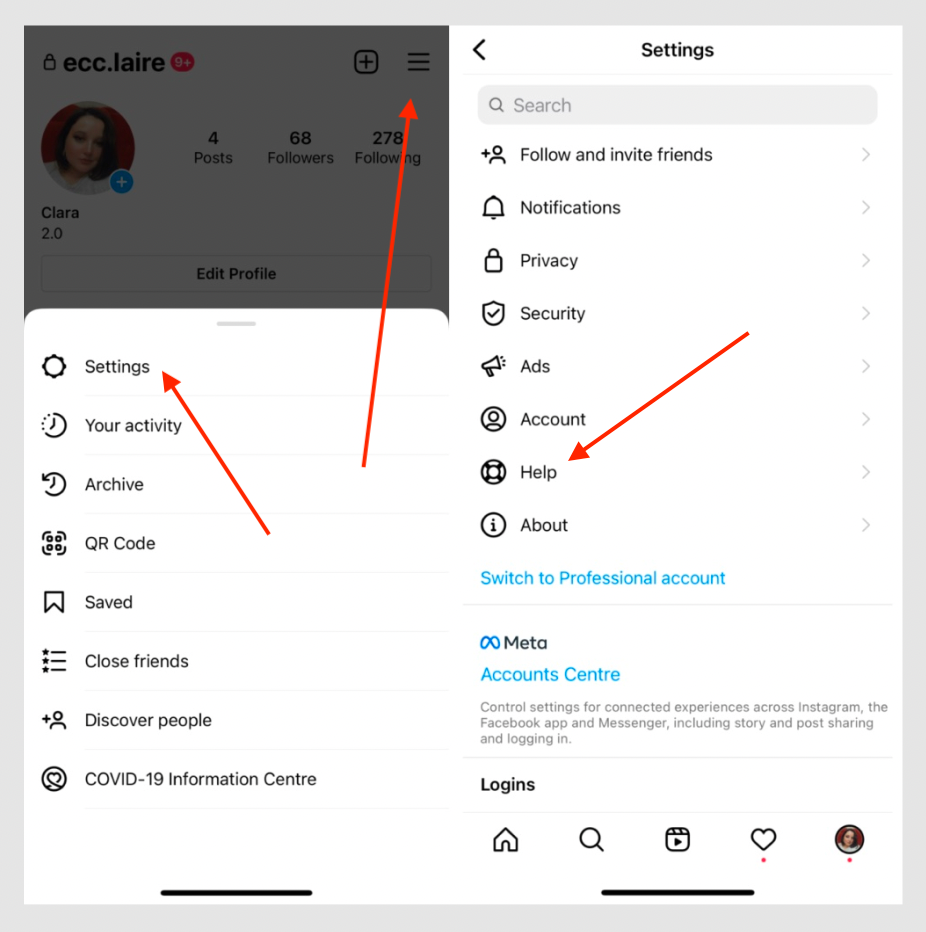
You can contact Instagram support through their Help Center or by using the "Report a Problem" feature within the Instagram app. Accessing the Help Center will provide you with access to Frequently Asked Questions (FAQs) and troubleshooting guides.
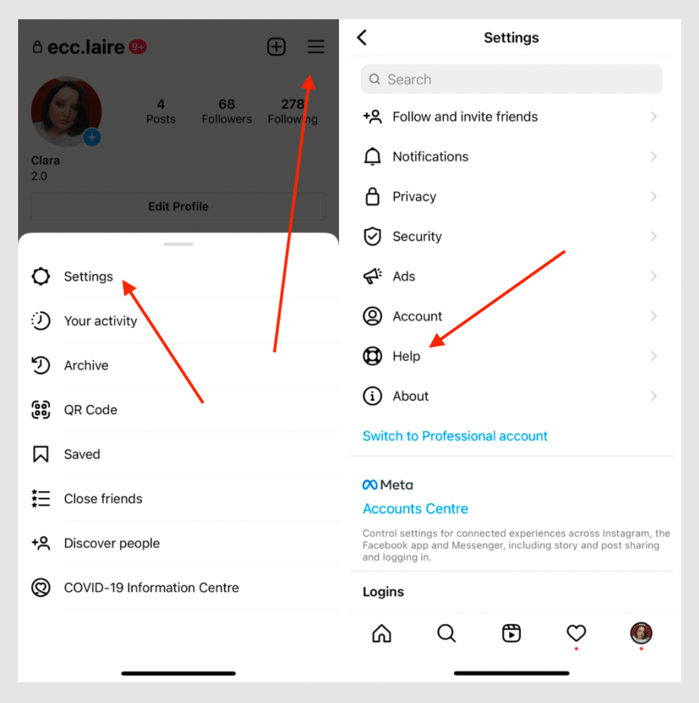
The Help Center, as indicated above, is a comprehensive resource that covers a wide range of topics related to Instagram. From account security to privacy settings, you can find detailed information and step-by-step instructions to resolve common issues. It is a valuable tool that empowers users to troubleshoot problems independently.
If you are unable to find a solution through the Help Center, you can directly contact Instagram support by using the "Report a Problem" feature within the app. This feature allows you to submit a detailed description of the issue you are facing, providing Instagram support with the necessary information to assist you effectively.
When contacting Instagram support, it's important to provide them with relevant information to help them understand your issue better. Include details such as your account username, the error message you are seeing, and any steps you have taken to address the problem.
By providing accurate and detailed information, you increase the chances of receiving a prompt and accurate response from Instagram support. It allows them to assess the situation thoroughly and provide you with tailored guidance to resolve the issue.
Additionally, if you have encountered any error messages or unusual behavior on the app, make sure to include them in your communication with Instagram support. These details can provide valuable insights into the root cause of the problem and help the support team identify any ongoing technical issues.
Remember, Instagram support is there to assist you, so don't hesitate to reach out if you need help. They are committed to ensuring a seamless user experience and will work diligently to resolve any issues you may encounter.
While dealing with a missing ad account can be challenging, taking preventive measures can help you avoid similar issues in the future.
Here are a few preventive measures you should consider:
Ensure that you regularly review and update your account information, including your contact details and payment information. This will help maintain the accuracy and validity of your account.
By regularly updating your account information, you can ensure that any changes to your contact details or payment information are accurately reflected. This will help prevent any potential issues that may arise from outdated or incorrect information. Additionally, keeping your account information up to date will make it easier for Instagram or any other platform to reach out to you if there are any concerns or updates regarding your account.
Adhere to Instagram's advertising policies to prevent violations that could lead to your ad account being suspended or disabled. Familiarize yourself with these policies and ensure compliance with them at all times.
Instagram's advertising policies are designed to maintain a safe and positive experience for users. By familiarizing yourself with these policies, you can ensure that your ads meet the platform's guidelines and avoid any potential violations. This includes understanding the rules regarding prohibited content, targeting restrictions, and disclosure requirements. Staying informed about any updates or changes to these policies is also crucial to maintaining compliance.
Additionally, it is important to regularly review your ad campaigns to ensure they are aligned with Instagram's policies. This includes monitoring the content, targeting options, and engagement metrics to identify any potential issues or areas for improvement. By proactively addressing any concerns, you can prevent your ad account from being suspended or disabled, thus avoiding future issues.
Once you have identified the issue and contacted Instagram support, you may need to navigate the reinstatement process to regain access to your missing ad account.
When it comes to reinstating your ad account on Instagram, there are a few important steps to keep in mind. It's crucial to follow these steps closely to ensure a smooth and successful reinstatement process.
The first step in the reinstatement process is to reach out to Instagram support. They will guide you through the necessary steps to regain access to your missing ad account. It's important to provide them with all the relevant information and details about your account.
Once you have contacted Instagram support, they may require additional information or documentation to verify the ownership and legitimacy of your account. This could include providing proof of identity, proof of ownership, or any other documents that can support your case.
After submitting the required information, it's crucial to be patient. The reinstatement process may take some time as Instagram support reviews your case and makes a decision. During this waiting period, it's essential to be prepared for potential requests for further information or clarification.

During the reinstatement process, it's important to manage your expectations. While you may be eager to regain access to your ad account, it's crucial to understand that the process may take some time and patience.
Instagram support will carefully review your case and assess the information and documentation you have provided. They will consider factors such as the nature of the issue, the legitimacy of your account, and any previous violations or warnings.
It's important to note that every case is unique, and the reinstatement process may vary depending on the specific circumstances. Instagram support will communicate with you throughout the process, providing updates and requesting any additional information if necessary.
Remember to check your email regularly during the reinstatement process, as Instagram support may reach out to you for further details or clarification. It's crucial to respond promptly and provide the requested information to expedite the process.
While waiting for the reinstatement decision, it's a good idea to review your account and ensure that you are in compliance with Instagram's policies and guidelines. This includes reviewing your ad content, ensuring it meets the platform's advertising standards, and addressing any potential issues or violations.
You can always leave your social media advertising Sarategy in the hands of the experts, ideally a social media agency. But, by following the instructions provided by Instagram support and being patient throughout the reinstatement process, you increase your chances of successfully managing any problems, like a missing ad account.
Experiencing a missing Instagram ad account can be a frustrating situation. By following the steps outlined above and reaching out to Instagram support for assistance, you can increase your chances of regaining access to your account. Additionally, taking preventive measures and staying compliant with Instagram's advertising policies can help you avoid similar issues in the future. Remember to remain patient and cooperative throughout the process, as reinstating your ad account may take some time.
Marketing for SaaS (Software as a Service) companies can often be challenging. With the increasing number of competitors and evolving consumer expectations, it's crucial for SaaS companies to stay ahead of the game to maximize their growth potential. In this article, we will explore seven essential tips for marketing your SaaS company effectively and driving sustainable growth.
It's important to understand the fundamentals of SaaS marketing and its significance. SaaS marketing refers to the process of promoting and selling software products on a subscription model. Unlike traditional software sales, SaaS companies focus on building long-term relationships with customers. It involves a strategic approach to attract, engage, and retain customers in a highly competitive market.
Successful SaaS marketing goes beyond simply selling a product; it involves creating a comprehensive marketing strategy that encompasses various elements such as branding, content creation, lead generation, and customer relationship management.
Developing a successful SaaS marketing strategy requires careful planning and execution. Here are some key elements to consider:
These elements form the foundation of a successful SaaS marketing strategy. By incorporating them into your overall marketing plan, you can effectively reach your target audience, generate leads, and drive business growth.
Remember, SaaS marketing is an ongoing process that requires constant adaptation and optimization. Stay up-to-date with industry trends, monitor competitor strategies, and regularly evaluate and refine your marketing tactics to stay ahead in the ever-evolving SaaS landscape.
A distinct and memorable brand identity is essential for attracting and retaining customers in the competitive SaaS industry. In order to stand out from the crowd and establish a strong presence in the market, there are several key aspects to consider.
Your unique selling proposition (USP) is what sets your SaaS company apart from competitors. It is the foundation upon which your brand identity is built. Clearly defining your USP is crucial in order to effectively communicate the value your product provides to customers.
When defining your USP, it is important to consider the key features, benefits, and value that your product offers. What makes your SaaS company unique? How does your product solve a problem or fulfill a need that other competitors cannot? These are the questions you need to answer in order to create a persuasive message that resonates with your target audience.
By highlighting the uniqueness of your offering, you can differentiate yourself from the competition and attract customers who are specifically looking for the benefits that your product provides. This will not only help you acquire new customers but also retain them in the long run.
Consistency is key when it comes to building a strong brand image. In order to establish a recognizable and memorable brand, it is important to ensure that your brand elements are consistently applied across all marketing channels.
One of the most important brand elements is your logo. Your logo should be visually appealing and reflect the essence of your brand. It should be placed prominently on all marketing materials, including your website, social media profiles, and promotional materials.
In addition to your logo, your color scheme, typography, and tone of voice also play a crucial role in creating a consistent brand image. Choose colors that align with your brand values and evoke the desired emotions in your target audience. Select fonts that are easy to read and reflect the personality of your brand. And finally, develop a tone of voice that is consistent across all communication channels, whether it's your website, social media posts, or customer support interactions.
By ensuring consistency in your brand elements, you create recognition and reinforce the credibility of your brand. Customers will be able to easily identify your brand and associate it with the positive experiences they have had with your product or service.
Building a strong brand identity takes time and effort, but it is a worthwhile investment. By defining your unique selling proposition and creating a consistent brand image, you can attract and retain customers in the competitive SaaS industry, ultimately leading to long-term success for your business.
Search engine optimization (SEO) plays a vital role in driving organic traffic to your website and increasing your visibility in search engine result pages (SERPs). By implementing effective SEO strategies, you can improve your website's ranking and attract potential customers. Here are some best practices for SaaS SEO:
SEO is crucial for increasing your website's visibility and attracting organic traffic. When potential customers search for solutions related to your SaaS company, a well-optimized website will have a higher chance of appearing in the top search results. By utilizing relevant keywords, optimizing meta tags, and improving site speed, you can improve your ranking in search engine results, leading to increased exposure and higher chances of attracting potential customers.
To effectively implement SEO for your SaaS company, consider the following best practices:
Keyword research is a critical step in SEO. By understanding the search terms your target audience uses, you can optimize your website's content to align with their needs. Use keyword research tools to identify high-demand keywords that are relevant to your SaaS product or service. This will help you create content that addresses the pain points and needs of your potential customers.
Content is king in SEO. By creating informative and keyword-rich content, you can attract and engage your target audience. Develop blog posts, articles, and guides that provide valuable insights and solutions related to your SaaS product or service. Incorporate relevant keywords naturally into your content to improve its visibility in search engine results.
On-page optimization is essential for improving your website's visibility in search engine results. Optimize your meta titles, meta descriptions, headers, and URLs with relevant keywords to help search engines understand the content of your web pages. This will increase the likelihood of your website appearing in relevant search queries.
Backlinks are an important factor in SEO. By building high-quality backlinks from reputable websites in your industry, you can enhance your website's authority and visibility. Reach out to industry influencers, guest post on relevant blogs, and participate in online communities to build valuable backlinks that will improve your website's SEO performance.
Regular monitoring and analysis of your SEO performance are crucial for identifying areas for improvement. Utilize analytical tools such as Google Analytics to track your website's traffic, keyword rankings, and user behavior. Analyze the data to identify trends, strengths, and weaknesses in your SEO strategy. This will help you make informed decisions and optimize your SEO efforts for better results.
By implementing these best practices, you can enhance your SaaS company's SEO performance and increase your website's visibility in search engine results. Remember to stay up-to-date with the latest SEO trends and algorithms to ensure long-term success in driving organic traffic to your website.
Content marketing is a powerful tool for SaaS companies to engage their target audience and establish thought leadership. Consider the following tips to create compelling and relevant content:
Content marketing allows SaaS companies to deliver valuable information and insights to their target audience, positioning themselves as industry experts and thought leaders. By offering relevant and informative content, you can build trust, establish credibility, and drive customer engagement.
Here are some tips to help you create engaging and relevant content for your SaaS company:
Social media has become an integral part of the marketing strategies for SaaS companies. Follow these tips to effectively leverage social media:
Each social media platform has its own strengths and characteristics. Understanding your target audience and their preferred platforms will help you choose the most suitable ones for your SaaS business. Consider factors such as audience demographics, engagement levels, and platform capabilities when making your decision.
Boosting engagement on social media is crucial for increasing brand visibility and fostering customer loyalty. Consider implementing these strategies:
By understanding the basics of SaaS marketing, building a strong brand identity, implementing strong SEO methodologies, utilizing content marketing, and harnessing the power of social media, you can drive sustainable growth and establish a strong presence in the market. Stay proactive, adapt to the ever-changing landscape, and continuously optimize your marketing efforts to stay ahead of the competition.
Lead generation has become a crucial aspect of any organization's marketing strategy. As businesses strive to expand their customer base and increase sales, understanding lead generation pricing becomes paramount. This article aims to provide a comprehensive overview of lead generation pricing, from its definition to the factors influencing it, and offer practical tips on budgeting and evaluating the return on investment (ROI) of these efforts.

In simple terms, lead generation refers to the process of attracting and converting potential customers into leads, who express interest in a company's products or services. These leads then become valuable assets for the sales team, as they can be nurtured and eventually converted into paying customers.
Lead generation is a multifaceted strategy that involves various tactics and techniques to capture the attention of potential customers. It is not just about getting people to visit a website or filling out a form; it is about building relationships and creating opportunities for businesses to connect with their target audience.
Lead generation plays a pivotal role in the growth and success of a business. By generating high-quality leads, companies can create a steady stream of potential customers, thereby increasing their chances of closing deals and driving revenue. Moreover, lead generation helps businesses build brand awareness, establish authority in their industry, and cultivate long-term relationships with customers.
When done effectively, lead generation can be a game-changer for businesses, providing them with a competitive edge in the market. It allows companies to proactively reach out to potential customers, rather than waiting for them to come across their products or services. This proactive approach not only increases the likelihood of conversions but also enables businesses to tailor their offerings to meet the specific needs and preferences of their target audience.
When it comes to lead generation, several key components work synergistically to achieve optimal results. These components include:
An effective website is the foundation of a successful lead generation strategy. It should be visually appealing, user-friendly, and optimized for search engines. Compelling landing pages with clear call-to-actions help guide visitors towards taking the desired action, whether it's filling out a form, subscribing to a newsletter, or making a purchase.
Engaging content is another crucial component of lead generation. By creating valuable and informative content, businesses can attract potential customers and establish themselves as industry experts. This can be achieved through blog posts, whitepapers, ebooks, videos, and webinars, among other content formats.
Lead capture forms and lead magnets play a vital role in capturing visitor information. These forms should be strategically placed on landing pages and offer something of value in exchange for contact details, such as a free ebook, a discount code, or access to exclusive content. This incentivizes visitors to provide their information willingly.
Targeted advertising and marketing campaigns help businesses reach the right audience and generate qualified leads. By leveraging data and analytics, companies can identify their target market and create customized campaigns that resonate with their audience's needs and preferences. This can be done through various channels, such as social media advertising, search engine marketing, email marketing, and content syndication.
Marketing automation tools streamline lead nurturing and follow-up processes, allowing businesses to engage with leads at scale. These tools automate repetitive tasks, such as sending personalized emails, tracking customer interactions, and scoring leads based on their level of engagement. By nurturing leads through targeted and timely communication, businesses can increase their chances of converting them into paying customers.
Here are [5 proven strategies to boost lead generation].
Now that we've covered the basics of lead generation, it's time to explore the various pricing models commonly used in this realm. Understanding the pros and cons of each model is crucial for businesses to make informed decisions and maximize their return on investment.
When it comes to lead generation, businesses have several pricing models to choose from. Each model offers its own advantages and disadvantages, catering to different business needs and goals. Let's take a closer look at three popular pricing models: Cost Per Lead (CPL), Monthly Retainer, and Performance-Based.
The cost per lead (CPL) model, as the name suggests, entails businesses paying a fixed amount for each lead they receive. This model offers a predictable and measurable approach to lead generation pricing. With CPL, companies have greater control over their budget, as they only pay for actual leads.
However, it is important to carefully evaluate the quality of leads generated under the CPL model. While lower-cost leads may seem appealing, they may not always translate into qualified prospects. Businesses need to ensure that the leads they receive are relevant and have a higher likelihood of conversion.
In the monthly retainer model, businesses work with lead generation agencies or consultants on an ongoing basis, paying a fixed monthly fee for their services. This model offers a more comprehensive approach, as the agency takes responsibility for managing the entire lead generation process.
The advantage of the monthly retainer model lies in its scalability and flexibility. Businesses can adjust their lead generation efforts according to their needs, whether it's increasing or decreasing the volume of leads generated. This model allows businesses to have a dedicated team working on their lead generation efforts, ensuring consistent results.
At the same time, it's important to note that the cost of retaining a lead generation agency can be higher compared to other pricing models. Businesses need to carefully assess their budget and the value they expect to receive from the agency before committing to a monthly retainer.
The performance-based model aligns lead generation pricing with the desired outcomes. Instead of paying a fixed fee or cost per lead, businesses only compensate lead generation agencies based on the actual performance achieved, such as the number of qualified leads or converted customers.
This model provides a clear incentive for the agency to deliver tangible results. The agency's compensation is directly tied to the success of the lead generation campaign, motivating them to put in their best efforts. It also allows businesses to closely track their return on investment (ROI) and ensure that they are getting the desired results.
However, implementing a performance-based model requires businesses to carefully define and measure the key performance indicators (KPIs) that will determine the agency's compensation. This ensures fair compensation for both parties and avoids any potential disputes.
While understanding the pricing models is crucial, it is equally important to consider the factors that influence lead generation pricing. By identifying these factors, businesses can set realistic expectations and allocate their resources effectively.
The quality of leads greatly impacts the pricing. High-quality leads, who are more likely to convert into paying customers, generally incur higher costs. Factors that contribute to lead quality include the relevance of the target audience, the level of interest demonstrated, and the accuracy of the contact information provided.
For example, let's say a business is targeting professionals in the healthcare industry who have shown a strong interest in a specific product. These leads are more likely to convert into customers compared to leads from a general audience. Therefore, the cost per lead for such high-quality leads would be higher due to the increased chances of conversion.
The industry in which a business operates and the characteristics of its target market can significantly influence lead generation pricing. Industries with intense competition or niche markets may require more targeted and tailored lead generation strategies, resulting in higher costs.
Consider a business operating in the highly competitive technology industry. The target market for this business consists of tech-savvy individuals who are constantly bombarded with advertisements and marketing campaigns. In order to stand out from the competition and capture the attention of these potential leads, the business may need to invest in more sophisticated lead generation tactics, such as personalized email campaigns or social media advertising. These additional efforts would naturally increase the overall cost of lead generation.

Let's say a business wants to implement a comprehensive lead generation strategy that includes not only capturing leads but also nurturing them through personalized email sequences and targeted content. This level of service requires a greater investment of time, resources, and expertise from the lead generation agency. As a result, the pricing for such a customized and hands-on approach would be higher compared to a more basic lead generation package.
At the same time, businesses that require advanced analytics to track and measure the effectiveness of their lead generation efforts may need to pay a premium for the tools and expertise needed to provide such insights. These analytics can help businesses optimize their lead generation strategies and improve their return on investment.
As you see, several factors influence lead generation pricing, including the quality of leads, the industry and target market, and the level of service and customization required. By understanding these factors, businesses can make informed decisions about their lead generation strategies and budget accordingly.
Prior to budgeting for lead generation, it is crucial for businesses to determine their specific lead needs. This involves assessing the desired volume of leads, the expected conversion rate, and the target cost per lead. By setting clear objectives and benchmarks, businesses can allocate their budget more effectively.
Allocating resources for lead generation involves finding a balance between investing in various lead generation strategies and managing costs. Some resources that would require allocation include advertising budgets, staff dedicated to lead generation efforts, and the technology needed to support these activities.
To evaluate the return on investment (ROI) of lead generation efforts, businesses must establish key performance metrics and regularly measure their performance against these benchmarks. Metrics such as the cost per lead, lead-to-customer conversion rate, and customer lifetime value are valuable indicators of lead generation success.
Based on the ROI analysis, businesses should make data-driven decisions to optimize their lead generation strategy. This might involve reallocating resources, refining targeting criteria, or experimenting with new lead generation tactics. Continuous monitoring and adaptation are crucial for achieving long-term success in lead generation.
To thrive in today's highly competitive business landscape, understanding lead generation pricing is essential. By comprehending the various pricing models, considering influencing factors, and budgeting wisely, organizations can maximize their lead generation efforts and ultimately drive revenue growth. Additionally, by evaluating the ROI of lead generation and making necessary adjustments, businesses can continuously refine their approach and stay ahead of the curve.
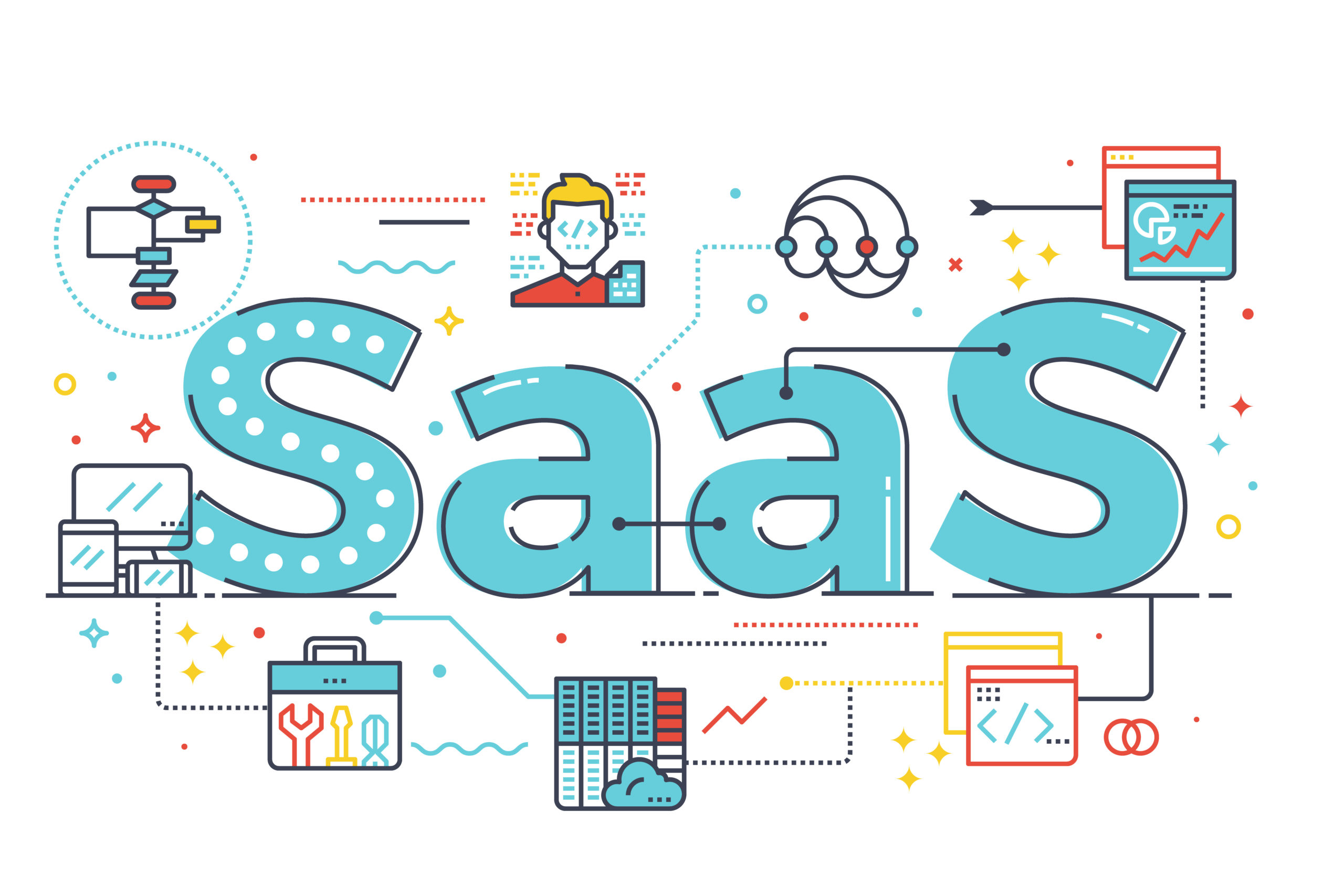
It is crucial for businesses to effectively market their products and services online. For Software as a Service (SaaS) businesses in particular, content marketing for SaaS plays a pivotal role in attracting and retaining customers. However, implementing an effective content marketing strategy requires specialized knowledge and expertise that may not be readily available in-house. This is where a SaaS content marketing agency can be invaluable.
SaaS content marketing refers to the creation and distribution of valuable and relevant content with the aim of attracting and retaining customers for SaaS businesses. Unlike traditional advertising, content marketing focuses on providing educational and informative content that addresses the pain points and challenges of the target audience.
But why is this approach so effective for SaaS businesses? The answer lies in the nature of the SaaS industry itself. SaaS products and services are often complex and require a certain level of understanding from potential customers. By providing educational content, a SaaS content marketing agency helps bridge the knowledge gap and empowers your audience to make informed decisions.
A SaaS content marketing agency is a professional service provider that specializes in helping SaaS businesses create and execute content marketing strategies. Their primary goal is to create engaging and persuasive content that resonates with the target audience, ultimately driving more traffic, generating more leads, and increasing conversions.
But what exactly does it mean to create engaging and persuasive content? It's about more than just writing a few blog posts or social media updates. A SaaS content marketing agency goes beyond the surface level and delves deep into understanding your target audience.
They conduct extensive research to identify the pain points and challenges that your potential customers face. This allows them to create content that not only captures their attention but also provides valuable solutions. By addressing these pain points, the agency can position your SaaS business as an authority in the industry, building trust and credibility with your audience.
Choosing the right SaaS marketing agency can be a game-changer for your business. With the right expertise and experience, they can help you reach your target audience, generate leads, and drive growth. However, with so many agencies out there, it can be overwhelming to make a decision. That's why it's crucial to consider the following factors:
Look for agencies that have proven expertise and experience in the SaaS industry. A track record of successful campaigns and satisfied clients is a testament to their capabilities.
When it comes to SaaS marketing, industry knowledge is key. An agency that understands the unique challenges and opportunities in the SaaS space will be better equipped to create effective strategies and deliver results. Look for agencies that have worked with SaaS companies similar to yours and have a deep understanding of the industry's dynamics.
Consider the range of services offered by the agency. Do they provide comprehensive content marketing solutions, including strategy development, content creation, and distribution? Make sure their services align with your specific needs.
Effective content marketing involves more than just creating blog posts or social media updates. It requires a strategic approach that encompasses various elements, such as SEO optimization, email marketing, and lead nurturing. Look for an agency that can provide a holistic approach to your content marketing efforts and has a proven track record in delivering results across different channels.
While cost should not be the sole determining factor, it is important to evaluate the agency's pricing structure and the value you will receive in return. Request detailed proposals and compare them to ensure you are getting the best value for your investment.
When it comes to pricing, it's important to strike a balance between affordability and quality. While it may be tempting to go for the cheapest option, keep in mind that quality and expertise come at a price. Look for an agency that offers transparent pricing and can demonstrate the value they will bring to your business. Consider factors such as the agency's reputation, the expertise of their team, and the results they have delivered for their clients. Remember, the right agency will not only help you achieve your marketing goals but also become a trusted partner in your business's growth.
Once you have shortlisted a few potential agencies, it is essential to evaluate their effectiveness in delivering results for SaaS businesses. Making the right choice can have a significant impact on the success of your content marketing efforts. Here are some key factors to consider:
Ask for case studies or examples of their previous work. This will give you a glimpse into their track record and the kind of results they have achieved for their clients. Look for agencies that have successfully increased website traffic, generated quality leads, and improved conversion rates. These tangible outcomes demonstrate their ability to deliver measurable results.
Additionally, seek feedback from their past and current clients. This will provide you with valuable insights into the agency's performance, professionalism, and ability to meet deadlines. Client testimonials and reviews can give you a well-rounded view of their strengths and weaknesses.
Understanding the agency's approach to content marketing is crucial. Are they up-to-date with the latest trends and best practices? Do they have a clear strategy for creating valuable and engaging content that aligns with your target audience's needs and preferences?
Look for agencies that prioritize research and data-driven insights. A successful content marketing strategy requires a deep understanding of your target audience, their pain points, and the solutions they seek. The agency should be able to demonstrate how they conduct audience research, develop buyer personas, and tailor content to resonate with your ideal customers.
Also, consider their expertise in different content formats such as blog posts, whitepapers, videos, infographics, and social media content. A diverse content mix, including paid ads, can help you reach a wider audience and engage them effectively.
Every SaaS business is unique, and it is crucial to find an agency that understands your specific needs. Consider factors such as their understanding of your industry, target audience, and unique selling points.
An agency that specializes in SaaS content marketing will have a better grasp of the challenges and opportunities in your industry. They will be familiar with the language, trends, and pain points that resonate with your target audience. This industry knowledge can save you time and effort in explaining your business context and help the agency create content that truly speaks to your customers.
When it comes to making the final decision, consider the pros and cons of each agency and how they align with your business objectives.
Review the strengths and weaknesses of each agency based on the factors mentioned earlier. Consider the agency's capabilities, level of expertise, and their ability to meet your specific requirements. A comprehensive evaluation will help you make an informed decision.

Choosing a SaaS content marketing agency is not just about hiring a service provider; it is about establishing a long-term partnership. Look for agencies that demonstrate a willingness to collaborate, communicate effectively, and align with your company's culture and values.
Before entering into a partnership, clearly communicate your expectations and goals to the agency. This will ensure that both parties are aligned and working towards a common objective within a flexible but precise marketing strategy. Regular communication and performance tracking will help you gauge the effectiveness of the partnership and make adjustments if necessary.
Choosing the right SaaS content marketing agency is a critical decision that can significantly impact your business's success. By understanding the role of a SaaS content marketing agency, evaluating key factors, and assessing their effectiveness, you can make an informed decision that drives growth and engagement for your SaaS business. If you want to compare the top options before committing, our breakdown of the best SaaS marketing agencies covers leading firms by specialty, pricing, and fit.


.svg)