
In the age of rapid digital transformation, AI has seeped into almost every industry, revolutionizing how we conduct business, design products, and even create content. The ClusterMagic service is a great example, which seamlessly integrates AI for content generation in a hybrid model, providing significant benefits in the SEO results of brands seeking a massive increase in organic traffic. But while AI holds immense promise, it has its limitations. Let's explore the pros and cons of using AI for content creation and understand why a hybrid approach might be the way forward.
Major publishers in sensitive niches like CNET.com, Bankrate.com, and Creditcard.com have already integrated AI-generated content. Other large companies, such as CNN and Forbes, might also be doing so. Countless smaller companies and publishers are utilizing AI, not only on their websites but also on social media, in email marketing, and virtually everywhere else.
Google's stance on AI-generated content is neutral, emphasizing that content should primarily be user-centric. In fact, Google's September 2023 Helpful Content Update removed the mention of "written by people" from their helpful content system guidelines.
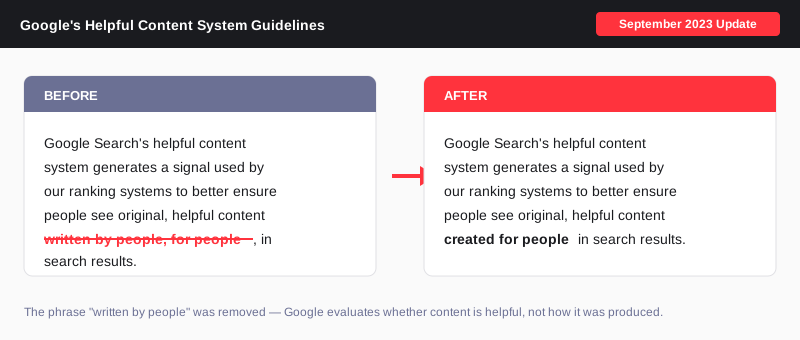
The message is clear: for content to rank well, it must be informative, answer users' queries satisfactorily, and showcase genuine expertise - regardless of how it's created.
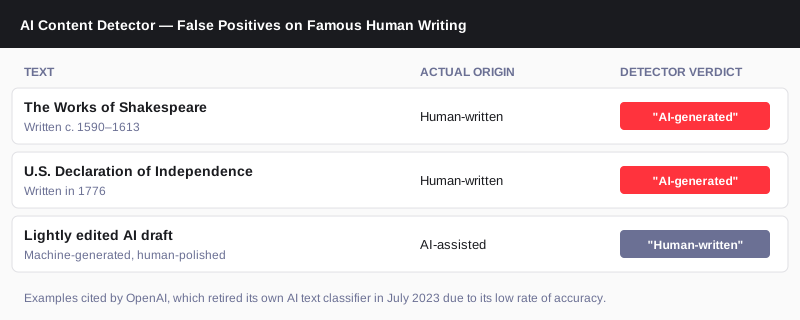
AI Content Detectors like GPTZero, ZeroGPT, and many others are not reliable. Even OpenAI has said as much. They consistently produce false positives about human-written content. Conversely, they can be easily fooled with creative prompting or a bit of human editing.
An interesting note from OpenAI: "we found that it labeled human-written text like Shakespeare and the Declaration of Independence as AI-generated."
Anecdotal evidence and real-life ranking data suggest that while AI-generated content isn't penalized by search engines, it might only achieve high rankings if it meets the above criteria. The role of AI in content creation is still a developing narrative, and its significance is indispensable for maintaining a competitive edge in the future.
At EmberTribe, the understanding is clear - AI serves as a foundation, not the final product. With ClusterMagic, while AI aids in the initial draft based on expert-driven keyword research, human experts step in for the crucial phases of editing, fact-checking, and final review. This hybrid approach ensures the content is accurate and helpful, has the potential to rank, and truly represents their business.
Google has always been at the forefront of technological innovation, and their latest endeavor involves leveraging generative AI for sophisticated ad campaigns. Join us to learn more about the concept of generative AI, its evolution, and how Google is utilizing this technology in advertising.
Generative AI is a branch of artificial intelligence that focuses on creating new content rather than simply analyzing or processing existing data. It involves using algorithms to simulate human-like creativity and generate original, unique content.
Generative AI has the ability to mimic human creativity by learning from vast amounts of data and using that knowledge to generate new and innovative content. This technology has the potential to revolutionize various industries, including art, music, literature, and marketing.
Generative AI has come a long way since its inception. Initially, AI was primarily used for analyzing data and making predictions. However, with advances in deep learning and neural networks, generative AI has emerged as a powerful tool for creative content generation.
One of the breakthroughs in generative AI was the development of generative adversarial networks (GANs). GANs consist of two neural networks: a generator network that creates new content and a discriminator network that evaluates the generated content. These networks work in tandem, constantly improving and refining the generated content.
From generating realistic images to composing music and writing compelling narratives, generative AI is revolutionizing the creative landscape. Artists can now use AI algorithms to create unique and visually stunning artwork. Musicians can leverage generative AI to compose melodies and harmonies that are both innovative and emotionally resonant.
Another exciting application of generative AI is in the field of virtual reality (VR). AI algorithms can generate realistic virtual environments, complete with lifelike characters and interactive elements. This opens up new possibilities for immersive gaming experiences and virtual training simulations.

Despite its many advancements, generative AI still faces challenges. One of the main concerns is the ethical implications of AI-generated content. As AI becomes more capable of creating content that is indistinguishable from human-generated content, issues of authenticity and ownership arise. Striking a balance between creativity and ethical considerations will be crucial for the future of generative AI.
Google has been at the forefront of AI research and development for years. They have a deep-rooted history of exploring AI technologies and integrating them into their products and services. From Google Assistant to autonomous vehicles, Google has been pioneering AI-driven advancements.
One of the earliest instances of Google's foray into AI can be traced back to the introduction of Google Translate. This groundbreaking service utilized AI algorithms to provide accurate translations between different languages. It was a game-changer in the world of language barriers and opened up new possibilities for global communication.
As Google continued to invest in AI, they expanded their efforts into the realm of voice recognition. This led to the development of Google Voice Search, a feature that allowed users to perform searches by simply speaking into their devices. This innovation revolutionized the way people interacted with technology and laid the foundation for the development of virtual assistants.
In recent years, Google has made significant breakthroughs in the field of AI. They have developed advanced machine learning algorithms that can perform complex tasks like natural language processing, image recognition, and more. Their innovations have helped shape the AI landscape and set new industry standards.
One of Google's most notable AI innovations is Google Photos. This application utilizes AI algorithms to organize and categorize photos based on their content. Through deep learning techniques, Google Photos can recognize faces, objects, and even specific locations, making it easier for users to search and manage their vast photo collections.
Another groundbreaking AI innovation by Google is the development of AlphaGo, an AI-powered computer program that can play the ancient Chinese board game, Go. In 2016, AlphaGo made headlines when it defeated the world champion Go player, Lee Sedol, in a five-game match. This achievement showcased the immense capabilities of AI and its potential to outperform human experts in complex tasks.
Google's commitment to AI innovation is further evident in their self-driving car project, Waymo. Through the use of AI algorithms and sensors, Waymo vehicles can navigate the roads autonomously, reducing the need for human intervention. This project represents a significant milestone in the development of autonomous vehicles and highlights Google's dedication to pushing the boundaries of AI technology.
AI can play a crucial role in advertising. It offers marketers the ability to analyze large amounts of data, identify patterns, and make data-driven decisions. This level of analysis was previously unimaginable, as it would have taken humans an immense amount of time and effort to sift through the vast amounts of data available.
AI algorithms can optimize ad campaigns, target specific demographics, and personalize ad content, resulting in increased engagement and conversions. By using AI, advertisers can now deliver highly targeted ads to their audience, ensuring that the right message reaches the right people at the right time. This level of precision is invaluable in a world where consumers are bombarded with countless ads every day.
Generative AI is taking advertising to new heights. With its ability to generate dynamic and personalized content, it enables marketers to create highly targeted and engaging ad campaigns. By leveraging generative AI, advertisers can deliver tailored messages to their audience, capturing their attention and driving brand awareness.
Generative AI algorithms can analyze vast amounts of data and generate ad content that is tailored to individual preferences and interests. This level of personalization goes beyond simply targeting demographics; it allows advertisers to create ads that resonate with individuals on a personal level.
For example, a clothing retailer can use generative AI to create personalized ads that showcase products based on a customer's browsing history and previous purchases. By showing customers items that align with their personal style and preferences, the retailer can significantly increase the chances of conversion.
The future of AI in advertising looks promising. As technology continues to advance, AI algorithms will become even more sophisticated and capable. We can expect increased automation, better targeting capabilities, and more personalized ad experiences. AI will continue to shape the advertising landscape and revolutionize how brands reach and engage with their audience.
While AI presents numerous opportunities, it also brings challenges and risks. Privacy concerns, data security, and ethical implications are crucial considerations when leveraging AI in advertising. As AI becomes more prevalent, it is essential for brands and advertisers to establish transparent and responsible AI practices to maintain trust with consumers.
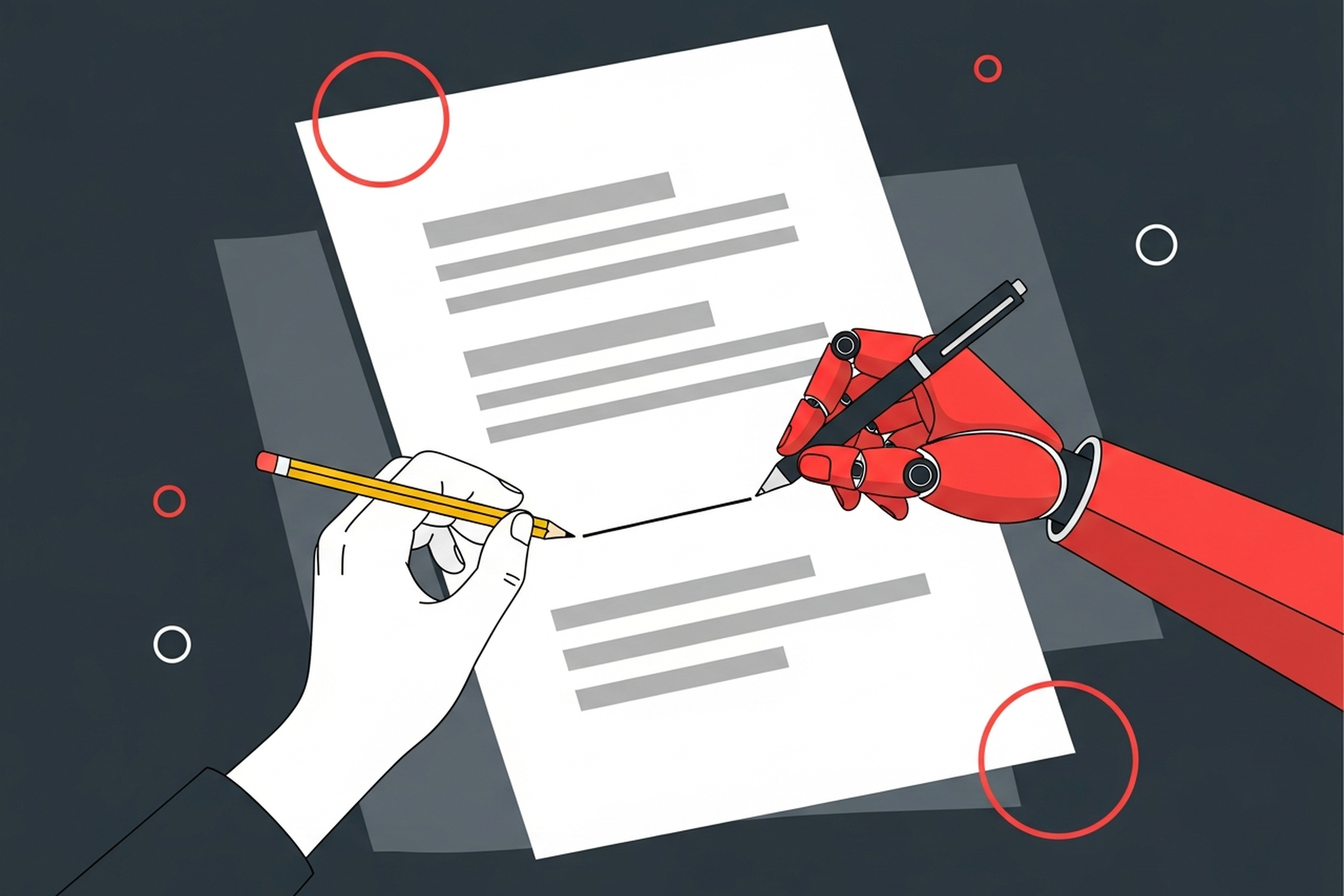
In the age of rapid digital transformation, AI has seeped into almost every industry, revolutionizing how we conduct business, design products, and even create content. The ClusterMagic service is a great example, which seamlessly integrates AI for content generation in a hybrid model, providing significant benefits in the SEO results of brands seeking a massive increase in organic traffic. But while AI holds immense promise, it has its limitations. Let's explore the pros and cons of using AI for content creation and understand why a hybrid approach might be the way forward.
Major publishers in sensitive niches like CNET.com, Bankrate.com, and Creditcard.com have already integrated AI-generated content. Other large companies, such as CNN and Forbes, might also be doing so. Countless smaller companies and publishers are utilizing AI, not only on their websites but also on social media, in email marketing, and virtually everywhere else.
Google's stance on AI-generated content is neutral, emphasizing that content should primarily be user-centric. In fact, Google's September 2023 Helpful Content Update removed the mention of "written by people" from their helpful content system guidelines.
The message is clear: for content to rank well, it must be informative, answer users' queries satisfactorily, and showcase genuine expertise - regardless of how it's created.
AI Content Detectors like GPTZero, ZeroGPT, and many others are not reliable. Even OpenAI has said as much. They consistently produce false positives about human-written content. Conversely, they can be easily fooled with creative prompting or a bit of human editing.
An interesting note from OpenAI: "we found that it labeled human-written text like Shakespeare and the Declaration of Independence as AI-generated."
Anecdotal evidence and real-life ranking data suggest that while AI-generated content isn't penalized by search engines, it might only achieve high rankings if it meets the above criteria. The role of AI in content creation is still a developing narrative, and its significance is indispensable for maintaining a competitive edge in the future.
At EmberTribe, the understanding is clear - AI serves as a foundation, not the final product. With ClusterMagic, while AI aids in the initial draft based on expert-driven keyword research, human experts step in for the crucial phases of editing, fact-checking, and final review. This hybrid approach ensures the content is accurate and helpful, has the potential to rank, and truly represents their business.


.svg)