
The traditional full-time CMO hire is increasingly mismatched to the economics of growth-stage companies. Spencer Stuart's 2025 CMO Tenure Study found that only 66% of Fortune 500 companies maintained a named chief marketing officer in 2024, down from 71% the year before. The institutional market has already moved away from the traditional model. Growth-stage DTC and B2B SaaS brands are now making the same shift.
A fractional CMO agency is the most complete version of that shift: senior marketing leadership plus an integrated execution team, on a retainer structure that provides strategic ownership without the $600,000 to $1.2 million Year 1 cost of a full-time hire.
The distinction matters and is frequently blurred by vendors selling both.
An individual fractional CMO is a solo senior marketing executive who works part-time across several clients. They own strategy: setting direction, making decisions, leading your marketing team and any outside agencies. What they do not provide is execution. Whatever the fractional CMO recommends still needs someone to run it — your existing team, additional hires, or separate agency relationships you manage yourself.
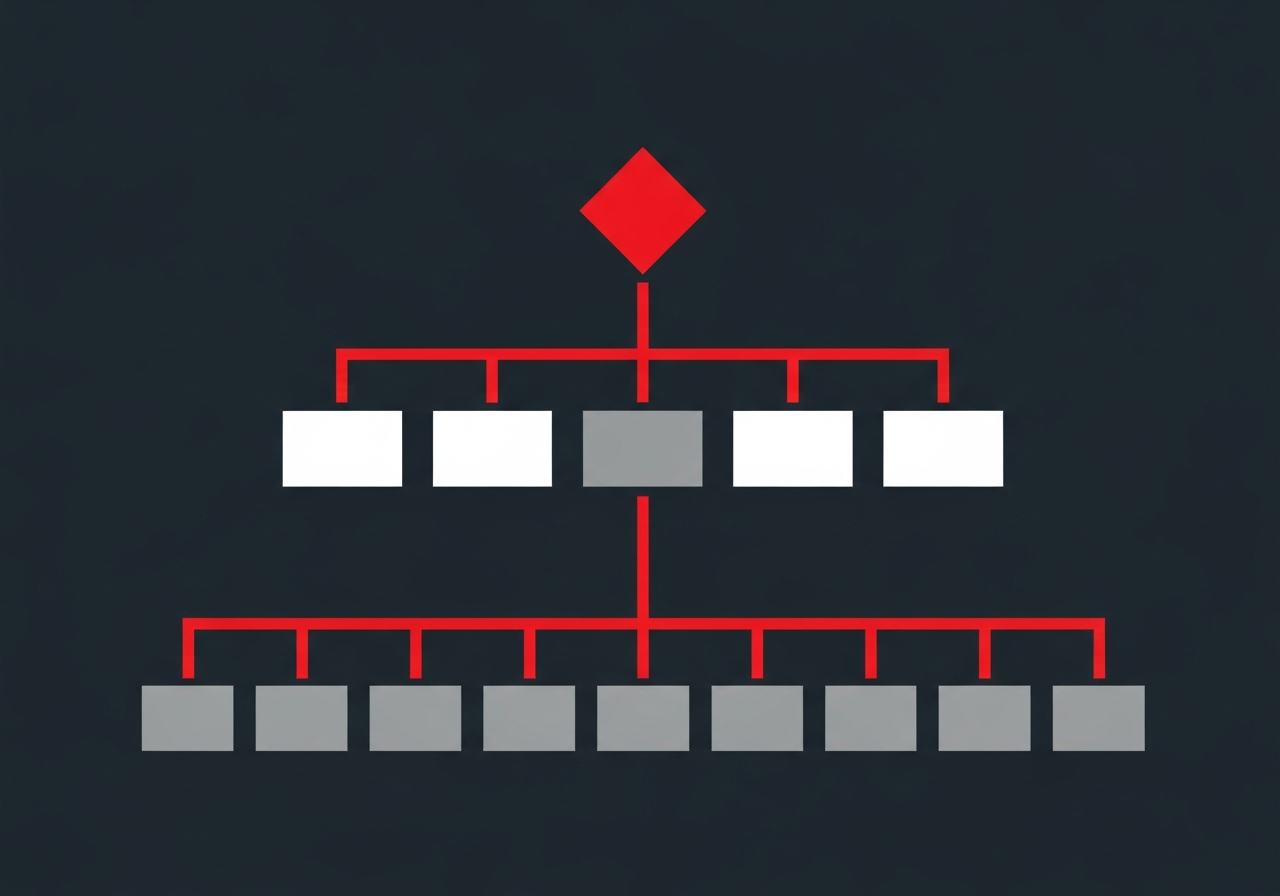
A fractional CMO agency bundles the strategic leadership with an execution team. The CMO sets strategy and owns the marketing function at the executive level. Below them, the agency provides specialists: paid media, SEO, content, marketing automation, analytics, creative. One contract covers the entire function. The strategy and execution are aligned by design rather than coordinated across multiple vendors.

The cost gap between the two models is real. Solo fractional CMOs typically run $60,000 to $180,000 per year. Fractional CMO agencies run $180,000 to $480,000 per year depending on scope and execution depth. Both represent substantial savings against the $600,000 to $1.2 million all-in cost of a full-time CMO hire, per averi.ai's 2026 cost analysis, which includes salary, benefits, equity, and recruiting fees.
The model choice depends on what exists internally. Companies with a functioning marketing team that just needs senior strategic direction and executive accountability can work with a solo fractional CMO. Companies building marketing from scratch, or whose team lacks the channel expertise to execute independently, are better served by an agency model.
The scope of a fractional CMO agency engagement should be explicit in any proposal. The standard components:
Averi.ai's analysis documents a 42% failure rate for new full-time CMO hires within 18 months, sourcing data from Spencer Stuart. The failure rate is not primarily a talent problem. It reflects a structural mismatch: a full-time CMO at $300,000 base salary is calibrated for a company large enough to fully utilize that investment. At $5 million to $30 million in revenue, most growth-stage companies cannot absorb the cost and cannot provide the infrastructure a senior CMO needs to perform.
The Geisheker Group's 2026 fractional CMO research shows the fractional marketing leader market has doubled from 60,000 to 120,000 professionals between 2022 and 2024, with LinkedIn job postings mentioning "fractional" growing 400% in the same period. The institutional validation point: a 2024 EY Private Equity Pulse Survey found 73% of PE firms now recommend fractional executives to portfolio companies, up from 31% in 2020. The model works, and the market has moved.
The fractional engagement also shows paradoxically stronger tenure. Average fractional CMO engagements last approximately 71 months per Geisheker's research, compared to roughly 42 months for Fortune 500 full-time CMOs and considerably less at growth-stage companies. A fractional CMO who is consistently delivering outcomes has every incentive to stay.
The fit conditions for a fractional CMO agency cluster around a specific growth profile:
Revenue between $2 million and $50 million ARR, where senior marketing leadership is necessary but full-time CMO cost is disproportionate. The CEO or COO is still running marketing alongside their primary responsibilities. The company has tried individual channel agencies or freelancers without achieving alignment between channels and strategy. A new product launch or market entry requires integrated go-to-market execution that does not exist internally.
The model is also a strong bridge hire: a company between full-time CMO tenures that cannot afford the 90 to 150-day recruiting process for a senior executive, or that wants to de-risk the hire by seeing the strategy and team perform before committing to a full-time role.
Companies that should probably hire a full-time CMO instead: businesses above $100 million in revenue where the marketing function is large enough to require full-time executive presence, companies approaching an IPO where investors expect named C-suite leadership, and organizations where the CMO role involves significant internal politics or cross-functional management that requires daily presence.
Several questions reliably separate genuine fractional CMO agencies from traditional agencies rebranding the title.
Ask specifically: "Walk me through a company where you inherited no marketing infrastructure. What did you do in the first 30 days, and what did you measure?" Real CMO operators give specific answers: which audit they ran, which tools they set up, which decisions they made and why. Consultants give frameworks.
Confirm that the CMO reports directly to the CEO and attends executive team meetings. If the structure positions the CMO as a vendor relationship managed by an operations or finance lead, the executive accountability that justifies the fractional CMO model is not present.
Ask for references specifically from CEOs or founders. The question to ask those references: "Did this person own revenue outcomes? What happened when a channel underperformed?"
Ask what the transition plan looks like. A fractional CMO agency that builds dependency rather than capability is optimizing for their own contract length. The best engagements have a defined path toward building internal marketing competency that the company eventually owns.
Breakthrough3x's fractional CMO ROI research sets a 3:1 revenue-to-CMO-cost ratio as the minimum sustainability benchmark. If you are spending $120,000 per year on fractional CMO services, the program should be attributable to at least $360,000 in incremental pipeline or revenue impact.
In the first 90 days: marketing audit complete, ICP finalized, attribution model in place, channel strategy approved. Months three to six: MQL volume and quality trending up, pipeline contribution percentage defined, CAC benchmarked. Months six to twelve: CAC improving, LTV:CAC at or approaching 3:1, marketing accounting for a defined and growing percentage of ARR booked.
Companies with fractional CMOs report an average of 29% revenue growth, compared to 19% for companies without, per Breakthrough3x benchmark data. The gap is large enough to justify the cost model if the engagement is run correctly and measured against the right outcomes.
The fractional CMO agency model exists because the full-time marketing executive hire does not fit most growth-stage company economics, and the individual fractional CMO creates an execution gap that undermines the strategy it is supposed to enable. The agency model closes both problems: executive accountability for revenue outcomes and an execution team to run the programs that deliver them.
If you are evaluating whether a fractional CMO engagement is the right next step for your marketing function, EmberTribe works with growth-stage DTC and B2B brands at exactly this intersection — performance marketing strategy and execution under one structure, accountable to revenue.
The traditional full-time CMO hire is increasingly mismatched to the economics of growth-stage companies. Spencer Stuart's 2025 CMO Tenure Study found that only 66% of Fortune 500 companies maintained a named chief marketing officer in 2024, down from 71% the year before. The institutional market has already moved away from the traditional model. Growth-stage DTC and B2B SaaS brands are now making the same shift.
A fractional CMO agency is the most complete version of that shift: senior marketing leadership plus an integrated execution team, on a retainer structure that provides strategic ownership without the $600,000 to $1.2 million Year 1 cost of a full-time hire.
The distinction matters and is frequently blurred by vendors selling both.
An individual fractional CMO is a solo senior marketing executive who works part-time across several clients. They own strategy: setting direction, making decisions, leading your marketing team and any outside agencies. What they do not provide is execution. Whatever the fractional CMO recommends still needs someone to run it — your existing team, additional hires, or separate agency relationships you manage yourself.
A fractional CMO agency bundles the strategic leadership with an execution team. The CMO sets strategy and owns the marketing function at the executive level. Below them, the agency provides specialists: paid media, SEO, content, marketing automation, analytics, creative. One contract covers the entire function. The strategy and execution are aligned by design rather than coordinated across multiple vendors.
The cost gap between the two models is real. Solo fractional CMOs typically run $60,000 to $180,000 per year. Fractional CMO agencies run $180,000 to $480,000 per year depending on scope and execution depth. Both represent substantial savings against the $600,000 to $1.2 million all-in cost of a full-time CMO hire, per averi.ai's 2026 cost analysis, which includes salary, benefits, equity, and recruiting fees.
The model choice depends on what exists internally. Companies with a functioning marketing team that just needs senior strategic direction and executive accountability can work with a solo fractional CMO. Companies building marketing from scratch, or whose team lacks the channel expertise to execute independently, are better served by an agency model.
The scope of a fractional CMO agency engagement should be explicit in any proposal. The standard components:
Averi.ai's analysis documents a 42% failure rate for new full-time CMO hires within 18 months, sourcing data from Spencer Stuart. The failure rate is not primarily a talent problem. It reflects a structural mismatch: a full-time CMO at $300,000 base salary is calibrated for a company large enough to fully utilize that investment. At $5 million to $30 million in revenue, most growth-stage companies cannot absorb the cost and cannot provide the infrastructure a senior CMO needs to perform.
The Geisheker Group's 2026 fractional CMO research shows the fractional marketing leader market has doubled from 60,000 to 120,000 professionals between 2022 and 2024, with LinkedIn job postings mentioning "fractional" growing 400% in the same period. The institutional validation point: a 2024 EY Private Equity Pulse Survey found 73% of PE firms now recommend fractional executives to portfolio companies, up from 31% in 2020. The model works, and the market has moved.
The fractional engagement also shows paradoxically stronger tenure. Average fractional CMO engagements last approximately 71 months per Geisheker's research, compared to roughly 42 months for Fortune 500 full-time CMOs and considerably less at growth-stage companies. A fractional CMO who is consistently delivering outcomes has every incentive to stay.
The fit conditions for a fractional CMO agency cluster around a specific growth profile:
Revenue between $2 million and $50 million ARR, where senior marketing leadership is necessary but full-time CMO cost is disproportionate. The CEO or COO is still running marketing alongside their primary responsibilities. The company has tried individual channel agencies or freelancers without achieving alignment between channels and strategy. A new product launch or market entry requires integrated go-to-market execution that does not exist internally.
The model is also a strong bridge hire: a company between full-time CMO tenures that cannot afford the 90 to 150-day recruiting process for a senior executive, or that wants to de-risk the hire by seeing the strategy and team perform before committing to a full-time role.
Companies that should probably hire a full-time CMO instead: businesses above $100 million in revenue where the marketing function is large enough to require full-time executive presence, companies approaching an IPO where investors expect named C-suite leadership, and organizations where the CMO role involves significant internal politics or cross-functional management that requires daily presence.
Several questions reliably separate genuine fractional CMO agencies from traditional agencies rebranding the title.
Ask specifically: "Walk me through a company where you inherited no marketing infrastructure. What did you do in the first 30 days, and what did you measure?" Real CMO operators give specific answers: which audit they ran, which tools they set up, which decisions they made and why. Consultants give frameworks.
Confirm that the CMO reports directly to the CEO and attends executive team meetings. If the structure positions the CMO as a vendor relationship managed by an operations or finance lead, the executive accountability that justifies the fractional CMO model is not present.
Ask for references specifically from CEOs or founders. The question to ask those references: "Did this person own revenue outcomes? What happened when a channel underperformed?"
Ask what the transition plan looks like. A fractional CMO agency that builds dependency rather than capability is optimizing for their own contract length. The best engagements have a defined path toward building internal marketing competency that the company eventually owns.
Breakthrough3x's fractional CMO ROI research sets a 3:1 revenue-to-CMO-cost ratio as the minimum sustainability benchmark. If you are spending $120,000 per year on fractional CMO services, the program should be attributable to at least $360,000 in incremental pipeline or revenue impact.
In the first 90 days: marketing audit complete, ICP finalized, attribution model in place, channel strategy approved. Months three to six: MQL volume and quality trending up, pipeline contribution percentage defined, CAC benchmarked. Months six to twelve: CAC improving, LTV:CAC at or approaching 3:1, marketing accounting for a defined and growing percentage of ARR booked.
Companies with fractional CMOs report an average of 29% revenue growth, compared to 19% for companies without, per Breakthrough3x benchmark data. The gap is large enough to justify the cost model if the engagement is run correctly and measured against the right outcomes.
The fractional CMO agency model exists because the full-time marketing executive hire does not fit most growth-stage company economics, and the individual fractional CMO creates an execution gap that undermines the strategy it is supposed to enable. The agency model closes both problems: executive accountability for revenue outcomes and an execution team to run the programs that deliver them.
If you are evaluating whether a fractional CMO engagement is the right next step for your marketing function, EmberTribe works with growth-stage DTC and B2B brands at exactly this intersection — performance marketing strategy and execution under one structure, accountable to revenue.

Hiring a full-time CMO at a B2B SaaS company costs $200,000–$300,000 per year before equity and benefits. For most Series A companies - and nearly all post-seed startups - that's a budget-breaking decision that locks you into one hire before you fully know what you need from marketing leadership.
A fractional CMO for B2B SaaS is the alternative that actually gets used: senior marketing leadership at 10–40 hours per month, costing $5,000–$20,000/month depending on scope, according to Kalungi. The pitch sounds almost too good. And sometimes it is.
This guide covers when the fractional CMO model works, when it falls apart, and what separates a high-impact engagement from one that burns six months and leaves you back at square one.
The job description varies more than most people expect. In a SaaS context, a fractional CMO typically owns some combination of:
What they usually don't do: execute. A fractional CMO is strategic leadership, not a full-time producer. If your current problem is that nobody is writing content or running campaigns, a fractional CMO won't solve that alone - you still need execution capacity underneath them.
This distinction matters enormously when deciding whether a fractional CMO is actually what you need.
The most common trigger is a founder who has been doing all the marketing themselves and has hit the limit of what that model can scale. You've found product-market fit, you're closing deals, but marketing is ad hoc, undocumented, and completely bottlenecked on one person.
A fractional CMO can come in and build the systems, establish the playbook, and hire or direct the team that executes - without requiring the $250K+ of a full-time executive hire.
When a full-time CMO leaves, the typical hire cycle takes 3–6 months. A fractional CMO can fill the gap, stabilize the team, and even help scope the full-time hire correctly - so you don't walk into the same problems with a new person.
Switching your SaaS go-to-market strategy from product-led to sales-led (or the reverse) is a major motion that requires senior marketing judgment. A fractional CMO with SaaS-specific experience can own the transition strategy without requiring a full-time organizational shift.
The fractional CMO model fails in predictable ways. Watch for these conditions:
No execution capacity underneath. A fractional CMO spending 20 hours per month cannot also write all the content, run the campaigns, and manage the CRM. If there's no execution layer - whether in-house or through agencies - strategy documents pile up and nothing ships. Before bringing in fractional marketing leadership, audit your execution capacity honestly.
Founder doesn't buy in. In early-stage SaaS, the fractional CMO needs to work alongside the founder, not around them. If the founder continues to override messaging decisions, second-guess positioning, or bypass the marketing plan, the engagement stalls. The fractional CMO can only be as effective as the authority they're actually given.
SaaS-naive candidates. Not every fractional CMO has done this in a SaaS context. Someone with strong DTC or agency experience may not understand subscription economics, CAC:LTV ratios, or the difference between top-of-funnel brand plays and bottom-of-funnel activation content. Ask specifically: How many B2B SaaS engagements have you led? What were the ARR ranges? What channels drove the most pipeline?
Expecting short-term revenue. The fractional CMO builds the system - positioning, team, playbook, channel strategy. The revenue output of that system takes time. If you need immediate pipeline, a fractional CMO alone won't deliver it; you also need an agency or contractor who can execute campaigns immediately.
Fractional CMOMarketing AgencyFocusStrategy, positioning, team leadershipExecution: content, SEO, paid, creativeAccountabilityPipeline and MQL targetsDeliverables and channel KPIsTime commitment10–40 hours/monthDefined retainer scopeBest forCompanies without marketing leadershipCompanies with direction, needing executionCost range$5K–$20K/month$3K–$25K/month (varies by scope)
The cleanest setup in B2B SaaS is both: a fractional CMO owning strategy and managing a specialized agency (or agencies) for execution. EmberTribe works with exactly this kind of structure - a fractional or in-house marketing lead sets the content and SEO strategy, and we execute. When that coordination works, it's efficient and accountable.
If you're still figuring out how to choose the right SaaS marketing agency to pair with marketing leadership, the criteria overlap: you want SaaS-specific experience, pipeline accountability, and a clear scope of execution that complements strategy work.
A strong fractional CMO for B2B SaaS will typically structure the first engagement in three phases:
Days 1–30: Diagnosis. ICP audit, competitive positioning review, funnel analysis, team assessment. The output is usually a positioning document and a 6-month marketing plan. No major campaigns launch yet. GoFractional's SaaS CMO playbook calls this the "strategy sprint" - the period that determines whether the rest of the engagement succeeds.
Days 31–60: Foundation. Messaging framework finalized, channel strategy selected, execution vendors or hires in place. First campaigns planned and handed off to execution.
Days 61–90: Execution in motion. First pipeline-focused campaigns live. Metrics baseline established. Weekly reporting cadence in place with the founder or CEO.
If the engagement hasn't produced a clear positioning document, a defined channel plan, and at least one campaign in motion by day 90, something is off - either scope mismatch, poor fit, or execution capacity problems.
If you're at Series A or earlier, have founder-led marketing that's hit its ceiling, and need senior go-to-market judgment without a full-time commitment - a fractional CMO is often the right call.
If you have marketing direction but need more content, more campaigns, more pipeline - an agency that specializes in your stage and channel is usually the right first move. If you're not sure how your agency options stack up, the post on how to choose the best ecommerce marketing agency covers a transferable evaluation framework that applies equally well to SaaS.
The worst outcome is hiring the wrong model for the wrong problem. Get clear on whether you need strategic leadership or execution capacity - and in most cases, you'll eventually need both.
EmberTribe works with B2B brands and growth-stage SaaS companies on content strategy and execution. If you're building a marketing system that needs senior-level execution alongside leadership, explore our services.


.svg)