
According to SeoProfy's lead generation statistics research, 80% of new leads never convert to sales. For companies paying business lead generation companies by volume, that number is the most important context in the decision: you are not buying leads. You are buying the fraction of leads that will eventually become customers, and the agency you choose determines whether that fraction is 5% or 25%.
The problem is that the category called "lead generation companies" covers at least five fundamentally different service models. An outbound appointment-setting firm and an inbound SEO agency both call themselves lead generation companies. They do completely different work, serve different sales motions, and produce different lead quality. Choosing without that distinction in mind produces the misalignment that drives the 80% non-conversion rate.
Not all lead generation companies are solving the same problem. Understanding the model is the first step to knowing whether a company can actually help you.
The differences between B2B and B2C lead generation are structural, not just tactical.
B2C generates roughly seven times more leads per month than B2B (an average of 196.5 leads per month at B2C companies versus 28 for B2B), but individual B2B leads carry far higher lifetime value. B2C conversions are often impulse-driven with short decision cycles. B2B deals involve 12 or more average touchpoints before a sales-qualified lead is created.
The platform split reflects this: 89% of B2B marketers use LinkedIn for lead gen, and 62% say LinkedIn generates leads at twice the rate of other platforms, per SeoProfy's research. B2C lead generation runs primarily through Meta (Facebook and Instagram), Google Shopping, and increasingly TikTok. An agency optimized for one side of this divide is not automatically equipped for the other.
The evaluation framework differs too. B2B lead quality is assessed by job title, company size, budget authority, and pain signal, criteria that take time to verify and require ICP-specific targeting. B2C lead quality is assessed faster, by behavioral signals: email open rates, click patterns, abandon cart events. Agencies that conflate these frameworks produce misaligned results in both directions.

The pricing model is the first signal. Retainer arrangements ($2,500 to $12,000 or more per month) indicate a strategic partnership focused on program quality. Pay-per-lead models create an incentive toward volume over quality, since the vendor gets paid the same whether the lead converts or not. Pay-per-appointment aligns incentives better for outbound firms, since the vendor only gets paid when a qualified meeting is booked.
Regardless of the model, several green flags indicate a trustworthy vendor:
The agency discloses exactly how leads are sourced and how contact data is verified. It provides sample lead records before signing. It can show historical MQL-to-SQL rates with real client data, not just industry averages. It offers CRM integration with real-time delivery and a defined policy for replacing invalid contacts.
Red flags that reliably predict future problems: the vendor refuses to disclose lead sourcing methodology. The pricing and volume promises look too good relative to industry CPL benchmarks. The case studies only show anonymous testimonials without named clients or specific metrics. The leads being sold are non-exclusive and shared across multiple buyers in your category.
There is no minimum contract length (which means they are not confident in results) or there is an unusually long lock-in with no performance-based exit clause.
One of the most costly red flags is a vendor that sells recycled lists. Recycled leads have already been contacted by competitors and are statistically much less likely to convert. If an agency cannot explain specifically how their contact database is sourced and refreshed, assume the data quality is poor.
First Page Sage's B2B conversion rate data shows website visitor-to-lead conversion averaging 1.1% for B2B SaaS and up to 7.4% for legal services. These are the starting points for evaluating funnel performance.
The metrics that matter from a lead generation company relationship:
Digitechniks' outsourced lead generation analysis shows outsourced campaigns launching in two to four weeks versus three to six months for in-house builds, with 71% of organizations that outsource reporting higher conversion rates than purely in-house management.
Outsourcing makes sense when the fully loaded cost of an in-house SDR ($150,000 to $200,000 annually in the US) exceeds the cost of an outsourced program ($7,000 to $12,000 per month for mid-market coverage). It also makes sense when you are entering a new market, when the sales team is prospecting instead of closing, or when you want to test a channel before committing to headcount.
Building in-house makes sense when brand narrative is highly complex and requires deep product knowledge, when you have a product-led growth motion that requires sophisticated lifecycle nurturing, or when lead volume is high enough to support and manage a dedicated SDR team effectively.
The reality for most growth-stage companies is a hybrid: outsource pipeline acceleration while building internal content and nurture capability in parallel. 82% of companies plan to outsource at least part of their lead generation in 2025, which is consistent with programs that treat outsourced agencies as a complement to in-house capability rather than a replacement.
Lead generation companies are not interchangeable. The model, the channel focus, the pricing structure, and the lead sourcing methodology all determine whether an engagement produces pipeline or just activity. Companies that treat lead gen as a commodity purchase, choosing on price per lead, reliably end up with the 80% non-conversion problem the industry is defined by.
If you want to evaluate which lead generation approach best fits your current stage, budget, and sales motion, EmberTribe works with growth-stage DTC and B2B brands on performance programs that connect lead generation spend directly to revenue outcomes.

In today's competitive business landscape, generating high-quality leads is crucial for B2C companies looking to thrive and succeed. Whether you're a small startup or an established enterprise, having a strong lead generation strategy is essential for driving sales and growing your customer base.
In this article, we'll explore five proven strategies that will help you boost your B2C lead generation efforts. From leveraging the power of social media platforms to implementing effective email marketing campaigns, these strategies will give you the edge you need to stand out from the competition and attract targeted leads that convert into loyal customers.
Before diving into the strategies, let's take a moment to understand what B2C lead generation is all about. B2C, or business-to-consumer, refers to companies that sell products or services directly to individual consumers. B2C lead generation involves attracting and nurturing potential customers who are interested in your offerings, with the goal of converting them into paying customers.
When it comes to B2C lead generation, it is important to have a clear understanding of the process and its significance. B2C lead generation is not just about getting random individuals interested in your products or services. It is a strategic approach that involves identifying and attracting potential customers who are most likely to be interested in what you have to offer.
The process of B2C lead generation starts with understanding your target audience. By conducting thorough market research and analysis, you can gain insights into the demographics, preferences, and behaviors of your potential customers. This information allows you to tailor your marketing strategies and messages to effectively reach and engage your target audience.
B2C lead generation is the process of identifying and attracting potential customers for your business, and nurturing them through various marketing channels until they are ready to make a purchase. Since B2C transactions are typically lower in value compared to B2B (business-to-business) transactions, the volume of leads generated becomes a critical factor for success.

Generating B2C leads involves implementing a combination of inbound and outbound marketing tactics. Inbound marketing focuses on creating valuable content and providing solutions to the pain points of your target audience. This can be done through blog posts, social media engagement, search engine optimization (SEO), and email marketing. Outbound marketing, on the other hand, involves reaching out to potential customers through methods like advertising, cold calling, and direct mail.
Once you have attracted potential customers, the next step is to nurture them through the sales funnel. This involves building relationships and providing relevant information and offers that address their needs and concerns. By consistently delivering value and staying top-of-mind, you increase the chances of converting leads into paying customers.
Effective B2C lead generation is crucial for several reasons. Firstly, generating a steady stream of leads ensures a constant flow of potential customers, enabling you to maintain a healthy sales pipeline. Without a consistent influx of leads, your business may struggle to meet its revenue targets and grow.
Secondly, by targeting the right audience, you can better allocate your resources and maximize your marketing efforts. Understanding your ideal customers allows you to focus your marketing budget and efforts on channels and strategies that are most likely to yield positive results. This not only saves you time and money but also increases the overall effectiveness of your marketing campaigns and keeps your brand ahead of the curve.
Lastly, attracting quality leads increases your chances of converting them into loyal customers who make repeat purchases. By nurturing potential customers and building strong relationships, you create a sense of trust and loyalty that encourages them to choose your products or services over your competitors'. This not only leads to increased sales but also helps in building a positive brand reputation and customer advocacy.
In conclusion, B2C lead generation is a strategic and essential process for businesses that sell directly to individual consumers. By understanding the process, implementing effective marketing strategies, and nurturing potential customers, businesses can increase their sales, optimize their marketing efforts, and build long-term customer relationships.
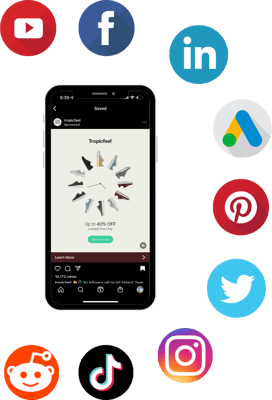
Social media platforms have become an integral part of our daily lives, providing businesses with an excellent opportunity to connect with their target audience. With billions of active users, platforms like Facebook and Instagram offer immense potential for B2C lead generation. Check out this article in which we explain how to scale en eComm brand from $500k to $5M with a Multi-Channel Growth System powered by ads.
When it comes to social media marketing, Facebook is undoubtedly a powerhouse. Its advertising platform allows you to target specific demographics, interests, and behaviors, making it an effective tool for B2C lead generation. By creating compelling ads and engaging content, you can attract potential customers who are likely to be interested in your products or services. The key lies in understanding your target audience and crafting messages that resonate with them. One of the biggest advantages of Facebook advertising is its extensive targeting options. You can narrow down your audience based on factors such as age, gender, location, and even interests. This level of precision ensures that your ads are being shown to the right people at the right time, increasing the chances of generating quality leads. Additionally, Facebook's retargeting feature allows you to reach out to users who have already shown interest in your brand, giving you another opportunity to convert them into customers.
Facebook's advertising platform is not just about targeting options; it also offers a wide range of ad formats to suit different marketing objectives. Whether you want to drive website traffic, increase brand awareness, or promote a specific product, Facebook has the tools to help you achieve your goals. From carousel ads that showcase multiple products to video ads that tell a compelling story, the possibilities are endless.
Furthermore, Facebook's ad analytics provide valuable insights into the performance of your campaigns. You can track metrics such as reach, engagement, and conversions, allowing you to fine-tune your strategy and optimize your ad spend. By constantly monitoring and analyzing the data, you can identify what works and what doesn't, making informed decisions to maximize your B2C lead generation efforts.
While Facebook reigns supreme in the world of social media, Instagram is quickly gaining momentum, especially among younger demographics. With its visually appealing layout and emphasis on aesthetics, Instagram has become a powerful platform for B2C lead generation.
As an image-centric platform, Instagram allows you to showcase your products or services in a visually compelling way. High-quality images and videos can capture the attention of your target audience and create a desire for what you offer. By utilizing relevant hashtags, you can increase the discoverability of your content and attract users who are actively searching for products or services like yours.
Engagement is key on Instagram. By actively interacting with your followers, responding to comments, and participating in relevant conversations, you can build a loyal community around your brand. This not only increases brand awareness but also creates opportunities for lead generation. When users feel connected to your brand and trust your expertise, they are more likely to visit your website and explore what you have to offer.
Additionally, Instagram's Stories feature provides a unique opportunity for B2C lead generation. With over 500 million daily active users, Stories allow you to share behind-the-scenes content, product demonstrations, and limited-time offers. By leveraging the sense of urgency created by Stories, you can encourage users to take immediate action, whether it's signing up for a newsletter, making a purchase, or requesting more information.
In conclusion, social media platforms like Facebook and Instagram offer immense potential for B2C lead generation. By utilizing their unique features and understanding the preferences of your target audience, you can create impactful campaigns that attract quality leads and drive business growth.
Content marketing is a strategic approach to attracting and engaging your target audience through valuable content. By offering informative and engaging content, you can position yourself as an authority in your industry and attract potential customers who are interested in what you have to offer.
Creating a blog on your website is an effective way to generate B2C leads. By consistently publishing high-quality blog posts that address the pain points and interests of your target audience, you can attract organic traffic and capture leads through opt-in forms or content upgrades. Ensure that your blog posts are optimized for search engines to maximize their visibility and reach.
E-books and whitepapers are in-depth resources that provide value to your target audience while also capturing leads. Offer downloadable e-books or whitepapers on topics related to your industry or products/services. Require users to provide their contact information before they can access the content, allowing you to generate leads while providing valuable information to your audience.
Email marketing remains one of the most effective channels for B2C lead generation. By building an email list of potential customers who have shown interest in your products or services, you can nurture them through targeted email campaigns and drive conversions.

Start by implementing lead capture forms on your website, offering incentives such as discounts or valuable content in exchange for email addresses. Segment your email list based on demographics, preferences, and engagement levels to tailor your campaigns and improve conversions. Personalize your emails to make them more engaging and relevant to your subscribers.
The content of your emails plays a crucial role in driving B2C lead generation. Craft attention-grabbing subject lines, compelling copy, and encourage recipients to take action with clear call-to-actions. Utilize automation to send personalized emails based on user behavior, interests, and purchase history.
Search Engine Optimization (SEO) is the practice of optimizing your website and content to improve its visibility in search engine rankings. By ensuring that your website appears prominently in relevant search results, you can attract organic traffic and generate B2C leads. Check out this article on how we scaled an eCommerce brand to $10M in revenue with SEO.
SEO involves various on-page and off-page techniques that help search engines recognize the relevance and quality of your content. By optimizing your website's structure, keywords, meta tags, and creating high-quality backlinks, you can improve your website's search engine rankings, driving more organic traffic and leads.
Focus on targeting relevant keywords that have high search volume and align with the interests of your target audience. Create informative and engaging content that caters to user search intent. Optimize your website's load speed, mobile responsiveness, and user experience to ensure that visitors have a positive experience and are more likely to convert into leads.

Influencer marketing has become a popular strategy for B2C lead generation, leveraging the influence of individuals with large social media followings to promote products or services. Collaborating with influencers who align with your brand allows you to reach a wider audience and generate targeted leads.

When selecting influencers, consider their relevance to your industry or niche, their engagement levels, and their ability to connect with your target audience. Collaborate with influencers to create engaging content such as sponsored posts, reviews, or giveaways. By leveraging their influence and reach, you can attract potential customers who trust and value their recommendations.
Implementing these five proven strategies will give your B2C lead generation efforts a significant boost. Remember to continually analyze and optimize your campaigns to maximize your results. With a comprehensive lead generation strategy in place, you'll be well on your way to attracting quality leads and driving business growth.


.svg)