







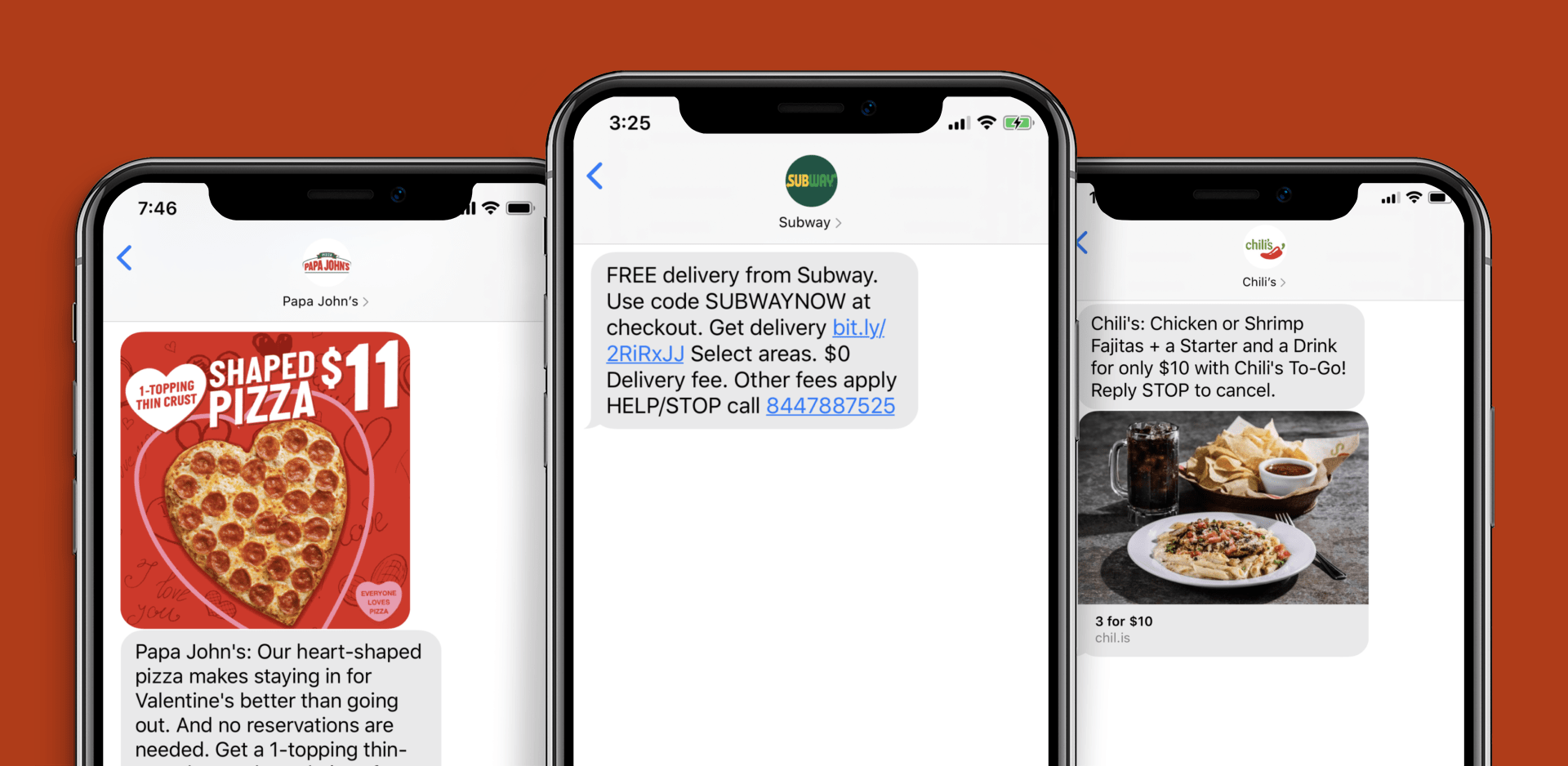
Businesses need to find new ways to reach and engage their audience. With inboxes overflowing and social media algorithms constantly shifting, the brands that win are the ones that show up where customers are already paying attention: their phones.
SMS campaigns have emerged as one of the most effective direct-response channels available to growth-focused brands. With open rates that dwarf email and response times measured in minutes rather than hours, text message marketing gives you a direct line to your customer's most personal device.
But sending texts without a strategy is a fast path to unsubscribes and wasted spend. Here is how to build an SMS program that drives real results.
Understanding SMS Campaigns
An SMS campaign delivers targeted text messages to a defined audience segment. These messages can range from order confirmations and appointment reminders to flash sales and product launch announcements.
At the highest level, SMS campaigns break down into two categories:
Transactional messages are triggered by a specific customer action. Order confirmations, shipping notifications, and appointment reminders all fall into this category. These messages serve a functional purpose and typically enjoy the highest engagement rates because recipients expect them.
Promotional messages are brand-initiated communications designed to drive a specific business outcome. Flash sales, limited-time offers, loyalty rewards, and new product announcements all qualify. These require explicit opt-in consent and demand more strategic planning around timing, frequency, and audience targeting.
The goal of any SMS campaign is to achieve a measurable objective, whether that means increasing sales, driving repeat purchases, or building brand awareness through consistent touchpoints.
Why SMS Deserves a Place in Your Channel Mix
Text messages have an open rate of around 98%, compared to roughly 20% for email. That alone makes SMS one of the highest-attention channels available to marketers. But the advantages extend well beyond open rates.
Speed of engagement. Most text messages are read within three minutes of delivery. If you need to drive action quickly, whether for a flash sale, a restocked item, or a time-sensitive offer, SMS delivers faster than any other owned channel.
Personal connection. A text message feels more intimate than an email blast. When done well, SMS builds stronger one-to-one relationships that translate to higher lifetime value and brand loyalty. This personal touchpoint creates real opportunities for increasing the possibilities of converting more.
Cost efficiency. Even small businesses can implement effective SMS campaigns without a massive budget. The per-message cost is low, and the high engagement rates mean the cost-per-conversion often outperforms more expensive channels.
Complementary channel. SMS works best as part of a broader multichannel strategy. Pair it with email, paid social, and on-site experiences to create a cohesive customer journey that reinforces your message across touchpoints.
Key Elements of an Effective SMS Campaign
Building an SMS program that consistently converts requires attention to five foundational elements.
1. Clear Objectives
Every SMS campaign should start with a specific, measurable goal. Are you trying to drive immediate purchases? Reduce cart abandonment? Increase event attendance? Re-engage lapsed customers?
Use the SMART framework (Specific, Measurable, Achievable, Relevant, Time-bound) to define what success looks like before you send a single message. Without clear objectives, you cannot measure performance or optimize your funnel over time.
2. Compelling Content
You have roughly 160 characters to capture attention and drive action. Every word must earn its place. The best SMS messages follow a simple structure:
- Hook: Lead with the value proposition or the most compelling detail
- Body: Provide the essential context (what, when, how much)
- CTA: Tell the recipient exactly what to do next
Avoid filler language. "Hey! Just wanted to let you know..." wastes precious characters. Lead with the offer or the benefit.
3. Timing and Frequency
Timing can make or break an SMS campaign. Sending messages during business hours (typically 10 AM to 8 PM in the recipient's time zone) generally produces the best results. Avoid early mornings, late nights, and holidays unless the message is directly relevant to the occasion.
Frequency is equally important. Most successful SMS programs send between two and six messages per month. Too few and subscribers forget about you. Too many and you train them to ignore or unsubscribe.
4. Segmentation
Sending the same message to your entire list is a missed opportunity. Segment your audience based on purchase history, browsing behavior, geographic location, and engagement patterns. A first-time buyer and a loyal repeat customer should receive different messages, different offers, and different levels of urgency.
The more relevant your message is to the individual recipient, the higher your conversion rates will be. This is the same principle that drives success in email marketing for ecommerce brands.
5. Strong Call to Action
Every SMS needs a clear, specific CTA. "Shop now," "Claim your discount," "Reply YES to confirm" - these direct instructions remove ambiguity and make it easy for recipients to take the next step. Include a shortened URL when driving to a specific landing page, and make sure that page is mobile-optimized.

Crafting Your SMS Campaign Strategy
Before writing a single message, develop a strategy that aligns with your broader business goals and audience expectations. Here is a framework for building one that performs.
Define Your Subscriber Acquisition Plan
Your SMS list is only as valuable as the subscribers on it. Focus on building a high-quality opt-in list through:
- Website pop-ups and banners offering a discount in exchange for a phone number
- Checkout opt-ins where customers can subscribe during the purchase flow
- Social media promotions that drive followers to a keyword-based opt-in
- Cross-channel promotion in your email newsletter inviting subscribers to join your SMS list for exclusive offers
Always ensure compliance with TCPA regulations and provide a clear opt-out mechanism in every message.
Map Your Message Types to the Customer Journey
Different stages of the customer journey call for different types of SMS communication:
- Awareness: Welcome messages and brand introductions
- Consideration: Product recommendations, social proof, and educational content
- Conversion: Limited-time offers, cart abandonment reminders, and discount codes
- Retention: Loyalty rewards, restock reminders, and VIP early access
- Advocacy: Referral program invitations and review requests
Mapping messages to the journey ensures you are sending the right content at the right time, rather than blasting promotional offers at every stage.
Integrate SMS with Your Other Channels
SMS should not operate in isolation. The most effective programs coordinate text messages with email sequences, paid advertising, and on-site experiences. For example, you might send an email announcing a new product, follow up 24 hours later with an SMS reminder, and retarget non-openers with a paid social ad.
This coordinated approach creates multiple touchpoints without overwhelming any single channel.
Writing Compelling SMS Messages
Crafting effective SMS messages is an art. Here are the principles that separate high-performing texts from those that get ignored.
Be concise. Get straight to the point. You have limited characters, and the recipient will decide within seconds whether your message is worth their attention.
Create urgency. Time-limited offers, low-stock alerts, and countdown language ("Ends at midnight," "Only 12 left") encourage immediate action rather than the "I'll look at this later" response that kills conversion rates.
Personalize where possible. Address recipients by name and reference their specific behavior. "Sarah, the item you viewed is now 20% off" outperforms a generic blast every time.
Use conversational language. SMS is inherently personal. Write the way you would text a friend, not the way you would write a press release. Keep the tone direct and approachable while staying on-brand.
Test relentlessly. A/B test your message copy, CTAs, send times, and offers. Small changes in wording or timing can produce significant differences in response rates.
Measuring SMS Campaign Success
Use the analytics tools provided by your SMS platform to gain insights into campaign performance. The metrics that matter most include:
- Delivery rate: The percentage of messages successfully delivered. Rates below 95% signal list hygiene issues.
- Open/read rate: While harder to track precisely than email opens, most platforms estimate read rates based on link clicks and responses.
- Click-through rate (CTR): The percentage of recipients who clicked a link in your message. This is your primary engagement metric.
- Conversion rate: The percentage of recipients who completed the desired action (purchase, sign-up, booking).
- Opt-out rate: The percentage of recipients who unsubscribed after a given message. Spikes indicate messaging frequency or relevance problems.
- Revenue per message: Total revenue attributed to an SMS campaign divided by the number of messages sent. This is your ultimate ROI metric.
Analyze this data to identify patterns. You might discover that certain message formats, specific call-to-action approaches, or particular send times consistently produce higher conversion rates. Armed with this knowledge, you can make data-driven decisions to optimize your future campaigns.

Common SMS Marketing Mistakes to Avoid
Even well-intentioned SMS programs can underperform if they fall into these traps:
Buying lists. Purchased phone numbers lead to low engagement, high opt-out rates, and potential legal liability. Build your list organically through value-driven opt-ins.
Ignoring compliance. TCPA violations can result in fines of $500 to $1,500 per unsolicited message. Ensure every subscriber has explicitly opted in and that every message includes an opt-out option.
Over-sending. More messages does not equal more revenue. Respect your subscribers' attention and communicate only when you have something genuinely valuable to share.
Neglecting mobile optimization. Every link in your SMS messages should lead to a mobile-optimized landing page. If a customer clicks through and lands on a desktop-formatted page, you have lost the sale.
Failing to test. Sending the same message format month after month without testing alternatives leaves performance gains on the table. Treat every campaign as an opportunity to learn.
Putting It All Together
SMS marketing is not a silver bullet, but when executed with a clear strategy, compelling content, and rigorous measurement, it becomes one of the most powerful channels in your growth marketing toolkit. The brands that win with SMS are the ones that respect the channel's intimacy, deliver genuine value with every message, and continuously optimize based on data.
Start with a small, engaged list. Test different message types and send cadences. Measure everything. And integrate SMS into your broader growth marketing strategy to create the kind of multi-touch experience that drives sustainable revenue growth.

.webp)

.svg)


