








PPC advertising services is a broad term. It gets used to describe everything from running a single Google Search campaign to managing multi-platform paid media programs across five different ad networks. Before you can meaningfully compare providers or evaluate what you're paying for, you need to understand what actually falls under the category and what the different service configurations look like in practice.
This post covers the platform landscape, the service types, what each configuration includes, and the metrics that actually matter when you're evaluating performance.
What PPC Advertising Services Actually Covers
Pay-per-click advertising means you pay each time someone clicks your ad. But the platforms, formats, and targeting mechanisms vary substantially depending on where those ads run.
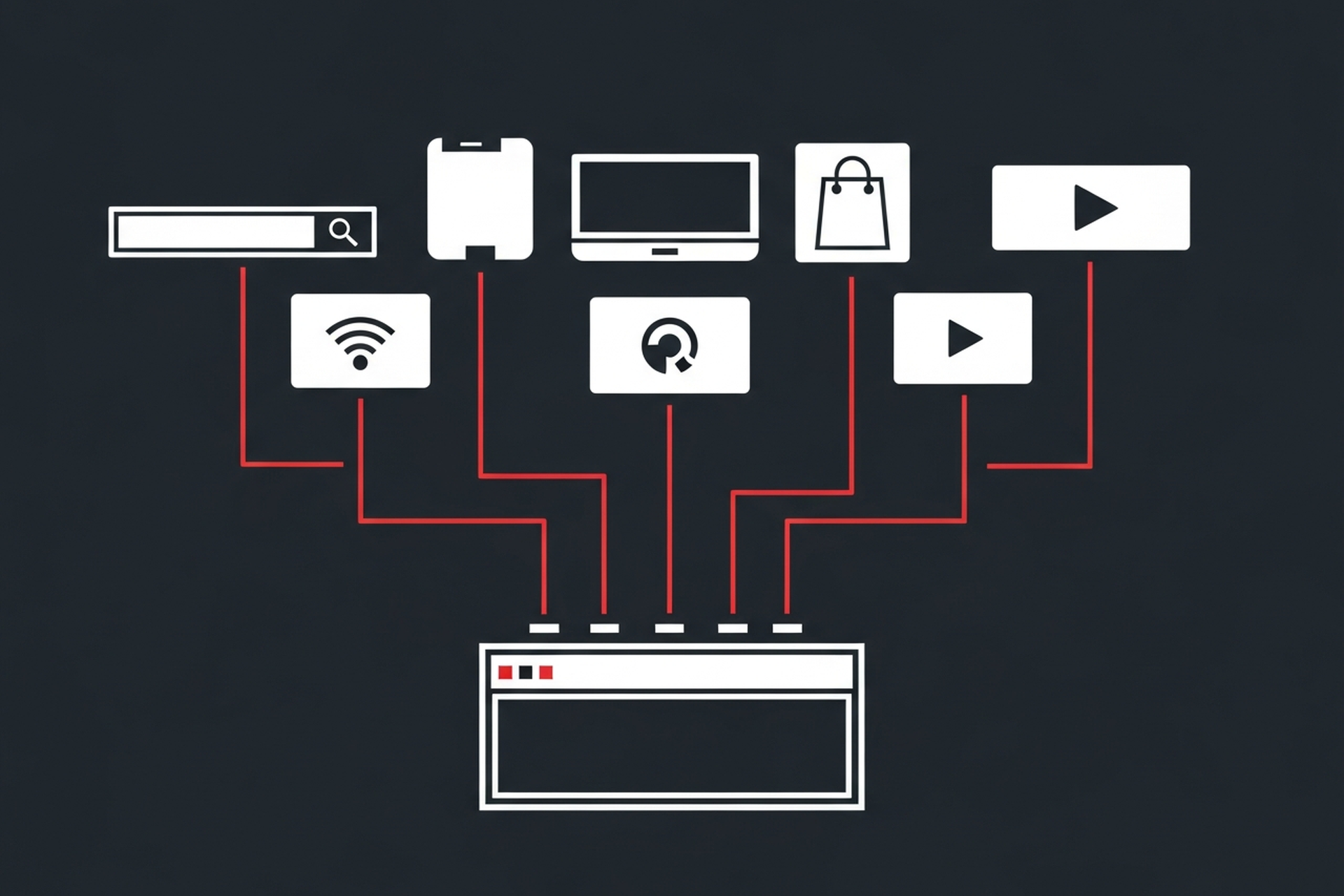
When someone offers PPC advertising services, they're typically referring to one or more of the following:
Google Search Ads. The core of most PPC programs. Text ads that appear when users search specific keywords. Targeting is intent-driven: your ad appears when someone actively searches for what you sell. Google Search is the highest-intent paid channel available for most product and service categories.
Google Shopping. Product-based ads that show images, prices, and store names directly in search results. Shopping campaigns are managed through a product feed linked to Google Merchant Center. Essential for ecommerce businesses; not relevant for service companies. Understanding how Google Ads work across both Search and Shopping is a prerequisite for managing either well.
Performance Max. Google's campaign type that serves ads across Search, Shopping, Display, YouTube, Gmail, and Maps from a single campaign. Google's automation controls placement and bidding. Performance Max campaigns require quality creative assets and strong conversion tracking to perform. Accounts with thin data or poor creative rarely see strong results from this format.
Microsoft Advertising. Bing, Yahoo, and DuckDuckGo search ad placements. Smaller audience than Google, but often lower CPCs and an older, higher-income demographic skew that matters in specific verticals. Many providers either exclude Microsoft entirely or treat it as an add-on. If your audience skews 35+, it's worth including.
LinkedIn Ads. The primary paid channel for B2B companies targeting by job title, company, seniority, or industry. CPCs are significantly higher than Google Search, but the targeting precision for B2B audiences is unmatched. LinkedIn advertising includes sponsored content, message ads, dynamic ads, and text ads, each suited to different funnel stages.
Amazon Ads. Relevant only if you sell products on Amazon. Amazon Sponsored Products are cost-per-click ads that promote individual listings inside Amazon search results. The mechanics differ from Google: bidding is keyword-based, but the "quality score" equivalent factors in conversion rate, sales velocity, and review count. Amazon advertising is a specialty that most Google-focused agencies don't have genuine depth in.
Each of these platforms requires different expertise. An agency that's strong on Google Search may have little actual experience with LinkedIn or Amazon. When you're evaluating PPC advertising services, the first question is which platforms are included and whether the provider has verifiable experience on each.
Service Scope: What You're Actually Buying
The term "PPC management" can describe vastly different service configurations. Here's how service scope typically breaks down:
Strategy Only
The provider develops the account architecture, campaign structure, keyword strategy, bidding approach, and audience targeting plan. Execution is either handled in-house or by a separate team. This is uncommon for smaller accounts, but larger organizations sometimes hire strategic consultants to audit and rebuild their paid media strategy without transferring day-to-day management.
Full Account Management
The most common engagement model. The provider handles everything: account setup or restructuring, campaign build-out, keyword selection, ad copywriting, bid management, audience targeting, landing page recommendations, and monthly reporting. Ongoing management includes monitoring performance, adjusting bids and budgets, testing new ad variations, managing negative keyword lists, and making structural changes as campaigns scale.
This is the default service model most businesses are buying when they hire a PPC management company.
Full Management With Creative
Includes everything in full management plus paid social creative: static images, video scripts, ad design, or motion graphics. Most relevant for LinkedIn, Meta, and YouTube campaigns where creative quality drives performance more than targeting precision. For Google Search, creative usually means ad copy, which most management-only engagements include. For display and social, creative is often a separate workstream with separate pricing.
Audit and Rebuild
A one-time engagement where the provider audits an existing account, identifies structural problems, and rebuilds campaigns. Accounts that have been poorly managed for years often have significant waste built in: redundant keyword match types, missing negative keywords, poorly structured ad groups, and bidding strategies misaligned with actual business goals. An audit-and-rebuild is appropriate when you have an active account with budget but suspect (or know) that performance has been poor.
Consulting and Training
The provider helps your internal team improve their own management capabilities. This includes account reviews, keyword strategy sessions, and coaching on bidding and structure. Common in companies that have an internal marketing team but lack deep PPC expertise.
Comparing PPC Advertising Service Providers
Before diving into how to evaluate providers, it's worth understanding the category landscape. A paid search agency is different from a large full-service digital agency that offers PPC as one of many services. The former typically has deeper paid-search specialization; the latter may have broader channel coverage but less technical depth.
Similarly, B2B PPC agencies operate differently from ecommerce-focused providers. B2B campaigns optimize toward pipeline and revenue, require integration with CRM systems, and involve significantly longer measurement cycles. SaaS PPC agencies have their own pattern: typically combining Google Search, LinkedIn Ads, and sometimes retargeting, with optimization toward trial signups or demo requests rather than direct purchase.
When comparing providers, here's what actually differentiates them:
Platform coverage vs. depth. Ask which platforms the provider actively manages and how many of their current accounts run on each. A provider claiming expertise across six platforms who has three active LinkedIn accounts is not a LinkedIn expert.
Account structure approach. How does the provider organize campaigns: by match type, by intent tier, by product line? Strong PPC practitioners have a coherent structural philosophy and can explain the reasoning behind it.
Bidding strategy. Manual bidding, target CPA, target ROAS, or Smart Bidding via Google's automated systems. Each has appropriate use cases, and a provider who defaults to automated bidding on every account without explaining why is using a shortcut, not a strategy.
Reporting and attribution. What gets reported, how often, and how it connects to business outcomes. Clicks and impressions are not business outcomes. Revenue, pipeline, cost per acquisition, and return on ad spend are. Ask to see an example of how the provider reports performance to a current client.
Integrated channel approach. Some buyers want PPC advertising services alongside SEO. If that's you, see our overview of SEO and PPC services combined for what integrated programs typically look like and where the two channels complement each other.
Metrics That Matter When Evaluating PPC Performance
The metrics a provider focuses on tell you a lot about how they operate. Here's what's worth tracking versus what often gets reported in lieu of real results:
Click-through rate (CTR). A useful diagnostic metric. Low CTR on search ads usually signals a relevance problem: your ad isn't compelling enough for the query triggering it. But CTR is not a business outcome metric. High CTR with poor conversion rates means you're driving unqualified traffic.
Conversion rate. The percentage of clicks that convert into a desired action (form fill, purchase, call, trial signup). This measures the combination of targeting quality and landing page effectiveness. Improving conversion rate often requires landing page work, not just ad changes.
Cost per acquisition (CPA). What you pay, on average, for each conversion. CPA is meaningful only if your conversion event is meaningful. If you're optimizing toward form fills but your sales team qualifies out 80% of those leads, CPA is measuring the wrong thing.
Return on ad spend (ROAS). Revenue generated per dollar spent on ads. The most direct performance metric for ecommerce accounts where purchase value is trackable. Requires solid conversion tracking tied to actual revenue, not just purchase events without value data.
Cost per qualified lead (CPQL). More useful than CPA for B2B companies. Requires passing lead quality data from your CRM back to the advertising platform, which many providers don't set up. Providers who optimize toward CPQL rather than raw lead volume are typically running more sophisticated programs.
Impression share. The percentage of eligible impressions your ads are actually showing for. Low impression share can indicate a budget constraint, a Quality Score issue, or a bid that's too low for your target keywords. This is a diagnostic metric, not a success metric.
Attribution model. How credit gets assigned across touchpoints matters as much as any individual metric. Last-click attribution tends to over-credit bottom-funnel keywords and under-credit brand awareness activity. If you're running LinkedIn at the top of the funnel and Google Search at the bottom, last-click will make Search look better and LinkedIn look worse than either deserves.
What to Ask Before You Commit
A few questions that separate providers worth evaluating from those worth skipping:
- Which platforms do you actively manage for current clients, and how many accounts on each?
- How do you handle attribution for clients with long sales cycles?
- What does month-one setup look like, and what can we expect in terms of ramp time?
- What's your process when performance drops, and how do you diagnose the issue?
- Can you show us a redacted reporting example from a current client in a similar vertical?
The answers reveal whether a provider is running the same playbook for every account or building programs specific to how your business actually works.
If you're looking for a starting point on provider selection, the PPC agency overview covers the selection process in more detail. EmberTribe works with businesses across Google Ads, Microsoft Advertising, and LinkedIn, building paid media programs tied to pipeline and revenue rather than vanity metrics. Reach out if you want a direct conversation about what your specific situation warrants.

.webp)

.svg)


